Other Space Exploration Signals
Astrobotic’s Detonation Engine Fires 4,000 Pounds of Thrust in Wild … (Gizmodo)
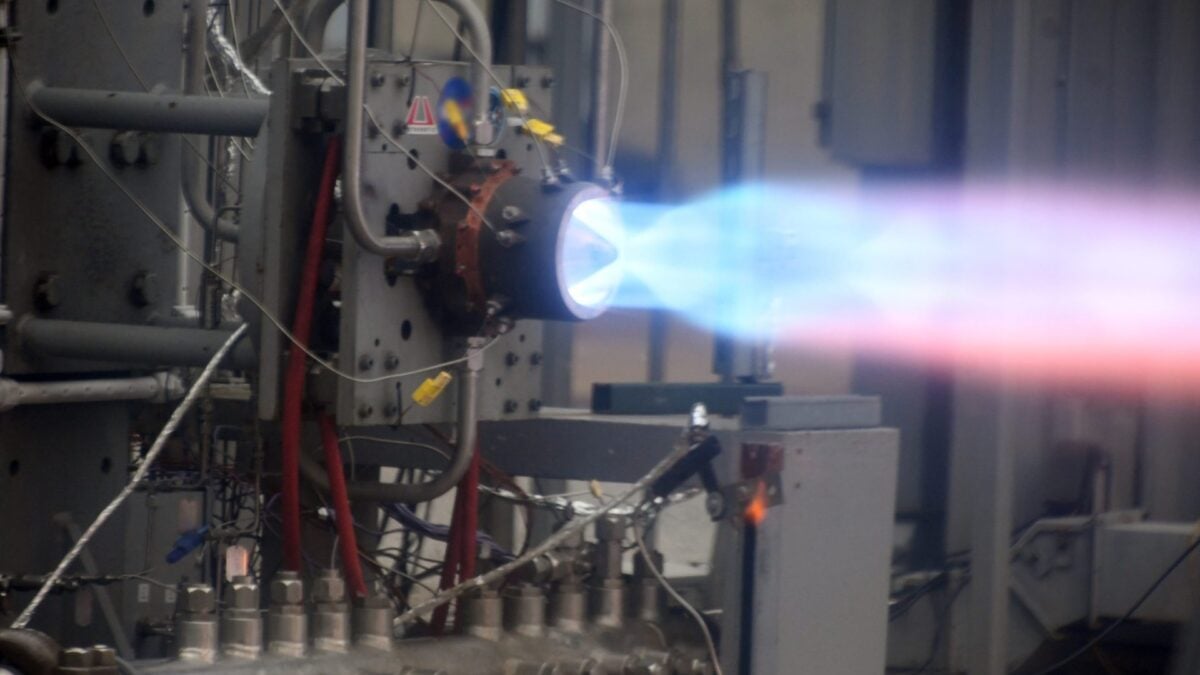
Summary: Astrobotic has completed the first hot-fire tests of its rotating detonation rocket engine (RDRE) at NASA’s Marshall Space Flight Center. Two prototypes generated over 4,000 pounds of thrust each, achieving a combined runtime of 470 seconds, including a single 300-second burn. The tests validate the use of supersonic combustion to increase propulsion efficiency for deep-space transit.
Why it matters: RDRE technology offers a theoretical leap in fuel efficiency and thrust-to-weight ratios, critical for reducing the mass-to-orbit requirements of crewed Mars and lunar missions.
Context: This private sector development parallels NASA’s own RDRE program, which achieved 5,800 pounds of thrust in 2023 using 3D-printed prototypes.
"Each engine produced more than 4,000 pounds of thrust (1,800 kilograms) for a combined 470 seconds of total runtime, including a single 300-second burn." — GIZMODO
Commentary: The 300-second single burn is the key engineering signal here, suggesting a move toward operational stability rather than mere momentary ignition. For Astrobotic, successful propulsion R&D is a necessary pivot after the Peregrine mission’s propulsion failure. The transition from NASA-led prototypes to commercial RDRE hardware indicates a maturing ecosystem for high-efficiency deep-space engines.
Date: April 25, 2026 12:00 AM ET
URL: https://gizmodo.com/astrobotics-detonation-engine-fires-4000-pounds-of-thrust-in-wild-new-demonstration-2000750533
AI Sentiment Score: Negative (60%)
AI Credibility Score: 10.0/10 — High
Scores and text generated by AI analysis of the source article indicated.
Astrobotic tests advanced rocket engine (Spacenews)
Summary: Astrobotic has completed a series of ground tests for Chakram, a rotating-detonation rocket engine (RDRE), at NASA’s Marshall Space Flight Center. The prototypes achieved a combined 470 seconds of firing, including a single 300-second burn producing over 4,000 pounds-force of thrust. The project utilized NASA Small Business Innovation Research awards to integrate additive manufacturing into the engine’s production. Astrobotic intends to eventually integrate this technology into its Griffin lunar landers and a new fleet of reusable suborbital vehicles.

Why it matters: RDREs offer superior specific impulse and thrust-to-weight ratios over conventional combustion, potentially reducing propellant mass for lunar payloads.
Context: While RDREs have been studied for decades, they remain difficult to control and lack significant flight heritage compared to traditional liquid-propellant engines.
"The company said it believed the thrust level of Chakram was among the highest of RDREs tested to date, and the 300-second burn was the longest for such an engine." — SPACENEWS
Commentary: The 300-second burn is a critical engineering signal, moving the technology from momentary pulses toward sustained operational viability. However, the lack of a flight timeline suggests that regenerative cooling and throttling—the primary hurdles for RDRE stability—remain unsolved. Until these are flight-proven, Chakram remains a promising lab success rather than a deployable asset for the Griffin lander’s immediate roadmap.
Date: Fri, 24 Apr 2026 11:56:58 +0000
URL: https://spacenews.com/astrobotic-tests-advanced-rocket-engine/
AI Sentiment Score: Positive (50%)
AI Credibility Score: 8.2/10 — High
Scores and text generated by AI analysis of the source article indicated.
NASA and Axiom react to OIG Report on delays in Next-Generation Spacesuit Program (Nasaspaceflight)
Summary: A NASA Office of Inspector General (OIG) report warns that the next-generation spacesuit program is significantly behind schedule, threatening the 2028 Artemis lunar landing and ISS operations before its 2030 decommissioning. Following the descope of Collins Aerospace due to missed milestones, NASA is now reliant on a single provider, Axiom Space. While Axiom targets late-2027 demonstrations, the OIG suggests historical data could push delivery to 2031. NASA Administrator Jared Isaacman has acknowledged the risks associated with the agency’s firm-fixed-price, service-based acquisition model.

Why it matters: The failure to field new suits creates a critical single-point failure for the Artemis architecture and leaves the ISS dependent on aging EMU hardware prone to water intrusion and obsolescence.
Context: NASA attempted to replicate the Commercial Crew ‘as-a-service’ model for xEVAS, shifting cost-overrun risks to contractors for hardware that had not seen a full design-to-production cycle since the 1970s.
"NASA’s leadership and Axiom have reacted to a warning from the NASA Office of Inspector General (OIG) that the agency’s ambitious plan to field next-generation spacesuits for lunar landings and International Space." — NASASPACEFLIGHT
Commentary: The OIG’s analysis exposes a fundamental mismatch between the ‘as-a-service’ procurement strategy and the high-risk engineering reality of EVA suits. By prioritizing risk-shifting over technical maturity, NASA effectively narrowed its industrial base to a single provider without a proven track record in suit development. The 2028 landing date now hinges entirely on Axiom’s ability to defy historical development timelines.
Date: Tue, 21 Apr 2026 23:02:17 +0000
URL: https://www.nasaspaceflight.com/2026/04/nasa-axiom-react-oig-report-spacesuit/
AI Sentiment Score: Negative (70%)
AI Credibility Score: 8.2/10 — High
Scores and text generated by AI analysis of the source article indicated.
Vast unveils Astronaut Flight Suit and revolutionary Large Docking Adapter (Nasaspaceflight)
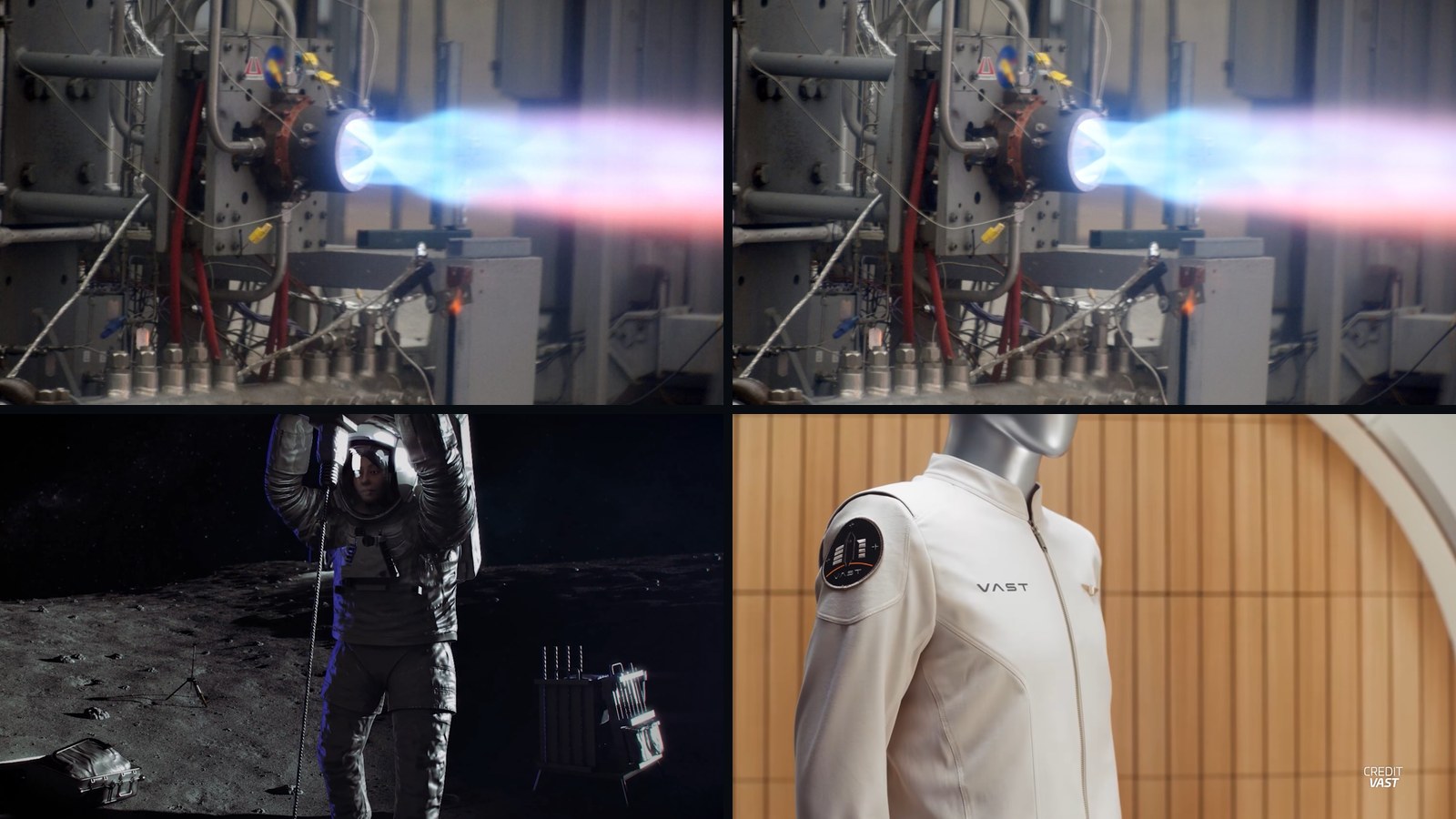
Summary: Commercial space station developer Vast has unveiled a professional-grade astronaut flight suit and a Large Docking Adapter designed for next-generation orbital infrastructure. While the flight suits prioritize operational utility and branding for the upcoming Haven-1 station, the adapter introduces a 2.9-meter pressurized opening, significantly expanding the diameter of current crewed docking ports. Vast intends to open-source the adapter standard next month to encourage industry-wide adoption. Haven-1’s launch has been adjusted to the first quarter of 2027.

Why it matters: The Large Docking Adapter addresses a critical engineering bottleneck by enabling the transfer of oversized cargo and modules that cannot fit through current International Docking Adapter (IDA) ports.
Context: Current orbital logistics rely on the 80cm IDA for crew and the 1.6m Common Berthing Mechanism for cargo, the latter of which requires robotic arm intervention rather than autonomous docking.
"Vast’s Large Docking Adapter addresses these constraints head-on with a dramatically larger 2.9-meter pressurized opening — more than triple the IDA’s diameter and substantially exceeding the CBM." — NASASPACEFLIGHT
Commentary: The move to open-source the docking standard is a strategic play to establish a de facto industry interface before the ISS retires in 2030. By designing for ‘Starship-scale’ volumes and the structural rigidity required for artificial gravity rotation, Vast is pivoting from a simple station provider to an infrastructure architect. The shift of Haven-1 to 2027 suggests a pragmatic recalibration of the integration timeline, though the hardware remains in active development.
Date: Sat, 18 Apr 2026 21:28:40 +0000
URL: https://www.nasaspaceflight.com/2026/04/vast-astronaut-flight-suit-docking-adapter/
AI Sentiment Score: Negative (50%)
AI Credibility Score: 8.2/10 — High
Scores and text generated by AI analysis of the source article indicated.
LLNL delivers advanced gamma-ray spectrometer for NASA’s … (Llnl.Gov)
Summary: Lawrence Livermore National Laboratory (LLNL) has delivered a specialized gamma-ray spectrometer to the Johns Hopkins Applied Physics Laboratory (APL). The hardware is a critical component of the Dragonfly Gamma-ray and Neutron Spectrometer (DraGNS) instrument suite. This delivery marks the transition of the instrument from the development phase into integration and testing. The rotorcraft mission is currently scheduled for a 2028 launch, with an arrival at Titan slated for 2034.

Why it matters: The delivery of flight-ready hardware signals a shift from theoretical design to operational verification for one of NASA’s most complex planetary mobility missions.
Context: Dragonfly represents the first NASA attempt at a multi-site aerial exploration mission on an extraterrestrial body since the 2005 Huygens landing.
"# LLNL delivers advanced gamma-ray spectrometer for NASA’s Dragonfly mission to explore Titan … The NASA Dragonfly mission is set to explore this world in unprecedented detail with a rotorcraft lander that." — LLNL.GOV
Commentary: Moving into the integration and testing phase is the primary risk-reduction milestone before the 2028 launch window. The use of a gamma-ray spectrometer allows for non-destructive elemental mapping of Titan’s surface, providing a chemical baseline for the rotorcraft’s targeted sampling. Success here validates the inter-agency pipeline between national laboratories and academic research hubs for deep-space instrumentation.
Date: April 24, 2026 12:00 AM ET
URL: https://www.llnl.gov/article/54241/llnl-delivers-advanced-gamma-ray-spectrometer-nasas-dragonfly-mission-explore-titan
AI Sentiment Score: Negative (57%)
AI Credibility Score: 10.0/10 — High
Scores and text generated by AI analysis of the source article indicated.
NASA’s April 2026 Report: Missions, Milestones and News (Theoceaniacables)
Summary: NASA has restructured the Artemis 3 mission, pivoting it from a lunar landing to an Earth-orbit demonstration to test integrated operations. Concurrently, the agency has approved the ROSA project to provide SpaceX Falcon Heavy launch services for ESA’s Rosalind Franklin rover in 2028. Other updates include the Dragonfly mission entering critical integration and the deployment of the IVGEN Mini fluid generation system to the ISS.

Why it matters: The deferral of the first crewed landing to Artemis 4 signals a shift in risk tolerance and a recognition of the technical hurdles in HLS integration.
Context: This realignment follows the successful Artemis II crewed flyby, moving the program from basic deep-space validation to complex orbital rendezvous testing.
"Artemis 3, originally planned as NASA’s return to the lunar surface, has been restructured as an Earth-orbit demonstration mission, with the lunar landing deferred to Artemis 4." — THEOCEANIACABLES
Commentary: Downgrading Artemis 3 to a demonstration mission is a pragmatic engineering signal that the Human Landing System (HLS) and Orion integration is not yet flight-ready for a surface mission. By decoupling the landing from the initial crewed return, NASA is prioritizing operational reliability over political timelines. The ROSA agreement further cements the reliance on commercial heavy-lift providers to sustain international planetary science goals.
Date: April 24, 2026 12:00 AM ET
URL: https://www.theoceaniacables.com/blog/nasas-april-2026-report-roman-telescope-launch-artemis-restructure-mars-organic-molecules-discovered-and-more/
AI Sentiment Score: Negative (50%)
AI Credibility Score: 7.0/10 — Medium
Scores and text generated by AI analysis of the source article indicated.
Progress 95 Cargo Craft Docks to Station with Food, Fuel, and Supplies (Nasa.Gov)
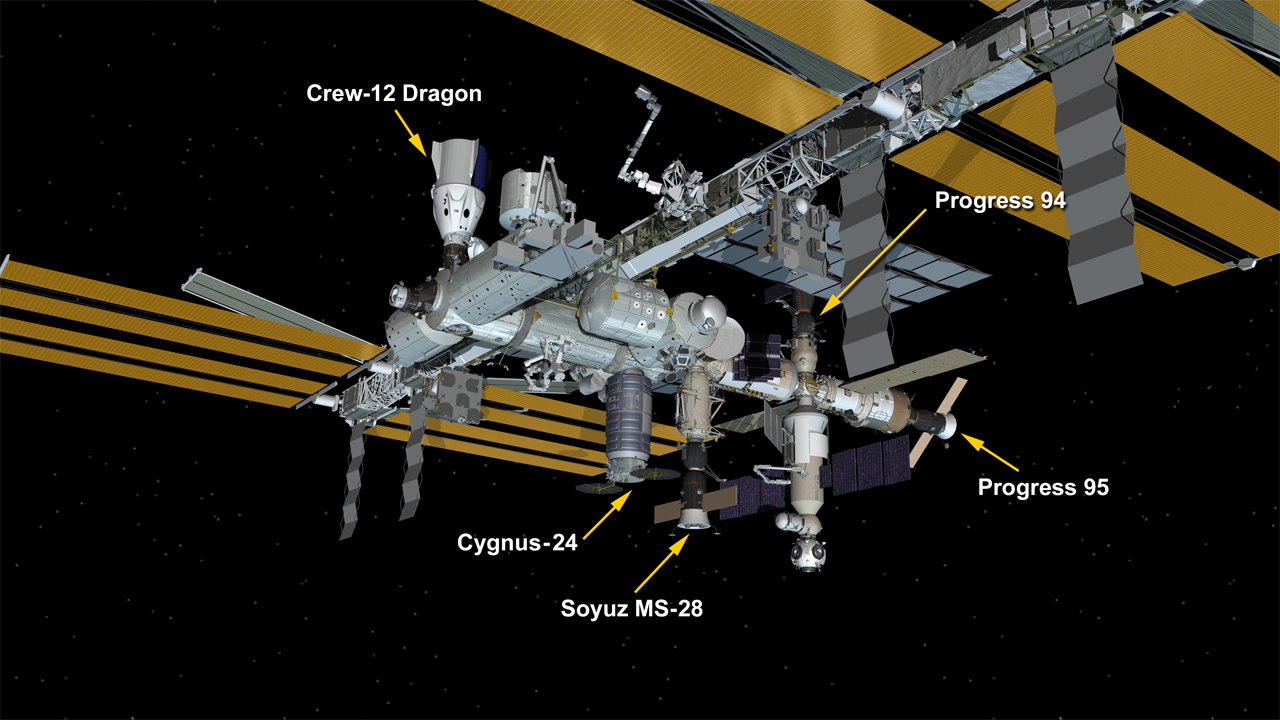
Summary: The Roscosmos Progress 95 cargo craft successfully docked with the International Space Station’s Zvezda module on Monday evening. The uncrewed vessel is transporting approximately three tons of fuel, food, and hardware to support the Expedition 74 crew. Following a six-month tenure, the craft will be used as a waste disposal vehicle for a destructive atmospheric re-entry.
Why it matters: Maintains the critical logistics chain and propellant levels required for station attitude control and crew sustainment.
Context: This represents the standard operational cadence of the Russian Orbital Segment’s resupply cycle.
"The spacecraft is delivering about three tons of food, fuel, and supplies for the Expedition 74 crew." — NASA.GOV
Commentary: The successful docking confirms the continued operational reliability of the Soyuz-Progress launch and docking sequence from Baikonur. While routine, the delivery of fuel to the Zvezda module is the primary engineering priority to prevent orbital decay. The six-month dwell time indicates a stable logistics schedule for the current expedition rotation.
Date: Tue, 28 Apr 2026 00:03:05 +0000
URL: https://www.nasa.gov/blogs/spacestation/2026/04/27/progress-95-cargo-craft-docks-to-station-with-food-fuel-and-supplies/
AI Sentiment Score: Negative (60%)
AI Credibility Score: 10.0/10 — High
Scores and text generated by AI analysis of the source article indicated.
Journal of Geophysical Research: Planets – Phys.org (Phys)
Summary: NASA’s Curiosity rover has identified a metal-rich hotspot in Gale Crater containing unprecedented concentrations of iron, manganese, and zinc. Simultaneously, researchers from NYU Abu Dhabi have presented evidence of ancient subsurface water flows. These findings suggest a more complex aqueous history for Mars than previously modeled.

Why it matters: The coexistence of these specific metals and evidence of prolonged subsurface hydration shifts the timeline for Martian habitability and identifies high-priority targets for future sample return missions.
Context: This follows a broader shift in Martian geology from studying surface runoff to analyzing deep-crustal hydrothermal and subsurface aqueous systems.
"### NASA’s Curiosity rover uncovers metal‑rich hotspot tied to ancient Martian lake A team of scientists using the ChemCam instrument on NASA’s Curiosity Mars rover has discovered the highest amounts of iron,." — PHYS
Commentary: The concentration of manganese and zinc is a critical geochemical marker; these elements often correlate with redox gradients essential for microbial metabolism. If subsurface water persisted longer than surface lakes, the search for biosignatures must pivot from sedimentary basins to deep-crustal conduits. This reinforces the necessity of drilling capabilities for future Mars missions.
Date: April 22, 2026 12:00 AM ET
URL: https://phys.org/journals/journal-of-geophysical-research-planets/
AI Sentiment Score: Positive (50%)
AI Credibility Score: 10.0/10 — High
Scores and text generated by AI analysis of the source article indicated.
MODIS Performance | MCST – NASA (Mcst.Gsfc.Nasa.Gov)
Summary: NASA’s Moderate Resolution Imaging Spectroradiometer (MODIS) continues to maintain high sensor performance through a redundant suite of on-board calibrators. The system utilizes a Solar Diffuser for visible and infrared bands, a Blackbody for thermal bands, and a Spectro-radiometric Calibration Assembly for spatial and spectral precision. To mitigate sensor drift, the instrument cross-references these internal tools against external stable targets, specifically the moon and deep space.

Why it matters: Radiometric stability is the prerequisite for long-term climate trend analysis; without precise calibration, sensor degradation could be mistaken for planetary environmental shifts.
Context: Space-borne sensors inevitably degrade due to radiation and thermal cycling, necessitating multi-modal calibration strategies to maintain data integrity over decades.
"The performance of the sensors and the on-board calibrators (the Solar Diffuser and its accompanying Solar Diffuser Stability Monitor, the Spectro-radiometric Calibration Assembly, the On-Board Calibrator Blackbody, and Space View port) have." — MCST.GSFC.NASA.GOV
Commentary: The reliance on the moon as a stable reflectance proxy highlights the inherent volatility of on-board hardware like the Solar Diffuser. By anchoring internal telemetry to an external, non-changing celestial body, NASA ensures the dataset remains scientifically viable for longitudinal studies. This layered redundancy is the only way to decouple instrument aging from actual atmospheric change.
Date: April 23, 2026 12:00 AM ET
URL: https://mcst.gsfc.nasa.gov/calibration/modis-performance
AI Sentiment Score: Negative (50%)
AI Credibility Score: 7.0/10 — Medium
Scores and text generated by AI analysis of the source article indicated.
Events for March 2026 – SpacePolicyOnline.com (Spacepolicyonline)
Summary: NASA’s Solar System Exploration Research Virtual Institute (SSERVI) is convening a Lunar Surface Science Workshop to analyze data from the initial Commercial Lunar Payload Services (CLPS) missions. The event focuses on sharing results from early deliveries and refining strategies for upcoming exploration activities. To date, the initiative has seen four missions from Astrobotic, Intuitive Machines, and Firefly.

Why it matters: The workshop serves as a critical operational audit of the CLPS model, determining if commercial delivery partnerships can reliably sustain scientific payloads.
Context: NASA is transitioning from direct procurement to a service-based model for lunar logistics, shifting risk to private providers.
"# LSSW: RESULTS FROM EARLY CLPS DELIVERIES & UPCOMING CLPS EXPL ACTIVITIES, Apr 22-23, 2026, 11:00 am-5:00 pm ET each day … Original Entry: NASA’s Solar System Exploration Research Virtual Institute (SSERVI)." — SPACEPOLICYONLINE
Commentary: A 25% success rate across the first four missions indicates a steep learning curve for commercial lunar landing. This workshop’s focus on ‘lessons learned’ suggests NASA is now quantifying the reliability gap between proposed capabilities and actual orbital-to-surface performance. The outcome will likely dictate the risk tolerance and insurance requirements for subsequent CLPS contracts.
Date: April 22, 2026 12:00 AM ET
URL: https://spacepolicyonline.com/events/lssw-results-from-early-clps-deliveries-upcoming-clps-expl-activities-jan-27-28-2026-1100-am-500-pm-et/
AI Sentiment Score: Negative (50%)
AI Credibility Score: 7.0/10 — Medium
Scores and text generated by AI analysis of the source article indicated.
Missing mission line-items (Planetary)
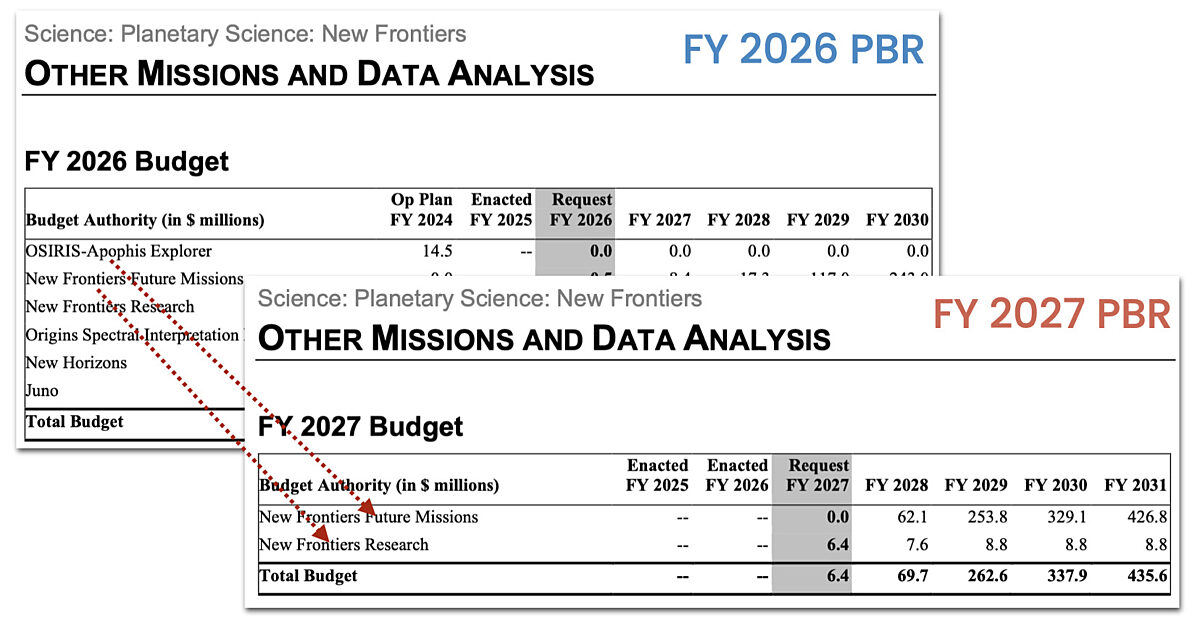
Summary: The FY 2027 Presidential Budget Request simply omits funding for science missions it intends to terminate, making it impossible to identify which missions… Budgetary omission obscures termination status, complicating long-term mission portfolio planning.
Why it matters: Budgetary omission obscures termination status, complicating long-term mission portfolio planning.
Context: Need clarity on which science missions are slated for defunding in the FY27 request.
"The FY 2027 Presidential Budget Request simply omits funding for science missions it intends to terminate, making it impossible to identify which missions…." — PLANETARY
Commentary: The signal is still worth tracking, but the current extraction path did not yield enough body text for a fuller analytical read. The immediate implication is operational rather than speculative: watch how this changes budgets, workflows, or risk assumptions over the next cycle.
Date: April 23, 2026 12:00 AM ET
URL: https://www.planetary.org/space-images/missing-mission-line-items
AI Sentiment Score: Neutral (50%)
AI Credibility Score: 7.0/10 — Medium
Scores and text generated by AI analysis of the source article indicated.
Post ID: 754af31f