Ancient World
Shocking Archaeological Discoveries in 2026 (Youtube)
Summary: A synthesis of 2026 archaeological findings, particularly from Eurasian sites like Kazakhstan, indicates that ancient human populations were more genetically diverse and interconnected than linear models suggest. Advanced DNA analysis reveals mixing with multiple groups, including Neanderthals and unidentified populations, while new excavation technologies uncover evidence of organized societies in regions previously considered empty. These discoveries collectively challenge the notion of a simple, progressive human history, pointing instead to cycles of development, collapse, and reinvention.

Why it matters: This recalibration of historical narrative directly impacts academic paradigms, museum curation, and public understanding of human origins, shifting focus from linear progress to complex adaptation.
Context: The field has been moving away from unilinear evolutionary models for decades, but recent technological leaps in genetic sequencing and remote sensing are providing concrete, disruptive evidence at an accelerating pace.
"In 2026, archaeologists made discoveries that shocked the world. Ancient cities, lost artifacts, and secrets buried for thousands of years. Some of these findings could change everything we know about history. ." — YOUTUBE
Commentary: The operational consequence is a methodological pivot: institutions like the Max Planck Institute for Evolutionary Anthropology must now model ‘admixture graphs’ rather than simple trees, while cultural heritage bodies in Central Asia face pressure to rapidly reassess site significance. This isn’t merely adding detail; it’s a structural challenge to the civilizational narratives underpinning both national histories and popular science, demanding a more probabilistic and less teleological public discourse.
Date: April 26, 2026 12:00 AM ET
URL: https://www.youtube.com/watch?v=rcz6Sxtwg2w
AI Sentiment Score: Negative (50%)
AI Credibility Score: 10.0/10 — High
Scores and text generated by AI analysis of the source article indicated.
Greece Recovers Five Ancient Artifacts From Chicago Family in … (Iefimerida.Gr)
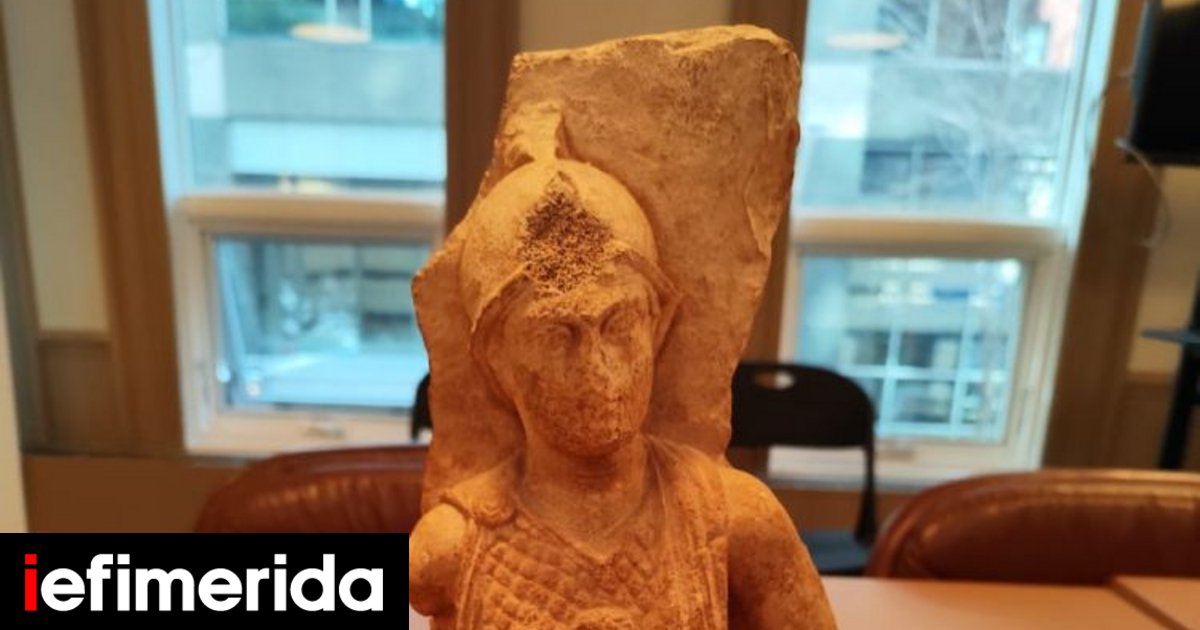
Summary: Greece has recovered five ancient artifacts from a Chicago family through a voluntary repatriation ceremony at its consulate. The pieces, acquired by Richard and Mary L. Gray in the 1970s and 1980s, include Athenian black-figure vases, a bronze mirror, a marble statue of Hermes, and a relief of Athena. Their children initiated the transfer in May 2025. Culture Minister Lina Mendoni framed the action as part of a broader campaign against cultural theft.
Why it matters: This illustrates a shift in repatriation tactics from adversarial legal action to leveraging private diplomacy and voluntary surrender, altering the calculus for collectors and institutions.
Context: Greece has repatriated over 200 objects from 17 countries in recent years, employing a mix of legal, diplomatic, and voluntary methods.
"Mrs. Mendoni said Greece has now repatriated more than 200 historical objects from 17 countries in recent years through a combination of legal action, diplomatic pressure and voluntary surrenders." — IEFIMERIDA.GR
Commentary: The Gray family’s voluntary surrender, framed as an alliance against theft, represents a strategic normalization of repatriation. It moves the process from courtroom drama to consulate ceremony, reducing reputational risk for donors and expanding Greece’s operational toolkit. This soft-power approach, accumulating over 200 objects, pressures other private holders by establishing a new, socially sanctioned pathway for return.
Date: April 22, 2026 12:00 AM ET
URL: https://www.iefimerida.gr/english/greece-recovers-five-ancient-artifacts-chicago-family-voluntary-repatriation
AI Sentiment Score: Negative (75%)
AI Credibility Score: 7.0/10 — Medium
Scores and text generated by AI analysis of the source article indicated.
Navigating the ethics of ancient human DNA research – ASBMB (Asbmb)
Summary: The 2022 Nobel Prize in Physiology or Medicine has accelerated the field of paleogenomics, raising its profile and its ethical stakes. Research using ancient human DNA has yielded significant insights into migration, immunity, and adaptation, but operates in a regulatory gray area where traditional informed consent is impossible. The core ethical challenge is navigating the absence of consent from the ancestors studied and the frequent exclusion of their living descendant communities from the research process.
Why it matters: This debate redefines the ethical framework for historical inquiry, shifting authority from purely academic institutions to include descendant communities and forcing a reckoning with the colonial legacy of archaeology.
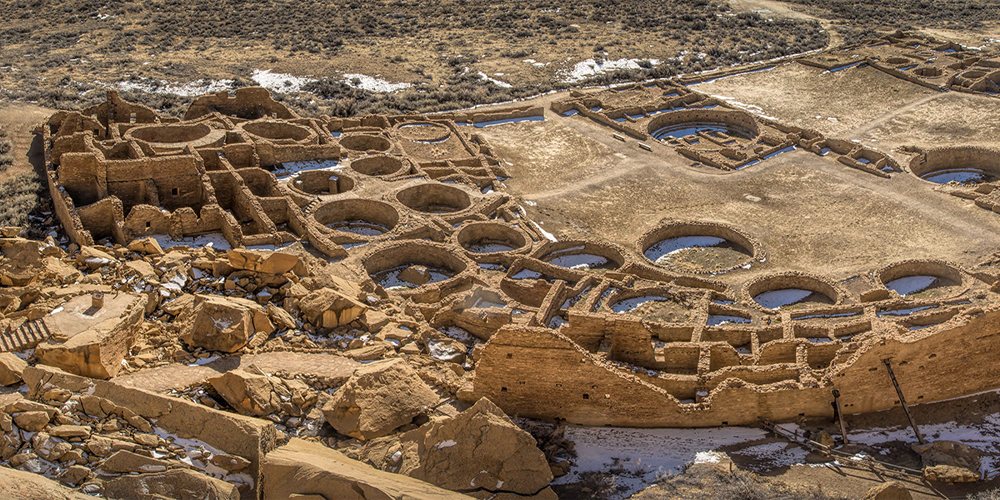
Context: This follows high-profile controversies, such as the 2018 study of Puebloan and Diné ancestors, which lacked tribal consultation and sparked fierce criticism, highlighting a systemic failure in the field’s standard practices.
"The 2022 Nobel Prize in physiology and medicine has brought fresh attention to paleogenomics, the sequencing of DNA of ancient specimens. … The study of ancient DNA has also shed light on." — ASBMB
Commentary: The emerging ethical model, framed as a ‘restorative-justice approach,’ represents a fundamental power shift. It moves from extraction to partnership, potentially slowing research timelines but increasing its legitimacy and social value. This could reshape grant requirements, museum repatriation policies, and the very composition of research teams, embedding community oversight as a prerequisite for access to genetic heritage.
Date: April 21, 2026 12:00 AM ET
URL: https://www.asbmb.org/asbmb-today/science/021123/ethics-of-ancient-human-dna-research
AI Sentiment Score: Negative (71%)
AI Credibility Score: 8.4/10 — High
Scores and text generated by AI analysis of the source article indicated.
Breathing in the Past: How Museums can use Biomolecular … (Gea.Mpg.De)
Summary: A research team at the Max Planck Institute of Geoanthropology is developing methods to extract and analyze volatile organic compounds from archaeological artifacts, enabling the reconstruction of ancient scents. This biomolecular archaeology approach moves beyond visual and tactile museum displays to incorporate olfactory experiences. The work focuses on identifying scent molecules preserved in pottery, textiles, and burial contexts, linking them to specific materials, practices, and environments.

Why it matters: This shifts museum curation from a static visual paradigm to a multisensory historical engagement, potentially altering public understanding of daily life, ritual, and trade in ancient societies.
Context: Archaeology has increasingly integrated biomolecular techniques (lipid analysis, DNA) for diet and disease, but the volatile organic compound profile of artifacts—their scent—has remained a largely untapped reservoir of cultural data.
"Breathing in the Past: How Museums can use Biomolecular Archaeology to Bring Ancient Scents to Life." — GEA.MPG.DE
Commentary: Operationalizing ancient scents forces museums to confront the ephemeral yet pervasive aspects of past environments—the smell of a marketplace, a ritual incense, or a workshop. This introduces a new vector for authenticity debates and ethical display, as reconstructed scents could be as culturally loaded as reconstructed artifacts. For researchers, it creates a direct link to non-textual sensory memory, offering a way to interrogate trade (via imported resins), social stratification (via access to rare aromatics), and ritual practice with a specificity previously limited to textual or pictorial evidence.
Date: April 22, 2026 12:00 AM ET
URL: https://www.gea.mpg.de/publication-search/196255?person=%2Fpersons%2Fresource%2Fpersons247987
AI Sentiment Score: Negative (75%)
AI Credibility Score: 10.0/10 — High
Scores and text generated by AI analysis of the source article indicated.
Applications and research advances of the ancient plant … (Pubmed.Ncbi.Nlm.Nih.Gov)
Summary: A review article highlights the methodological maturation of ancient DNA (aDNA) analysis as it is systematically applied to plant research. The field is moving beyond its foundational focus on humans and animals to establish standardized protocols for extracting, sequencing, and interpreting genetic material from preserved botanical specimens. This shift represents a technical and conceptual expansion, enabling direct interrogation of plant domestication, agricultural spread, and paleoenvironmental reconstruction.

Why it matters: The systematization of plant aDNA research provides a new, direct evidentiary stream for understanding agricultural revolutions, trade networks, and human-environment interactions, challenging and refining narratives previously built on archaeology and modern genetics alone.
Context: Ancient DNA has revolutionized paleogenomics, but its application has been historically skewed toward well-preserved faunal and human remains. Plant materials present distinct preservation and contamination challenges, making methodological rigor paramount for credible results.
"With the rapid development of ancient DNA extraction, library construction, and sequencing techniques, ancient DNA technology is increasingly contributing to plant research and is gradually developing into a standardized and systematic research area." — PUBMED.NCBI.NLM.NIH.GOV
Commentary: The operational shift from ad-hoc studies to a ‘standardized and systematic’ discipline signals a move from proof-of-concept to robust, reproducible science. This lowers the barrier for archaeological and botanical teams to integrate genetic data, promising a more granular understanding of crop dispersal timelines, the genetic bottlenecks of domestication, and the ecological impact of ancient societies. The key implication is the potential to resolve long-standing debates about independent invention versus cultural diffusion in agricultural history by providing a direct, chronological genetic ledger.
Date: April 20, 2026 12:00 AM ET
URL: https://pubmed.ncbi.nlm.nih.gov/41992885/
AI Sentiment Score: Negative (50%)
AI Credibility Score: 10.0/10 — High
Scores and text generated by AI analysis of the source article indicated.
Post ID: a8b70e5a