Circular Fashion & Textile Recycling
Circular Economy – The Fashion Pact (Thefashionpact)
Summary: The Circular Fibre Collective, a new initiative from The Fashion Pact and Fashion for Good, aims to break the ‘chicken-and-egg’ stalemate hindering textile-to-textile recycling. It will aggregate voluntary brand demand, develop adoption tools, and explore policy to signal the market and unlock financing for scaling. The effort targets 13 million tonnes of next-gen and T2T material needed by 2030, starting with priority materials and regional cohorts.

Why it matters: For brands and suppliers, this initiative represents a concrete, if voluntary, mechanism to de-risk investment in circular materials and pre-comply with looming regulations like ESPR, directly affecting sourcing strategy and capital allocation.
Context: This follows years of industry pledges and reports, like Fashion for Good and BCG’s 2025 analysis, which identified the scale of the supply-demand gap but failed to mobilize coordinated action.
"Despite growing regulatory pressure and brand commitments, the transition to textile-to-textile (T2T) recycled and next-generation fibres remains stalled. Significant barriers continue to hinder progress at scale, including fragmented demand, insufficient financing, and." — THEFASHIONPACT
Commentary: The Collective’s focus on voluntary aggregated demand and practical tools like the T2T Cohorts is a tacit admission that neither regulation nor corporate goodwill alone can build the necessary infrastructure. Its success hinges on converting this facilitated collaboration into binding offtake agreements that give recyclers the confidence to scale. For material innovators and recycling operators, this could finally provide the demand signal needed for project financing, but the non-binding nature of initial commitments leaves the fundamental risk unaddressed.
Date: April 21, 2026 12:00 AM ET
URL: https://www.thefashionpact.org/area-of-action/circular-economy/
AI Sentiment Score: Negative (57%)
AI Credibility Score: 10.0/10 — High
Scores and text generated by AI analysis of the source article indicated.
A new textile-to-textile recycling process validated on an industrial scale (Prnewswire)
Summary: A consortium of Axens, IFPEN, and JEPLAN has successfully validated their Rewind® PET chemical recycling process for polyester textiles at a semi-industrial scale of 1,000 tons per year. Using tens of tons of post-consumer textile waste sourced from France, processed in Japan, the test produced the BHET monomer for new polyester yarns and fabrics. This marks one of the first demonstrations of textile-to-textile recycling under representative industrial conditions.
Why it matters: This validation provides a concrete, scalable pathway for brands and manufacturers to close the loop on polyester, directly impacting material sourcing strategies and waste reduction targets.
Context: Textile-to-textile recycling, particularly for blended post-consumer waste, has been a major bottleneck for circular fashion, with most current recycling being downcycling or reliant on virgin feedstocks.
"AXENS, IFPEN and JEPLAN have completed a recycling loop for polyester textiles. PARIS, April 21, 2026 /PRNewswire/ — Several tens of tons of post-consumer, polyester-rich, European textile wastes, sorted and prepared in." — PRNEWSWIRE
Commentary: The operational consequence is a near-term shift in procurement and waste logistics for major polyester consumers like sportswear and luxury brands. By licensing a proven technology for retrofit into existing polyester production sites, the model enables regional recycling loops, altering supply chain geography and reducing dependency on fossil-based or bottle-grade PET feedstocks. This moves circularity from a design constraint to a manufacturing and sourcing variable, with tangible impacts on traceability and production waste volumes.
Date: April 21, 2026 12:00 AM ET
URL: https://www.prnewswire.com/news-releases/a-new-textile-to-textile-recycling-process-validated-on-an-industrial-scale-302748535.html
AI Sentiment Score: Negative (87%)
AI Credibility Score: 10.0/10 — High
Scores and text generated by AI analysis of the source article indicated.
Harnest launches scalable circular trims platform with … (Textilefocus)
Summary: Harnest, a major Bangladeshi manufacturer, has launched the Responsible Trims Collection, a platform integrating recycled and biodegradable trims, threads, and accessories from five materials innovators. The initiative directly targets a critical bottleneck: trims constitute over 40% of a garment’s bill of materials and are a major barrier to textile recycling. By embedding these alternative materials into its existing Tier 2/3 manufacturing operations, Harnest aims to close the gap between material innovation and industrial-scale production.

Why it matters: This directly addresses a persistent operational constraint for brands pursuing circularity, moving the challenge from R&D to the production line, where cost, scale, and integration determine real-world adoption.
Context: Circular fashion efforts have historically focused on primary fabrics, leaving trims—threads, elastics, labels—as a largely unaddressed contaminant in recycling streams, with fewer than 1% of global textiles currently sourced from recycled fiber.
"Dhaka / London. 21 April 2026. Trims account for more than 40% of a garment’s bill of materials and remain one of the least-addressed barriers to textile recycling. Today, fewer than 1%." — TEXTILEFOCUS
Commentary: Harnest’s platform shifts the circularity conversation from speculative innovation to supply chain integration, forcing brands to audit their entire bill of materials. For sourcing and sustainability teams, this creates a new, concrete vendor option that reduces the procurement and validation burden for compliant trims. The vertical integration model suggests that future circular compliance may be enforced less by brand mandates and more by manufacturer-led platform offerings, reshaping power dynamics in the supply chain.
Date: April 23, 2026 12:00 AM ET
URL: https://textilefocus.com/harnest-launches-scalable-circular-trims-platform-with-oceansafe-ambercycle-blocktexx-indorama-ventures-and-jairun/
AI Sentiment Score: Negative (66%)
AI Credibility Score: 7.0/10 — Medium
Scores and text generated by AI analysis of the source article indicated.
Circular Fibre Collective Launches to Scale T2T Fibres (Globaltextiletimes)
Summary: The Circular Fibre Collective, a collaboration between The Fashion Pact, Fashion for Good, and the Ellen MacArthur Foundation, has launched to address the commercial scaling barriers for textile-to-textile recycled and next-generation fibres. It aims to aggregate brand demand, test financing models, map supply, and provide practical adoption tools to convert corporate commitments into bankable volumes. The initiative responds to fragmented demand, uncertain pricing, and limited recycling infrastructure that have kept these materials in pilot phases.
Why it matters: For supply chain managers and sustainability leads, this creates a structured pathway to de-risk procurement of next-generation fibres, potentially altering cost curves and capacity planning.
Context: Despite regulatory pressure and brand targets, recycled fibre adoption has been hampered by a chicken-and-egg problem between insufficient demand and underdeveloped supply infrastructure.
"The partners say the programme offers a structured route for brands and suppliers to coordinate decisions that are difficult to make in isolation particularly when volumes are small, pricing is uncertain and supply remains uneven." — GLOBALTEXTILETIMES
Commentary: The Collective’s focus on aggregated demand and financing models directly targets the capital expenditure hesitation in recycling plant development. If successful, it could shift the procurement timeline for brands, making multi-year offtake agreements more feasible and reducing the per-unit cost premium for recycled content. This operationalizes circularity targets into contractible supply chain actions.
Date: April 23, 2026 12:00 AM ET
URL: https://www.globaltextiletimes.com/sustainability/circular-fibre-collective-launches-to-scale-t2t-fibres/
AI Sentiment Score: Negative (71%)
AI Credibility Score: 7.0/10 — Medium
Scores and text generated by AI analysis of the source article indicated.
Circular Fibre Collective launches to push T2T material adoption (Just-Style)
Summary: The Circular Fibre Collective, a new consortium led by The Fashion Pact and Fashion for Good with strategic input from The Ellen MacArthur Foundation, has launched to address systemic barriers to scaling textile-to-textile (T2T) recycled and next-generation fibres. The group’s structured framework targets fragmented demand, insufficient financing, and underdeveloped recycling infrastructure, which have kept T2T materials at a minor share of global fibre production despite regulatory and brand pressure. Its operational focus includes aggregating voluntary demand, exploring financial mechanisms, mapping supply, and providing practical adoption tools like the Fiber Club and support cohorts.
Why it matters: This initiative directly targets the commercial and operational bottlenecks that have stalled T2T fibre adoption, moving from pledges to a coordinated implementation playbook for brands and suppliers.
Context: This follows years of industry pledges and regulatory pressure failing to materially shift fibre sourcing, with research from BCG and Fashion for Good indicating a potential 8% market share by 2030 if collaboration succeeds.
"Analysis from Boston Consulting Group and Fashion for Good suggests that, with effective collaboration, the capacity for these fibres could reach up to two million tonnes and account for about 8% of global production by 2030." — JUST-STYLE
Commentary: The Collective’s formation signals a shift from fragmented, brand-level sustainability efforts to a coordinated industry utility focused on pooled demand and shared risk. For practitioners, this creates a centralized channel for accessing pre-vetted supply, financial structures, and adoption toolkits, potentially lowering the transaction costs and commercial uncertainty that have deterred individual brands. Its success hinges on converting voluntary CEO-level commitments into binding offtake agreements that can de-risk the capital investments needed in recycling infrastructure. If effective, it could finally create a reliable, scaled pipeline for T2T materials, altering sourcing timelines and cost structures for participating brands.
Date: April 21, 2026 12:00 AM ET
URL: https://www.just-style.com/news/circular-fibre-collective-textile-material/
AI Sentiment Score: Negative (70%)
AI Credibility Score: 9.8/10 — High
Scores and text generated by AI analysis of the source article indicated.
Nature of Fashion Pilot Projects (Biomimicry)
Summary: The Nature of Fashion initiative is piloting regionally specific models for handling low-value, mixed textile waste—the ‘bottom fraction’ destined for landfill or incineration. In the Netherlands, Circle Economy is leading a consortium exploring integrated biological and thermochemical processes to convert this waste into regenerative outputs, aiming to create a regional circular ecosystem. In Germany, the Beneficial Design Institute is collaborating with Fraunhofer institutes to develop biotechnological processes for transforming waste into high-quality, biocompatible materials. A parallel pilot in Ghana focuses on ecological restoration and community stewardship, applying a different, locally attuned operational model.

Why it matters: For brands, manufacturers, and waste managers, these pilots represent concrete, scalable alternatives to incineration and landfill, directly impacting waste handling costs, material sourcing, and compliance with tightening EU regulations on textile waste.
Context: The fashion industry faces mounting regulatory and consumer pressure to address post-consumer textile waste, particularly the non-reusable, mixed-material fraction that constitutes most recycling challenges.
"The Nature of Fashion initiative is transforming textile waste management by learning from nature’s strategies of decomposition and regeneration. Through innovative pilot projects across three continents, we’re demonstrating how the fashion industry." — BIOMIMICRY
Commentary: The operational consequence is a bifurcation in waste strategy: European pilots are building high-tech, regional industrial infrastructure, while the Ghana model suggests a path focused on land restoration and local labor. This forces brands to choose between investing in capital-intensive biorefineries closer to home or supporting decentralized, nature-based solutions in Global South waste-receiving regions. The success of either model could reshape vendor relationships for waste handlers and material suppliers.
Date: April 20, 2026 12:00 AM ET
URL: https://biomimicry.org/innovation/nature-of-fashion/pilot-projects/
AI Sentiment Score: Negative (72%)
AI Credibility Score: 9.8/10 — High
Scores and text generated by AI analysis of the source article indicated.
6 Best Carbon Accounting Software For Fashion & Textiles (Greenstitch.Io)
Summary: Greenstitch.io’s review of carbon accounting software for fashion establishes a vendor-agnostic evaluation framework weighted toward supply chain depth, product-level LCA, and regulatory readiness. It positions its own platform as a ‘Carbon ERP’ designed for multi-tier traceability and textile-specific gap-filling, while categorizing competitors like Watershed and Persefoni by their disclosure and compliance strengths.

Why it matters: For fashion operations managers and sustainability leads, software selection now directly dictates the cost and feasibility of compliance with CSRD, CBAM, and DPP mandates, requiring a tool that integrates with existing ERP/PLM data pipelines.
Context: Carbon accounting is shifting from voluntary reporting to a regulated, audit-grade function, with fashion’s complex, multi-tier supply chains presenting a unique data-collection challenge.
"|Criterion|Why it matters for fashion|Weight| |–|–|–| |Industry Specialisation|Textile-specific emission factors, supply chain structure, fibre databases|20%| |Scope 3 & Supply Chain Depth|80–96% of fashion emissions are Scope 3 — accuracy here is everything|20%|." — GREENSTITCH.IO
Commentary: The review’s criteria matrix formalizes the operational burden: brands must now procure software that functions as a supply-chain mapping and primary data collection engine, not just a calculator. This creates a new vendor evaluation and integration workload for technical teams, with ‘textile-specific’ gap-filling becoming a key differentiator over generic sustainability platforms. The framing as ‘Carbon ERP’ signals a shift from standalone reporting to a core operational system tied to PLM and logistics data.
Date: April 23, 2026 12:00 AM ET
URL: https://greenstitch.io/blogs/best-carbon-accounting-software/
AI Sentiment Score: Negative (83%)
AI Credibility Score: 7.0/10 — Medium
Scores and text generated by AI analysis of the source article indicated.
Carbon Emissions Management Software | Scope 3 … – IntegrityNext (Integritynext)
Summary: IntegrityNext is marketing a carbon emissions management platform focused on Scope 3 supply chain data. It centralizes collection of Scope 1, 2, and 3 emissions from suppliers and internal units, automates Product Carbon Footprint (PCF) calculations, and tracks progress toward Science Based Targets. The platform also includes a dedicated module for Carbon Border Adjustment Mechanism (CBAM) compliance, automating data collection and report generation for the EU Transitional Registry.

Why it matters: For fashion brands and manufacturers, this represents a shift from voluntary reporting to a mandatory, tool-driven compliance and sourcing workflow, directly impacting vendor relationships and cost structures.
Context: Scope 3 emissions, particularly from raw materials and manufacturing, constitute the majority of a fashion brand’s carbon footprint, but data collection has been fragmented and manual. Regulatory pressure from CBAM and investor demands for SBTi alignment are forcing systematization.
"Create full transparency on supply chain emissions and Corporate Carbon Footprints (CCF), engage suppliers to reduce carbon impact, and drive measurable progress toward Science Based Targets (SBTi) and broader climate goals. ." — INTEGRITYNEXT
Commentary: The platform’s explicit CBAM module signals that carbon accounting is no longer a CSR exercise but a core operational and financial compliance function. For procurement teams, this means supplier contracts will increasingly require data submission through such platforms, altering negotiation leverage and adding a new layer of administrative burden for vendors. The automation of PCF calculation lowers the barrier for supplier participation but also centralizes brand control over product-level emissions data, potentially reshaping sourcing decisions and design-for-sustainability workflows.
Date: April 22, 2026 12:00 AM ET
URL: https://www.integritynext.com/carbon-emissions
AI Sentiment Score: Negative (80%)
AI Credibility Score: 7.0/10 — Medium
Scores and text generated by AI analysis of the source article indicated.
Ege Üniversitesi sürdürülebilir tekstiller için uluslararası GreenTEX projesinde (Textilegence)
Summary: Ege University in Turkey is joining Germany’s Hochschule Niederrhein University and Italy’s ETN School in the EU-funded GreenTEX project. The initiative aims to develop green skills and modernize vocational training curricula for the textile industry with a sustainability focus. The project launch meeting was hosted by the German coordinating institution.

Why it matters: For manufacturers and brands, this signals a shift in the skilled labor pool towards standardized, EU-aligned sustainable practices, which will affect supplier training requirements and compliance costs.
Context: EU policy is increasingly driving harmonization of sustainability standards in textile manufacturing, creating pressure on global supply chains to adopt certified training and processes.
"Tekstil sektöründe yeşil becerilerin geliştirilmesi ve mesleki eğitim müfredatlarının sürdürülebilirlik odağında modernize edilmesini hedefleyen projenin açılış toplantısı, proje koordinatörü Almanya Hochschule Niederrhein Üniversitesi ev sahipliğinde gerçekleştirildi." — TEXTILEGENCE
Commentary: This is a pipeline intervention: it will produce a cohort of technicians and managers trained in a common EU framework, reducing friction for brands sourcing from these regions but also creating a new de facto compliance benchmark. Manufacturers outside this training network may face steeper costs to suggest equivalent sustainable practices to European buyers.
Date: Tue, 21 Apr 2026 12:55:18 +0000
URL: https://www.textilegence.com/ege-universitesi-surdurulebilir-tekstiller-icin-uluslararasi-greentex-projesinde/
AI Sentiment Score: Negative (66%)
AI Credibility Score: 10.0/10 — High
Scores and text generated by AI analysis of the source article indicated.
e‑FLOWER Project Accelerates Future Growth of Green E‑Textiles (Tyndall.Ie)
Summary: The e-FLOWER project, an EU-funded research initiative led by Tyndall National Institute, aims to develop industrial-scale production methods for sustainable electronic textiles. It focuses on integrating bio-based adhesives, modular architectures, and energy-efficient printing to create wearable sensors for health, sports, and extreme environments. The explicit goal is to overcome current technological and environmental barriers to enable scalable, circular e-textile manufacturing within Europe.
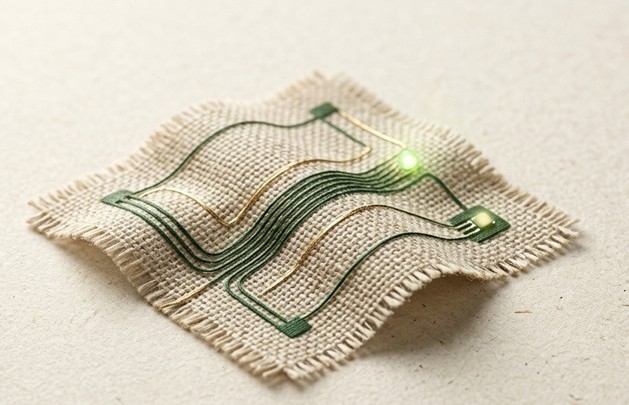
Why it matters: For manufacturers and brands, this signals a coming shift in the supply chain for smart apparel, moving from prototype-level, hard-to-recycle assemblies toward modular, repairable systems that could lower long-term production costs and waste.
Context: E-textiles have struggled with scalability, durability in wash cycles, and end-of-life recyclability, often relying on petrochemical-based components and non-modular designs that hinder circularity.
"Tyndall National Institute, based at University College Cork, is proud to announce the launch of eFLOWER, a major new EU funded research initiative that will develop the next generation of sustainable, high." — TYNDALL.IE
Commentary: The project’s focus on bio-based adhesives and modular architectures directly targets two major operational pain points: the environmental cost of current bonding materials and the high failure rates that render entire garments unusable. If successful, this could reduce digital sampling costs for performance wearables and lower return rates due to product longevity, while creating a new vendor ecosystem around repairable textile electronics. The emphasis on SSbD principles from the outset suggests future EU regulatory frameworks may mandate such designs, forcing brands to adapt their development pipelines.
Date: April 23, 2026 12:00 AM ET
URL: https://www.tyndall.ie/news/e-flower-project-accelerates-future-growth-of-green-e-textiles/
AI Sentiment Score: Negative (77%)
AI Credibility Score: 7.0/10 — Medium
Scores and text generated by AI analysis of the source article indicated.
Revolutionizing Fashion: The Impact of DTi on the Industry (Dev.What.It.Is)
Summary: Digital Twin technology (DTi) is being adopted to create virtual garment replicas, enabling simulation and testing before physical production. This shift reduces reliance on physical prototypes, aiming to cut waste, accelerate design cycles, and improve sustainability. The article outlines a workflow from CAD creation through simulation to iteration, while noting challenges around data quality and scalability for smaller firms.

Why it matters: For fashion practitioners, DTi directly alters the prototyping budget, material waste metrics, and cross-departmental collaboration mechanics, making it a core operational change rather than a speculative trend.
Context: The move from physical to digital sampling is an ongoing industry pivot, driven by cost pressure and sustainability mandates, with DTi representing a maturation of 3D design tools into full production pipelines.
""With Digital Twin, we can test and perfect our designs in a completely digital environment, reducing the need for physical prototypes and minimizing errors," explains Emma Taylor, a senior designer at a leading fashion brand." — DEV.WHAT.IT.IS
Commentary: The operational consequence is a reallocation of labor from sample-room technicians to 3D modelers and simulation analysts. For vendors, this pressures fabric mills to provide digitally accurate material properties, and for brands, it shifts cost from physical waste to software and data-integration overhead. The scalability constraint means fast-fashion giants will leverage it for throughput, while independent designers may face a new tooling barrier to entry.
Date: April 25, 2026 12:00 AM ET
URL: https://dev.what.it.is/dev/revolutionizing-fashion-the-impact-of-dti-on-the-industry
AI Sentiment Score: Negative (87%)
AI Credibility Score: 10.0/10 — High
Scores and text generated by AI analysis of the source article indicated.
Post ID: a8d63b49