
Dementia Research Challenges & Community Insights
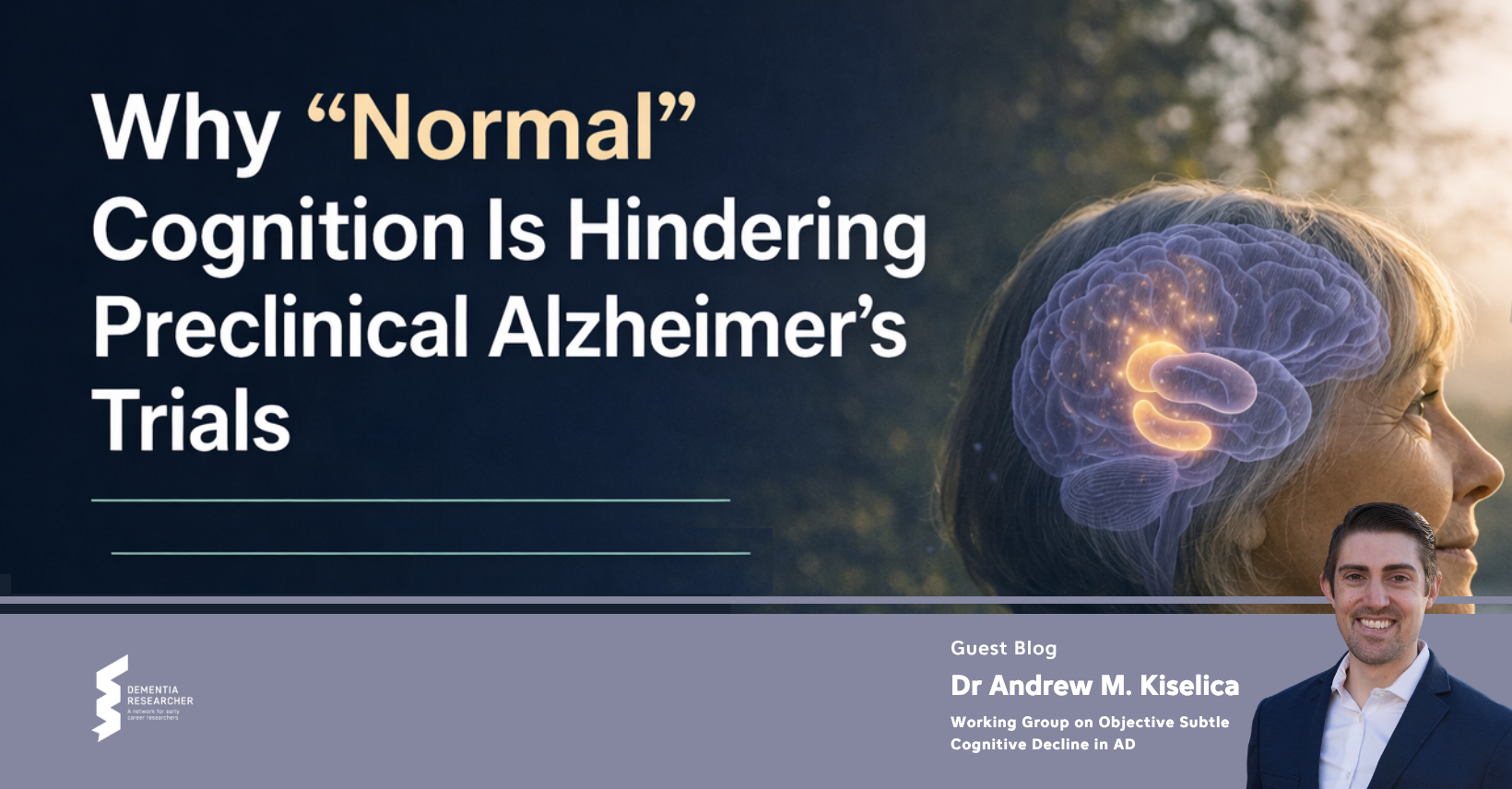
Blog – Why “Normal” Cognition Is Hindering Preclinical Alzheimer’s Trials (Dementiaresearcher.Nihr.Ac.Uk)
Summary: Preclinical Alzheimer’s trials targeting amyloid-positive but cognitively unimpaired individuals have repeatedly failed, most notably the A4 solanezumab trial. The article argues this failure stems from treating ‘cognitively normal’ as a monolithic group, masking significant phenotypic heterogeneity. Data shows over 40% of amyloid-positive, unimpaired individuals exhibit subtle symptoms—subjective complaints, objective low scores, or neurobehavioral issues—and these subgroups show markedly faster progression. The core proposal is to refine trial recruitment by selecting only those with measurable objective subtle cognitive decline, using digital assessments and novel psychometrics, to increase the signal for detecting treatment effects.
Why it matters: This directly challenges the recruitment paradigm for multi-billion-dollar prevention trials, proposing a methodologically sharper, more stratified approach that could salvage the search for disease-modifying therapies.
Context: The field is grappling with a series of negative prevention trials (A4, ADAPT, GEM) despite targeting diverse pathways, raising fundamental questions about trial design and the preclinical disease model.
"The Great White Whale in Alzheimer’s disease research is a drug that prevents cognitively unimpaired people with elevated levels of amyloid from developing frank cognitive impairment or dementia. In 2025, there were." — DEMENTIARESEARCHER.NIHR.AC.UK
Commentary: This shifts the failure narrative from biological target futility to operational blindness in trial design. Implementing this stratification would shrink eligible pools but increase statistical power, forcing sponsors to adopt digital phenotyping and accept slower recruitment for clearer outcomes. It also creates a tiered risk model for preclinical AD, with implications for clinical counseling and biomarker interpretation beyond trials.
Date: Wed, 15 Apr 2026 19:30:16 +0000
URL: https://www.dementiaresearcher.nihr.ac.uk/blog-why-normal-cognition-is-hindering-preclinical-alzheimers-trials/
AI Sentiment Score: Negative (77%)
AI Credibility Score: 10.0/10 — High
Scores and text generated by AI analysis of the source article indicated.
Blog – No Care Homes Left Out in Dementia Research (Dementiaresearcher.Nihr.Ac.Uk)
Summary: ENRICH Scotland’s Clinical Studies Officer details successful remote engagement with care homes on Scottish islands for dementia research, overcoming geographic barriers through virtual methods post-COVID. The initiative reveals high enthusiasm among island care home managers and staff, who participate in studies like music provision research and dementia training via board games delivered over Teams. The engagement uncovered that rural communities face a ‘covert exclusion’ from research not through formal criteria but via practical barriers like travel costs and feasibility, leading to underrepresentation of their unique insights, such as delayed diagnoses and staff with broad, generalist knowledge due to lack of specialists.

Why it matters: It demonstrates that inclusive dementia research is operationally achievable and methodologically vital, as excluding remote populations skews the evidence base and overlooks critical insights from resource-constrained settings.
Context: Dementia research has historically struggled with recruitment in care homes, with remote and rural settings often systematically excluded due to logistical and cost constraints, despite potentially distinct care pathways and challenges.
"ENRICH (ENabling Research in Care Homes) Scotland works to ensure that care home residents, relatives and staff across Scotland have the opportunity to take part in research, regardless of where they live." — DEMENTIARESEARCHER.NIHR.AC.UK
Commentary: The ENRICH model operationalizes a shift from viewing these settings as ‘hard-to-reach’ to seeing them as ‘requiring-flexible-approaches,’ a crucial reframe for funders and ethics boards. The documented insights—like community-funded CT scanners and staff acting as generalists—constitute a unique data stratum that challenges urban-centric service models. For research integrity, this argues for budgeting virtual engagement as a core cost, not an add-on, to prevent geographic bias from becoming an invisible confounder in dementia evidence.
Date: Sat, 18 Apr 2026 08:00:18 +0000
URL: https://www.dementiaresearcher.nihr.ac.uk/blog-no-care-homes-left-out-in-dementia-research/
AI Sentiment Score: Negative (85%)
AI Credibility Score: 10.0/10 — High
Scores and text generated by AI analysis of the source article indicated.
Mental Health Challenges in Dementia Researchers (Dementiaresearcher.Nihr.Ac.Uk)
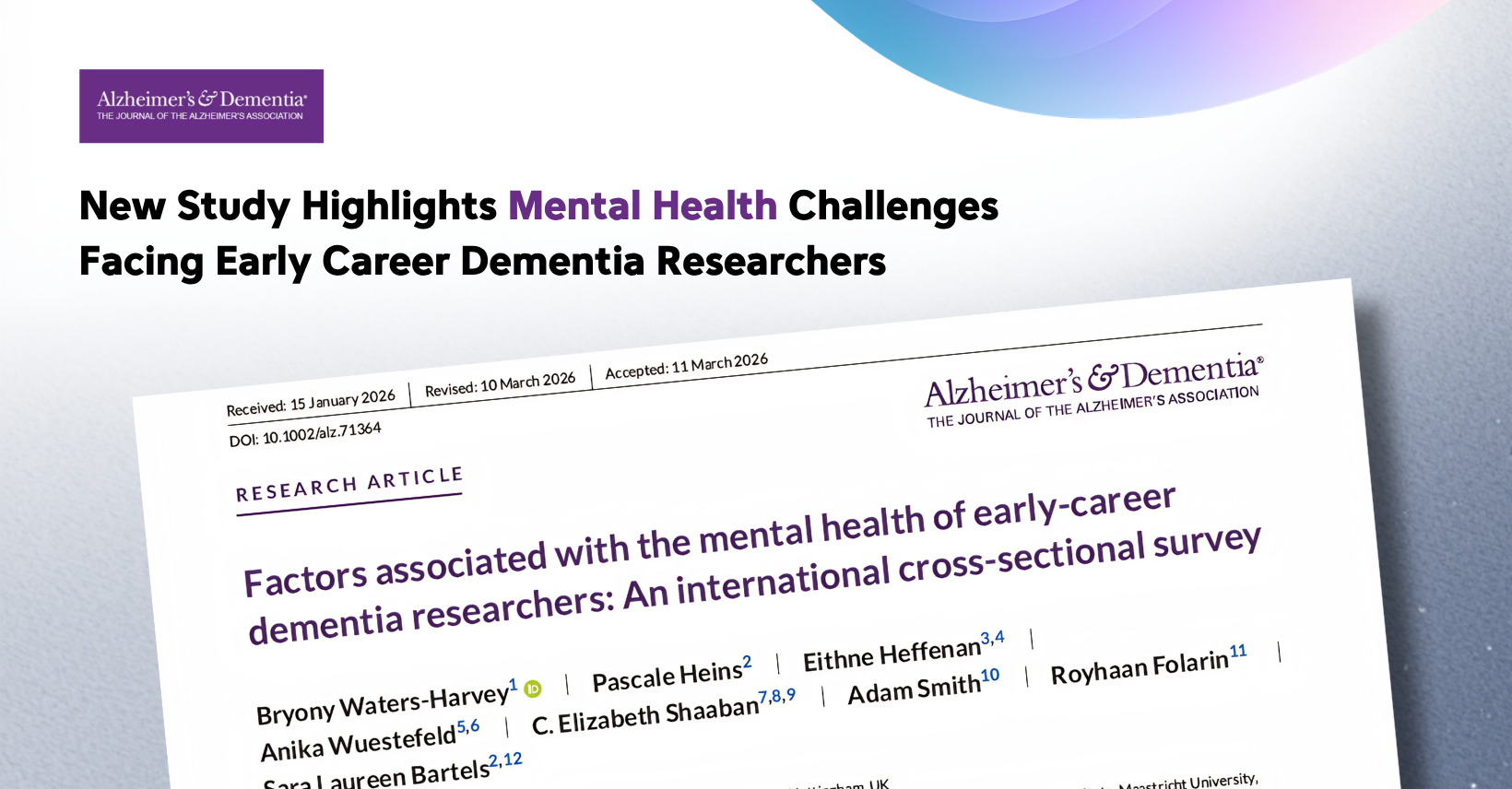
Summary: A new international study led by Dr Bryony Waters-Harvey, alongside Dr Pascale Heins, Dr Eithne Heffenan, Dr Anika Wuestefeld, Dr.C. Elizabeth Shaaban, Adam Smith, Dr Royhaan Folarin, and Dr Sara Laureen Bartels, has explored the mental health of early career dementia researchers. This is the third paper to be published, drawing on survey data collected through a collaboration between Dementia Researcher and ISTAART.
Why it matters: This matters for Alzheimer’s Disease and Frontal Temporal Dementia because it gives a concrete current signal to track: A new international study led by Dr Bryony Waters-Harvey, alongside Dr Pascale Heins, Dr Eithne Heffenan, Dr Anika Wuestefeld, Dr.C.
Context: A new international study led by Dr Bryony Waters-Harvey, alongside Dr Pascale Heins, Dr Eithne Heffenan, Dr Anika Wuestefeld, Dr.C. Elizabeth Shaaban, Adam Smith, Dr Royhaan Folarin, and Dr Sara Laureen Bartels, has explored the mental health of early career dementia researchers. This is the third paper to be published, drawing on survey data collected through a collaboration between Dementia Researcher and ISTAART.
"A new international study led by Dr Bryony Waters-Harvey, alongside Dr Pascale Heins, Dr Eithne Heffenan, Dr Anika Wuestefeld, Dr.C. Elizabeth Shaaban, Adam Smith, Dr Royhaan Folarin, and Dr Sara Laureen Bartels,." — DEMENTIARESEARCHER.NIHR.AC.UK
Commentary: The immediate implication is operational rather than speculative: watch how this changes budgets, workflows, or risk assumptions over the next cycle.
Date: Thu, 16 Apr 2026 12:28:23 +0000
URL: https://www.dementiaresearcher.nihr.ac.uk/mental-health-challenges-in-dementia-researchers/
AI Sentiment Score: Negative (80%)
AI Credibility Score: 10.0/10 — High
Scores and text generated by AI analysis of the source article indicated.
FRONTIERS Science Journalism Residency Programme (Dementiaresearcher.Nihr.Ac.Uk)
Summary: FRONTIERS, an initiative funded by the European Research Council, invites applications from science journalists worldwide for immersive residencies at European research institutions. These residencies, spanning 3 to 5 months, offer unparalleled opportunities to delve into frontier research across diverse disciplines, including social sciences and humanities. Four calls are envisaged in 2023-2026, supporting up to 40 fellowships, for a total funding available of 600,000 EUR.

Why it matters: This matters for Alzheimer’s Disease and Frontal Temporal Dementia because it gives a concrete current signal to track: FRONTIERS, an initiative funded by the European Research Council, invites applications from science journalists worldwide for immersive residencies at European research institutions.
Context: FRONTIERS, an initiative funded by the European Research Council, invites applications from science journalists worldwide for immersive residencies at European research institutions. These residencies, spanning 3 to 5 months, offer unparalleled opportunities to delve into frontier research across diverse disciplines, including social sciences and humanities. Four calls are envisaged in 2023-2026, supporting up to 40 fellowships, for a total funding available of 600,000 EUR.
"FRONTIERS, an initiative funded by the European Research Council, invites applications from science journalists worldwide for immersive residencies at European research institutions. These residencies, spanning 3 to 5 months, offer unparalleled opportunities." — DEMENTIARESEARCHER.NIHR.AC.UK
Commentary: The immediate implication is operational rather than speculative: watch how this changes budgets, workflows, or risk assumptions over the next cycle.
Date: Sun, 19 Apr 2026 21:50:10 +0000
URL: https://www.dementiaresearcher.nihr.ac.uk/frontiers-science-journalism-residency-programme/
AI Sentiment Score: Negative (77%)
AI Credibility Score: 10.0/10 — High
Scores and text generated by AI analysis of the source article indicated.
Shining a Light on a Little-Known Dementia (Youtube)
Summary: A video highlighting frontotemporal degeneration research breakthroughs in biomarker detection and updates on new clinical trial platforms for FTD. This matters for Alzheimer’s Disease and Frontal Temporal Dementia because it gives a concrete current signal to track: A video highlighting frontotemporal degeneration research breakthroughs in biomarker detection and updates on new clinical trial platforms for FTD.

Why it matters: This matters for Alzheimer’s Disease and Frontal Temporal Dementia because it gives a concrete current signal to track: A video highlighting frontotemporal degeneration research breakthroughs in biomarker detection and updates on new clinical trial platforms for FTD.
Context: A video highlighting frontotemporal degeneration research breakthroughs in biomarker detection and updates on new clinical trial platforms for FTD. This matters for Alzheimer’s Disease and Frontal Temporal Dementia because it gives a concrete current signal to track: A video highlighting frontotemporal degeneration research breakthroughs in biomarker detection and updates on new clinical trial platforms for FTD.
"A video highlighting frontotemporal degeneration research breakthroughs in biomarker detection and updates on new clinical trial platforms for FTD." — YOUTUBE
Commentary: The immediate implication is operational rather than speculative: watch how this changes budgets, workflows, or risk assumptions over the next cycle.
Date: April 14, 2026 12:00 AM ET
URL: https://www.youtube.com/watch?v=jnY-eJUbH4o
AI Sentiment Score: Negative (88%)
AI Credibility Score: 10.0/10 — High
Scores and text generated by AI analysis of the source article indicated.
Lonely people have worse memory but don’t decline faster, study finds (Sciencedaily)
Summary: A longitudinal study of 10,217 adults aged 65-94 across 12 European countries examined the relationship between loneliness and cognitive decline over seven years. Researchers found that while individuals reporting high levels of loneliness exhibited lower baseline memory scores, their rate of cognitive deterioration did not accelerate compared to socially connected peers. The data suggests loneliness correlates with initial memory performance rather than the velocity of decline.

Why it matters: It challenges the prevailing clinical assumption that loneliness acts as a primary catalyst for accelerated cognitive decline or dementia progression.
Context: Loneliness has long been flagged as a public health risk factor for dementia, though empirical evidence regarding its role in the speed of cognitive decay has remained inconsistent.
[Summary note] A longitudinal study of 10,217 adults aged 65-94 across 12 European countries examined the relationship between loneliness and cognitive decline over seven years.
Commentary: This distinction shifts the focus from loneliness as a progressive neurodegenerative driver to a potential marker of baseline cognitive vulnerability or a comorbid state. For clinicians, this suggests that loneliness screenings should be used for initial risk stratification rather than as a predictor of decline velocity. The finding underscores a need to decouple social isolation from the biological mechanisms of dementia progression.
Date: Tue, 14 Apr 2026 08:56:31 EDT
URL: https://www.sciencedaily.com/releases/2026/04/260414075633.htm
AI Sentiment Score: Negative (85%)
AI Credibility Score: 10.0/10 — High
Scores and text generated by AI analysis of the source article indicated.
Doing this throughout life may cut Alzheimer’s risk by 38% (Sciencedaily)
Summary: A longitudinal study published in Neurology finds a strong association between lifelong cognitive enrichment—spanning childhood access to books and language study to later-life activities like reading and writing—and reduced Alzheimer’s risk. Participants in the top decile for enrichment had a 38% lower risk of Alzheimer’s and developed symptoms approximately five years later than those in the bottom decile, with similar delays for mild cognitive impairment. The effect persisted even after controlling for education and Alzheimer’s-related brain pathology in autopsy-confirmed cases.

Why it matters: This reframes dementia prevention from late-life interventions to a lifelong public health strategy, shifting policy focus toward early and sustained access to intellectually stimulating environments.
Context: The study builds on the cognitive reserve hypothesis but uniquely quantifies enrichment across the entire lifespan and links it to both clinical and neuropathological outcomes, moving beyond correlation toward mechanistic insight.
"After accounting for factors like age, sex, and education, higher lifetime enrichment was linked to a 38% lower risk of Alzheimer’s disease and a 36% lower risk of mild cognitive impairment." — SCIENCEDAILY
Commentary: The findings mandate a reevaluation of public spending on libraries, early education, and adult learning programs as core health infrastructure. For insurers and health systems, this strengthens the case for reimbursing or subsidizing lifelong learning initiatives, potentially creating new markets in cognitive wellness. The delay in symptom onset alone could significantly alter the economic and caregiving burden projections for aging populations.
Date: Wed, 15 Apr 2026 04:09:05 EDT
URL: https://www.sciencedaily.com/releases/2026/04/260414075648.htm
AI Sentiment Score: Negative (66%)
AI Credibility Score: 10.0/10 — High
Scores and text generated by AI analysis of the source article indicated.
Post ID: d428f331