
Industry News Roundups & Analysis
Global TV, Film & Media Industry News Roundup, Weekend 25-26 … (Furtherandbetter.Substack)
Summary: The weekend’s industry signals point to a strategic realignment across multiple fronts: Warner Bros. Discovery’s approved $111B acquisition of Paramount Skydance consolidates major studio power, while Warner Bros. itself broadens its operational focus. Banijay Rights and Verza TV highlight a market-wide pivot towards scalable, repeatable formats and user-generated micro-content. Concurrently, African content is flagged as a high-growth asset class, and European documentary financing becomes dependent on cross-border co-productions.

Why it matters: These shifts collectively redefine commissioning logic, investment risk profiles, and the competitive landscape for producers, financiers, and distributors.
Context: This follows a prolonged period of market fragmentation and experimentation, now giving way to consolidation and a clearer focus on scalable, franchisable assets with proven demand.
"New data highlights African audiovisual content as a high-growth, underexploited asset with strong international demand and limited supply, signalling major investment potential." — FURTHERANDBETTER.SUBSTACK
Commentary: The explicit framing of African content as an ‘asset’ with ‘investment potential’ signals a move from cultural initiative to hard-nosed portfolio strategy for global studios and streamers. Combined with Banijay’s franchise focus and the Paramount deal, it reveals a market retreat from speculative one-offs toward de-risked, scalable IP pools. The European documentary and RTL restructuring notes underscore that even public-service and regional markets are now forced into consolidation and co-dependency to secure financing and compete.
Date: April 25, 2026 12:00 AM ET
URL: https://furtherandbetter.substack.com/p/global-tv-film-and-media-industry-e0a
AI Sentiment Score: Negative (50%)
AI Credibility Score: 10.0/10 — High
Scores and text generated by AI analysis of the source article indicated.
Global TV, Film & Media Industry News Roundup, Thursday 23 April … (Furtherandbetter.Substack)
Summary: Netflix is finalizing a $330 million acquisition of the Radford Studio Center, expanding its owned physical production footprint in Los Angeles. Courtney Kemp, creator of ‘Power,’ outlines a new pitch strategy where budget discipline and franchise potential are primary, reflecting a fundamental shift in commissioning logic. Meanwhile, Warner Bros. Discovery’s shelved film ‘Coyote vs. Acme’ is being revived for theatrical release by a third-party distributor.

Why it matters: These developments signal concrete shifts in asset strategy, commissioning priorities, and IP valuation that directly affect financing, production pipelines, and career trajectories.
Context: Studio infrastructure investment and commissioning austerity are concurrent trends, as streamers balance long-term capital commitments with immediate cost control. Shelved projects finding secondary distribution paths test the financial logic of tax write-offs.
"Kemp says selling a show now begins with proving budget discipline and franchise potential, not just story." — FURTHERANDBETTER.SUBSTACK
Commentary: Netflix’s Radford purchase locks in long-term cost control and capacity, a counterpoint to Kemp’s emphasis on fiscal proof in pitches. This dual move reveals a studio optimizing for both fixed-cost efficiency and variable-cost scrutiny. The ‘Coyote vs. Acme’ revival demonstrates that shelved IP can retain market value outside the original studio’s calculus, potentially complicating future write-off decisions.
Date: April 23, 2026 12:00 AM ET
URL: https://furtherandbetter.substack.com/p/global-tv-film-and-media-industry-065
AI Sentiment Score: Negative (85%)
AI Credibility Score: 10.0/10 — High
Scores and text generated by AI analysis of the source article indicated.
Global TV, Film & Media Industry News Roundup, Monday 27 April … (Furtherandbetter.Substack)
Summary: The weekly industry roundup highlights a security breach at Paramount Animation leading to an arrest, alongside a major writer deal and strategic international co-production moves. A successful Fox unscripted reboot and festival signals point to specific content demands, while emerging production activity in regions like Nauru indicates geographic expansion.

Why it matters: These items collectively signal shifting risk profiles for high-value IP, the enduring premium on proven creative talent, and the strategic calculus behind content financing and market positioning.
Context: Studios are grappling with increased cybersecurity threats as IP value concentrates, while international co-productions and talent lock-ups are standard tactics for de-risking development and accessing global audiences.
"### Streaming overtakes TV ads, FAST surges, YouTube disrupts, creator empires strain, co-productions rise, cybersecurity threats grow, and global content strategies rapidly reshape the screen industry. … – **Fox’s Fear Factor Reboot." — FURTHERANDBETTER.SUBSTACK
Commentary: The Paramount arrest is a rare public enforcement action that may pressure studios to formalize and fund cybersecurity as a core production cost, not just an IT concern. Jez Butterworth’s Universal deal reinforces the market’s valuation of writer-creators with proven cross-platform utility, effectively a premium for de-risking development. Australia’s co-production strategy and Nauru’s first film represent two poles of the same trend: the systematic pursuit of soft-power influence and tax incentives versus organic, grant-driven capacity building in new territories.
Date: April 27, 2026 12:00 AM ET
URL: https://furtherandbetter.substack.com/p/global-tv-film-and-media-industry-b4a
AI Sentiment Score: Negative (71%)
AI Credibility Score: 10.0/10 — High
Scores and text generated by AI analysis of the source article indicated.
Global TV, Film & Media Industry News Roundup, Monday 20 April … (Furtherandbetter.Substack)
Summary: The 2026 streaming slate is being defined by a strategic pivot towards established literary IP, with Amazon Prime Video, Apple TV+, and Netflix aggressively commissioning book adaptations to de-risk development. This trend coincides with Netflix’s explicit push in the UK for scalable, exportable unscripted formats and Lionsgate’s extension of the Rambo franchise, indicating a broader industry preference for pre-sold audience recognition. Concurrently, format innovation continues with the commercial testing of vertical microdramas.

Why it matters: This signals a contraction in buyer appetite for original, unproven concepts, directly impacting development pipelines, packaging leverage for non-IP-based projects, and the valuation of literary rights.
Context: This follows years of streaming overspend on speculative originals, with platforms now prioritizing cost-certainty and built-in marketing hooks in a saturated, profit-focused market.
"A wave of bestselling book adaptations is powering 2026’s TV lineup, with platforms like Apple TV+, Netflix and Prime Video rolling out high-profile series including Imperfect Women, Margo’s Got Money Troubles and The Five-Star Weekend." — FURTHERANDBETTER.SUBSTACK
Commentary: The ‘book-to-TV boom’ is less a creative renaissance and more a procurement strategy, revealing depressed risk tolerance among commissioning editors. This concentrates power with agencies holding major IP portfolios and pressures producers to secure underlying rights before pitching. The parallel moves on franchise extension (Rambo) and legacy IP (FernGully) confirm that brand equity is the primary currency, potentially sidelining mid-tier original drama. Netflix’s UK unscripted push, targeting ‘globally exportable IP,’ applies the same scalable, asset-building logic to a different genre.
Date: April 20, 2026 12:00 AM ET
URL: https://furtherandbetter.substack.com/p/global-tv-film-and-media-industry-34e
AI Sentiment Score: Positive (40%)
AI Credibility Score: 10.0/10 — High
Scores and text generated by AI analysis of the source article indicated.
Global TV, Film & Media Industry News Roundup, Wednesday 22 … (Furtherandbetter.Substack)
Summary: Warner Bros.’ Clockwork label has committed a $22 million global distribution deal for Sean Baker’s ‘Ti Amo!’, representing a significant financial escalation for the director and a notable acquisition for the studio’s specialty division. The deal signals a major studio’s willingness to place a substantial, upfront financial bet on a director known for low-budget, independent filmmaking, moving beyond traditional festival-driven acquisition models. This transaction provides immediate capital and a global platform, altering the financing and distribution calculus for similar auteur-driven projects.

Why it matters: This deal recalibrates the market value for prestige indie auteurs and demonstrates a major studio’s strategic use of a specialty label to secure high-profile talent with a significant capital commitment, influencing future packaging and financing negotiations.
Context: Major studios have historically used boutique labels like Searchlight or A24 to manage risk on arthouse films, but upfront global distribution deals of this scale for a director’s specific project, rather than a broader output pact, are less common and indicate a shift in acquisition aggression.
"Oscar-winning director Sean Baker has secured a $22 million global distribution deal with Warner Bros.’ Clockwork label for Ti Amo!, marking the biggest payday of his career. … The Sidemen returned to." — FURTHERANDBETTER.SUBSTACK
Commentary: The $22 million figure is a market signal that resets the ceiling for what studios will pay to lock down prestige talent before a film is even completed, effectively monetizing a director’s brand and critical cachet. For Warner Bros. Discovery, this is a calculated move by Clockwork to secure a headline project that can drive subscriber and theatrical interest for Max, while also denying the film to rival streamers or indie distributors. The deal structure implies high confidence in Baker’s commercial appeal beyond the festival circuit and could pressure other studios to match such terms for comparable talent, potentially inflating packaging costs for auteur-driven packages. It also provides Baker with unprecedented leverage and capital control, potentially altering the independent financing ecosystem by setting a new benchmark for ‘pre-sale’ valuations.
Date: April 22, 2026 12:00 AM ET
URL: https://furtherandbetter.substack.com/p/global-tv-film-and-media-industry-5fb
AI Sentiment Score: Positive (50%)
AI Credibility Score: 10.0/10 — High
Scores and text generated by AI analysis of the source article indicated.
Global TV, Film & Media Industry News Roundup, Tuesday 28 April … (Furtherandbetter.Substack)
Summary: Private credit is emerging as a significant alternative financing mechanism for film and TV production, exemplified by Magnetic Labs’ $50 million fund. This trend indicates a shift away from reliance on traditional studio financing and major streamer equity. Concurrently, the industry is seeing an acceleration in global content partnerships and format expansion, as seen with deals like ‘Gangnam Project’ and Banijay’s ShowdownTV, which prioritize scalable, cross-border strategies.
Why it matters: For producers and financiers, the rise of private credit alters the capital stack and deal-making leverage, while global format deals signal where buyer demand and commissioning logic are shifting.
Context: Traditional studio and streamer financing has tightened, creating a capital gap for mid-budget and independent projects. Simultaneously, platforms and broadcasters are seeking proven, lower-risk concepts that can be adapted across territories.
"# Global TV, Film & Media Industry News Roundup, Tuesday 28 April 2026 ### Streaming pivots to films, AI reshapes jobs and discovery, private credit fuels production, and global deals, festivals and." — FURTHERANDBETTER.SUBSTACK
Commentary: The Magnetic Labs fund represents a structural shift: private credit demands different risk-return profiles and collateralization than studio equity, potentially favoring genre or franchise projects with clear audience metrics. The parallel push for global formats reveals a commissioning logic focused on amortizing development costs and mitigating creative risk through pre-tested concepts, which may marginalize idiosyncratic, single-territory pitches. Together, these trends point to an industry optimizing for financial engineering and scalable replication over pure creative speculation.
Date: April 28, 2026 12:00 AM ET
URL: https://furtherandbetter.substack.com/p/global-tv-film-and-media-industry-a75
AI Sentiment Score: Negative (66%)
AI Credibility Score: 10.0/10 — High
Scores and text generated by AI analysis of the source article indicated.
Roundup: Industry Analysis & Financing, April 28, 2026 | FreakPulse (Freakpulse)
Summary: Independent film financing now demands demonstrable collateral and realistic modeling, shifting from speculative to asset-backed deals. U.S. production spending in Canada rose 9.5% in 2025, driven by TV series and foreign projects. The UK’s AI policy pivot is pushing the television industry toward structured licensing models for data mining.

Why it matters: These shifts signal a hardening of capital access, a reconfiguration of international production hubs, and a new compliance burden for content development, directly impacting deal structuring, location budgeting, and rights management.
Context: The independent financing market is consolidating around institutional models and tangible collateral, while production incentives and regulatory changes continue to redirect global capital and operational workflows.
"A guide from Vitrina.Ai details the current, more rigorous state of independent film financing, where capital access now requires demonstrable collateral, realistic modeling, and clear contractual structures." — FREAKPULSE
Commentary: The move toward collateralized lending and SEBI-regulated funds like 91 Film Studios indicates a flight to quality and institutionalization, squeezing out speculative projects. The Canadian spending surge reflects a strategic hedge against domestic U.S. volatility and incentive fluctuations. The UK’s AI licensing mandate will increase pre-production costs and complexity, favoring larger studios with established legal and rights management infrastructure over smaller independents.
Date: April 28, 2026 12:00 AM ET
URL: https://freakpulse.com/2026/04/28/roundup-industry-analysis-financing-april-28-2026-2026-w18-a0ff6310/
AI Sentiment Score: Positive (50%)
AI Credibility Score: 8.6/10 — High
Scores and text generated by AI analysis of the source article indicated.
April 2026 – FilmTake (Filmtake)
Summary: Cannes 2026 reflects a more controlled film market, where strong packages and structured financing are driving deal flow. Market focus shifts to structured financing and robust package deals; operational viability dictates deal velocity.

Why it matters: Market focus shifts to structured financing and robust package deals; operational viability dictates deal velocity.
Context: Cannes 2026 signals a return to transactional deal-making, favoring pre-packaged, financed slates.
"Cannes 2026 reflects a more controlled film market, where strong packages and structured financing are driving deal flow." — FILMTAKE
Commentary: The signal is still worth tracking, but the current extraction path did not yield enough body text for a fuller analytical read. The immediate implication is operational rather than speculative: watch how this changes budgets, workflows, or risk assumptions over the next cycle.
Date: April 27, 2026 12:00 AM ET
URL: https://www.filmtake.com/2026/04/
AI Sentiment Score: Positive (50%)
AI Credibility Score: 10.0/10 — High
Scores and text generated by AI analysis of the source article indicated.
Film & TV Briefing: Friday 24 April 2026 (Simkins)
Summary: The weekly industry digest highlights a mix of corporate consolidation, strategic investments, and operational shifts. Sister Group’s majority stake in After Party Studios signals continued vertical integration by larger entities, while Disney+’s development deal with Japanese producer The Seven underscores a targeted expansion into specific regional pipelines. Concurrently, Netflix’s announced $25 billion stock buyback and the call for a €2.83 billion European investment fund reflect contrasting capital allocation strategies amid market fragmentation.

Why it matters: These moves collectively indicate where capital and strategic attention are flowing, revealing commissioning priorities, risk appetites, and the evolving leverage of independent producers versus global platforms.
Context: The industry is navigating a post-peak streaming correction, with buyers balancing content investment against shareholder returns and seeking efficiency through partnerships and pre-sales.
"Film & TV Briefing: Friday 24 April 2026 Welcome to this week’s round-up of news, commentary and industry announcements that you may have missed from the past week. If you are looking." — SIMKINS
Commentary: Sister’s acquisition is a classic play for production capacity and IP control, reducing reliance on third-party pitches. Disney’s Japan deal, however, is a cheaper, lower-risk alternative to outright acquisition, focusing on access over ownership. The juxtaposition of Netflix’s massive buyback—a direct return to shareholders—against the European sector’s plea for a public-private investment fund highlights a fundamental tension: platforms are optimizing for financial markets, while traditional bodies seek state-backed industrial policy to maintain production volume and cultural sovereignty.
Date: April 24, 2026 12:00 AM ET
URL: https://www.simkins.com/news/film-tv-briefing-friday-24-april-2026
AI Sentiment Score: Negative (75%)
AI Credibility Score: 7.0/10 — Medium
Scores and text generated by AI analysis of the source article indicated.
The Pinched Middle — When NonDē Meets Its Limits (Capitalmeetsstory.Substack)
Summary: The article analyzes the structural financing challenges for independent films in the $10M–$15M budget range, identifying it as a ‘pinched middle’ where projects require complex, multi-layered capital stacks but lack the institutional support of larger productions. It details the typical composition of such a stack—equity, pre-sales, tax incentives, and gap financing—and highlights pre-sales as the critical de-risking mechanism for securing gap loans. The piece suggests that new forms of audience validation, termed ‘Verified Audiences,’ could function as a modern, behavioral equivalent to traditional pre-sales.
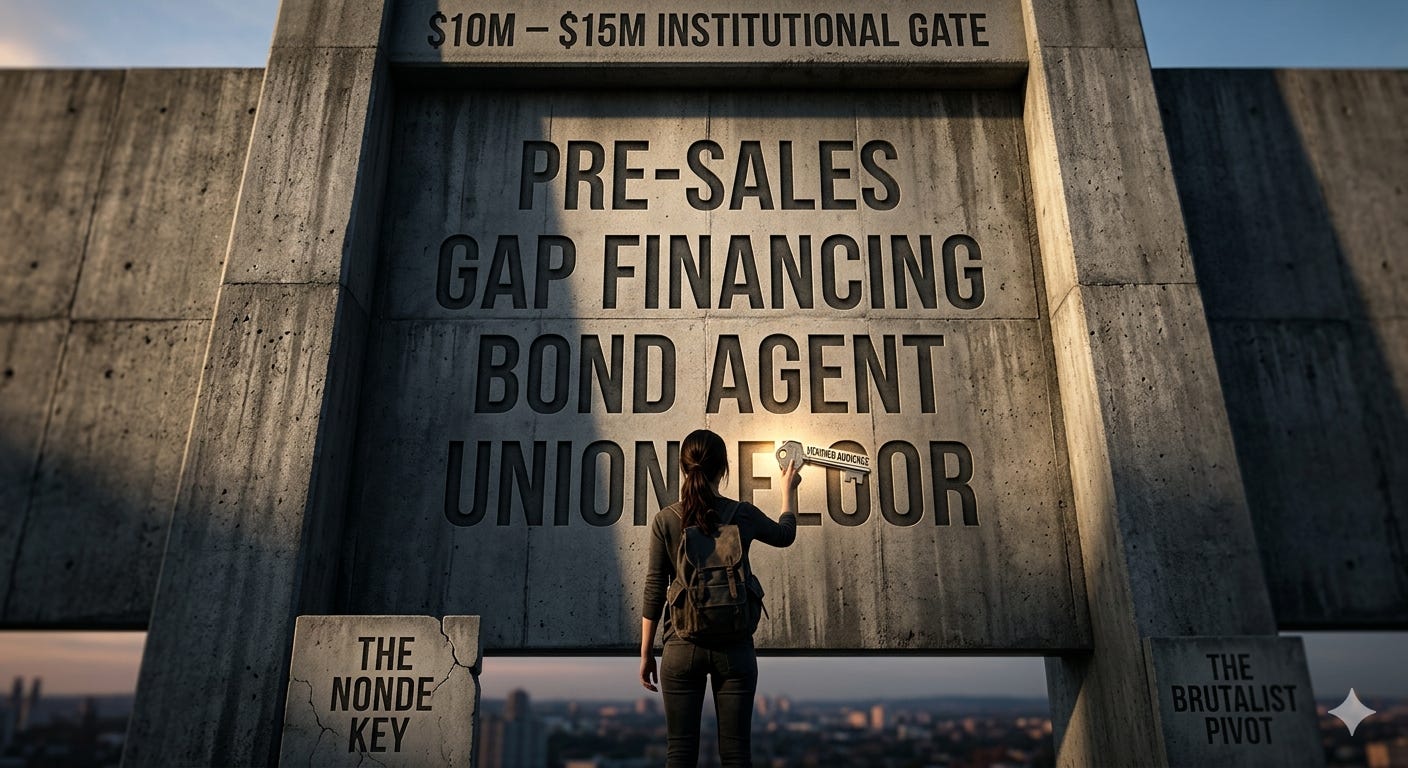
Why it matters: This matters because it defines the specific financial and operational hurdles that determine which mid-budget projects get greenlit, directly impacting producers’ packaging strategies, financiers’ risk assessments, and the overall viability of a crucial segment of the independent market.
Context: The independent film financing model has long relied on assembling capital from disparate sources, with pre-sales to distributors being the linchpin for securing completion funds. This analysis reframes that model around a specific, problematic budget tier.
"The $10M–$15M range is the most treacherous terrain in independent film finance for one precise reason: it demands institutional-level infrastructure without providing institutional-level support." — CAPITALMEETSSTORY.SUBSTACK
Commentary: The analysis correctly identifies the operational inflection point where producer skill shifts from fundraising to financial engineering. The proposed ‘Verified Audience’ metric is an attempt to commodify market validation, potentially altering leverage in negotiations with traditional gap lenders and distributors by providing data-driven proof of demand earlier in the development cycle.
Date: April 21, 2026 12:00 AM ET
URL: https://capitalmeetsstory.substack.com/p/the-pinched-middle-when-nonde-meets
AI Sentiment Score: Negative (75%)
AI Credibility Score: 9.7/10 — High
Scores and text generated by AI analysis of the source article indicated.
Sony’s Swear, Warner’s Wish – The Industry | Substack (Theindustry.Co)
Summary: Warner Bros. Discovery shareholders overwhelmingly approved the Paramount acquisition, pending regulatory scrutiny of Middle Eastern funding. Amazon MGM Studios closed a $30M deal for a romantic comedy, while Focus Features joined a Blumhouse-produced horror film. Netflix, Hulu, and Roadside Attractions secured rights for series and film adaptations, indicating sustained buyer activity across genres.

Why it matters: The shareholder vote signals confidence in consolidation, but the regulatory focus on foreign capital introduces a new risk variable for mega-mergers.
Context: Major studio acquisitions face heightened antitrust and foreign investment scrutiny, while mid-tier buyers continue filling genre slates with packaged projects.
"The film is releasing today in theaters in the US. … 99% of Warner Bros. Discovery shareholders voted to greenlight its acquisition by Paramount. Of course, Paramount Skydance Warner Bros. Discovery cannot." — THEINDUSTRY.CO
Commentary: The near-unanimous shareholder vote demonstrates institutional faith in the strategic logic of the Paramount deal, but the DOJ and European regulators’ focus on the $24bn Middle Eastern investment pipeline reveals a new friction point: geopolitical capital sources are now a material factor in merger approval. Concurrent mid-market deals (Amazon MGM’s $30M comedy, Focus joining a Blumhouse horror) show that commissioning for packaged, star-driven genre films remains robust despite consolidation uncertainty, suggesting a bifurcated market where headline mergers and operational buying continue independently.
Date: April 24, 2026 12:00 AM ET
URL: https://theindustry.co/p/sonys-swear-warners-wish
AI Sentiment Score: Positive (71%)
AI Credibility Score: 10.0/10 — High
Scores and text generated by AI analysis of the source article indicated.
Cracking Apple TV: The Shows It Wants Now – The Ankler (Theankler)
Summary: The Ankler’s Spring Sellers’ Guide details Apple TV’s current commissioning logic, revealing a post-WGA contract landscape where buyers only acquire projects with a clear path to production. Apple’s mandate is described as ‘premium, yet populist,’ prioritizing projects with major stars and high production value, akin to HBO’s peak. Despite recent executive departures and an impending CEO transition, the streamer’s development process remains a tightly controlled ‘black box’ focused on a narrow, high-impact slate.

Why it matters: For writers, producers, and agents, this intelligence defines the precise, restrictive criteria for a viable Apple TV pitch, directly impacting deal-making strategy and resource allocation in a risk-averse market.
Context: Industry-wide development slates have contracted significantly; streamers have shifted from speculative development to commissioning only projects with a near-certain production path, raising the stakes for packaging and pitching.
"Premium, yet populist. Movie stars. Big TV stars. You know, kind of what HBO was doing during the height of HBO." — THEANKLER
Commentary: Apple’s strategy signals a consolidation around bankable, star-driven prestige intended for broad appeal, effectively outsourcing creative risk to established talent. This narrow aperture increases packaging leverage for top-tier showrunners and agencies while sidelining unconventional or unproven voices. The executive turnover and incoming hardware-focused CEO introduce a variable that could further constrict the brief, making current intelligence on greenlight power and genre preferences a critical asset for sellers.
Date: April 28, 2026 12:00 AM ET
URL: https://theankler.com/cracking-apple-tv-the-shows-it-wants-now/
AI Sentiment Score: Negative (75%)
AI Credibility Score: 10.0/10 — High
Scores and text generated by AI analysis of the source article indicated.
The State of Theatrical Releasing in 2026: Dead Man Walking or Phoenix Rising? (Youtube)
Summary: A 2026 industry discussion reveals a concrete windowing deal between a major studio and theaters, specifying a three-week theatrical window followed by a premium pay-per-view release, with theaters receiving a revenue share from the PPV phase. The model acknowledges the distributor’s high initial release costs and incentivizes theaters to retain films longer through a sliding revenue share scale. Concurrently, the analysis suggests the market can only sustain one or two major streaming services, with studios opting for output deals to Netflix proving financially more successful than operating their own platforms.

Why it matters: This signals a formalization of hybrid distribution economics, directly impacting studio P&L calculations, theater chain negotiation leverage, and the strategic viability of proprietary streaming services.
Context: The post-pandemic windowing debate has evolved from emergency measures to structured, multi-platform revenue-sharing agreements, testing the financial sustainability of the theatrical ecosystem.
"{ts:860} with Universal for what a three-week window it typically in the past films would play I don’t know Ira you probably {ts:868} know the number it was like at least six." — YOUTUBE
Commentary: The three-week window and PPV revenue share represent a calibrated concession from studios, preserving theatrical marketing momentum while monetizing the premium home-viewing audience directly. The sliding theatrical revenue share scale (50% down to 30%) explicitly ties theater compensation to ongoing occupancy, a direct operational incentive. The observation that only one or two major streaming services can survive, and that output deals to Netflix are yielding greater financial success for studios, underscores a strategic retreat from the ‘must-have-a-platform’ mandate, redirecting capital away from subscriber acquisition wars back to content financing and distribution partnerships.
Date: April 22, 2026 12:00 AM ET
URL: https://www.youtube.com/watch?v=cfRo-IpKgyY
AI Sentiment Score: Negative (66%)
AI Credibility Score: 10.0/10 — High
Scores and text generated by AI analysis of the source article indicated.
E.J. Foerster on Shopping a Script in Today’s Industry (Youtube)
Summary: Director-producer E.J. Foerster outlines the contemporary mechanics of independent film packaging and financing, emphasizing a shift from monetary incentives to character-driven actor attachments and the necessity of constructing a parallel ‘story of making the movie’ to generate momentum. He stresses operational credibility signals like SAG deposits and start dates for investor confidence, while positioning crowdfunding as a nascent marketing arm rather than just a capital source.
Why it matters: This clarifies the current leverage points for independent producers, revealing where buyer and investor risk tolerance is now anchored and which packaging tactics actually move projects forward.
Context: The traditional indie script-shopping pipeline has fragmented, with platform acquisition logic becoming opaque and traditional studio financing increasingly risk-averse, forcing producers to build more complete, investor-ready packages earlier.
"##### Apr 27, 2026 (0:55:00) You’ve finished the script. Now comes the hard part—getting it made. In Episode 4 of Working Title, Mark Elias sits down with director and producer E.J. Foerster." — YOUTUBE
Commentary: Foerster’s focus on character-as-leverage signals a market where actor attachment is the primary currency for unlocking financing, shifting development labor towards crafting actor-centric IP from the outset. His operational emphasis on SAG deposits and start dates indicates financiers now demand concrete, irreversible commitments before engaging, raising the pre-production cost floor for credible packages. The framing of crowdfunding as a marketing tool suggests its utility is evolving from pure capital to proof-of-audience, a metric increasingly valuable for platform acquisitions.
Date: April 27, 2026 12:00 AM ET
URL: https://www.youtube.com/watch?v=GYhPSjVgfD8
AI Sentiment Score: Negative (66%)
AI Credibility Score: 10.0/10 — High
Scores and text generated by AI analysis of the source article indicated.
Making It Work: Production Pressure, Test Audiences & Financing Reality | Off The Lot Podcast (Youtube)
Summary: A podcast interview reveals the granular mechanics of independent film financing, highlighting the reliance on private investors after repeated rejections from public funding bodies like Telefilm Canada. The producer secured full financing for a project despite being denied a $217,000 post-production grant, which represented 10% of the budget, illustrating the disconnect between institutional support and on-the-ground viability.
Why it matters: This demonstrates the practical, often personal, capital pathways that sustain independent production when institutional gatekeepers fail, informing risk assessments and partnership strategies for producers.
Context: Telefilm Canada’s development and production programs are a cornerstone of the Canadian independent film ecosystem, but their selection criteria and funding gaps frequently force producers to pivot to private equity.
"The episode wraps with a deeper discussion on film financing, exploring investor relationships, what makes a project commercially viable, and why building the right partnerships is just as critical as the film." — YOUTUBE
Commentary: The case underscores that Telefilm’s decisions are not a reliable proxy for a project’s commercial feasibility or completion potential. It signals to producers that building a resilient network of private investors is a more critical operational skill than optimizing grant applications, and may point to a misalignment between Telefilm’s mandate and the actual capital needs of functioning productions.
Date: April 20, 2026 12:00 AM ET
URL: https://www.youtube.com/watch?v=2S8NU7ex2ng
AI Sentiment Score: Negative (66%)
AI Credibility Score: 10.0/10 — High
Scores and text generated by AI analysis of the source article indicated.
Film Financing Intelligence: How Data Is Replacing Guesswork In … (Vitrina.Ai)
Summary: Film financing intelligence platforms are systematizing the historically opaque process of assembling production capital. By aggregating and analyzing data across pre-sales, tax incentives, co-production funds, equity, and broadcaster deals, these tools map active funders, their mandates, and deal structures in near real-time. This shift replaces reliance on informal networks with structured data, aiming to reduce the time to identify viable financing partners from months to hours.
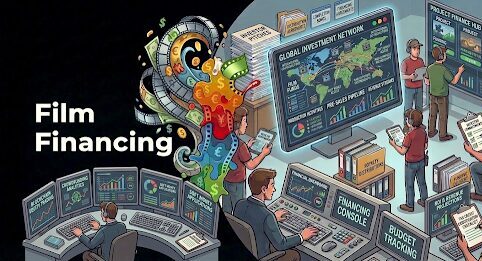
Why it matters: For producers, financiers, and studio executives, this datafication directly impacts deal flow, packaging efficiency, and competitive advantage in structuring complex, multi-source financing stacks.
Context: The financing of independent and co-produced film and TV has grown increasingly complex, with projects often requiring four or more distinct capital sources, creating a high barrier to entry and a reliance on specialized knowledge.
"- Film financing intelligence means structured, real-time data on who funds film and TV projects — by territory, genre, budget range, stage, and deal structure — replacing the informal networks that have." — VITRINA.AI
Commentary: The professionalization of financing intelligence commoditizes relationship capital, shifting leverage toward producers who can navigate data as well as networks. It could pressure traditional sales agents and gap financiers whose value was partly informational arbitrage, while enabling new entrants to model risk and assemble packages with greater precision. The real test is whether these platforms can penetrate the opaque equity layer, where the most significant capital and informational asymmetries remain.
Date: April 28, 2026 12:00 AM ET
URL: https://vitrina.ai/blog/film-financing-intelligence-data-production-funding/
AI Sentiment Score: Negative (50%)
AI Credibility Score: 10.0/10 — High
Scores and text generated by AI analysis of the source article indicated.
THE FINAL CUT – BEYOND THE PROCESS Substack (Beyondtheprocess.Art)
Summary: California’s Film & Television Tax Credit Program has expanded to include animated features and series for the first time, triggering a 400% surge in applications in the initial window. Three major productions—The Simpsons Movie 2, a Phineas and Ferb feature, and an untitled DreamWorks Animation project—have been awarded credits totaling over $46 million. This policy shift follows years of lobbying and documented production exodus.

Why it matters: The inclusion of animation fundamentally alters the state’s competitive calculus for studio pipeline planning and capital allocation, directly impacting where high-cost, long-term development projects are anchored.
Context: The program historically excluded animation, contributing to a migration of such work to other states and countries. The expansion now covers animated TV series, competition shows, and short-form content.
"Applications for the new program jumped more than 400% in its first window." — BEYONDTHEPROCESS.ART
Commentary: The 400% application spike reveals not just pent-up demand but a rapid strategic recalibration by studios to lock in California-based financing for future animated slates. This will increase competition for the capped credit pool, potentially crowding out lower-budget live-action projects and forcing a reevaluation of internal greenlight thresholds. The immediate awards to established franchise extensions (Simpsons, Phineas and Ferb) signal that the program’s initial phase is being used to secure high-confidence, pre-packaged assets, prioritizing risk mitigation over experimental development.
Date: April 24, 2026 12:00 AM ET
URL: https://www.beyondtheprocess.art/p/the-final-cut-b77
AI Sentiment Score: Negative (50%)
AI Credibility Score: 7.0/10 — Medium
Scores and text generated by AI analysis of the source article indicated.
FilmLA Reports Early Signs of Production Growth Across … (Mynewsla)
Summary: FilmLA’s Q1 2026 report indicates a 10.7% quarter-over-quarter increase in on-location shoot days, driven by a 45.2% surge in feature film activity and significant gains in TV drama. The California Film & TV Tax Credit Program is a primary catalyst, accounting for 21.8% of feature shoot days and 33.7% of TV drama days. However, overall television activity remains down 28.4% year-over-year, and the reality TV category continues a steep, multi-year decline.

Why it matters: The data provides a concrete, early signal of the tax credit program’s efficacy in recapturing high-value production and jobs, directly impacting location budgeting, crew hiring, and vendor forecasting in the LA basin.
Context: The report measures the initial impact of the latest round of California’s expanded tax credit program, where approved projects had 180 days to commence filming, against a backdrop of prolonged industry contraction and runaway production.
"“While it’s still too early to make predictions for the coming months, the increase in shoot days we are seeing in key categories gives hope for a broader rise in production activity and points to the California Film and Television Tax Program’s growing impact on local job creation,” FilmLA CEO Denise Gutches said in a statement." — MYNEWSLA
Commentary: The report validates the credit as a necessary but blunt instrument: it’s pulling specific, high-budget scripted work (features, network dramas, premium comedies) while failing to stem the collapse in unscripted/reality, indicating a bifurcated recovery. For below-the-line labor and service vendors, the shift towards incentivized, studio-backed projects means a concentration of work around fewer, larger shoots with stricter compliance and scheduling windows tied to the 180-day start clock.
Date: April 28, 2026 12:00 AM ET
URL: https://mynewsla.com/business/2026/04/28/filmla-reports-early-signs-of-production-growth-across-region/
AI Sentiment Score: Positive (60%)
AI Credibility Score: 10.0/10 — High
Scores and text generated by AI analysis of the source article indicated.
Post ID: 63f250c0