
Nasa Signals
NASA Laser Terminal Enhances Views During Artemis II Mission – NASA (Nasa.Gov)
Summary: NASA’s Artemis II mission, which carried a crew of four astronauts on a lunar flyby, successfully demonstrated a laser communications terminal attached to the Orion spacecraft. The system transmitted 484 gigabytes of data, including high-definition video and mission-critical information, at downlink rates of 260 megabits per second, significantly exceeding the capabilities of traditional radio frequency systems at lunar distance. This marks the first operational use of optical communications on a crewed mission beyond Earth orbit.

Why it matters: This validates a critical infrastructure upgrade for deep space exploration, enabling higher-fidelity data return and real-time mission support for future lunar and Mars missions.
Context: NASA has been developing optical communications for years through demonstrations like LCRD and DSOC, but Artemis II represents its transition from a technology experiment to an integrated, crew-supporting system.
"Millions of people watched the historic launch of Artemis II and were captivated by the mission’s 10-day journey around the Moon as NASA astronauts Reid Wiseman, Victor Glover, and Christina Koch, and." — NASA.GOV
Commentary: The performance data confirms optical comms as a production-ready capability, not just a demo. This shifts the engineering baseline for Artemis III and beyond, where high-bandwidth data from surface operations will be non-negotiable. It also pressures the Deep Space Network to accelerate its own optical ground station rollout to fully leverage the new capacity.
Date: April 28, 2026 12:00 AM ET
URL: https://www.nasa.gov/missions/artemis/artemis-2/nasa-laser-terminal-enhances-views-during-artemis-ii-mission/
AI Sentiment Score: Positive (50%)
AI Credibility Score: 10.0/10 — High
Scores and text generated by AI analysis of the source article indicated.
NASA Laser Terminal Enhances Views During Artemis II Mission (Theinnatcocoabeach)
Summary: Millions of people watched the historic launch of Artemis II and were captivated by the mission’s 10-day journey around the Moon as NASA astronauts Reid Wiseman, Victor Glover, and Christina Koch, and CSA (Canadian Space Agency) astronaut Jeremy Hansen ventured farther into space than any human before. Part of the public’s ability to experience the mission in high-definition was due to laser communications. …
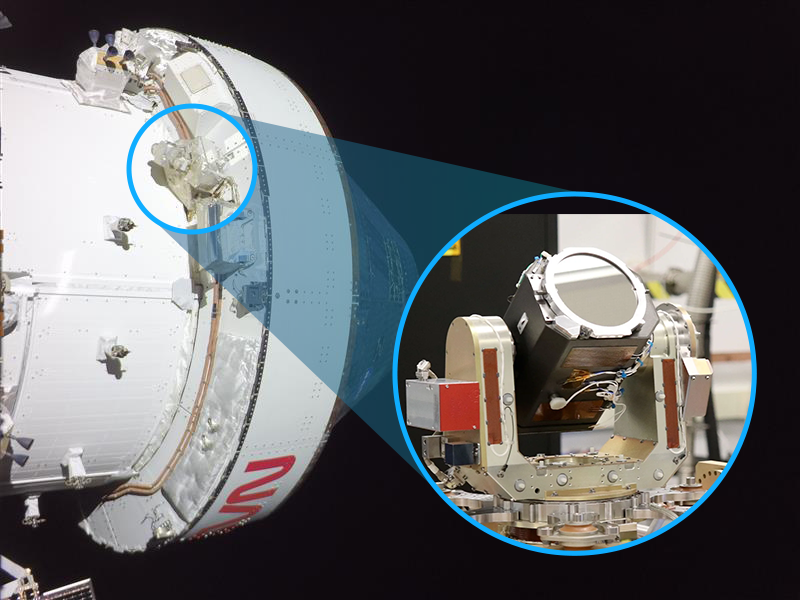
Why it matters: This matters for Space Exploration because it gives a concrete current signal to track: Millions of people watched the historic launch of Artemis II and were captivated by the mission’s 10-day journey around the Moon as NASA astronauts Reid Wiseman, Victor Glover, and Christina Koch, and CSA (Canadian Space Agency) astronaut Jeremy Hansen ventured farther into space than any human before.
Context: Millions of people watched the historic launch of Artemis II and were captivated by the mission’s 10-day journey around the Moon as NASA astronauts Reid Wiseman, Victor Glover, and Christina Koch, and CSA (Canadian Space Agency) astronaut Jeremy Hansen ventured farther into space than any human before. Part of the public’s ability to experience the mission in high-definition was due to laser communications. …
"Millions of people watched the historic launch of Artemis II and were captivated by the mission’s 10-day journey around the Moon as NASA astronauts Reid Wiseman, Victor Glover, and Christina Koch, and." — THEINNATCOCOABEACH
Commentary: The immediate implication is operational rather than speculative: watch how this changes budgets, workflows, or risk assumptions over the next cycle.
Date: April 28, 2026 12:00 AM ET
URL: https://theinnatcocoabeach.com/nasa-laser-terminal-enhances-views-during-artemis-ii-mission/
AI Sentiment Score: Negative (60%)
AI Credibility Score: 7.0/10 — Medium
Scores and text generated by AI analysis of the source article indicated.
NASA Fires Up Powerful Lithium-Fed Thruster for Trips to Mars (Jpl.Nasa.Gov)
Summary: A technology that could propel crewed missions to Mars and robotic spacecraft throughout the solar system was recently put to the test at NASA’s Jet Propulsion Laboratory in Southern California. On Feb. 24, for the first time in years and at power levels exceeding any previous test in the United States, a team fired up an electromagnetic thruster that runs on lithium metal vapor.

Why it matters: This matters for Space Exploration because it gives a concrete current signal to track: A technology that could propel crewed missions to Mars and robotic spacecraft throughout the solar system was recently put to the test at NASA’s Jet Propulsion Laboratory in Southern California.
Context: A technology that could propel crewed missions to Mars and robotic spacecraft throughout the solar system was recently put to the test at NASA’s Jet Propulsion Laboratory in Southern California. On Feb. 24, for the first time in years and at power levels exceeding any previous test in the United States, a team fired up an electromagnetic thruster that runs on lithium metal vapor.
"A technology that could propel crewed missions to Mars and robotic spacecraft throughout the solar system was recently put to the test at NASA’s Jet Propulsion Laboratory in Southern California. On Feb." — JPL.NASA.GOV
Commentary: The immediate implication is operational rather than speculative: watch how this changes budgets, workflows, or risk assumptions over the next cycle.
Date: Tue, 28 Apr 2026 09:00:00 -0700
URL: https://www.jpl.nasa.gov/news/nasa-fires-up-powerful-lithium-fed-thruster-for-trips-to-mars
AI Sentiment Score: Negative (60%)
AI Credibility Score: 10.0/10 — High
Scores and text generated by AI analysis of the source article indicated.
NASA wants to use a fleet of MoonFall drones to scout the lunar … (Space)
Summary: Last month, NASA chief Jared Isaacman ripped off the Band-Aid on the space agency’s back-to-the-moon agenda, calling for a large overhaul of NASA’s Artemis Program. One of his announcements was a speedy series of robotic missions to scout, conduct experiments and prepare for surface operations ahead of any "rebooting" of the lunar landscape by astronauts in 2028. As part of NASA’s "Ignition" event on March 24, Isaacman called for clearing away needless obstacles that impede progress, said the agency would "unleash the workforce and industrial might of our nation" to return to the lunar landscape and build a moon base.

Why it matters: This matters for Space Exploration because it gives a concrete current signal to track: Last month, NASA chief Jared Isaacman ripped off the Band-Aid on the space agency’s back-to-the-moon agenda, calling for a large overhaul of NASA’s Artemis Program.
Context: Last month, NASA chief Jared Isaacman ripped off the Band-Aid on the space agency’s back-to-the-moon agenda, calling for a large overhaul of NASA’s Artemis Program. One of his announcements was a speedy series of robotic missions to scout, conduct experiments and prepare for surface operations ahead of any "rebooting" of the lunar landscape by astronauts in 2028. As part of NASA’s "Ignition" event on March 24, Isaacman called for clearing away needless obstacles that impede progress, said the agency would "unleash the workforce and industrial might of our nation" to return to the lunar landscape and build a moon base.
"Last month, NASA chief Jared Isaacman ripped off the Band-Aid on the space agency’s back-to-the-moon agenda, calling for a large overhaul of NASA’s Artemis Program. One of his announcements was a speedy." — SPACE
Commentary: The immediate implication is operational rather than speculative: watch how this changes budgets, workflows, or risk assumptions over the next cycle.
Date: April 27, 2026 12:00 AM ET
URL: https://www.space.com/astronomy/moon/nasa-wants-to-use-a-fleet-of-moonfall-drones-to-scout-the-lunar-south-pole-we-believe-we-can-do-it
AI Sentiment Score: Negative (66%)
AI Credibility Score: 10.0/10 — High
Scores and text generated by AI analysis of the source article indicated.
NASA Spaceline Current Awareness List #1,197 24 April 2026 … (Astrobiology)
Summary: 1. Moriggi M, Capitanio D, Torretta E, Metatla I, Frings-Meuthen P, Heinz V, Trautmann G, Salanova M, Blottner D, Gelfi C.Proteograph™-based proteome and sphingolipidome analyses identified novel serum biomarkers to monitor astronauts’ health in spaceflight. Front Physiol. 2026 Apr 21;17:1773221.Note: ISS results.This article may be obtained online without charge.

Why it matters: This matters for Space Exploration because it gives a concrete current signal to track: 1.
Context: 1. Moriggi M, Capitanio D, Torretta E, Metatla I, Frings-Meuthen P, Heinz V, Trautmann G, Salanova M, Blottner D, Gelfi C.Proteograph™-based proteome and sphingolipidome analyses identified novel serum biomarkers to monitor astronauts’ health in spaceflight. Front Physiol. 2026 Apr 21;17:1773221.Note: ISS results.This article may be obtained online without charge.
"1. Moriggi M, Capitanio D, Torretta E, Metatla I, Frings-Meuthen P, Heinz V, Trautmann G, Salanova M, Blottner D, Gelfi C.**Proteograph™-based proteome and sphingolipidome analyses identified novel serum biomarkers to monitor astronauts’." — ASTROBIOLOGY
Commentary: The immediate implication is operational rather than speculative: watch how this changes budgets, workflows, or risk assumptions over the next cycle.
Date: April 28, 2026 12:00 AM ET
URL: https://astrobiology.com/2026/04/nasa-spaceline-current-awareness-list-1197-24-april-2026-space-life-science-research-results.html
AI Sentiment Score: Neutral (50%)
AI Credibility Score: 10.0/10 — High
Scores and text generated by AI analysis of the source article indicated.
NASA pursues lunar terrain vehicle services for Artemis missions (Compositesworld)
Summary: # NASA pursues lunar terrain vehicle services for Artemis missionsemiNASA is seeking industry proposals before July 10, 2023, for the development and demonstration of a next-gen LTV for crewed and uncrewed exploration of the moon during Artemis missions. … #### NASA, Northrop Grumman finalize moon outpost living quarters contractd The habitation and logistics outpost (HALO), a critical components to the way station Gateway, will be assembled using a monolithic composite structure and aluminum honeycomb panels.

Why it matters: This matters for Space Exploration because it gives a concrete current signal to track: # NASA pursues lunar terrain vehicle services for Artemis missionsemiNASA is seeking industry proposals before July 10, 2023, for the development and demonstration of a next-gen LTV for crewed and uncrewed exploration of the moon during Artemis missions.
Context: # NASA pursues lunar terrain vehicle services for Artemis missionsemiNASA is seeking industry proposals before July 10, 2023, for the development and demonstration of a next-gen LTV for crewed and uncrewed exploration of the moon during Artemis missions. … #### NASA, Northrop Grumman finalize moon outpost living quarters contractd The habitation and logistics outpost (HALO), a critical components to the way station Gateway, will be assembled using a monolithic composite structure and aluminum honeycomb panels.
"# NASA pursues lunar terrain vehicle services for Artemis missionsemiNASA is seeking industry proposals before July 10, 2023, for the development and demonstration of a next-gen LTV for crewed and uncrewed exploration." — COMPOSITESWORLD
Commentary: The immediate implication is operational rather than speculative: watch how this changes budgets, workflows, or risk assumptions over the next cycle.
Date: April 27, 2026 12:00 AM ET
URL: https://www.compositesworld.com/news/nasa-pursues-lunar-terrain-vehicle-services-for-artemis-missions
AI Sentiment Score: Neutral (50%)
AI Credibility Score: 10.0/10 — High
Scores and text generated by AI analysis of the source article indicated.
NASA Plans Commercial Lunar Payload Service Contract Increase (Aviationweek)
Summary: # NASA Plans Commercial Lunar Payload Service Contract Increase Robert Wall April 28, 2026 … NASA plans to boost the financial commitment to the Commercial Lunar Payload Service (CLPS), which includes more than a dozen vendors. The contract modification would lift the cumulative, not-to-exceed ordering value to $4.2 billion from $2.6 billion, the agency said April 27.
Why it matters: This matters for Space Exploration because it gives a concrete current signal to track: # NASA Plans Commercial Lunar Payload Service Contract Increase Robert Wall April 28, 2026 …
Context: # NASA Plans Commercial Lunar Payload Service Contract Increase Robert Wall April 28, 2026 … NASA plans to boost the financial commitment to the Commercial Lunar Payload Service (CLPS), which includes more than a dozen vendors. The contract modification would lift the cumulative, not-to-exceed ordering value to $4.2 billion from $2.6 billion, the agency said April 27.
"# NASA Plans Commercial Lunar Payload Service Contract Increase Robert Wall April 28, 2026 … NASA plans to boost the financial commitment to the Commercial Lunar Payload Service (CLPS), which includes more." — AVIATIONWEEK
Commentary: The immediate implication is operational rather than speculative: watch how this changes budgets, workflows, or risk assumptions over the next cycle.
Date: April 28, 2026 12:00 AM ET
URL: https://aviationweek.com/space/budget-policy-regulation/nasa-plans-commercial-lunar-payload-service-contract-increase
AI Sentiment Score: Positive (66%)
AI Credibility Score: 7.0/10 — Medium
Scores and text generated by AI analysis of the source article indicated.
NASA Astrobiology Program Archives (Astrobiology)
Summary: Astrobiologists Search For Alien Life And Help Life On Earth In The Process This matters for Space Exploration because it gives a concrete current signal to track: Astrobiologists Search For Alien Life And Help Life On Earth In The Process

Why it matters: This matters for Space Exploration because it gives a concrete current signal to track: Astrobiologists Search For Alien Life And Help Life On Earth In The Process
Context: Astrobiologists Search For Alien Life And Help Life On Earth In The Process This matters for Space Exploration because it gives a concrete current signal to track: Astrobiologists Search For Alien Life And Help Life On Earth In The Process
Commentary: The immediate implication is operational rather than speculative: watch how this changes budgets, workflows, or risk assumptions over the next cycle.
Date: April 28, 2026 12:00 AM ET
URL: https://astrobiology.com/nasa-astrobiology-institute
AI Sentiment Score: Neutral (50%)
AI Credibility Score: 10.0/10 — High
Scores and text generated by AI analysis of the source article indicated.
Post ID: 9fb93997