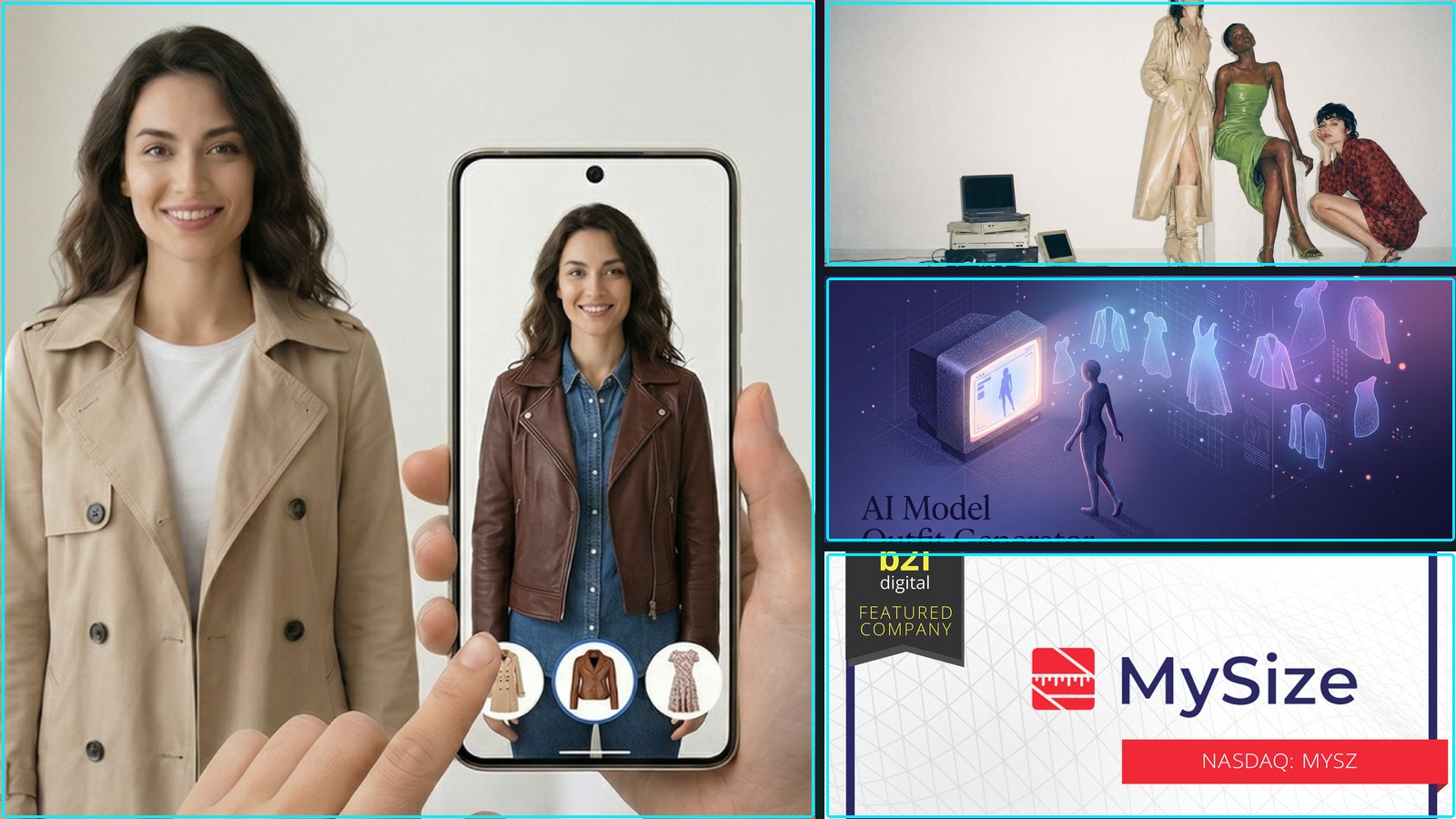
AI, Virtual Try-On & Digital Fashion Tools
ASOS: Redesigning online fashion at the speed of AI (Ukstories.Microsoft)
Summary: ASOS is deploying Microsoft’s cloud and AI stack across its value chain to compress operational timelines and personalize the customer experience. The partnership focuses on three core areas: an AI Stylist for conversational commerce, centralized data analytics for trend scouting and decision velocity, and AI agents automating back-office and development tasks. The goal is to reduce the idea-to-shelf cycle to three weeks and shift online shopping from transactional to inspirational.

Why it matters: This signals a move from AI as a feature to AI as the core operating system for fast fashion, directly impacting production speed, labor allocation, and customer data leverage.
Context: Fast fashion’s competitive edge has always been speed-to-market; ASOS is now weaponizing AI to accelerate every internal process, from trend detection to code generation, while attempting to solve online retail’s persistent inspiration deficit.
"ASOS: Redesigning online fashion at the speed of AI Fashion retailer ASOS is applying artificial intelligence and cloud services throughout its whole value chain in a frontier AI transformation partnership with Microsoft,." — UKSTORIES.MICROSOFT
Commentary: The operational model shifts from human-led curation to AI-driven prediction and automation, with humans supervising constrained agents. This pressures vendors and studios to match this velocity, while the centralized Azure data lake becomes a strategic asset for controlling the entire pipeline. The 15% agent-generated code figure is a concrete benchmark for software development labor displacement within the sector.
Date: April 30, 2026 12:00 AM ET
URL: https://ukstories.microsoft.com/features/asos-redesigning-online-fashion-at-the-speed-of-ai/
AI Sentiment Score: Negative (50%)
AI Credibility Score: 9.6/10 — High
Scores and text generated by AI analysis of the source article indicated.
Fashion Draws Closer To Some Fixed Ideas About AI, Just … (Theinterline)
Summary: AWS has published a generative AI playbook for retail, consolidating common applications like virtual try-on and personalized search. Meanwhile, deployments are maturing into integrated solutions across the product lifecycle, from design to shopfloor control, with Microsoft and ASOS reporting tangible ROI. The narrative is shifting from speculative innovation to practical, ROI-driven applications.

Why it matters: For fashion practitioners, this signals a move from experimental pilots to operational integration, where AI tools must justify their cost by improving throughput, reducing waste, or enhancing data leverage.
Context: The industry has been saturated with promotional AI narratives; the current phase involves codifying these tools into existing workflows to address persistent strategic aims like reducing digital sampling costs and improving traceability.
"The deployments that don’t justify excitable-sounding articles, though, are codifying into a much more sensible and recognisable shape." — THEINTERLINE
Commentary: The focus on ROI from Microsoft-ASOS and the AWS playbook indicates vendor consolidation and a demand for measurable impact on time-to-market and production waste. This pressures brands to prioritize integrations that affect the bottom line over novelty, reshaping vendor selection and internal tooling budgets.
Date: May 01, 2026 12:00 AM ET
URL: https://www.theinterline.com/2026/05/01/fashion-draws-closer-to-some-fixed-ideas-about-ai-just-as-the-subsidies-are-running-out/
AI Sentiment Score: Negative (75%)
AI Credibility Score: 10.0/10 — High
Scores and text generated by AI analysis of the source article indicated.
Graph Network-Based Predictive Modeling for Next-Generation … (Intechopen)
Summary: A graph network analysis of global patent data maps the innovation landscape for wearable e-textiles, identifying key convergence hubs. The study forecasts pathways where material science, electrical engineering, and AI intersect, such as self-powered sensors and biocompatible fabrics. It provides a predictive framework for R&D strategy, highlighting specific IPC code intersections that signal commercializable technology clusters.

Why it matters: For R&D managers and textile engineers, this patent map clarifies which fragmented technological intersections merit investment and partnership, directly informing pipeline prioritization and IP strategy.
Context: Smart textile innovation is notoriously fragmented across disciplines, making strategic R&D allocation difficult. Predictive modeling of patent convergence offers a data-driven method to de-risk development bets.
"These hubs highlight strong innovation activity and potential convergence pathways, including AI-enabled health monitoring fabrics, sustainable e-textiles, biocompatible sensors, and self-powered textiles." — INTECHOPEN
Commentary: The explicit linking of IPC codes (e.g., B32B with H05K) provides a concrete tool for IP teams to monitor competitive activity and identify white-space opportunities. For manufacturers, the focus on ‘washable energy-harvesting materials’ and ‘recyclable conductive fibers’ signals a shift from lab prototypes to production-ready specs, impacting vendor selection and sustainability compliance workflows.
Date: April 24, 2026 12:00 AM ET
URL: https://www.intechopen.com/online-first/1236203
AI Sentiment Score: Negative (50%)
AI Credibility Score: 10.0/10 — High
Scores and text generated by AI analysis of the source article indicated.
2026: Why Virtual Try-On is Killing the Fashion Photoshoot (Weshop.Ai)
Summary: The article argues that 2026 marks a tipping point for Virtual Try-On (VTON) technology, moving it from a gimmick to a core operational tool. It cites the emergence of high-fidelity physics models like ‘nanobanana pro,’ which use dual neural networks to simulate fabric behavior and garment geometry accurately. This shift enables zero-sample marketing campaigns and drastically reduces the logistical overhead of influencer outreach and product returns.

Why it matters: For fashion industry practitioners, this changes the cost structure and timeline of product launches, directly impacting sampling budgets, marketing asset production, and supply chain emissions.
Context: VTON has evolved from basic GANs and diffusion models, which required significant manual input, to a ‘one-click’ API standard that simulates real-world physics.
"To understand why 2026 is the tipping point, we have to look at the “Uncanny Valley” of fashion AI. For years, Virtual Try-On felt like a cheap digital sticker. Today, it operates." — WESHOP.AI
Commentary: The operational consequence is the decoupling of marketing and physical production, allowing for pre-manufacturing campaign deployment. This pressures traditional photography studios, sample logistics vendors, and influencer agencies to adapt or face obsolescence. The focus on reducing return rates through accurate fit simulation directly attacks a major cost center and sustainability pain point for retailers.
Date: April 22, 2026 12:00 AM ET
URL: https://www.weshop.ai/blog/why-2026-is-the-year-the-professional-photoshoot-dies-thanks-to-virtual-try-on/
AI Sentiment Score: Negative (50%)
AI Credibility Score: 10.0/10 — High
Scores and text generated by AI analysis of the source article indicated.
Virtual Try-On Tools (Trendhunter)
Summary: AI-powered virtual try-on tools are moving from speculative features to operational retail infrastructure, deployed to reduce return rates and improve conversion. The trend themes highlight a shift toward AI-driven fit personalization and AR dressing rooms, which alter the customer evaluation process. Industry implications point to integration pressures for e-commerce platforms, experiential reframing for physical stores, and data-driven adjustments for apparel manufacturing pipelines.

Why it matters: For practitioners, this signals a concrete change in workflow: digital garment models and fit data are becoming critical inputs for pattern-making and inventory planning, directly impacting production waste and time to market.
Context: This follows a multi-year push to digitize sampling and fit validation, where the primary barrier has been accuracy and integration cost.
"Businesses use it to potentially reduce return rates and improve conversion rates by offering a more immersive shopping experience." — TRENDHUNTER
Commentary: The operational consequence is a new data layer: fit and style interaction data from these tools will inform manufacturing throughput and inventory planning, enabling a shift toward on-demand fabrication. For studios and post teams, this creates demand for high-fidelity 3D garment assets as a production standard, not just a marketing asset. The reduction in physical sampling cost is real, but the larger shift is in traceability and customer data leverage for sizing models.
Date: April 24, 2026 12:00 AM ET
URL: https://www.trendhunter.com/trends/clothing-virtual-try-on
AI Sentiment Score: Negative (71%)
AI Credibility Score: 10.0/10 — High
Scores and text generated by AI analysis of the source article indicated.
Virtual Try On Clothing App for E-Commerce | Optidress (Optidress.Fr)
Summary: OptiDress, a Shopify-integrated virtual try-on app, is marketing a three-step workflow for e-commerce brands: customers select items, create a 3D avatar with body measurements, and drag-drop garments onto it before checkout. The vendor claims the tool boosts conversion rates and reduces returns by addressing sizing uncertainty. It includes an analytics dashboard showing claimed metrics like a 35.8% increase in conversion rate and a 23.8% reduction in return costs. The service is pitched as a subscription with 24/7 support and emphasizes a ‘trained’ avatar to minimize bugs.

Why it matters: For e-commerce operators, a reliable virtual try-on tool directly impacts key financial metrics: conversion rate, average order value, and the significant cost of returns.
Context: Virtual fitting rooms are a crowded segment aiming to solve e-commerce’s fundamental fit problem. Success hinges on avatar accuracy, garment simulation realism, and seamless integration into the purchase funnel.
"Boost your conversion rate and reduce returns. Your customers can now try your clothes before buying them." — OPTIDRESS.FR
Commentary: The emphasis on a ‘trained’ avatar and 24/7 support suggests the operational hurdle isn’t the tech demo, but maintaining consistent, bug-free performance at scale. The claimed dashboard metrics, if replicable, shift the tool from a nice-to-have feature to a core margin-protection system. For brands, the critical evaluation shifts from ‘does it look cool’ to ‘does it integrate with our product data pipeline and actually move our KPIs without increasing support burden’.
Date: April 29, 2026 12:00 AM ET
URL: https://optidress.fr
AI Sentiment Score: Positive (44%)
AI Credibility Score: 7.0/10 — Medium
Scores and text generated by AI analysis of the source article indicated.
Virtual Try-On Technology in 2026: How It Works & Key Trends | Designkit (Designkit)
Summary: Virtual try-on technology in 2026 is defined by a mature technical stack combining computer vision, generative AI, and 3D rendering, enabling real-time, high-fidelity garment visualization. Key operational impacts include a reported 60% reduction in return rates through AI-driven size prediction and a 30% increase in sales conversions for retailers adopting the tools. The market is shifting from static e-commerce pages to social commerce channels like TikTok and Instagram, with latency dropping to sub-15-second outputs, driven by edge computing and 5G. Adoption is bifurcating: large enterprises like Amazon deploy it at scale, while mid-market brands use it to eliminate photoshoots, reduce time-to-market, and cut studio costs.
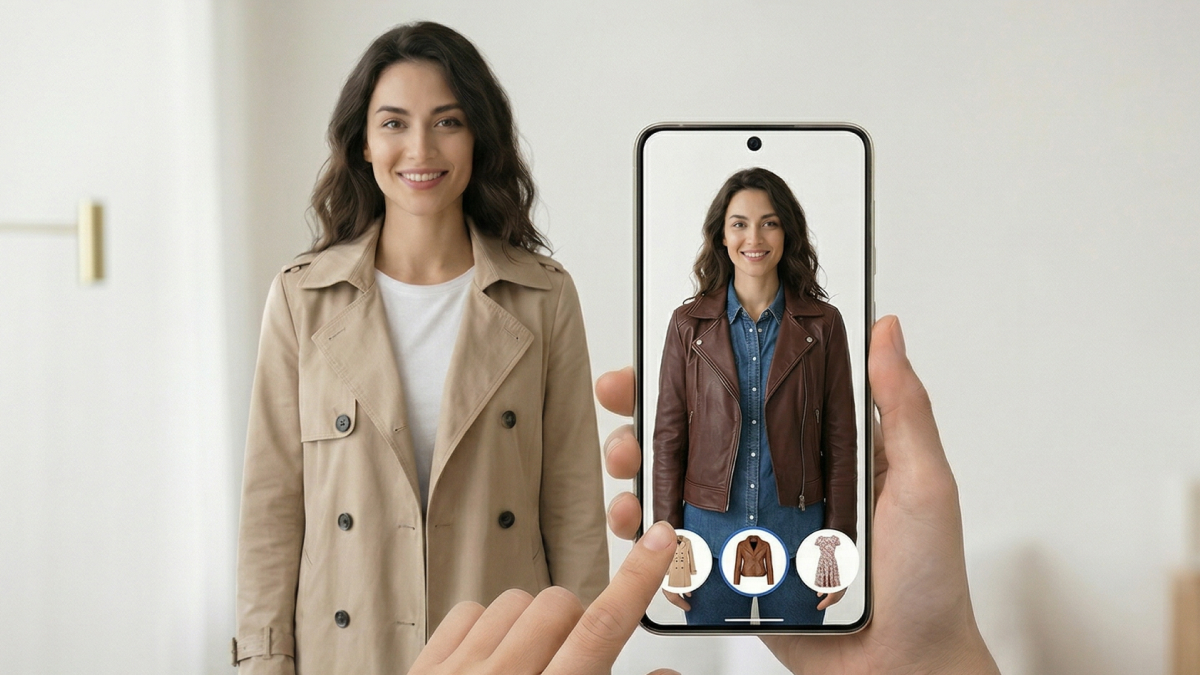
Why it matters: For fashion retailers and e-commerce operators, this changes the unit economics of online sales by directly attacking return rates and photography costs, while altering the channel strategy for customer acquisition.
Context: The push for virtual try-on is a multi-year effort to mitigate the core financial and experiential pain points of online fashion retail: high return rates and the cost/lead time of physical product photography.
"A recent Mordor Intelligence research shows that advanced AI-driven size prediction tools can help retailers trim return rates by 60%." — DESIGNKIT
Commentary: The 60% return rate reduction is the pivotal metric; if substantiated, it redefines the ROI calculus for this technology from a marketing novelty to a core operational tool. The concurrent drive into social commerce suggests the technology is becoming a conversion layer rather than just a visualization aid, embedding shopping directly into content streams. However, the persistent limitations in rendering complex fabrics like sheers and knits mean high-end and luxury segments may still require physical sampling, creating a tiered adoption landscape.
Date: April 30, 2026 12:00 AM ET
URL: https://www.designkit.com/blog/virtual-try-on-technology
AI Sentiment Score: Negative (57%)
AI Credibility Score: 7.0/10 — Medium
Scores and text generated by AI analysis of the source article indicated.
AI Shopping Assistant for Apparel Retail (Fitanalytics)
Summary: Fitanalytics is marketing an AI shopping assistant designed to intervene at points of hesitation in the apparel e-commerce journey. The tool aims to convert browsing into sales by providing context-specific guidance on style, selection, and fit. The value proposition for retailers centers on increasing conversion rates and basket size while reducing returns.

Why it matters: For apparel retailers, this directly targets operational pain points: cart abandonment and high return rates, which are major cost centers and logistical challenges.
Context: The apparel e-commerce sector is saturated with generic recommendation engines; differentiation now hinges on tools that can interpret shopper intent and provide decisive, personalized guidance to close sales.
"When a shopper hesitates, the Assistant responds with what they need in that moment – whether that’s surfacing the right style, narrowing down options, or a clear fit recommendation." — FITANALYTICS
Commentary: The shift from passive recommendation to active, moment-based intervention represents a new layer of automation in the sales funnel. Success will depend on the assistant’s ability to leverage proprietary fit and purchase data to make credible recommendations, moving beyond simple collaborative filtering. This could pressure retailers to deepen their first-party data collection to feed such systems, altering vendor relationships and internal analytics priorities.
Date: April 23, 2026 12:00 AM ET
URL: https://fitanalytics.com/ai-shopping-assistant
AI Sentiment Score: Negative (57%)
AI Credibility Score: 10.0/10 — High
Scores and text generated by AI analysis of the source article indicated.
Fit Collective Secures €3.4 Million Pre‑Seed to … (Mycapital.Co.Uk)
Summary: Fit Collective, a London-based fashiontech startup, has raised €3.4 million in pre-seed funding to scale its AI platform for garment sizing optimization. Founded by Savile Row-trained designer Phoebe Gormley, the company analyzes returns data, fabric behavior, and sales patterns to predict fit issues before production. The platform is positioned as a ‘co-pilot’ for design and technical teams, aiming to reduce return rates and associated waste. Early adopters include brands like Rixo, Ro & Zo, and Boden.

Why it matters: This matters to industry practitioners because it directly targets the costly operational pain points of returns, overproduction, and waste by intervening at the pattern-making stage, potentially altering production workflows and cost structures.
Context: The funding round highlights growing VC interest in fashiontech solutions that address fundamental supply chain and operational inefficiencies, moving beyond consumer-facing ‘find my size’ tools to backend, data-driven design systems.
"London‑based fashion technology startup Fit Collective has closed a €3.4 million (£3 million) pre‑seed funding round to scale its AI‑driven platform that helps apparel brands improve garment sizing and reduce costly returns." — MYCAPITAL.CO.UK
Commentary: The shift from post-purchase return management to pre-production prediction changes the cost equation for brands, potentially reducing digital sampling iterations and physical waste. If successful, it could recalibrate technical design roles, requiring new data literacy and shifting vendor relationships for pattern-making and grading. The scale of the pre-seed round signals investor confidence that solving fit is a tractable, high-value problem warranting deep tech investment.
Date: April 28, 2026 12:00 AM ET
URL: https://mycapital.co.uk/fit-collective-secures-e3-4-million-pre-seed-to-revolutionize-garment-sizing-with-ai/
AI Sentiment Score: Negative (70%)
AI Credibility Score: 7.0/10 — Medium
Scores and text generated by AI analysis of the source article indicated.
MySize, Inc. | Nasdaq: MYSZ | B2i Digital Featured Company (B2Idigital)
Summary: MySize, Inc. (Nasdaq: MYSZ) reports an 18% year-over-year revenue increase to $8.26 million in fiscal 2024, driven by its integrated suite of SaaS platforms addressing fashion’s $300 billion annual problem of returns and overstock. Its three businesses—Naiz Fit for size recommendation, Percentil for secondhand/resale, and Orgad for overstock clearance—share data and infrastructure, allowing brands to manage the full inventory lifecycle within a single vendor relationship. The company cites return reductions of 15-40% and conversion rate increases of 2x to 8x for clients using Naiz Fit, which has profiled over 220,000 garments using data from more than 20 million consumers.
Why it matters: For fashion brands and their operations teams, this signals a shift toward integrated, data-driven vendor ecosystems that directly impact key financial metrics—reducing return rates and markdown waste while creating new revenue streams from circularity mandates.
Context: EU regulations are increasingly mandating circularity and waste reduction, forcing brands to adopt resale infrastructure and return-reduction tools. The market is consolidating around platforms that offer multiple, interoperable solutions rather than point tools.
"Clients report return reductions of 15% to 40% and conversion rate increases of 2x to 8x after deploying the technology." — B2IDIGITAL
Commentary: The operational consequence is vendor consolidation: brands can now source fit technology, resale platforms, and liquidation channels from a single provider, streamlining integration costs and data silos. This pressures standalone fit-tech or recommerce vendors to either expand their offerings or risk being sidelined. For procurement and IT departments, the evaluation shifts from best-of-breed point solutions to assessing the total lifecycle ROI of an integrated stack. The reported metrics, if sustainable, materially alter the unit economics of online fashion, making compliance with circularity regulations a revenue opportunity rather than a cost center.
Date: April 24, 2026 12:00 AM ET
URL: https://b2idigital.com/my-size-inc-1
AI Sentiment Score: Negative (80%)
AI Credibility Score: 7.0/10 — Medium
Scores and text generated by AI analysis of the source article indicated.
Fit Analyzer vs Size Chart: Which Cuts Returns More? (Alhena.Ai)
Summary: Alhena.Ai’s analysis positions AI-powered fit analyzers as a direct operational upgrade over traditional size charts, citing a 20-35% reduction in size-related returns versus 5-10% for charts. The core argument is that fit analyzers shift the decision burden from the shopper to the system by interpreting chart data, resolving between-sizes ambiguity, and mapping sizes across brands. This translates to measurable performance lifts: brands like Mammut reported a 22% conversion increase, and Tatcha saw 3x conversions.
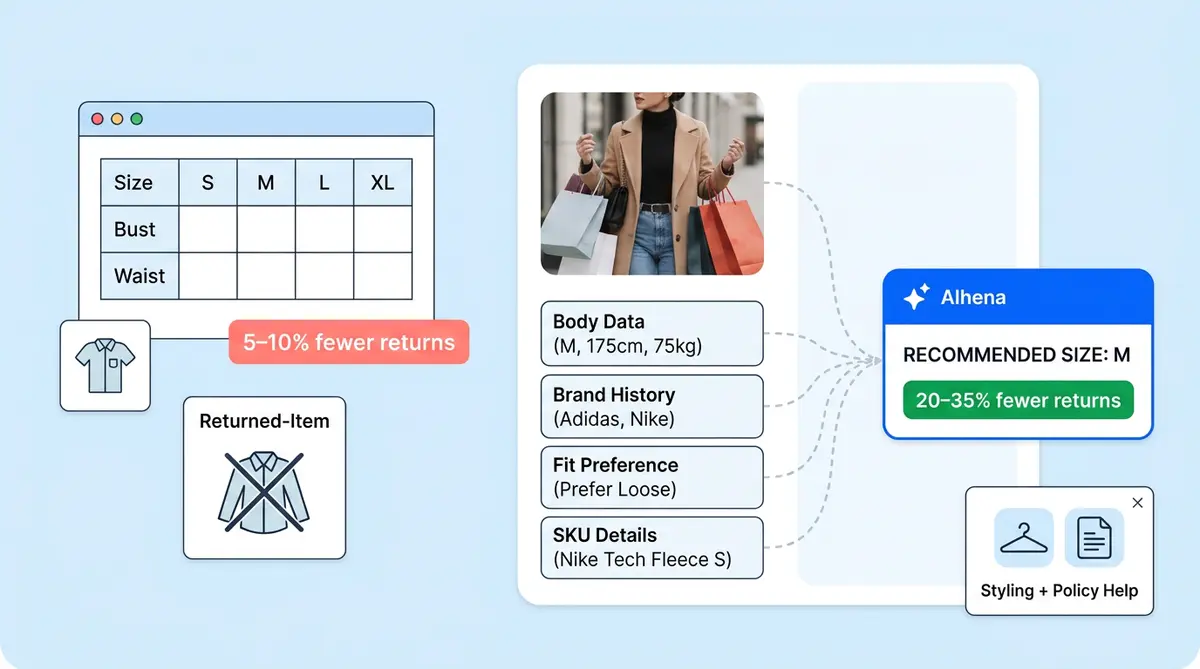
Why it matters: For fashion e-commerce operators, this quantifies the return-on-investment case for deploying AI sizing tools, directly impacting key metrics like return rates, conversion, and inventory efficiency.
Context: The high cost of returns, driven predominantly by fit issues, remains a persistent operational and profitability challenge for online apparel retailers, even when shoppers consult size charts.
"A size chart is a dictionary. A fit analyzer is a translator for apparel sizing. Both give you sizing information, but only one shows what the fit will look like on the." — ALHENA.AI
Commentary: The 2x to 7x performance gap frames the fit analyzer not as a feature but as a necessary decision-support layer. Its integration model—pulling from existing product metadata and checking live inventory—means deployment alters the conversion funnel without disrupting backend data pipelines. For practitioners, the shift is from providing data to automating the sizing decision, which changes how merchandising teams structure product information and how customer service handles fit inquiries.
Date: April 24, 2026 12:00 AM ET
URL: https://alhena.ai/blog/fit-analyzer-vs-size-chart-returns/
AI Sentiment Score: Negative (50%)
AI Credibility Score: 9.7/10 — High
Scores and text generated by AI analysis of the source article indicated.
How to Solve the $850B Retail Returns Problem (Gspann)
Summary: The $850B retail returns problem is being addressed through targeted technology deployments, not just promotional virtual try-on. AI sizing and fit tools are reducing return rates by up to 40% by tackling the primary cause of returns: size mismatch. Meanwhile, computer vision is automating the reverse logistics process, routing returned items to their highest-value disposition path, transforming warehouses into AI-powered sorting centers.

Why it matters: For fashion brands and retailers, these technologies directly impact bottom-line profitability by reducing return rates and optimizing the costly dispositioning process, shifting capital from waste management to revenue recovery.
Context: Returns have long been a systemic drain, but solutions have been fragmented. The shift is from generic ‘innovation’ to specific, data-driven interventions at key pain points in the pre-purchase and post-return workflow.
"Returns are retail’s quiet profit killer. Virtual try-on gets the headlines, but it only fixes one reason people send things back. Here is what really drives returns, what actually reduces them, and." — GSPANN
Commentary: The operational focus is bifurcating: front-end AI for fit prediction and back-end computer vision for asset recovery. This creates a new vendor landscape specializing in either conversion optimization or logistics automation, forcing brands to integrate distinct tech stacks. The real metric of success is not the tech demo but the reduction in manual inspection labor and the increase in inventory velocity from returns.
Date: April 22, 2026 12:00 AM ET
URL: https://www.gspann.com/insights/blog/how-to-solve-the-usd850b-retail-returns-problem
AI Sentiment Score: Positive (45%)
AI Credibility Score: 10.0/10 — High
Scores and text generated by AI analysis of the source article indicated.
AI Model Outfit Generator Guide for Fashion E-Commerce … (Blog.Segmind)
Summary: AI model outfit generators are being deployed as a production tool to create on-model fashion visuals from separate product and model images, eliminating the need for a physical shoot for each catalog update. The process involves feeding a flat-lay garment image and a model image into an API to generate a composite, photograph-style result. This shifts the workflow from studio booking and model casting to digital asset management and API calls.
Why it matters: For fashion e-commerce teams, this directly impacts production timelines, reduces costs associated with physical shoots, and enables rapid scaling of catalog visuals across thousands of SKUs.
Context: The push for faster, cheaper content at scale in e-commerce is driving adoption of synthetic media tools, moving beyond speculative ‘innovation’ to operational integration for core tasks like catalog imagery.
"Instead of booking a model and renting a studio for every catalog refresh, you put a product image and a model image into an API and generate an on-model fashion visual that is ready to review, QA, and ship." — BLOG.SEGMIND
Commentary: The operational consequence is a reallocation of budget from photography crews and studio rentals to AI vendor fees and internal QA labor. This creates a new dependency on the consistency and quality of the AI model’s outputs, introducing a novel technical risk into the visual merchandising pipeline. It also pressures brands to maintain high-quality, standardized input asset libraries, shifting the bottleneck from production scheduling to digital asset management.
Date: April 30, 2026 12:00 AM ET
URL: https://blog.segmind.com/ai-model-outfit-generator-guide-for-fashion-e-commerce-2026/
AI Sentiment Score: Positive (50%)
AI Credibility Score: 9.0/10 — High
Scores and text generated by AI analysis of the source article indicated.
Arts University Bournemouth takes AI and VR fashion tech … (Edtechinnovationhub)
Summary: Arts University Bournemouth is leveraging Fashion SVP 2026 to reposition itself as a commercial partner for the fashion industry, moving beyond its traditional role as a talent pipeline. Its Innovation Hub showcases AI pattern engineering, VR design workflows, and Digital Product Passport systems already in use by major brands. Concurrently, it is soft-launching the AUB Agency, a model for direct industry access to student talent through live briefs and consultancy ahead of a full public debut in Summer 2026.

Why it matters: This signals a structural shift in how fashion brands may source innovation and talent, directly integrating R&D and production-ready tools from academic institutions into their commercial pipelines.
Context: Fashion SVP is a key sourcing event for volume fashion, where operational efficiency and speed-to-market are primary currencies. Universities have historically been seen as feeders for graduate labor, not as providers of deployable commercial technology or on-demand project teams.
"The AUB Agency soft launch at Fashion SVP is the first public test of whether a UK arts university can position itself as a commercial AI and digital design partner rather than simply a graduate supplier, with the Summer 2026 full launch the next marker to watch." — EDTECHINNOVATIONHUB
Commentary: The move commoditizes university IP and student labor into a just-in-time service, potentially compressing the innovation-to-production timeline for brands. It also creates a new competitive layer for consultancies and tech vendors, as AUB bundles tool development (e.g., TechThread.ai’s pattern conversion) with design talent and traceability solutions (Green Threads DPP) under one commercial roof. The success of the AUB Agency model could pressure other institutions to monetize their research ecosystems similarly, altering the vendor landscape for digital sampling, supply chain compliance, and margin analysis tools.
Date: April 28, 2026 12:00 AM ET
URL: https://www.edtechinnovationhub.com/news/arts-university-bournemouth-takes-ai-and-vr-fashion-tech-to-olympia-london-this-week
AI Sentiment Score: Negative (50%)
AI Credibility Score: 7.0/10 — Medium
Scores and text generated by AI analysis of the source article indicated.
Are Mandatory Digital Twins Reshaping Fashion? – Style3D AI (Style3D.Ai)
Summary: The phygital fashion trend is the convergence of physical apparel and digital representation, where every garment is sold alongside a corresponding virtual version. … Phygital fashion is the combination of physical and digital apparel, where every real-world purchase includes a virtual counterpart for use in gaming and social platforms.

Why it matters: Mandatory digital twins suggest a shift in SKU management, requiring integrated PLM/3D asset pipelines for physical-digital parity.
Context: Focus shifts to operationalizing the ‘phygital’ loop: ensuring virtual assets are generated and tracked alongside physical goods for commerce.
"The phygital fashion trend is the convergence of physical apparel and digital representation, where every garment is sold alongside a corresponding virtual version. … Phygital fashion is the combination of physical and." — STYLE3D.AI
Commentary: The signal is still worth tracking, but the current extraction path did not yield enough body text for a fuller analytical read. The immediate implication is operational rather than speculative: watch how this changes budgets, workflows, or risk assumptions over the next cycle.
Date: May 01, 2026 12:00 AM ET
URL: https://www.style3d.ai/blog/are-mandatory-digital-twins-reshaping-fashion/
AI Sentiment Score: Neutral (50%)
AI Credibility Score: 10.0/10 — High
Scores and text generated by AI analysis of the source article indicated.
How Can 3D Fashion Software Transform Your PLM & ERP Systems? (Style3D)
Summary: Style3D’s article positions its 3D fashion software as a direct integration layer for enterprise PLM and ERP systems, moving beyond standalone tools. The core proposition is embedding real-time cloth simulation, AI automation, and digital asset management into existing workflows via open APIs and SDKs. This aims to reduce physical sampling, accelerate design-to-production cycles, and address the legacy gap where PLM systems typically handle only 2D data.

Why it matters: For technical architects and production leads, this signals a shift from managing separate 3D tools to embedding simulation directly into core enterprise systems, altering integration roadmaps and vendor selection criteria.
Context: The fashion industry’s push for digital transformation has long been hampered by fragmented tools and legacy PLM systems ill-equipped for 3D workflows, creating parallel processes and high sampling costs.
"3D fashion software transforms PLM and ERP systems by embedding real-time cloth simulation, AI-driven automation, and open APIs directly into existing enterprise infrastructure. This eliminates fragmented workflows, reduces physical sampling significantly, and." — STYLE3D
Commentary: The move from standalone 3D software to embedded APIs represents a maturation of the market, forcing PLM vendors to either build native capabilities or cede control to third-party integrators like Style3D. For brands, successful implementation hinges on technical audits of legacy systems and pilot programs that quantify reductions in sampling and cycle time before enterprise-scale deployment. The emphasis on open APIs and standardized formats (DXF, OBJ, FBX) is a direct response to vendor lock-in concerns, but creates new dependencies on the simulation engine provider’s ecosystem and support.
Date: April 27, 2026 12:00 AM ET
URL: https://www.style3d.com/blog/how-can-3d-fashion-software-transform-your-plm-erp-systems/
AI Sentiment Score: Positive (40%)
AI Credibility Score: 10.0/10 — High
Scores and text generated by AI analysis of the source article indicated.
CLO secures victory in software copyright infringement case (Fibre2Fashion)
Summary: A Chinese court has issued a final judgment against Linctex for willful, commercial-scale copyright infringement of CLO Virtual Fashion’s 3D design software. The ruling dismisses a ‘fair use’ defense and orders cessation of infringement and compensation. CLO’s CEO frames the victory as a signal to the industry about intellectual property rules and a commitment to market stability.

Why it matters: For studios and brands, this establishes a legal precedent that using cracked software for commercial digital sampling and design carries concrete financial and operational risk, potentially disrupting production pipelines reliant on unlicensed tools.
Context: Software piracy has been a persistent cost and competitive issue in 3D fashion design, where tools like CLO are critical for digital sampling, which reduces physical waste and time to market.
"We pursued this case to protect not only our own innovations but the stability of the entire digital fashion ecosystem. Brands and companies need to know that the tools they rely on are stable, secure, and built on sound foundations." — FIBRE2FASHION
Commentary: The ruling directly pressures manufacturers and brands to audit their software licenses, potentially increasing operational costs but standardizing the toolchain. For CLO, it strengthens its pricing power and justifies investment in localized support, which could accelerate adoption of its validated digital workflow in a key market.
Date: Sun, 03 May 2026 09:08:02 GMT
URL: https://www.fibre2fashion.com/news/textiles-technology-news/clo-secures-victory-in-software-copyright-infringement-case-307745-newsdetails.htm
AI Sentiment Score: Negative (66%)
AI Credibility Score: 10.0/10 — High
Scores and text generated by AI analysis of the source article indicated.
Fast fashion inventory AI and IoT landscape 2026 (Patsnap)
Summary: A 2026 patent landscape analysis shows the intellectual property for fashion-specific supply chain automation platforms remains sparse, with only one active World Intellectual Property Organization filing (Refashiond OS Inc., 2022). Recent Chinese and Indian patents focus on optimizing manufacturer-livestream-retail channels and converting unsold inventory, while literature increasingly links inventory optimization with sustainability compliance via blockchain and IoT. The core automation architecture for orchestrating fashion’s design-to-shelf cycle is an underdeveloped IP space.

Why it matters: For operations and tech teams, this signals a nascent but high-stakes competitive arena where first-movers in platform automation could lock in significant workflow and data advantages.
Context: Fast fashion’s operational model depends on extreme inventory velocity and low forecasting error, making supply chain tech a direct competitive lever.
"With only one WO patent (Refashiond OS Inc., 2022) explicitly targeting fashion industry supply chain automation as a platform OS, the IP landscape for fashion-specific demand-supply orchestration platforms remains substantially underpopulated as of 2026." — PATSNAP
Commentary: The scarcity of platform patents suggests most automation is built on generic enterprise software, creating a vulnerability and an opportunity. Refashiond OS’s integrated approach—tying design IP, marketplace, and workflow to NFT controls—could become a de facto standard if adopted, forcing brands onto its data model. The shift from pure inventory math (like the 2022 hybrid metaheuristic study) to integrated platforms with blockchain traceability indicates the next efficiency gains require end-to-end data unification, not just better algorithms.
Date: May 01, 2026 12:00 AM ET
URL: https://www.patsnap.com/resources/blog/articles/fast-fashion-inventory-ai-and-iot-landscape-2026/
AI Sentiment Score: Negative (66%)
AI Credibility Score: 10.0/10 — High
Scores and text generated by AI analysis of the source article indicated.
AI Turns Thrift Into Profitable Fashion Marketplace (Letsdatascience)
Summary: AI has transitioned from a peripheral tool to the core operational infrastructure enabling the profitability of secondhand fashion marketplaces. Platforms are deploying computer vision and generative models to solve the fundamental cataloging and discovery problems inherent in unique-item inventory. This technical shift is underpinning the sector’s growth, with the global market reaching $289 billion in 2025.

Why it matters: For resale operators and brands entering the channel, the margin calculus now hinges on deploying targeted AI systems for search, pricing, and catalog normalization.
Context: The resale market’s structural challenge is that every SKU is unique, rendering classical retail catalog systems ineffective.
"AI has converted secondhand apparel from a logistical headache into a high-margin retail channel. … Platforms solved the core technical challenge of uniqueness by applying computer vision and generative models to discovery,." — LETSDATASCIENCE
Commentary: The operational consequence is a reallocation of labor from manual cataloging to system oversight and data curation. For vendors, this reduces time-to-listing and improves pricing accuracy through cross-platform comparables. The shift also pressures brands to consider how their own product data feeds into these external identification layers, potentially ceding control over secondary market presentation.
Date: April 21, 2026 12:00 AM ET
URL: https://letsdatascience.com/news/ai-turns-thrift-into-profitable-fashion-marketplace-81e30183
AI Sentiment Score: Negative (50%)
AI Credibility Score: 10.0/10 — High
Scores and text generated by AI analysis of the source article indicated.
Legit Check: AI Auth Scanner – App Store – Apple (Apps.Apple)
Summary: Apple’s App Store now hosts ‘Legit Check: AI Auth Scanner,’ a consumer-facing application that uses AI to analyze photos of fashion items for authenticity. The app scans stitching, logos, materials, and other visual details to return a ‘real or fake’ assessment, targeting secondary market transactions for sneakers, bags, and streetwear. It operates as a rapid, on-device tool designed to reduce risk in peer-to-peer and consignment purchases, though it explicitly disclaims being a suggest.

Why it matters: This represents a direct, consumer-grade automation of a core authentication workflow, potentially altering risk assessment and trust dynamics in the secondary fashion market.
Context: Authentication has traditionally relied on expert human labor, centralized verification services, or physical inspection. The emergence of AI-powered, decentralized scanning tools shifts this capability to the point of sale.
"# Legit Check: AI Auth Scanner Real or Fake Sneaker Bag Scan Free · In-App Purchases · Designed for iPad. … Scan before you cop. Get a fast AI-powered legit check for." — APPS.APPLE
Commentary: The app commoditizes a key gatekeeping function, potentially compressing the value of individual authenticator expertise and creating a new data layer on counterfeit trends. For brands, it could accelerate the arms race in anti-counterfeiting features, as fakes adapt to evade algorithmic detection. For resale platforms, integration of such tools could become a baseline expectation, altering liability and verification cost structures.
Date: April 22, 2026 12:00 AM ET
URL: https://apps.apple.com/ca/app/legit-check-ai-auth-scanner/id6761913359
AI Sentiment Score: Negative (60%)
AI Credibility Score: 10.0/10 — High
Scores and text generated by AI analysis of the source article indicated.
Exclusive: Swan Beauty CEO on the @acquiredstyle bachelorette party that broke the internet (Glossy.Co)
Summary: Swan Beauty, a four-month-old AI mirror startup, executed a high-cost, high-impact brand awareness play by becoming the exclusive sponsor of influencer Brigette Pheloung’s (@acquiredstyle) luxury bachelorette trip to St. Barth’s. The activation, involving a private jet, villa, and gifting to creator guests, generated a social media firestorm, driving a 3,800% surge in impressions, 11,000% increase in engagements, and a 4,000% week-over-week jump in iOS app downloads. Founder Colby Mitchell self-funded the venture through family office capital, framing the move as a ‘culture-first’ strategy to build community for its $795 mirror and subscription app.

Why it matters: This demonstrates a new operational playbook for launching capital-intensive, niche hardware products: leveraging ultra-high-net-worth founder liquidity to bypass traditional venture scaling and buy concentrated cultural attention through lavish, spectacle-driven creator partnerships.
Context: The activation reflects a shift from broad, paid media buys to targeted, high-stakes ‘moment marketing’ orchestrated through personal networks, where the ROI is measured in earned media value and direct conversion spikes rather than gradual follower growth.
"Since the trip began and the branded private jet was unveiled on social media, Swan Beauty has seen explosive growth across some key metrics, showing the power of creator marketing. The brand’s total impressions across TikTok and Instagram surged more than 3,800% to 19.9 million over the past seven days, while engagements climbed more than 11,000% to 1.2 million, driving an 8.32% engagement rate, up 1,180%." — GLOSSY.CO
Commentary: The campaign’s success hinges on its unapologetic alignment with an elite aesthetic, making the product’s high price a feature, not a bug, for its target clientele. For practitioners, it validates a ‘go big or go home’ launch tactic for premium tech-lifestyle products, but one that requires deep-pocketed, founder-led capital and tolerance for polarized reception. The real test is whether Swan can convert spectacle-driven curiosity into sustained subscription revenue and community engagement beyond the event’s virality.
Date: Tue, 28 Apr 2026 04:03:00 +0000
URL: https://www.glossy.co/beauty/exclusive-swan-beauty-ceo-on-the-acquiredstyle-bachelorette-party-that-broke-the-internet/
AI Sentiment Score: Positive (62%)
AI Credibility Score: 10.0/10 — High
Scores and text generated by AI analysis of the source article indicated.
Post ID: 62b33b9d