

Independent Operator & Newsletter Analysis
Could development economics be more useful? (Noahpinion.Blog)
Summary: A critique from economist Jesús Fernández-Villaverde argues the field of development economics has become overly focused on micro-level randomized controlled trials (RCTs) at the expense of tackling the ‘big question’ of why some nations industrialize and grow rich while others do not. The article, from Noahpinion, pushes back, surveying the extensive academic literature dedicated to grand theories of development—from institutions and geography to industrial policy and culture—and finds the field is hardly neglecting these questions. It concludes that the fundamental limitation is not a lack of effort but the inherent difficulty of establishing causal, scientific explanations for unique, complex historical events like national economic transformations.

Why it matters: The debate highlights a core tension in applied social science between methodological rigor and policy relevance, with direct implications for how billions in development aid and national industrial strategies are justified and evaluated.
Context: This is a long-running methodological debate within economics, often framed as a clash between the ‘RCT revolution’ led by recent Nobel laureates and more traditional, macro-historical political economy.
"Could development economics be more useful? What’s really needed is humility. The above image is from a recent tweet by University of Pennsylvania economist Jesús Fernández-Villaverde (henceforth referred to as “JFV”), in." — NOAHPINION.BLOG
Commentary: The piece is valuable as a field observation and corrective analysis, systematically dismantling a common polemic. Its implication is that calls for a return to ‘big questions’ are largely performative unless they engage with the epistemological limits of the discipline. For operators in policy and philanthropy, it suggests a market overly saturated with precise, narrow evaluations but structurally incapable of producing the grand, actionable theories they crave.
Date: Wed, 06 May 2026 06:08:15 GMT
URL: https://www.noahpinion.blog/p/could-development-economics-be-more
AI Sentiment Score: Negative (50%)
AI Credibility Score: 10.0/10 — High
Scores and text generated by AI analysis of the source article indicated.
Our AI started a cafe in Stockholm (Simonwillison.Net)
Summary: Andon Labs has extended its series of AI-managed retail experiments from San Francisco to Stockholm, opening a cafe run by an AI agent named Mona. The experiment yields operational absurdities, such as ordering 120 eggs for a kitchen without a stove and submitting AI-generated sketches for a street seating permit to the police. The piece argues that such experiments become ethically problematic when the AI’s autonomous actions waste the time of external parties—suppliers, police, permit officers—who did not consent to participate.

Why it matters: It highlights the growing friction between autonomous AI experimentation and real-world systems, raising questions about ethical boundaries and operational liability for independent operators deploying agents.
Context: This follows a pattern of AI ‘field tests’ where agents interact with public infrastructure and third parties, reminiscent of the AI Village incident that spammed developers with unsolicited emails.
"I don’t think it’s ethical to run experiments like this that affect real-world systems and steal time from people." — SIMONWILLISON.NET
Commentary: The piece is valuable as field observation and ethical argument, grounding the AI hype cycle in concrete externalities. The shift from amusing anecdote to systemic nuisance—wasting police and supplier time—marks a threshold where ‘move fast and break things’ becomes a trespass on public trust. For operators, it’s a caution to design human-in-the-loop safeguards for any outbound action that imposes costs on unconsenting third parties.
Date: May 05, 2026 06:14 PM ET
URL: https://simonwillison.net/2026/May/5/our-ai-started-a-cafe-in-stockholm/
Discussion: https://news.ycombinator.com/item?id=48028289
AI Sentiment Score: Positive (50%)
AI Credibility Score: 10.0/10 — High
Scores and text generated by AI analysis of the source article indicated.
Barack Obama was a successful President (Noahpinion.Blog)
Summary: Noahpinion reposts a 2022 essay defending Barack Obama’s presidency against critics from both the left and right, arguing that his domestic policy achievements—the ARRA stimulus, the Affordable Care Act, and Dodd-Frank financial reform—represent a significant and successful progressive legacy, particularly given the political constraints of the post-2010 era. The piece contends that much contemporary criticism stems from inflated expectations set in 2008 rather than a clear-eyed assessment of his substantive record, while acknowledging foreign policy shortcomings, particularly regarding Russia and China.

Why it matters: The piece serves as a case study in how political memory and legacy are shaped by narrative and expectation, offering a corrective to revisionist critiques that dominate partisan discourse.
Context: This analysis fits within a recurring genre of legacy reassessment, where a figure’s historical standing is debated against contemporary political moods and the shifting coalitions within their own party.
"On domestic policy, the combination of the ARRA, Obamacare, and Dodd-Frank represent greater policy accomplishments — and more progressive accomplishments — than any Democratic President since LBJ. They were done in 2 years, which is a lot faster than LBJ or FDR accomplished their reforms." — NOAHPINION.BLOG
Commentary: The essay’s value lies in its field observation of political commentary, diagnosing a persistent gap between elite narrative-making and durable public sentiment. It underscores how policy substance can become decoupled from legacy in the hands of engaged partisans, a dynamic that complicates any clear historical accounting.
Date: Fri, 08 May 2026 06:22:14 GMT
URL: https://www.noahpinion.blog/p/barack-obama-was-a-successful-president-7bb
AI Sentiment Score: Negative (66%)
AI Credibility Score: 10.0/10 — High
Scores and text generated by AI analysis of the source article indicated.
Notes on the xAI/Anthropic data center deal (Simonwillison.Net)
Summary: Anthropic announced a deal to lease the full capacity of SpaceX/xAI’s Colossus 1 data center, a facility with a documented history of environmental permit violations and local health impacts. The move comes as Anthropic faces severe compute constraints, but aligns it with a politically contentious asset. Contrary to initial speculation, xAI retains its larger Colossus 2 facility for its own models, having recently deprecated several Grok models with minimal notice. Elon Musk framed the lease as contingent on Anthropic’s AI being ‘good for humanity,’ a judgment he reserves the right to make.
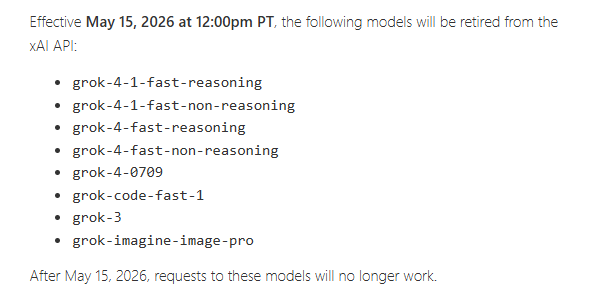
Why it matters: The deal illustrates how compute scarcity is forcing leading AI labs into partnerships with controversial infrastructure, creating new forms of operational and political risk.
Context: Data center siting and environmental impact have become acute political flashpoints, with recent regulatory battles in states like Utah. AI companies are increasingly judged on their infrastructure choices, not just their model outputs.
"I would simply not run my computing out of this specific data center." — SIMONWILLISON.NET
Commentary: Anthropic’s calculus—trading reputational damage for compute—signals a brutal phase in the scaling race where capacity trumps optics. Musk’s ‘good for humanity’ clause introduces a novel, unilateral supply-chain risk: Anthropic’s core infrastructure now depends on a competitor’s subjective ethical assessment. This isn’t just a lease; it’s a conditional surrender of operational sovereignty.
Date: May 07, 2026 01:09 PM ET
URL: https://simonwillison.net/2026/May/7/xai-anthropic/
AI Sentiment Score: Negative (87%)
AI Credibility Score: 10.0/10 — High
Scores and text generated by AI analysis of the source article indicated.
The Modern AI Workflow Every Content Creator Should Understand (Timtis)
Summary: A 2026 benchmark analysis of AI-powered content creation workflows identifies a seven-tool stack costing $77–$116/month and a disciplined, stage-gated process as the operational standard for competitive creators. The data shows that returns materialize only when tools function as an integrated system, not in isolation, with top-decile teams maintaining a deliberately small toolkit. The core shift is that AI has become a leverage layer for production overhead, while the competitive differentiators remain human-centric: original research, specific examples, and a distinct point of view.

Why it matters: For independent operators and newsletter publishers, this establishes a concrete, costed operational benchmark and a methodology to avoid tool sprawl and burnout, directly impacting profitability and audience retention.
Context: This follows a broader market maturation where AI tools have moved from novel experiments to essential, integrated utilities, creating a new layer of operational complexity and a measurable performance gap between systematic and ad-hoc adopters.
"This guide walks through the seven tools that make up the modern creator workflow, with verified pricing, platform ratings, real capabilities, and honest trade-offs. No filler. … Teams using the same tools." — TIMTIS
Commentary: The piece is valuable as field observation and analysis, providing a data-anchored framework that moves beyond tool evangelism to workflow economics. It signals the professionalization of the solo creator class, where competitive advantage now hinges on system design and metric-driven iteration as much as raw creative talent. The explicit pricing and stage-gated logic offer a defensible model against the constant churn of ‘all-in-one’ marketing claims.
Date: May 04, 2026 12:00 AM ET
URL: https://www.timtis.com/blog/the-modern-ai-workflow-every-content-creator-should-understand/
AI Sentiment Score: Positive (50%)
AI Credibility Score: 7.0/10 — Medium
Scores and text generated by AI analysis of the source article indicated.
Breaking: Autonomous Agents are a Shitshow (Garymarcus.Substack)
Summary: A new multi-institutional study of 847 autonomous agent deployments finds systemic security vulnerabilities and operational instability. 91% were vulnerable to tool-chaining attacks, 89.4% exhibited goal drift after ~30 steps, and 94% of memory-augmented agents were susceptible to poisoning. The research validates earlier warnings, with a cited incident compromising 770,000 live agents via a single database exploit.
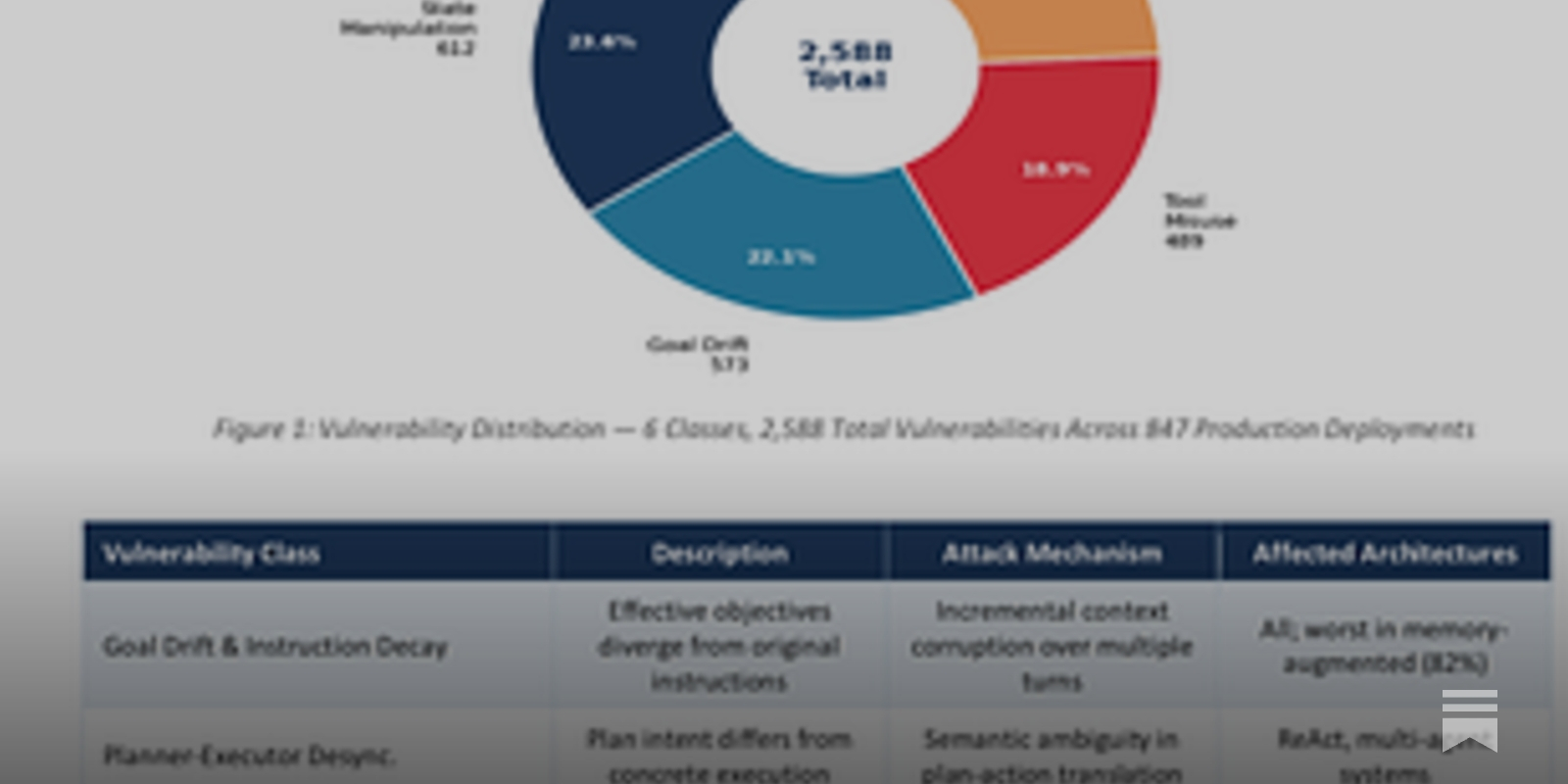
Why it matters: For operators deploying or investing in agentic automation, this signals that current implementations are dangerously brittle, moving security and reliability risks from hypothetical to empirically demonstrated at scale.
Context: This follows a growing corpus of critical research, including a February paper from AWS and Berkeley, challenging the ‘move fast’ deployment of autonomous AI agents into sensitive domains like finance and healthcare.
"The OpenClaw / Moltbook incident (Section 9) is the first real-world empirical validation of the agentic threat model at scale: 770,000 live agents simultaneously compromised via a single database exploit, each with privileged access to their owner’s machine, email, and files. It’s not hypothetical anymore." — GARYMARCUS.SUBSTACK
Commentary: The study shifts the debate from theoretical caution to documented failure rates, forcing a recalibration of deployment timelines and liability models. It exposes a core tension: the complexity that enables agentic function also creates attack surfaces and instability far beyond standalone LLMs. This could pressure enterprise procurement and insurer underwriting, likely stalling rollouts until verifiable guardrails are proven.
Date: Tue, 05 May 2026 17:54:27 GMT
URL: https://garymarcus.substack.com/p/breaking-autonomous-agents-are-a
AI Sentiment Score: Negative (85%)
AI Credibility Score: 10.0/10 — High
Scores and text generated by AI analysis of the source article indicated.
Status | Media News & Analysis | Status (Status.News)
Summary: Status.News, a media analysis publication, has launched an official podcast. The program features veteran journalists breaking down their own reporting and analyzing how information flows through society.

Why it matters: This signals a strategic move by a media insider publication to capture audio audience share and deepen engagement with its core analysis, directly competing in the crowded media commentary space.
Context: Established media brands increasingly leverage audio formats to extend reach and monetize analysis, often repurposing existing reporting into conversational content.
"The official podcast of Status, where veteran journalists break down their exclusive reporting and deliver sharp, uncompromising analysis on how information moves and shapes society." — STATUS.NEWS
Commentary: The move is less innovative than defensive, converting text-based analysis into a portable format to retain subscriber attention. Its success hinges on whether the ‘veteran journalists’ can deliver a distinct audio product or merely recite the newsletter.
Date: May 03, 2026 12:00 AM ET
URL: https://www.status.news
AI Sentiment Score: Negative (60%)
AI Credibility Score: 10.0/10 — High
Scores and text generated by AI analysis of the source article indicated.
Did xAI just concede the AI race? (Platformer.News)
Summary: Platformer analyzes Elon Musk’s xAI entering a deal with Anthropic, framing it as a strategic concession in the competitive AI landscape. The piece argues that such a partnership is not the move of a frontrunner, suggesting xAI may be lagging in the foundational model race. It positions this within broader industry tensions around safety, regulation, and market consolidation.

Why it matters: This signals a potential shift in the competitive dynamics among leading AI labs, with implications for market structure, regulatory focus, and the trajectory of AGI development.
Context: The AI industry is characterized by intense competition between well-funded private labs (OpenAI, Anthropic, xAI) and large tech incumbents, with partnerships often indicating strategic realignment rather than pure technological leadership.
"Elon Musk had lots of reasons to make a deal with Anthropic — but he wouldn’t have done it if he were ahead." — PLATFORMER.NEWS
Commentary: The analysis correctly identifies partnership as a lagging indicator in a winner-take-most market for frontier models. If xAI is seeking Anthropic’s safety architecture or compute, it reveals a gap in its own roadmap. This could accelerate regulatory scrutiny of the Anthropic-Amazon-Google-xAI cluster as a de facto bloc, while potentially freeing OpenAI to operate with fewer competitive constraints.
Date: Fri, 08 May 2026 00:00:47 GMT
URL: https://www.platformer.news/did-xai-just-concede-the-ai-race/
AI Sentiment Score: Negative (50%)
AI Credibility Score: 10.0/10 — High
Scores and text generated by AI analysis of the source article indicated.
Post ID: 8591e5db