Hacker Community
Pluralistic: Trump’s fruitless search for a goreable ox (09 May 2026) (Pluralistic.Net)
Summary: Cory Doctorow’s Pluralistic newsletter analyzes the political-economic bind facing the Trump administration: while electoral pressure demands action on the cost-of-living crisis, any effective intervention would harm the oligarchic interests that underpin his power. The piece uses the example of the Agri Stats antitrust settlement, where Trump’s DOJ transformed a price-fixing case into a revenue-generating license for the consultancy, as a concrete instance of this inability to ‘gore an ox.’ The argument extends to monopolies in ticketing, groceries, and rental housing, where concentrated gains for a few create diffuse losses for the base. The political path forward, Doctorow suggests, may lie with state Attorneys General using laws like the Tunney Act to challenge such settlements.

Why it matters: For the hacker community, this illustrates the structural limits of political change within captured systems and highlights the specific policy levers—like antitrust enforcement—that are being neutralized, making grassroots, extra-political action (from tool-building to mutual aid) more critical.
Context: This analysis fits within Doctorow’s long-running critique of ‘enshittification’ and platform monopolies, but applies the framework directly to the agricultural and retail sectors, showing how data aggregation and ‘consultancies’ enable illegal collusion. The ‘Object Permanence’ section also signals ongoing hacker-world concerns: a new Phrack issue, a major edtech data breach, and a Right to Repair report anniversary.
"Today’s links – Trump’s fruitless search for a goreable ox: You can keep billionaires happy, or you can fight the cost of living crisis, but not both. – Hey look at this:." — PLURALISTIC.NET
Commentary: The Agri Stats settlement is a masterclass in regulatory capture as a service: a tool for laundering price-fixing is not just preserved but monetized and expanded. For technologists, it’s a case study in how ‘data sharing’ and ‘market transparency’ can be weaponized for anti-competitive ends when the underlying power structures are inverted. The call for state AG action is a rare, concrete procedural hook in a landscape often devoid of immediate leverage.
Date: Sat, 09 May 2026 12:51:02 +0000
URL: https://pluralistic.net/2026/05/09/cossie-livvie-crissie/
AI Sentiment Score: Negative (75%)
AI Credibility Score: 10.0/10 — High
Scores and text generated by AI analysis of the source article indicated.
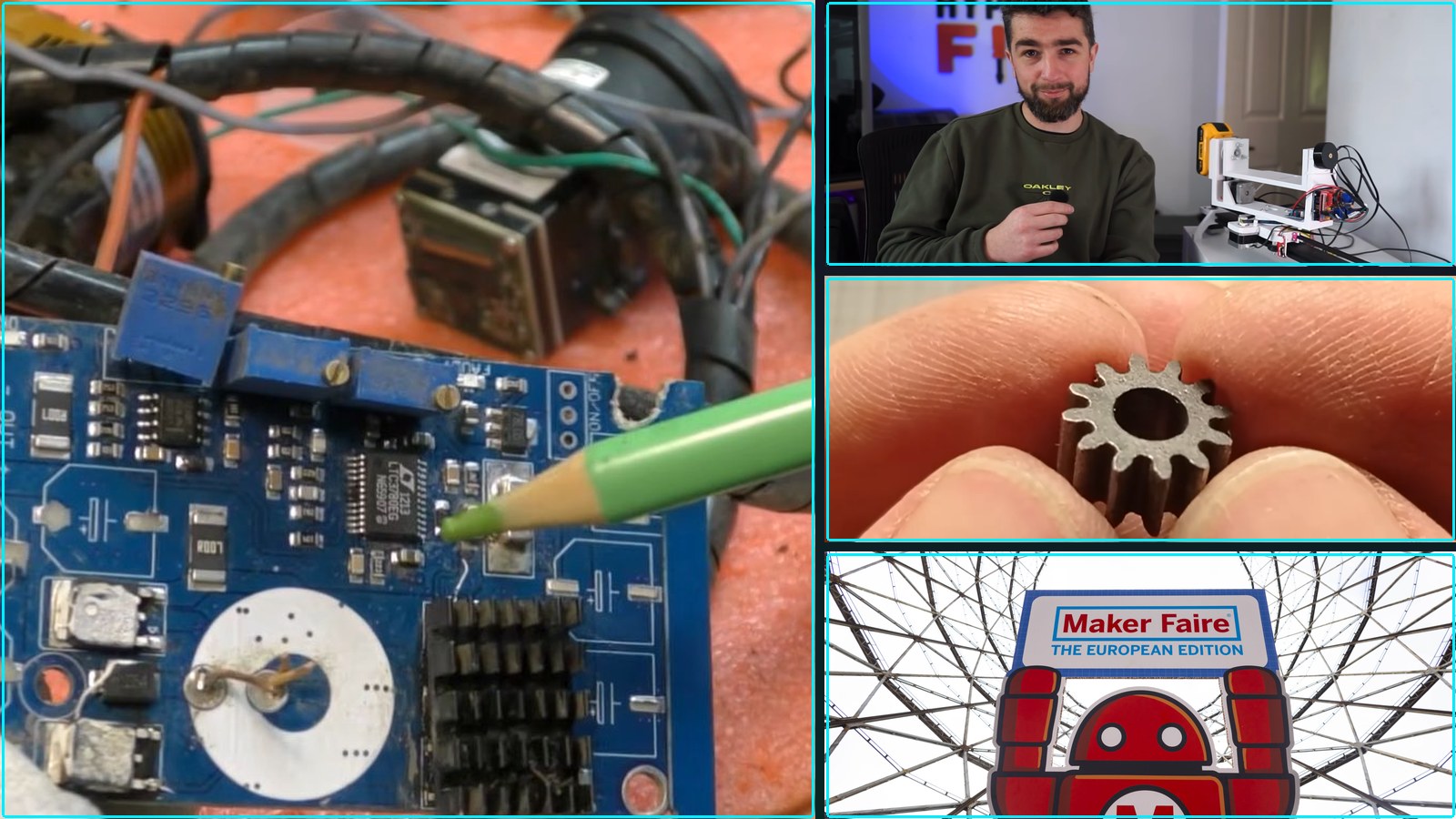
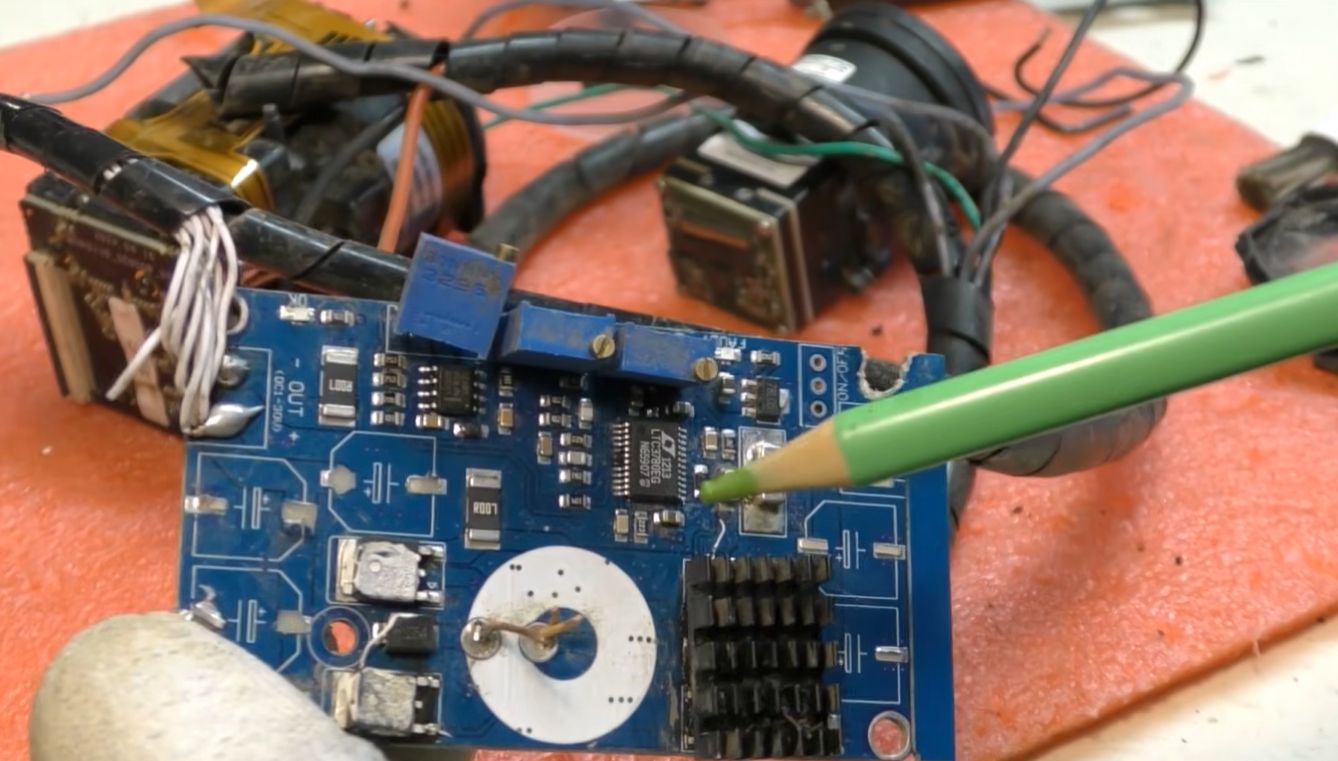
Teardown of a Shahed-136 Gimbaled Camera (Hackaday)
Summary: A detailed teardown of a camera recovered from a downed Iranian Shahed-136 drone in Ukraine reveals its construction from commercially available, off-the-shelf components. The system employs an Artix-7 FPGA board, an Hi3519 SoC for video handling, and a thermal camera, with power supply and relay boards appearing as generic modules. The gimbal assembly also suggests commercial sourcing, contrasting with more custom hardware found in Russian missiles.
Why it matters: It demonstrates how non-state and state actors are leveraging globalized, dual-use electronics supply chains to rapidly field sophisticated military systems, lowering barriers to advanced surveillance and attack capabilities.
Context: This follows a pattern of hobbyist and professional analysis of captured military hardware, revealing an increasing reliance on commercial components, particularly from Chinese marketplaces like AliExpress, for cost-effective and sanction-resistant production.
"the entire contents of the camera consisting of off-the-shelf development boards and modules that are readily found for sale online." — HACKADAY
Commentary: This teardown is a hardware-hacking signal and an ignored warning. It validates that advanced drone capabilities are now built on a foundation of globally accessible, modular electronics, making technical parity easier to achieve and complicating traditional export controls and supply-chain interdiction strategies.
Date: Mon, 04 May 2026 23:00:06 +0000
URL: https://hackaday.com/2026/05/04/teardown-of-a-shahed-136-gimbaled-camera/
AI Sentiment Score: Negative (66%)
AI Credibility Score: 10.0/10 — High
Scores and text generated by AI analysis of the source article indicated.
Calling All Prototypes To Maker Faire Rome 2026 (Makezine)
Summary: Maker Faire Rome 2026 has opened its global Call for Makers, Schools, and Universities, offering free exhibition space for working prototypes. The event, uniquely organized by the Rome Chamber of Commerce, emphasizes live demonstration and public interaction over pitches, creating a feedback loop that has historically refined projects like WSense’s underwater networking and GEVI’s adaptive wind turbine.
Why it matters: This signals a mature, institutionally-backed pipeline for translating hacker-space prototypes into funded, real-world infrastructure, validating the ‘show, don’t tell’ model as a viable alternative to venture capital pitch culture.
Context: Maker Faires globally have evolved from hobbyist showcases to critical nodes for applied R&D, with the Rome edition notable for its public-sector backing and focus on tangible societal problems.
"Showing a working prototype or running an interactive workshop in the MakeLab area to thousands of people who are actually there to engage with it — not to scroll past it, not to sit politely through a deck — is a specific kind of useful. The feedback is immediate. The audience is real. And sometimes the room changes what you build next." — MAKEZINE
Commentary: The event’s structure—mixing secondary schools, independent makers, and research labs—creates a rare cross-pollination layer. Its success under a Chamber of Commerce highlights a shift: public institutions are now operationalizing open innovation, not just funding it. The cited case studies (WSense, GEVI) demonstrate this pipeline’s effectiveness in moving from signal problem to industrial partnership, offering a concrete alternative to the Silicon Valley accelerator model.
Date: Fri, 08 May 2026 03:39:11 +0000
URL: https://makezine.com/article/maker-news/calling-all-prototypes-to-maker-faire-rome-2026/
AI Sentiment Score: Positive (50%)
AI Credibility Score: 10.0/10 — High
Scores and text generated by AI analysis of the source article indicated.
The Open Social Web Needs Section 230 To Survive (Techdirt)
Summary: An EFF Deeplinks blog post, republished by Techdirt, argues that Section 230 of the Communications Decency Act is not a shield for Big Tech but a critical enabler for the Open Social Web. It posits that decentralized protocols like ActivityPub and ATProto rely on a network of small, independent hosts who cannot survive without the liability protections Section 230 provides. Weakening these protections would disproportionately harm fledgling, community-run infrastructure while entrenching the legal and financial advantages of incumbent platforms.

Why it matters: For the hacker community building decentralized alternatives, the legal framework is as critical as the protocol stack; this is a digital-rights fight over the foundational infrastructure of user-controlled networks.
Context: This is part of a long-running, high-stakes policy debate where Section 230 is often mischaracterized as a ‘Big Tech get-out-of-jail-free card,’ obscuring its role as the bedrock for any intermediary-based communication, from ISPs to Mastodon instances.
"Per Compuserve, all they have to do to not be held liable is to not look at the content and not moderate at all to be legally shielded from what users post,." — TECHDIRT
Commentary: The piece correctly inverts the common political framing: attacking Section 230 isn’t an attack on Silicon Valley giants; it’s an attack on their potential replacements. This creates a perverse incentive structure where well-meaning regulatory pressure could cement the very monopolies it seeks to dismantle. For the federated web, this isn’t an abstract policy discussion but an existential threat to its operational model, making legal defense a core part of the infrastructure build-out.
Date: Mon, 04 May 2026 22:24:17 +0000
URL: https://www.techdirt.com/2026/05/04/the-open-social-web-needs-section-230-to-survive/
AI Sentiment Score: Negative (66%)
AI Credibility Score: 10.0/10 — High
Scores and text generated by AI analysis of the source article indicated.
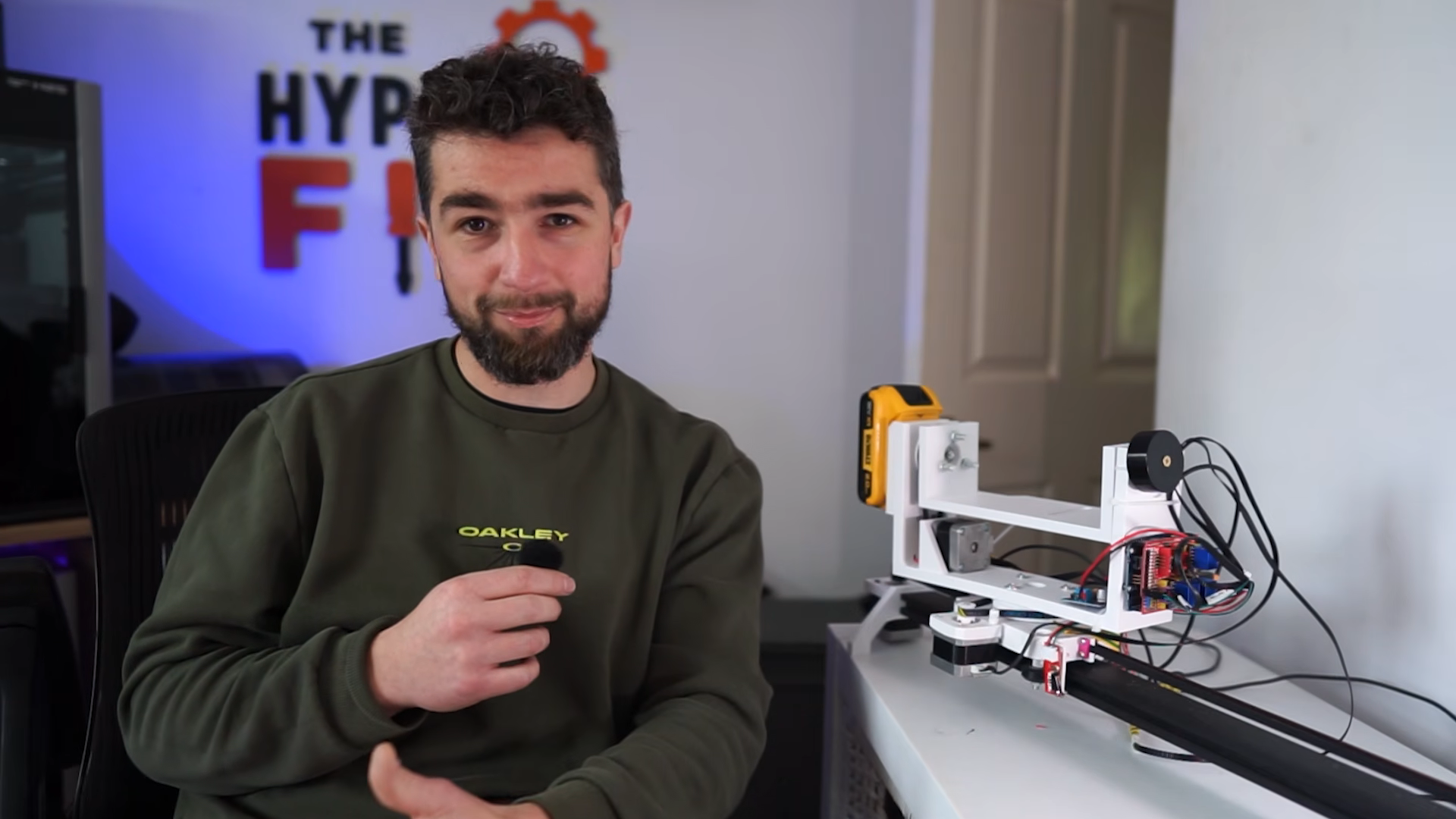
Camera Slider: Build Instead of Buy Goes Awry (Hackaday)
Summary: A Hackaday project report details a builder’s attempt to repurpose a broken 3D printer into a motorized camera slider. The iterative process involved controller failures, substitutions with an Arduino and CNC shield, and persistent issues with jerky motion and hardware limits. The final result is semi-functional but not suitable for professional use, highlighting the gap between a DIY concept and a polished tool.
Why it matters: This exemplifies the core hacker ethos of ‘build instead of buy’ and its frequent, instructive collision with real-world engineering constraints, serving as a village/workshop signal for the community.
Context: Repurposing 3D printer components for motion-control projects is a common hacker-space practice, but success often hinges on controller stability and mechanical refinement beyond initial prototyping.
"Unfortunately, the early experiments failed when the controller blew up under load. An Arduino was subbed in with a CNC shield, which got things back on track, and [TheHyperFix] had a somewhat functional slider with relatively jerky movement." — HACKADAY
Commentary: The project is a classic tool-release signal that reveals the hidden complexity in seemingly simple electromechanical systems. Its value lies not in the final product but in the documented failure modes—controller burnout, pulse limits, bearing issues—which serve as a public workshop log for others attempting similar builds. This reinforces that the hacker pipeline to mainstream tools often requires several iterations of public failure before a reliable design emerges.
Date: Tue, 05 May 2026 05:00:34 +0000
URL: https://hackaday.com/2026/05/04/building-a-camera-slider-instead-of-buying-one-goes-awry/
AI Sentiment Score: Negative (60%)
AI Credibility Score: 10.0/10 — High
Scores and text generated by AI analysis of the source article indicated.
Cutting Steel Gears with Homemade EDM (Hackaday)
Summary: A hacker has iterated on a desktop wire EDM (Electric Discharge Machining) system, repurposing a cheap CNC router frame and developing a sophisticated wire-tensioning and spark-monitoring control system using Arduino. The build demonstrates the ability to cut precise, stress-free gears from hardened steel, a task typically reserved for industrial machines, over extended periods. This represents a significant step in bringing advanced subtractive manufacturing capabilities into the workshop.
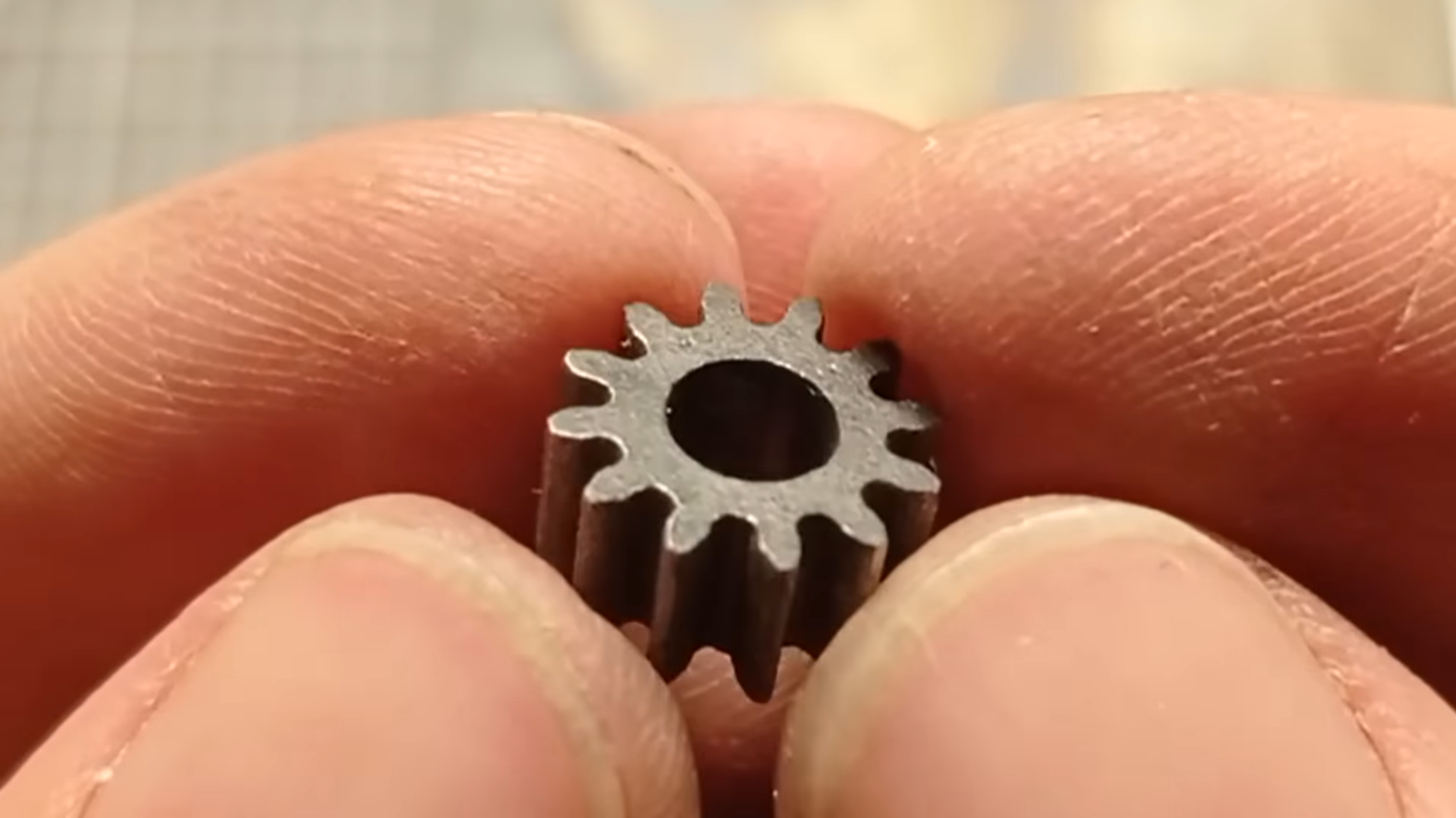
Why it matters: It signals the maturation of high-precision, industrial-grade fabrication tools within the hacker/maker ecosystem, moving beyond additive manufacturing and basic CNC.
Context: EDM builds have become more frequent as the precision motion control and microcontroller knowledge from the 3D printing and desktop CNC scenes diffuses, enabling replication of previously inaccessible industrial processes.
"Electric discharge machining (EDM) may be slower than alternatives like laser cutting, water jets, or a milling machine, but for some applications there’s no alternative: it can cut through any conductive material,." — HACKADAY
Commentary: This is a clear ‘hackerspace-to-mainstream pipeline’ signal, demonstrating how commodified components and open-source control can democratize a niche industrial technique. The ten-hour steel gear cut is not a flaw but a proof of concept for patient, automated workshop fabrication of impossible-to-machine parts, shifting the boundary of what constitutes a viable homebrew project.
Date: Tue, 05 May 2026 20:00:39 +0000
URL: https://hackaday.com/2026/05/05/cutting-steel-gears-with-homemade-edm/
AI Sentiment Score: Positive (50%)
AI Credibility Score: 10.0/10 — High
Scores and text generated by AI analysis of the source article indicated.
Maker Faire Trieste 2026: La Festa dell’Ingegno (Makezine)
Summary: Maker Faire Trieste 2026, hosted by the International Centre for Theoretical Physics (ICTP), represents a mature, community-powered model of the maker movement. It blends high-level scientific research with grassroots tinkering, featuring 440 makers from eight countries in a free, public Piazza setting. The event’s DNA is shaped by its local scientific density and its role as a cross-border cultural and technical crossroads.

Why it matters: It demonstrates a sustainable, institutionalized path for hacker culture, moving beyond spectacle to a curiosity-driven, globally connected model with serious scientific backing.
Context: Maker Faires globally have struggled with commercialization and scale; Trieste’s model, rooted in a UNESCO-linked physics research center, offers a counter-narrative of deep local integration and academic legitimacy.
"The event is produced by the International Centre for Theoretical Physics (ICTP), a UNESCO-linked research powerhouse founded by Nobel laureate Abdus Salam. Its Scientific FabLab (SciFabLab) sits at the heart of the Faire’s DNA, blending hardcore research with grassroots tinkering." — MAKEZINE
Commentary: This is a hackerspace-to-mainstream pipeline signal, showing how a top-tier research institution can successfully host and legitimize a chaotic, open community event. The concrete consequence is a template for other scientific hubs: leverage institutional credibility to create accessible, free forums that demystify research and empower local makers. The blend of particle physicists and Arduino hackers on equal footing challenges traditional hierarchies of knowledge production.
Date: Tue, 05 May 2026 06:50:09 +0000
URL: https://makezine.com/article/maker-news/maker-faire-trieste-2026-la-festa-dellingegno/
AI Sentiment Score: Negative (66%)
AI Credibility Score: 10.0/10 — High
Scores and text generated by AI analysis of the source article indicated.
Win95-Tracker-CYD is a Cheap Yellow Mod Tracker with I2S (Hackaday)
Summary: A hacker repurposes a Cheap Yellow Display (CYD) module, designed for simple visual projects, into a music tracker by bodging a wire to access an I2S pin on the underlying ESP32. The project, Win95-Tracker-CYD, uses a WYSIWYG UI tool called Lopaka.app to create an interface with deliberate retro Amiga/Windows 95 aesthetics, fitting for playing MOD tracker files. This exemplifies a hardware-hacking ethos of adapting available parts over buying purpose-built modules.
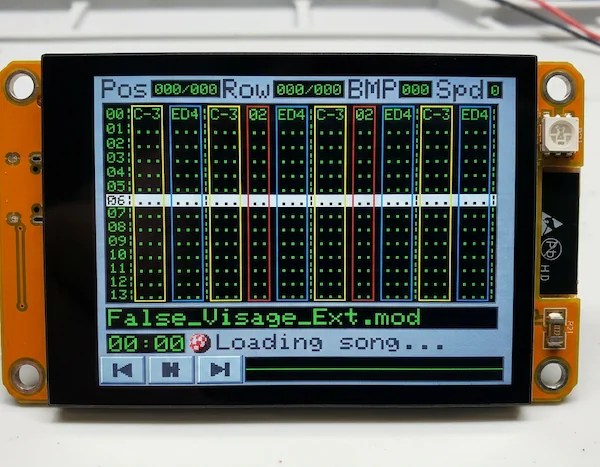
Why it matters: It signals a shift in maker priorities from consumption of specialized modules to creative adaptation of general-purpose hardware, reinforcing core hacker values of resourcefulness and aesthetic intentionality.
Context: The CYD is a popular, low-cost ESP32-based display module often used in beginner projects; its pin limitations typically steer users toward more integrated solutions for complex tasks like audio.
"It isn’t exactly a ground-breaking hack: he’s just tossed a bodge wire to the pin he needs on the ESP32, and run it to the I2S sound module. Still, in this era of endless modules it’s nice to see someone hacking what they have rather than running to AliExpress or somewhere else for a part that has everything the project needs built in." — HACKADAY
Commentary: This is a village/workshop signal celebrating the craft of the bodge over consumer convenience. The use of Lopaka.app points to an emerging toolchain for embedded UI design, while the deliberate retro styling connects the project to the demoscene and tracker culture, making it a cultural artifact as much as a technical one. The project underscores that the hacker pipeline values clever repurposing and stylistic cohesion, which often get lost in the rush to modular, off-the-shelf solutions.
Date: Fri, 08 May 2026 23:00:48 +0000
URL: https://hackaday.com/2026/05/08/win95-tracker-cyd-is-a-cheap-yellow-mod-tracker-with-i2s/
AI Sentiment Score: Negative (50%)
AI Credibility Score: 10.0/10 — High
Scores and text generated by AI analysis of the source article indicated.
Post ID: 22876759