
Reshoring and its impact on logistics and freight
How Tariffs Are Reshaping Warehouse Demand in 2026 | WareCRE (Warecre)
Summary: Elevated U.S. tariff rates are directly increasing industrial real estate demand through two distinct channels: immediate inventory front-loading by importers and the longer-term structural shift of manufacturing reshoring. National net absorption is forecast to jump to 200 million square feet in 2026, with the most acute pressure falling on the structurally undersupplied small-bay warehouse segment (under 10,000 SF). This dynamic is forcing operators to prioritize lease flexibility and redirecting tenant location strategies toward Southeastern, Central, and border logistics corridors.
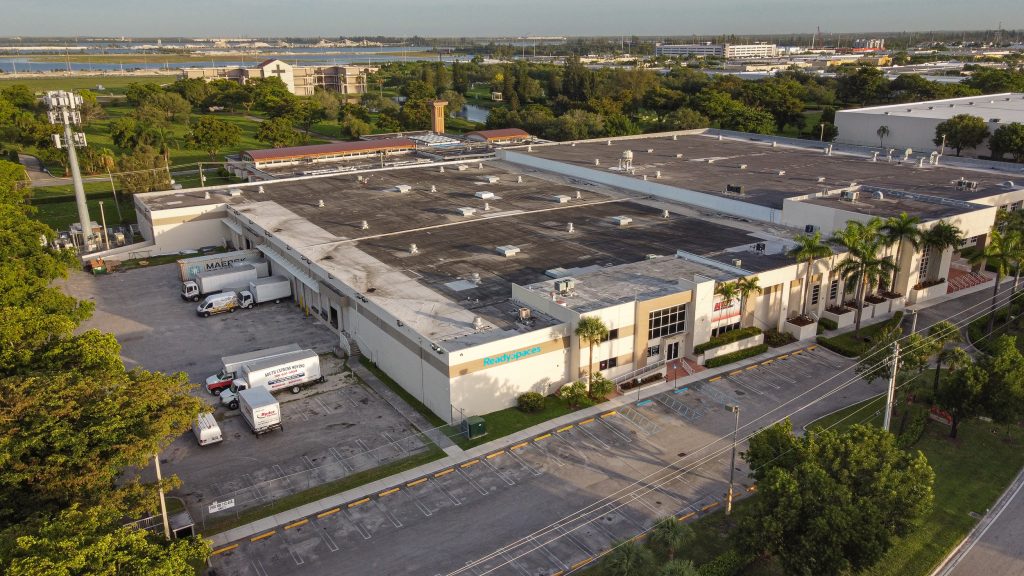
Why it matters: For operators and tenants, this means lease economics, location strategy, and asset specifications must adapt to a new calculus driven by trade policy volatility, not just traditional supply and demand.
Context: This follows a multi-year trend of rising manufacturing’s share of industrial leasing, now at 20%, accelerated by federal incentives and supply chain resilience concerns.
"Small-bay warehouse space (under 10,000 SF) is structurally undersupplied and absorbing the most pressure — the businesses most affected by tariffs need exactly the space that’s hardest to find." — WARECRE
Commentary: The mismatch between demand profile and supply constraints creates a durable pricing and operational advantage for co-warehousing and flex-space operators who can offer short-term commitments. For traditional landlords, the competitive imperative shifts from rent per square foot to term flexibility and spec suites suitable for light manufacturing. Port-adjacent markets will see volatile, front-loaded demand, while inland reshoring corridors require a pivot in tenant prospecting toward assembly and production.
Date: April 28, 2026 12:00 AM ET
URL: https://warecre.com/cre-insights/industrial-101/tariffs-reshaping-warehouse-demand-2026/
AI Sentiment Score: Neutral (33%)
AI Credibility Score: 7.0/10 — Medium
Scores and text generated by AI analysis of the source article indicated.
The Reshoring Freight Boom Is Here: Heavy Haul Capacity 2026 (Bookyourcargo)
Summary: A detailed operational playbook for managing heavy haul logistics in reshoring projects outlines a 10-step process to navigate extended lead times and complex permitting. The core argument is that reshoring fundamentally shifts freight demand from consolidated container imports to numerous domestic industrial moves, with heavy haul, oversized loads, and specialized freight becoming critical bottlenecks. Effective planning requires engaging carriers during site selection, building detailed freight inventories, and securing capacity 30-90 days in advance to avoid costly delays.

Why it matters: For manufacturers executing reshoring builds, failure to adapt logistics planning from an import-centric to a domestic production model risks project delays, budget overruns, and operational paralysis due to constrained heavy haul capacity.
Context: Reshoring initiatives are straining specialized domestic freight networks, creating a seller’s market for heavy haul carriers and exposing a planning gap for manufacturers accustomed to ocean container logistics.
"Industry analysis suggests domestic production could generate up to 400 truckloads for every one truckload of imported goods, because finished imports arrive consolidated in containers while domestic manufacturing requires multiple inbound moves of raw materials, components, and equipment." — BOOKYOURCARGO
Commentary: The 400:1 multiplier reframes reshoring not as a simple location swap but as a complete re-engineering of the supply chain’s physical architecture. The playbook’s emphasis on early carrier engagement and permit mapping shifts the logistics function from tactical execution to strategic facility design. This creates a new vendor management imperative: manufacturers must now cultivate deep partnerships with a handful of integrated heavy haul providers, not just transactional relationships with broad freight brokers.
Date: April 22, 2026 12:00 AM ET
URL: https://bookyourcargo.com/blogs/reshoring-freight-boom-heavy-haul-capacity-2026
AI Sentiment Score: Negative (75%)
AI Credibility Score: 9.3/10 — High
Scores and text generated by AI analysis of the source article indicated.
The Reshoring of Commercial Equipment Manufacturing: What It Means for Transit and Fleet Operations (Globaltrademag)
Summary: Commercial equipment manufacturing for transit and fleet operations is undergoing a structural shift toward domestic and regional production, driven by supply chain fragility, rising transport costs, and policy incentives. This reshoring directly impacts operational reliability by shortening lead times for parts and repairs, though it introduces higher upfront labor costs. The transition is not a full replacement for global sourcing but a move toward a hybrid model of domestic assembly with international component sourcing. The long-term trajectory points to more regionalized, resilient supply chains enabled by digital manufacturing and automation.

Why it matters: For fleet managers and transit agencies, this shift alters procurement strategies, maintenance logistics, and total cost of ownership calculations, prioritizing operational uptime over pure acquisition cost.
Context: Reshoring narratives often focus on macroeconomics; this piece grounds the trend in the specific operational pain points of fleet and transit systems, where downtime has cascading public and commercial consequences.
"For the short term, many companies will rely on a mix of domestic assembly with global sourcing, while production is evolving to more local and regional areas." — GLOBALTRADEMAG
Commentary: The practical implication is a bifurcated supply chain: final assembly and bulky, regulation-sensitive components move onshore, while high-tech subcomponents (semiconductors, specialized electronics) remain globally sourced. This forces procurement and maintenance teams to manage two distinct vendor ecosystems with different lead times and risk profiles. The real constraint isn’t ideological preference but the limited domestic capacity for advanced electronics, making full reshoring a multi-decade capital project. Operators must now budget for higher domestic labor costs but can factor in reduced inventory buffers and faster technician response as partial offsets.
Date: April 29, 2026 12:00 AM ET
URL: https://www.globaltrademag.com/the-reshoring-of-commercial-equipment-manufacturing-what-it-means-for-transit-and-fleet-operations/
AI Sentiment Score: Negative (70%)
AI Credibility Score: 10.0/10 — High
Scores and text generated by AI analysis of the source article indicated.
Manufacturing Returning to America — Standard Time® Blog (Strdtime)
Summary: U.S. manufacturing construction spending has surged over 130% since 2020, driven by semiconductor, EV, defense, and general manufacturing investments. This is not a cyclical uptick but a structural shift, underpinned by supply chain resilience demands, tariffs, government incentives like the CHIPS Act, and automation narrowing labor cost gaps. The buildout faces a critical constraint: a skilled workforce shortage that risks slowing the pace of new capacity coming online. For existing domestic shops, winning new contracts now depends on demonstrable operational readiness, particularly in digital production tracking and scheduling.
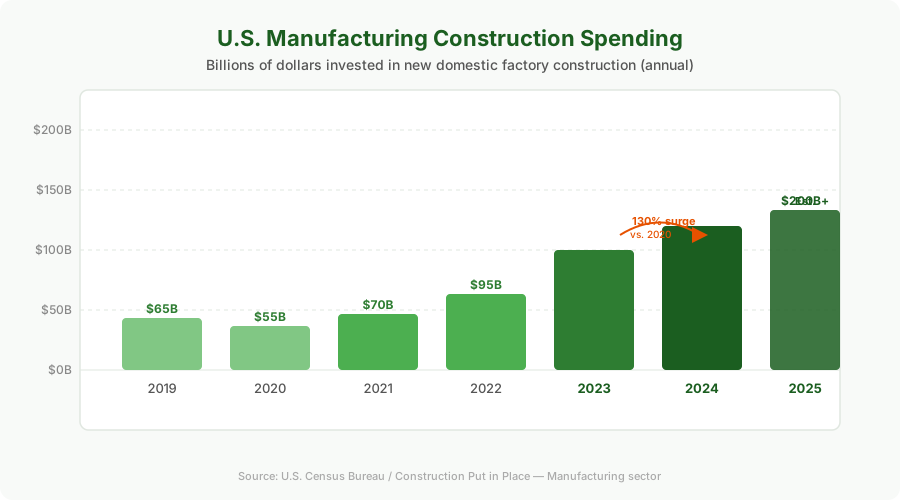
Why it matters: For domestic manufacturers and their suppliers, the influx of work and investment is creating immediate operational demands and a competitive landscape where data visibility and process discipline are becoming prerequisites for growth.
Context: The reshoring trend has been discussed for years, but the current wave is distinguished by the scale of fixed-asset investment and policy mechanisms that create a durable floor for domestic production, moving it beyond market-cycle volatility.
"The shops that are going to win new contracts over the next several years are those that can demonstrate capacity, responsiveness, and cost visibility. A manufacturer that cannot tell a new customer when a work order will be complete, what the labor cost will be, or how many hours a given task will take is at a structural disadvantage against one that can answer all three questions before the purchase order is signed." — STRDTIME
Commentary: The shift transforms supplier qualification from a check-the-box exercise on certifications to an audit of real-time operational data. This creates a bifurcation in the vendor base, favoring shops with integrated digital systems for labor tracking and work order management. The workforce gap, however, remains the system’s tightest bottleneck; automation may offset some labor needs, but it intensifies demand for a smaller pool of higher-skilled technicians and operators. Procurement teams at primes are now the de facto enforcers of this new operational standard, making their audit criteria a leading indicator of market consolidation.
Date: April 23, 2026 12:00 AM ET
URL: https://strdtime.com/articles/448-manufacturing-returning-to-america
AI Sentiment Score: Positive (50%)
AI Credibility Score: 9.4/10 — High
Scores and text generated by AI analysis of the source article indicated.
Post ID: 7b3f23ae