

Media, Music & Entertainment Deals
Chord Music Partners’ John Chapman on the next wave of capital heading for music rights (Musicbusinessworldwide)
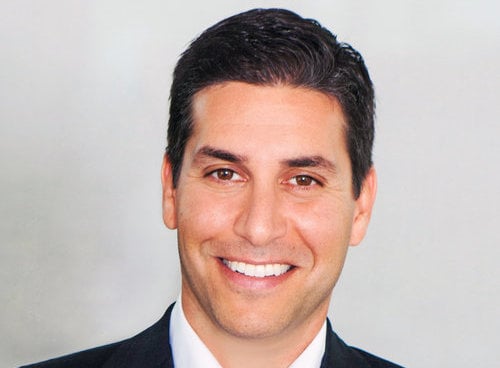
Summary: John Chapman, who manages the family office behind Chord Music Partners, has expressed optimism for the future value of premium music catalogs. In fact, he says music is undergoing a seismic shift, driven by a new source of capital: the insurance sector. “Nobody understands how much insurance money is coming this way,” Chapman said on Tuesday (May 19) at an invite-only industry breakfast co-hosted by MBW and The Raine Group at the Charlotte Street Hotel in London.

Why it matters: This matters for Capital Flows & Deals because it gives a concrete current signal to track: John Chapman, who manages the family office behind Chord Music Partners, has expressed optimism for the future value of premium music catalogs.
Context: John Chapman, who manages the family office behind Chord Music Partners, has expressed optimism for the future value of premium music catalogs. In fact, he says music is undergoing a seismic shift, driven by a new source of capital: the insurance sector. “Nobody understands how much insurance money is coming this way,” Chapman said on Tuesday (May 19) at an invite-only industry breakfast co-hosted by MBW and The Raine Group at the Charlotte Street Hotel in London.
"John Chapman, who manages the family office behind Chord Music Partners, has expressed optimism for the future value of premium music catalogs. In fact, he says music is undergoing a seismic shift,." — MUSICBUSINESSWORLDWIDE
Commentary: The immediate implication is operational rather than speculative: watch how this changes budgets, workflows, or risk assumptions over the next cycle.
Date: Wed, 20 May 2026 17:09:04 +0000
URL: https://www.musicbusinessworldwide.com/chord-music-partners-john-chapman-on-the-next-wave-of-capital-heading-for-music-rights/
AI Sentiment Score: Neutral (50%)
AI Credibility Score: 10.0/10 — High
Scores and text generated by AI analysis of the source article indicated.
After selling Taylor Swift her masters, Shamrock closes new $813M fund – targeting rights including music (Musicbusinessworldwide)
Summary: Shamrock Capital has closed its fourth content acquisition fund at $813 million, exceeding its $700 million target in just over three months. The fund will target rights in music, film, television, sports, video games, and the creator economy. This follows Shamrock’s high-profile exit from its Taylor Swift masters investment and its recent acquisition of the Vine Alternative Investments portfolio, including a Calvin Harris catalog. The firm’s Content Strategy now exceeds $3.3 billion in AUM, part of a total platform managing approximately $7.4 billion.
Why it matters: The speed and scale of this fundraise signals sustained institutional appetite for content as a hard asset class, shifting leverage toward financial intermediaries in rights markets.
Context: Shamrock’s strategy exemplifies the financialization of intellectual property, where catalogs are treated as yield-generating portfolios, a trend accelerated by low-interest-rate environments and streaming’s predictable cash flows.
"As content becomes more global, more valuable, and more complex to finance, we believe the need for sophisticated, long-term capital partners has never been greater." — MUSICBUSINESSWORLDWIDE
Commentary: The oversubscribed fund demonstrates that capital allocators view content rights as a durable, scalable asset despite market volatility. Shamrock’s integrated platform across media verticals allows it to underwrite complexity that pure-play music funds cannot, potentially crowding out smaller buyers. The firm’s ability to pivot from a headline-making Swift transaction to a broader rights strategy shows a maturation of the IP-as-asset model beyond speculative catalog bubbles.
Date: Wed, 20 May 2026 16:05:39 +0000
URL: https://www.musicbusinessworldwide.com/after-selling-taylor-swift-her-masters-shamrock-closes-new-813m-fund/
AI Sentiment Score: Negative (50%)
AI Credibility Score: 10.0/10 — High
Scores and text generated by AI analysis of the source article indicated.
Shamrock Capital Launches Fourth Content Strategy Fund Since 2015 With $813 Million in Commitments (Variety)
Summary: Shamrock Capital has closed its fourth dedicated content fund since 2015, raising $813 million against a $700 million target. The firm’s content strategy focuses exclusively on acquiring and monetizing library rights to finished material—songs, films, TV series, sports, video games, and creator economy assets—rather than financing new production or buying companies. The oversubscribed fund signals continued institutional appetite for content as a structured asset class, with Shamrock positioning its industry relationships and operational expertise as a differentiator in a crowded field.

Why it matters: The fund’s size and focus underscore the maturation of content libraries as a core institutional asset class, shifting leverage from distributors to rights holders and creating a permanent secondary market for IP cash flows.
Context: This is part of a multi-year trend of financialization of media catalogs, where private capital seeks predictable, long-tail revenue streams from established IP, a strategy accelerated by streaming’s insatiable demand for library content.
"Shamrock Capital isn’t slowing down when it comes to investing in content libraries and catalogs. The Los Angeles-based investment firm focused on media, entertainment and communications has had no trouble lining up." — VARIETY
Commentary: Shamrock’s ‘friendly’ sale of the Swift masters back to the artist exemplifies its stated non-adversarial model, which grants it preferential access to high-quality assets from studios and creators wary of purely financial buyers. The fund’s broad mandate across music, film, TV, sports, and gaming reflects a deliberate hedge against sector-specific volatility, betting on content’s aggregate value in a multi-platform ecosystem. This capital influx further professionalizes the back-end of the creator economy, turning individual celebrity catalogs into bankable, institutional-grade investments.
Date: Wed, 20 May 2026 12:31:00 +0000
URL: https://variety.com/2026/biz/news/shamrock-capital-fourth-content-strategy-fund-1236754564/
AI Sentiment Score: Negative (66%)
AI Credibility Score: 10.0/10 — High
Scores and text generated by AI analysis of the source article indicated.
Paramount’s Junk-Status Credit Rating to Be Downgraded Further Following Warner Bros. Merger to Reflect ‘Major Ongoing Uncertainties,’ S&P Global Says (Variety)
Summary: S&P Global will downgrade Paramount Skydance’s credit rating from BB+ to BB upon completion of its merger with Warner Bros. Discovery, citing ‘major ongoing uncertainties.’ The combined entity will carry an elevated debt load, with leverage projected to remain above 7.6x through 2026 and not fall below 5x until 2029. S&P acknowledges potential cost synergies but will only recognize them upon realization, warning that integration risks, secular pressures, and a fragmented media landscape could slow deleveraging.

Why it matters: The downgrade signals a structural weakening of the merged entity’s financial position, increasing its cost of capital and constraining strategic optionality in a volatile sector.
Context: This follows a pattern of credit agencies reacting skeptically to large-scale media consolidation, where promised synergies are often delayed or outweighed by integration costs and market erosion.
"S&P Global projects the merged company’s leverage ratio (adjusted debt to adjusted EBITDA) for 2026 will be 7.6x, and that it doesn’t expect that to drop below 5x until 2029." — VARIETY
Commentary: The rating action underscores that financial engineering alone cannot resolve the core secular challenges facing linear TV and film studios. The projected multi-year deleveraging timeline implies Paramount-WBD will operate under severe financial constraints, limiting its ability to invest in content or technology during a critical period of industry transformation. S&P’s explicit linkage of the downgrade to integration risk and ‘seismic challenges’ across all key businesses serves as a direct critique of the merger’s strategic premise.
Date: Wed, 20 May 2026 17:40:11 +0000
URL: https://variety.com/2026/film/news/paramount-credit-rating-lower-junk-status-warner-bros-merger-1236754967/
AI Sentiment Score: Negative (80%)
AI Credibility Score: 10.0/10 — High
Scores and text generated by AI analysis of the source article indicated.
FUGA renews global distribution partnership with Insomniac Music Group (Musicbusinessworldwide)
Summary: FUGA, the B2B distributor owned by Downtown Music (now part of UMG), has renewed and expanded its global distribution and marketing partnership with Insomniac Music Group. The deal extends comprehensive catalog management, distribution, and localized marketing support for Insomniac’s portfolio of electronic imprints. Concurrently, Insomniac has also renewed its neighboring rights agreement with Downtown Neighbouring Rights. This renewal follows FUGA’s initial 2022 deal with Insomniac and is part of a broader expansion of FUGA’s client base and services.

Why it matters: This renewal signals the strategic value of integrated, full-service distribution partnerships for major electronic music entities and demonstrates FUGA’s continued consolidation of power within the independent distribution ecosystem post-UMG acquisition.
Context: FUGA has been actively expanding its electronic music footprint and global label roster, while its parent company, Downtown Music Holdings, was acquired by UMG in a $775 million deal finalized in early 2026, bringing FUGA under the Universal umbrella.
"We are energized by their renewed confidence in our partnership as we continue working with such an instrumental label group that is inspiring and moving audiences on a massive scale." — MUSICBUSINESSWORLDWIDE
Commentary: The renewal, rather than a new deal, underscores FUGA’s success in locking in a key client post-acquisition, mitigating client flight risks. For Insomniac, it represents a vote for stability and deepened integration over exploring alternatives, granting FUGA/UMG greater influence over the commercial pipeline of a major electronic music brand. The parallel renewal of neighboring rights management points to a strategic preference for bundling services within the Downtown ecosystem, increasing switching costs for the label group.
Date: Wed, 20 May 2026 12:31:55 +0000
URL: https://www.musicbusinessworldwide.com/fuga-renews-global-distribution-partnership-with-insomniac-music-group/
AI Sentiment Score: Positive (50%)
AI Credibility Score: 10.0/10 — High
Scores and text generated by AI analysis of the source article indicated.
Evan Whikehart named General Manager, North America at IDOL, as Paris-headquartered indie says its annual revenue topped $50m globally last year (Musicbusinessworldwide)
Summary: Paris-based independent distributor IDOL has appointed Evan Whikehart, formerly of Secretly Distribution, as General Manager for North America and LATAM. The move coincides with IDOL reporting its global revenue surpassed $50 million for the first time last year, with North America now accounting for nearly a third of that total. Whikehart will oversee the regional network, which includes labels like Mexican Summer and Moderna Records, and spearhead the planned Q3 2026 rollout of D2C services in the US, focusing on physical distribution and merchandise. This appointment is part of IDOL’s sustained, self-funded push into the US market, aiming to expand its US team from 5 to 15 staff over the next 3-5 years.

Why it matters: This signals a strategic escalation in the competition for high-value independent label and artist rosters, with a focus on capturing downstream revenue through owned D2C channels.
Context: The appointment follows IDOL’s recent US hires and label signings, and occurs against a backdrop of increasing debate over the role of venture capital in independent music, a topic on which founder Pascal Bittard has publicly advocated for organic, self-funded growth.
"IDOL, the Paris-headquartered independent distributor, has appointed Evan Whikehart as its new General Manager â North America. Whikehart joins from Secretly Distribution, where he built the company’s Label & Shared Services division." — MUSICBUSINESSWORLDWIDE
Commentary: Whikehart’s hire is a direct talent raid from a key competitor (Secretly) and provides IDOL with operational credibility for its planned D2C physical expansion. The $50M revenue milestone, achieved without external capital, validates its patient-growth model and strengthens its negotiating position with both labels and potential partners. The planned US team expansion suggests a shift from a Paris-centric export model to a fully embedded North American operation, aiming to capture more margin and control over the final mile of distribution.
Date: Tue, 19 May 2026 19:53:27 +0000
URL: https://www.musicbusinessworldwide.com/evan-whikehart-named-general-manager-north-america-at-idol-as-paris-headquartered-indie-says-its-annual-revenue-tops-50m-globally-last-year/
AI Sentiment Score: Positive (80%)
AI Credibility Score: 10.0/10 — High
Scores and text generated by AI analysis of the source article indicated.
After raising $5M, Adobe-backed Tamber officially launches its AI music-making platform (Musicbusinessworldwide)
Summary: Tamber, an AI music tool startup, has officially launched following a $5M funding round led by Adobe Ventures. The platform positions itself as an ‘assistive’ and ‘non-generative’ creative layer integrated into existing DAW workflows, contrasting with generative AI models. Its core technology, ‘sonic intelligence,’ translates abstract prompts into musical elements and learns user habits, built on an ethically sourced sound library of original recordings.

Why it matters: This launch crystallizes a strategic fork in AI music investment: funding is flowing toward assistive, workflow-integrated tools that claim ethical training, as legal risks mount for generative models trained on scraped data.
Context: The AI music tool sector is bifurcating between generative platforms producing finished audio (e.g., Udio, ElevenLabs) and assistive tools designed to augment human creators. Recent lawsuits, like Sony Music versus Udio, highlight the legal peril of training on copyrighted material without licensing.
"After raising $5 million from Adobe Ventures, M13, Rackhouse Venture Capital, and a network of artist-investors last month, Tamber has now officially launched its suite of AI music tools. The Los Angeles-based." — MUSICBUSINESSWORLDWIDE
Commentary: Tamber’s launch, backed by Adobe Ventures, signals institutional capital seeking a defensible position outside the copyright fray. Its success hinges on whether ‘assistive’ tools can capture market share from more capable but legally fraught generative AI, and if artists will pay for ethical purity over raw capability. The venture bet is that workflow integration and ethical sourcing create a moat, but the technical and commercial ceiling for non-generative AI remains untested.
Date: Tue, 19 May 2026 11:29:22 +0000
URL: https://www.musicbusinessworldwide.com/after-raising-5m-adobe-backed-tamber-officially-launches-its-ai-music-making-platform/
AI Sentiment Score: Negative (60%)
AI Credibility Score: 10.0/10 — High
Scores and text generated by AI analysis of the source article indicated.
Tencent Music’s $2.4B Ximalaya takeover cleared by China’s competition watchdog – with conditions (Musicbusinessworldwide)
Summary: China’s State Administration for Market Regulation (SAMR) has granted conditional approval for Tencent Music Entertainment’s $2.4 billion acquisition of audio platform Ximalaya. The approval mandates five binding commitments, including prohibitions on price increases, new exclusive content deals, and bundling restrictions for automotive clients. This clears a major hurdle for the deal, announced in June 2025, and enables a potential exit for shareholders like Sony Music Entertainment.

Why it matters: The conditions imposed by SAMR signal an extension of China’s regulatory playbook from music exclusivity to the broader audio content ecosystem, directly shaping Tencent’s strategy and market structure.
Context: This follows SAMR’s 2021 action against Tencent Music’s exclusive music licensing deals and represents a continued, condition-laden approach to platform consolidation under China’s anti-monopoly framework.
"Tencent Music Entertainment‘s acquisition of Chinese audiobooks and podcasting platform Ximalaya has cleared China’s competition watchdog. China’s State Administration for Market Regulation (SAMR) issued an announcement on Tuesday (May 12) granting conditional." — MUSICBUSINESSWORLDWIDE
Commentary: SAMR is using behavioral remedies, not structural ones, to manage Tencent’s expansion, preserving Ximalaya’s operational independence in key areas while blocking paths to market dominance. The conditions on exclusivity and bundling specifically target leverage over creators and downstream distributors (like automakers), constraining Tencent’s ability to weaponize the acquisition. This creates a controlled consolidation, favoring platform scale but under state-defined competitive parameters.
Date: Wed, 13 May 2026 10:18:23 +0000
URL: https://www.musicbusinessworldwide.com/tencent-musics-2-4b-ximalaya-takeover-cleared-by-chinas-competition-watchdog-with-conditions/
AI Sentiment Score: Neutral (50%)
AI Credibility Score: 10.0/10 — High
Scores and text generated by AI analysis of the source article indicated.
Kicking the Cannes: No Fun at the Beach for Dealmakers This Year (Hollywoodreporter)
Summary: The 2024 Cannes Film Market saw two major eight-figure deals—A24’s $17 million acquisition of ‘Club Kid’ and Amazon’s package sale for ‘Pumping Black’—but these were exceptions in a generally subdued environment. The traditional indie financing model, anchored by predictable pay-one TV windows, has collapsed, leaving distributors risk-averse and producers reliant on equity and soft money. In response, new distribution models are emerging, built on direct audience engagement via community networks (Watermelon Pictures), faith-based collectives (Angel Studios), creator-led followings (Markiplier, Jordan Firstman), and curated re-releases (Warner Bros. Clockwork). The market didn’t close but adjourned, with the real dealmaking shifting to post-festival number crunching.

Why it matters: The structural shift in indie film financing away from pre-sales and toward audience-direct models reallocates risk, reshapes capital flows, and redefines which players have leverage in the market.
Context: This follows years of streaming platforms dismantling the traditional pay-one TV window, which had provided a financial backstop for independent film pre-sales and risk-taking.
"The old model — the one that sustained the indie ecosystem for decades — is visibly fraying. At its center was the pay-one television window: a predictable, lucrative revenue stream that allowed distributors to take risks on pre-sales, backing films before a frame was shot based on talent and a promising pitch. Streaming platforms, negotiating their own deals on their own terms, have largely killed that window." — HOLLYWOODREPORTER
Commentary: The Cannes market is now a symptom, not a driver. The capital drought for mid-tier projects forces a fragmentation of financing into niche, audience-owned verticals—community, faith, creator-led—which trade scale for certainty. This balkanizes the indie landscape, giving leverage not to traditional sales agents but to entities that control direct distribution channels and cultivated communities. The ‘buyer’s market without enough buyers’ means optionality now resides with those who can de-risk through pre-built audiences, not pre-sales.
Date: Tue, 19 May 2026 06:30:00 +0000
URL: https://www.hollywoodreporter.com/business/business-news/cannes-deals-2026-1236599130/
AI Sentiment Score: Negative (60%)
AI Credibility Score: 10.0/10 — High
Scores and text generated by AI analysis of the source article indicated.
Paramount Says It’s All in on Theatrical Distribution as It Aims to Stave Off California Merger Challenge (Hollywoodreporter)
Summary: Paramount is actively lobbying California Attorney General Rob Bonta to approve its merger with Warner Bros. Discovery, framing the deal as a pro-theatrical strategy essential for competing with Netflix, Disney, and Amazon. The company argues that theatrical releases, exemplified by ‘Top Gun: Maverick,’ create marketing momentum that drives subsequent streaming engagement and subscriber growth. The combined entity would control roughly 25% of domestic box office, becoming the largest theatrical distributor, while holding only about 10% of streaming viewership. Bonta has signaled antitrust concerns, citing risks of higher prices, less choice, and reduced competition.

Why it matters: The regulatory outcome will determine the structure of Hollywood’s post-merger landscape, setting precedents for how scale and vertical integration are balanced against theatrical exhibition’s role in the streaming economy.
Context: This lobbying effort follows a pattern of major media mergers facing state-level antitrust scrutiny, with California’s position often pivotal. The argument revives the long-debated ‘theatrical window’ as a competitive moat against pure-play streamers.
"Paramount is looking to convince California’s top prosecutor that its megadeal to acquire Warner Bros. Discovery will be a boon for movie theaters. Theaters will be a core part of the combined." — HOLLYWOODREPORTER
Commentary: Paramount’s legal strategy is a calculated bet that framing the merger as a defense of the theatrical ecosystem will resonate with regulators wary of further streaming consolidation. The ‘Top Gun’ case study is a compelling data point, but the pledge of 30 annual theatrical releases is a structural commitment that, if enforced, would meaningfully differentiate the combined studio from Disney’s post-Fox trajectory. The core tension is whether regulators will accept that a 25% box office share is a necessary counterweight to the 65% streaming share held by the Big Three, or view it as excessive concentration in distribution.
Date: Tue, 12 May 2026 18:59:03 +0000
URL: https://www.hollywoodreporter.com/business/business-news/paramount-theatrical-distribution-wbd-merger-california-ag-letter-1236593688/
AI Sentiment Score: Negative (80%)
AI Credibility Score: 10.0/10 — High
Scores and text generated by AI analysis of the source article indicated.
Ari Emanuel, Mark Shapiro Are Acquiring Minority Stakes in NFL’s Las Vegas Raiders (Variety)
Summary: Ari Emanuel and Mark Shapiro, the top executives at WME and TKO Group, are acquiring minority stakes in the Las Vegas Raiders, marking their first entry into NFL ownership. The deal, part of a broader capital round that values the team at approximately $9.9 billion, also sees increased stakes for Silver Lake CEO Egon Durban (to 22%) and real-estate developer Michael Meldman (to 12.9%). Mark Davis retains controlling ownership.

Why it matters: This transaction illustrates the continued convergence of sports, media, and private equity capital, concentrating influence among a tight network of cross-invested executives.
Context: The Raiders’ move to Las Vegas and the construction of Allegiant Stadium have transformed the franchise into a premium asset, attracting capital from entertainment and financial heavyweights.
"Ari Emanuel and Mark Shapiro, top execs at WME and TKO Group, are buying small ownership stakes in the Las Vegas Raiders. A spokesperson for Emanuel and Shapiro confirmed that the sports." — VARIETY
Commentary: The deal is less about the nominal equity percentages and more about the strategic foothold it grants Emanuel and Shapiro within the NFL’s ownership circle. Their entry, alongside Silver Lake’s deepening position, signals a further institutionalization of sports franchises as platforms for integrated media, live events, and hospitality—leveraging TKO’s and WME’s existing NFL relationships through On Location and content deals. For Mark Davis, it brings in sophisticated partners and capital while ceding no control, a model other franchise owners may emulate.
Date: Tue, 19 May 2026 19:00:42 +0000
URL: https://variety.com/2026/biz/news/ari-emanuel-mark-shapiro-las-vegas-raiders-owners-1236753941/
AI Sentiment Score: Neutral (50%)
AI Credibility Score: 10.0/10 — High
Scores and text generated by AI analysis of the source article indicated.
Acquisition Founders Alex and Leila Hormozi Sign With CAA (Exclusive) (Hollywoodreporter)
Summary: Alex and Leila Hormozi, co-founders of the private equity firm Acquisition.com, along with CEO Sharran Srivatsaa, have signed with Creative Artists Agency (CAA). The agency will represent them for speaking engagements, brand partnerships, and media expansion. This move aligns the business operators, who command significant social media followings and run a portfolio generating over $250 million in annual revenue, with Hollywood’s traditional talent representation infrastructure.

Why it matters: It signals the formal integration of a new class of ‘operator-influencers’ into the legacy talent economy, testing whether their business-focused audience and cash-flow driven model can be scaled through entertainment industry channels.
Context: CAA and other major agencies have been aggressively signing digital creators and business personalities as the lines between content, commerce, and capital allocation blur.
"The Hormozis join CAA as the fast-growing creator economy continues to power Hollywood as its digital disrupters fuel studio talent pipelines, drive marketing strategies and redefine who becomes a star." — HOLLYWOODREPORTER
Commentary: The deal is less about talent discovery and more about distribution arbitrage: CAA gains a pipeline to monetize the Hormozis’ existing business audience through high-margin live events and partnerships, while the Hormozis gain institutional leverage and market access beyond the entrepreneurial circuit. The test is whether their appeal, rooted in operational rigor and financial metrics, translates into the broader, more sentiment-driven consumer branding CAA typically manages. This further erodes the wall between private equity operational playbooks and personal brand management.
Date: Wed, 20 May 2026 16:26:04 +0000
URL: https://www.hollywoodreporter.com/business/business-news/acquisition-com-founders-caa-1236601170/
AI Sentiment Score: Positive (50%)
AI Credibility Score: 10.0/10 — High
Scores and text generated by AI analysis of the source article indicated.
Opposition Mounts to Paramount-WBD Merger. Will It Make a Difference? (Variety)
Summary: Opposition to the $111 billion Paramount-WBD merger is mounting from actors, House Democrats, and an FCC commissioner, focusing on job losses, reduced consumer choice, and foreign ownership concerns. The deal’s structure includes a $24 billion commitment from Saudi, Qatari, and Abu Dhabi sovereign wealth funds, giving foreign entities a 49.5% stake in the merged company. Despite the noise, antitrust arguments appear weak given the combined entity’s projected 12.2% share of U.S. TV watch time and 23.6% studio market share. The most likely outcome is not blockage but potential regulatory conditions on the merger, which the parties still expect to close in September.

Why it matters: The merger’s fate hinges on regulatory scrutiny of foreign investment and antitrust arguments, setting a precedent for media consolidation and sovereign wealth fund influence in U.S. broadcast assets.
Context: This follows a pattern of heightened regulatory and public scrutiny of media mega-mergers, particularly those involving foreign state capital and broadcast licenses, amid a fragmented and financially pressured streaming landscape.
"Paramount disclosed that the merged entity will be 49.5% owned by foreign investors, with about 38.5% of the equity in the new company owned by the three Middle Eastern funds. Paramount’s WBD deal has a $24 billion commitment from the sovereign wealth funds of Saudi Arabia, Qatar and Abu Dhabi." — VARIETY
Commentary: The FCC’s foreign ownership rules, not antitrust law, present the most credible hurdle, as Commissioner Gomez’s call for review targets the 25% indirect ownership threshold for broadcast licenses. The deal’s structure effectively mortgages a major U.S. broadcast network to Gulf states, trading near-term capital for long-term political risk and potential operational constraints. Opposition groups, recognizing the weak monopoly case, are pivoting to lobby for conditions, a tactical shift that concedes the merger’s inevitability while seeking to extract concessions on jobs and output.
Date: Fri, 08 May 2026 21:14:50 +0000
URL: https://variety.com/2026/biz/news/paramount-wbd-merger-opposition-will-it-make-a-difference-1236742042/
AI Sentiment Score: Negative (75%)
AI Credibility Score: 10.0/10 — High
Scores and text generated by AI analysis of the source article indicated.
Paralympics Star Ali Truwit Documentary ‘Stronger Than You Think’ Distribution Rights Acquired by Sox Entertainment (Variety)
Summary: Sox Entertainment, led by former CBS/Paramount executive Scott Koondel, has acquired distribution rights to ‘Stronger Than You Think,’ a documentary about Paralympic swimmer Ali Truwit. Truwit’s profile has surged following her 2024 Paralympic performance, coming just a year after a shark attack, and she has built a significant brand portfolio including Nike, Amazon, and McKinsey. The acquisition positions Sox to monetize a high-profile, cross-platform inspirational narrative.

Why it matters: This deal illustrates the commercial maturation of Paralympic narratives and the strategic value of rights to ‘inspirational IP’ with built-in corporate and brand partnerships.
Context: Non-fiction film rights are increasingly valued as multi-platform brand assets, especially when tied to figures with established commercial and speaking careers beyond sports.
"Distribution rights to the inspirational sports documentary “Stronger Than You Think,” which tells the story of Paralympic star swimmer Ali Truwit, have been acquired by Sox Entertainment. Truwit made international headlines at." — VARIETY
Commentary: The acquisition is less about film distribution and more about securing optionality on a packaged, sponsor-friendly human story. Koondel’s background suggests a play for broad, non-theatrical placement—corporate, educational, streaming—leveraging Truwit’s existing brand ecosystem. It signals a shift where the documentary is an asset in her broader enterprise, not the endpoint.
Date: Tue, 19 May 2026 16:30:00 +0000
URL: https://variety.com/2026/biz/news/ali-truwit-documentary-stronger-than-you-think-sox-koondel-1236753250/
AI Sentiment Score: Neutral (50%)
AI Credibility Score: 10.0/10 — High
Scores and text generated by AI analysis of the source article indicated.
Sony Pictures TV Buys Majority Stake in ‘The Valley,’ ‘Vanderpump Rules’ Producer 32 Flavors (Hollywoodreporter)
Summary: Sony Pictures Television has acquired a majority stake in 32 Flavors, the production company behind Bravo’s ‘Vanderpump Rules’ and ‘The Valley,’ along with several other reality franchises. The deal, announced by Sony Pictures TV Studios president Katherine Pope, is framed as a strategic move to scale ‘distinctive, globally relevant IP’ in the premium nonfiction space. Founder Alex Baskin could remain CEO, and the company’s leadership will stay intact under Sony’s unscripted division, which already houses several other production entities.

Why it matters: This acquisition signals a major studio’s deliberate consolidation in the high-margin, returnable unscripted television sector, prioritizing established franchises and creator-led operations over greenfield development.
Context: The move follows the recent departure of Sony’s Nonfiction heads and aligns with a broader industry trend where legacy studios are acquiring proven unscripted producers to secure stable, scalable content pipelines in a volatile market.
"This deal reflects our broader strategy to invest in best-in-class creative talent and scale distinctive, globally relevant IP. As the market evolves, we see real opportunity in premium nonfiction, and 32 Flavors strengthens our ability to deliver high-impact, returnable formats that connect with audiences and buyers around the world." — HOLLYWOODREPORTER
Commentary: Sony is buying a proven operating system, not just a library; Baskin’s ‘culture-driving franchises’ offer predictable cash flow and international format potential. The retention of the leadership team suggests Sony values entrepreneurial execution over integration, a model for managing creative assets. This further concentrates buyer power for unscripted talent and formats within a handful of vertically integrated studio entities.
Date: Mon, 18 May 2026 17:17:09 +0000
URL: https://www.hollywoodreporter.com/business/business-news/sony-majority-stake-vanderpump-rules-producer-32-flavors-1236598769/
AI Sentiment Score: Neutral (33%)
AI Credibility Score: 10.0/10 — High
Scores and text generated by AI analysis of the source article indicated.
Charter CFO Unpacks Its $34.5 Billion Cox Megadeal (Hollywoodreporter)
Summary: Charter CFO Jessica Fischer outlined the operational rationale behind the $34.5 billion acquisition of Cox Communications, emphasizing rapid post-close integration under the Cox corporate name with Spectrum as the consumer brand. The strategy centers on bundling mobile, video, and broadband into ‘stickier’ packages to boost customer lifetime value and generate operating synergies, aiming to counter subscriber losses to streaming rivals. Regulatory approvals are largely secured, with a deadline of September 15, 2026, to complete the deal.

Why it matters: The merger consolidates the legacy cable sector into a scaled entity with greater leverage in broadband and advertising, directly challenging tech giants while testing the limits of bundling as a retention tool in a cord-cutting era.
Context: This deal follows a pattern of consolidation in mature, capital-intensive infrastructure sectors where scale is pursued to offset declining core revenues (linear video) and fund competitive investments in mobile and fiber.
"The number one priority is being able to deliver our high value products, which includes our mobile and video product, and to do that in our pricing and packaging structure and with the brand and to package all of those together,." — HOLLYWOODREPORTER
Commentary: Fischer’s comments reveal Charter’s playbook: use Cox’s brand equity and Charter’s operational template to create a bundled moat. The real test is whether ‘stickier packages’ can arrest video subscriber erosion or merely slow the bleed while the combined entity leverages its aggregated broadband base for mobile and advertising revenue. Regulatory clearance, save for California, suggests authorities see limited consumer harm in combining two non-overlapping cable footprints, focusing antitrust scrutiny on broadband competition alone.
Date: Wed, 20 May 2026 13:10:53 +0000
URL: https://www.hollywoodreporter.com/business/business-news/charter-communications-cox-merger-1236602237/
AI Sentiment Score: Negative (83%)
AI Credibility Score: 10.0/10 — High
Scores and text generated by AI analysis of the source article indicated.
Bari Weiss Has Big Plans for CBS News. And That’s Before CNN Enters the Picture (Hollywoodreporter)
Summary: Bari Weiss, seven months into her role as editor-in-chief of CBS News, is executing a digital-first overhaul while preparing for potential linear shake-ups at flagship programs like 60 Minutes and CBS Mornings this summer. Her strategy, articulated as moving beyond clinging to a declining broadcast audience, faces immediate tests in ratings and internal restructuring. Concurrently, David Ellison’s pending acquisition of Paramount, which would bring CNN under the same corporate umbrella as CBS News, introduces significant uncertainty over Weiss’s mandate and the future integration of two large, culturally distinct news divisions.

Why it matters: The outcome will determine the strategic direction and leadership structure of two major legacy news brands during a period of industry consolidation and digital transition.
Context: Legacy broadcast news divisions are under pressure to redefine their value propositions amid declining linear viewership and fragmented digital competition, often leading to leadership clashes between digital-native editors and traditional television executives.
"Seven months after she was named editor-in-chief of CBS News, Bari Weiss is set to have a consequential summer as she overhauls the legacy news division and plots significant changes to tentpole." — HOLLYWOODREPORTER
Commentary: Weiss’s public rejection of a linear-first strategy is a direct challenge to the legacy broadcast model, but her operational authority is already being questioned internally, as reported by Puck. The pending Paramount-WBD merger adds a second-order strategic risk: even if Weiss succeeds in her CBS overhaul, she may be sidelined or forced to integrate with CNN, a move historically complicated by unionization differences. This creates a high-stakes environment where near-term programming changes are being executed under a cloud of long-term corporate uncertainty, testing whether a digital-focused editorial vision can be implemented before potential consolidation reshuffles the deck entirely.
Date: Tue, 19 May 2026 17:19:42 +0000
URL: https://www.hollywoodreporter.com/business/business-news/bari-weiss-plans-cbs-news-cnn-mornings-60-minutes-1236601047/
AI Sentiment Score: Negative (66%)
AI Credibility Score: 10.0/10 — High
Scores and text generated by AI analysis of the source article indicated.
Warner Bros. Discovery Upfront Kicks Off With Fake Freudian Slip About Paramount (Hollywoodreporter)
Summary: At its Upfront presentation, Warner Bros. Discovery executives directly referenced the pending $111 billion merger with Paramount, framing it as inevitable industry change. The ad sales heads used a staged ‘Freudian slip’ referencing Paramount CEO David Ellison to acknowledge the deal’s prominence. The merger faces regulatory scrutiny and public opposition, but has cleared the WBD shareholder vote.

Why it matters: The public performance of merger integration begins long before regulatory approval, shaping advertiser sentiment and competitive positioning in a consolidating market.
Context: This follows the pattern of media conglomerates using major industry events to manage narrative and stakeholder anxiety around transformative, controversial M&A.
"Onstage at an Upfronts presentation on Wednesday, Warner Bros. Discovery’s ad sales heads addressed the elephant in the room: This may be the company’s last such presentation, if their company’s $111 billion." — HOLLYWOODREPORTER
Commentary: The scripted ‘slip’ is a deliberate, high-stakes communications tactic, attempting to normalize the merger for a core revenue constituency (advertisers) while the deal remains politically volatile. It signals WBD’s operational pivot to managing the perception of integration ahead of its legal reality, a necessary move to retain commercial confidence during uncertainty. The focus on ‘guiding through transition’ is an explicit promise of continuity to clients, directly countering fears of disruption from antitrust challenges and internal restructuring.
Date: Wed, 13 May 2026 14:46:48 +0000
URL: https://www.hollywoodreporter.com/business/business-news/warner-bros-discovery-upfronts-paramount-merger-1236594751/
AI Sentiment Score: Positive (42%)
AI Credibility Score: 10.0/10 — High
Scores and text generated by AI analysis of the source article indicated.
Ari Emanuel and Mark Shapiro Are Buying Stakes in the Las Vegas Raiders (Hollywoodreporter)
Summary: Ari Emanuel and Mark Shapiro are acquiring personal minority stakes in the Las Vegas Raiders, joining an ownership group that includes Mark Davis, Silver Lake’s Egon Durban, and others. The move formalizes their position within the NFL’s ownership class, despite their stakes being under 10%. Both executives already wield significant influence in sports through TKO (UFC, WWE), WME, and their MARI holding company.

Why it matters: This grants two key media-sports power brokers direct, albeit minority, equity and influence inside one of the most closed and valuable ownership clubs, aligning their personal portfolios with their corporate sports empires.
Context: The NFL has become a primary destination for capital from tech, finance, and media executives seeking status and strategic alignment. Minority stakes offer access without the control premium of a full acquisition.
"Media moguls Ari Emanuel and Mark Shapiro are now NFL owners. The WME Group and TKO executives are each buying personal stakes in the Las Vegas Raiders, a rep for the moguls." — HOLLYWOODREPORTER
Commentary: The investment is less about financial return and more about securing a seat at the league’s table, providing Emanuel and Shapiro with direct leverage in future media rights negotiations, cross-promotional opportunities for TKO properties, and deeper integration into the NFL’s ecosystem. It further blurs the line between content distributors and franchise owners, concentrating influence within a small group of interconnected executives.
Date: Tue, 19 May 2026 18:38:01 +0000
URL: https://www.hollywoodreporter.com/business/business-news/ari-emanuel-mark-shapiro-buying-stake-nfl-las-vegas-raiders-1236601381/
AI Sentiment Score: Positive (50%)
AI Credibility Score: 10.0/10 — High
Scores and text generated by AI analysis of the source article indicated.
Music as an asset class: Why PE continues to deploy … (Reedsmith)
Summary: Private equity’s approach to music rights has matured from niche catalog acquisitions to a systematic asset class strategy, focusing on recurring cash flows, data-driven underwriting, and ecosystem-wide investment across administration, technology, and infrastructure. The investment thesis hinges on music’s durable, yield-oriented cash flows from diverse revenue streams, perceived resilience across economic cycles, and multiple operational levers for value creation. Legal and commercial diligence is now central to underwriting, as value is heavily dependent on copyright intricacies, chain-of-title, and legacy contractual constraints.

Why it matters: For capital allocators, this signals the institutionalization of music rights, demanding deeper sector-specific legal and operational expertise to underwrite risk and capture value, while reshaping the capital structure of the creative industry.
Context: This follows a decade of high-profile catalog sales (e.g., Bruce Springsteen, Bob Dylan) and the rise of specialized funds (e.g., Hipgnosis, Primary Wave), now expanding into the less glamorous but critical infrastructure of royalty collection, administration, and data analytics.
"Over the past decade, music has evolved into one of the most compelling alternative asset classes for private equity (PE) sponsors, credit funds, institutional investors, and strategic buyers. What was once viewed." — REEDSMITH
Commentary: The shift from financial to forensic diligence marks the sector’s maturation; the premium now accrues to firms that can navigate copyright reversion risks and legacy contract misalignments. This creates a moat for specialized legal advisors like Reed Smith while pressuring generalist PE firms to either develop in-house expertise or accept constrained returns. The next phase will likely see consolidation among administration platforms as sponsors seek operational leverage, turning royalty analytics into a competitive battleground.
Date: May 22, 2026 12:00 AM ET
URL: https://www.reedsmith.com/articles/private-equity-behind-the-scenes/music-as-an-asset-class-why-pe-continues-to-deploy-capital-into-music-rights/
AI Sentiment Score: Negative (50%)
AI Credibility Score: 10.0/10 — High
Scores and text generated by AI analysis of the source article indicated.
Hollywood dealmaking tilts toward targeted acquisitions amid consolidation – ION Analytics (Ionanalytics)
Summary: Hollywood’s M&A landscape is shifting from mega-mergers toward targeted acquisitions of specific IP, capabilities, and creator economy assets, as articulated by executives at the Milken Institute Global Conference. Sony Pictures focuses on strengthening anime, gaming, and international content via deals like Peanuts and Crunchyroll, while Fox’s Tubi acquires agile creator-led businesses to provide backend infrastructure. Independent studios like Black Bear are pivoting to acquire IP libraries for recurring revenue, and financiers note global markets, particularly Asia, are driving cross-border deal flow. The consensus is that consolidation’s secondary effects and a fragmented streaming ecosystem are creating a market for niche, opportunistic transactions alongside headline-grabbing large-scale mergers.

Why it matters: This shift reallocates capital and strategic advantage toward firms that can execute precision acquisitions, altering the competitive landscape for content ownership, distribution, and monetization.
Context: This follows a decade of vertical integration (e.g., Warner Bros. Discovery, Amazon-MGM) that consolidated major studios, leaving a thinner field of independent players and a splintered audience.
"Hollywood dealmaking tilts toward targeted acquisitions amid consolidation – Film production companies prioritize IP and capabilities over scale – Niche platforms, creator networks, content libraries among targets – Large transactions unlock follow‑on." — IONANALYTICS
Commentary: The move from scale-for-scale’s-sake to capability-specific deals signals a maturation of the streaming wars, where sustainable margins trump subscriber land grabs. It creates a bifurcated market: scaled platforms trading assets for optionality, and agile operators like Fox/Tubi building distributed creator networks that bypass traditional studio economics. The emphasis on IP libraries by independents like Black Bear reveals a defensive pivot toward annuity-like revenue streams in an unstable advertising and subscription environment.
Date: 2 weeks ago
URL: https://ionanalytics.com/insights/mergermarket/hollywood-dealmaking-tilts-toward-targeted-acquisitions-amid-consolidation
AI Sentiment Score: Negative (50%)
AI Credibility Score: 10.0/10 — High
Scores and text generated by AI analysis of the source article indicated.
To the moon: SpaceX’s generational payday (Ft)
Summary: Who’s positioned for a windfall from the listing, and why it’s historic in more ways than one Focus shifts to secondary market liquidity and early investor exit mechanics post-IPO.
Why it matters: Focus shifts to secondary market liquidity and early investor exit mechanics post-IPO.
Context: Scrutinize valuation multiples against comparable private space sector benchmarks.
[Metadata-only note] The available source data did not expose a direct source quote this cycle.
Commentary: The signal is still worth tracking, but the current extraction path did not yield enough body text for a fuller analytical read. The immediate implication is operational rather than speculative: watch how this changes budgets, workflows, or risk assumptions over the next cycle.
Date: Wed, 20 May 2026 04:00:41 GMT
URL: https://www.ft.com/content/87c47a69-7004-4745-9255-1ea6d3064da9
AI Sentiment Score: Neutral (50%)
AI Credibility Score: 10.0/10 — High
Scores and text generated by AI analysis of the source article indicated.
Post ID: 9b86e3de