New Software Tools & Updates
Scene Auditor Pro targets Blender bloat (Digitalproduction)
Summary: Scene Auditor Pro, a $15 Blender add-on, introduces systematic dependency visualization and cleanup targeting orphaned datablocks, duplicate materials, and oversized textures. It aims to convert the slow accumulation of technical debt—unused meshes, duplicated assets, memory-heavy elements—from a guessing game into a diagnosable and reversible process. Its primary use case is export preparation for Unreal Engine, Unity, and ArchViz pipelines, emphasizing safety and reversibility to avoid breaking production scenes.

Why it matters: It directly addresses the hidden costs of scene bloat—longer load times, higher memory use, and render slowdowns—that erode margins and complicate handoffs in professional pipelines.
Context: Blender’s adoption in professional pipelines has increased the need for tools that bridge its open-ended workflow with the strict asset hygiene required by game engines and large-scale productions.
"Big productions rarely die from a single catastrophic mistake. They usually drown in tiny leftovers. Unused meshes that never got purged. Materials duplicated by imports. Textures that ballooned from sensible to cinematic for no reason." — DIGITALPRODUCTION
Commentary: The tool shifts the economics of complex shots by making technical debt visible and actionable before export, potentially reducing vendor-side debugging time and tightening iteration cycles. Its safety-first design and low cost could lower the barrier for smaller studios to maintain pipeline discipline, subtly altering the leverage between generalist artists and specialized technical artists in asset optimization.
Date: Tue, 19 May 2026 07:00:00 +0000
URL: https://digitalproduction.com/2026/05/19/scene-auditor-pro-targets-blender-bloat/
AI Sentiment Score: Negative (66%)
AI Credibility Score: 10.0/10 — High
Scores and text generated by AI analysis of the source article indicated.
Blackmagic Design releases Fusion Studio 21.0 in beta (Cgchannel)
Summary: Blackmagic Design has released Fusion Studio 21.0 in public beta, a significant update to its 3D compositing software. Key additions include the integration of the third-party Krokodove motion graphics toolkit, enhanced deep compositing with native color correction, and expanded USD toolset support. The update also brings performance improvements, Cryptomatte support, and native compatibility with Windows on ARM platforms.
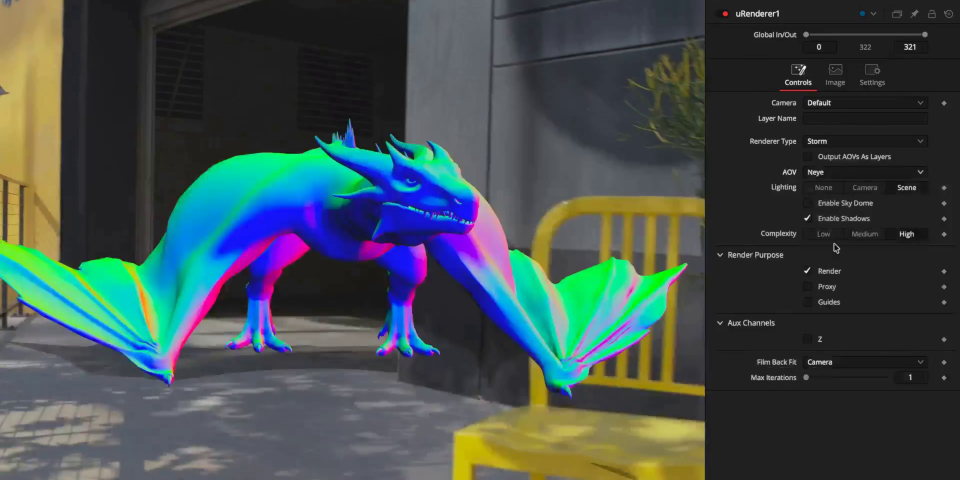
Why it matters: This release consolidates toolsets and improves performance, directly impacting VFX studio throughput, the economics of complex shots, and the viability of Fusion within broader, multi-application pipelines.
Context: Fusion competes in a mid-market compositing space against established players like Nuke, with its integration into DaVinci Resolve being a key differentiator. Updates increasingly focus on closing feature gaps in motion graphics and USD-based asset interchange.
"Previously a free third-party add-on, it provides over 70 tools for motion design, from standard image filters to warping and morphing effects, and a range of titling and text animation tools." — CGCHANNEL
Commentary: The formal integration of Krokodove signals a strategic move to capture more motion graphics work, potentially shifting staffing models where smaller teams can handle more complex design tasks in-house. Native deep color correction and Hydra 2 support lower the technical barrier for complex shots, which could pressure vendor pricing for certain shot types while increasing leverage for studios standardized on the Resolve ecosystem.
Date: Thu, 14 May 2026 08:32:59 +0000
URL: https://www.cgchannel.com/2026/05/blackmagic-design-releases-fusion-studio-21-0-in-beta/
AI Sentiment Score: Negative (60%)
AI Credibility Score: 10.0/10 — High
Scores and text generated by AI analysis of the source article indicated.
World Machine 4059 ‘Dragontail Peak’ is out (Cgchannel)
Summary: World Machine Software has released World Machine 4059 ‘Dragontail Peak,’ a major update shifting its core terrain generation from heightfields to Vector Displacement Maps (VDMs). This enables the creation of true overhangs, caves, and cliffs, addressing a fundamental geometric limitation. The update also overhauls the 3D viewport with HDR lighting and introduces significant workflow improvements. Future releases in this series will expand the historically Windows-only application to macOS and Linux.
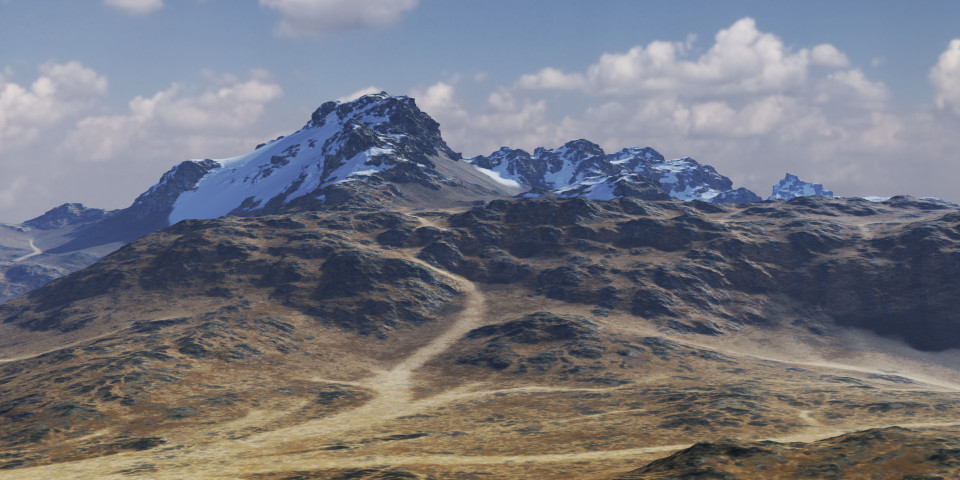
Why it matters: This changes the quality ceiling and economic model for generating complex natural environments, potentially reducing the need for manual sculpting or multi-software workflows for overhanging terrain.
Context: World Machine is a long-established procedural terrain tool used in games and VFX, but its reliance on heightfields limited its use for photorealistic or highly detailed environments requiring complex geometry.
"World Machine 4059 ‘Dragontail Peak’ is out World Machine Software has released World Machine 4059: a major update to the terrain generation software, and the first of the new ‘Dragontail Peak’ series." — CGCHANNEL
Commentary: The shift to VDM-based terrain directly impacts vendor selection and staffing models; studios can now procure more complex, procedurally generated environments from a single tool, potentially consolidating work previously split between terrain generation and sculpting departments. This raises the throughput and detail ceiling for environment art while applying pressure on vendors specializing in manual cliff and cave work. The promised cross-platform support further alters the tooling calculus for Linux-based render farms and macOS-centric pipelines.
Date: Mon, 18 May 2026 09:59:38 +0000
URL: https://www.cgchannel.com/2026/05/world-machine-software-ships-world-machine-4059-dragontail-peak/
AI Sentiment Score: Neutral (33%)
AI Credibility Score: 10.0/10 — High
Scores and text generated by AI analysis of the source article indicated.
Das szenische Portal RT: When the Stage Starts Listening to the Music (Digitalproduction)
Summary: Andreas Resch’s ‘Das szenische Portal RT’ is a prototype real-time hybrid stage system built in Unreal Engine. It integrates live musical performance, external audio triggers, and live camera feeds to dynamically generate visual effects and scene choreography within a virtual environment that extends the physical stage. The system is designed as a modular framework for live events, particularly those featuring improvisation, where the virtual set reacts to performers. It currently operates as an art project but is positioned for potential development into a production or rental solution for the events sector.

Why it matters: It demonstrates a potential new service model and technical pipeline for live event production, shifting visual accompaniment from pre-rendered or manually triggered content to a dynamic, performer-driven system.
Context: The push for more interactive and immersive live experiences has led to increased experimentation with real-time engines like Unreal in event staging, though integration often remains decorative or pre-scripted.
"The ambition is therefore greater than mere decorative projection. The virtual scene is intended to become part of the stage space." — DIGITALPRODUCTION
Commentary: The system’s reliance on performer input as a primary trigger reconfigures the labor and technical workflow for live visual support, potentially creating a new hybrid role—part VFX artist, part live audio engineer. If robust, it could commoditize a class of complex, reactive visuals for mid-tier live events, altering vendor offerings and crew skill requirements. However, its path from art prototype to scalable production tool hinges on solving the inherent instability of real-time systems in varied live environments, a non-trivial engineering challenge.
Date: Mon, 18 May 2026 06:00:00 +0000
URL: https://digitalproduction.com/2026/05/18/das-szenische-portal-rt-when-the-stage-starts-listening-to-the-music/
AI Sentiment Score: Negative (50%)
AI Credibility Score: 10.0/10 — High
Scores and text generated by AI analysis of the source article indicated.
10 expert tips for building production-ready lighting macros (Cgchannel)
Summary: A senior lighting TD at ILM details a framework for building robust, production-ready Katana macros, emphasizing design principles that ensure tools remain reliable and maintainable across multiple artists, sequences, and even entire productions. The advice focuses on UI clarity, versioning, dependency management, and performance optimization, drawn from deployment on shows like ‘The Mandalorian’ and ‘Transformers One.’

Why it matters: For VFX studios, the durability and scalability of internal tools directly impact throughput, labor costs, and the ability to meet deadlines; fragile macros create systemic bottlenecks.
Context: As VFX pipelines become more complex and distributed, the quality of shared tooling is a critical determinant of vendor efficiency and artist retention.
"The lighting macro framework I developed has been used across multiple major productions at Industrial Light & Magic, from The Mandalorian Season 3 to Transformers One, and has been adopted by other artists on those productions. That cross-show durability is the real test of whether a tool was built well or just built fast." — CGCHANNEL
Commentary: This signals a shift from tool development as a personal or show-specific task to a core infrastructure discipline. The emphasis on cross-production durability raises the quality ceiling for complex shots by reducing error rates and rework, but it also centralizes technical authority, potentially altering staffing models where senior TDs become platform architects rather than sequence support.
Date: Fri, 15 May 2026 06:00:40 +0000
URL: https://www.cgchannel.com/2026/05/10-expert-tips-for-building-production-ready-lighting-macros/
AI Sentiment Score: Neutral (33%)
AI Credibility Score: 10.0/10 — High
Scores and text generated by AI analysis of the source article indicated.
New motion graphics tool Caddis puts a node graph in every layer (Cgchannel)
Summary: Motion designer Mike Gaynor has launched Caddis, a GPU-accelerated compositing and motion graphics tool currently in free beta. It hybridizes a standard layer-based timeline with node-based procedural power inside each layer, positioning itself as an alternative to After Effects rather than a direct replacement. The tool, developed by a practitioner using AI-assisted coding, will launch commercially in June 2026 for $129 and will include cloud-based AI nodes for tasks like depth estimation.
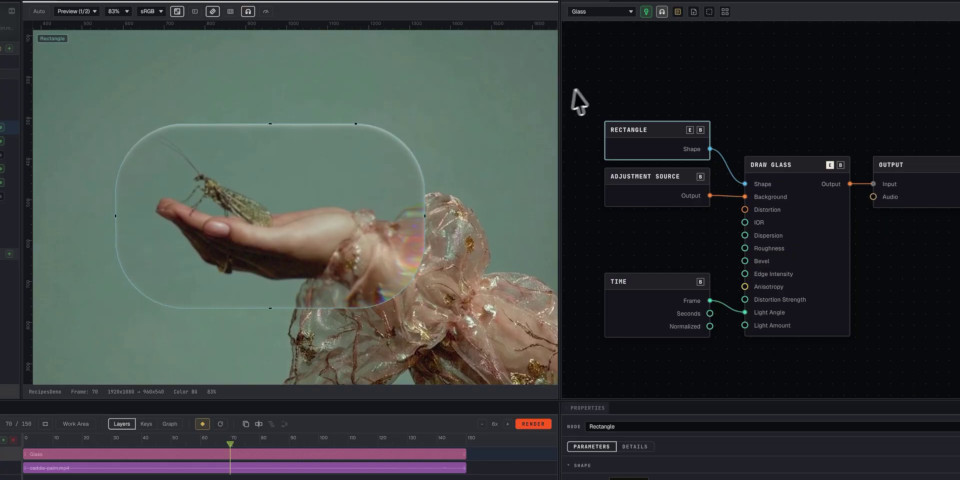
Why it matters: It signals a potential shift in the tooling landscape for motion graphics, offering a new workflow paradigm that could alter artist efficiency and the economic calculus for mid-tier studios evaluating subscription costs against retraining overhead.
Context: This follows a recent trend of accessible, often free, motion graphics tools like Autograph and Cavalry emerging as alternatives to entrenched industry standards, often built by practitioners rather than traditional software firms.
"New motion graphics tool Caddis puts a node graph in every layer Motion designer Mike Gaynor has unveiled Caddis, an interesting new compositing and motion graphics tool that combines node-based and layer-based." — CGCHANNEL
Commentary: Caddis’s hybrid model directly targets the workflow friction that limits node-based adoption in fast-turnaround motion graphics. If it gains traction, it could pressure incumbent pricing and force a reevaluation of pipeline specialization, potentially flattening the distinction between compositors and motion designers for certain project types. Its practitioner-led, AI-assisted development model also suggests a new vector for tool innovation, bypassing traditional software development pipelines.
Date: Tue, 19 May 2026 09:50:31 +0000
URL: https://www.cgchannel.com/2026/05/new-motion-graphics-tool-caddis-puts-a-node-graph-in-every-layer/
AI Sentiment Score: Neutral (33%)
AI Credibility Score: 10.0/10 — High
Scores and text generated by AI analysis of the source article indicated.
DreamWorks Animation’s MoonRay joins the Academy Software Foundation (Postmagazine)
Summary: DreamWorks Animation has contributed its proprietary, production-proven MoonRay renderer to the Academy Software Foundation as a hosted open-source project. The renderer, which has been used on every DreamWorks feature since 2019, is now available under an Apache 2.0 license and will be maintained collaboratively within the ASWF. This move transitions a major studio’s core rendering technology into a shared, industry-governed resource.

Why it matters: For VFX and animation professionals, this alters the competitive landscape for high-end rendering tools, potentially reducing vendor lock-in and shifting the economics of complex, feature-film-grade shot production.
Context: The ASWF has become the central repository for mission-critical open-source tools in visual media, with projects like OpenVDB and OpenColorIO. Major studios donating proprietary code represents a strategic shift towards shared infrastructure over competitive advantage in tooling.
"LOS ANGELES – The Academy Software Foundation (www.aswf.io), the open-source foundation for advancing open-source software in motion pictures, visual effects and animation, has announced that MoonRay, the open source production path-tracing renderer." — POSTMAGAZINE
Commentary: This donation pressures commercial renderer vendors by introducing a free, studio-grade alternative with a modern architecture. It signals that the economic advantage for major studios now lies in talent and pipeline efficiency, not in hoarding rendering IP. For smaller shops and freelancers, it lowers the barrier to entry for high-quality path tracing, potentially reshaping vendor pricing and service models. The ongoing DreamWorks engineering support ensures the project retains production relevance, avoiding the stagnation common in donated code.
Date: Tue, 19 May 2026 07:00:00 GMT
URL: https://www.postmagazine.com/Press-Center/Daily-News/2026/DreamWorks-Animations-MoonRay-joins-the-Academy-.aspx
AI Sentiment Score: Positive (62%)
AI Credibility Score: 10.0/10 — High
Scores and text generated by AI analysis of the source article indicated.
See amazing demo videos of Wētā FX’s in-house simulation tools (Cgchannel)
Summary: Wētā FX has published a series of demo videos showcasing its proprietary simulation tools, including the Loki multiphysics framework and Pahi water pipeline. This marks a shift from its previous practice of sharing only research papers, offering a direct view of the technology behind recent high-profile projects like the Avatar sequels. The move provides an unprecedented look at the internal tooling of a leading VFX studio.
Why it matters: It signals a potential change in how top-tier VFX houses manage proprietary technology as a competitive asset, offering rivals and vendors a clearer benchmark for simulation quality and integration.
Context: Wētā FX has long published research but kept operational tool demonstrations private; this public release coincides with the intensive simulation demands of its current Avatar pipeline.
"See amazing demo videos of Wētā FX’s in-house simulation tools Wētā FX has posted demo videos of a lot of its in-house tools on its website, including Pahi, its water simulation system,." — CGCHANNEL
Commentary: Publicly demonstrating proprietary tools recalibrates market expectations for simulation quality, potentially pressuring mid-tier vendors to accelerate R&D. For Wētā, it serves as a high-fidelity talent recruitment tool while subtly asserting technological dominance. However, it also risks commoditizing techniques that were once trade secrets, possibly flattening the technical differentiator between elite studios over time.
Date: Mon, 18 May 2026 11:38:44 +0000
URL: https://www.cgchannel.com/2026/05/see-amazing-demo-videos-of-weta-fxs-in-house-simulation-tools/
AI Sentiment Score: Neutral (33%)
AI Credibility Score: 10.0/10 — High
Scores and text generated by AI analysis of the source article indicated.
Former SideFX & Dneg CTO Paul Salvini joins Rodeo FX (Postmagazine)
Summary: Rodeo FX has appointed Paul Salvini, former CTO of SideFX and Dneg, as its new Chief Technology Officer. Salvini was instrumental in the development and evolution of Houdini and later led technology strategy at Dneg, focusing on AI and real-time tools. His hiring signals Rodeo FX’s continued investment in proprietary pipeline development and R&D.

Why it matters: A high-profile CTO hire with deep tool-building and studio-side experience signals a strategic push for competitive advantage through proprietary technology, directly impacting pipeline efficiency, artist workflows, and the studio’s ability to bid on complex work.
Context: Major VFX studios are increasingly competing on the strength of their internal tooling and R&D, moving beyond pure labor arbitrage. Salvini’s career path from core software (SideFX) to a major vendor (Dneg) and now to a high-end studio (Rodeo FX) reflects this trend.
"MONTREAL – Rodeo FX recently welcomed Paul Salvini as its new chief technology officer. A respected innovator in computer graphics and a key figure behind the creation and evolution of SideFX’s Houdini,." — POSTMAGAZINE
Commentary: Salvini’s appointment is a direct investment in throughput and quality ceilings. His experience suggests Rodeo FX aims to harden its proprietary pipeline, potentially reducing reliance on third-party vendors and increasing its leverage in bidding for high-margin, technically complex sequences. The move underscores that top-tier VFX work is now a race for proprietary operational technology, not just artist headcount.
Date: Tue, 12 May 2026 07:00:00 GMT
URL: https://www.postmagazine.com/Press-Center/Daily-News/2026/Former-SideFX-Dneg-CTO-Paul-Salvini-joins-Rodeo-.aspx
AI Sentiment Score: Positive (50%)
AI Credibility Score: 10.0/10 — High
Scores and text generated by AI analysis of the source article indicated.
Blender Singularity lands in 4K HDR (Digitalproduction)
Summary: Blender Studio has released its latest open film, ‘Singularity,’ as a 4K HDR short. The release is packaged with all production assets, frames, and high-quality encodes under a Creative Commons Attribution license. This positions the project less as a narrative piece and more as a comprehensive, real-world test dataset for storage, conform, review, and HDR pipeline validation.

Why it matters: For VFX and CGI professionals, this provides a free, high-fidelity benchmark for stress-testing HDR workflows, procedural animation systems, and asset management pipelines against a known, complex reference.
Context: Blender Studio’s open films serve as both artistic showcases and practical battlegrounds for the Blender ecosystem’s tooling, establishing de facto technical standards and workflow patterns for the broader open-source and mid-market production community.
"The release matters less for the plot and more for what it packages with the movie. The singularity includes downloads of ALL production assets, frames, and high quality encodes under a Creative Commons Attribution license. That makes it usable as real-world test data for storage, conform, and review, not just a nice watch on a big screen." — DIGITALPRODUCTION
Commentary: This move commoditizes high-end pipeline validation, allowing smaller studios and freelancers to pressure-test their HDR and procedural workflows against a studio-grade benchmark. It subtly pressures commercial tool vendors to demonstrate comparable interoperability and transparency. The mandatory attribution clause, however, introduces a practical friction for asset reuse in client work, potentially limiting its utility in commercial pipelines despite its technical openness.
Date: Fri, 15 May 2026 10:00:00 +0000
URL: https://digitalproduction.com/2026/05/15/blender-singularity-lands-in-4k-hdr/
AI Sentiment Score: Negative (71%)
AI Credibility Score: 10.0/10 — High
Scores and text generated by AI analysis of the source article indicated.
Simple Tree Tools 3.0 goes procedural (Digitalproduction)
Summary: Simple Tree Tools 3.0 introduces a procedural, non-destructive tree generation system for Houdini, emphasizing parameter-driven controls and environmental response tropisms. It bridges scanned and procedural workflows with new scan extension nodes and offers tiered licensing with clear commercial use terms. The update targets environment artists and asset teams seeking iterative speed and consistency over heroic one-off assets.

Why it matters: This shifts the economics of complex environment shots by enabling faster, more flexible iteration and reducing reliance on manual sculpting or extensive scan libraries, directly impacting staffing models and vendor throughput.
Context: The VFX industry increasingly prioritizes non-destructive, procedural workflows to manage late-stage creative changes and scale environment complexity without linearly increasing artist hours.
"Simple Tree Tools 3.0 targets artists who want tree and plant generation to behave like the rest of a Houdini graph: parameter driven, non-destructive, and easy to rewire when a shot brief." — DIGITALPRODUCTION
Commentary: By embedding biological logic into a procedural node, the tool elevates environment work from manual placement to systemic generation, potentially reducing the need for specialized modelers per shot. The explicit licensing tiers and scan integration nodes signal a product maturing for studio pipelines, where predictable costs and hybrid asset workflows are critical. However, the reliance on Houdini’s ecosystem and the caveats around mixed-geometry handoffs mean adoption will be fastest in shops already committed to procedural environment pipelines.
Date: Mon, 18 May 2026 05:00:00 +0000
URL: https://digitalproduction.com/2026/05/18/simple-tree-tools-3-0-goes-procedural/
AI Sentiment Score: Negative (66%)
AI Credibility Score: 10.0/10 — High
Scores and text generated by AI analysis of the source article indicated.
Foundry Releases Nuke Stage Virtual Production Application | Animation World Network (Awn)
Summary: Foundry has updated Nuke Stage, its virtual production and in-camera VFX software, with new features including native USD workflows, Gaussian Splat rendering, NotchLC playback support, and enhanced metadata tracking. The updates are informed by early production use, such as on an Amazon MGM Studios feature. The tool is designed to unify pre-production, on-set, and post workflows on standard hardware, aiming to reduce setup times and proprietary dependencies.

Why it matters: This release directly impacts the cost and complexity of virtual production pipelines, potentially shifting vendor selection, crew composition, and the economic feasibility of in-camera VFX for mid-tier productions.
Context: Virtual production tooling is consolidating around USD and real-time rendering, but workflows often remain fragmented between game engines and traditional VFX software. Foundry is positioning Nuke Stage to bridge this gap within its established compositing ecosystem.
"Using Nuke Stage, we can set up scenes in half the time." — AWN
Commentary: The push for hardware-agnostic, node-based virtual production tools like Nuke Stage threatens the lock-in of proprietary game engine and hardware stacks, potentially redistributing labor from specialized real-time operators back to broader compositing artists. If the promised throughput gains materialize, the economics of complex LED volume shoots could shift, making them accessible to more productions and pressuring vendors to offer more open, pipeline-integrated solutions.
Date: 1 week ago
URL: https://www.awn.com/news/foundry-releases-nuke-stage-virtual-production-application
AI Sentiment Score: Negative (75%)
AI Credibility Score: 10.0/10 — High
Scores and text generated by AI analysis of the source article indicated.
DaVinci Resolve 21: An AI-Driven Post-Production Evolution (Cubiecolor)
Summary: DaVinci Resolve 21 integrates AI across its entire post-production suite, automating tasks from dialogue replacement and media logging to complex rotoscoping and facial manipulation. It introduces a dedicated Photo page, collapsing still photography into the same node-based pipeline as motion work, and adds high-end compositing tools via the Krokodove integration. The update targets throughput bottlenecks in professional pipelines, from assembly to final multi-format delivery.
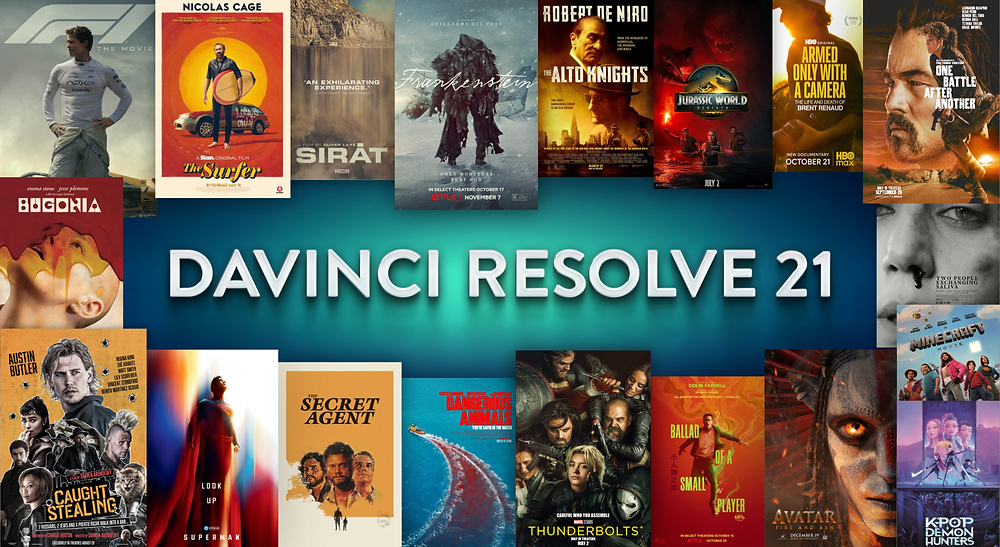
Why it matters: This release directly pressures post-house economics by automating labor-intensive tasks, potentially reducing headcount for junior roles while increasing leverage for senior creatives. It also consolidates vendor ecosystems, challenging Adobe’s hold on photography and After Effects for motion graphics.
Context: The post-production industry is under intense pressure to accelerate timelines and reduce costs while managing proliferating deliverable formats. AI tooling has been fragmented across specialized plugins; Resolve 21 integrates it natively, aiming to own the entire pipeline.
"DaVinci Resolve 21: An AI-Driven Post-Production Evolution – Aniket Bhattacharjee – Apr 14 – 23 min read Updated: Apr 15 Paradigm Shift in Post-Production Forget everything you knew about post-production. DaVinci Resolve." — CUBIECOLOR
Commentary: The ten-second voice cloning threshold commoditizes ADR, threatening a core revenue stream for recording studios and voice actors while shifting that budget to post. Tools like AI Slate ID and IntelliSearch directly target the assistant editor and DIT roles, automating foundational logging work. The Photo page’s nodal color science and cloud collaboration enable agencies to enforce brand consistency across motion and print from a single project file, streamlining client review but centralizing power with the colorist. For VFX, the Krokodove integration and USD/Hydra 2.0 support signal a direct play for high-end broadcast and mid-tier feature work, offering a native alternative to After Effects and Nuke for certain compositing tasks.
Date: April 14, 2026
URL: https://www.cubiecolor.com/post/davinci-resolve-21-an-ai-driven-post-production-evolution
AI Sentiment Score: Negative (50%)
AI Credibility Score: 9.8/10 — High
Scores and text generated by AI analysis of the source article indicated.
The Immense Engine: Former Epic Director’s AI-First Unreal Alternative | GAMES.GG (Games.Gg)
Summary: A former Epic Games technical director has launched The Immense Engine, an AI-native game engine developed in Europe. It is positioned as a structural alternative to Unreal Engine, integrating AI into core workflows rather than as a retrofit. The announcement arrives amid industry turbulence at Epic and broader studio restructuring around AI efficiency. Its commercial terms and ability to build a support ecosystem remain unproven.

Why it matters: This signals a potential shift in the foundational tooling for real-time content creation, which could alter vendor leverage, staffing models, and the economics of complex production pipelines.
Context: The game and VFX engine market is dominated by US-based tools (Unreal, Unity), with European studios increasingly seeking alternatives aligned with regional operational and compliance needs.
"Former Epic Tech Director Unveils The Immense Engine A former Epic Games technical director has announced The Immense Engine, an AI-driven game engine built in Europe and positioned as a serious alternative." — GAMES.GG
Commentary: If technically viable, an AI-native architecture could raise the quality ceiling for small teams and compress timelines for complex shots, directly pressuring incumbent vendors on throughput economics. However, its success hinges on licensing terms that avoid Unity’s missteps and the rapid cultivation of a third-party tooling ecosystem—a formidable barrier to entry. For European studios, it offers a strategic hedge against platform dependency, but adoption will require proven superiority in a specific workflow, not just pedigree.
Date: 5 days ago
URL: https://games.gg/news/immense-engine-epic-tech-director-ai
AI Sentiment Score: Negative (66%)
AI Credibility Score: 7.0/10 — Medium
Scores and text generated by AI analysis of the source article indicated.
Best Cloud Render Farm for After Effects 2026 (Superrendersfarm)
Summary: A 2026 multi-vendor comparison of cloud render farms for After Effects reveals a narrowing field of dedicated AE support, impacting studios with hybrid Nuke/AE pipelines. Key vendors like GarageFarm have deprecated AE services, while others like Drop & Render do not support the application, forcing a fragmented sourcing strategy. The analysis suggests studios must now pair an AE-native farm, such as Super Renders Farm, with a separate specialist 3D farm for pre-comps.

Why it matters: For VFX studios and post-production houses, the availability and quality of cloud rendering directly affect project throughput, cost predictability, and the feasibility of complex hybrid workflows.
Context: The cloud rendering market has historically fragmented by application support, with farms specializing in either 3D (Houdini, C4D) or compositing (Nuke, AE). AE’s persistent role in motion graphics and final comps has maintained demand for its cloud support.
"For studios running mixed pipelines, the AE compositing pass needs an AE-supporting farm — and among the six, the AE-native options narrow quickly given GarageFarm’s deprecation (garagefarm.md:135) and Drop & Render’s non-support (drop-and-render.md:117)." — SUPERRENDERSFARM
Commentary: This consolidation reduces vendor leverage for AE-heavy shops, potentially increasing costs. It mandates a multi-vendor render management strategy, adding operational overhead. The economics of complex AE shots, particularly those with heavy plugin loads, will be dictated by the few remaining suppliers, shifting bargaining power.
Date: May 22, 2026 12:00 AM ET
URL: https://superrendersfarm.com/article/best-cloud-render-farm-after-effects-comparison-2026
AI Sentiment Score: Positive (50%)
AI Credibility Score: 10.0/10 — High
Scores and text generated by AI analysis of the source article indicated.
Cloud Render Farm Pricing Explained: Real Costs 2026 | SuperRenders (Superrendersfarm)
Summary: SuperRenders Farm’s 2026 pricing guide demystifies cloud render farm billing by detailing the operational math behind GHz-hour and GPU-hour units, with worked examples for V-Ray, Redshift, and other major engines. It highlights that while GPU-hour rates are higher, total job costs can be lower due to faster render times, a dynamic that shifts when scenes approach VRAM limits. The analysis underscores hidden cost factors like software licensing, minimum charges, and failed frame policies that materially impact total project economics. This provides a concrete framework for studios to compare managed services against IaaS models, factoring in the labor cost of setup and troubleshooting.
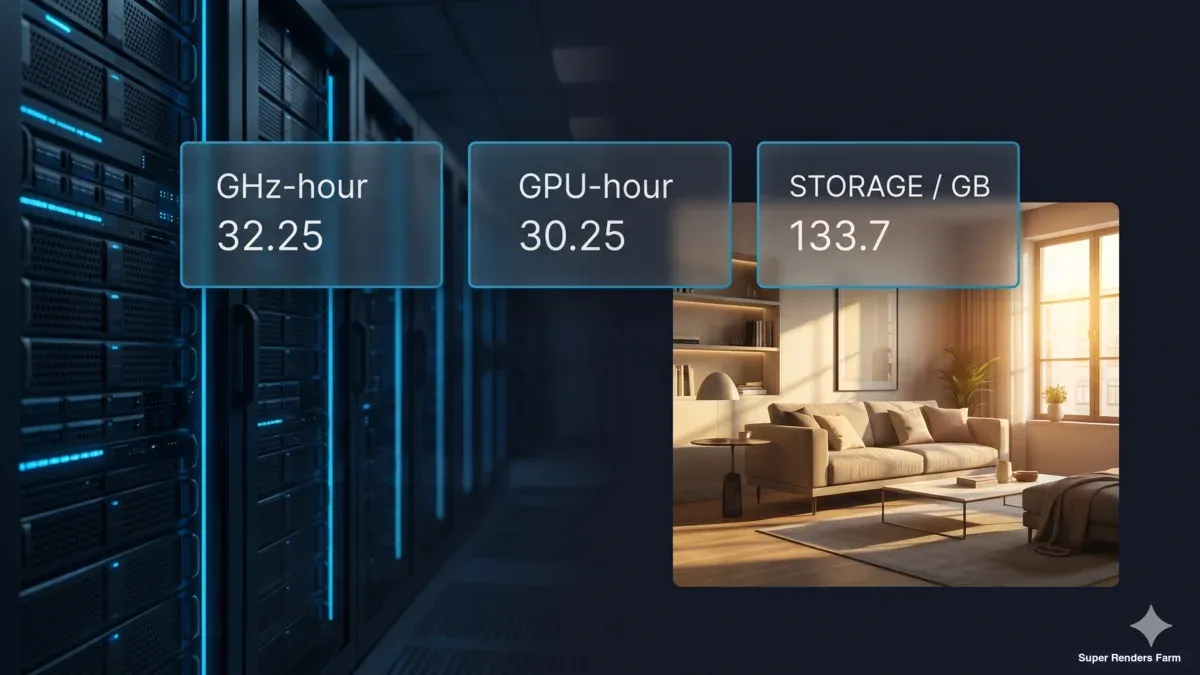
Why it matters: For VFX supervisors, studio heads, and pipeline TDs, this granular cost breakdown directly informs vendor selection, project budgeting, and the ongoing calculus between CPU and GPU render strategies, with significant implications for throughput and staffing.
Context: Cloud rendering has shifted from a niche capacity boost to a core pipeline component, but pricing models remain opaque, making accurate cost forecasting and vendor comparison difficult for production.
"Cloud Render Farm Pricing Explained: Real Costs in 2026 Overview Introduction The pricing page of any cloud render farm lists a rate. For CPU jobs it might say "$0.006 per GHz-hour." For." — SUPERRENDERSFARM
Commentary: The explicit linkage of VRAM thresholds to economic inflection points clarifies when GPU rendering’s speed advantage collapses, guiding asset optimization and hardware procurement. Bundled licensing and the absence of minimum job charges at managed farms like SuperRenders alter the competitive landscape, pressuring IaaS providers to justify their lower headline rates against the hidden labor costs of system administration. This shifts vendor leverage towards integrated service models for all but the largest studios with dedicated render-wrangler roles.
Date: 4 weeks ago
URL: https://superrendersfarm.com/article/cloud-render-farm-pricing-explained-2026
AI Sentiment Score: Negative (57%)
AI Credibility Score: 9.6/10 — High
Scores and text generated by AI analysis of the source article indicated.
From Freelancers to VFX Studios: Why Cloud Render Farms Are No Longer Optional (Gridmarkets)
Summary: Cloud render farms are shifting from a convenience to essential production infrastructure across the VFX pipeline, enabling remote workflows for freelancers, elastic scaling for mid-sized studios, and peak-load management for large facilities. The article positions services like GridMarkets as critical for handling complex simulations and high-volume renders without fixed capital expenditure, fundamentally altering project economics and team geography.

Why it matters: This signals a structural shift in VFX capacity planning, where rendering becomes a variable operational cost rather than a fixed capital barrier, directly impacting studio bidding strategies, freelance market competitiveness, and global talent distribution.
Context: The push for cloud rendering accelerates as shot complexity outpaces on-premise hardware refresh cycles, and distributed production becomes the default model for both episodic and feature work.
"A strong strategy for large studios is a hybrid model: maintain an in-house render farm sized for your average workload, optimised to run at ~80% utilization where ownership is cost-effective, and burst to cloud render farm services for peak demand, rushes, and overflow." — GRIDMARKETS
Commentary: The hybrid model endorsement validates cloud rendering as a core capacity management tool, not just a stopgap. This could pressure in-house IT departments to integrate cloud bursting into their financial and operational planning, while vendors must suggest seamless pipeline integration to win studio contracts. The economic effect is to flatten the cost curve of complex shots, potentially lowering the barrier for mid-tier studios to bid on high-end work.
Date: 2 weeks ago
URL: https://gridmarkets.com/post/cloud-render-farm
AI Sentiment Score: Negative (69%)
AI Credibility Score: 9.9/10 — High
Scores and text generated by AI analysis of the source article indicated.
Houdini Cloud Rendering: VFX Simulation Deep Dive (Superrendersfarm)
Summary: A VFX farm operator details the operational calculus for cloud-rendering Houdini simulations, emphasizing that the bottleneck shifts from raw compute to cache logistics and solver constraints. The article provides a per-sim-type breakdown (Pyro, FLIP, Vellum, Destruction, Crowds) of when to bake locally versus rebuild on the farm, focusing on bandwidth costs, deterministic seeding, and the limits of distributed solving. It clarifies that cloud farms win on parallel-frame rendering of baked caches, not on parallelizing the simulation solve itself, which remains bound to single nodes.

Why it matters: For FX TDs and pipeline managers, this defines the cost and feasibility thresholds for outsourcing simulation-heavy work, directly impacting shot budgeting, iteration speed, and vendor selection.
Context: Cloud rendering adoption in VFX is accelerating, but Houdini’s simulation-heavy workflows present unique challenges that generic render-farm models don’t address, forcing a reassessment of what ‘cloud scalability’ actually means for FX pipelines.
"Houdini Cloud Rendering: A VFX Simulation Deep Dive for Pyro, FLIP, Vellum, Destruction, and Crowds Overview Houdini scenes have a way of generating output long before they generate frames. A FLIP simulation." — SUPERRENDERSFARM
Commentary: This explicitly reframes cloud economics for FX: the primary cost isn’t GPU hours but upload bandwidth and CPU time for cache rebuilds, shifting vendor competition from core-hour pricing to data logistics and deterministic workflow suggests. It forces studios to audit their sim caches and uplink capacity as rigorously as their render budgets, and may slow the shift of complex FX shots to the cloud until WAN acceleration improves.
Date: May 22, 2026 12:00 AM ET
URL: https://superrendersfarm.com/article/houdini-cloud-rendering-vfx-simulation-deep-dive-2026
AI Sentiment Score: Negative (75%)
AI Credibility Score: 10.0/10 — High
Scores and text generated by AI analysis of the source article indicated.
Digital Fashion in Unreal Engine Five: the Textile Realism … (Foro3D)
Summary: Infinity Nikki demonstrates a production pipeline integrating Marvelous Designer, Houdini, and Unreal Engine 5’s Lumen to achieve high-fidelity cloth simulation and material rendering. The workflow moves from precise textile pattern modeling to dynamic effects generation and real-time global illumination, aiming for virtual couture quality. This signals a maturation of real-time digital fashion creation toolsets.

Why it matters: This pipeline elevates the quality ceiling for real-time cloth and materials, directly impacting asset creation costs, vendor specialization, and staffing requirements for projects demanding high-fashion or hyper-realistic wardrobe.
Context: Real-time rendering has historically traded off complex material and cloth simulation for performance; UE5’s Lumen and integrated DCC workflows are closing the gap with offline rendering for specific, high-value assets.
"Infinity Nikki redefines the open-world genre by merging exploration with a deep focus on digital fashion. The title, developed in Unreal Engine 5, not only presents a vibrant world but also sets." — FORO3D
Commentary: This integrated pipeline commoditizes what was once bespoke VFX work, shifting labor toward specialized textile artists and real-time technical artists. It pressures vendors to offer these integrated services and could bifurcate projects between those requiring this fidelity and those that don’t, altering bidding and crewing models. The economics of complex, hero-character shots change when this quality is achievable in-engine, reducing post-production compositing and simulation overhead.
Date: May 21, 2026 12:00 AM ET
URL: https://foro3d.com/en/2026/mayo/moda-digital-en-unreal-engine-5-el-realismo-textil-de-infinity-nikki.html
AI Sentiment Score: Positive (66%)
AI Credibility Score: 10.0/10 — High
Scores and text generated by AI analysis of the source article indicated.
Post ID: 5522c21e