
RFID and Digital Tracking for Supply Chains
From scanning to sensing: a new era of supply chain visibility – Sensolus (Sensolus)
Summary: UPS has completed a nationwide rollout of RFID sensing across its U.S. small package network, eliminating 20 million daily manual scans and reducing misloads by nearly 70%. This $100 million investment marks a transition from scanning to sensing as a baseline operational standard. The deployment, alongside the production of 55 billion RFID tags in 2025, signals that real-time visibility is now considered necessary infrastructure, not just promising technology. This shift creates a new operational baseline where discrete identification at fixed points is expected, pushing the visibility requirement outward to the uncontrolled gaps between those points.

Why it matters: For domestic manufacturers and logistics operators, the UPS move establishes a new cost-of-entry for visibility, forcing competitors to match its efficiency or lose contracts, and refocusing investment on filling the tracking gaps RFID cannot cover.
Context: The logistics industry has relied on manual barcode scanning for decades, creating choke points of data and labor. The maturation of RFID provides automated, low-cost identification at fixed infrastructure points, but leaves a blind spot for assets moving outside controlled environments.
"WEBINAR Multimodal transport: smart tracking in uncontrolled environments REGISTER HERE Behind the Tech How RFID and IoT tracking combine to give supply chain teams a continuous, end-to-end view of every asset; from." — SENSOLUS
Commentary: The UPS deployment is a capital-intensive proof-of-concept that redefines the labor equation: it automates a high-volume, error-prone manual task (scanning), freeing labor for higher-value functions while setting a new service-level expectation for shippers. For vendors and operators, the competitive landscape now bifurcates: you either provide the fixed-point RFID infrastructure or you provide the interstitial tracking (like Sensolus’s IoT) for assets in transit and at unstructured sites. This creates a layered visibility market where integration between point-sensing and continuous-tracking platforms becomes a critical vendor selection criterion, not a nice-to-have.
Date: May 22, 2026 12:00 AM ET
URL: https://www.sensolus.com/knowledge-hub/company-news/from-scanning-to-sensing-a-new-era-of-supply-chain-visibility/
AI Sentiment Score: Negative (57%)
AI Credibility Score: 10.0/10 — High
Scores and text generated by AI analysis of the source article indicated.
The Tag That Doesn’t Come Off: How RFID is Rewriting The Customer Relationship (Youtube)
Summary: A video from a supply chain executive details the operational integration of RFID tags at the point of garment manufacture, creating a continuous digital thread from factory floor to store shelf. The system enables precise inventory tracking and establishes the first verifiable record of an item’s provenance. This shifts RFID from a post-production logistics tool to a foundational component of product identity and traceability.

Why it matters: For domestic manufacturers and brands, this represents a capital and process commitment that alters factory workflows, adds a new data layer to vendor relationships, and creates a tangible asset for supply chain resilience and consumer transparency claims.
Context: RFID adoption in retail has historically focused on distribution centers and stores; embedding tags at the source for US-made goods introduces new cost and coordination challenges but offers a competitive data advantage.
"We start out with we’re {ts:502} going to take a tag. We’re going to have it placed on the garment at time manufacturer. We’re going to track stuff {ts:509} throughout the supply." — YOUTUBE
Commentary: The operational consequence is that domestic factories must now manage a secure, serialized component (the tag) and execute a new scanning protocol, adding a step that impacts labor and throughput. This creates a verifiable ‘birth certificate’ for goods, a tangible asset for brands marketing provenance, but also a new point of potential friction and cost in the manufacturing agreement. The data generated fundamentally rewires inventory management from probabilistic to deterministic, affecting everything from production planning to loss prevention.
Date: May 20, 2026 12:00 AM ET
URL: https://www.youtube.com/watch?v=wk45mZgoTwI
AI Sentiment Score: Negative (60%)
AI Credibility Score: 10.0/10 — High
Scores and text generated by AI analysis of the source article indicated.
DPP for Textiles in Practice: Learnings from Fusion Sportswear … (Carbonfact)
Summary: The EU’s forthcoming Digital Product Passport (DPP) mandate for textiles is forcing apparel brands to operationalize complex environmental and supply chain data. A new analysis from Carbonfact outlines four distinct implementation approaches—marketing-led, traceability-led, LCA-led, and layered systems—each reflecting a brand’s internal priorities and maturity. The technical workflow, from data consolidation to QR code generation, reveals a significant backend lift involving PLM/ERP systems, data gap filling, and coordination with label suppliers. For US-based manufacturers, this adds a new layer of compliance complexity to domestic production, centered on data acquisition and verification.

Why it matters: For US manufacturers and brands, this is a new compliance and operational cost center that will dictate supply chain data architecture, vendor selection, and labeling logistics, irrespective of where final assembly occurs.
Context: The EU’s Ecodesign for Sustainable Products Regulation (ESPR) is set to impose DPPs, creating a de facto global standard for product transparency that will impact any brand selling into the EU market.
"###### Last Updated May 20, 2026 The Digital Product Passport (DPP) is expected to become a key element of the EU’s Ecodesign for Sustainable Products Regulation (ESPR), aiming to make product information." — CARBONFACT
Commentary: The taxonomy of DPP approaches reveals a strategic bifurcation: consumer-facing transparency versus backend supply chain and environmental management. For US production, the traceability and LCA-led models will be most burdensome, as they require granular, verified data from domestic material processors and component suppliers who may lack existing digital infrastructure. This mandates upstream investment in data capture, potentially reshaping vendor relationships and favoring larger, integrated manufacturers over smaller contractors. The recommendation to host the entry URL on a brand’s domain underscores that while third-party platforms handle computation, brands must own the customer-facing compliance interface.
Date: May 20, 2026 12:00 AM ET
URL: https://www.carbonfact.com/blog/policy/dpp-case-study
AI Sentiment Score: Negative (66%)
AI Credibility Score: 7.0/10 — Medium
Scores and text generated by AI analysis of the source article indicated.
VF Put RFID Under The Model Already Running — Rack & Reason (Rack-Reason)
Summary: VF Corporation is implementing a global, item-level RFID system via Nedap, beginning with The North Face in Q2 2026 and extending to Vans and Timberland across over 1,500 stores and their supporting distribution network. The program mandates tagging at the point of manufacture, integrating ‘vendor partners at the source’ into the data pipeline. This moves RFID from a pilot or store-level application to a foundational supply chain and inventory management protocol.

Why it matters: For domestic manufacturers and logistics operators, this signals a shift toward mandatory, upstream data integration with major brands, adding a new compliance layer and capital requirement to production lines.
Context: RFID has long promised supply chain visibility, but adoption has been fragmented, often limited to distribution centers or high-value items. VF’s scale and ‘at source’ mandate represent a tipping point for the technology as a condition of doing business.
"VF Corporation announced on 20 April that it had chosen Nedap to deliver item-level RFID across its brand portfolio, starting with The North Face in Q2-2026 and expanding to Vans and Timberland." — RACK-REASON
Commentary: This imposes a direct operational cost and process change on all contracted factories, who must now source, apply, and encode tags as a standard packing step. The real constraint isn’t the technology but the alignment of hundreds of vendors to a single data standard and the capital outlay for encoding hardware, which could pressure smaller suppliers. For VF, the payoff is real-time global inventory accuracy, but the execution risk lies in vendor compliance and the integrity of the data pipeline from the factory floor onward.
Date: April 24, 2026 12:00 AM ET
URL: https://rack-reason.com/en/vf-put-rfid-under-model-already-running/
AI Sentiment Score: Negative (66%)
AI Credibility Score: 10.0/10 — High
Scores and text generated by AI analysis of the source article indicated.
Avery Dennison, ReCircled RFID pilot proves circular can scale (Just-Style)
Summary: A pilot by Avery Dennison and ReCircled, in collaboration with two major apparel brands, demonstrated that RFID-enabled garment sorting for circularity can deliver significant operational gains. The system, using atma.io for data management, reduced scanning labor hours by up to 99.9% and increased sorting accuracy to 99%, compared to manual rates as low as 72%. The efficiency gains were sufficient to more than offset the initial RFID implementation costs.

Why it matters: For domestic manufacturers and logistics operators, this quantifies a path to radically lower the labor and error costs of handling end-of-life goods, a critical constraint for scaling domestic circularity and compliance programs.
Context: Scaling textile recycling and resale in the US has been hampered by the high cost and inaccuracy of manual sorting, making post-consumer collection economically unviable for many operators.
"Conducted in collaboration with two major apparel brands, the pilot embedded Avery Dennison’s RFID tags into garments, using the atma.io cloud platform to capture, store, manage and share garment life cycle data." — JUST-STYLE
Commentary: The pilot validates a capital-for-labor trade-off that changes the math for domestic reverse logistics. The major operational hurdle shifts from sorting costs to upstream coordination: brands must embed RFID at manufacture, creating a new vendor requirement and data pipeline. This creates a first-mover advantage for brands that can standardize with suppliers, while logistics firms will see demand for automated sorting facilities grow. The Duty Drawback claim efficiency is a direct, near-term financial incentive for brands with unsold inventory.
Date: May 21, 2026 12:00 AM ET
URL: https://www.just-style.com/news/avery-dennison-recircled-rfid-pilot/
AI Sentiment Score: Negative (57%)
AI Credibility Score: 10.0/10 — High
Scores and text generated by AI analysis of the source article indicated.
UPS growing RFID usage to boost shipper visibility, trim manual scans | Supply Chain Dive (Supplychaindive)
Summary: The carrier will equip U.S. hubs with RFID sensors and customers with label printers as it looks to connect nearly all of its packages with the technology, an executive said.

Why it matters: RFID integration signals a shift toward granular, automated tracking, demanding immediate process audits for manual scan dependencies.
Context: Expect changes in required labeling infrastructure and potential workflow retraining for facility personnel.
"The carrier will equip U.S. hubs with RFID sensors and customers with label printers as it looks to connect nearly all of its packages with the technology, an executive said." — SUPPLYCHAINDIVE
Commentary: The signal is still worth tracking, but the current extraction path did not yield enough body text for a fuller analytical read. The immediate implication is operational rather than speculative: watch how this changes budgets, workflows, or risk assumptions over the next cycle.
Date: April 14, 2026
URL: https://www.supplychaindive.com/news/ups-rfid-sensor-hub-expansion-2026/817288/
AI Sentiment Score: Negative (50%)
AI Credibility Score: 10.0/10 — High
Scores and text generated by AI analysis of the source article indicated.
How RFID is Reshaping Health and Wellness Supply Chains: Q&A with Suresh Palliparambil | PharmExec (Pharmexec)
Summary: Impinj’s Suresh Palliparambil details how the Gen2X enhancement to RAIN RFID protocol enables true item-level visibility for historically difficult-to-track OTC and pharmaceutical items, including those with liquids, metals, or small form factors. This technical leap allows unique identification and real-time tracking of each unit from manufacturing through retail, supporting authentication, expiration management, and rapid recall response. The shift moves supply chain monitoring beyond pallet- or case-level to granular, item-specific data.

Why it matters: For domestic manufacturers and distributors of health and wellness products, this directly addresses critical operational constraints around inventory accuracy, loss prevention, and regulatory compliance, while potentially reshaping labor and automation strategies in warehouses and pharmacies.
Context: The push for supply chain resilience and ‘Made in USA’ production intensifies the need for granular visibility to manage domestic capacity, labor, and logistics costs effectively, especially for sensitive health products.
"True item-level visibility goes beyond general inventory tracking. It’s being able to see and understand at the item level exactly what an item is, whether it is authentic and where it is at any given moment in time." — PHARMEXEC
Commentary: The operational consequence is a move from probabilistic inventory management to deterministic, unit-level control, which reduces safety stock requirements and labor for manual counts. For domestic producers, this granular data stream is a prerequisite for justifying automation and AI initiatives, but it imposes new vendor integration and data hygiene burdens on packaging lines and DCs. The ability to track diversion and counterfeits at the item level also shifts the compliance and liability landscape for brands.
Date: 3 weeks ago
URL: https://www.pharmexec.com/view/rfid-reshaping-health-wellness-supply-chains-suresh-palliparambil
AI Sentiment Score: Negative (66%)
AI Credibility Score: 10.0/10 — High
Scores and text generated by AI analysis of the source article indicated.
UPS deploys RFID across US network – Logistics Manager (Logisticsmanager)
Summary: UPS has completed a nationwide deployment of RFID sensing technology across its US small parcel network, including vehicles, sorting facilities, and over 5,500 UPS Store locations. The $100+ million investment eliminates the need for manual barcode scanning, enabling automatic package detection throughout the shipping journey. This positions UPS as the first major integrated logistics provider to implement RFID at this scale.

Why it matters: For manufacturers and shippers prioritizing domestic supply chain resilience, this upgrade directly impacts operational reliability, cost predictability, and the granularity of real-time logistics data available for US-based operations.
Context: The push for supply chain digitization and transparency has been a multi-year industry trend, but widespread, network-level RFID adoption has been hampered by high capital costs and integration complexity with legacy systems.
"With RFID embedded into labels, on our vehicles and in our loading bays, customers benefit from clear visibility during the entire shipping process – from pick up to delivery, with no manual scanning required. The result is commerce that is smarter and predictable." — LOGISTICSMANAGER
Commentary: The operational consequence is a shift in labor and error profiles: fewer manual scans reduce human bottlenecks and mis-sorts, but place greater systemic reliance on the uptime and accuracy of the RFID infrastructure. For clients, this means more reliable, automated tracking data, but also potentially new service tiering or data-access models from UPS as it monetizes this intelligence. The scale of the investment raises the barrier for competitors and could accelerate industry-wide expectations for ‘hands-off’ visibility, particularly for high-value or time-sensitive domestic shipments.
Date: April 20, 2026 12:00 AM ET
URL: https://www.logisticsmanager.com/ups-deploys-rfid-across-us-network/
AI Sentiment Score: Positive (40%)
AI Credibility Score: 10.0/10 — High
Scores and text generated by AI analysis of the source article indicated.
UPS Bets on RFID to Deliver ‘Most Significant’ Visibility Upgrade (Wwd)
Summary: UPS has completed a $100+ million deployment of RFID sensors across its U.S. delivery vehicles, last-mile facilities, and UPS Store locations, phasing out manual barcode scanning. The system provides near-real-time package tracking, has reportedly reduced misloads by nearly 70%, and is part of a broader automation drive labeled ‘Efficiency Reimagined.’ This initiative coincides with significant workforce reductions and facility closures aimed at lowering costs.

Why it matters: For manufacturers and brands reliant on domestic logistics, this signals a shift toward more automated, data-driven, and potentially less labor-intensive shipping networks, affecting cost structures and service predictability.
Context: This RFID rollout is a core component of UPS’s multi-year cost-cutting and network automation strategy, which has already involved closing dozens of facilities and cutting tens of thousands of jobs.
"The logistics giant has invested more than $100 million in projects to roll out the technology across its network, the company revealed on Tuesday. With the investment, UPS has embedded RFID sensors." — WWD
Commentary: The operational consequence is a trade-off: shippers gain granular visibility and reduced error rates, but this comes bundled with a carrier aggressively optimizing for lower unit costs through automation and labor reduction. For clients, this may mean more predictable logistics but also a less flexible, more system-dependent partnership. The real test is whether the promised ‘smarter and predictable’ commerce materializes during peak disruptions, when automated systems are often stressed.
Date: April 16, 2026
URL: https://wwd.com/sourcing-journal/logistics/ups-rfid-100-million-sensors-supply-chain-visibility-delivery-vehicles-network-smart-package-facility-1238919403
AI Sentiment Score: Negative (62%)
AI Credibility Score: 10.0/10 — High
Scores and text generated by AI analysis of the source article indicated.
UPS Rolls Out RFID Tracking to Improve Delivery Accuracy, WSJ Reports – Insider Monkey (Insidermonkey)
Summary: The provided text is a promotional sales pitch for a stock-picking newsletter, not a report on UPS or logistics. It makes broad, unsupported claims about a $250 trillion AI-driven robotics market by 2040, name-drops tech billionaires to build credibility, and urges readers to subscribe for a low monthly fee to discover a single, unnamed ‘game-changing’ AI stock.

Why it matters: This exemplifies the type of low-quality, hype-driven financial content that practitioners must filter out to focus on substantive operational intelligence.
Context: Financial and industry media are saturated with promotional material disguised as analysis, often using AI and automation themes to attract attention.
"When Jeff Bezos said that one breakthrough technology would shape Amazon’s destiny, even Wall Street’s biggest analysts were caught off guard. Fast forward a year and Amazon’s new CEO Andy Jassy described." — INSIDERMONKEY
Commentary: The piece has zero operational value for logistics or manufacturing professionals. Its framing—vague trillion-dollar markets, secret ‘keys,’ and urgent calls to action—is a distraction from analyzing real-world constraints like capacity, labor, or tooling. Practitioners should dismiss such content and seek sources grounded in specific deployments, cost data, or supply chain impacts.
Date: April 15, 2026
URL: https://insidermonkey.com/blog/ups-rolls-out-rfid-tracking-to-improve-delivery-accuracy-wsj-reports-1738414
AI Sentiment Score: Negative (75%)
AI Credibility Score: 10.0/10 — High
Scores and text generated by AI analysis of the source article indicated.
UPS expands deployment of automated package sensors to improve tracking – FreightWaves (Freightwaves)
Summary: UPS has completed the second-phase deployment of radio frequency identification (RFID) sensors across its U.S. small package network, including all delivery vehicles, stations, and UPS Store locations. The $100M+ investment aims to eliminate an estimated 20 million daily manual scans, reduce misloads by nearly 70%, and provide real-time package tracking from drop-off to delivery. The rollout is a core component of UPS’s ‘Network of the Future’ transformation, with plans to extend RFID to sortation hubs and aircraft.
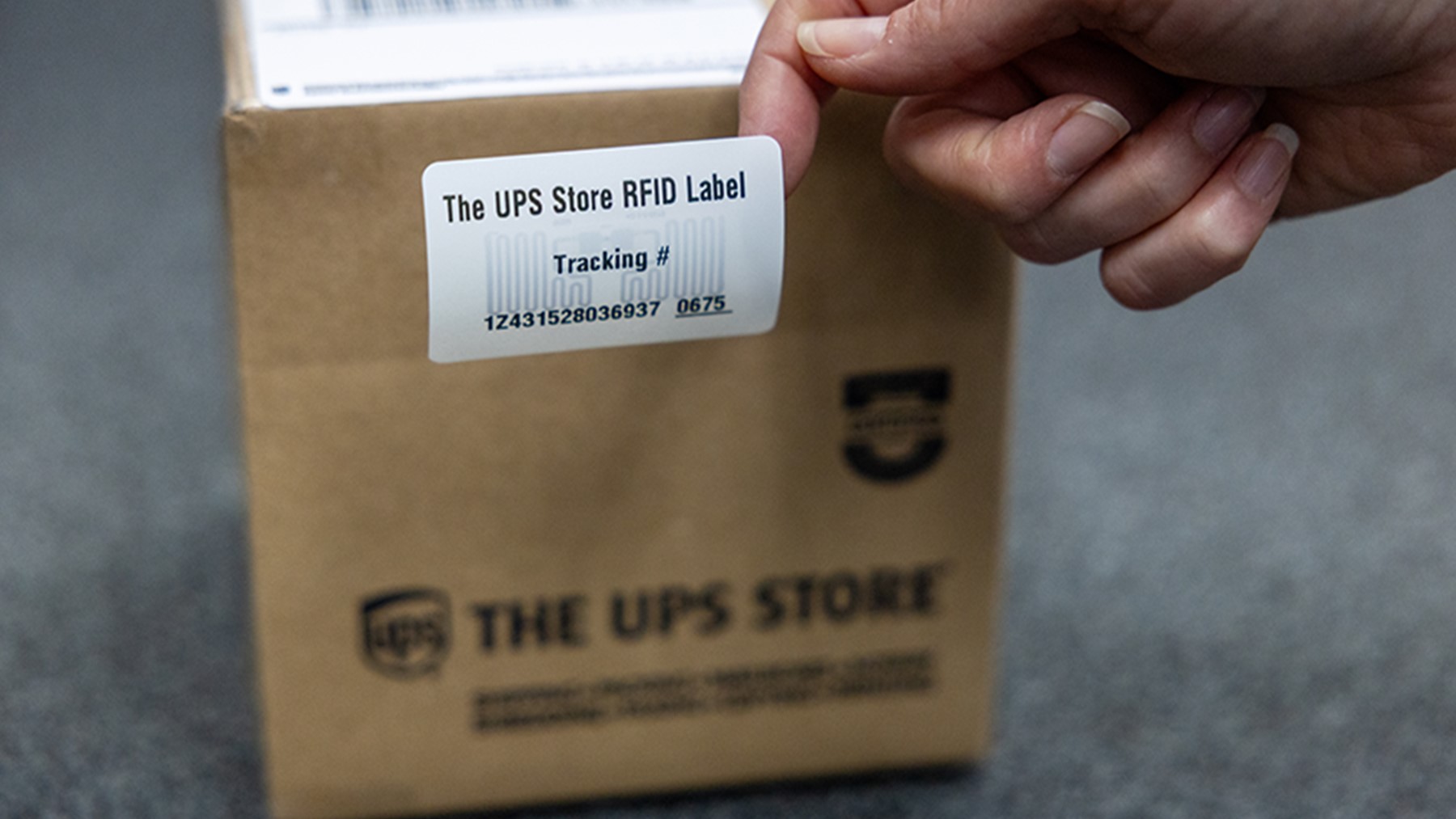
Why it matters: This operational shift directly impacts labor efficiency, network visibility, and competitive dynamics in domestic logistics, setting a new standard for parcel tracking that rivals must now match.
Context: The shipping industry has relied on barcode scanning for decades; RFID represents a shift from intermittent scanning to continuous sensing. While FedEx uses similar tech for high-value shipments, UPS’s integrated, network-wide deployment is a first at this scale.
"United Parcel Service said Tuesday it has completed the second-phase deployment of radio frequency identification package sensing technology across its small package network, boosting productivity by eliminating the need for handheld scans." — FREIGHTWAVES
Commentary: The move systematically reduces manual labor per package, directly affecting frontline workflow and productivity metrics. For shippers, the value is in predictable, actionable data earlier in transit, which alters inventory and customer service calculations. UPS’s scale here pressures FedEx and regional carriers to accelerate their own sensor-based tracking investments, potentially reshaping vendor contracts and technology roadmaps across the industry. The real constraint is now the integration of this data into shippers’ systems to capitalize on the visibility.
Date: April 14, 2026
URL: https://freightwaves.com/news/ups-expands-deployment-of-automated-package-sensors-to-improve-tracking
AI Sentiment Score: Neutral (33%)
AI Credibility Score: 10.0/10 — High
Scores and text generated by AI analysis of the source article indicated.
Impinj (PI) Sees Stock Growth Amid UPS RFID Rollout (Gurufocus)
Summary: On April 14, 2026, Impinj Inc (PI), a provider of RFID technology, is witnessing a notable increase in its stock value following UPS’s implementation of radio f UPS’s RFID rollout signals increased operational dependency on RFID infrastructure, potentially validating PI’s technology stack.
Why it matters: UPS’s RFID rollout signals increased operational dependency on RFID infrastructure, potentially validating PI’s technology stack.
Context: Monitor for specific integration timelines or capacity constraints related to large-scale logistics deployments.
"On April 14, 2026, Impinj Inc (PI), a provider of RFID technology, is witnessing a notable increase in its stock value following UPS’s implementation of radio f." — GURUFOCUS
Commentary: The signal is still worth tracking, but the current extraction path did not yield enough body text for a fuller analytical read. The immediate implication is operational rather than speculative: watch how this changes budgets, workflows, or risk assumptions over the next cycle.
Date: April 14, 2026
URL: https://gurufocus.com/news/8792830/impinj-pi-sees-stock-growth-amid-ups-rfid-rollout
AI Sentiment Score: Negative (50%)
AI Credibility Score: 10.0/10 — High
Scores and text generated by AI analysis of the source article indicated.
RFID END TO END SUCCESSFUL DEPLOYMENT (Youtube)
Summary: A video details a successful end-to-end RFID deployment in retail, emphasizing operational gains in inventory accuracy and customer experience. The system enables daily stock takes, precise location of items for customer requests, and provides data on which items are tried on in fitting rooms versus sold.
Why it matters: For domestic manufacturers and retailers, this demonstrates a tangible path to improving supply chain resilience and in-store efficiency, directly addressing labor constraints and the cost of stockouts.
Context: RFID technology has long been discussed, but successful, integrated deployments that link warehouse to point-of-sale remain a benchmark for operational maturity in physical retail.
"{ts:637} union powered by tag ID solutions to elevate store operations and customer experience. … {ts:705} right time. Stores can do stock take on a daily basis and thus keep stocks as." — YOUTUBE
Commentary: The shift from periodic, manual counts to continuous, automated inventory visibility fundamentally changes labor allocation, reducing hours spent on stock-taking and redirecting staff to higher-value customer service. For U.S. manufacturing, the reliable data flow from store back to production can tighten make-to-order cycles, but it requires upfront capital investment in tagging infrastructure and integration—a real constraint for smaller brands. The fitting room analytics represent a new, high-granularity feedback loop for design and merchandising teams, potentially influencing domestic production schedules for fast-moving items.
Date: May 22, 2026 12:00 AM ET
URL: https://www.youtube.com/watch?v=DGzBqgRE1jY
AI Sentiment Score: Negative (57%)
AI Credibility Score: 10.0/10 — High
Scores and text generated by AI analysis of the source article indicated.
Polytag and Xact target gap in market with launch of turnkey digital product passport solution — Retail Technology Innovation Hub (Retailtechinnovationhub)
Summary: Polytag and Xact have launched an integrated turnkey solution for Digital Product Passports (DPPs), combining data management, compliant inline printing, and brand-controlled digital experiences. The partnership directly addresses the operational friction of managing multiple vendors for printing, data, and consumer interfaces, which has led to dead links and fragmented data in early trials. The launch is timed for the phased EU mandate beginning in 2027 under the Ecodesign for Sustainable Products Regulation (ESPR).

Why it matters: For US manufacturers and brands exporting to the EU, this reduces the integration burden and technical risk of upcoming DPP compliance, while creating a new, scalable direct-to-consumer marketing channel embedded in product packaging.
Context: DPP mandates are creating a new operational layer for global supply chains, forcing a convergence of physical production coding, data management, and digital marketing. The shift toward next-generation QR codes in retail, as seen with Tesco, is accelerating this infrastructure change beyond mere compliance.
"Brands don’t want multiple vendors, technical friction or fragmented data. They want one solution, ready to go, that handles printing, data, compliance and consumer experience. Together with Xact, we’re delivering exactly that, and accelerating the shift toward a truly circular economy." — RETAILTECHINNOVATIONHUB
Commentary: The partnership signals a vendor consolidation phase in the DPP tooling market, moving from a best-of-breed to an integrated suite model. For production lines, this means factory systems (Xact) must now reliably output GS1-compliant codes linked to live data clouds (Polytag), turning a compliance task into a persistent digital touchpoint. The real constraint shifts from technology selection to ensuring print quality and data integrity at high-speed manufacturing scales.
Date: 1 week ago
URL: https://retailtechinnovationhub.com/home/2026/5/7/polytag-and-xact-target-gap-in-market-with-launch-of-turnkey-digital-product-passport-solution
AI Sentiment Score: Negative (50%)
AI Credibility Score: 10.0/10 — High
Scores and text generated by AI analysis of the source article indicated.
Tracking Tuesday: Triple-Mode IoT & the $100M RFID Rollout (Strategictracking)
Summary: Iridium’s launch of the 9604 triple-mode module (satellite, cellular, GNSS) and UPS’s completion of a $100M RFID network have technically solved the ‘where’ problem in logistics, enabling near-perfect package visibility. Simultaneously, CargoNet’s Q1 2026 report reveals a 41% surge in targeted impersonation fraud, shifting the primary vulnerability from physical theft to identity-based deception at the dispatch level. The operational environment now demands integration of automated tracking with robust digital identity verification.

Why it matters: For domestic manufacturers and logistics operators, this creates a dual mandate: invest in automated tracking infrastructure to meet new baseline expectations, and overhaul identity verification protocols to counter the rising impersonation threat that exploits these very systems.
Context: This follows a multi-year industry push for supply chain visibility, where technological advances in connectivity and scanning have now largely closed physical tracking gaps, exposing identity and authorization as the next critical attack surface.
"The 100% Visibility Era Welcome to this week’s Tracking Tuesday. The final week of April 2026 marks a structural pivot in the logistics industry. We are moving from “Best-Effort Tracking” to “Guaranteed." — STRATEGICTRACKING
Commentary: The convergence of these developments forces a strategic pivot. Operational budgets must now allocate for both triple-mode hardware integration and identity-verification software/services, as the cost of a misload is dwarfed by the loss from a coordinated impersonation. The ‘Zero-Trust Pallet’ concept, while speculative, correctly frames the required endpoint: cargo that actively authenticates its handlers, merging physical tracking with digital trust. This shifts risk management from reactive forensic analysis to proactive, identity-gated execution.
Date: April 28, 2026 12:00 AM ET
URL: https://www.strategictracking.com/2026/04/28/tracking-tuesday-28th-april-2026/?amp=1
AI Sentiment Score: Negative (62%)
AI Credibility Score: 7.0/10 — Medium
Scores and text generated by AI analysis of the source article indicated.
whatt.io Introduces Aegis Vault, a New Physical-Edge Infrastructure for Immutable Digital Product Passport Persistence | whatt.io – Lostboyslab (Mynewsdesk)
Summary: whatt.io has announced Aegis Vault, a hardware and connectivity infrastructure designed to ensure the long-term persistence of Digital Product Passport (DPP) data. The system combines a physical, brand-owned vault node with Starlink satellite connectivity, blockchain anchoring on Polygon, and Cloudflare Zero Trust access controls. It is a direct response to the ‘Zombie Passport’ risk, where DPPs become inaccessible due to vendor or platform failure, threatening regulatory compliance under frameworks like the EU’s ESPR.

Why it matters: For manufacturers and brands subject to DPP regulations, this introduces a new operational layer and cost center focused on long-term data sovereignty and resilience, moving compliance from a purely software service to a hybrid physical-digital architecture.
Context: The EU’s Ecodesign for Sustainable Products Regulation (ESPR) is creating a durable compliance burden, mandating data accessibility for years, which conflicts with the ephemeral nature of many cloud services and vendor platforms.
"Press release — whatt.io Introduces Aegis Vault, a New Physical-Edge Infrastructure for Immutable Digital Product Passport Persistence Combining physical vault nodes, Starlink satellite connectivity, blockchain anchoring, and Cloudflare Zero Trust to secure." — MYNEWSDESK
Commentary: This shifts the DPP vendor landscape from SaaS to hardware-as-a-service, creating a new class of infrastructure liability for brands. The operational consequence is that compliance teams must now manage physical nodes, satellite service contracts, and multi-layered cryptographic verification, significantly raising the floor for responsible DPP deployment. It effectively commoditizes ‘regulatory persistence’ as a product, acknowledging that software vendors are not permanent institutions.
Date: 5 days ago
URL: https://www.mynewsdesk.com/whatt-io/pressreleases/whatt-dot-io-introduces-aegis-vault-a-new-physical-edge-infrastructure-for-immutable-digital-product-passport-persistence-3448442
AI Sentiment Score: Negative (66%)
AI Credibility Score: 7.0/10 — Medium
Scores and text generated by AI analysis of the source article indicated.
Avery Dennison RFID Breakthrough Highlights Circular … (Sahmcapital)
Summary: Avery Dennison’s RFID-based automation system, deployed in the ReCircled pilot for garment sorting, has achieved near-total accuracy. This operational milestone demonstrates that RFID tagging can function at scale to identify and route post-consumer apparel for recycling and reuse. The pilot automates key steps in the circular fashion pipeline, moving the technology from a theoretical sustainability tool to a validated sorting mechanism.

Why it matters: For domestic manufacturers and logistics operators, this suggests a viable technical path to automate the labor-intensive and costly process of sorting returned or discarded garments, a critical bottleneck for scaling circular business models in the US.
Context: Building a domestic circular supply chain for textiles faces significant hurdles in manual sorting costs and contamination rates, limiting the economic viability of recycling and resale operations.
"Avery Dennison’s 99% sorting accuracy with ReCircled is important because it turns RFID from a concept into a working system in a complex use case, post consumer garment handling." — SAHMCAPITAL
Commentary: The 99% accuracy rate directly addresses a core cost and quality control constraint, potentially altering the ROI for automated sorting facilities. This shifts the operational challenge from technical feasibility to the economics of widespread RFID tag adoption by brands and the capital expenditure for retrofitting existing logistics hubs. It creates a new vendor dependency and data layer for recyclers, while raising the bar for manual sorting operations competing on cost.
Date: May 24, 2026 12:00 AM ET
URL: https://www.sahmcapital.com/news/content/avery-dennison-rfid-breakthrough-highlights-circular-fashion-and-investor-considerations-2026-05-24
AI Sentiment Score: Negative (71%)
AI Credibility Score: 10.0/10 — High
Scores and text generated by AI analysis of the source article indicated.
Unlocking Value Through Digital Product Passports (Deloitte)
Summary: Deloitte outlines the impending mandate for Digital Product Passports (DPPs), which are comprehensive digital records tracking a product’s lifecycle from material origin to end-of-life. The report highlights the operational complexity of implementation, requiring brands and manufacturers to aggregate and verify data across disparate supply chains. This creates a new compliance and data-management layer for domestic producers.

Why it matters: For US manufacturers, DPPs represent a significant new compliance cost and operational hurdle, directly impacting supply chain visibility, production workflows, and market access, particularly for exporters to the EU.
Context: DPPs are a core component of the EU’s Circular Economy Action Plan and similar emerging regulations, moving from voluntary sustainability reporting to mandatory, verifiable product-level data.
"20 May 2026 … Digital Product Passports are becoming mandatory – but implementation is complex. … Digital Product Passports (DPPs) are digital records that contain data spanning the entire lifecycle of a." — DELOITTE
Commentary: The mandate shifts the burden of proof onto manufacturers, requiring auditable data pipelines from raw material suppliers. This will strain smaller US producers lacking integrated IT systems, potentially consolidating advantage with larger, vertically-integrated firms. The ‘design for circularity’ data requirement may force upstream redesign of products and packaging, altering engineering and procurement workflows. Ultimately, this regulatory layer acts as a non-tariff trade barrier, where compliance capability becomes a direct component of production cost and resilience.
Date: May 20, 2026 12:00 AM ET
URL: https://www.deloitte.com/be/en/issues/climate/digital-product-passports-sustainability.html
AI Sentiment Score: Negative (62%)
AI Credibility Score: 10.0/10 — High
Scores and text generated by AI analysis of the source article indicated.
Origin Traceability for a Textile Digital Product Passports (Tracextech)
Summary: The EU’s Digital Product Passport (DPP) regulation for textiles, with enforcement beginning in 2027, mandates a verifiable, fiber-level chain of custody from farm to finished garment. This creates a multi-tier data governance challenge for brands, as typical supply chains span 7-10 facilities across multiple countries, leading to systemic data breaks. Compliance is not optional; non-compliant products will be barred from the EU market, making traceability a market access requirement.

Why it matters: For US manufacturers and brands selling into the EU, this mandates a fundamental operational overhaul of supply chain data capture, with direct consequences for sourcing, vendor management, and compliance costs.
Context: This mandate converges with other regulatory pressures like the UFLPA and the forthcoming EU Forced Labour Regulation, making origin traceability a core operational competency rather than a niche sustainability initiative.
"The gap between what regulators now demand, fibre-level origin data, supply chain provenance records, environmental impact attributes, and what most brands can actually deliver is enormous." — TRACEXTECH
Commentary: The operational bottleneck is at Tier 3 and 4 (farms, ginners), requiring mobile-first, offline-capable data capture tools for smallholder-dominated chains. This could force a vendor lock-in for brands with suppliers in India, Africa, or Southeast Asia to platforms like TraceX that specialize in these environments. The shift from paper certificates and mass-balance accounting to immutable, product-level blockchain records represents a capital-intensive but unavoidable infrastructure investment.
Date: 2 weeks ago
URL: https://tracextech.com/origin-traceability-textile-digital-product-passports/
AI Sentiment Score: Negative (50%)
AI Credibility Score: 10.0/10 — High
Scores and text generated by AI analysis of the source article indicated.
Post ID: 8bfad68c