
Category & Retail Strategy: Footwear, Eyewear, Swim & More
Fashion Briefing: A profitable brand builder, eyewear is fashion’s new favorite category (Glossy.Co)
Summary: Fashion and lifestyle brands are accelerating category expansion into eyewear, treating it as a high-margin, low-barrier entry point for consumers and a high-visibility branding tool. Monos, Wrangler, and others are launching collections, leveraging licensing partnerships or in-house design to capitalize on gross margins of 60-70% and resilient consumer demand even as other luxury segments slow. The strategic calculus centers on accessible price points, retail footprint fill, and the product’s inherent marketing value as a logo-bearing, frequently photographed accessory.

Why it matters: This shift alters brand economics and retail strategy, creating a new, profitable product development pipeline and changing the calculus for licensing deals and in-house manufacturing decisions.
Context: Eyewear has historically been a licensed category for many fashion houses, but direct control and in-house launches are increasing as brands seek to capture full margin and tighter brand integration.
"This week, we take a look at why so many brands are expanding into eyewear. TL,DR: It’s cheap, profitable and good for branding. This week, the 8-year-old Canadian luggage brand Monos announced." — GLOSSY.CO
Commentary: The operational consequence is a bifurcation: brands with specific design capability (like Monos) will vertically integrate for margin and control, while others will flock to licensed manufacturers like FGX International, turning eyewear into a commoditized brand-extension service. This pressures eyewear specialists and redirects merchandising budgets, as every brand with a recognizable logo now has a clear, low-risk path to a high-margin SKU that also functions as a marketing asset.
Date: Thu, 28 May 2026 04:00:00 +0000
URL: https://www.glossy.co/fashion/fashion-briefing-profitable-and-eye-catching-why-fashion-brands-are-flocking-to-eyewear/
AI Sentiment Score: Positive (50%)
AI Credibility Score: 10.0/10 — High
Scores and text generated by AI analysis of the source article indicated.
Satisfy and Adidas Christen Partnership With Three Mismatched Super Shoes Coming Soon (Wwd)
Summary: Satisfy and Adidas have launched their first collaborative product, the Adizero Adios Pro 4, in three mismatched colorways. The partnership leverages Satisfy’s community-focused, grungy trail-running aesthetic and Adidas’s established performance technology and road-running distribution. The shoe is positioned as a more accessible super shoe at $300, compared to Adidas’s elite-focused Pro Evo 3.

Why it matters: This collaboration signals a strategic shift for both brands, opening new market segments and testing the viability of ‘cultural’ aesthetics in high-performance categories, which will influence future product pipelines and partnership models.
Context: Satisfy, a trail-running apparel brand with strong community credentials, is expanding into footwear via a major sportswear partner, while Adidas is using the collaboration to inject subcultural credibility into its performance running line.
"After sparking anticipation with a tease at Paris Fashion Week, Satisfy and Adidas have now unleashed the start of their partnership. The Satisfy x Adidas Adizero Adios Pro 4 brings three mismatched." — WWD
Commentary: The operational play is clear: Satisfy gains instant road-shoe credibility and scale without developing its own carbon-plate platform, while Adidas acquires a ready-made narrative and community to counter Nike’s and On’s cultural cachet. The mismatched design is a low-cost manufacturing tweak that delivers high-perceived novelty, a tactic others will copy. If successful, it creates a blueprint for performance brands to outsource ‘cool’ to smaller, authentic labels, altering vendor and partnership economics.
Date: Mon, 18 May 2026 15:00:00 +0000
URL: https://wwd.com/footwear-news/sneaker-news/satisfy-adidas-adios-pro-4-release-date-1238957021/
AI Sentiment Score: Positive (60%)
AI Credibility Score: 10.0/10 — High
Scores and text generated by AI analysis of the source article indicated.
1 month in, Abercrombie’s test with Sperry proves the potential of A&F footwear (Glossy.Co)
Summary: Abercrombie & Fitch’s one-month test of a Sperry footwear and apparel collaboration has exceeded internal benchmarks, driving higher conversion and cross-category shopping. The digitally-led, limited launch serves as a low-risk model for Abercrombie to assess footwear’s role in its assortment and its ability to attract new customers and enable full-look outfitting. The partnership leverages Sperry’s heritage and Abercrombie’s ‘read and react’ inventory model to chase demand in real time.
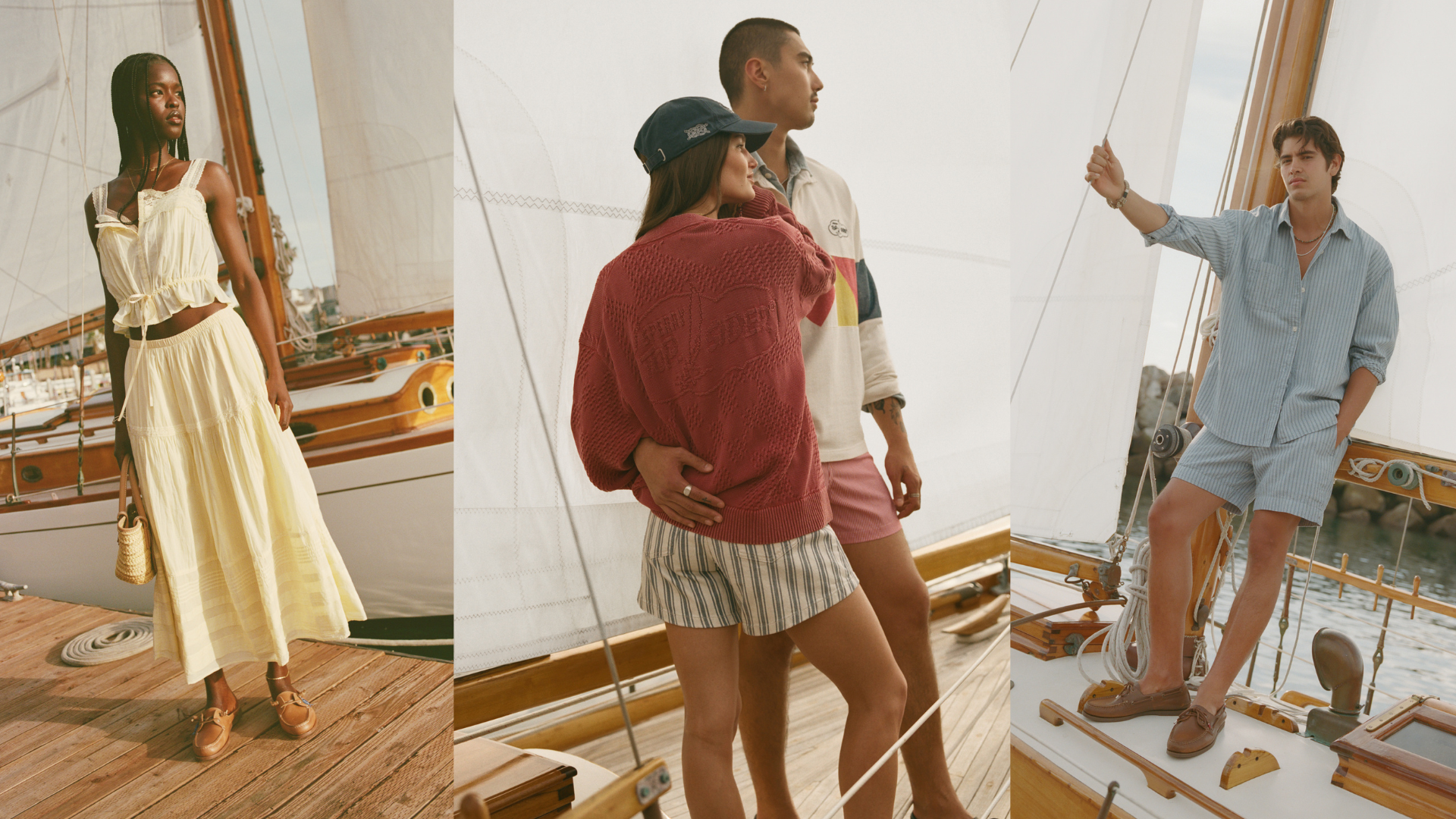
Why it matters: It provides a replicable, capital-light template for apparel brands to test category expansion, demonstrating how digitally-led collaborations can validate new product lines and customer segments before committing to a full-scale launch.
Context: This follows the successful Sperry x Aritzia collaboration and aligns with Abercrombie’s stated 2026 goal to grow through partnerships and new categories, using a disciplined inventory model to manage risk in a volatile sourcing environment.
"One month after Abercrombie & Fitch launched its Sperry collaboration, the retailer is confident that footwear can become a bigger part of its growth strategy. The collection, released April 9, reunited Abercrombie." — GLOSSY.CO
Commentary: The operational significance is the validation of a specific launch playbook: a digitally-led, limited collaboration that tests category viability, gathers demand data, and supports a higher-margin full-look sale. For Abercrombie, footwear is not yet a standalone business but a tactical lever for increasing basket size and attracting a younger female demographic. The ‘read and react’ inventory model is critical, allowing the brand to chase units surgically while avoiding the overstock that plagues trend-driven launches. This approach shifts footwear from a capital-intensive inventory gamble into a data-gathering marketing exercise with immediate revenue.
Date: Mon, 11 May 2026 04:02:00 +0000
URL: https://www.glossy.co/fashion/abercrombie-sperry-collaboration-footwear-strategy/
AI Sentiment Score: Negative (75%)
AI Credibility Score: 10.0/10 — High
Scores and text generated by AI analysis of the source article indicated.
A tale of 2 sandals: Prada’s and Chanel’s footwear buzz reflects the brands’ businesses, for worse and for better (Glossy.Co)
Summary: Prada’s attempt to rectify its Kolhapuri sandal controversy with a new artisan-made version has reignited criticism over pricing and credit, coinciding with a quarter of muted retail growth. Meanwhile, Chanel’s viral, impractical sandal demonstrates the power of clear creative coding to generate buzz. The contrast underscores divergent pressures: Prada faces operational scrutiny on sourcing and growth, while competitors leverage sharp creative resets.
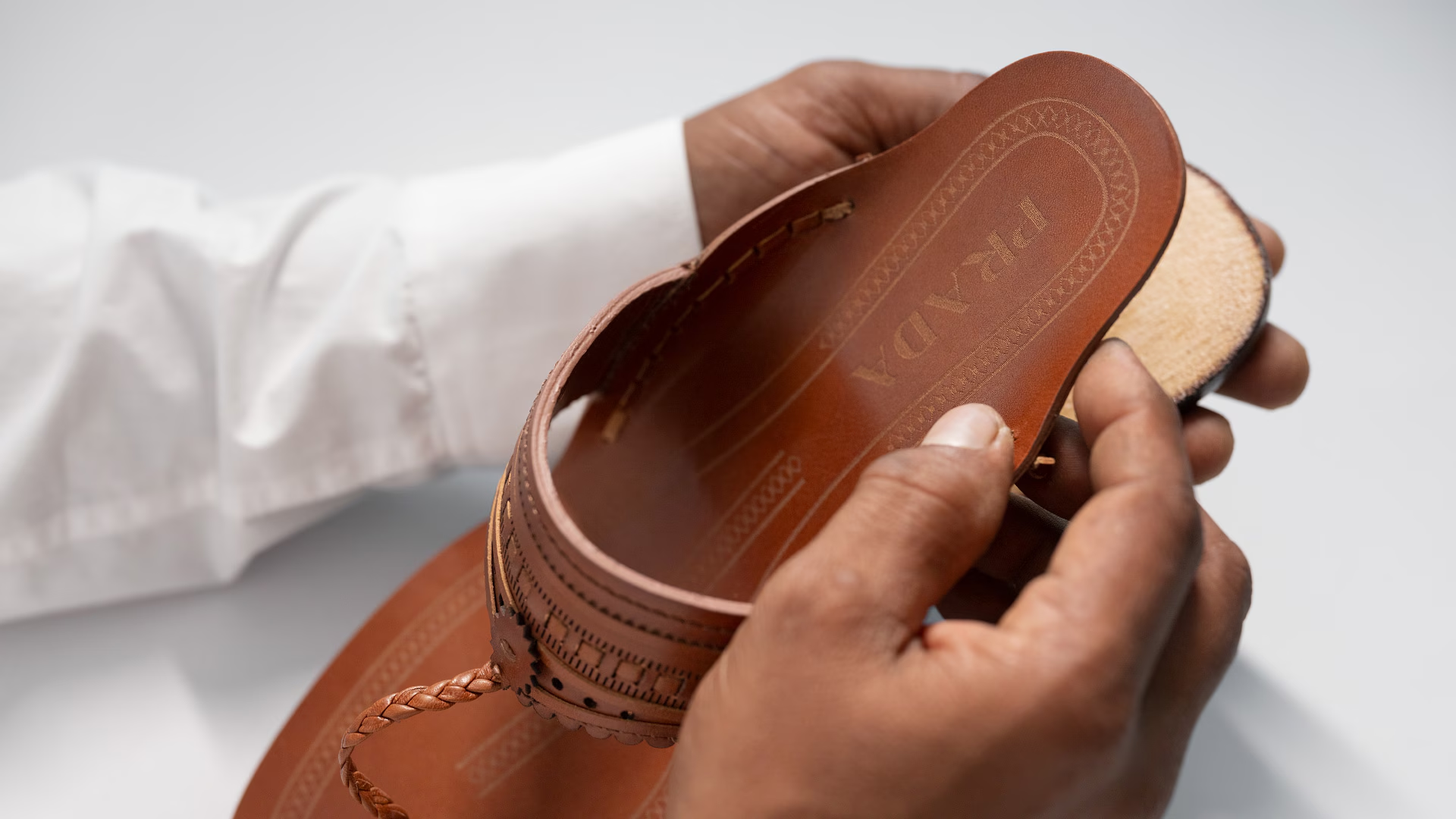
Why it matters: For brands, the episode highlights the escalating operational and reputational costs of mishandling cultural appropriation, and the market penalty for unclear creative momentum versus rivals.
Context: Luxury brands have long sourced Indian craft without consistent credit, a pattern now under intensified scrutiny from informed consumers and commentators.
"In this week’s Luxury Briefing, I dig into Prada Group’s earnings as it deals with its Prada Kolhapuri scandal backlash, with comments from analysts on how Prada and Miu Miu are trying." — GLOSSY.CO
Commentary: Prada’s corrective action is now a measurable operational liability, creating a new vector for criticism that directly competes with its craft narrative. This complicates Guerra’s growth levers—conquest in America and China, high-low product pushes—by adding sustained reputational management to the task list. The parallel Lyst rankings show the market is rewarding unambiguous creative direction (Chanel, Gucci) over brands perceived as navigating internal or external controversies.
Date: Fri, 01 May 2026 04:02:00 +0000
URL: https://www.glossy.co/fashion/luxury/a-story-of-2-luxury-sandals-pradas-and-chanels-footwear-buzz-reflects-the-brands-businesses-for-worse-and-for-better/
AI Sentiment Score: Positive (60%)
AI Credibility Score: 10.0/10 — High
Scores and text generated by AI analysis of the source article indicated.
No. 1 in women’s swimwear for 10 years, Target is refining its approach to the category (Glossy.Co)
Summary: Target is leveraging its decade-long dominance in women’s swimwear to execute a broader merchandising strategy, treating the category as a summer outfitting business that includes cover-ups, sandals, and sun care. This involves a multi-brand approach with trend-led Wild Fable, elevated Shade & Shore, and a new collaboration with Solid & Striped, alongside social-led partnerships like one with Gen-Z creator Demetra Dias. The retailer is using its proprietary Gen AI tool, Target Trend Brain, to accelerate trend identification and product development. This refinement comes as Target seeks to reassert authority in discretionary categories like apparel, where sales have lagged.

Why it matters: It demonstrates how a mass retailer is operationalizing a category-as-lifestyle strategy to defend market share and drive full-outfit sales, using owned brands, AI-driven trend forecasting, and strategic partnerships as core tools.
Context: The swimwear market has fragmented post-Victoria’s Secret’s 2016 exit, with DTC and social-first brands competing on fit and inclusivity. Target’s sustained leadership makes it a bellwether for mass-market apparel strategy.
"Target is using swimwear to sell more than swimsuits. The retailer is positioning the category as part of a full summer wardrobe that includes bikinis, one-pieces and cover-ups, as well as Havaianas sandals, accessories and sun-care products." — GLOSSY.CO
Commentary: Target’s move from selling swimsuits to selling a ‘summer wardrobe’ systemizes the capture of higher-margin, complementary purchases, directly countering the single-item focus of DTC competitors. The integration of Trend Brain AI and micro-collaborations with social creators like Demetra Dias signals a shift toward a faster, data-influenced design pipeline that can still generate viral heat. For vendors like Solid & Striped, this represents a wholesale channel play for national physical distribution, trading some brand control for scale. The operational takeaway is that category leadership now requires managing a portfolio of brand voices and a supply chain agile enough to act on trend signals more than a year out, while still making updates months before launch.
Date: Thu, 21 May 2026 04:04:00 +0000
URL: https://www.glossy.co/fashion/no-1-in-womens-swimwear-for-10-years-target-is-refining-its-approach-to-the-category/
AI Sentiment Score: Negative (66%)
AI Credibility Score: 10.0/10 — High
Scores and text generated by AI analysis of the source article indicated.
Burberry adopts a Coach-style playbook built on scarf bars, swimwear and activewear (Glossy.Co)
Summary: Burberry’s full-year earnings show a flat revenue of £2.42bn, with a strategic pivot to a Coach-style retail playbook focused on category destinations like scarf bars and polo galleries. CEO Joshua Schulman emphasized turning core codes—trenches, scarves, polos, cashmere—into dedicated, interactive shopping moments to drive store productivity. The brand is extending this logic through collaborations like Hunza G swimwear and a new activewear line, aiming to widen the role of its heritage in new categories and price segments. Concurrently, Dior’s use of BeReal for its Cruise show signals a luxury industry search for authenticity beyond algorithmic feeds.

Why it matters: For fashion practitioners, this signals a shift in luxury retail operations toward modular, category-specific merchandising and a deliberate expansion of brand codes into adjacent product categories, altering inventory planning, store design, and marketing briefs.
Context: Luxury brands are under pressure to improve retail productivity and clarify brand narratives, often by leveraging heritage assets into more accessible and repeatable commercial expressions.
"In this week’s Luxury Briefing, we look at Burberry’s earnings and new categories, and why Dior put its 2026 Cruise show on BeReal. Also, executive moves at Rent the Runway, and news." — GLOSSY.CO
Commentary: Burberry’s operational shift turns stores into a collection of branded boutiques, requiring visual merchandising and staff training to specialize by category. The Hunza G and activewear moves are not mere collaborations but market tests for warm-weather and performance extensions of British heritage, directly impacting design briefs and fabric sourcing. For competitors, this reframes the challenge: heritage must now be engineered into discrete, shoppable modules rather than a diffuse aesthetic.
Date: Fri, 15 May 2026 04:02:00 +0000
URL: https://www.glossy.co/fashion/luxury/burberry-adopts-a-coach-style-playbook-built-on-scarf-bars-swimwear-and-activewear/
AI Sentiment Score: Negative (66%)
AI Credibility Score: 10.0/10 — High
Scores and text generated by AI analysis of the source article indicated.
Warby Parker to enter new category with Intelligent Eyewear (Retaildive)
Summary: Warby Parker is launching its first line of ‘Intelligent Eyewear’ this fall, a smart glasses product built on Google’s Gemini AI and the Android XR platform. The frames, designed to support prescriptions and leverage the company’s proprietary fit data, represent a strategic expansion beyond its core DTC optical business. This move follows similar tech-enabled eyewear experiments from brands like Nautica and Eddie Bauer, as well as Meta’s ongoing push with Ray-Ban.
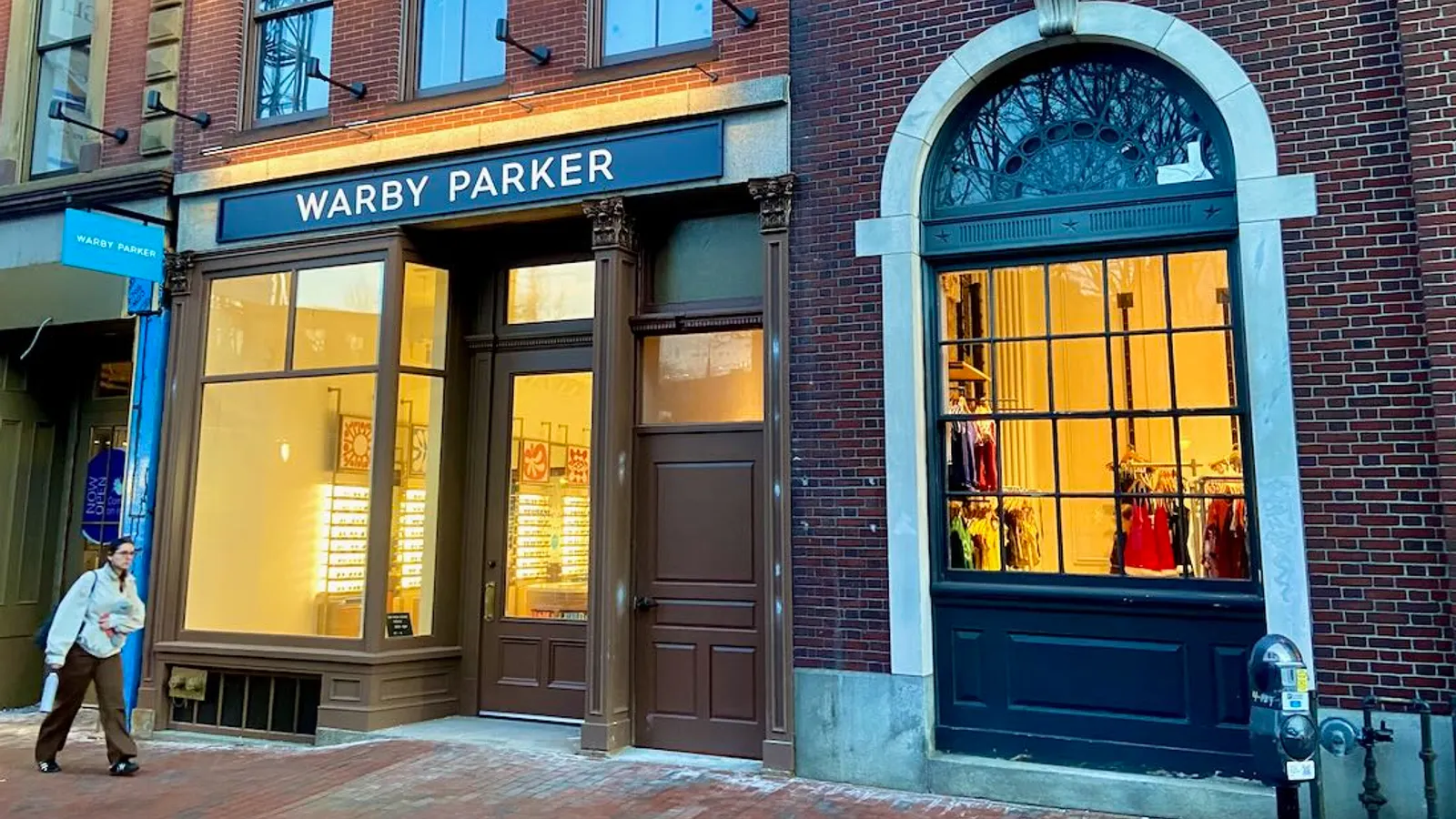
Why it matters: This signals a major brand’s bet on integrating AI hardware into a fashion-first, prescription-ready product, which could reshape vendor relationships, retail floor plans, and technical support pipelines for optical retailers.
Context: The smart glasses category has seen repeated attempts from tech and fashion brands, but adoption has been limited by clunky design, high cost, and unclear utility. Warby Parker’s entry is notable for its focus on prescription compatibility and leveraging its existing design and fit database.
"Dive Brief: – Warby Parker is introducing the brand’s first Intelligent Eyewear frame built with technology from Google and Samsung, according to a press release. – The frames use Google’s AI assistant,." — RETAILDIVE
Commentary: Warby Parker is attempting to solve the core adoption problem—social awkwardness and utility—by prioritizing a familiar, comfortable form factor. The operational consequence is a shift from a pure-play optical retailer to a hybrid tech-hardware company, requiring new supply chain partners (Google, Samsung), in-store tech support protocols, and potentially higher-margin but more complex inventory. Its success hinges on whether the AI features are compelling enough to justify the inevitable price premium and technical complexity for both the consumer and the store associate.
Date: Thu, 28 May 2026 12:49:00 -0400
URL: https://www.retaildive.com/news/warby-parker-intelligent-eyewear-smart-frames-AI/821098/
AI Sentiment Score: Positive (55%)
AI Credibility Score: 10.0/10 — High
Scores and text generated by AI analysis of the source article indicated.
Madewell plans to open 3 stores, starting this week (Retaildive)
Summary: Madewell, the J. Crew Group subsidiary, is opening three new stores in May and June, including a Sag Harbor location and two dual-concept stores for men’s and women’s apparel in Greenwich and Bend. This marks a modest but notable physical expansion for a brand whose store fleet has remained largely static at around 150 locations, a scale dwarfed by competitors like Gap Inc. and even its own sibling brand, J.Crew Factory.
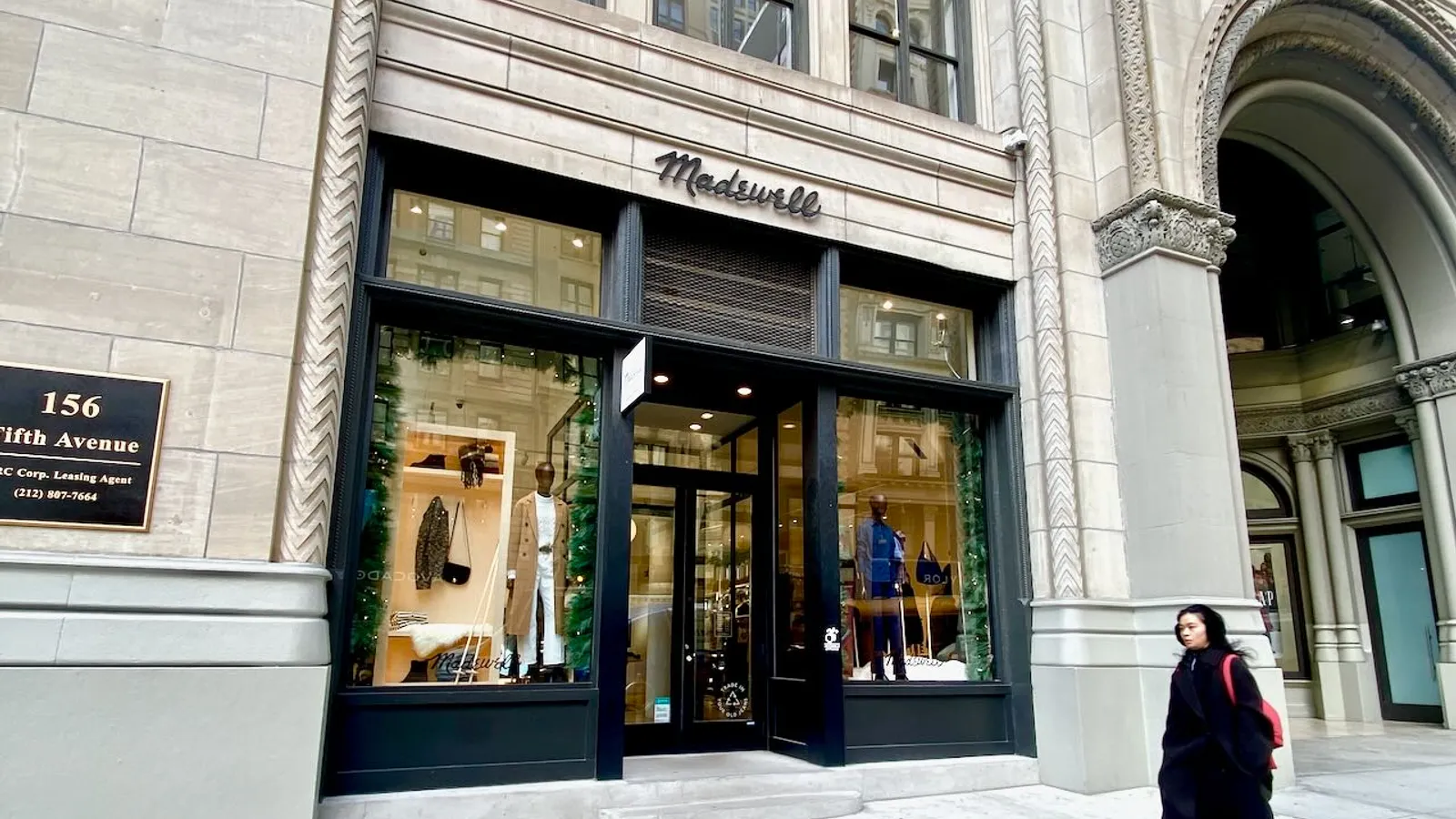
Why it matters: For practitioners in retail operations and brand strategy, this signals a cautious return to capital expenditure on physical retail for a brand that has been in a holding pattern, offering a real-world test of dual-gender store formats and affluent suburban markets.
Context: Madewell’s growth stalled after its parent company’s 2020 bankruptcy and the abandonment of earlier IPO plans; its current store count is comparable to J. Crew’s full-price fleet but far smaller than its off-price sibling.
"Dive Brief: – Madewell, owned by J. Crew Group, is expanding its footprint with three new stores opening in May and June, in New York, Connecticut and Oregon. – Following a successful." — RETAILDIVE
Commentary: The expansion is a tactical maneuver, not a strategic resurgence. The choice of affluent enclaves (Sag Harbor, Greenwich) and a high-growth leisure market (Bend) suggests a targeted, low-risk portfolio test, using the dual-concept format to maximize lease efficiency. For vendors and production planners, this incremental growth offers negligible scale impact, but it does signal where J. Crew Group is willing to deploy limited capital.
Date: Mon, 18 May 2026 12:21:00 -0400
URL: https://www.retaildive.com/news/madewell-three-store-openings-sag-harbor-new-york-connecticut-oregon/820470/
AI Sentiment Score: Negative (50%)
AI Credibility Score: 10.0/10 — High
Scores and text generated by AI analysis of the source article indicated.
Fashion misses at Old Navy spell trouble for Gap Inc. (Retaildive)
Summary: Gap Inc.’s Q1 results reveal a divergent performance across its portfolio, with the core Gap brand surging but its critical value engine, Old Navy, faltering due to fashion and pricing missteps in seasonal categories like dresses. Old Navy’s comps are estimated to have fallen double-digits in early May, marking a second consecutive quarter of disappointment and presenting CEO Richard Dickson’s first significant operational challenge since taking over. While Gap and Banana Republic show strength, Old Navy’s struggles—potentially exacerbated by competition from off-price retailers—threaten near-term comps and margins for the parent company, which relies on the brand for over half its revenue.
Why it matters: For fashion practitioners, this signals that merchandising precision and value-proposition discipline are immediate operational imperatives, especially for volume-driven brands facing direct competition from off-price channels.
Context: This is the second straight quarter of merchandising issues at Old Navy, contrasting sharply with Gap’s sustained 10-quarter streak of positive comps, highlighting the operational fragility of high-volume, trend-sensitive fast fashion even within a diversified portfolio.
"Dive Brief: – Despite spring fashion misses, Old Navy Q1 net sales reached $2 billion, up 1% year on year; comps also rose 1%. Still, results disappointed the company and analysts. -." — RETAILDIVE
Commentary: The operational consequence is a forced, rapid recalibration of Old Navy’s buying and pricing teams, under pressure to clear misjudged inventory and sharpen value messaging. The simultaneous success of Gap’s focused, culturally-aligned product lines (denim, fleece) and brand extensions (fragrance) underscores a bifurcated strategy: volume operations require flawless execution, while brand revival can leverage narrative and nostalgia. The direct mention of off-price competition from Ross and others shifts the competitive analysis, suggesting Old Navy’s problem isn’t just internal merchandising but a structural battle for the budget-conscious customer, which could pressure margin strategies and inventory planning going forward.
Date: Fri, 29 May 2026 12:13:00 -0400
URL: https://www.retaildive.com/news/old-navy-fashion-misses-spell-trouble-gap-inc-q1-earnings/821459/
AI Sentiment Score: Negative (69%)
AI Credibility Score: 10.0/10 — High
Scores and text generated by AI analysis of the source article indicated.
Quick Commerce 2.0: Slower, safer, and more profitable for fashion … (Dfupublications)
Summary: The quick commerce sector is pivoting from a pure speed model to a ‘profitable precision’ strategy, with fashion and apparel emerging as a key driver. This shift is fueled by superior unit economics: higher average order values and gross margins compared to FMCG, which justify more deliberate handling despite higher return rates. Platforms are now structuring delivery networks to monetize ‘social emergencies’—occasion-based, impulse purchases that demand reliability over raw speed.

Why it matters: For fashion brands and logistics operators, this recalibration changes the calculus for inventory selection, last-mile partnerships, and return management, prioritizing margin protection over delivery velocity.
Context: Quick commerce initially focused on ultra-fast delivery of low-margin essentials; expansion into higher-value categories requires re-engineering operational and financial assumptions.
"With government scrutiny on unsafe delivery timelines intensifying and platforms expanding into non-essential categories such as fashion and apparel, the industry is shifting from a ‘speed-at-all-costs’ model to one centered on ‘profitable." — DFUPUBLICATIONS
Commentary: The integration of fashion fundamentally alters platform economics, shifting the core metric from orders-per-hour to contribution-per-order. This could pressure fashion brands to adapt product lines and packaging for a quick-commerce pipeline, while logistics vendors must develop handling protocols for high-value, high-return items. The move validates that monetizable urgency isn’t limited to physiological needs, but extends to social performance, creating a new operational niche between traditional e-commerce and instant delivery.
Date: April 28, 2026 12:00 AM ET
URL: https://www.dfupublications.com/index.php/news/apparel/quick-commerce-2-0-slower-safer-and-more-profitable-for-fashion-retail
AI Sentiment Score: Positive (50%)
AI Credibility Score: 10.0/10 — High
Scores and text generated by AI analysis of the source article indicated.
Issey Miyake Opens Largest China Store in Shanghai (Wwd)
Summary: Issey Miyake has opened its largest store in China, a 4,100-square-foot flagship in Shanghai’s new Westbund Central development. The store consolidates the brand’s six sub-labels, including the eyewear line Issey Miyake Eyes, which debuts in the market. The project is part of a strategic retail expansion managed by its local partner, Ningbo Hengcheng Everbeauty Commerce Co., Ltd., since 2012, now totaling 22 locations.

Why it matters: For fashion operators, this signals a pivot toward consolidated brand temples in key luxury corridors, requiring integrated merchandising and local partnership strategies that prioritize experiential retail over simple distribution.
Context: Luxury brands are escalating flagship investments in Shanghai’s emerging districts like West Bund, which is positioning itself as a mixed-use hub blending finance, AI, and premium retail, altering the city’s commercial geography.
"Issey Miyake has opened its largest retail project at Westbund Central, the newly inaugurated mixed-use luxury development in Shanghai. Nestled between the Chinese multibrand retailer SND and the South Korean fashion brand." — WWD
Commentary: The move consolidates brand presentation, reducing consumer friction and increasing basket size potential, but it also raises the capital and operational bar for local partners. Placing a legacy Japanese brand in Shanghai’s ‘AI hub’ reflects a deliberate adjacency strategy, betting on the district’s future high-net-worth traffic. The inclusion of the eyewear line, a collaboration with Kaneko Optical, illustrates a tactical category expansion within the flagship format to capture higher-margin accessory sales.
Date: Mon, 18 May 2026 13:44:41 +0000
URL: https://wwd.com/business-news/retail/issey-miyake-shanghai-flagship-westbund-1238961375/
AI Sentiment Score: Positive (50%)
AI Credibility Score: 10.0/10 — High
Scores and text generated by AI analysis of the source article indicated.
Nike’s Futuristic New Basketball Sneaker Is Getting a Limited-Edition Oregon Ducks Release (Wwd)
Summary: Nike and the University of Oregon’s Ducks of a Feather NIL initiative are releasing a limited-edition ‘Metallic Nova’ colorway of the Nike G.T. Future basketball sneaker. The release is exclusively handled by GOAT Group’s Flight Club New York, with only 300 pairs produced worldwide. All proceeds will benefit Oregon student athletes.

Why it matters: This release demonstrates the evolving operational model for limited sneaker drops, shifting distribution to specialized resale platforms and tying product directly to athlete compensation pipelines.
Context: This follows a pattern of Nike using its NIL (Name, Image, Likeness) partnerships, like Ducks of a Feather, to create ultra-limited, regionally or platform-exclusive products that bypass traditional retail channels.
"Only 300 pairs of the shoes were produced worldwide and there will be only one place to get them next weekend: Flight Club New York." — WWD
Commentary: The partnership with Flight Club, a premium reseller, for an exclusive launch formalizes the secondary market as a primary distribution channel for a brand’s own product. This moves inventory risk and hype management to a third-party expert while creating a clean, high-margin fundraising mechanism for the NIL collective. For practitioners, it signals a continued shift toward treating limited releases as B2B wholesale allocations to curated partners rather than direct-to-consumer operations, altering the logistics and partnership calculus for future drops.
Date: Sat, 02 May 2026 18:13:02 +0000
URL: https://wwd.com/footwear-news/sneaker-news/doaf-nike-gt-future-release-date-1238938022/
AI Sentiment Score: Negative (60%)
AI Credibility Score: 10.0/10 — High
Scores and text generated by AI analysis of the source article indicated.
Where Nike’s marketing comeback is stumbling — and where it can still win (Retaildive)
Summary: Nike’s ‘Win Now’ turnaround strategy is faltering, with flat revenue and marketing missteps like the tone-deaf ‘Walkers Tolerated’ Boston Marathon ad undermining its performance-athlete focus. Internal churn from layoffs and leadership changes is diluting brand consistency, while rivals like Hoka and On gain ground by leveraging community and lifestyle partnerships. Despite strengths in women’s sports and North American sales, Nike’s reliance on legacy mass-marketing and top-tier athletes is struggling in a fragmented media landscape oriented toward creators and niche tastemakers.

Why it matters: For industry practitioners, Nike’s operational and marketing struggles signal a shift in effective brand-building tactics, emphasizing decentralized cultural engagement over monolithic campaigns.
Context: The sportswear sector is fragmenting, with performance and lifestyle convergence demanding new vendor strategies and community-focused activation.
"The “now” part of Nike’s high-stakes Win Now turarnound plan is starting to feel like a “later” to some industry watchers nearly two years in. The legendary sportswear giant is beset by." — RETAILDIVE
Commentary: Nike’s challenge is operational: its centralized marketing engine, built for tentpole events, must retool for a pipeline of smaller, creator-led engagements. This necessitates restructuring agency relationships, content production workflows, and athlete partnership terms to prioritize speed and cultural nuance over scale. The consequence is a reallocation of marketing budgets from blockbuster media buys to distributed community programs and collaborative product lines, as seen with On’s Zendaya partnership.
Date: Mon, 18 May 2026 10:45:00 -0400
URL: https://www.retaildive.com/news/where-nikes-marketing-comeback-is-stumbling-and-where-it-can-still-win/820115/
AI Sentiment Score: Neutral (33%)
AI Credibility Score: 10.0/10 — High
Scores and text generated by AI analysis of the source article indicated.
Shuffle Board: Solbari Builds Wholesale, TrueCommerce Eyes Growth (Wwd)
Summary: A series of executive appointments across fashion, retail, textiles, and logistics signals strategic shifts in wholesale expansion, sustainability governance, and operational leadership. Puma appoints a new CFO with extensive luxury and retail experience, while Solbari hires a head of sales to build a national wholesale network. The Lycra Company creates a dedicated VP of product sustainability role, and TrueCommerce brings in a CRO from Avalara to drive revenue growth.

Why it matters: Executive hires and role creations directly alter brand strategy, supply chain priorities, and market expansion tactics, impacting vendor relationships and operational cadence.
Context: Appointments reflect a broader industry trend of embedding sustainability into product leadership and prioritizing wholesale channel development for direct-to-consumer brands seeking scale.
"Davis will lead Solbari’s wholesale strategy, building a national network of sales representatives, securing retail partnerships and establishing a seasonal wholesale cadence." — WWD
Commentary: Solbari’s move institutionalizes wholesale, shifting from a DTC model to a structured, seasonal B2B operation that requires new sales infrastructure and partner management. The Lycra Company’s new sustainability VP role formalizes environmental accountability within product development, likely tightening material specs for downstream brands. TrueCommerce hiring a CRO from a tax compliance firm (Avalara) suggests a push to monetize supply chain data and regulatory integration, not just connectivity.
Date: Fri, 01 May 2026 22:20:51 +0000
URL: https://wwd.com/sourcing-journal/industry-news/shuffle-board-executive-moves-solbari-1238937545/
AI Sentiment Score: Neutral (50%)
AI Credibility Score: 10.0/10 — High
Scores and text generated by AI analysis of the source article indicated.
Apparel’s 2026 margin playbook: The great SKU diet – Textile Fashion News Fibre2Fashion (Fibre2Fashion)
Summary: Apparel brands are shifting from broad seasonal assortments to leaner, data-driven inventory models. This ‘SKU diet’ prioritizes fewer stock-keeping units, sharper demand forecasting, and faster replenishment cycles. The competitive edge is moving from pure low-cost sourcing to supply-chain responsiveness and inventory precision, forcing mills and manufacturers to adapt to smaller, repeatable, quick-turn orders.
Why it matters: This redefines the operational playbook for brands, manufacturers, and suppliers, shifting capital allocation, production planning, and partnership criteria from volume to velocity.
Context: This follows years of margin pressure from overstock and markdowns, accelerated by post-pandemic supply chain volatility and the rise of real-time demand data.
"The apparel business is entering a harder, cleaner phase. The old model, comprising wider assortments, bigger seasonal buys and deeper end-of-season clearance, is giving way to a leaner operating code: fewer SKUs, sharper demand reads and replenishment that moves before markdowns eat the margin." — FIBRE2FASHION
Commentary: This is a structural margin defense that will bifurcate vendor relationships: manufacturers capable of small-batch agility will capture premium work, while bulk-focused mills face commoditization. For brands, the operational risk shifts from unsold inventory to supply-chain fragility, making supplier diversification and data-integration capabilities critical new cost centers.
Date: May 08, 2026 12:00 AM ET
URL: https://www.fibre2fashion.com/news/textile-news/apparel-s-2026-margin-playbook-the-great-sku-diet-310177-newsdetails.htm?amp=true
AI Sentiment Score: Negative (75%)
AI Credibility Score: 10.0/10 — High
Scores and text generated by AI analysis of the source article indicated.
Seasonal Inventory Planning: Strategy for Fashion Retailers (Easyreplenish)
Summary: The article outlines a structured approach to seasonal inventory planning for fashion retailers, emphasizing the need to align trend forecasting, demand planning, and buying calendars with volatile consumer demand. It details a seven-component framework that moves from trend analysis and line planning through to post-season performance reviews, positioning inventory management as a core strategic discipline rather than a reactive operational task.

Why it matters: For fashion practitioners, this formalizes the operational pressure points where forecasting errors directly impact margin, cash flow, and brand relevance, making inventory planning a critical lever for profitability and market positioning.
Context: This reflects the ongoing industry shift from intuition-led buying to data-integrated merchandise planning, driven by shortened trend cycles and the financial risks of overstock and stockouts.
"A well-executed seasonal plan defines when to launch new collections, how deep to buy, what to restock mid-season, and when to initiate markdowns or clearance." — EASYREPLENISH
Commentary: The framework elevates inventory planning from a logistical function to a central commercial strategy, directly tying merchandising calendars to supplier lead times and promotional windows. This imposes a new discipline on design and buying teams, requiring earlier, data-backed commitments and creating a formal feedback loop that penalizes poor forecasting. For vendors and suppliers, it signals a demand for greater flexibility and transparency in production pipelines to accommodate mid-season adjustments.
Date: April 20, 2026 12:00 AM ET
URL: https://www.easyreplenish.com/blog/seasonal-inventory-planning
AI Sentiment Score: Negative (75%)
AI Credibility Score: 10.0/10 — High
Scores and text generated by AI analysis of the source article indicated.
Post ID: 68a863ae