

Digital Privacy & Surveillance Legislation
Pulte Appointment Underscores Need to Reform Section 702 Spying (Eff)
Summary: President Trump has appointed Bill Pulte, the director of the Federal Housing Finance Agency, as acting Director of National Intelligence, bypassing Senate confirmation. Pulte lacks any intelligence, military, or congressional experience but has a record of using agency data to accuse political opponents of misconduct. This appointment occurs as Congress faces a June 12 deadline to reauthorize Section 702 of FISA, a warrantless surveillance authority that grants the DNI access to vast databases of communications involving Americans. The EFF argues Pulte’s politicized appointment exemplifies the inherent risk of the current Section 702 framework, which lacks judicial oversight for queries on U.S. persons.
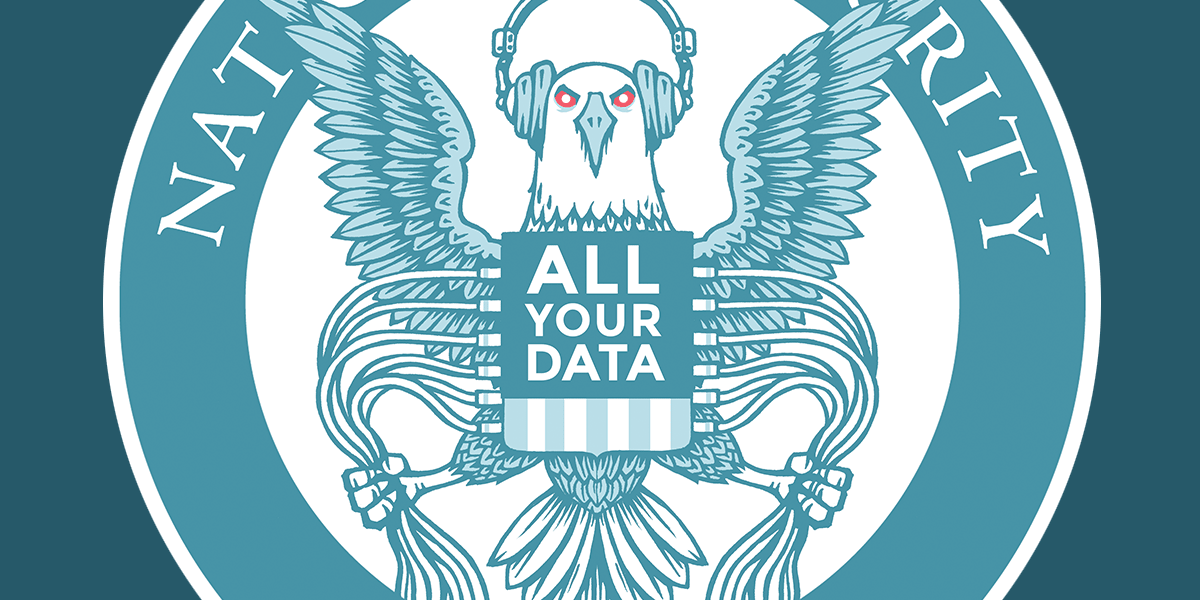
Why it matters: The appointment creates an immediate operational risk that a politically weaponized intelligence apparatus could exploit Section 702 data against domestic opponents, intensifying the legislative calculus for reformers demanding a warrant requirement.
Context: Section 702 reauthorization has been stalled by an unusual coalition seeking a warrant mandate; this appointment provides reformers with a concrete, high-stakes example of executive branch abuse potential to pressure wavering legislators.
"Pulte isn’t a qualified intelligence administrator. He does, however, seem to be unquestioningly loyal to President Trump and willing to use his position to attack and smear the President’s political foes. As acting DNI, Pulte would have access to every scrap of classified information the Intelligence Community holds, and under Section 702, that includes massive amounts of information about Americans." — EFF
Commentary: The EFF’s tactical linkage of a personnel scandal to statutory reform is sharp: it moves the Section 702 debate from abstract civil liberties to a proximate crisis of confidence in the steward of the data. This reframes the warrant requirement as a necessary institutional safeguard against bad actors, not just a privacy principle, potentially altering the cost-benefit analysis for national security hawks. The risk is that this framing could also harden partisan lines, making a clean reauthorization more likely if opponents fracture along traditional alliances.
Date: June 04, 2026 05:18 PM ET
URL: https://www.eff.org/deeplinks/2026/06/pulte-appointment-underscores-need-reform-section-702-spying
AI Sentiment Score: Negative (66%)
AI Credibility Score: 10.0/10 — High
Scores and text generated by AI analysis of the source article indicated.
Congress still can’t decide what to do about warrantless surveillance (Theverge)
Summary: Congress remains deadlocked on reauthorizing Section 702 of FISA, with a June 12th deadline looming after a previous 45-day extension. The Senate rejected a three-year renewal, failing to reach the 60-vote threshold. The impasse has been exacerbated by President Trump’s appointment of businessman Bill Pulte as acting Director of National Intelligence, a move that alienated Democrats and some Republicans and signaled an intent to dismantle the intelligence apparatus.

Why it matters: The failure to reauthorize or reform Section 702 creates operational uncertainty for the intelligence community and leaves a critical surveillance tool in legal limbo, while the politicization of intelligence leadership undermines institutional stability and trust.
Context: Section 702, which permits warrantless surveillance of non-US persons abroad but has been criticized for incidental collection on Americans, has faced recurring reauthorization battles. The current deadlock reflects a longstanding tension between national security imperatives and civil liberties concerns, now intensified by partisan dynamics.
"The deadline to reauthorize Section 702 of the Foreign Intelligence Surveillance Act is coming up a week from now on June 12th, and legislators seem no closer to reaching a deal. If." — THEVERGE
Commentary: The appointment of Pulte transforms the debate from a procedural reauthorization into a structural crisis for the intelligence community. It signals a deliberate erosion of institutional expertise and norms, which will likely increase compliance risk for agencies reliant on Section 702 and shift the bargaining power of reform advocates. The operational consequence is a heightened probability of a last-minute, short-term extension that defers substantive reform while injecting greater political volatility into intelligence oversight.
Date: June 05, 2026 05:15 PM ET
URL: https://www.theverge.com/policy/944615/section-702-senate-vote-fails-pulte
AI Sentiment Score: Negative (66%)
AI Credibility Score: 10.0/10 — High
Scores and text generated by AI analysis of the source article indicated.
Privacy hawks rail against Senate FISA proposal with 3-year CBDC ban (Thehill)
Summary: A Senate proposal to extend Section 702 of the Foreign Intelligence Surveillance Act (FISA) includes a three-year ban on the Federal Reserve issuing a central bank digital currency (CBDC). Privacy-focused House conservatives oppose the pairing, arguing the FISA extension undermines the privacy protections the CBDC ban is meant to symbolize. The legislative maneuver reveals a strategic trade: using a popular, albeit temporary, restriction on financial surveillance to secure a controversial renewal of digital surveillance authority.

Why it matters: This legislative linkage directly ties the future of U.S. monetary infrastructure to the reauthorization of intelligence community powers, creating a high-stakes political and policy trade-off.
Context: Section 702 of FISA, which permits warrantless surveillance of non-U.S. persons abroad, has faced recurring bipartisan scrutiny over privacy concerns and ‘backdoor’ searches on Americans. CBDC development has become a political flashpoint, with critics framing it as a tool for government overreach.
"Privacy-minded conservatives in the House are pushing back against a Senate proposal to pair a temporary ban on the creation of central bank digital currency (CBDC) with a long-term extension of the federal government’s warrantless spying powers." — THEHILL
Commentary: The tactic exposes a fundamental tension: using a forward-looking financial privacy win to anchor a past surveillance practice. For the Fed and Treasury, the three-year moratorium creates operational uncertainty and signals that CBDC development could remain a political, not just technical, challenge. The real enforcement risk shifts to intelligence agencies, who gain renewed legal cover for bulk collection, while compliance costs for financial institutions remain ambiguous until the ban expires.
Date: Wed, 03 Jun 2026 16:27:12 +0000
URL: https://thehill.com/homenews/house/5907896-fisa-cbdc-house-conservatives/
AI Sentiment Score: Positive (44%)
AI Credibility Score: 10.0/10 — High
Scores and text generated by AI analysis of the source article indicated.
What happens when your phone is confiscated at the airport (Theverge)
Summary: A federal lawsuit filed by the Council on American-Islamic Relations (CAIR) on behalf of Minnesota labor organizer Janette Zahia Corcelius challenges CBP’s seizure of her phone at Minneapolis-St. Paul International Airport. The complaint alleges the confiscation, following her return from Europe, violates the Fourth Amendment and CBP regulations, arguing she was targeted for her opposition to ICE raids. The case highlights a broader pattern of increased device searches—55,318 in FY2025, up 32% from 2023—and the administration’s use of ‘national security’ designations, like labeling ‘Antifa’ a terrorist organization, to justify searches of activists and critics.

Why it matters: This case tests the legal limits of border search authority and demonstrates how national security frameworks are being applied domestically to scrutinize political activity, setting precedents for digital privacy and activist targeting.
Context: CBP’s authority for warrantless device searches at the border is established but contested, creating a jurisdictional patchwork; the Trump administration’s executive actions have expanded the use of ‘terrorist’ designations against domestic political groups.
"CBP can conduct two types of searches of people’s phones and other devices at the border: basic inspections, in which they can only look at what’s on the phone while it’s in airplane mode, and advanced forensic searches, in which they hook up the phone to an external device that allows them to go through and potentially copy its contents." — THEVERGE
Commentary: The operational shift is the normalization of forensic extraction under a ‘national security concern’ exception, which lowers the threshold for seizure. This transforms the border from a customs checkpoint into a domestic intelligence-gathering node, with Cellebrite tools enabling bulk data acquisition. The legal outcome in Minnesota will likely remain geographically limited, but the policy signal encourages selective enforcement against perceived ideological adversaries, chilling organized dissent.
Date: June 05, 2026 12:15 PM ET
URL: https://www.theverge.com/report/944076/cbp-airport-phone-searches-seizure-minneapolis-activists
AI Sentiment Score: Negative (50%)
AI Credibility Score: 10.0/10 — High
Scores and text generated by AI analysis of the source article indicated.
The form asked my permission to share my health data. Then it wouldn’t let me say no. (Themarkup)
Summary: Investigative reporting reveals that patient check-in systems at healthcare providers across the U.S. routinely employ ‘dark patterns’—manipulative digital interfaces—that force patients to acknowledge or agree to privacy notices they haven’t seen and block immediate opt-outs from data sharing. The practice is legally permissible under current HIPAA interpretations, despite contradicting the law’s intent, and is enabled by third-party vendors like Phreesia and Privia Health. HHS is considering a rule change to eliminate the mandatory acknowledgment, but experts argue for stronger regulations requiring real-time, frictionless opt-out mechanisms.

Why it matters: This institutionalizes non-consensual data sharing at scale, creating systemic privacy risks for patients—particularly in sensitive areas like reproductive care—while shifting compliance burden and legal liability onto individuals.
Context: HIPAA currently requires providers to make a ‘good faith effort’ to obtain acknowledgment of privacy practices, but does not mandate consent for treatment. State laws on health information exchange consent vary, creating a patchwork where default opt-in is common.
"“What becomes problematic for me is that you can’t actually proceed. The design forces you to do something that the HIPAA privacy rule does not require you to do,” said Stacey Tovino, a professor who teaches HIPAA privacy law at the University of Oklahoma College of Law." — THEMARKUP
Commentary: The vendor-driven opacity (Privia, Phreesia, athenahealth) creates an enforcement blind spot: no single entity claims responsibility for the interface design. This shifts the regulatory onus from the FTC’s consumer protection framework to HHS’s administrative rulemaking, which has been historically slower. The proposed HIPAA amendment to remove the acknowledgment requirement is necessary but insufficient; it must be paired with a positive obligation for symmetric, real-time choice architecture to prevent obstruction.
Date: Wed, 27 May 2026 08:00:00 -0400
URL: https://themarkup.org/privacy/2026/05/27/opt-out-dark-patterns
AI Sentiment Score: Negative (57%)
AI Credibility Score: 10.0/10 — High
Scores and text generated by AI analysis of the source article indicated.
Post ID: 75b3139b