
Logistics Technology and Innovation
NMFTA launches anonymous threat reporting portal for freight fraud and cybercrime (Freightwaves)
Summary: The National Motor Freight Traffic Association has launched an anonymous Threat Report Portal for reporting freight fraud, cargo theft, and cybercrime. The portal aims to address the industry’s fragmented intelligence on criminal tactics by allowing carriers, brokers, 3PLs, and shippers to share incident data without reputational risk. Its success hinges on widespread participation to build a comprehensive threat picture.

Why it matters: For Southeast logistics hubs, concentrated fraud intelligence could influence carrier vetting standards, insurance premiums, and the operational security posture of regional freight networks.
Context: Cargo crime and cyber-enabled fraud have been escalating, but reporting is siloed due to concerns over legal exposure and brand damage, leaving the industry vulnerable to repeated, adaptive attacks.
"threat actors are constantly adapting their tactics, and no single organization has visibility into every threat facing the industry. When organizations share what they’re experiencing, the entire industry benefits." — FREIGHTWAVES
Commentary: The portal’s utility depends on overcoming deep-seated industry reluctance to share operational failures. If successful, it could shift fraud prevention from a private, reactive cost center to a collective, predictive function, potentially altering risk assessment models for insurers and investors in Southeast logistics real estate and tech.
Date: Thu, 04 Jun 2026 12:18:17 +0000
URL: https://www.freightwaves.com/news/nmfta-launches-anonymous-threat-reporting-portal-for-freight-fraud-and-cybercrime
AI Sentiment Score: Negative (80%)
AI Credibility Score: 10.0/10 — High
Scores and text generated by AI analysis of the source article indicated.
How private yards became autonomous trucking’s most promising frontier (Freightwaves)
Summary: ISEE AI, founded by MIT researchers, pivoted from highway autonomous trucking to yard operations after customer feedback highlighted the lower-risk, controlled environment. The company’s core technical challenge is mastering the ‘inverted pendulum’ physics of backing trailers, solved via machine learning for real-time trailer behavior prediction. It has developed three solutions for the ‘last foot’ auto-coupling problem and has validated its safety case, targeting serial production in 2027 through a partnership with TICO.
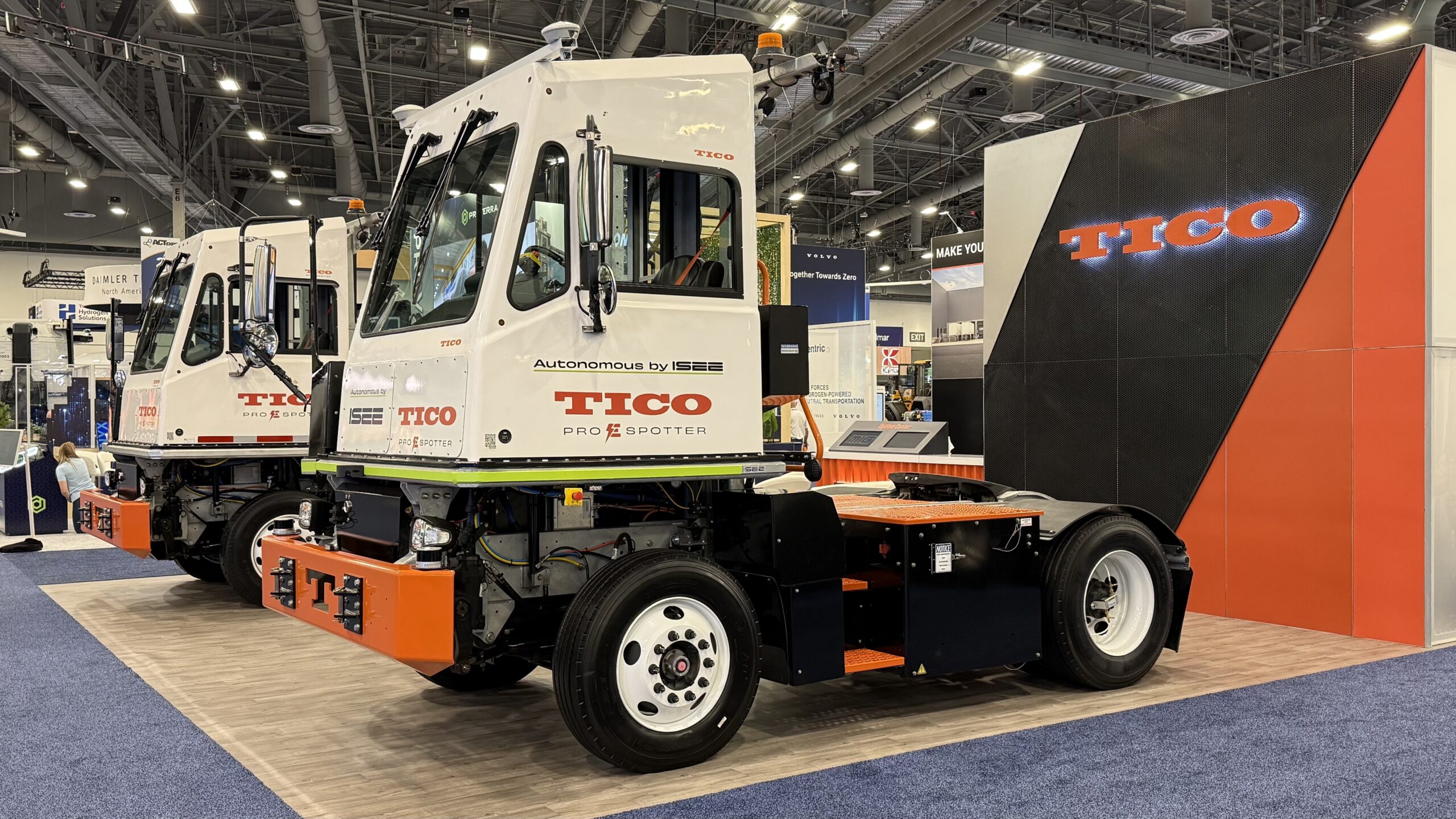
Why it matters: The pivot to private yards represents a pragmatic, near-term path to automation with immediate operational and safety impacts, shifting capital and talent focus within the freight sector.
Context: Autonomous trucking has struggled with highway-scale deployment due to regulatory and technical complexity, making constrained environments like ports and distribution yards a logical first beachhead.
"Before Yibiao Zhao and Chris Baker launched ISEE AI in 2017, the two co-founders were deep in research at the Massachusetts Institute of Technology, building artificial intelligence for what they called “collaborative." — FREIGHTWAVES
Commentary: The yard represents a classic ‘adjacent possible’ for autonomy: a high-friction operational node where automation delivers immediate ROI through continuous operation and damage reduction, bypassing the public road morass. ISEE’s three-path coupling strategy reveals a market segmented by trailer ownership, forcing a hardware-as-service model. Their validated safety case and OEM partnership signal a shift from pilot purgatory to scaled deployment, concentrating early adoption in major Southeastern logistics hubs.
Date: June 05, 2026 07:00 AM ET
URL: https://www.freightwaves.com/news/autonomous-yard-trucks-isee-tico-2027
AI Sentiment Score: Negative (50%)
AI Credibility Score: 10.0/10 — High
Scores and text generated by AI analysis of the source article indicated.
Bot Auto names Brett Suma as president and COO to scale autonomous trucking (Freightwaves)
Summary: Bot Auto, having completed its first driverless commercial run, has appointed Brett Suma as President and COO to lead its commercial scaling. Suma, a Knight Transportation veteran, brings a team focused on building a ‘native AI freight network’ from the ground up, explicitly avoiding the inefficiencies of retrofitting autonomous trucks into existing driver-centric operations. The company’s strategy is to methodically build corridors in Texas first, optimizing for autonomous asset utilization without the constraints of mixed fleets or driver seniority.

Why it matters: This signals a pivot from pure technology validation to operational execution in autonomous trucking, with a strategy that could redefine regional freight network economics in the Southeast.
Context: The autonomous trucking sector is bifurcating between retrofit models (adding AVs to legacy networks) and greenfield approaches. Bot Auto’s hire of a traditional freight network builder underscores the critical shift from R&D to scalable, profitable operations.
"The autonomous trucking race has a new entrant with a distinctly old-school playbook. Bot Auto, fresh off completing its first fully humanless commercial load on a public highway, is betting its next." — FREIGHTWAVES
Commentary: Suma’s appointment and his ‘native network’ thesis directly challenge the capital-heavy retrofit strategies of incumbents. If successful, this could concentrate autonomous freight infrastructure investment in specific Texas corridors first, potentially drawing freight volume and supporting logistics real estate away from legacy hubs. The operational friction he identifies—where autonomous assets sit idle behind tenured drivers—is a real constraint incumbents must solve, creating a first-mover advantage for clean-slate operators in key regional markets.
Date: Wed, 03 Jun 2026 12:00:00 +0000
URL: https://www.freightwaves.com/news/bot-auto-brett-suma-president-coo
AI Sentiment Score: Negative (57%)
AI Credibility Score: 10.0/10 — High
Scores and text generated by AI analysis of the source article indicated.
The Role of Automation in Managing Complex Revenue Workflows in Logistics (Globaltrademag)
Summary: Logistics firms are losing 1-5% of EBITDA to revenue leakage in order-to-cash processes, a significant drain driven by the mismatch between legacy financial systems and modern, variable-rate operations. Manual reconciliation between transportation management, warehouse, and billing systems creates latency, errors, and extended Days Sales Outstanding, which averages 46 days in the sector. Automation that directly connects operational events to billing is presented as a structural solution to enforce contract logic, reduce disputes, and provide real-time revenue visibility.

Why it matters: For Southeast Asian logistics hubs, where cross-border trade and complex multi-party arrangements are central, closing this revenue gap is a direct lever for improving profitability and competitive positioning in a margin-sensitive industry.
Context: This reflects a broader regional trend where operational technology adoption in logistics (e.g., TMS, WMS) has outpaced financial system modernization, creating a systemic efficiency drag.
"Organizations structurally lose between 1% and 5% of their realized earnings before interest, taxes, depreciation, and amortization (EBITDA) due to revenue leakage in the order-to-cash process alone." — GLOBALTRADEMAG
Commentary: The quantified leakage underscores a material operational tax on growth, particularly for asset-light 3PLs where margin preservation is critical. Successful automation implementation will hinge on data normalization and deep system integration—tasks that will separate firms with mature data governance from those merely purchasing software. This creates a near-term opportunity for consultancies and system integrators specializing in logistics finance tech stacks across major ASEAN trade corridors.
Date: Wed, 03 Jun 2026 09:00:20 +0000
URL: https://www.globaltrademag.com/the-role-of-automation-in-managing-complex-revenue-workflows-in-logistics/
AI Sentiment Score: Positive (50%)
AI Credibility Score: 10.0/10 — High
Scores and text generated by AI analysis of the source article indicated.
Consolidating Intra-Southeast Asia Logistics and Achieving … (Nipponexpress)
Summary: Nipponexpress outlines a logistics model where manufacturers use a bonded hub warehouse in Malaysia to consolidate shipments entering Southeast Asia. The model replaces direct, small-lot shipments from external production sites to each country with regional consolidation, paired with a visibility portal called SHUTTLE. This aims to cut costs, reduce administrative burdens at destination ports, and provide real-time inventory data across the region.

Why it matters: This signals a shift in regional supply chain architecture, moving from fragmented national logistics to centralized, bonded hubs, which could reallocate warehousing activity and customs processing to strategic transit nodes like Malaysia.
Context: Southeast Asia’s manufacturing landscape is increasingly integrated, but logistics have remained country-centric. Third-party logistics providers are competing to offer regional consolidation and visibility as a service, leveraging free trade zones.
"The hub warehouse is located within a Free Commercial Zone (FCZ) in Malaysia. By utilizing the bonded environment, customers can operate inventory bases even without establishing a local subsidiary." — NIPPONEXPRESS
Commentary: The FCZ provision is the operational linchpin, enabling inventory staging without local corporate presence—a significant lowering of the barrier to regional distribution. If adopted widely, this could concentrate high-value logistics real estate and skilled jobs in Malaysia, potentially at the expense of warehousing in destination countries like Thailand or Vietnam. The model also creates a new data layer (SHUTTLE) that gives multinationals tighter control but creates a single point of failure.
Date: May 29, 2026 12:00 AM ET
URL: https://www.nipponexpress.com/us/en/knowledge/case/consolidating-intra-sea-logistics-and-achieving-iv/
AI Sentiment Score: Negative (50%)
AI Credibility Score: 9.8/10 — High
Scores and text generated by AI analysis of the source article indicated.
Post ID: 8d95aae3