Alzheimer’s Disease and Frontal Temporal Dementia
Podcast – Agentic AI and the Future of Dementia Research (Dementiaresearcher.Nihr.Ac.Uk)
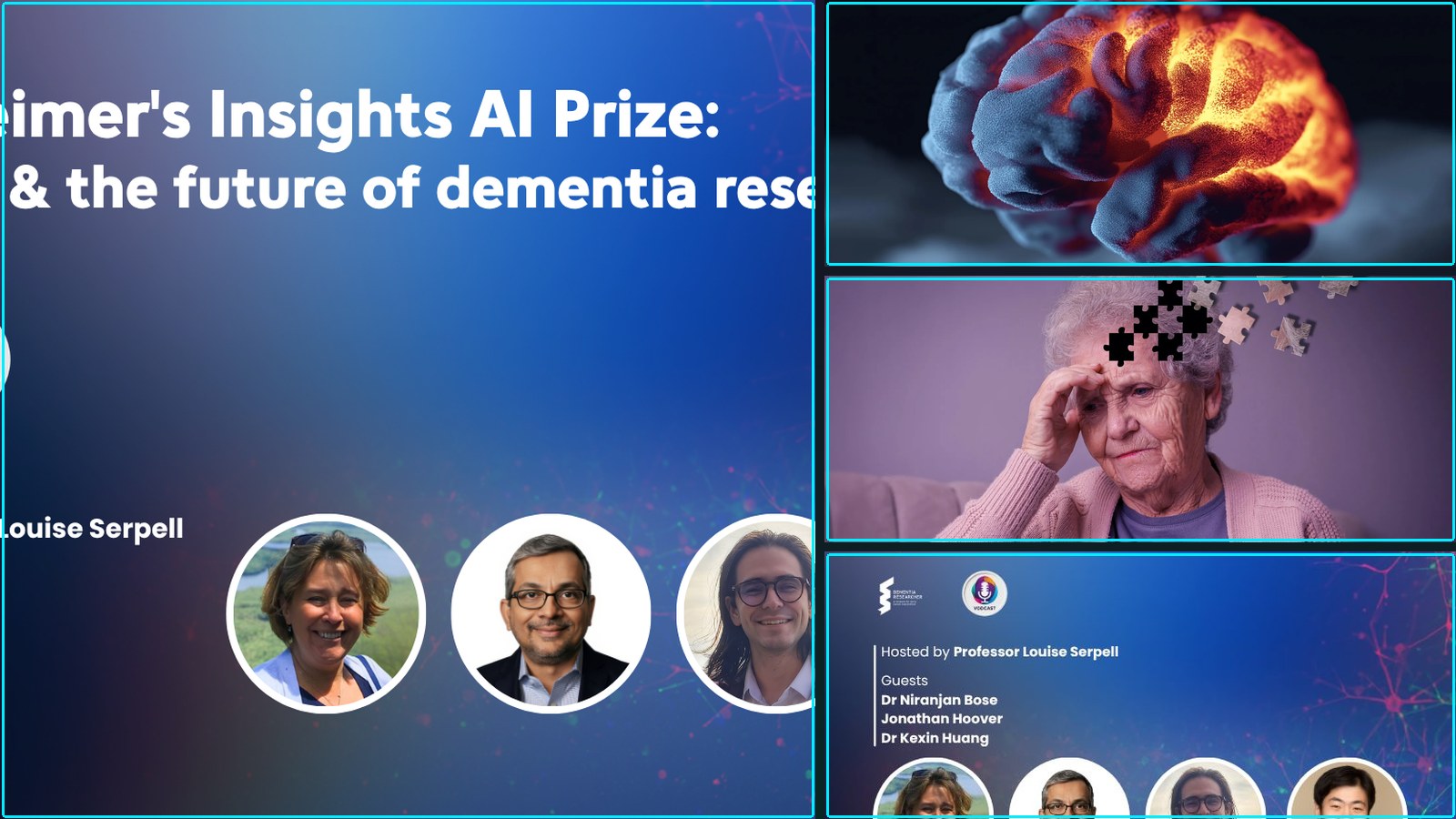
Summary: The Alzheimer’s Disease Data Initiative’s $1 million AI Prize, split between two winners, signals a strategic pivot toward agentic AI as a core research infrastructure layer. Biomni AD, a ‘virtual research intern’ from Stanford and Mount Sinai, automates data analysis workflows, while Prima Mente’s Parthenon platform offers a ‘virtual wet lab’ for in silico hypothesis testing in cellular models. Both tools are designed to integrate with the AD Workbench’s federated data ecosystem, aiming to accelerate discovery by acting as collaborative partners rather than replacements for human scientists.
Why it matters: This marks a concrete shift from data aggregation to AI-augmented hypothesis generation and experimental planning, potentially compressing research timelines but also redefining core scientific skills and collaboration models in a high-stakes, data-rich field.
Context: The Alzheimer’s research field has historically been fragmented by data silos and late-stage clinical failures. Recent efforts like the AD Data Initiative focus on interoperability, but the bottleneck is now analytical capacity. Agentic AI represents the next logical step, moving from data access to automated insight generation.
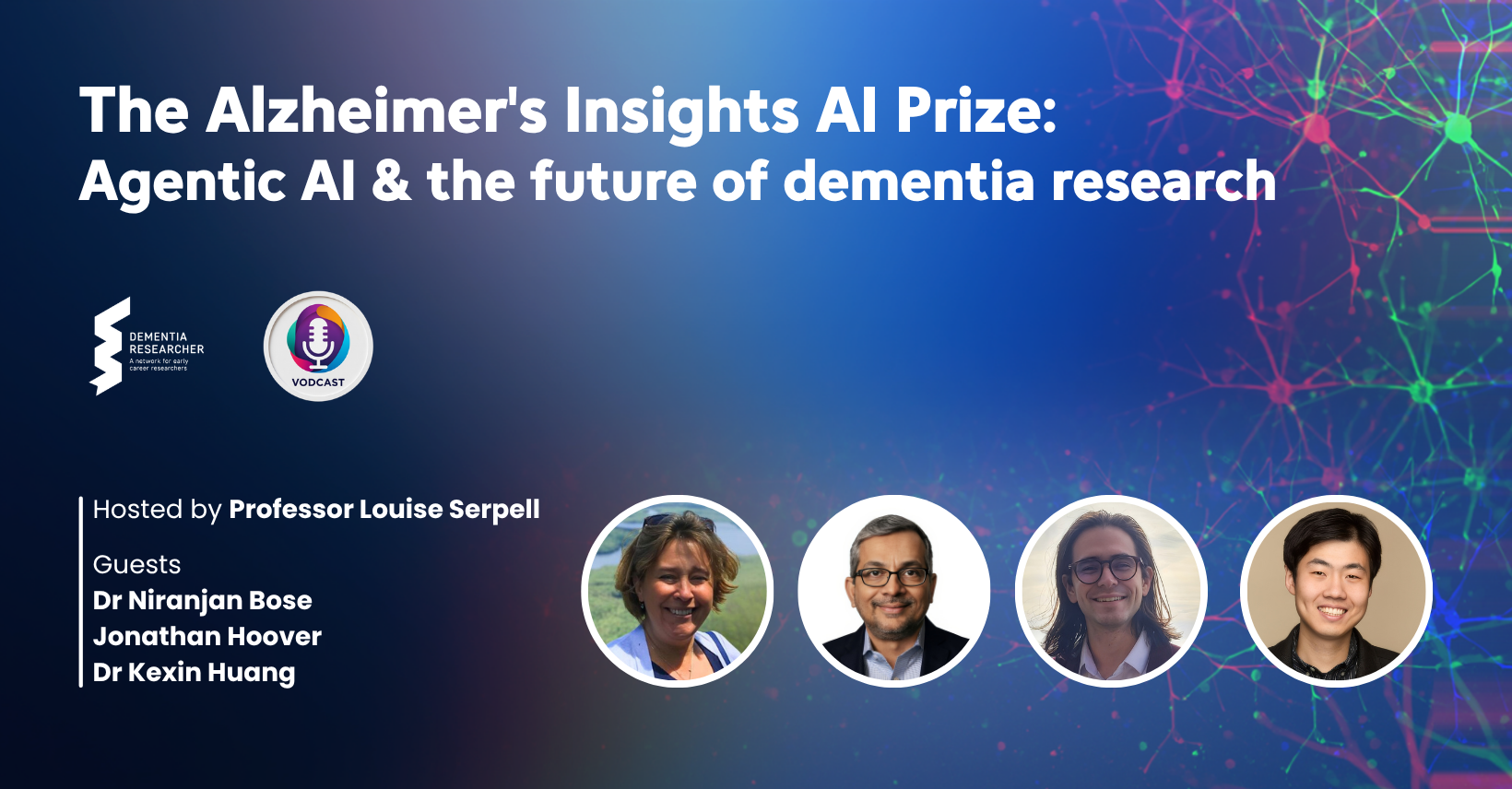
"In this episode, Professor Louise Serpell brings together Dr Niranjan Bose from the Alzheimer’s Disease Data Initiative, Jonathan Hoover from the AI company Prima Mente, and Dr Kexin Huang from Stanford University." — DEMENTIARESEARCHER.NIHR.AC.UK
Commentary: The operational goal is clear: lower the technical barrier to complex, multi-dataset analysis to broaden the pool of researchers who can generate testable hypotheses. This democratization, however, introduces new dependencies on tool reliability and data quality. The explicit framing of AI as a ‘co-scientist’ rather than an oracle is a necessary hedge against overconfidence, but it also institutionalizes a new layer of technical mediation between the researcher and the data. Success will be measured not just by faster cycles, but by whether these tools can produce novel, clinically actionable insights that elude traditional methods.
Date: June 06, 2026 03:00 AM ET
URL: https://www.dementiaresearcher.nihr.ac.uk/podcast-agentic-ai-and-the-future-of-dementia-research/
AI Sentiment Score: Negative (72%)
AI Credibility Score: 10.0/10 — High
Scores and text generated by AI analysis of the source article indicated.
Scientists found the hidden switch fueling alzheimer’s brain inflammation (Sciencedaily)
Summary: Scripps Research Institute scientists have identified a specific chemical modification, S-nitrosylation at cysteine 148 on the STING protein, that appears to act as a molecular switch driving chronic neuroinflammation in Alzheimer’s disease. In experimental models, blocking this modification reduced inflammation and protected synaptic connections without disabling STING’s normal immune function. The finding suggests a self-amplifying cycle where protein aggregates trigger inflammation that, via nitric oxide, modifies STING to perpetuate further damage.
Why it matters: It proposes a druggable target that could suppress pathological inflammation while preserving essential immune defenses, a critical distinction for a disease of aging.
Context: This work extends Lipton’s long-standing research into S-nitrosylation as a pathological mechanism, now pinpointing a specific site on a known inflammatory mediator, STING, within the Alzheimer’s disease cascade.
"What makes this target particularly promising is that we can quiet the pathological overactivation of STING without shutting down the normal immune response," says Lipton. "You still need STING to protect yourself from infections, and when we target cysteine 148, we’re not blocking the entire molecule; we’re just preventing STING from becoming overactivated." — SCIENCEDAILY
Commentary: The operational significance lies in the move from a broad ‘inflammation bad’ narrative to a precise, chemically-defined node. If translatable, this could shift therapeutic development away from blunt immunosuppression toward modulation of specific post-translational modifications, a technically demanding but potentially more sustainable approach. The link to environmental exposures like air pollution provides a mechanistic bridge to non-genetic risk factors clinicians observe.
Date: Sun, 31 May 2026 11:30:38 EDT
URL: https://www.sciencedaily.com/releases/2026/05/260530053424.htm
AI Sentiment Score: Negative (85%)
AI Credibility Score: 10.0/10 — High
Scores and text generated by AI analysis of the source article indicated.
Protein traffic jams may explain aging, memory loss, and Alzheimer’s (Sciencedaily)
Summary: Stanford researchers propose a unified mechanism linking aging, cognitive decline, and neurodegenerative disease: a breakdown in the fidelity of protein production. Using the short-lived turquoise killifish model, they observed that ribosomes, the cell’s protein factories, stall and collide during translation elongation in aged brains, leading to faulty proteins and aggregation. This ‘traffic jam’ may explain the observed decoupling between mRNA levels and protein output, a hallmark of aging. The findings suggest ribosome dysfunction as a core, upstream driver of proteostasis collapse.

Why it matters: It reframes neurodegeneration from a disease-specific protein aggregation problem to a consequence of a fundamental aging process in cellular machinery, potentially redirecting therapeutic strategies.
Context: The search for a primary driver of aging and its cognitive sequelae has long oscillated between genetic, metabolic, and proteostatic theories; this work places a specific, mechanistic fault in translation elongation at the center.
"Protein traffic jams may explain aging, memory loss, and Alzheimer’s – Date: – May 29, 2026 – Source: – Stanford University – Summary: – Scientists at Stanford may have uncovered a hidden." — SCIENCEDAILY
Commentary: If validated in humans, this shifts the therapeutic paradigm from clearing downstream aggregates (e.g., amyloid-beta) to maintaining upstream translational fidelity. It implies that interventions targeting ribosomal quality control or elongation kinetics could have broad, preventative effects against age-related cognitive decline, not just Alzheimer’s. The killifish model’s utility here underscores the value of fast-aging vertebrates for dissecting mechanistic cascades. However, the leap from fish to human brain proteostasis, with its unique cell types and decades-long timeline, remains the critical translational challenge.
Date: Fri, 29 May 2026 10:17:40 EDT
URL: https://www.sciencedaily.com/releases/2026/05/260528082505.htm
AI Sentiment Score: Negative (80%)
AI Credibility Score: 10.0/10 — High
Scores and text generated by AI analysis of the source article indicated.
Post ID: 130031b1