Software and Tool Updates
RealityScan 2.2 Widens GPU Support (Digitalproduction)
Summary: Epic Games’ RealityScan 2.2 expands GPU hardware support to include AMD Radeon and Radeon PRO cards, enabling mixed NVIDIA/AMD GPU setups for accelerated photogrammetry reconstruction. The update also introduces a 360 camera workflow tutorial and a series of targeted bug fixes for the editor, texturing, and CLI. This shifts the tool’s accessibility for studios with heterogeneous or AMD-centric hardware investments.

Why it matters: It lowers the hardware barrier for photogrammetry throughput and allows studios to utilize existing or cost-effective AMD workstation fleets, directly impacting project economics and pipeline flexibility.
Context: Professional photogrammetry has been largely accelerated by NVIDIA CUDA, locking out AMD GPU users and creating vendor-specific bottlenecks in studio hardware procurement and utilization.
"Version 2.2 can use supported AMD and NVIDIA GPUs in the same machine at the same time. The workload gets split across every supported GPU in parallel. That is the sort of change that makes Frankenstein workstations look less like bad procurement and more like resourcefulness with cable management." — DIGITALPRODUCTION
Commentary: This is a vendor-agnostic move that commoditizes GPU acceleration for a key VFX data-capture stage. It reduces vendor lock-in for scan teams, improves ROI on existing mixed or AMD hardware, and could pressure other reconstruction tool vendors to follow suit. The 360 camera workflow, while experimental, signals a push towards faster, cheaper location capture for VFX reference and virtual production, potentially altering the economics of complex environment builds.
Date: June 26, 2026 01:00 AM ET
URL: https://digitalproduction.com/2026/06/26/realityscan-2-2-widens-gpu-support/
AI Sentiment Score: Negative (66%)
AI Credibility Score: 10.0/10 — High
Scores and text generated by AI analysis of the source article indicated.
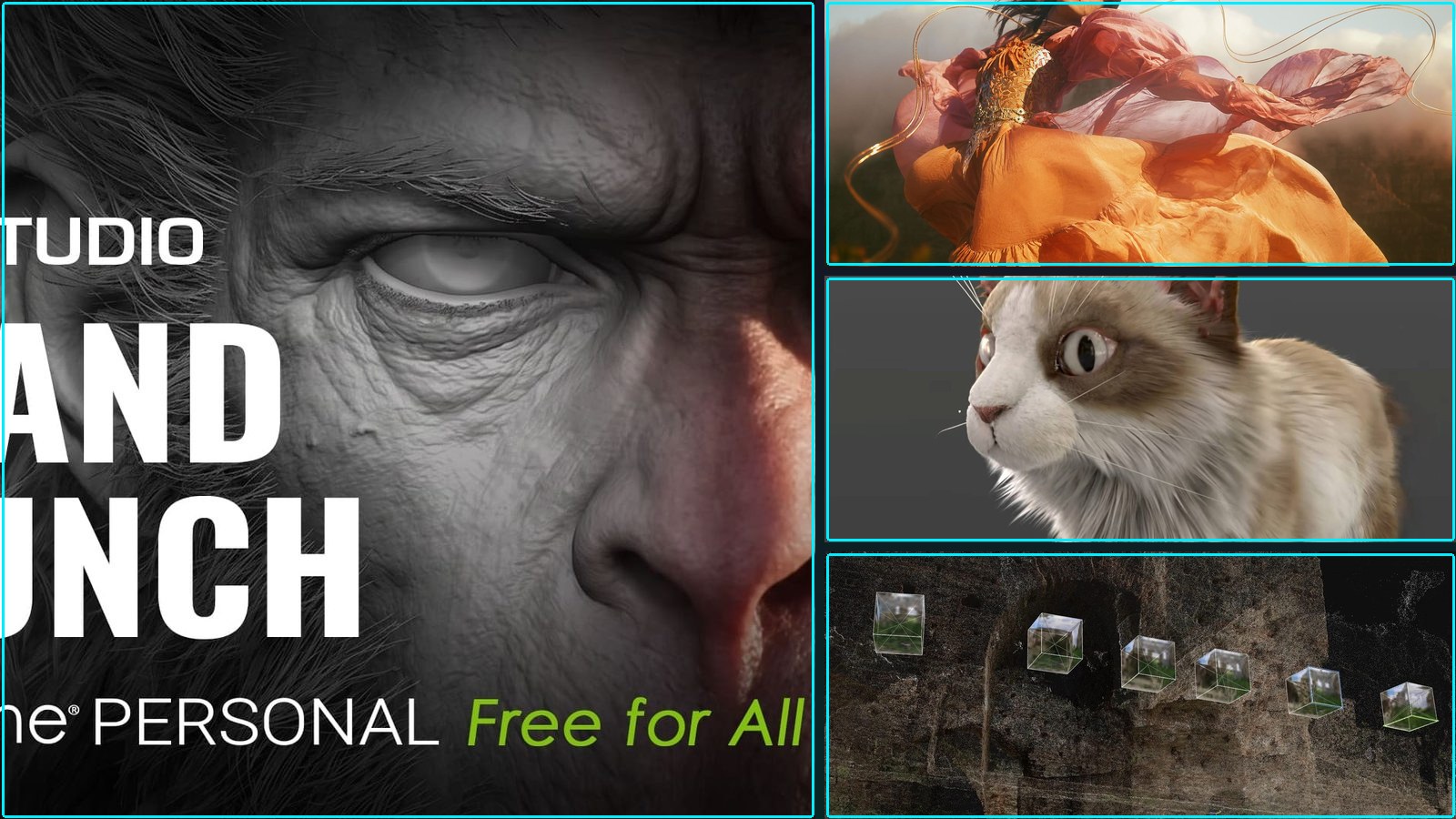
Reallusion Unlocks Limitless Creation: iClone Personal Debuts Alongside AI Studio Official Launch (Digitalproduction)
Summary: Reallusion has replaced its 30-day iClone trial with a free, perpetual ‘Personal’ edition, removing time restrictions for its real-time character animation software. Concurrently, its AI Studio platform has exited Early Access, introducing enhanced multi-reference features for character consistency and integrating premier models like Seedance 2.0. The new licensing model offers a free tier for unlimited learning and rendering, with export and commercial-use gates tied to subscription or perpetual licenses.

Why it matters: This fundamentally lowers the cost of entry for previsualization and pipeline testing, while establishing a new, tiered commercial model that monetizes asset export and AI compute rather than software access.
Context: The move follows industry trends toward freemium models and integrated AI toolchains, but is notable for decoupling perpetual software access from pipeline interoperability.
"Table of Contents Show For those who don’t know the tool: iClone is Reallusion‘s real-time character animation hub, sitting between Character Creator, ActorCore, Blender, Maya and Unreal Engine, with AI Studio adding." — DIGITALPRODUCTION
Commentary: By making the core 3D tool free in perpetuity, Reallusion is commoditizing scene blocking and internal rendering, betting its revenue on selling pipeline connectivity (exports) and AI compute. This pressures competing mid-tier animation suites to similarly unbundle their pricing. For studios, it creates a permanent, zero-cost sandbox for rapid previs and technical proof-of-concept, potentially reducing vendor lock-in during early R&D phases.
Date: June 25, 2026 02:00 AM ET
URL: https://digitalproduction.com/2026/06/25/iclone-personal-is-free-now/
AI Sentiment Score: Negative (66%)
AI Credibility Score: 10.0/10 — High
Scores and text generated by AI analysis of the source article indicated.
Substance 3D Painter 12.1 bakes smarter (Digitalproduction)
Summary: Adobe Substance 3D Painter 12.1 introduces a reworked baking workflow with automatic rebaking, on-mesh skew correction painting, and edge protection, targeting hard-surface asset production bottlenecks. It also adopts OpenPBR 1.1 as the default shading model and adds a hard-surface mode for automatic UV unwrapping. These updates focus on reducing manual iteration, improving material interchange, and streamlining mechanical asset workflows.

Why it matters: This release directly impacts throughput and quality control for texture artists, particularly in hard-surface work, by automating tedious corrections and standardizing material outputs across pipelines.
Context: Baking and UV unwrapping for mechanical assets remain labor-intensive, error-prone steps; vendor adoption of OpenPBR aims to reduce material translation errors between DCC tools and renderers.
"For those who don’t know the tool: Substance 3D Painter is Adobe’s 3D texture-painting app for imported meshes. It exports textures for renderers and game engines, and sits beside Substance 3D Designer,." — DIGITALPRODUCTION
Commentary: The skew painting and edge protection tools represent a shift from post-bake cleanup to proactive correction, potentially reducing rework cycles for complex hard-surface shots. Adopting OpenPBR as default pressures studios to align their material naming and export conventions, reducing vendor lock-in but requiring pipeline updates. The hard-surface UV unwrap, if effective, could lower the technical bar for junior artists on mechanical assets, altering staffing models for mid-complexity work.
Date: June 26, 2026 02:00 AM ET
URL: https://digitalproduction.com/2026/06/26/substance-3d-painter-12-1-bakes-smarter/
AI Sentiment Score: Negative (50%)
AI Credibility Score: 10.0/10 — High
Scores and text generated by AI analysis of the source article indicated.
Here comes Houdini 22 (Digitalproduction)
Summary: Table of Contents Show The sheer mass of innovation so far has been roughly the same kind of brain trip as Neo’s journey down the rabbit hole. So put the popcorn on the table, question your own reality, celebrate Houdini’s 30th anniversary to the day while you are at it, and off we go into the land of new nodes. And yes, you can imagine this being read to you in Keanu Reeves voice.

Why it matters: This matters for Visual Effects and CGI because it gives a concrete current signal to track: Table of Contents Show The sheer mass of innovation so far has been roughly the same kind of brain trip as Neo’s journey down the rabbit hole.
Context: Table of Contents Show The sheer mass of innovation so far has been roughly the same kind of brain trip as Neo’s journey down the rabbit hole. So put the popcorn on the table, question your own reality, celebrate Houdini’s 30th anniversary to the day while you are at it, and off we go into the land of new nodes. And yes, you can imagine this being read to you in Keanu Reeves voice.
"Table of Contents Show The sheer mass of innovation so far has been roughly the same kind of brain trip as Neo’s journey down the rabbit hole. So put the popcorn on." — DIGITALPRODUCTION
Commentary: The immediate implication is operational rather than speculative: watch how this changes budgets, workflows, or risk assumptions over the next cycle.
Date: June 23, 2026 04:26 AM ET
URL: https://digitalproduction.com/2026/06/23/here-comes-houdini-22/
AI Sentiment Score: Negative (62%)
AI Credibility Score: 10.0/10 — High
Scores and text generated by AI analysis of the source article indicated.
Epic Games releases RealityScan 2.2 with AMD GPU support (Cgchannel)
Summary: Epic Games has updated its professional photogrammetry software RealityScan to version 2.2, adding GPU acceleration support for AMD hardware. This breaks the tool’s previous dependency on NVIDIA GPUs, allowing users to mix AMD and NVIDIA cards in a single workstation. The update is paired with the release of Pano2Views, a free online tool for converting 360-degree equirectangular footage into cubemaps usable by the software.

Why it matters: This expands hardware options for asset creation pipelines, potentially lowering capital costs and increasing render farm flexibility for studios.
Context: RealityScan (formerly RealityCapture) is a key photogrammetry tool for VFX, games, and visualization, acquired by Epic and made free for smaller studios. Its move to AMD follows a broader industry trend of applications like V-Ray adopting AMD’s HIP framework to support multiple GPU vendors.
"Epic Games releases RealityScan 2.2 with AMD GPU support Epic Games has released RealityScan 2.2, the latest version of its professional desktop photogrammetry software, formerly known as RealityCapture. The update introduces support." — CGCHANNEL
Commentary: The shift to vendor-agnostic acceleration directly impacts capital expenditure and operational flexibility. Studios can now deploy mixed-GPU render farms, leveraging AMD’s often lower-cost workstation cards without sacrificing throughput for photogrammetry workloads. This incrementally reduces vendor lock-in at the pipeline’s front end, though Linux server support remains a pending constraint for large-scale operations. The bundled Pano2Views tool subtly expands the viable input source pool, making 360-degree camera rigs more practical for environment capture.
Date: June 25, 2026 05:22 AM ET
URL: https://www.cgchannel.com/2026/06/epic-games-releases-realityscan-2-2-with-amd-gpu-support/
AI Sentiment Score: Negative (71%)
AI Credibility Score: 10.0/10 — High
Scores and text generated by AI analysis of the source article indicated.
Optics 2026.5 gets more photo hosts (Digitalproduction)
Summary: Boris FX expands its Optics plugin suite beyond Adobe hosts to include Apple Photos, Capture One, and Affinity Photo, while maintaining a single-seat license. The 2026.5 update introduces S_FilmBurn for analog effects, enhanced S_Grunge for procedural backgrounds, new Particle Illusion assets for cinemagraphs, and improved automatic masking. This broadens the tool’s utility in mixed, host-agnostic post-production pipelines for photographers and retouchers.

Why it matters: The expansion of host support and integrated effects directly impacts workflow efficiency and cost for photographers and small shops, reducing roundtrips and enabling more finishing work within primary editing environments.
Context: The plugin market is consolidating around tools that offer cross-host compatibility and integrated, high-quality asset generation to reduce reliance on external stock and manual compositing.
"So photographers can keep more of the finishing pass inside the host they already use. The toolkit now fits RAW finishing, portrait retouching, background treatment, look building and quick still-image VFX without forcing every job through Photoshop." — DIGITALPRODUCTION
Commentary: The move to multi-host support under one license pressures niche plugin vendors and elevates Optics as a central utility in photo post-production. By embedding high-quality procedural assets (S_Grunge, particles) and automated masking, it systematically reduces the labor cost of complex shots, shifting the economic ceiling for editorial and commercial stills work. The paid ‘Gilded Paw’ preset pack signals a strategy to monetize specialized aesthetic pipelines built atop the core toolset.
Date: June 25, 2026 11:15 AM ET
URL: https://digitalproduction.com/2026/06/25/optics-2026-5-gets-more-photo-hosts/
AI Sentiment Score: Positive (57%)
AI Credibility Score: 10.0/10 — High
Scores and text generated by AI analysis of the source article indicated.
Adobe releases Substance 3D Painter 12.1 (Cgchannel)
Summary: Adobe has released Substance 3D Painter 12.1, focusing on core texture baking and UV workflow improvements. The update introduces continuous rebaking, a skew correction painting tool for fixing normal map artifacts, and a new hard-surface mode for automatic UV unwrapping. It also makes the OpenPBR shading standard the default. These are incremental but targeted changes to the software’s technical pipeline.
Why it matters: For texture artists and VFX/games studios, these updates directly impact daily throughput and quality control for complex assets, particularly hard-surface models.
Context: This continues Adobe’s integration of the OpenPBR standard across its Substance suite and reflects an ongoing industry push to automate and correct common, time-consuming baking and UV tasks.
"The update introduces support for continuous rebaking, meaning that maps update each time a user updates their baking parameters, rather than having to trigger the bake manually." — CGCHANNEL
Commentary: Continuous rebaking and skew correction painting are operational upgrades that reduce iteration friction and manual fix-up work, slightly tilting the economics of complex texturing toward faster turnaround. The hard-surface UV mode and OpenPBR default further cement Painter’s position as a central, interoperable hub in asset pipelines, reducing vendor lock-in for material workflows. This pressures competing texturing tools to match these quality-of-life automations or risk losing ground on efficiency.
Date: June 24, 2026 12:33 PM ET
URL: https://www.cgchannel.com/2026/06/adobe-releases-substance-3d-painter-12-1/
AI Sentiment Score: Negative (50%)
AI Credibility Score: 10.0/10 — High
Scores and text generated by AI analysis of the source article indicated.
New motion graphics tool Caddis puts a node graph in every layer (Cgchannel)
Summary: Motion designer Mike Gaynor has launched Caddis, a new GPU-accelerated compositing and motion graphics tool that integrates a node graph directly into each layer of a traditional timeline-based workflow. Currently in free beta ahead of a July 2026 commercial launch priced at $129, it positions itself as an alternative, not a drop-in replacement, for After Effects. The tool is ‘vibe-coded,’ built by a practitioner leveraging AI to bypass traditional development constraints, and will offer cloud-based AI nodes for tasks like depth estimation. Recent beta updates have added Windows support and a planar tracker, signaling rapid iteration.
Why it matters: It signals a shift in tool development economics, lowering the barrier for practitioner-led software that could reshape vendor competition and artist workflows.
Context: This follows a recent trend of free or low-cost motion graphics alternatives (Autograph, Cavalry) emerging, challenging Adobe’s dominance. The ‘vibe-coded’ development model, enabled by AI, represents a new supply chain for professional tools.
"New motion graphics tool Caddis puts a node graph in every layer Originally posted on 19 May 2026, and updated with details of the Windows beta. Motion designer Mike Gaynor has unveiled." — CGCHANNEL
Commentary: Caddis’s hybrid model directly targets a core workflow friction: the cognitive switch between layer-based animation and node-based proceduralism. If it gains traction, it pressures incumbent vendors to similarly unify interfaces and could begin disaggregating the ‘one artist, one seat’ licensing model, especially with its cloud-based AI node credits. The practitioner-led, AI-assisted development path suggests a future where niche, workflow-specific tools emerge faster, increasing competition but also fragmenting pipeline standards.
Date: June 25, 2026 02:00 AM ET
URL: https://www.cgchannel.com/2026/06/new-motion-graphics-tool-caddis-puts-a-node-graph-in-every-layer/
AI Sentiment Score: Neutral (33%)
AI Credibility Score: 10.0/10 — High
Scores and text generated by AI analysis of the source article indicated.
Adobe to acquire Topaz Labs (Cgchannel)
Summary: Adobe announced its intent to acquire Topaz Labs, a pioneer in AI-based image and video enhancement tools, for an undisclosed sum. The deal, expected to close in H2 2026, will see Topaz’s products remain available standalone while its models and NeuroStream GPU optimization technology are integrated into Adobe Firefly, Firefly Services, and Creative Cloud apps. Topaz CEO Eric Yang will join Adobe to continue leading his team.
Why it matters: This acquisition consolidates a key AI enhancement capability into the dominant creative software suite, altering the vendor landscape for upscaling and restoration tools used across photography, video, and CG pipelines.
Context: Topaz Labs, with $48M in annual revenue and millions of users, had already shifted to a subscription model and partnered with Adobe, offering its Gigapixel and Bloom models in Photoshop as alternatives to Firefly’s native upscaler.
"Adobe to acquire Topaz Labs Topaz Labs’ latest promo for its AI models for image enhancement and upscaling. Adobe has just announced that it plans to acquire to company to expand the." — CGCHANNEL
Commentary: The acquisition neutralizes a competitive differentiator and brings a proven, high-performance enhancement stack in-house, likely accelerating Adobe’s roadmap for on-device AI video processing via NeuroStream. For studios and post houses, this reduces the need for third-party upscaling licenses but increases dependency on Adobe’s ecosystem and pricing. In VFX, it may further incentivize lower-resolution renders with AI upscaling as a cost-saving step, potentially impacting render farm utilization and compositing workflows.
Date: June 26, 2026 01:58 AM ET
URL: https://www.cgchannel.com/2026/06/adobe-to-acquire-topaz-labs/
AI Sentiment Score: Negative (50%)
AI Credibility Score: 10.0/10 — High
Scores and text generated by AI analysis of the source article indicated.
Reallusion Unlocks Limitless Creation: iClone Personal Debuts Alongside AI Studio Official Launch (Beforesandafters)
Summary: Reallusion has replaced its 30-day trial for iClone with a permanently free ‘Personal’ tier, removing time restrictions for learning, scene blocking, and rendering. Concurrently, its AI Studio platform has exited Early Access, emphasizing enhanced multi-reference control and character consistency. The model shifts vendor economics from a time-limited trial to a freemium structure, where monetization is gated by commercial rendering rights, 3D asset exports, and access to premium AI models and asset libraries.

Why it matters: This recalibrates the entry cost for 3D pre-visualization and AI-assisted animation, potentially expanding the user base while strategically reserving pipeline integration and commercial output for paid tiers.
Context: Vendors are increasingly using free, feature-limited tiers to capture users and embed their tools early in creative pipelines, monetizing through cloud services, exports, and professional features.
"iClone Personal: A permanent, zero-cost tier for indefinite learning, scene blocking, and animation with full project access and entirely free rendering. While creation is unrestricted, it includes a limit of 30 exports for external 3D pipelines." — BEFORESANDAFTERS
Commentary: The move locks in a long-tail user base for training and internal pre-vis, making paid upgrades for export and commercial use the logical next step. It pressures competing mid-tier 3D animation tools to justify their upfront cost. The bundled AI Studio launch, with its focus on character consistency, directly targets a high-cost, labor-intensive VFX pain point, suggesting a future where AI-assisted consistency tools become a standard layer in the pre-vis to final-pixel pipeline.
Date: June 25, 2026 07:11 PM ET
URL: https://beforesandafters.com/2026/06/26/reallusion-unlocks-limitless-creation-iclone-personal-debuts-alongside-ai-studio-official-launch/
AI Sentiment Score: Negative (66%)
AI Credibility Score: 10.0/10 — High
Scores and text generated by AI analysis of the source article indicated.
Post ID: 33955e3a