Telescope Missions & Astronomical Discoveries
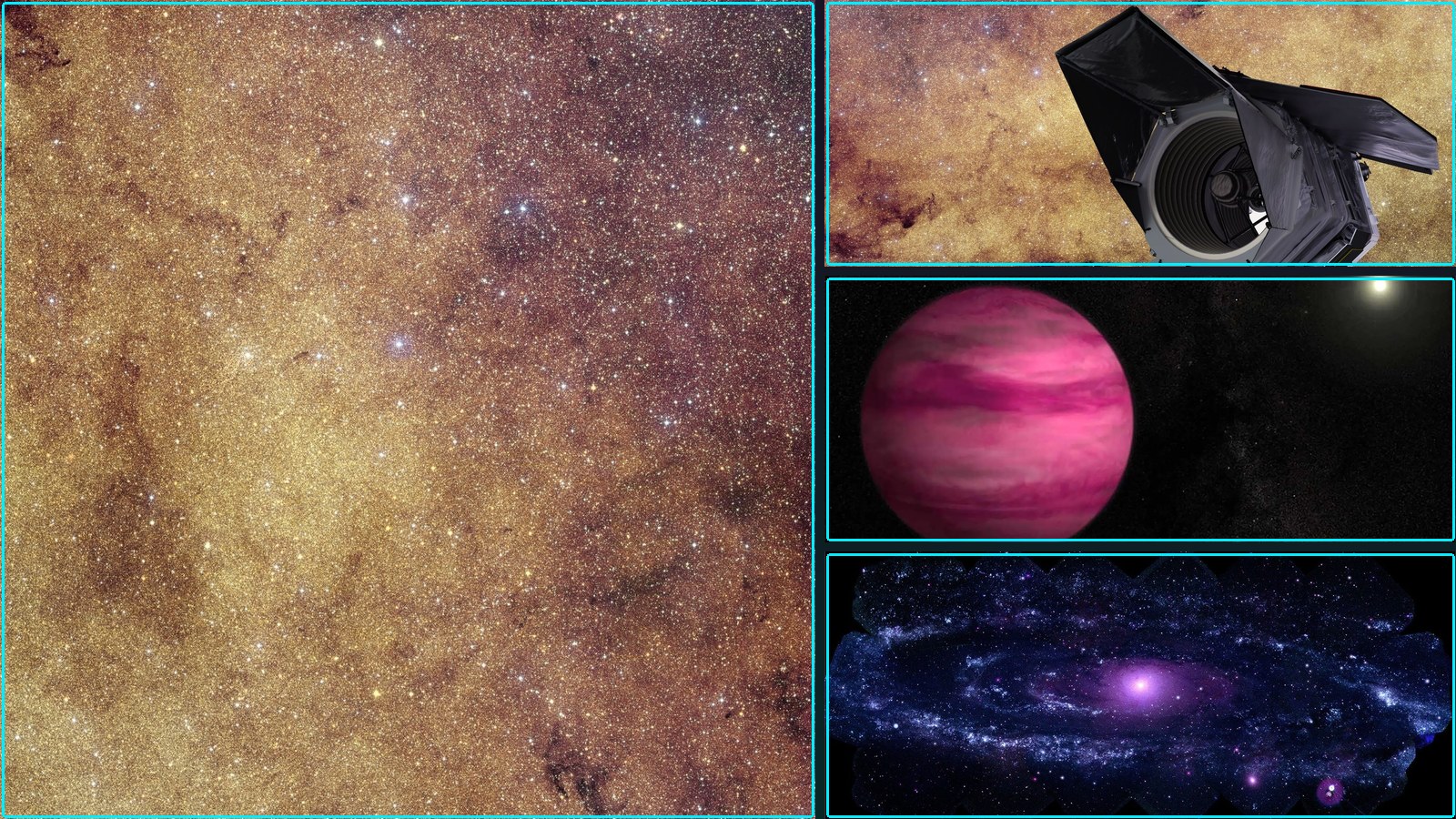
ESA’s Euclid captures the Milky Way’s crowded heart (Esa.Int)
Summary: The European Space Agency’s Euclid space telescope has produced the largest, most detailed visible-light image of the Milky Way’s galactic bulge, capturing over 60 million stars in a single 26-hour mosaic. While designed for cosmology, this targeted observation demonstrates Euclid’s unique survey speed and resolution, creating a critical reference dataset for future exoplanet microlensing studies. The image pre-maps the stellar field that NASA’s upcoming Roman Space Telescope will monitor, enabling mass measurements of planets discovered via microlensing by providing a precise ‘before’ snapshot.

Why it matters: This demonstrates mission agility and creates a foundational, time-stamped dataset that will multiply the scientific value of future exoplanet surveys, shifting microlensing from detection toward precise characterization.
Context: Euclid is a cosmology mission focused on dark energy; this is a targeted, one-day deviation from its core survey. It highlights the growing operational trend of using large survey telescopes for coordinated, multi-mission science.
"ESA’s Euclid captures the Milky Way’s crowded heart In brief The largest and most detailed photo ever made of our Milky Way galaxy’s centre in visible light is revealed today by the." — ESA.INT
Commentary: The operational significance is Euclid providing a fixed, high-fidelity baseline. This turns a detection method (microlensing) into a characterization tool, enabling mass measurements for cold, distant planets otherwise inaccessible. It’s a clever leveraging of survey-cadence differences between missions, creating a durable public good for the exoplanet community.
Date: June 24, 2026 06:00 AM ET
URL: https://www.esa.int/Science_Exploration/Space_Science/Euclid/ESA_s_Euclid_captures_the_Milky_Way_s_crowded_heart
AI Sentiment Score: Negative (66%)
AI Credibility Score: 10.0/10 — High
Scores and text generated by AI analysis of the source article indicated.
Partners, NASA Ready for June Launch of Swift Boost Mission (Science.Nasa.Gov)
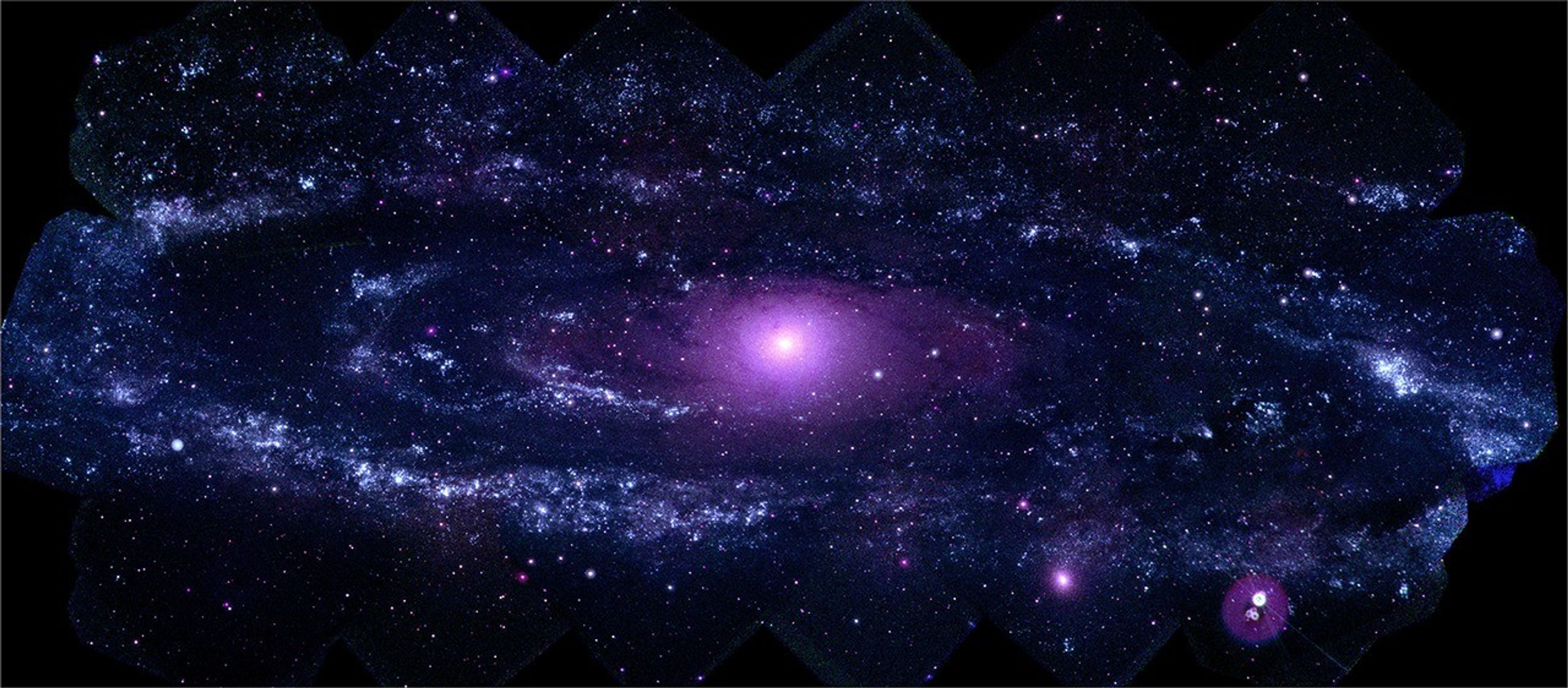
Summary: NASA and commercial partner Katalyst Space are preparing for the June 30 launch of the Swift boost mission. The robotic servicing satellite LINK, launched via a Northrop Grumman Pegasus XL from Kwajalein Atoll, will rendezvous with and raise the orbit of the aging Neil Gehrels Swift Observatory to prevent its atmospheric re-entry. This represents a funded, operational attempt at on-orbit satellite servicing for a spacecraft not designed for it, accelerated by increased solar activity degrading Swift’s orbit faster than predicted.
Why it matters: This mission tests the commercial viability and technical readiness of robotic satellite life extension, a critical capability for sustainable space operations.
Context: Swift, launched in 2004, is a key multi-wavelength astrophysics observatory. Its accelerated orbital decay due to solar activity forced NASA to choose between decommissioning it or funding a rapid, commercial servicing demonstration.
"Swift wasn’t designed to be serviced," said Ghonhee Lee, CEO of Katalyst. "By demonstrating we can quickly and cost-effectively extend its lifetime, we’re creating a blueprint for servicing spacecraft that were never designed for on-orbit maintenance." — SCIENCE.NASA.GOV
Commentary: The mission’s compressed timeline—less than one year from contract to launch—serves as a stress test for the commercial servicing industry’s operational tempo. Success would validate a new class of insurance-like services for aging government and commercial assets, while failure would highlight the non-trivial challenges of proximity operations and grappling with legacy hardware. The use of an air-launched Pegasus underscores the demand for responsive launch to meet time-sensitive orbital rendezvous windows.
Date: June 26, 2026 01:16 PM ET
URL: https://science.nasa.gov/missions/swift/swift-boost-mission/partners-nasa-ready-for-june-launch-of-swift-boost-mission/
AI Sentiment Score: Negative (75%)
AI Credibility Score: 10.0/10 — High
Scores and text generated by AI analysis of the source article indicated.
Euclid studies Milky Way center, supports future Roman observations (Nasaspaceflight)
Summary: ESA’s Euclid space telescope has released a high-resolution mosaic of the Milky Way’s galactic bulge, containing over 60 million stars, captured during a 26-hour observation in March 2025. This represents a deliberate pause in Euclid’s primary dark matter cosmology survey to support NASA’s upcoming Nancy Grace Roman Space Telescope, which arrived at Kennedy Space Center this week for a Falcon Heavy launch targeting August 30. Euclid’s data provides a pre-event baseline for Roman’s microlensing exoplanet search in the same region, enabling more precise mass measurements and the identification of rogue planets. The coordinated effort establishes a model for cross-agency, multi-mission observational synergy.

Why it matters: This demonstrates a shift from isolated mission science to coordinated, pre-planned observational campaigns, increasing the scientific yield of major space telescopes and setting a precedent for future flagship astronomy.
Context: Euclid’s primary mission is a wide-field cosmology survey; this targeted galactic bulge observation is its first and only planned deviation. Roman’s exoplanet hunt via microlensing requires long-duration monitoring of dense stellar fields, a task for which Euclid’s sharp, pre-existing catalog provides critical contextual data.
"The European Space Agency (ESA) recently released a new picture of the center of the Milky Way galaxy, an area known as the galactic bulge. Containing over 60 million stars, the picture,." — NASASPACEFLIGHT
Commentary: The operational coordination between ESA and NASA telescopes signals a maturation of multi-agency astrophysics, moving beyond ad-hoc collaborations to integrated mission planning. By providing a ‘time-zero’ reference frame, Euclid effectively extends Roman’s observational baseline before launch, a clever leveraging of assets that will refine exoplanet mass measurements and potentially identify free-floating planetary bodies. This model of complementary, scheduled data-sharing could become standard for maximizing return on multi-billion-dollar observatories, though it requires significant upfront bureaucratic and technical alignment.
Date: June 28, 2026 05:42 PM ET
URL: https://www.nasaspaceflight.com/2026/06/euclid-galactic-bulge-survey/
AI Sentiment Score: Negative (85%)
AI Credibility Score: 10.0/10 — High
Scores and text generated by AI analysis of the source article indicated.
The JWST Spies Six Galaxies Becoming One (Universetoday)
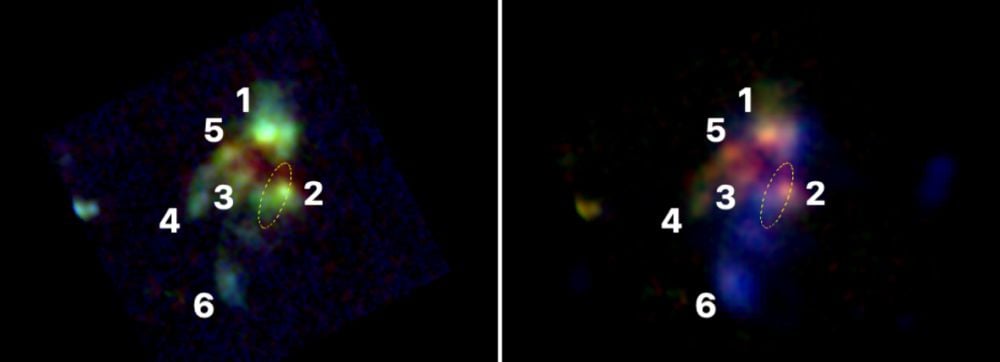
Summary: The James Webb Space Telescope (JWST) and complementary radio telescope networks have observed a protocluster of six massive galaxies merging about 1.5 billion years after the Big Bang. The target, radio galaxy TGSS J1530+1049, was thought to be a single entity, but high-resolution data reveal it as a complex of galaxies in the process of forming a single, much larger galaxy. The observations provide a simultaneous view of both the assembly of a future brightest cluster galaxy and the activity of its central supermassive black hole.
Why it matters: This offers a rare, direct observational test of hierarchical galaxy formation models and the co-evolution of galaxies and their central black holes.
Context: JWST was built to probe early galaxy assembly, but its infrared data are most powerful when combined with other wavelengths, like radio, to disentangle active galactic nuclei from stellar light.
[Summary note] The James Webb Space Telescope (JWST) and complementary radio telescope networks have observed a protocluster of six massive galaxies merging about 1.5 billion years after the Big Bang.
Commentary: The finding validates the multi-messenger approach in modern astronomy; JWST’s power is amplified by ground-based radio arrays like EVN/e-MERLIN. It confirms that radio-selected high-redshift galaxies remain prime targets for studying dense environments, and it provides a tangible, observed benchmark for cosmological simulations of massive galaxy formation.
Date: June 24, 2026 02:59 PM ET
URL: https://www.universetoday.com/articles/the-jwst-spies-six-galaxies-becoming-one
AI Sentiment Score: Neutral (33%)
AI Credibility Score: 10.0/10 — High
Scores and text generated by AI analysis of the source article indicated.
NASA races to save Swift telescope from falling back to Earth with daring rescue mission (Phys)
Summary: NASA has contracted startup Katalyst Space Technologies for a rapid, unproven robotic mission to salvage the Swift gamma-ray observatory, which is decaying from orbit due to heightened solar activity. The mission, launching imminently, involves the ‘Link’ spacecraft attempting to grapple and boost Swift to a higher orbit. Success would not only preserve a unique astronomical asset but also demonstrate a new commercial service model for extending the life of aging satellites, with Hubble potentially next.

Why it matters: A successful mission establishes a new, commercially-provided capability for orbital life extension, potentially reshaping satellite economics and preserving high-value national assets without replacement costs.
Context: Only China has demonstrated a similar robotic satellite-boosting mission. Most NASA observatories, including Hubble, were designed for servicing only by astronauts, a capability lost with the Space Shuttle’s retirement.
"This is the first American space robot to go up and do anything like this," Lee told The Associated Press. "NASA has all these big senior observatories … all of them can benefit from a service like this. So what we’re proving with this mission is this is a new play in the playbook that’s available." — PHYS
Commentary: The mission is a high-stakes, accelerated test of a nascent commercial service. Success validates a scalable business model for orbital logistics and creates a precedent for saving other assets like Hubble. Failure, while a loss for gamma-ray astronomy, would still provide critical data on the technical limits of unplanned robotic servicing under operational pressure.
Date: June 28, 2026 11:23 AM ET
URL: https://phys.org/news/2026-06-nasa-swift-telescope-falling-earth.html
AI Sentiment Score: Negative (50%)
AI Credibility Score: 10.0/10 — High
Scores and text generated by AI analysis of the source article indicated.
Euclid’s New Portrait of the Milky Way’s Crowded Bulge (Universetoday)
Summary: ESA’s Euclid space telescope, designed for cosmology, has imaged the Milky Way’s galactic bulge, capturing 60 million stars in a 26-hour survey. This dense stellar field is a prime target for gravitational microlensing, a technique for detecting exoplanets, including cold, distant ones missed by other methods. Euclid’s data provides a critical time-reference baseline for future microlensing surveys, notably NASA’s upcoming Roman Space Telescope mission. The image and its derived data will enable precise mass measurements for known exoplanets and support the detection of new ones.
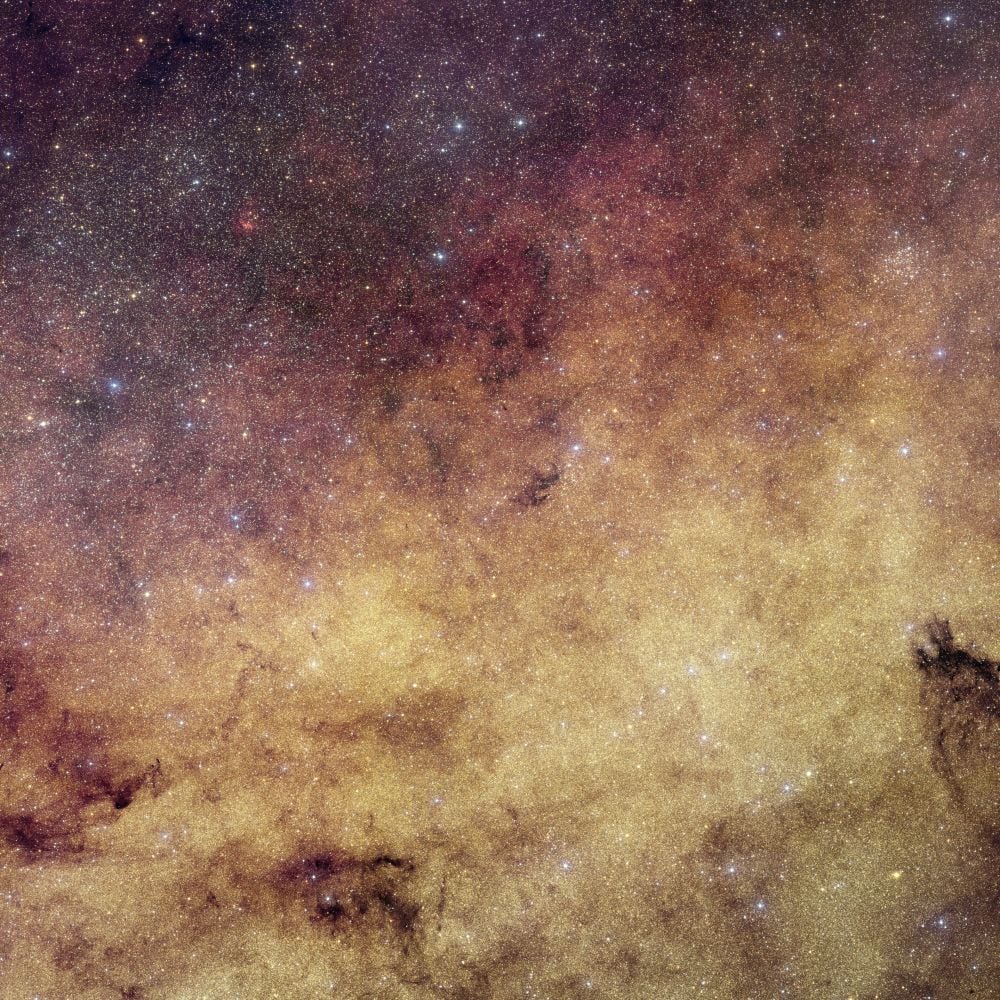
Why it matters: It demonstrates how a flagship mission’s operational constraints can be leveraged for high-impact secondary science, creating a foundational dataset for the next generation of exoplanet discovery.
Context: Gravitational microlensing is a key method for finding exoplanets unbiased by orbital distance or size, but it requires dense stellar fields and long-duration, time-domain observations. Major upcoming missions like Roman are built around this technique.
[Summary note] ESA’s Euclid space telescope, designed for cosmology, has imaged the Milky Way’s galactic bulge, capturing 60 million stars in a 26-hour survey.
Commentary: Euclid’s survey transforms a mission scheduling necessity—observing during equinoxes when its primary cosmology fields are unavailable—into a strategic asset. By pre-mapping the stellar actors for Roman’s future detections, it shifts microlensing from pure event detection to a more deterministic, characterizable process. This operational symbiosis between major missions underscores how planned data interoperability can exponentially increase the scientific yield of billion-dollar observatories.
Date: June 25, 2026 07:41 PM ET
URL: https://www.universetoday.com/articles/euclids-new-portrait-of-the-milky-ways-crowded-bulge
AI Sentiment Score: Negative (50%)
AI Credibility Score: 10.0/10 — High
Scores and text generated by AI analysis of the source article indicated.
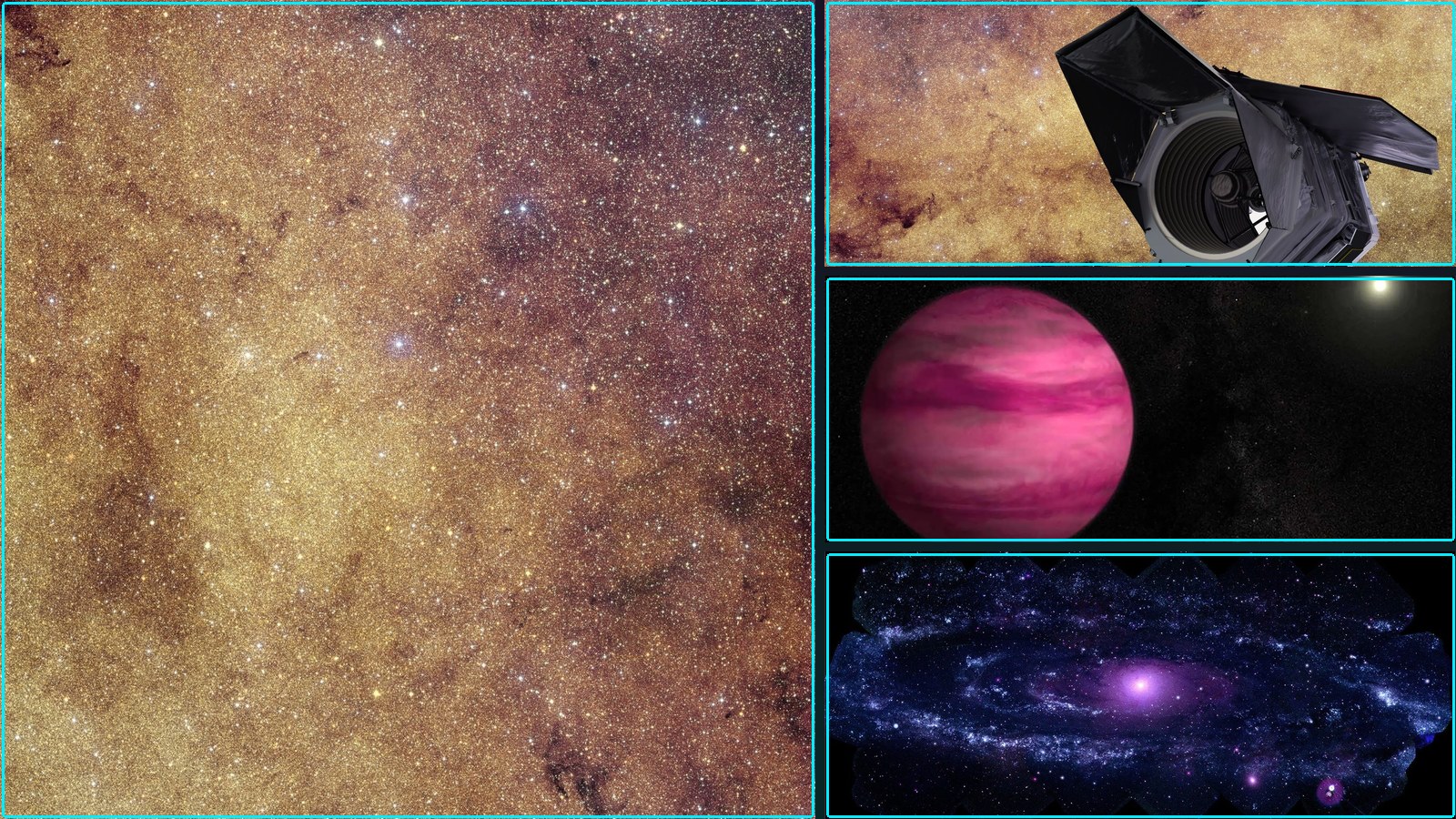
James Webb uncovers exotic salt clouds on a mysterious pink world (Sciencedaily)
Summary: JWST observations of the cold planetary-mass companion GJ 504 b (‘Pink Planet’) have provided its first direct spectrum, revealing an atmosphere containing water vapor, methane, carbon dioxide, ammonia, and crucially, clouds of salt. The data, which required only two hours of JWST time versus failed all-night ground-based attempts, could only be modeled with the inclusion of these exotic clouds, solving a long-standing atmospheric inconsistency. The finding confirms a 15-year-old theoretical prediction and demonstrates JWST’s unique capability to probe faint, cold objects.
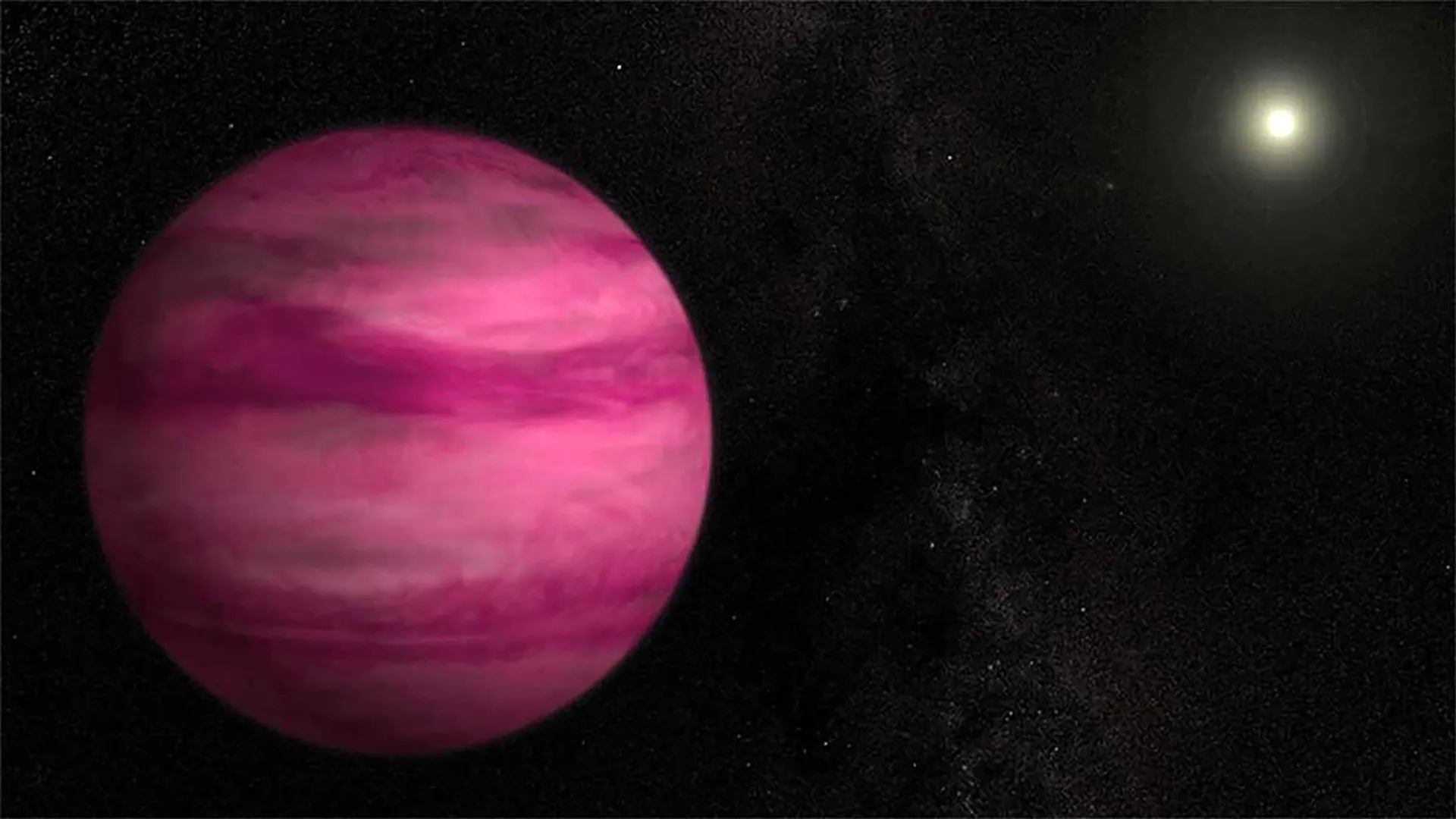
Why it matters: This validates JWST’s role in advancing atmospheric science of cold substellar objects and establishes a new observational benchmark for cloud composition in exoplanetary science, directly impacting modeling approaches.
Context: Direct imaging and spectroscopy of cold, low-mass companions has historically been limited by instrumental sensitivity, leaving their atmospheric properties poorly constrained and reliant on models.
[Summary note] JWST observations of the cold planetary-mass companion GJ 504 b (‘Pink Planet’) have provided its first direct spectrum, revealing an atmosphere containing water vapor, methane, carbon dioxide, ammonia, and crucially, clouds of…
Commentary: The operational consequence is that future JWST programs targeting cold objects will now routinely include salt-cloud models, shifting the default assumption for atmospheric retrievals. For the broader field, this moves the study of planetary atmospheres closer to the detailed cloud physics currently only possible for Jupiter, narrowing the gap between solar system and exoplanetary science.
Date: June 28, 2026 02:15 PM ET
URL: https://www.sciencedaily.com/releases/2026/06/260623014009.htm
AI Sentiment Score: Negative (75%)
AI Credibility Score: 10.0/10 — High
Scores and text generated by AI analysis of the source article indicated.
Deuterium in Comets Tells Interesting Tales (Universetoday)
Summary: JWST analysis of interstellar comet 3I/ATLAS reveals deuterium enrichment 30x higher than solar system comets and a carbon isotope profile indicating ancient origin. This suggests the comet formed in a cold, early galactic environment over 10 billion years ago, predating our solar system. The detection of prebiotic compounds like cyanide further indicates its home system possessed chemistry relevant to life’s building blocks.
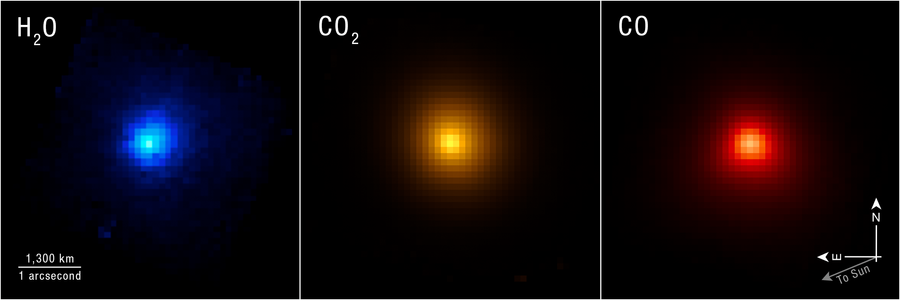
Why it matters: This provides the first direct chemical evidence of an ancient, extrasolar planetesimal, offering a physical benchmark for models of galactic chemical evolution and the prevalence of prebiotic chemistry.
Context: Interstellar objects like ‘Oumuamua and Borisov hinted at galactic diversity, but lacked detailed in-situ composition analysis. JWST’s capability to perform detailed spectroscopy on such fast-moving targets transforms them from dynamical curiosities into archived samples of distant protoplanetary disks.
[Summary note] JWST analysis of interstellar comet 3I/ATLAS reveals deuterium enrichment 30x higher than solar system comets and a carbon isotope profile indicating ancient origin.
Commentary: The 30x deuterium enrichment is a concrete data point constraining formation temperature and epoch, moving beyond speculation. It validates JWST’s role as a core instrument for interstellar object science. The finding pressures planetary science models to account for a wider distribution of primordial conditions than previously sampled, suggesting our local deuterium-to-hydrogen ratio may be the outlier, not the norm.
Date: June 27, 2026 08:49 PM ET
URL: https://www.universetoday.com/articles/deuterium-in-comets-tell-interesting-tales
AI Sentiment Score: Negative (50%)
AI Credibility Score: 10.0/10 — High
Scores and text generated by AI analysis of the source article indicated.
Post ID: aa30959b