

TV Technology & Infrastructure Advances
Hearst Television Brings Ad Addressability to Local Broadcast TV (Tvtechnology)
Summary: Hearst Television, a major broadcast group, is partnering with Viamedia.ai to deploy dynamic ad insertion for its local broadcast TV inventory. This enables household-level addressable advertising on linear broadcast streams, a capability previously confined to cable, satellite, and connected TV. The deployment, tested with WLWT-TV and MediaKind, promises to increase monetizable impressions by up to 25% by allowing advertisers to target specific households within a market. The move aims to bring the precision and measurability of digital channels to broadcast’s scaled, engaged audience.

Why it matters: This fundamentally alters the economics of local broadcast TV, forcing a convergence of linear and digital ad models and reshaping value chains for stations, distributors, and media buyers.
Context: Broadcast TV has lagged behind cable and digital in offering targeted, accountable advertising, protecting its mass-reach model but ceding premium budgets. The technical hurdle has been enabling dynamic ad insertion within the one-way broadcast signal, which this partnership claims to have solved.
"The new tool provides a station like WLWT the ability to participate in previously unavailable markets which could drive a 25% increase in monetizable impressions." — TVTECHNOLOGY
Commentary: Hearst and Viamedia are not just selling better ads; they are re-architecting broadcast’s core product. The 25% lift claim is a direct threat to non-addressable inventory’s pricing power. This forces other broadcast groups to adopt similar tech or face commoditization, while MVPDs must integrate or see their own addressable offerings diluted. For advertisers, it turns local broadcast from a blunt awareness tool into a performance channel, collapsing the distinction between ‘linear’ and ‘digital’ video buys.
Date: June 24, 2026 11:27 AM ET
URL: https://www.tvtechnology.com/business/hearst-television-brings-ad-addressability-to-local-broadcast-tv
AI Sentiment Score: Negative (75%)
AI Credibility Score: 10.0/10 — High
Scores and text generated by AI analysis of the source article indicated.
Spectrum Intelligence Ventures Launches Latis (Tvtechnology)
Summary: Charter Communications’ new AI and data commercialization unit, Spectrum Intelligence Ventures, has launched its first product: Latis, a household intelligence platform. It synthesizes digital engagement, TV viewership, and connected device data from approximately 30 million U.S. households into pseudonymized, privacy-protected activity patterns. The platform is designed to identify consumer intent and emerging trends for applications in advertising, media targeting, and AI model training.

Why it matters: This represents a major cable operator monetizing its first-party data at industrial scale, shifting the competitive landscape for consumer intelligence and threatening data brokers and ad-tech pure-plays.
Context: Legacy telecom and media conglomerates are aggressively leveraging their vast, walled-garden subscriber data to build new AI-driven revenue streams beyond core services.
"Latis is designed to help power this next generation of AI-driven systems by transforming large-scale household signals into continuously evolving real-world intelligence that organizations can use to improve decisioning, automation, personalization and business outcomes." — TVTECHNOLOGY
Commentary: Charter is weaponizing its infrastructure advantage—direct access to 30 million households—to sell intelligence, not just ads. This moves the battleground from data aggregation to interpretation, forcing competitors to match its integrated signal or cede ground. The ‘privacy-forward’ architecture is a necessary concession, but the real lock-in is the proprietary, continuous data flow from set-top boxes and modems that pure-play data firms cannot replicate.
Date: June 26, 2026 01:33 PM ET
URL: https://www.tvtechnology.com/insights/analysis/spectrum-intelligence-ventures-launches-latis
AI Sentiment Score: Neutral (33%)
AI Credibility Score: 10.0/10 — High
Scores and text generated by AI analysis of the source article indicated.
MultiDyne Acquires the Assets of MRMC (Tvtechnology)
Summary: MultiDyne Video & Fiber Optic Systems has acquired the assets of MRMC (Mark Roberts Motion Control), a six-decade pioneer in robotic camera systems and motion control. The deal creates a new subsidiary, MultiDyne Robotics and Motion Control, which will maintain the MRMC brand. The acquisition is framed as a strategic extension, moving MultiDyne from signal transport into the point of image acquisition, creating an end-to-end ecosystem for content creators.

Why it matters: This vertical integration consolidates key production technologies, potentially reshaping vendor relationships and workflow solutions for broadcast, cinema, and live event producers.
Context: This follows Nikon’s April announcement that it would sell MRMC, and occurs during a wave of consolidation in broadcast and production technology as companies seek to own more of the content creation stack.
"MultiDyne has long been focused on the transport, processing and management of video, audio and data signals. MRMC places us at the point of image acquisition itself, allowing us to participate in a much broader portion of the production workflow." — TVTECHNOLOGY
Commentary: The move is less about cost-cutting and more about market expansion, leveraging complementary non-overlapping portfolios to offer bundled solutions. It signals a shift from selling discrete components to providing integrated production ecosystems, which could pressure smaller, single-point vendors and increase MultiDyne’s leverage in negotiations with major studios and broadcast networks.
Date: June 26, 2026 12:18 PM ET
URL: https://www.tvtechnology.com/production/multidyne-acquires-the-assets-of-mrmc
AI Sentiment Score: Negative (50%)
AI Credibility Score: 10.0/10 — High
Scores and text generated by AI analysis of the source article indicated.
Wisycom Unveils Improvements to Its Professional Wireless Ecosystem of Solutions (Tvtechnology)
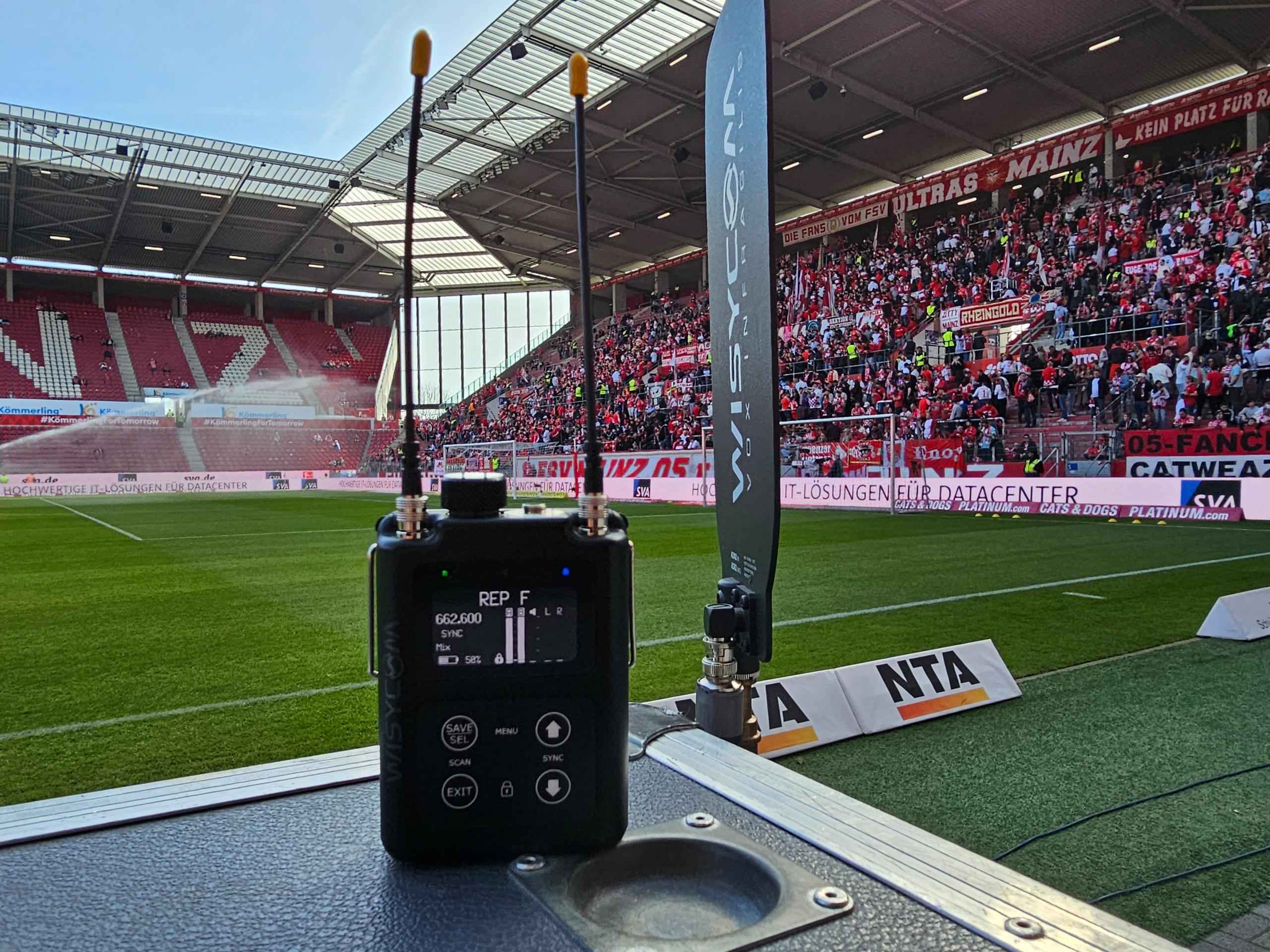
Summary: Wisycom has announced a suite of hardware and firmware updates targeting the high-end professional audio market. The core development is a firmware update for the MPR60 receiver enabling a three-channel IFB mode, which dramatically increases channel density per RF carrier. This is complemented by the new MATF Wideband Antenna Matrix for managing complex multi-zone RF deployments and the PFL Portable RFoF Box for extending signal runs via fiber. The updates are framed as solutions for the increasing RF complexity in large-scale broadcast, live event, and production environments.
Why it matters: For production integrators and broadcast engineers, these updates directly address the escalating pressure on RF spectrum and physical infrastructure in major events, offering tangible efficiency gains in channel count, rack space, and deployment flexibility.
Context: The professional wireless audio sector is in a perpetual arms race for spectral efficiency and system robustness, driven by crowded event RF environments and the logistical demands of mobile production units.
"The latest firmware update for the MPR60 Wideband IEM/IFB Receiver introduces a powerful three‑channel IFB mode, which enables up to three IFB audio channels to be transmitted over a single 200 kHz RF carrier. When paired with the Wisycom MTK982 transmitter, users can achieve up to 60 IFB audio channels within an 8 MHz TV channel or 45 channels within a 6 MHz TV channel, offering the most RF‑efficient IFB solutions available today." — TVTECHNOLOGY
Commentary: This is a tactical, engineering-led advance that consolidates Wisycom’s position in the high-stakes, low-margin world of broadcast RF. The move to license the multichannel mode suggests a software-defined shift in monetization, trading upfront hardware costs for operational capability. For competitors like Shure and Sennheiser, the pressure is now on matching this density without sacrificing the audio quality and reliability that define the premium tier.
Date: June 25, 2026 03:04 PM ET
URL: https://www.tvtechnology.com/production/wisycom-unveils-improvements-to-its-professional-wireless-ecosystem-of-solutions
AI Sentiment Score: Negative (50%)
AI Credibility Score: 10.0/10 — High
Scores and text generated by AI analysis of the source article indicated.
Clear-Com FreeSpeak Cell Successfully Tested by RTL Deutschland’s 5G Network (Tvtechnology)
Summary: Clear-Com, a professional intercom manufacturer, successfully tested its FreeSpeak Cell system with RTL Deutschland during a live event at Germany’s Nürburgring circuit. The system used Deutsche Telekom’s 5G networks—both private campus and public—to provide wireless intercom coverage across the large venue, integrating with RTL’s existing production workflow. This validated cellular-based intercom as a viable alternative to traditional DECT-based systems for broadcast.

Why it matters: It signals a shift in broadcast infrastructure, moving critical production communications onto commercial cellular networks, which could lower capital costs and increase operational flexibility for live events.
Context: The broadcast industry is under pressure to reduce the physical infrastructure and crew footprint for remote productions while maintaining reliability, pushing adoption of IP and cellular-based workflows.
"The successful test at the Nürburgring proves that integrating intercom solutions into 5G infrastructures efficiently bridges the last mile of wireless communication." — TVTECHNOLOGY
Commentary: The test is less about a new product and more about a strategic pivot: leveraging public 5G as a utility for mission-critical audio. This reduces broadcaster reliance on proprietary, venue-specific hardware, shifting capex to opex and potentially lowering barriers for smaller production outfits. However, it also deepens dependency on telecom operators’ network performance and pricing models, introducing a new variable into production risk calculus.
Date: June 24, 2026 03:59 PM ET
URL: https://www.tvtechnology.com/production/sports-production/clear-com-freespeak-cell-successfully-tested-by-rtl-deutschland
AI Sentiment Score: Negative (66%)
AI Credibility Score: 10.0/10 — High
Scores and text generated by AI analysis of the source article indicated.
Rede Legislativa Chooses Appear to Support Brazil’s TV 3.0 Trials (Tvtechnology)
Summary: Brazil’s Rede Legislativa de Rádio e TV is using Appear’s X5 platform, leveraging HEVC compression and Secure Reliable Transport (SRT) over the public internet, to feed live signals from Brasília to São Paulo for the country’s experimental TV 3.0 (DTV+) trials. This deployment connects existing broadcast operations to new core infrastructure without a custom-built transmission platform, validating a cost-efficient IP-based contribution workflow for next-generation television services.

Why it matters: It demonstrates how legacy broadcasters can adopt hybrid IP architectures to transition to new standards without full infrastructure replacement, lowering the barrier to entry for national broadcast upgrades.
Context: Brazil formally adopted the TV 3.0 standard in 2025, with public trials now underway. This follows a global trend where broadcasters are integrating internet protocol (IP) and cloud-based technologies into traditional terrestrial and satellite workflows.
"In this project, our hardware-accelerated SRT technology enables Rede Legislativa to transport high-quality signals securely and reliably from Brasília to São Paulo over the public internet. It demonstrates how broadcasters can use new efficient technologies, such as SRT, to support the next wave of television services in Brazil with the low latency, high density and resilience needed for modern production workflows." — TVTECHNOLOGY
Commentary: The trial is less about the TV 3.0 standard itself and more about the operational bridge being built: using commodity internet with professional-grade protocols (SRT) to decouple contribution from distribution. This reduces the capital intensity of national broadcast modernization, potentially accelerating adoption by allowing public broadcasters like EBC and legislative channels to iterate on core services while maintaining legacy outputs. It also signals a maturation point for SRT, moving from niche use to backbone infrastructure for state-level media.
Date: June 23, 2026 08:02 PM ET
URL: https://www.tvtechnology.com/platform/broadcast/rede-legislativa-chooses-appear-to-support-brazils-tv-3-0-trials
AI Sentiment Score: Negative (66%)
AI Credibility Score: 10.0/10 — High
Scores and text generated by AI analysis of the source article indicated.
FCC Adopts New Cybersecurity Requirements for Alerting Systems (Tvtechnology)
Summary: The FCC has unanimously adopted new cybersecurity rules for the Emergency Alert System (EAS), mandating strong passwords, prompt patching, and firewalls to prevent hijacking by criminals or foreign actors. It also issued a Further Notice proposing deeper modernization, including authenticating alerts, improving geotargeting accuracy, and allowing software-based EAS implementations to replace dedicated hardware. The National Association of Broadcasters endorsed the move, framing it as essential for preserving trust in a critical public safety infrastructure.

Why it matters: A compromised national alert system erodes public trust and creates a vector for mass panic or disinformation, making its security a non-negotiable component of civic infrastructure.
Context: This follows a pattern of regulatory bodies belatedly applying basic IT security hygiene to legacy operational technology (OT) systems long after such practices became standard in enterprise IT.
"The Further Notice of Proposed Rulemaking also explores improving geographic accuracy by eliminating outdated WEA geotargeting exceptions that often cause alerts to be received in the wrong locations and increasing alert effectiveness by requiring EAS and WEA to display symbols that match the type of emergency." — TVTECHNOLOGY
Commentary: The shift from hardware to software-based alert processing is the substantive change, reducing broadcasters’ capital lock-in and enabling faster security updates, but it also expands the software attack surface. The NAB’s support signals an industry preference for operational flexibility over the perceived security of air-gapped, proprietary hardware, a trade-off the FCC is now willing to formalize.
Date: June 25, 2026 12:54 PM ET
URL: https://www.tvtechnology.com/regulatory-legal/fcc-adopts-new-cybersecurity-requirements-for-alerting-systems
AI Sentiment Score: Negative (50%)
AI Credibility Score: 10.0/10 — High
Scores and text generated by AI analysis of the source article indicated.
Post ID: 0375591a