Hacker Community
2026 Frikkin Lasers Challenge: A 3D-Printed Raman Spectrometer (Hackaday)
Summary: A hacker known as [Allegedly Science] has built a 3D-printed Raman spectrometer called CubeRaman, using a cheap 532-nm laser module, a dichroic mirror, and a microscope objective to detect molecular signatures via Raman scattering. The device successfully identified a raw diamond’s Raman shift and distinguished ethanol from its polypropylene container by adjusting focal distance. It still requires a separate spectrometer for readout, but the design is more accessible than previous open-source efforts. The project is entered in the 2026 Frikkin Lasers Challenge.
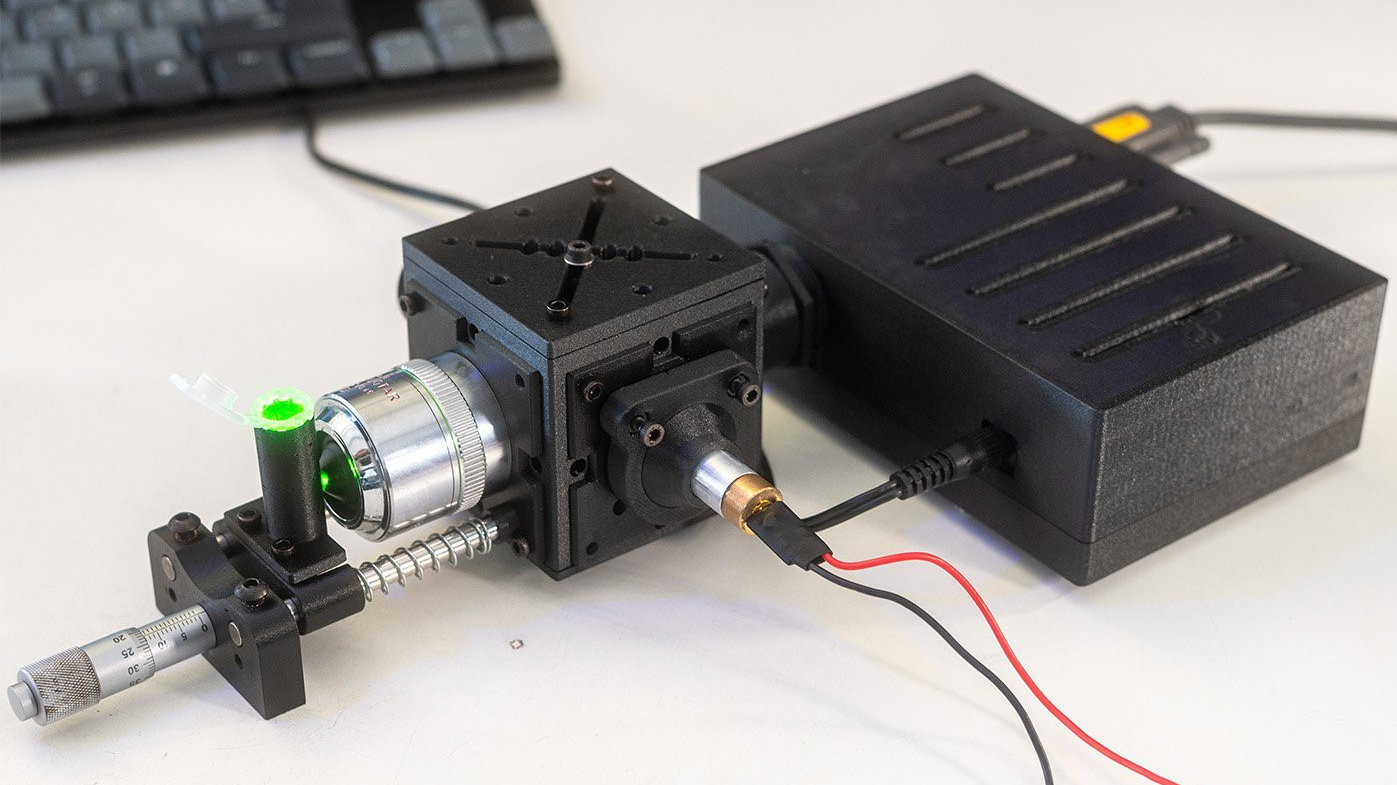
Why it matters: This is a tool release signal: it lowers the barrier to entry for Raman spectroscopy, a technique normally confined to well-funded labs, and puts molecular identification capability into the hands of hackerspace-level builders.
Context: Previous open-source Raman spectrometers existed but required expensive or hard-to-source components; CubeRaman’s use of 3D-printed kinematic mounts and off-the-shelf optics represents a step toward democratizing chemical analysis.
"When light reflects off a surface, not all of it reflects off at the same wavelength; some photons impart a portion of their energy to raising the vibrational energy of the surface’s molecules, and are thus scattered away at a lower energy and longer wavelength. This is called Raman scattering, and the precise wavelength shifts are characteristic of the particular molecule being illuminated." — HACKADAY
Commentary: The key advance here is not just the 3D-printed housing but the use of magnetic kinematic mounts, which simplify alignment—historically the hardest part of DIY spectroscopy. The ethanol/polypropylene discrimination test shows the system has real analytical resolution, not just toy sensitivity. The remaining dependency on a separate spectrometer is a practical bottleneck, but one that other open-source spectrometer projects (e.g., from Public Lab) could fill. Expect this design to propagate through hackerspaces and maker fairs as a workshop signal for low-cost materials identification.
Date: July 05, 2026 10:00 AM ET
URL: https://hackaday.com/2026/07/05/2026-frikkin-lasers-challenge-a-3d-printed-raman-spectrometer/
AI Sentiment Score: Negative (66%)
AI Credibility Score: 10.0/10 — High
Scores and text generated by AI analysis of the source article indicated.
Review: The Tanmatsu, A Year On (Hackaday)
Summary: The Tanmatsu, a handheld computer born from the Dutch conference badge scene, has matured over the past year into a stable, open-source platform with a growing app repository. Based on the ESP32-P4 with RISC-V cores, LoRa, and mesh networking, it targets hackers needing a low-power communicator and toolkit. Priced at €99, it occupies a niche between bare development boards and pricier Linux handhelds, offering a unique app ecosystem but no Linux compatibility. Its success hinges on whether it can define and hold that niche.
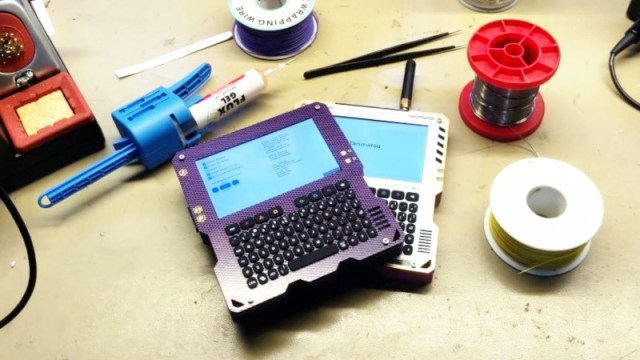
Why it matters: This is a hackerspace-to-mainstream pipeline signal: a badge-born design has become a commercial product with a community cousin, testing whether open-source hardware can sustain a dedicated user base beyond the conference circuit.
Context: The Tanmatsu evolved from the MCH2022 badge, part of a lineage of badge.team devices with downloadable apps dating back to SHA 2017. It competes with Raspberry Pi-based cyberdecks and similar Linux handhelds but lacks their OS flexibility.
"Where I think its niche lies is in being simple and low power enough to be a reliable and powerful hacker’s communicator and general purpose toolkit, but cheap enough to remain a reasonable purchase. For now it stands alone in that niche, and only time will tell whether it can successfully define it." — HACKADAY
Commentary: The Tanmatsu’s real test is whether its app repository and mesh networking features—especially Meshcore integration—can attract a critical mass of developers and users beyond the badge scene. Its lack of multitasking and Linux support limits it to specific use cases like field communication or sensor nodes, but the open-source design and expansion ports invite hardware hacks. If the community builds compelling LoRa or mesh apps, it could become a staple in disaster-resilient or off-grid networks. Otherwise, it risks being a well-engineered curiosity.
Date: July 01, 2026 01:00 PM ET
URL: https://hackaday.com/2026/07/01/review-the-tanmatsu-a-year-on/
AI Sentiment Score: Negative (71%)
AI Credibility Score: 10.0/10 — High
Scores and text generated by AI analysis of the source article indicated.
Positioning Without Satellites Or Base Stations (Hackaday)
Summary: Terra is an open-source positioning system that uses FM broadcast transmitters as fixed reference points instead of satellites or dedicated base stations. It relies on a network of internet-connected reference receivers to share timing information, allowing a client with a software-defined radio and a computer to calculate position. A demo is currently running in Denver. This approach democratizes positioning technology, moving it from government control to community-driven infrastructure.

Why it matters: This is a cypherpunk infrastructure signal: it decouples positioning from state-controlled satellite networks, enabling resilient, community-owned navigation that can operate independently of GPS.
Context: LORAN and Decca Navigator were terrestrial radio navigation systems that required dedicated transmitter networks. Terra repurposes existing FM broadcast towers, using internet backhaul for timing synchronization, a technique reminiscent of distributed time-transfer protocols.
"We’re all used to satellite navigation systems such as GPS or GLONASS, sheer magic in which the combination of a set of reference transmitters and super-accurate timing information can be used to." — HACKADAY
Commentary: Terra is a tool release that turns a known vulnerability—FM broadcast signals’ predictable structure—into a positioning asset. The reliance on internet backhaul for reference receivers introduces a single point of failure, but the open-source model allows for alternative synchronization methods. This is a hackerspace-to-mainstream pipeline candidate: if the Denver demo scales, expect community-run positioning grids in areas with dense FM coverage and weak GPS reception. The real test will be accuracy under multipath conditions and adversarial jamming scenarios.
Date: July 01, 2026 04:00 PM ET
URL: https://hackaday.com/2026/07/01/positioning-without-satellites-or-base-stations/
AI Sentiment Score: Negative (75%)
AI Credibility Score: 10.0/10 — High
Scores and text generated by AI analysis of the source article indicated.
Making in the City of Music: Maker Faire Hamamatsu 2026 (Makezine)
Summary: Hamamatsu Micro Maker Faire 2026, held at the Hamamatsu Science Museum, showcases a range of projects from a Super-Kamiokande 3D monitor to an automatic-playing cajon. The event reflects the city’s deep-rooted maker culture, historically tied to Yamaha, Honda, and Suzuki, and its local ethos of ‘yaramaika’ (let’s give it a try). Standout projects include a self-made MIDI sound module, a rigged board game roulette, and a wind synth mobile system. The faire demonstrates how a small, focused gathering can produce high-signal hardware hacks and musical instrument innovations.

Why it matters: This is a field report from a regional Japanese maker faire that consistently produces novel hardware hacks, particularly in music and precision mechanics, offering early signals of toolchain and design patterns that may diffuse into the global hacker community.
Context: Hamamatsu is the birthplace of Yamaha, Honda, and Suzuki, and its maker culture is reinforced by the ‘yaramaika’ attitude. The Micro Maker Faire is a recurring event that surfaces projects blending traditional craftsmanship with modern electronics, often with a musical focus.
"Japanese makers distinguish themselves every year at the Maker Faires around the country with some of the quirkiest and most inventive projects around. The makers and projects at Micro Maker Faire Hamamatsu." — MAKEZINE
Commentary: The ‘Super Octet!’ MIDI sound module, with its stackable design for increased polyphony, is a concrete toolchain signal for anyone building custom synthesizers or embedded audio gear. The automatic cajon with 30+ solenoids and a custom driver board is a hardware-hacking signal for electromechanical instrument design. The rigged roulette games, while playful, demonstrate practical motor control and wireless manipulation techniques that could be repurposed for other interactive installations. This faire consistently delivers projects that are both whimsical and technically rigorous, making it a reliable source of early movement signals in the hardware and music-tech intersection.
Date: June 29, 2026 03:30 PM ET
URL: https://makezine.com/article/maker-news/maker-faire/making-in-the-city-of-music-maker-faire-hamamatsu-2026/
AI Sentiment Score: Neutral (50%)
AI Credibility Score: 10.0/10 — High
Scores and text generated by AI analysis of the source article indicated.
Instant Prints! OpenCAL Layerless 3D Printing (Makezine)
Summary: The UC Berkeley team behind computed axial lithography (CAL) has released OpenCAL, a DIY, open-source volumetric 3D printer that cures entire objects in minutes without layers or supports. The build uses off-the-shelf components—a DLP projector, Fresnel lens, Raspberry Pi 5, and 3D-printed parts—and relies on VAMToolbox software to compute tomographic projections. Early adopters should expect a high failure rate, but the project aims to pull a lab-only process into makerspaces, with commercial resin partnerships and over-printing capabilities for embedding existing objects.
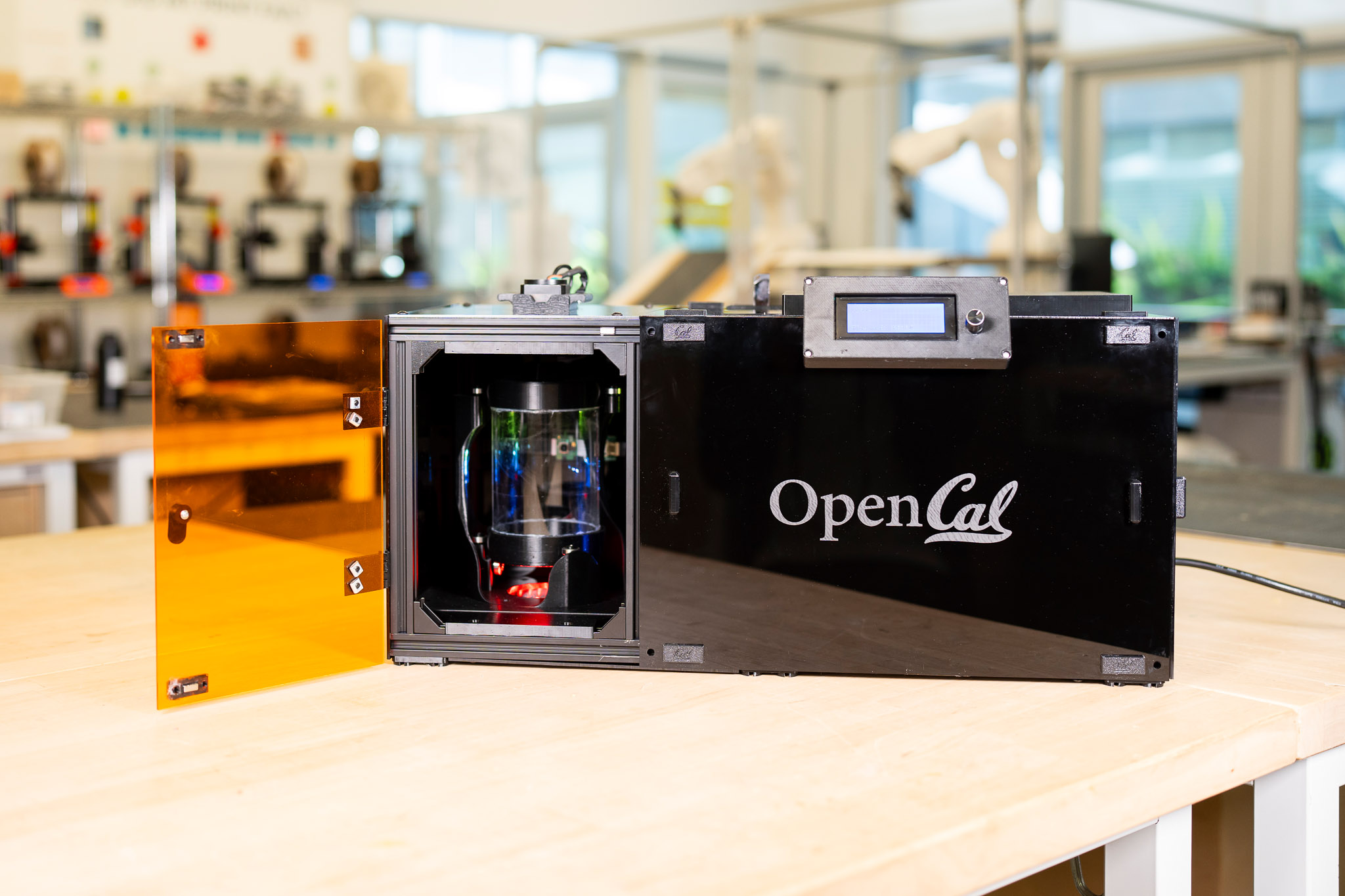
Why it matters: This is a hackerspace-to-mainstream pipeline signal: OpenCAL transforms a 2019 academic breakthrough into a reproducible, modifiable platform, potentially shifting desktop fabrication from layer-by-layer to volumetric, with implications for rapid prototyping, embedded-object manufacturing, and resin reuse.
Context: CAL was introduced in 2019 as a lab technique; this release condenses years of research into a buildable system, echoing the early RepRap days when hobbyists drove 3D printing evolution.
"The core idea behind OpenCAL remains the same — tomographic reconstruction. It’s like a CT scan in reverse. In a CT scan, X-rays are used to measure a person’s internal structure and then computers reconstruct it volumetrically. In CAL, the process starts with a 3D model." — MAKEZINE
Commentary: OpenCAL is a tool release that directly challenges the layer-by-layer dogma of FDM/SLA, but the high failure rate and need for precise optical alignment mean it’s firmly in the ‘early adopter tinkerer’ phase. The over-printing feature—embedding a screwdriver bit and printing a handle around it—is the most immediately practical signal, hinting at low-volume hybrid manufacturing. The Formlabs resin partnership ($100/L) lowers the chemistry barrier, but the real test will be whether the community can stabilize the process into something repeatable. This is the kind of project that either fizzles or spawns a new generation of desktop fabbers.
Date: June 30, 2026 12:00 PM ET
URL: https://makezine.com/projects/instant-prints-opencal-layerless-3d-printing/
AI Sentiment Score: Negative (62%)
AI Credibility Score: 10.0/10 — High
Scores and text generated by AI analysis of the source article indicated.
Using Flatpak to Run a 1996 Version of the GIMP on Modern Linux (Hackaday)
Summary: A Flatpak release of GIMP 0.54 from 1996 is now available for modern Linux, preserving the first fully surviving source code of the image editor. The package required extensive patching and bundles original plugins and tutorials, offering a time capsule of early open-source software design. Notably, this beta version uses the Motif widget toolkit and a multi-window UI that later GIMP releases abandoned, reigniting old debates about interface philosophy.
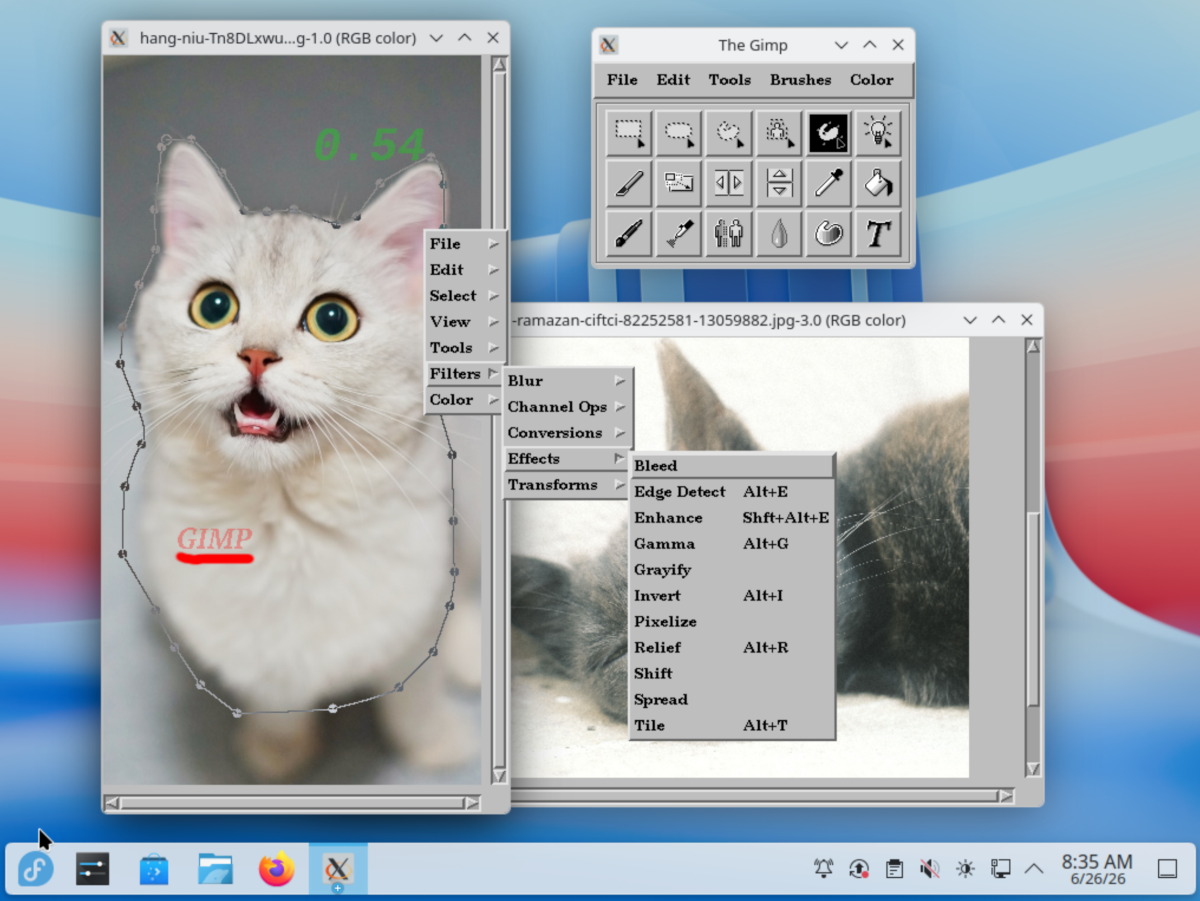
Why it matters: This is a hackerspace-to-mainstream pipeline signal: it demonstrates how Flatpak’s sandboxing and dependency bundling can resurrect historically significant but otherwise unbuildable software, preserving digital heritage and enabling hands-on archaeology of early open-source toolchains.
Context: GIMP 0.54 predates GTK and relied on Motif, a proprietary toolkit that made recompilation on modern systems non-trivial. The project’s patch set and Flatpak packaging represent a reproducible method for running legacy X11-era applications without virtual machines.
"Although there’s probably no good reason to want to run image editing software from 1996 other than for nostalgia’s sake, if you ever wanted to run the GIMP version 0.54 from back." — HACKADAY
Commentary: This release is a concrete artifact of the early Linux desktop era, when Motif was the standard and GTK had not yet been born. For the hacker community, it’s a reminder that software preservation requires more than archiving binaries—it demands toolchain reconstruction and runtime isolation. The multi-window UI debate, resurrected here, also underscores how design decisions from 1996 still echo in modern UX wars.
Date: July 04, 2026 07:00 PM ET
URL: https://hackaday.com/2026/07/04/using-flatpak-to-run-a-1996-version-of-the-gimp-on-modern-linux/
AI Sentiment Score: Positive (50%)
AI Credibility Score: 10.0/10 — High
Scores and text generated by AI analysis of the source article indicated.
2026 Frikkin Lasers Challenge: Super-Simple Laser Precision for Your Stargazing (Hackaday)
Summary: Maker [mircemk] has submitted a simple but effective star-hopper device for the 2026 Frikkin Lasers Challenge, combining a smartphone running the AstroHopper app with a green laser pointer on a tripod-mounted plate. By aligning the phone’s axis with the laser, users can point the laser at any celestial object shown on the app’s sky map, then follow the green beam with binoculars. The hack emphasizes learning the sky through manual slewing rather than relying on automated tracking. The contest runs until July 23, 2026.
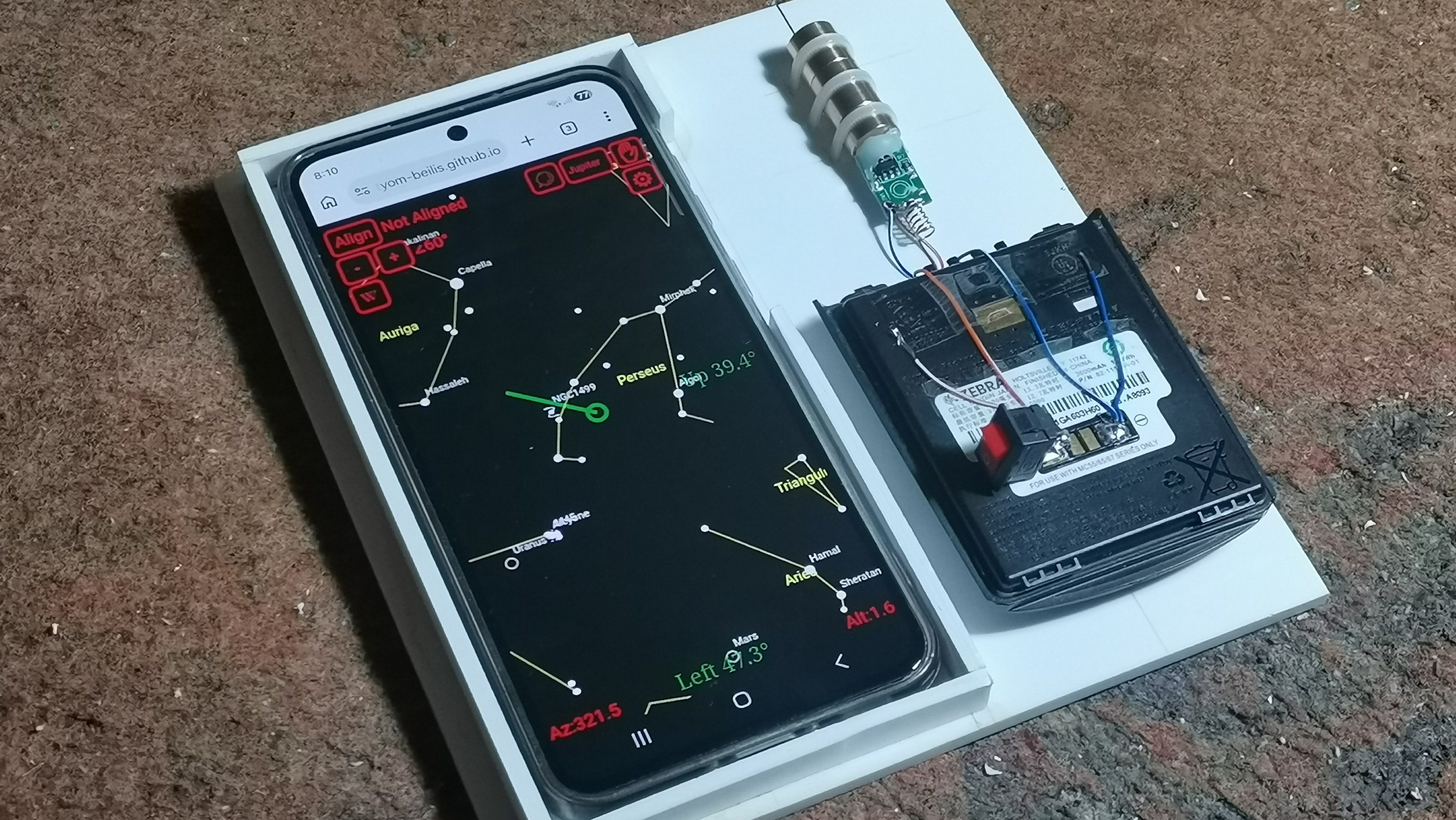
Why it matters: This is a hackerspace-to-mainstream pipeline signal: a low-cost, DIY approach to a common pain point in amateur astronomy that leverages off-the-shelf components and open-source software, potentially lowering the barrier to entry for stargazing.
Context: The Frikkin Lasers Challenge is a recurring Hackaday contest that encourages creative, practical uses of laser pointers beyond novelty. AstroHopper is an existing open-source app that uses phone sensors for sky navigation, but this hack adds a physical pointing aid.
"Perhaps the hardest thing for amateur astronomers just starting out is finding the things you want to look at. Prolific maker [mircemk] has submitted a quick-and-easy star-hopper device that will help guide your binoculars with laser-like precision using things you likely already have on hand: a smartphone, a mounting plate, and a green laser pointer." — HACKADAY
Commentary: The elegance here is in the alignment trick: by mechanically coupling the phone’s inertial reference to a laser, the maker sidesteps the need for expensive goto mounts or complex calibration. This is a classic hardware-hacking signal—taking a software tool (AstroHopper) and extending it into the physical world with a simple jig. The emphasis on manual learning over ‘electronic magic’ also echoes the repair and self-sufficiency ethos common in hacker culture.
Date: June 29, 2026 02:30 PM ET
URL: https://hackaday.com/2026/06/29/2026-frikkin-lasers-challenge-super-simple-laser-precision-for-your-stargazing/
AI Sentiment Score: Negative (75%)
AI Credibility Score: 10.0/10 — High
Scores and text generated by AI analysis of the source article indicated.
iFixit Begins Developing a Repairability Scoring Standard with NSF (Ifixit)
Summary: For more than 15 years, we’ve scored products to help people understand what makes them repairable. But we’re a small team, and there are lots of products in the world; we’ve come to accept that we can’t score them all. Several jurisdictions have been working on repairability scoring efforts: France kicked things off in 2021, and the Joint Research Commission followed.

Why it matters: This matters for Hacker Community because it gives a concrete current signal to track: For more than 15 years, we’ve scored products to help people understand what makes them repairable.
Context: For more than 15 years, we’ve scored products to help people understand what makes them repairable. But we’re a small team, and there are lots of products in the world; we’ve come to accept that we can’t score them all. Several jurisdictions have been working on repairability scoring efforts: France kicked things off in 2021, and the Joint Research Commission followed.
"For more than 15 years, we’ve scored products to help people understand what makes them repairable. But we’re a small team, and there are lots of products in the world; we’ve come." — IFIXIT
Commentary: The immediate implication is operational rather than speculative: watch how this changes budgets, workflows, or risk assumptions over the next cycle.
Date: July 02, 2026 09:58 PM ET
URL: https://www.ifixit.com/News/118390/ifixit-begins-developing-a-repairability-scoring-standard-with-nsf
AI Sentiment Score: Negative (80%)
AI Credibility Score: 10.0/10 — High
Scores and text generated by AI analysis of the source article indicated.
Post ID: 2b5c8312