
Regulatory and legal shifts hitting trucking and logistics
TQL case on broker transparency heads to oral arguments (Freightwaves)
Summary: The case of Pink Cheetah vs. Total Quality Logistics (TQL) is headed to oral arguments in Washington on September 11, after a lower court dismissed the carrier’s request for broker transaction records. The dispute centers on whether FMCSA’s directive to TQL to remove a contract waiver and produce data constitutes a binding agency order under the Administrative Procedure Act. Pink Cheetah alleges TQL withheld records showing it received only 56% of the load payment, with TQL extracting a roughly 40% commission versus an industry norm of 14-16%. The outcome could set precedent for broker transparency obligations under 49 C.F.R. 371.3, with implications for the stalled Kowalski Freight Brokers Safety Act.
Why it matters: This case tests whether FMCSA can enforce broker data disclosure without formal rulemaking, directly affecting carrier leverage in rate negotiations and the viability of legislative transparency efforts.
Context: The Kowalski Freight Brokers Safety Act, which would mandate broker transparency, has stalled in Congress, making judicial interpretation of existing regulations the primary battleground for disclosure standards.
"A lawsuit involving the question of broker transparency, featuring the second-biggest brokerage as one of the parties in a lawsuit, is headed to oral arguments in Washington September 11. The case of." — FREIGHTWAVES
Commentary: If the appeals court rules that FMCSA’s email was a binding order, it would empower carriers to demand transaction data without contractual waivers, potentially compressing broker margins toward the TIA average. A ruling for TQL would reinforce the industry’s reliance on contractual waivers, leaving carriers to negotiate from weakness and further stalling legislative momentum. The 40% commission figure, if substantiated, could accelerate shipper demands for fee transparency and pressure large brokerages to justify spreads. Either way, the decision will shape how brokers structure contracts and whether FMCSA can informally regulate without formal rulemaking.
Date: July 01, 2026 05:16 PM ET
URL: https://www.freightwaves.com/news/tql-case-on-broker-transparency-heads-to-oral-arguments
AI Sentiment Score: Negative (66%)
AI Credibility Score: 10.0/10 — High
Scores and text generated by AI analysis of the source article indicated.
Highway, post-Montgomery, requiring ELD hookups for all carriers (Freightwaves)
Summary: Highway, a compliance platform for freight brokers, is requiring all carriers on its system to connect their Electronic Logging Devices (ELDs) by July 5. The mandate is a direct response to the Supreme Court’s unanimous decision in Montgomery v. Caribe Transport II, which held brokers liable for negligence involving carriers they hire. About 90% of carriers already have ELDs connected, but the policy targets the remaining holdouts, as brokers now face heightened legal risk and are less likely to override connection requirements. The shift signals a tightening of broker-carrier verification standards across the industry.

Why it matters: For the Southeast’s logistics-heavy economy, this policy change raises the compliance bar for smaller carriers and brokers, potentially concentrating freight movement among vetted operators and reshaping regional supply chain dynamics.
Context: The Montgomery decision resolved a circuit split, exposing brokers to liability for carrier negligence, which has accelerated demand for real-time identity and safety verification tools like Highway’s ELD integration.
"What is a reportedly small percentage of carriers that are vetted through the Highway compliance system are facing a looming requirement to hook their ELD up to the company’s system. July 5." — FREIGHTWAVES
Commentary: Highway’s move is a textbook example of regulatory shock reshaping market behavior: a legal ruling creates liability, and a platform vendor turns that into a mandatory feature. The 10% of carriers not yet connected are likely smaller or less tech-savvy operators, and they now face a binary choice—comply or lose broker access. Expect consolidation pressure on small carriers in the Southeast, where broker density is high, and a potential uptick in demand for ELD-as-a-service providers that can integrate with Highway’s API. The real signal is that broker discretion is shrinking; the override option is becoming a legal liability, not just a business preference.
Date: July 02, 2026 06:33 PM ET
URL: https://www.freightwaves.com/news/highway-post-montgomery-requiring-eld-hookups-for-all-carriers
AI Sentiment Score: Negative (50%)
AI Credibility Score: 10.0/10 — High
Scores and text generated by AI analysis of the source article indicated.
The C.H. Robinson “U-Turn” Case: What It Means for Broker Liability (Freightwaves)
Summary: A lawsuit against C.H. Robinson, despite the broker having no direct involvement in the load, is testing the boundaries of freight broker liability. The case centers on negligent hiring claims and is prompting industry debate over tort reform and regulatory clarity. Plaintiff attorney Ted Bassett argues the case challenges industry norms and calls for clearer government rules. The outcome could reshape risk allocation and insurance costs for brokers across the supply chain.
Why it matters: For regional logistics hubs in the Southeast, where broker density is high, a shift in liability standards could raise operational costs and alter competitive dynamics among intermediaries.
Context: Freight brokers have historically faced limited liability for carrier actions, but this case tests whether they can be held responsible for accidents involving carriers they did not select.
"A shocking ‘U-turn’ lawsuit against C.H. Robinson highlights growing tensions around freight broker liability. We discuss why this “ridiculous” case, despite the broker having no involvement in the load, raises critical questions." — FREIGHTWAVES
Commentary: If courts expand broker liability beyond direct selection, expect higher insurance premiums and tighter carrier vetting, particularly in the Southeast where many brokers operate. This could accelerate consolidation among smaller brokers unable to absorb increased risk. The case also pressures regulators to define clearer standards, potentially preempting state-level tort reforms.
Date: July 01, 2026 05:01 PM ET
URL: https://www.freightwaves.com/news/the-c-h-robinson-u-turn-case-what-it-means-for-broker-liability
AI Sentiment Score: Positive (50%)
AI Credibility Score: 10.0/10 — High
Scores and text generated by AI analysis of the source article indicated.
Liability in Trucking: How Bad Legislation Drives Up Costs (Freightwaves)
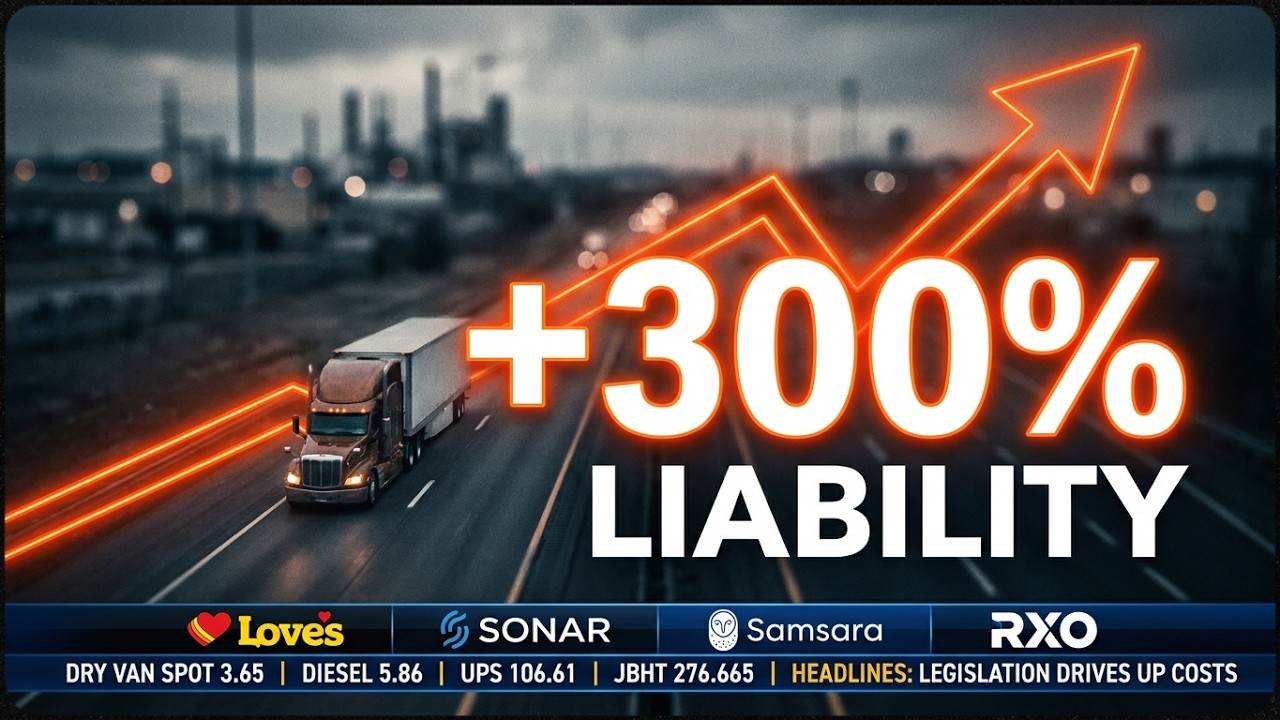
Summary: The trucking insurance market is destabilized by ‘nuclear verdicts’ and a recent Supreme Court decision that erodes federal preemption, creating a hard market that traditional insurers cannot navigate. Cover Whale’s CRO argues that legislative environments and poor underwriting discipline are compounding the crisis. Tech-forward insurance solutions are becoming essential for brokers and carriers to survive the resulting cost spikes and capacity constraints.
Why it matters: For Southeast-focused readers, this signals rising operational costs and potential carrier exits in a region heavily dependent on trucking for manufacturing and port logistics.
Context: The Supreme Court’s rollback of federal preemption allows state courts to impose larger liability awards, directly increasing insurance premiums and reducing coverage availability for trucking firms.
"Cover Whale’s CRO, Myles Oppenheimer, explains how legislative environments and a lack of underwriting discipline are creating a ‘self-inflicted wound’ that traditional insurers can’t handle." — FREIGHTWAVES
Commentary: The unraveling of federal preemption is a structural shift, not a cyclical one. Expect regional insurance markets to fragment further, with carriers in states like Georgia and the Carolinas facing disproportionate rate hikes. This will accelerate consolidation among brokers and push more fleets toward usage-based or AI-driven underwriting models as a survival tactic.
Date: July 01, 2026 04:58 PM ET
URL: https://www.freightwaves.com/news/liability-in-trucking-how-bad-legislation-drives-up-costs
AI Sentiment Score: Neutral (50%)
AI Credibility Score: 10.0/10 — High
Scores and text generated by AI analysis of the source article indicated.
DeSantis KOs bill to allow CDL training of some Florida inmates (Freightwaves)
Summary: Florida Governor Ron DeSantis vetoed HB 325, a bill that would have allowed CDL training for nonviolent inmates nearing release. The bill passed both legislative chambers without opposition. DeSantis cited burdens on the Department of Corrections and public safety concerns, specifically objecting to inmates operating commercial vehicles on public roads. The program would have required a corrections officer present during training.

Why it matters: This veto blocks a potential pipeline of trained drivers from a state with a severe trucking labor shortage, reinforcing the industry’s reliance on other labor pools and immigration policy.
Context: Florida’s trucking industry faces persistent driver shortages, and similar programs in other states have been used to expand the labor pool. The bill targeted nonviolent, scheduled-release inmates, a cohort often seen as lower risk.
"Florida Governor Ron DeSantis has vetoed a bill that would have allowed CDL training for a narrow segment of state prisoners. The bill passed both houses of the Florida legislature with no." — FREIGHTWAVES
Commentary: DeSantis’s veto prioritizes political optics over a pragmatic solution to a known labor bottleneck. The requirement for a corrections officer in the vehicle—a cost the governor deemed burdensome—was a built-in safety measure, not a loophole. This decision effectively closes a small but viable talent pipeline at a time when the industry is desperate for drivers.
Date: June 29, 2026 06:03 PM ET
URL: https://www.freightwaves.com/news/desantis-kos-bill-to-allow-cdl-training-of-some-florida-inmates
AI Sentiment Score: Negative (80%)
AI Credibility Score: 10.0/10 — High
Scores and text generated by AI analysis of the source article indicated.
Why Trucking Companies Should Hire an Insurance Agent—Not Just Buy Insurance (Freightwaves)
Summary: Jessica Howington of United Commercial Insurance argues that trucking companies should prioritize finding a knowledgeable insurance agent over simply shopping for the cheapest policy. She emphasizes that agents who understand trucking operations—cargo specifics, safety protocols, and growth plans—can prevent costly claim denials and coverage gaps. The interview highlights common mistakes like misclassifying cargo as ‘general freight’ and failing to document accidents properly. Howington also stresses the importance of cameras, workers’ compensation, and open communication with agents before making business decisions.
Why it matters: For trucking companies in the Southeast facing rising premiums and tighter underwriting, this advice reframes insurance from a cost center to a strategic partnership that can directly impact operational continuity and liability exposure.
Context: The trucking insurance market has hardened in recent years, with carriers demanding more granular risk data and penalizing vague classifications like ‘general freight.’ Owner-operators and small fleets are especially vulnerable to coverage gaps during rapid growth.
"The biggest mistake people make is shopping insurance instead of shopping for the right insurance agent,” Howington said during a recent interview. “The right agent can get you the right insurance if they truly care." — FREIGHTWAVES
Commentary: Howington’s emphasis on agent specialization over price shopping reflects a structural shift in the insurance market: underwriters now require precise operational data to price risk accurately. For small fleets, the cost of a bad agent—claim denials, uncovered liabilities, or delayed certificates—can exceed any premium savings. The advice to treat agents as part of the team, not as vendors, is a practical hedge against the industry’s tightening cycle.
Date: July 01, 2026 06:38 PM ET
URL: https://www.freightwaves.com/news/why-trucking-companies-should-hire-an-insurance-agent-not-just-buy-insurance
AI Sentiment Score: Negative (71%)
AI Credibility Score: 10.0/10 — High
Scores and text generated by AI analysis of the source article indicated.
Post ID: ff271915