Ukraine War: Front Lines, Russia’s Moves, and Life Under Conflict
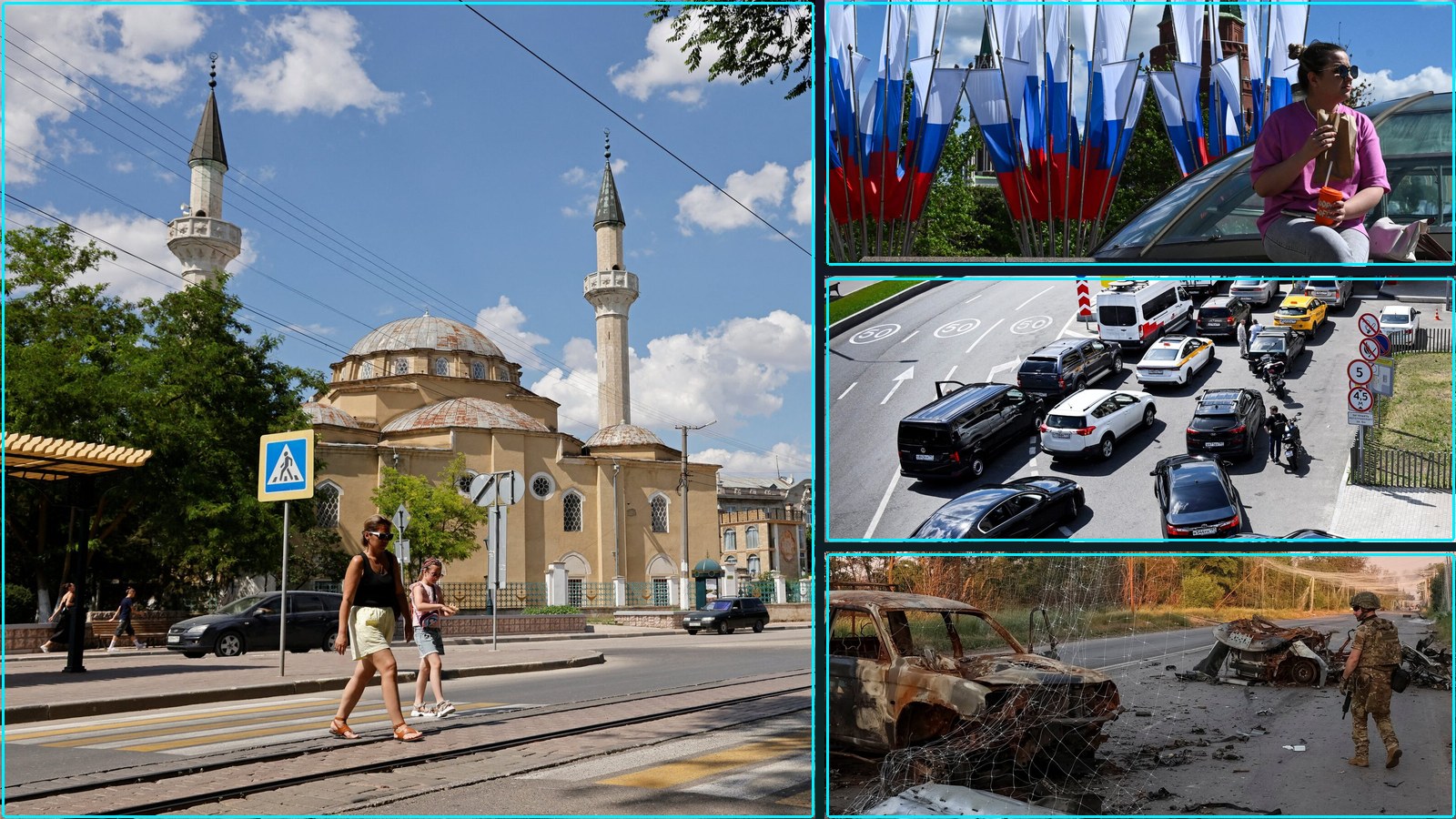
Four Reasons Crimea Has Become Crucial in the Ukraine War (Nytimes)
Summary: Escalating drone strikes, fuel shortages and power cuts in the region Russia annexed are among the factors turning up the heat on President Vladimir V. Putin.

Why it matters: Infrastructure fragility in annexed Crimea signals persistent operational instability for any external engagement.
Context: Escalating internal pressures—power, fuel—suggest strategic overextension for the occupying power.
"Escalating drone strikes, fuel shortages and power cuts in the region Russia annexed are among the factors turning up the heat on President Vladimir V. Putin." — NYTIMES
Commentary: The signal is still worth tracking, but the current extraction path did not yield enough body text for a fuller analytical read. The immediate implication is operational rather than speculative: watch how this changes budgets, workflows, or risk assumptions over the next cycle.
Date: July 03, 2026 10:54 AM ET
URL: https://www.nytimes.com/2026/07/02/world/europe/russia-crimea-ukraine.html
AI Sentiment Score: Negative (66%)
AI Credibility Score: 10.0/10 — High
Scores and text generated by AI analysis of the source article indicated.
Far From Kyiv and Moscow, Soldiers Stalk Ruins and Evade Drones on the Front (Nytimes)
Summary: Ukraine’s military has denied a Kremlin claim to have taken a city in the eastern Donetsk region, saying its troops are holding out against infiltrating Russians. Frontline skirmishes suggest localized operational tempo remains high, complicating any narrative of strategic collapse or breakthrough.

Why it matters: Frontline skirmishes suggest localized operational tempo remains high, complicating any narrative of strategic collapse or breakthrough.
Context: Focus shifts to the persistent, low-intensity nature of conflict in the Donbas, impacting regional stability assessments.
"Ukraine’s military has denied a Kremlin claim to have taken a city in the eastern Donetsk region, saying its troops are holding out against infiltrating Russians." — NYTIMES
Commentary: The signal is still worth tracking, but the current extraction path did not yield enough body text for a fuller analytical read. The immediate implication is operational rather than speculative: watch how this changes budgets, workflows, or risk assumptions over the next cycle.
Date: July 05, 2026 05:17 AM ET
URL: https://www.nytimes.com/2026/07/05/world/europe/ukraine-russia-donetsk-front.html
AI Sentiment Score: Positive (40%)
AI Credibility Score: 10.0/10 — High
Scores and text generated by AI analysis of the source article indicated.
Putin Visits Battlefield and Vows to Take More of Ukraine (Nytimes)
Summary: The Russian leader denounced Ukraine’s “imaginary achievements” on the battlefield of late, calling its leaders “play actors.” Escalation rhetoric suggests no immediate de-escalation; military posturing remains the primary diplomatic signal.

Why it matters: Escalation rhetoric suggests no immediate de-escalation; military posturing remains the primary diplomatic signal.
Context: Focus shifts to observable troop movements and international response mechanisms rather than stated political objectives.
[Metadata-only note] The available source data did not expose a direct source quote this cycle.
Commentary: The signal is still worth tracking, but the current extraction path did not yield enough body text for a fuller analytical read. The immediate implication is operational rather than speculative: watch how this changes budgets, workflows, or risk assumptions over the next cycle.
Date: July 04, 2026 01:11 PM ET
URL: https://www.nytimes.com/2026/07/03/world/europe/putin-ukraine-donbas-battlefield-visit.html
AI Sentiment Score: Neutral (50%)
AI Credibility Score: 10.0/10 — High
Scores and text generated by AI analysis of the source article indicated.
Whatever You Do in Russia, Don’t Talk About the War (Nytimes)
Summary: As Ukraine brings the war home to Russia, officials hesitate to designate shelters and blast sirens, downplaying the conflict’s consequences with euphemisms. Official downplaying of conflict impact suggests controlled information flow, complicating risk assessment for international movement.

Why it matters: Official downplaying of conflict impact suggests controlled information flow, complicating risk assessment for international movement.
Context: Hesitancy in public safety warnings signals state-managed narrative control regarding the war’s immediate fallout.
"As Ukraine brings the war home to Russia, officials hesitate to designate shelters and blast sirens, downplaying the conflict’s consequences with euphemisms." — NYTIMES
Commentary: The signal is still worth tracking, but the current extraction path did not yield enough body text for a fuller analytical read. The immediate implication is operational rather than speculative: watch how this changes budgets, workflows, or risk assumptions over the next cycle.
Date: June 29, 2026 04:02 PM ET
URL: https://www.nytimes.com/2026/06/29/world/europe/russia-ukraine-rhetoric.html
AI Sentiment Score: Negative (80%)
AI Credibility Score: 10.0/10 — High
Scores and text generated by AI analysis of the source article indicated.
Long Lines for Gas Shatter the Illusion of Normalcy in Wartime Russia (Nytimes)
Summary: “Are we in the Soviet Union now?” asked one Russian, stunned and frustrated by the waits at the pumps. Persistent fuel shortages signal deeper logistical strain, undermining narratives of stability.

Why it matters: Persistent fuel shortages signal deeper logistical strain, undermining narratives of stability.
Context: Domestic infrastructure stress in Russia suggests operational friction beyond immediate conflict zones.
"“Are we in the Soviet Union now?” asked one Russian, stunned and frustrated by the waits at the pumps." — NYTIMES
Commentary: The signal is still worth tracking, but the current extraction path did not yield enough body text for a fuller analytical read. The immediate implication is operational rather than speculative: watch how this changes budgets, workflows, or risk assumptions over the next cycle.
Date: July 03, 2026 06:47 AM ET
URL: https://www.nytimes.com/2026/07/03/world/europe/russia-gas-shortages.html
AI Sentiment Score: Negative (75%)
AI Credibility Score: 10.0/10 — High
Scores and text generated by AI analysis of the source article indicated.
The Prom Went On in Kyiv, but Masha’s Date Danced Alone (Nytimes)
Summary: Masha Polska, 15, was an avid dancer who had been dreaming of a star turn in the group waltz. That was not to be.

Why it matters: Cultural life persists despite geopolitical strain, suggesting resilience in social structures.
Context: Focus shifts from grand public events to individual endurance within constrained environments.
"Masha Polska, 15, was an avid dancer who had been dreaming of a star turn in the group waltz. That was not to be." — NYTIMES
Commentary: The signal is still worth tracking, but the current extraction path did not yield enough body text for a fuller analytical read. The immediate implication is operational rather than speculative: watch how this changes budgets, workflows, or risk assumptions over the next cycle.
Date: June 30, 2026 04:50 PM ET
URL: https://www.nytimes.com/2026/06/30/world/europe/russia-ukraine-prom.html
AI Sentiment Score: Positive (50%)
AI Credibility Score: 10.0/10 — High
Scores and text generated by AI analysis of the source article indicated.
Post ID: a59b500d