
World & Travel
‘Not migration, but a city under Spanish occupation’: Morocco turns its anger on Israel (Ynetnews)
Summary: A mass crossing of roughly 60,000 people from Morocco into the Spanish enclave of Ceuta has triggered a political firestorm across Europe, with France’s far right and center both accusing Spain of encouraging the influx and Italy suspending Schengen free movement with Spain. Spain’s Interior Ministry reports most have returned, but the crisis has reignited a diplomatic spat with Israel, whose UN ambassador accused Spain of maintaining ‘colonial enclaves’ in Africa. Moroccan sources frame the event not as migration but as Moroccans entering a city under Spanish occupation, while some allege foreign actors, including Algerians or Iran-linked figures, orchestrated the chaos.

Why it matters: This crisis tests the EU’s border and migration consensus at a moment of political fragility, with Schengen’s future and Spain’s legalization program now under direct attack from Paris and Rome.
Context: Ceuta and Melilla are the EU’s only land borders with Africa, and large-scale breaches recur every few years, most notably in May 2021 when over 8,000 crossed in two days.
"France’s right and far right on Friday accused the Spanish government and Prime Minister Pedro Sánchez of having “encouraged” the wave of undocumented migrants who crossed from Morocco into the Spanish enclave." — YNETNEWS
Commentary: The framing shift from ‘migration crisis’ to ‘occupation’ is a strategic narrative move that complicates any EU-level response, since it recasts the event as a sovereignty dispute rather than a border-control failure. Italy’s Schengen suspension, even without a shared border, signals that migration politics now trumps free-movement solidarity, and France’s presidential race will amplify this. The Israeli intervention adds a geopolitical layer, but the real operational risk is that Spain’s legalization program becomes a permanent flashpoint for EU internal cohesion.
Date: July 31, 2026 08:48 PM ET
URL: https://www.ynetnews.com/article/bj00vypcbge
AI Sentiment Score: Negative (85%)
AI Credibility Score: 10.0/10 — High
Scores and text generated by AI analysis of the source article indicated.
Spain Records Unprecedented Migrant Crossing (Foreignpolicy)
Summary: Around 60,000 migrants surged from Morocco into Spain’s Ceuta exclave in 24 hours, roughly 70 percent of Ceuta’s population, before Madrid reversed most crossings. The incident has triggered a Schengen suspension by Italy, far-right backlash in Spain, and a broader EU fight over border enforcement. At least 57 people died during the attempt, and Ceuta’s president declared an ‘absolute humanitarian and social emergency.’

Why it matters: This is the largest single-day migrant surge at an EU land border in recent memory, and it directly tests the Schengen system’s solidarity clauses, with Italy’s suspension threatening to normalize bilateral border closures across the bloc.
Context: Ceuta and Melilla are the EU’s only land borders with Africa, and Spain’s left-leaning government recently legalized over a million undocumented migrants, making it a lightning rod for EU hardliners.
"The situation that Ceuta is going through is absolutely unsustainable,” Ceuta President Juan Jesús Vivas said on Friday, with Spanish Prime Minister Pedro Sánchez calling it “an attack on Spain’s territorial integrity." — FOREIGNPOLICY
Commentary: The scale of the surge—equivalent to 70 percent of Ceuta’s population in a day—suggests a coordinated push, likely leveraging Morocco’s leverage over migration as a diplomatic tool. Italy’s Schengen suspension, even if symbolic, sets a dangerous precedent: if bilateral suspensions become routine, the EU’s free-movement zone fragments into a patchwork of national emergency measures. Spain’s regularization policy is now politically radioactive, and the far-right will use Ceuta to frame any future migration reform as a security failure. Expect Brussels to face intense pressure to centralize border enforcement or risk losing credibility on its foundational treaty.
Date: July 31, 2026 04:35 PM ET
URL: https://foreignpolicy.com/2026/07/31/spain-morocco-ceuta-migrant-crisis-schengen-area/
AI Sentiment Score: Negative (62%)
AI Credibility Score: 10.0/10 — High
Scores and text generated by AI analysis of the source article indicated.
Spain’s PM blames traffickers after 60,000 migrants reach Ceuta from Morocco (Bbc.Co.Uk)
Summary: Spain’s PM Pedro Sánchez has blamed trafficking gangs after roughly 60,000 migrants surged into the North African enclave of Ceuta from Morocco, with at least 57 deaths reported. The influx followed a Supreme Court ruling that barred summary returns of migrants stopped at sea, which Sánchez says criminal networks exploited. Italy has suspended Schengen free movement with Spain, and Spain has deployed armed forces to reinforce both Ceuta and Melilla. Most arrivals have voluntarily returned to Morocco, but thousands remain, including at least 7,000 minors.
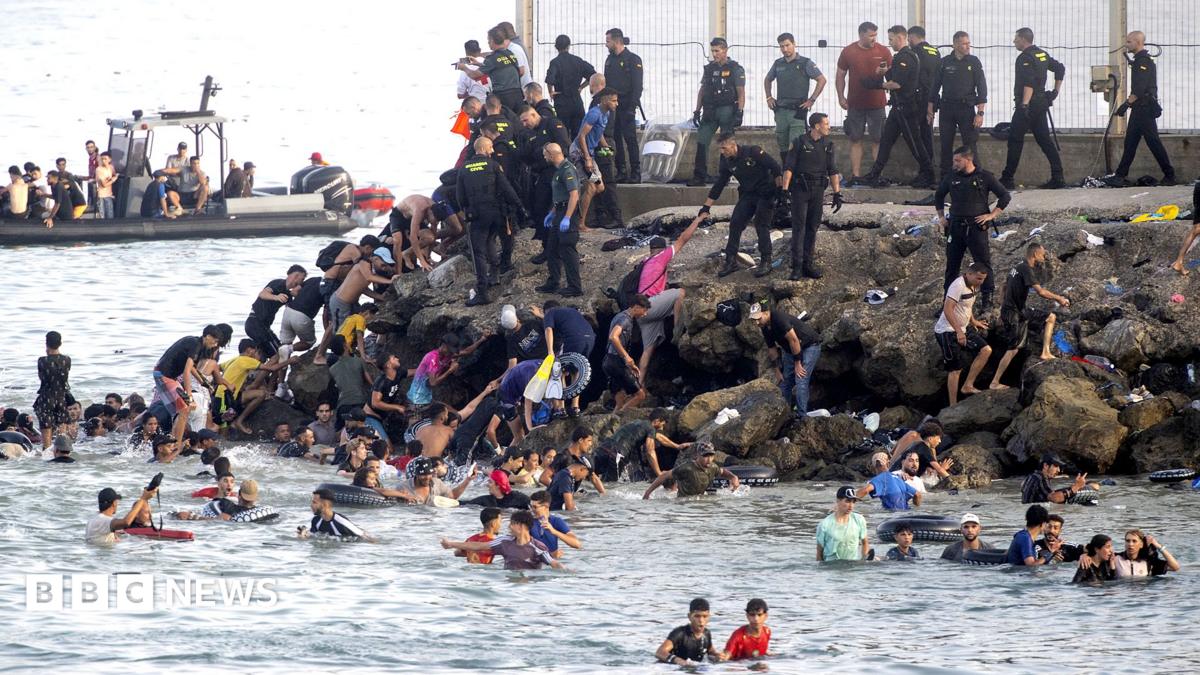
Why it matters: This is the largest single-day migration surge into a European territory in recent memory, testing the EU’s border regime and exposing the fragility of Schengen solidarity when a member state faces an external shock.
Context: Ceuta and Melilla are the EU’s only land borders with Africa, and have long been flashpoints in Spain-Morocco relations. The surge follows a Spanish Supreme Court ruling that limited summary returns, and comes amid high Moroccan youth unemployment and recent Gen Z protests.
"One man told Reuters news agency he was going back, adding: "It’s not good at all, and it’s not fun either. I mean, people are dying here. I beg you, please, if you haven’t come yet, don’t come. Don’t do it."." — BBC.CO.UK
Commentary: The immediate crisis is the border breakdown, but the deeper story is the legal and political vacuum: the Supreme Court ruling has criminalized summary returns, yet no alternative framework exists, leaving traffickers to exploit the gap. Italy’s Schengen suspension is more symbolic than operational—no land border—but it signals a new willingness to weaponize free movement rules for domestic politics. The real test will be whether Spain and Morocco can rebuild a cooperative return mechanism without triggering another humanitarian catastrophe, and whether the EU can offer a coherent response beyond condemnation.
Date: July 31, 2026 01:03 PM ET
URL: https://www.bbc.co.uk/news/articles/cx2kp639yx4o
AI Sentiment Score: Negative (55%)
AI Credibility Score: 10.0/10 — High
Scores and text generated by AI analysis of the source article indicated.
‘I just want a chance’: Moroccans sought better future in collective crossing to Spain territory (Apnews)
Summary: In a single weekend, roughly 60,000 people crossed from Morocco into the Spanish enclave of Ceuta, with about 45,000 returning within hours as Spanish authorities ordered a reversal or face expulsion. The influx—equal to 70% of Ceuta’s resident population—triggered a humanitarian crisis and local calls for military intervention. Migrants, many young and educated, cited despair, unemployment, and the desire to support families as motivations, while social media played a key role in organizing the crossing. The event echoes a smaller 2021 crisis but at a much larger scale, raising questions about border control, EU migration policy, and the limits of deterrence.
Why it matters: This surge tests the EU’s external border management and Spain’s political will, while highlighting the growing role of social media in enabling mass migration events—a pattern that could repeat across other border points.
Context: Ceuta and Melilla, Spain’s North African enclaves, have long been flashpoints for migration, with periodic surges used by Morocco as leverage in bilateral disputes. The 2021 incident saw thousands cross in two days; this event dwarfs that, signaling a new scale of coordinated movement.
"I’ve spent perhaps 14 years studying, but there’s nothing at home, and I’d have to work 12-hour shifts for a meager wage,” Buji told The Associated Press. “That’s why I came here, but I haven’t found any opportunities here either, so I have to go back." — APNEWS
Commentary: The rapid return of most migrants suggests that many were testing the system rather than committing to a permanent crossing, but the sheer volume—70% of Ceuta’s population—overwhelmed local capacity and exposed the fragility of border enforcement. Social media’s role in disseminating practical crossing instructions marks a shift from spontaneous to semi-organized migration, which could be replicated elsewhere. For Spain and the EU, the immediate crisis is containment, but the underlying drivers—youth unemployment, limited mobility, and the pull of European labor markets—remain unaddressed, ensuring this is not a one-off event.
Date: August 01, 2026 12:30 AM ET
URL: https://apnews.com/article/migrants-spain-ceuta-morocco-d564354dd54e92debf43ce5fe22299f9
AI Sentiment Score: Negative (75%)
AI Credibility Score: 10.0/10 — High
Scores and text generated by AI analysis of the source article indicated.
Spain sending troops as thousands enter enclave of Ceuta from Morocco (Bbc.Co.Uk)
Summary: Spain is deploying troops to Ceuta after thousands of migrants swam from Morocco into the enclave, with at least 18 drownings reported. The surge follows a Supreme Court ruling that bars summary returns of migrants intercepted at sea, which Madrid says trafficking networks are exploiting. Italy has threatened to suspend the Schengen open-border agreement with Spain, sparking a diplomatic row. The crisis echoes the May 2021 mass entry and underscores the fragility of the EU’s only land border with Africa.
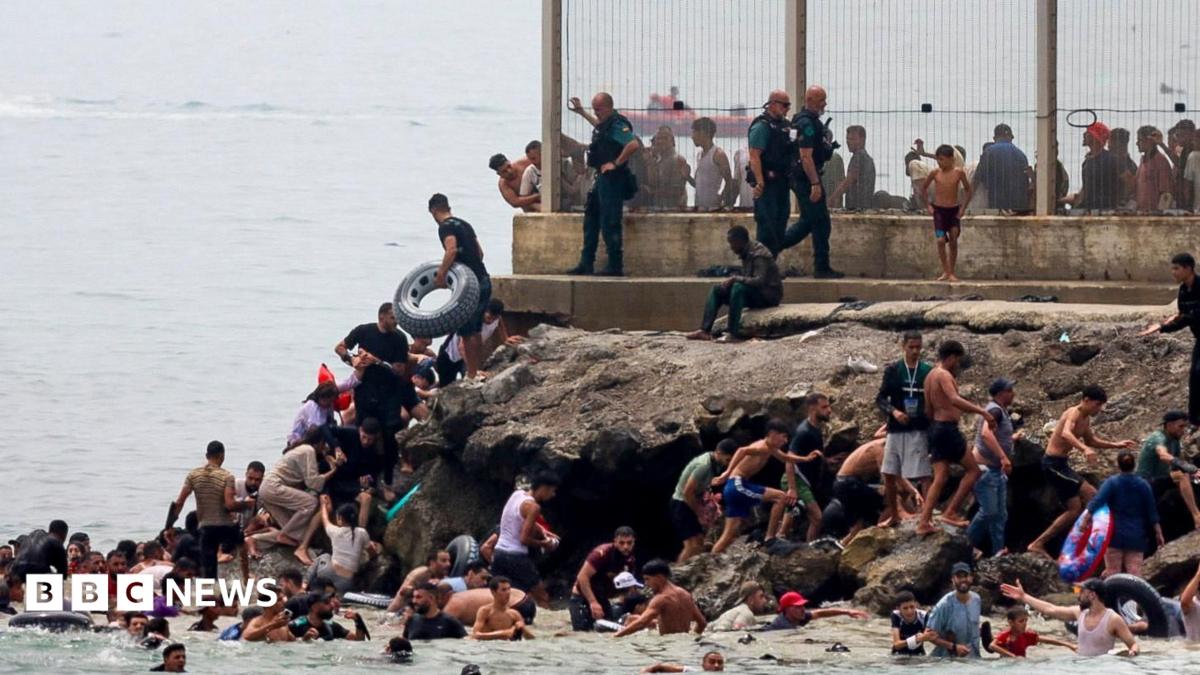
Why it matters: For travelers and logistics operators, this signals potential Schengen border friction and heightened security checks across southern Europe, while the diplomatic spat with Italy could reshape intra-EU mobility norms.
Context: Ceuta and Melilla have long been flashpoints in Spanish-Moroccan relations, with the 2021 surge of 8,000 entrants setting a precedent. The recent Supreme Court ruling has altered the legal landscape for migrant returns, creating new incentives for crossings.
"Spain’s interior ministry accused human trafficking networks of exploiting that to "encourage the flow of undocumented migrants"." — BBC.CO.UK
Commentary: The Italian threat to suspend Schengen is more political theater than operational reality—no land border exists—but it signals a hardening of EU migration politics that could spill into travel disruptions. The real story is the legal shift: the Supreme Court ruling has effectively decriminalized sea arrivals, forcing Spain to choose between military enforcement and diplomatic accommodation with Morocco. Expect increased naval patrols and bilateral pressure on Rabat, but the underlying push factors remain unaddressed.
Date: July 31, 2026 04:09 AM ET
URL: https://www.bbc.co.uk/news/articles/cg4drwzkrkxo
AI Sentiment Score: Negative (50%)
AI Credibility Score: 10.0/10 — High
Scores and text generated by AI analysis of the source article indicated.
57 dead, 50,000 cross from Morocco into Spains Ceuta: All about the crisis – The Tribune (Tribuneindia)
Summary: Over 50,000 people crossed from Morocco into Spain’s Ceuta enclave in a two-day surge, with 57 bodies recovered on the Spanish side. Most have returned voluntarily, but the crisis has triggered political fallout: Italy suspended Schengen with Spain, France quintupled border police, and the US State Department blamed Madrid’s migration policies. Spain’s PM called it a sovereignty violation, while a recent Supreme Court ruling limiting summary rejections may have contributed to the surge.
Why it matters: This unprecedented border rush tests the EU’s Schengen solidarity and exposes how domestic migration rulings can trigger continental political crises, with immediate implications for travel and border policy across Europe.
Context: Ceuta and Melilla are the EU’s only land borders with Africa, and periodic surges are common, but this scale is unprecedented. The incident follows Spain’s amnesty for unauthorized migrants and a Supreme Court ruling that complicates border rejections.
"Spain’s Interior Ministry said around 50,000 people had crossed the border since Thursday morning, and estimated that 48,300 had returned by 6 p.m. (1600 GMT) on Friday. Juan Jesus Vivas, head of Ceuta’s local government, said as many as 60,000 people had pushed across over the past couple of days." — TRIBUNEINDIA
Commentary: The speed and scale of this crossing—and the voluntary return of most—suggests a coordinated push rather than a spontaneous migration wave, likely used as leverage by Morocco. Italy’s Schengen suspension is a symbolic but potent crack in EU unity, and the US State Department’s direct intervention signals that migration is now a transatlantic political weapon. For travelers, expect tightened border checks and potential delays across Schengen, especially at Spanish and Italian entry points.
Date: August 01, 2026 12:15 AM ET
URL: https://www.tribuneindia.com/news/world/57-dead-50000-cross-from-morocco-into-spains-ceuta-all-about-the-crisis/
AI Sentiment Score: Negative (50%)
AI Credibility Score: 10.0/10 — High
Scores and text generated by AI analysis of the source article indicated.
What to know about the Spanish territory of Ceuta as migrant arrivals from Morocco spike (Union-Bulletin)
Summary: Thousands of migrants, mostly Moroccans, surged into the Spanish enclave of Ceuta from Morocco, with at least 57 deaths reported, prompting Spain to deploy its military to restore border control. The influx follows a pattern of diplomatic leverage by Rabat, which previously used mass crossings to pressure Madrid over Western Sahara policy. Ceuta and Melilla remain the EU’s only land borders with Africa, fortified yet persistently targeted by migrants seeking entry into Europe.

Why it matters: For readers tracking migration, EU border security, and North African geopolitics, this spike signals a renewed flashpoint that could reshape Spain-Morocco relations and test EU asylum protocols.
Context: Ceuta has been a pressure valve in Spain-Morocco diplomacy since the 2021 crisis, when Morocco deliberately relaxed border controls after Spain hosted a Western Sahara independence leader. The current surge, with its high death toll, suggests a deliberate or uncontrolled escalation that may force Madrid to recalibrate its stance on migration and Western Sahara.
"MADRID (AP) — Thousands of migrants have streamed into the tiny Spanish territory of Ceuta in North Africa from Morocco, with at least 57 dying in the attempt, prompting Spain to deploy." — UNION-BULLETIN
Commentary: The military deployment is a stopgap, but the underlying leverage game remains: Morocco can weaponize migration whenever it wants concessions on Western Sahara or other bilateral issues. Spain’s response will likely involve a mix of deterrence and diplomatic appeasement, but the human cost—57 dead—raises the stakes for EU-level action. Watch for whether Madrid shifts its Western Sahara stance again, as it did in 2022, or whether this time it holds firm and risks a prolonged standoff.
Date: July 31, 2026 11:03 PM ET
URL: https://www.union-bulletin.com/news/world/what-to-know-about-the-spanish-territory-of-ceuta-as-migrant-arrivals-from-morocco-spike/article_a1a09d4e-eace-543c-a95c-3206e47bb53d.html
AI Sentiment Score: Negative (57%)
AI Credibility Score: 10.0/10 — High
Scores and text generated by AI analysis of the source article indicated.
Post ID: 3c89c1ed