

Interactive Art
Shirley Tse and Dana Berman Duff’s Breathing Moons (Hyperallergic)
Summary: Shirley Tse and Dana Berman Duff’s Breathing Moons The artist duo — who go by "Relational" — explore the unseen forces that bind us to the universe. When sculptor Shirley Tse was invited by her former student Anna Hrund Másdóttir to produce an original exhibition at her cooperative gallery King and Bang in Reykjavik, her first thought was to invite her friend and former teacher, the film and video maker Dana Berman Duff, to collaborate with her. Geography, landscape, desire and time are some of the interests these two artists shared.
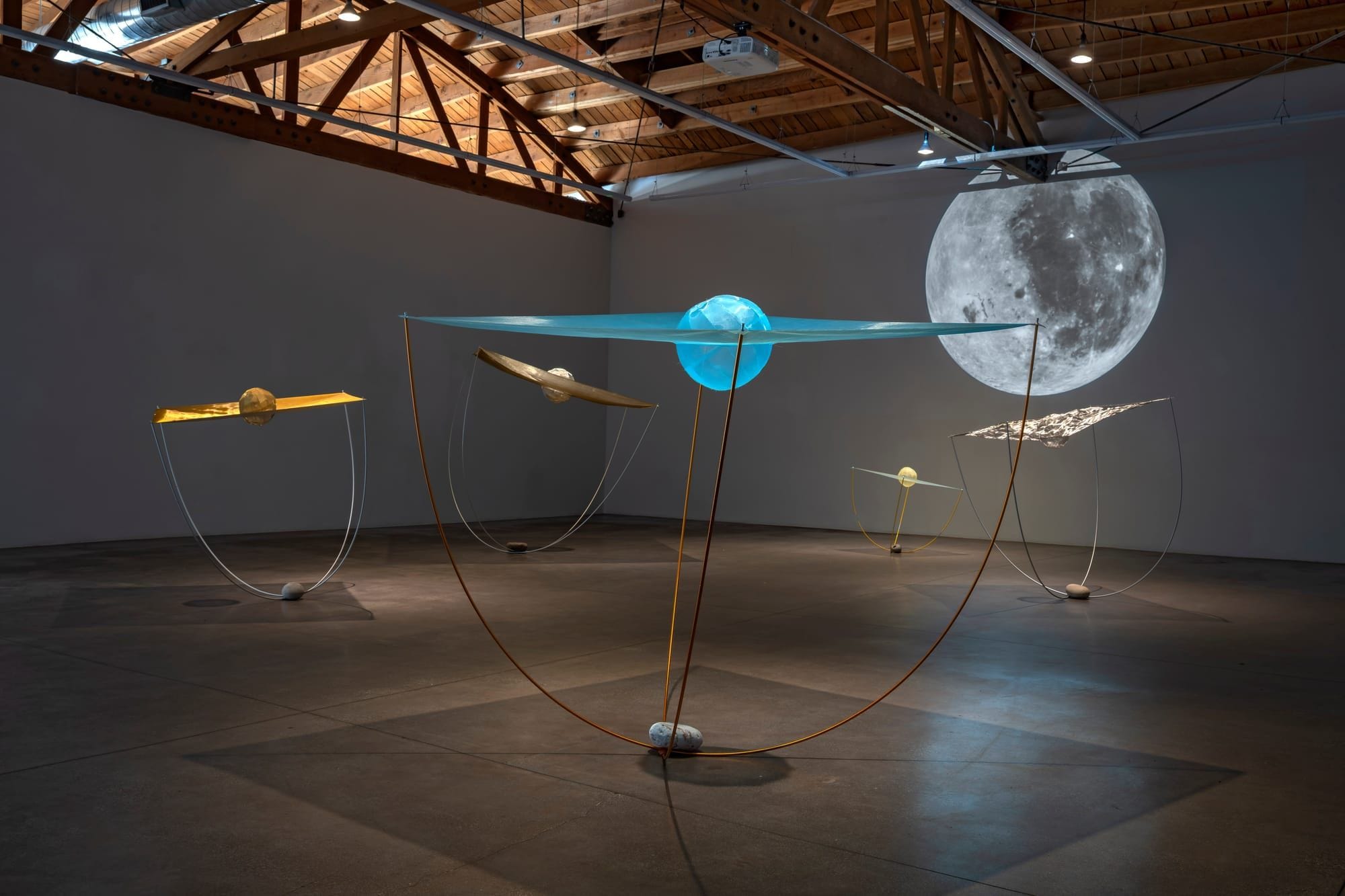
Why it matters: This matters for Interactive Art because it gives a concrete current signal to track: Shirley Tse and Dana Berman Duff’s Breathing Moons The artist duo — who go by "Relational" — explore the unseen forces that bind us to the universe.
Context: Shirley Tse and Dana Berman Duff’s Breathing Moons The artist duo — who go by "Relational" — explore the unseen forces that bind us to the universe. When sculptor Shirley Tse was invited by her former student Anna Hrund Másdóttir to produce an original exhibition at her cooperative gallery King and Bang in Reykjavik, her first thought was to invite her friend and former teacher, the film and video maker Dana Berman Duff, to collaborate with her. Geography, landscape, desire and time are some of the interests these two artists shared.
"Shirley Tse and Dana Berman Duff’s Breathing Moons The artist duo — who go by "Relational" — explore the unseen forces that bind us to the universe. When sculptor Shirley Tse was." — HYPERALLERGIC
Commentary: The immediate implication is operational rather than speculative: watch how this changes budgets, workflows, or risk assumptions over the next cycle.
Date: August 14, 2026 01:30 PM ET
URL: https://hyperallergic.com/shirley-tse-and-dana-berman-duffs-breathing-moons/
AI Sentiment Score: Negative (50%)
AI Credibility Score: 10.0/10 — High
Scores and text generated by AI analysis of the source article indicated.
Art Dispatches From “Habibi City” (Hyperallergic)
Summary: This week’s art dispatches cover Alan Michelson’s oyster-shell public artwork on Governors Island, a newly displayed Homer papyrus fragment at The Met, and a previously unpublished interview with Simone Forti about Yoko Ono. Michelson’s installation uses nearly a million shells from Manhattan restaurants to address Lenape erasure and Indigenous futurity. The Met’s fragment contains three lines from Book 20 of The Odyssey absent from modern texts. Forti’s interview, conducted in 2014, recalls her time in Ono’s Chambers Street loft alongside John Cage, Bob Morris, and Yvonne Rainer.
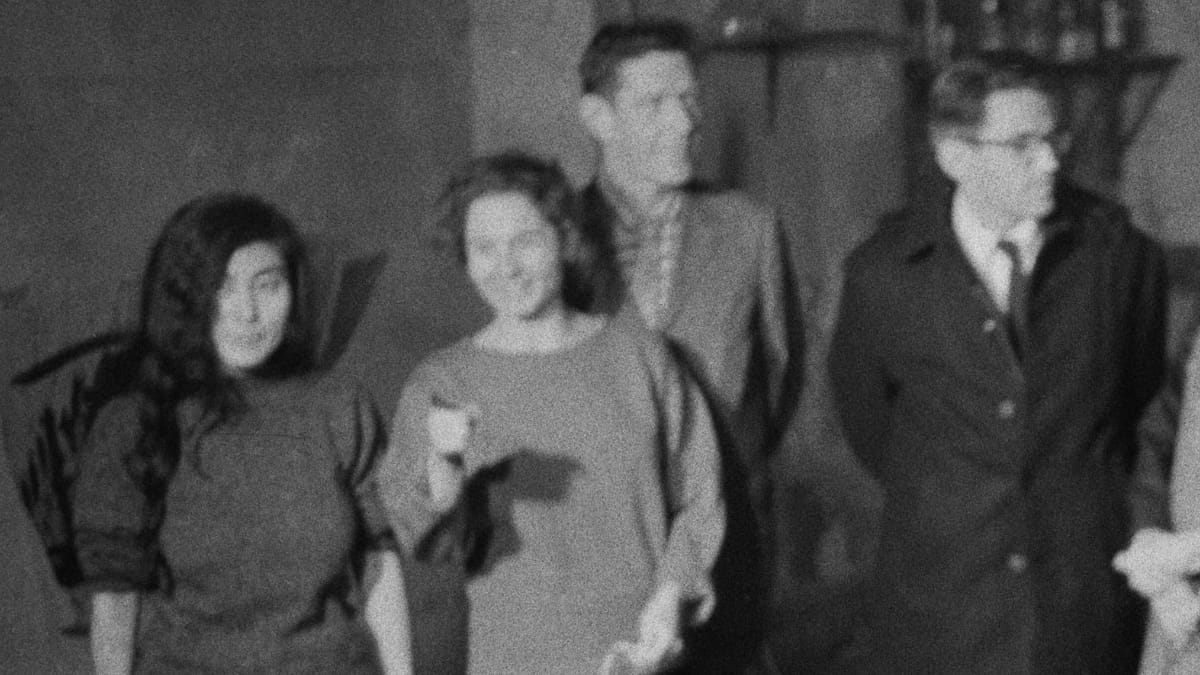
Why it matters: For interactive art practitioners, Michelson’s work demonstrates how large-scale public installations can operationalize material sourcing and community engagement—here, restaurant waste streams—to make historical erasure tangible. The Forti interview offers primary-source documentation of a formative participatory art milieu, useful for curators and historians staging or contextualizing performance work.
Context: Michelson’s piece aligns with a broader trend of ecological and decolonial public art in NYC, while the Met’s papyrus display reflects ongoing scholarly interest in textual variants. The Forti interview adds to the archival record of 1960s downtown performance and its cross-disciplinary networks.
"The oysters in Michelson’s installation are just as far-flung as its visitors, echoing the scale of change and the way globalization has forced the migration of people, animals, and things in order to survive in the storms brought on by colonialism and its descendants, including neo-liberal capitalism." — HYPERALLERGIC
Commentary: Michelson’s use of restaurant-sourced shells turns waste logistics into a curatorial asset, a model for institutions seeking low-cost, high-narrative materials. The Met’s fragment, though minor, signals a shift toward displaying textual artifacts as process—inviting audiences to see how editions diverge. For interactive art, the Forti interview underscores how loft-based participation was built on access and improvisation, not fixed infrastructure—a useful counterpoint to today’s tech-heavy installations. Expect more institutions to mine archival interviews as engagement hooks, given their low production cost and high authenticity value.
Date: August 11, 2026 06:16 PM ET
URL: https://hyperallergic.com/art-dispatches-from-habibi-city/
AI Sentiment Score: Positive (45%)
AI Credibility Score: 10.0/10 — High
Scores and text generated by AI analysis of the source article indicated.
recycled 3D printing waste transforms into a resonant field of sound, light, and space (Designboom)
Summary: Ninefold: A Distributed Resonant Field, by Hyojin Kwon, Jeremy Muller, and Misri Patel, transforms recycled PLA from fabrication labs into nine large-scale resonant forms using pellet-based additive manufacturing. The installation, on view at Reeves House Visual Arts Center in Woodstock, Georgia, uses reaction–diffusion algorithms to generate geometries that function as tuned acoustic bodies, creating a distributed sound field. Visible layer deposition and material variation are treated as expressive features, not defects. The project is part of the Plastic Reimagined exhibition and is supported by an NSF Convergence Accelerator grant, with a live performance event scheduled for August 20th.

Why it matters: For interactive art practitioners, this project demonstrates a viable pipeline for converting waste PLA into large-scale, functional acoustic artifacts, with modular fabrication enabling transport and reconfiguration—a model for sustainable, touring installations.
Context: The project extends prior work in computational design and digital fabrication, but its explicit use of recycled material as a visible and acoustic feature marks a shift from waste-as-filler to waste-as-design-language, supported by NSF funding for community-led manufacturing.
"Instead of concealing the recycled content, the fabrication process leaves variations in transparency, opacity, color, and layered deposition visible across the surfaces, allowing each object to register the transformation of the material." — DESIGNBOOM
Commentary: The modular sectioning is the operational sleeper: it lowers shipping and maintenance costs, making large-scale recycled-print installations feasible for mid-tier venues. The NSF backing signals institutional interest in circular manufacturing workflows, which could push more grants toward waste-stream-driven art projects. For teams, the visible-layer aesthetic sets a new bar for material honesty—audiences now expect to see the print process, not hide it. The live performance component, with a 60-minute composition, tests whether these resonant bodies hold up as instruments, not just sculptures.
Date: August 11, 2026 05:35 PM ET
URL: https://www.designboom.com/art/recycled-3d-printing-waste-resonant-field-sound-light-space-ninefold/
AI Sentiment Score: Negative (57%)
AI Credibility Score: 10.0/10 — High
Scores and text generated by AI analysis of the source article indicated.
Post ID: 3ac83a2a