Fashion Industry Business Moves & Leadership
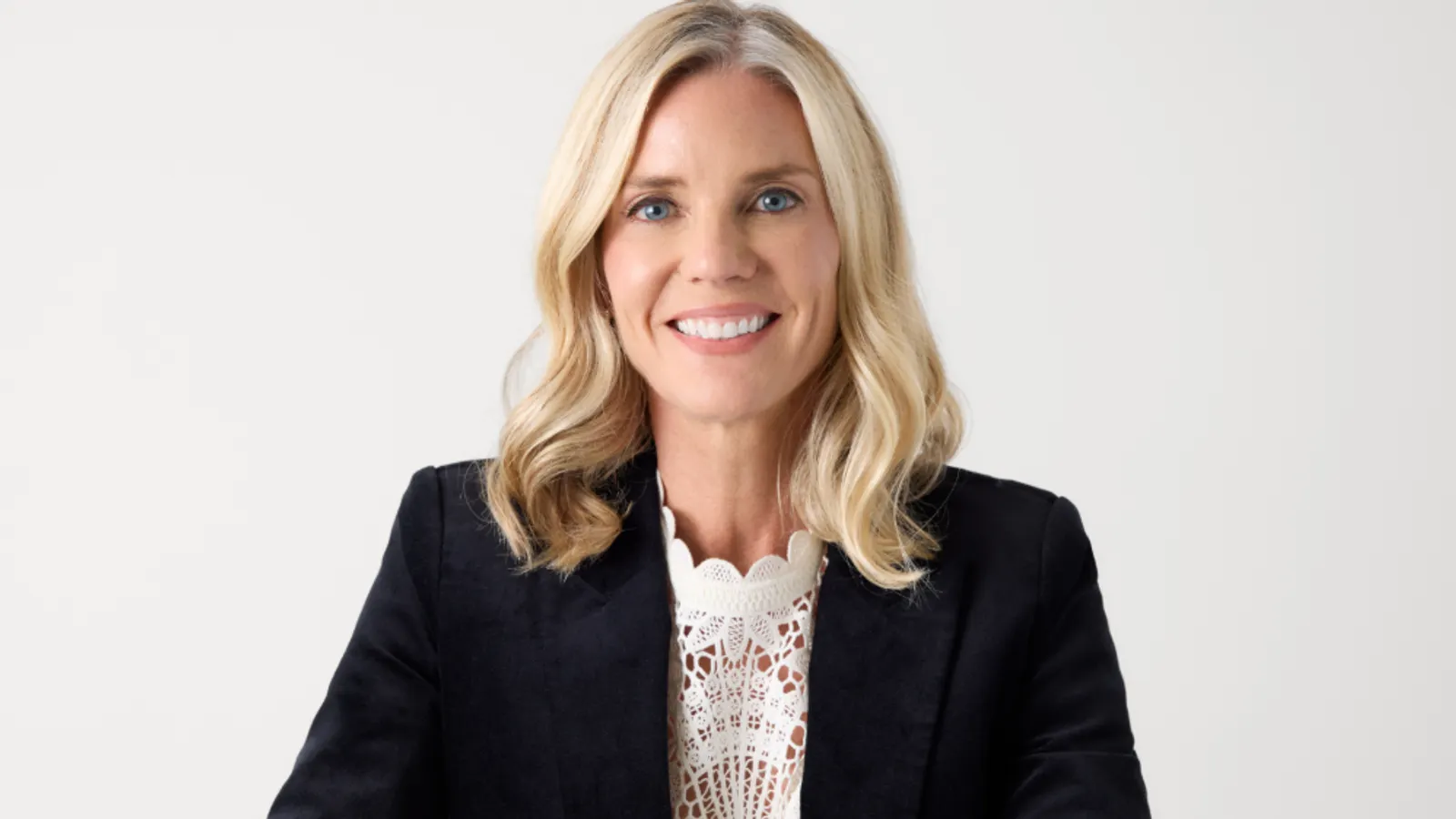
Lululemon Names Nike Veteran Heidi O’Neill as Next CEO (Wwd)
Summary: Lululemon has appointed Heidi O’Neill, a 27-year Nike veteran, as its next CEO, effective September 8. The move follows a period of underperformance and the departure of former CEO Calvin McDonald, with the company’s market cap falling sharply from $64 billion to $19 billion. O’Neill’s compensation package includes a $1.4 million salary, substantial equity awards, and a $2 million retention bonus. The appointment occurs amidst activist pressure from Elliott Investment Management and founder Chip Wilson, and a skeptical market response.

Why it matters: The CEO transition signals a strategic pivot for a major brand facing growth and product challenges, directly impacting its operational roadmap, vendor relationships, and internal culture.
Context: This follows a pattern of major activewear brands recruiting leadership from direct competitors to reinvigorate growth and brand strategy during periods of market correction.
"Lululemon Athletica Inc. is going to Just Do It. The active company named 27-year Nike veteran Heidi O’Neill its next chief executive officer, setting course for the future after a couple years." — WWD
Commentary: The hire prioritizes scaling discipline over brand mimicry, suggesting a focus on operational rigor in product pipeline and global execution. For internal teams, this likely means a review of development processes and cost structures, while vendors should anticipate tightened performance metrics. The immediate market skepticism underscores the execution risk in translating vision into financial turnaround.
Date: Wed, 22 Apr 2026 20:42:05 +0000
URL: https://wwd.com/business-news/human-resources/lululemon-appoints-heidi-oneill-ceo-1238926063/
AI Sentiment Score: Negative (57%)
AI Credibility Score: 10.0/10 — High
Scores and text generated by AI analysis of the source article indicated.
Primark to be spun off into stand-alone company (Retaildive)
Summary: Associated British Foods will demerge Primark into a standalone listed company, separating its fast-fashion retail arm from its food business by late 2027. The move, long anticipated by analysts, follows a strategic review and comes as Primark faces flat UK growth, margin pressure, and competition from ultra-fast-fashion online players. The separation, approved by major shareholder Wittington Investments, coincides with ABF reporting flat group revenue and a 7% drop in operating profit, with analysts noting Primark as the first European clothing retailer to signal softening consumer trends linked to geopolitical tension.
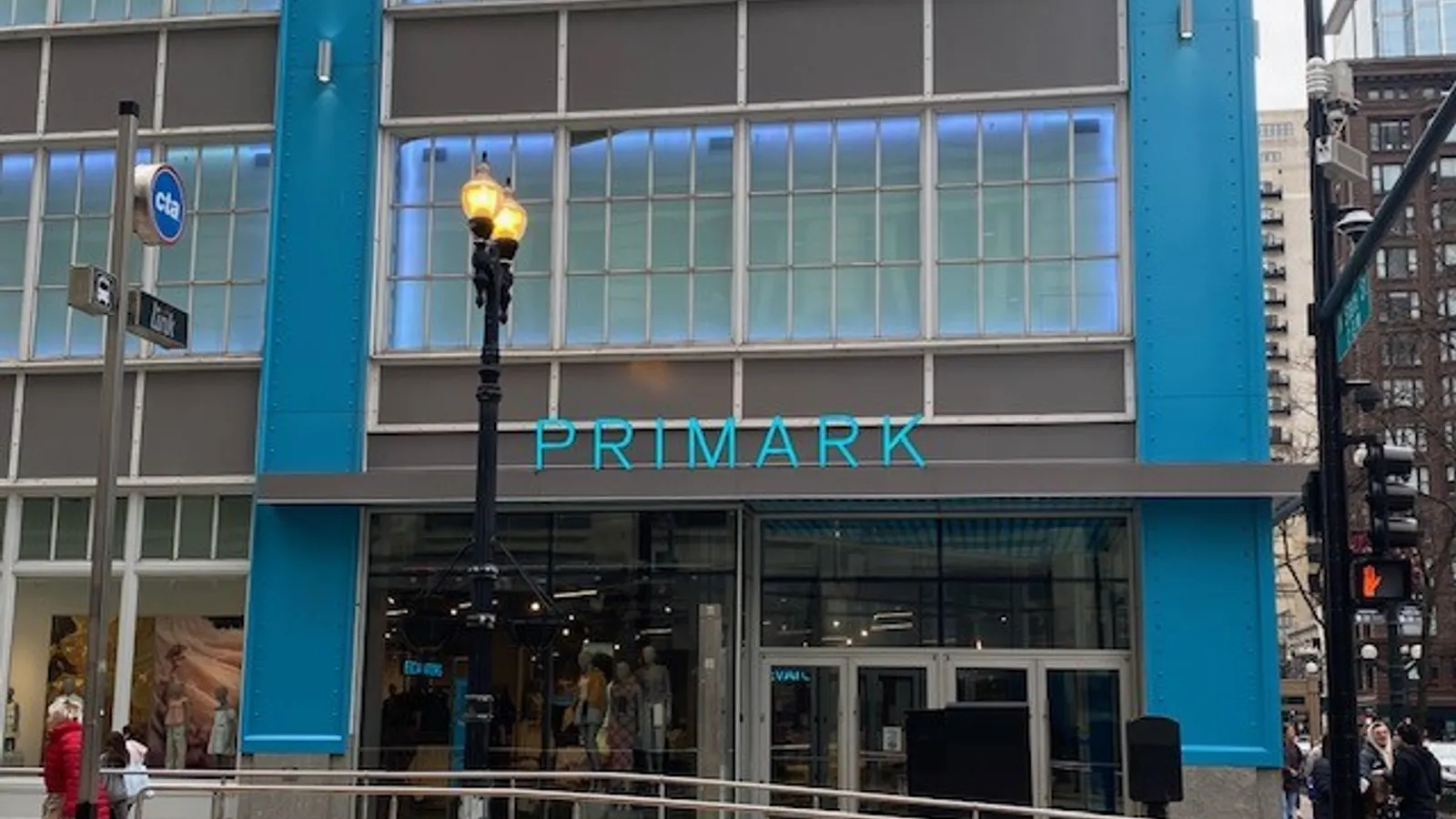
Why it matters: The demerger creates a new, publicly-traded corporate entity for Primark, altering its capital structure, strategic autonomy, and investor base, which will directly impact its operational priorities, expansion pace, and competitive posture in a challenging market.
Context: The split reflects a longstanding divergence between Primark’s capital-intensive, fashion-cycle-driven retail model and ABF’s stable grocery and bakery operations, a structural tension that has limited focused investment and market valuation.
"Primark’s revenue base is heavily concentrated in the UK, where growth has been largely flat. What’s more, fast fashion is facing a reckoning – grappling with online challengers like Shein and Temu undercutting on prices, while established players struggle with margin erosion and supply chain complexity,." — RETAILDIVE
Commentary: As a standalone listed company, Primark’s management will face intensified scrutiny on its U.S. expansion and digital capabilities, with capital allocation decisions becoming more transparent and directly tied to apparel-sector metrics. The demerger effectively isolates the firm’s operational challenges—geographic concentration, physical retail reliance, and margin compression—making them the sole focus of its equity story and likely accelerating strategic pivots.
Date: Tue, 21 Apr 2026 12:10:00 -0400
URL: https://www.retaildive.com/news/primark-spinoff-abf-stand-alone-apparel-company/818050/
AI Sentiment Score: Negative (50%)
AI Credibility Score: 10.0/10 — High
Scores and text generated by AI analysis of the source article indicated.
Nike re-strategizes Indian apparel vertical with senior leadership … (Dfupublications)
Summary: Nike has appointed Ashwin Kumar as Brand Lead for India, a senior leadership move that signals a deeper operational shift toward localizing its apparel strategy. The appointment coincides with a transition of its e-commerce operations to the platform Nykaa Fashion, aiming to optimize logistics and digital interface. The stated goal is to strengthen cultural relevance and capture growth in the premium athleisure segment, particularly in Tier-II cities.
Why it matters: This re-strategizing alters the vendor and distribution landscape for apparel operations in India, directly impacting logistics partners, digital platform contracts, and the competitive pressure on niche D2C brands.
Context: Nike’s ‘India for India’ pivot follows a broader industry pattern where global brands are decentralizing marketing and digital infrastructure to capture growth in specific high-potential markets, moving beyond a reliance on global endorsements.
"The goal is to build a brand that lives in the local culture while solving the friction in the digital purchase funnel, noted Kumar upon his return." — DFUPUBLICATIONS
Commentary: The shift to Nykaa Fashion outsources a critical operational layer—digital sales and metro logistics—to a local specialist, reducing Nike’s direct infrastructure burden but increasing platform dependency. Kumar’s mandate to blend performance wear with lifestyle demand requires a new product development and sourcing discipline for the Indian vertical, likely favoring localized materials and designs over global inventory. This creates a new competitive front where Nike’s scale and Nykaa’s distribution challenge domestic athleisure brands on their own turf of cultural relevance and delivery speed.
Date: April 25, 2026 12:00 AM ET
URL: https://www.dfupublications.com/index.php/news/apparel/nike-re-strategizes-indian-apparel-vertical-with-senior-leadership-appointment
AI Sentiment Score: Negative (50%)
AI Credibility Score: 7.0/10 — Medium
Scores and text generated by AI analysis of the source article indicated.
Vuori taps Rothy’s exec for first product chief (Retaildive)
Summary: Vuori has created its first chief product officer role, appointing Heather Archibald, formerly of Rothy’s, to oversee design, development, merchandising, and sourcing. The move signals a formalization of product operations as the brand scales its retail footprint and expands into categories like denim and outerwear. This structural investment follows a period of rapid growth fueled by significant venture capital, with the company now valued at $5.5 billion.
Why it matters: For practitioners, this signals a shift from founder-led product intuition to a structured, scalable operating model, directly impacting sourcing discipline, category expansion strategy, and internal workflows.
Context: High-growth DTC brands often reach an inflection point where they institutionalize product functions to manage complexity across new categories and international retail expansion.
"With Heather joining the brand, we’re reinforcing our commitment to a product-first approach — deepening innovation, sharpening storytelling and assortments, and bringing even greater rigor to how we scale while maintaining a deep connection with our consumers."
Commentary: Archibald’s background at Rothy’s and Title Nine suggests Vuori is prioritizing material innovation and sustainable sourcing rigor, not just aesthetic expansion. The explicit mention of ‘raw material planning’ indicates a move to lock down supply chain control as margins face pressure from scale. This hire is a hedge against dilution of product quality during aggressive physical retail growth, a common failure point for scaled DTC brands.
Date: Tue, 21 Apr 2026 11:38:00 -0400
URL: https://www.retaildive.com/news/vuori-rothys-exec-heather-archibald-chief-product-officer/817821/
AI Sentiment Score: Positive (50%)
AI Credibility Score: 10.0/10 — High
Scores and text generated by AI analysis of the source article indicated.
Lululemon launches e-commerce in Mexico, expands brick-and-mortar presence (Retaildive)
Summary: Lululemon has launched an e-commerce site in Mexico and announced plans to open eight new stores there in FY2026, aiming for over 30 total locations. The expansion is part of a broader international push targeting six new European markets in 2026 and follows a 44-store expansion in China last year. This move coincides with stagnating North American sales, where Q4 net revenue dipped 4%, while international revenue surged 17% in the same quarter.
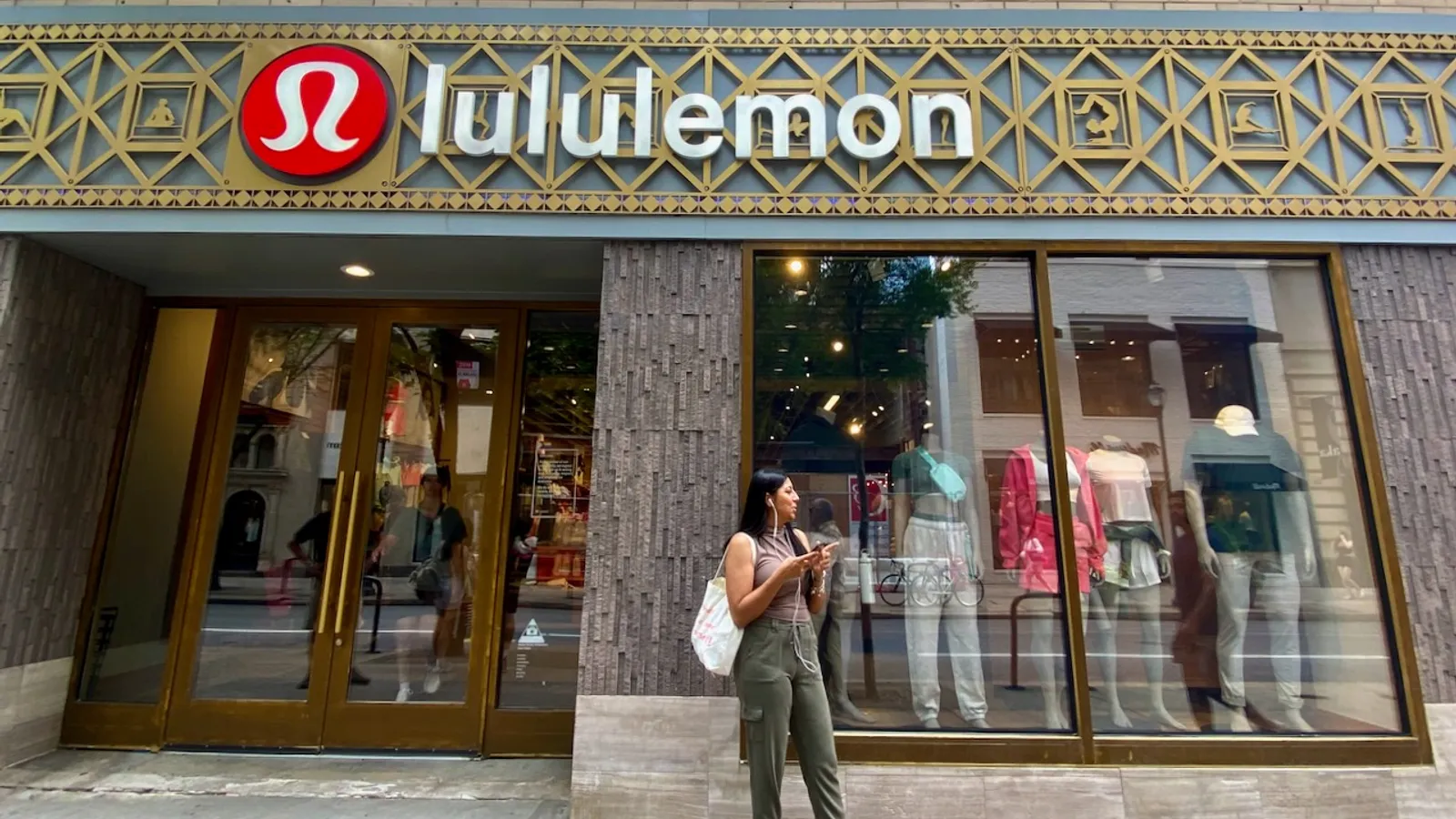
Why it matters: For practitioners, this signals a strategic pivot in capital allocation and operational focus, requiring new logistics, localization, and influencer partnership workflows for the Mexico and European pipelines.
Context: Lululemon’s growth model has historically relied on high-density North American store networks and community ambassador programs; flat domestic sales are now forcing a documented shift to international markets for revenue growth.
"While Lululemon’s North American business is slowing, its international operations are on the rise. In Q4, the company’s international net revenue jumped 17% from a year prior, and comparable sales increased 20%." — RETAILDIVE
Commentary: The operational consequence is a reallocation of brand energy: Mexico’s rollout, using a pre-engaged ambassador network of 100+, shows a template for entering mid-tier markets with lower retail density but high digital potential. For supply chain and marketing teams, this means building parallel systems for localized e-commerce and influencer-led community activation outside core English-speaking territories, while North American ops face a maintenance posture.
Date: Tue, 21 Apr 2026 12:20:00 -0400
URL: https://www.retaildive.com/news/lululemon-launches-mexico-e-commerce-site-opens-eight-stores/818065/
AI Sentiment Score: Positive (66%)
AI Credibility Score: 10.0/10 — High
Scores and text generated by AI analysis of the source article indicated.
Nike Cuts 1,400 Jobs in Operations and Tech in Latest Round of Layoffs (Wwd)
Summary: Nike is eliminating approximately 1,400 operations and technology roles globally, representing less than 2% of its workforce. The cuts are framed as the ‘next phase’ of its ‘Win Now’ turnaround plan, aimed at simplifying complexity and building a model for long-term profitable growth. Specific changes include consolidating the technology footprint around hubs in Beaverton and India, modernizing Air MI facilities, and moving Converse manufacturing resources closer to factory partners.

Why it matters: This signals a structural pivot in athleticwear operations, prioritizing leaner teams, geographic consolidation, and supply chain integration, which could reshape vendor relationships and internal career paths.
Context: This follows Nike’s January layoffs of ~800 distribution center roles and Converse’s undisclosed cuts, occurring against a backdrop of flat sales and a 35% drop in Q3 net income.
"Nike is moving ahead with yet another round of layoffs amid a laborious restructuring process. On Thursday, Nike Inc. chief operating officer Venkatesh Alagirisamy revealed the news in a memo, which stated." — WWD
Commentary: The operational rationale—’speed, simplicity, and precision’—masks a hard pivot toward cost discipline and hub concentration, effectively de-prioritizing distributed tech and manufacturing roles outside Beaverton and India. For vendors and partners, this means tighter integration but also reduced operational flexibility; for remaining staff, it centralizes decision-making and increases pressure on the two core hubs to deliver efficiency gains.
Date: Thu, 23 Apr 2026 21:25:29 +0000
URL: https://wwd.com/footwear-news/shoe-industry-news/nike-layoffs-job-cuts-operations-technology-1238927553/
AI Sentiment Score: Negative (75%)
AI Credibility Score: 10.0/10 — High
Scores and text generated by AI analysis of the source article indicated.
After Years of Double-Digit Sales Growth, Luxury Retailers Face … (Thedailyupside)
Summary: The luxury sector’s multi-decade expansion, fueled by Chinese demand and aspirational social media, has reversed. LVMH and Kering report consecutive annual revenue declines, with geopolitical instability, China’s slowdown, and AI-driven economic anxiety cited as structural pressures. The industry is responding with product-line rationalization, a focus on lower-priced entry items, and a wave of creative director hires, but has lost an estimated 70 million customers since 2022.
Why it matters: For industry practitioners, this signals a fundamental shift in operating conditions, requiring recalibrated growth targets, revised product pipelines, and new customer acquisition strategies.
Context: The luxury business model had become dependent on perpetual double-digit growth from emerging markets and status-driven consumption, a cycle now broken.
"“Luxury retail is in a crisis; it’s not a slowdown, it’s not a pause, it’s a crisis,” says Achim Berg, the founder and managing director of industry consultant FashionSIGHTS." — THEDAILYUPSIDE
Commentary: The pivot to accessories and creative reshuffling is a tactical response to a strategic problem: the core customer base is contracting. This forces a re-evaluation of inventory planning, marketing spend allocation, and wholesale partnerships, moving from expansion to efficiency. The projected ‘silver age’ of single-digit growth could pressure margins and test the operational discipline of brands built for abundance.
Date: April 26, 2026 12:00 AM ET
URL: https://www.thedailyupside.com/industries/consumer/after-years-of-double-digit-sales-growth-luxury-retailers-face-reckoning/
AI Sentiment Score: Negative (50%)
AI Credibility Score: 9.9/10 — High
Scores and text generated by AI analysis of the source article indicated.
Les Deux: 14 years of uninterrupted growth despite a strained … (Fashionunited.Uk)
Summary: Danish brand Les Deux reported a 13% turnover increase in 2025, its fourteenth consecutive year of growth, with a pre-tax profit of €8.68 million. This resilience is attributed to a strategic shift from using agents and distributors to internalizing operations in key markets like Benelux, Switzerland, and Greece. The brand also expanded physically, opening over 250 new wholesale accounts, showrooms in London and Amsterdam, and a flagship in Paris. For 2026, it forecasts further double-digit growth, with plans to nearly double its US presence at Nordstrom and add 15 new locations in France.

Why it matters: This demonstrates a viable operational counter-strategy for wholesale-dependent brands in a strained market, prioritizing direct control over distribution and proximity to retail partners.
Context: The global wholesale market is experiencing a significant slowdown, pressuring brands that rely on third-party distributors and agents for growth.
"Danish brand Les Deux has confirmed its resilience and agility. In 2025, the Copenhagen-based label recorded a 13 percent increase in turnover, marking its fourteenth consecutive year of growth amid a challenging." — FASHIONUNITED.UK
Commentary: Les Deux’s model of replacing external agents with in-house teams recalibrates the wholesale cost structure, trading variable commissions for fixed operational overhead to secure margin and brand control. This shift demands significant upfront investment in local talent and logistics, creating a higher barrier to entry but potentially deeper, more defensible retailer relationships. For competitors, it raises the benchmark for wholesale partnership management beyond mere sales targets to integrated operational support. The planned US and French expansions will test whether this hands-on model scales efficiently across diverse retail cultures and regulatory environments.
Date: April 24, 2026 12:00 AM ET
URL: https://fashionunited.uk/news/business/les-deux-14-years-of-uninterrupted-growth-despite-a-strained-wholesale-market/2026042487658
AI Sentiment Score: Positive (55%)
AI Credibility Score: 10.0/10 — High
Scores and text generated by AI analysis of the source article indicated.
Is luxury fashion just finding new excuses for old problems? (Insideretail.Au)
Summary: LVMH and Kering cited Middle East conflict impacts to explain Q1 revenue declines of 6%. However, the region accounts for only ~5% of their retail turnover, making the arithmetic effect modest. The article argues this is a recurring pattern of attributing underperformance to external geopolitical or economic factors, while a deeper issue is the erosion of the aspirational middle-class customer base due to aggressive price inflation over recent years.

Why it matters: For practitioners, it signals a potential misdiagnosis of market weakness, shifting focus from core operational and strategic failures in pricing, product, and consumer targeting to more convenient external narratives.
Context: The luxury sector has previously cited US tariffs and a sluggish Chinese consumer to explain uneven results, even as some competitors with clear brand vision and merchandising discipline continued to perform well.
"When results disappoint, the industry reaches for the nearest headline. Major luxury houses have reported their first quarterly results, and the Middle East conflict has been the centre of attention. French luxury." — INSIDERETAIL.AU
Commentary: The operational consequence is a potential delay in necessary strategic corrections—recalibrating price architecture, re-engaging the aspirational tier, or refining product assortments. Relying on geopolitical narratives preserves brand mystique in the short term but risks a structural misalignment with the actual addressable market, forcing more severe adjustments later.
Date: April 20, 2026 12:00 AM ET
URL: https://insideretail.com.au/sectors/has-luxury-fashion-found-a-new-excuse-for-old-problems-202604
AI Sentiment Score: Negative (50%)
AI Credibility Score: 10.0/10 — High
Scores and text generated by AI analysis of the source article indicated.
Has luxury fashion found a new excuse for old problems? (Insideretail.Asia)
Summary: Major luxury conglomerates LVMH and Kering cited the Middle East conflict as a primary factor in their Q1 revenue declines of 6%. However, the region accounts for only ~5% of their retail turnover, making the arithmetic impact modest. Analyst Mathew Dixon argues the sector’s deeper issue is the loss of ~60 million aspirational middle-class customers, alienated by years of aggressive price inflation, which the geopolitical narrative conveniently obscures.

Why it matters: For practitioners, this signals a shift in corporate communication strategy that may delay necessary operational corrections in pricing, product, and target audience engagement.
Context: This follows a two-year pattern where luxury brands have attributed underperformance to external factors like Chinese demand or US tariffs, while some competitors with disciplined merchandising continued to thrive.
"When results disappoint, the industry reaches for the nearest headline. Major luxury houses have reported their first quarterly results, and the Middle East conflict has been the centre of attention. French luxury." — INSIDERETAIL.ASIA
Commentary: The operational consequence is a potential misallocation of resources: marketing and product teams may be directed to address a geopolitical narrative rather than the core commercial problem of alienated entry-level buyers. This preserves brand mystique in the short term but risks structural erosion of the aspirational funnel that fuels long-term growth.
Date: April 20, 2026 12:00 AM ET
URL: https://insideretail.asia/2026/04/20/has-luxury-fashion-found-a-new-excuse-for-old-problems/
AI Sentiment Score: Negative (50%)
AI Credibility Score: 10.0/10 — High
Scores and text generated by AI analysis of the source article indicated.
For luxury retailers, value is a vibe | CX Dive (Customerexperiencedive)
Summary: Luxury retail executives are redefining value as an experiential quotient, not a price point. Ralph Lauren’s Patrice Louvet frames value as ‘quality of storytelling, product and shopping experience divided by price,’ with ventures like Ralph’s coffee serving as experiential anchors. Tapestry’s Joanne Crevoiserat emphasizes staying close to the consumer to deliver recognized value through innovation and customization, like Coach’s in-store craftsmanship bars, rather than reactive price hikes.
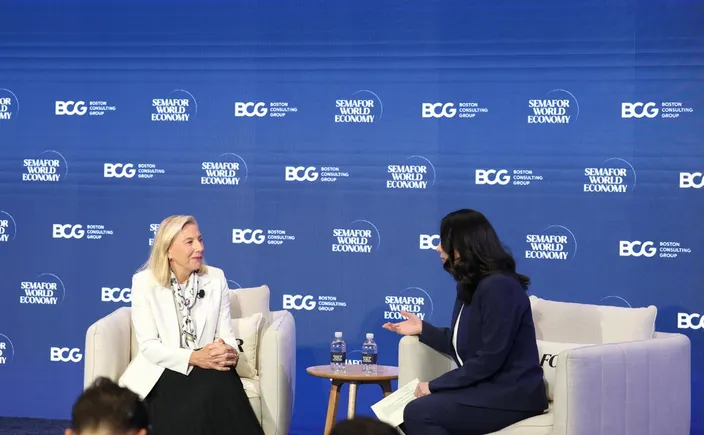
Why it matters: This shifts operational and capital allocation priorities from pure product margin to integrated experience design, requiring new vendor partnerships, staff training, and physical retail formats.
Context: This occurs against a backdrop of record-low consumer sentiment, pushing luxury to defend margins through perceived value rather than austerity.
"WASHINGTON — Value perception is more about vibes and less about the price for luxury retail CEOs. “We sell a dream,” Ralph Lauren President and CEO Patrice Louvet told an audience at." — CUSTOMEREXPERIENCEDIVE
Commentary: The ‘value as vibe’ model institutionalizes experiential overhead as a core cost center, not marketing fluff. For operators, this means budgeting for hospitality-grade service layers, co-branded ventures, and in-store workshops that directly subtract from traditional product margin but are now essential to defend pricing power. The risk is creating a brittle, labor-intensive retail model that struggles to scale beyond flagship locations.
Date: April 21, 2026 12:00 AM ET
URL: https://www.customerexperiencedive.com/news/luxury-retail-ceos-sell-value-vibes/817803/
AI Sentiment Score: Negative (60%)
AI Credibility Score: 7.0/10 — Medium
Scores and text generated by AI analysis of the source article indicated.
Luxury Briefing: How DeMellier is increasing demand while doing less (Glossy.Co)
Summary: DeMellier’s 97% YoY search growth on Lyst, against a backdrop of luxury sector slowdown, demonstrates the commercial viability of a restrained, craft-led strategy. The brand prioritizes durable construction, controlled distribution (80% DTC), and a focused product line over aggressive expansion, treating sustainability as a quality proof point rather than a primary marketing hook. This operational discipline contrasts with the volatility affecting broader aspirational shoppers, as noted in Bain’s report of 70 million lost customers, and aligns with a wider industry pivot toward product value and ethical infrastructure, as seen in Kering’s strategic reframing.

Why it matters: For brands and operators, it validates a capital-efficient playbook where craftsmanship, controlled growth, and integrated ethics can build demand and resilience without relying on wholesale volatility or trend-chasing.
Context: The luxury sector is losing aspirational customers who no longer see a clear link between price, creativity, and intrinsic product value, forcing a refocus on tangible craftsmanship and operational ethics.
"For this week’s Luxury Briefing, I spoke with DeMellier founder Mireia Llusia-Lindh about how the cult U.K. bag brand is leaning into craftsmanship and alternative materials to build loyalty in a tougher." — GLOSSY.CO
Commentary: DeMellier’s model offers a practical response to Bain’s identified disconnect: it rebuilds the price-value equation through verifiable craft (35 artisans per bag) and material traceability, making sustainability an operational output, not a marketing cost center. The deliberate wholesale pause with Saks and focus on owned retail underscores a shift toward channel control as a risk mitigation tactic. For practitioners, this signals that mid-tier luxury growth now requires a demonstrable product narrative and supply chain transparency to justify price points, moving beyond aspirational branding alone.
Date: Fri, 24 Apr 2026 04:00:00 +0000
URL: https://www.glossy.co/fashion/luxury/luxury-briefing-demellier-is-growing-by-doing-less-and-focusing-on-craftsmanship/
AI Sentiment Score: Positive (57%)
AI Credibility Score: 10.0/10 — High
Scores and text generated by AI analysis of the source article indicated.
Pat McGrath Labs Is Exiting Bankruptcy. Now What? (Wwd)
Summary: Pat McGrath Labs has emerged from Chapter 11 bankruptcy under new majority owner GDA Luma, with founder Pat McGrath transitioning from CEO to Chief Creative Officer. The central question is whether the brand’s editorial, artistry-driven product vision can be made commercially viable in a now-crowded market. The operational pivot requires rebuilding retail relationships, clarifying the founder’s role, and adapting the brand’s once-coveted ‘drop’ model to today’s accelerated TikTok-driven cycle. Industry sources question the feasibility of translating McGrath’s viral runway looks into a sustainable, year-round product pipeline and the brand’s target audience at its premium price point.

Why it matters: This case tests the operational limits of translating pure creative editorial vision into a scalable, disciplined commercial business, a tension relevant to any brand built on a founder-artist’s reputation.
Context: The brand’s journey from a $1 billion valuation to Chapter 11 highlights the systemic challenge of maintaining artistic integrity while meeting the logistical and financial demands of modern retail and supply chains.
"I wonder generally about the commercial viability of editorial cosmetics trends, which is what she’s the queen of. I think there’s a tension with that being commercialized." — WWD
Commentary: The restructuring forces a concrete separation of creative and operational leadership—a necessary but risky surgery for any founder-led brand. The immediate workflow changes involve GDA Luma managing retailer appeasement and supply chain discipline while McGrath’s team must systematize inspiration into a reliable product calendar. Success hinges on whether the brand can operationalize ‘drops’ with the logistical rigor of a contemporary DTC player while preserving the artistic aura that justifies its price point, a balance few have mastered.
Date: Fri, 24 Apr 2026 19:53:16 +0000
URL: https://wwd.com/beauty-industry-news/color-cosmetics/pat-mcgrath-labs-bankruptcy-analysis-1238929151/
AI Sentiment Score: Negative (50%)
AI Credibility Score: 10.0/10 — High
Scores and text generated by AI analysis of the source article indicated.
Fashion Briefing: Why Rolex discontinued one of its most iconic and coveted watch models (Glossy.Co)
Summary: Rolex has discontinued several iconic models, including the ‘Pepsi’ GMT-Master II, at the Watches and Wonders trade show. This decision is part of a deliberate strategy to reduce production volume and control market supply, which immediately spiked secondary-market demand by 500% and pulled listings down by 25%. The move mirrors broader luxury sector actions, such as Gucci’s planned SKU reduction, aimed at recalibrating exclusivity versus scale.
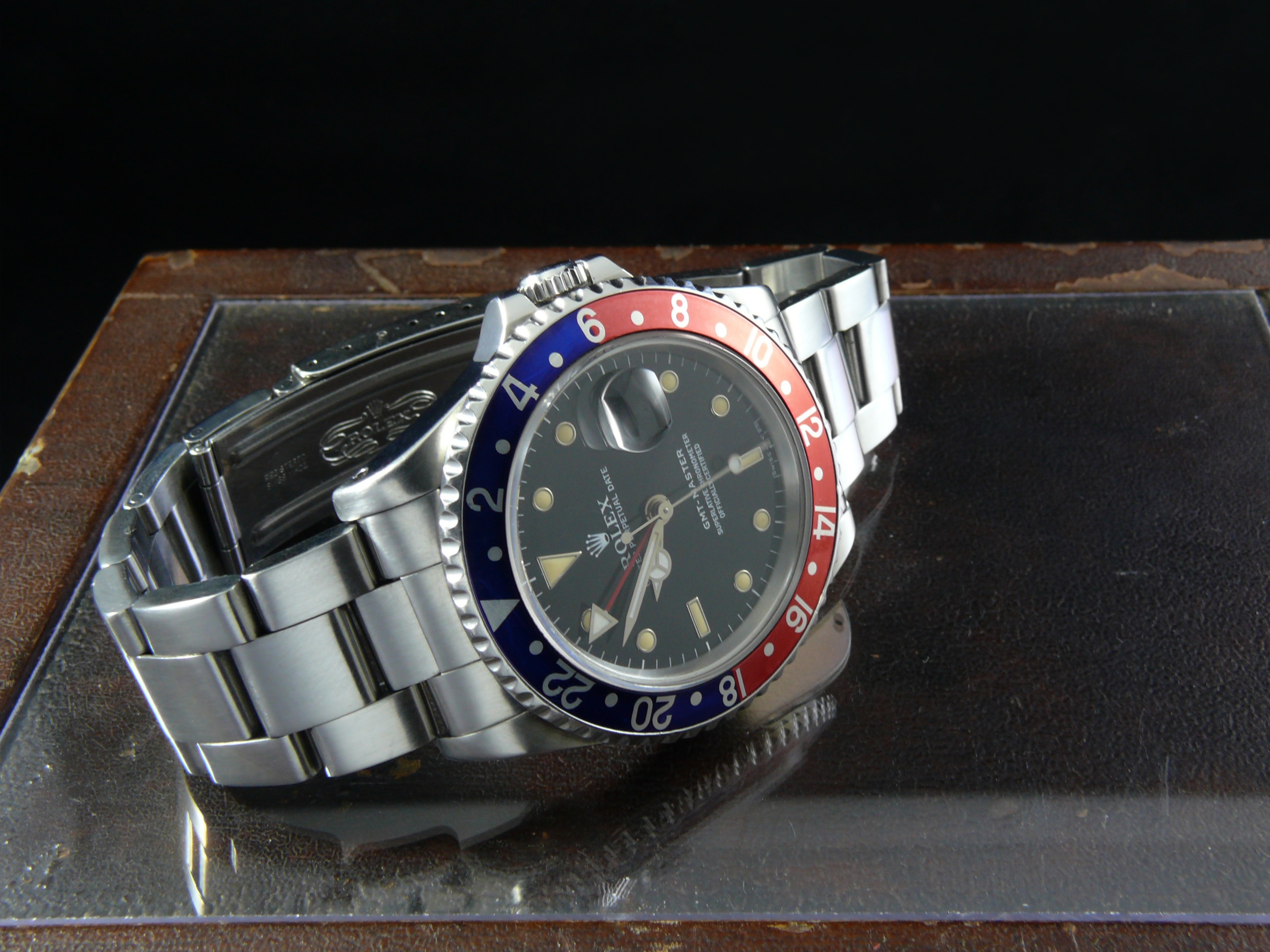
Why it matters: This signals a strategic pivot in luxury brand management, directly impacting dealer inventory strategies, secondary-market pricing dynamics, and long-term product lifecycle planning.
Context: Luxury brands are systematically reducing product volumes to enhance exclusivity and manage demand, a trend evident across watches, fashion, and leather goods.
"This week, a look at the major takeaways from Watches and Wonders in Geneva and what they reveal about the broader luxury fashion market. At Watches and Wonders, the watch industry’s biggest." — GLOSSY.CO
Commentary: Rolex’s discontinuation is a calculated supply-side intervention, not a design failure. It resets market perception and secondary pricing power for a foundational model, demonstrating that legacy brands now treat discontinuation as a core tool for demand engineering. This forces dealers to adjust holding strategies and reassures investors that brand equity is being actively defended through scarcity, even at the cost of immediate wholesale volume.
Date: Thu, 23 Apr 2026 04:03:00 +0000
URL: https://www.glossy.co/fashion/fashion-briefing-why-rolex-discontinued-one-of-its-most-iconic-and-coveted-watch-models/
AI Sentiment Score: Negative (60%)
AI Credibility Score: 10.0/10 — High
Scores and text generated by AI analysis of the source article indicated.
Fashion Brand Financial Management: From Design to Distribution (Wiss)
Summary: A financial advisory firm details the operational accounting failures endemic to growing fashion brands, arguing that the primary risk is not low margins but a lack of cost visibility at the style and SKU level. The article emphasizes that landed cost—incorporating duties, freight, and fees—is the only valid inventory cost for pricing, and that multi-channel distribution requires separate tracking of margins, payment terms, and return liabilities to prevent structurally uninformed decisions.

Why it matters: For practitioners, this translates to a direct workflow mandate: financial systems must be configured to answer specific operational questions about style-level margins and channel-specific net revenue, or the brand is flying blind on pricing, markdowns, and cash flow.
Context: This reflects a broader industry shift where financial management is becoming a core operational competency, moving beyond bookkeeping to become integral to product strategy and supply chain resilience.
"- Fashion brand financial management requires tracking costs across a lifecycle spanning 12 to 18 months, from design to final retail sale, with cash outflows front-loaded and inflows heavily delayed. – The." — WISS
Commentary: The analysis reframes financial infrastructure as a production tool, not a compliance function. Brands that cannot answer the listed questions—on style-channel-season margins or post-chargeback net revenue—are effectively ceding strategic control to their accounting gaps, which will manifest in eroded margins and misallocated production capital.
Date: April 22, 2026 12:00 AM ET
URL: https://wiss.com/fashion-brand-financial-management/
AI Sentiment Score: Negative (50%)
AI Credibility Score: 7.0/10 — Medium
Scores and text generated by AI analysis of the source article indicated.
From Stores to Smartphones: India’s e-retail fashion boom enters its … (Dfupublications)
Summary: India’s fashion e-retail market has matured from an urban convenience into a macroeconomic shift, with apparel at its core. The competitive landscape is defined by distinct models: H&M’s store-led scale, Zara’s premium-location productivity, Uniqlo’s proposition-led consistency, and the looming influence of platform-native, hyper-speed players like Shein. This growth is accelerated by supportive policies and a demand-responsive production model, but it carries systemic costs in sustainability and supply chain pressures.

Why it matters: For brands, studios, and distributors, India’s market evolution redefines the operational playbook for speed, localization, and channel strategy, while intensifying scrutiny on supply chain ethics and environmental impact.
Context: Global fashion brands have long viewed India as a high-potential, complex market, but the convergence of digital adoption, policy support, and data-driven production is now forcing a decisive shift from exploratory to core strategic investment.
"These second-wave players have converted fashion into a data science exercise, using real-time consumer feedback, micro-trend analytics and tightly integrated supplier ecosystems to cut lead times to nearly 10 days." — DFUPUBLICATIONS
Commentary: The 10-day lead time benchmark, imported by global players like Shein, could pressure all incumbents to overhaul their design-to-delivery pipelines, prioritizing data integration over seasonal forecasting. This accelerates a shift from inventory-led to signal-led production, forcing local sourcing and manufacturing partners to adapt to compressed cycles, likely at the expense of margin stability. Simultaneously, the table reveals that store productivity (Zara) and proposition discipline (Uniqlo) remain viable counter-strategies to pure speed, suggesting a fragmented, multi-model operating environment rather than a single dominant template.
Date: April 25, 2026 12:00 AM ET
URL: https://www.dfupublications.com/index.php/news/apparel/from-stores-to-smartphones-india-s-e-retail-fashion-boom-enters-its-defining-phase
AI Sentiment Score: Negative (50%)
AI Credibility Score: 8.7/10 — High
Scores and text generated by AI analysis of the source article indicated.
Apparel – News – ET Retail (Retail.Economictimes.Indiatimes)
Summary: The Indian apparel sector is undergoing structural realignment, with Lux Industries announcing a three-way demerger driven by a family settlement, triggering a 7% share drop. Trent’s aggressive store expansion is showing strain on its fashion business despite a 32.57% profit rise. Meanwhile, garment exporters signal a demand recovery as U.S. tariff pressures ease, while the Textiles Ministry considers duty cuts to mitigate West Asia crisis impacts. Venture capital interest in fashion and lifestyle brands persists, with funding discussions for Zouk and Slikk, alongside executive transitions at Aditya Birla Fashion.

Why it matters: For operators, these moves redefine corporate structures, expansion trade-offs, and the financial landscape for sourcing, branding, and investment.
Context: This follows a period of post-pandemic retail expansion and ongoing supply chain recalibration due to geopolitical and trade policy shifts.
"# Apparel – ## Lux Industries demerger: Mukul Agrawal-owned smallcap company announces three-way split ### Lux Industries’ shares dropped over 7% following board approval for a business demerger. The move, stemming from." — RETAIL.ECONOMICTIMES.INDIATIMES
Commentary: The Lux demerger underscores how family governance directly impacts public market valuation and operational focus, forcing investors and partners to reassess counterparty risk across new entities. Trent’s growth paradox—profit up but fashion business strained—highlights the capital and operational intensity of physical retail scaling, a caution for brands pursuing similar aggressive footprints. The export recovery narrative, coupled with Ministry intervention talks, signals a volatile policy environment where sourcing decisions must account for both demand signals and potential state-backed cost adjustments.
Date: April 24, 2026 12:00 AM ET
URL: https://retail.economictimes.indiatimes.com/news/apparel-fashion/apparel
AI Sentiment Score: Positive (44%)
AI Credibility Score: 7.0/10 — Medium
Scores and text generated by AI analysis of the source article indicated.
The Strategic Playbook for Every International Fashion & Design … (Exploretex)
Summary: The article frames the 2026 fashion consultant as a supply chain architect, pivoting from aesthetic guidance to operational engineering. The core strategic shift is the mandated adoption of a dual-hub production model, explicitly pairing European craftsmanship (e.g., Portugal) with Asian vertical scale (e.g., Bangladesh). This is presented as a non-negotiable standard for efficiency and brand resilience.

Why it matters: This redefines the consultant’s service offering and cost structure, forcing a technical mastery of global logistics and compliance over traditional creative direction.
Context: The push for dual-hub models reflects broader industry pressure to decouple prestige from production risk, moving beyond single-region dependency post-pandemic and amid trade volatility.
"For a fashion & design consultant, knowing how to leverage a dual-hub production model—such as engineering in Portugal and scaling in Bangladesh—is the ultimate competitive advantage." — EXPLORETEX
Commentary: The prescription is vendor-specific (ExploreTex), but the operational implication is generic: consultants must now build and manage bifurcated supply chains as a core competency. This elevates procurement and logistics firms to strategic partners, potentially marginalizing consultants who lack this engineering rigor. It also formalizes a tiered product strategy where ‘luxury capsules’ and ‘core collections’ have distinct, geographically separated pipelines.
Date: April 20, 2026 12:00 AM ET
URL: https://exploretex.com/international-fashion-design-consultant/
AI Sentiment Score: Negative (85%)
AI Credibility Score: 10.0/10 — High
Scores and text generated by AI analysis of the source article indicated.
Fashion Growth Unlocked – The Interline (Theinterline)
Summary: Lectra’s Retviews and Neteven platforms are being positioned as integrated solutions for fashion market intelligence and marketplace management. They aim to address core operational challenges: assortment planning, in-season stock optimization, international pricing, and marketplace expansion. The value proposition centers on using competitive data to refine strategies across the value chain, building resilience in unpredictable markets.

Why it matters: For merchandising, buying, and digital teams, this signals a shift toward data-driven, integrated platforms that promise to directly impact margins, sell-through, and operational complexity in international expansion.
Context: This reflects the ongoing consolidation of the fashion tech stack, where specialized point solutions are being bundled into broader ‘pillars’ by larger vendors like Lectra, aiming to own more of the strategic workflow.
"Integrated within the Market pillar, Retviews and Neteven, Lectra’s fashion‑native solutions for market intelligence and marketplace management, offer an integrated response to this new reality. Together, they empower brands to refine strategies." — THEINTERLINE
Commentary: The integration of Retviews and Neteven under Lectra creates a closed-loop system for planning and execution, potentially locking brands into a single vendor ecosystem. The practical implication is a centralization of competitive intelligence and marketplace operations, which could streamline workflows but also reduce flexibility in tool selection. For practitioners, this means their decision-making surface is increasingly mediated by a platform that defines both the data inputs and the channel outputs.
Date: April 22, 2026 12:00 AM ET
URL: https://www.theinterline.com/2026/04/22/fashion-growth-unlocked/
AI Sentiment Score: Neutral (50%)
AI Credibility Score: 10.0/10 — High
Scores and text generated by AI analysis of the source article indicated.
FashionNetwork USA – The World’s Fashion Business News (Us.Fashionnetwork)
Summary: Nike is cutting 1,400 corporate jobs, primarily in technology, as part of its turnaround effort. Lululemon appoints former Nike executive Heidi O’Neill as its new CEO, signaling a strategic pivot. Meanwhile, European brands like Tinycottons, Longchamp, and Les Deux are accelerating US and global retail expansion, with new logistics hubs and store openings.

Why it matters: These moves signal a recalibration of operational priorities for major players and a shift in competitive dynamics as European brands target US infrastructure and market share.
Context: The apparel sector is navigating post-pandemic normalization, with legacy brands restructuring while agile, digitally-native labels expand physical footprints.
"Nike Inc. is cutting 1,400 roles, less than 2% of its total workforce, as the sporting-goods company tries to get its turnaround plan back on track." — US.FASHIONNETWORK
Commentary: Nike’s tech-focused layoffs suggest a pruning of digital overreach or a consolidation of platform investments, directly impacting vendor and contractor pipelines. O’Neill’s move to Lululemon imports Nike’s scale-playbook into a brand facing maturation, likely presaging a more aggressive wholesale and international strategy. The concurrent European retail push into the US, exemplified by Tinycottons’ Miami warehouse, indicates a bet on localized logistics to improve margin and speed, raising the stakes for domestic mid-market brands.
Date: April 24, 2026 12:00 AM ET
URL: https://us.fashionnetwork.com
AI Sentiment Score: Negative (50%)
AI Credibility Score: 10.0/10 — High
Scores and text generated by AI analysis of the source article indicated.
Post ID: 0375ca3f