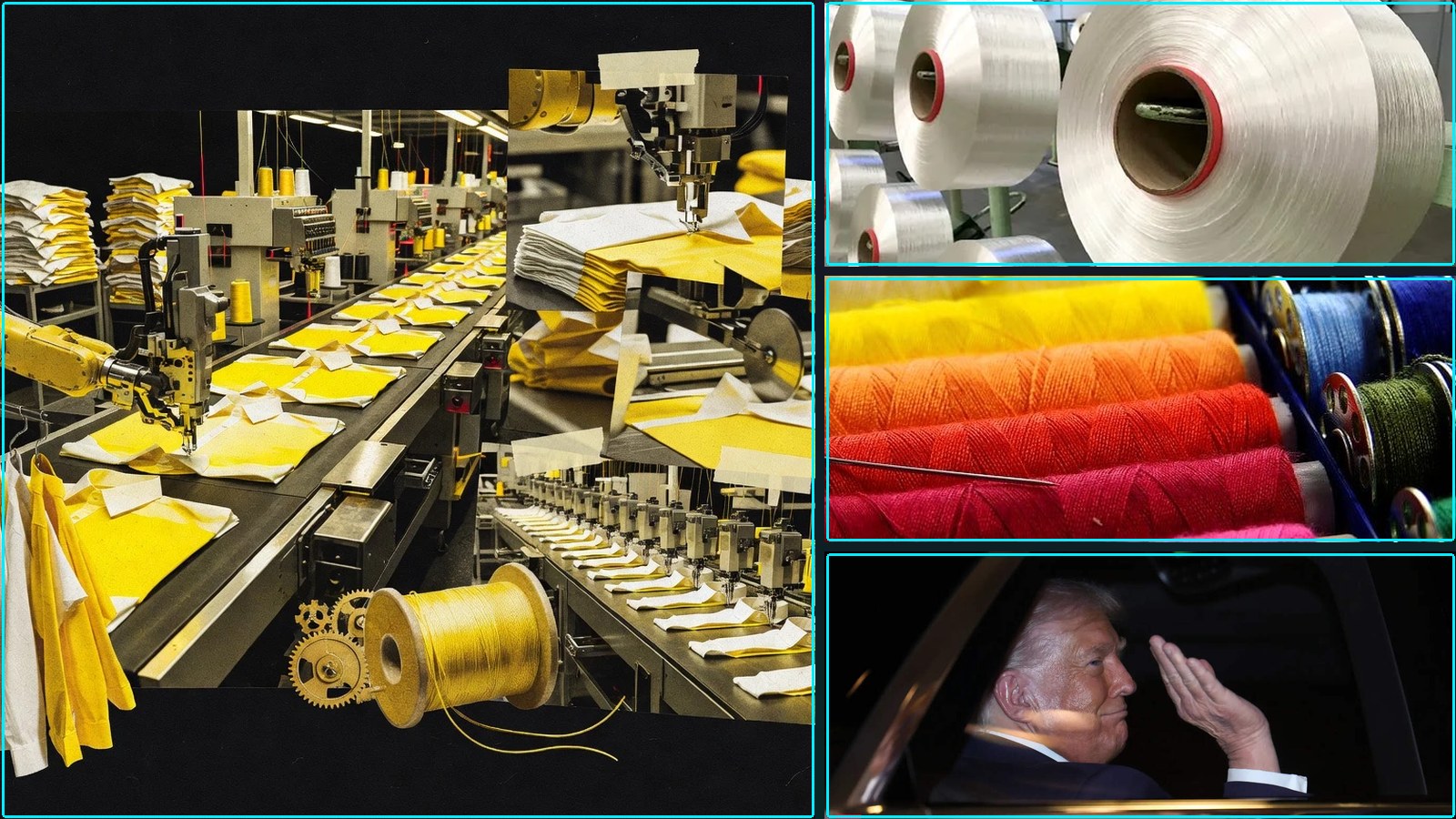
Made In USA manufacturing and logistics
US weighs tougher auto import rules to accelerate reshoring (Economictimes)
Summary: The US administration is considering stricter rules for auto imports under USMCA to accelerate domestic manufacturing, including potential minimum US parts requirements or limits on tariff-reduction mechanisms. These preliminary discussions aim to increase the cost of importing vehicles, particularly from Canada and Mexico, ahead of a July 1 review deadline for the trade agreement. Current USMCA rules allow duty-free movement if 75% of parts are North American and 40-45% are made by higher-wage labor, but existing Trump-era tariffs on non-US content have already complicated the landscape.

Why it matters: For manufacturers and supply chain managers, this signals increased regulatory risk and potential cost inflation for North American auto production, forcing a reassessment of sourcing strategies and factory footprints.
Context: The US remains heavily import-reliant for affordable vehicles, and previous tariffs and investment pledges have not yielded substantial reshoring of auto and component factories, leading to policy frustration.
"The administration is pondering ways to rein in those tariff-reducing measures to raise how much companies would pay to bring USMCA vehicles across borders, one of the people said. That could subject US imports of USMCA-compliant vehicles to an effective tariff of roughly 10%, which is higher than what Detroit’s carmakers currently pay, the person said." — ECONOMICTIMES
Commentary: This move targets the financial engineering of USMCA compliance, shifting the calculus from labor-cost arbitrage to pure tariff exposure. For automakers, it makes the ‘US parts’ threshold a direct cost control lever, potentially bifurcating supply chains for compliant vs. non-compliant models. The immediate operational consequence is a July 1 deadline forcing contingency planning for both higher-duty sourcing and accelerated onshoring of component production, with mid-priced vehicle segments most exposed.
Date: April 18, 2026 12:00 AM ET
URL: https://economictimes.com/news/international/business/us-weighs-tougher-auto-import-rules-to-accelerate-reshoring/articleshow/130345602.cms
AI Sentiment Score: Negative (71%)
AI Credibility Score: 10.0/10 — High
Scores and text generated by AI analysis of the source article indicated.
Italian Textile Machinery Innovation Takes Center Stage In Frankfurt For Techtextil 2026 (Textileworld)
Summary: The Italian textile machinery industry, a global export leader with 86% of sales going abroad, is preparing a significant showing at Techtextil 2026 in Frankfurt. Its strength is attributed to a network of specialized SMEs focused on R&D and customization, particularly in finishing machinery and accessories. This sector’s performance is a key indicator of capital investment trends in technical textiles manufacturing worldwide.

Why it matters: For U.S. manufacturers and logistics planners, Italian machinery dominance defines the capital equipment landscape, influencing supply chain resilience, production costs, and the pace of technological adoption in domestic textile production.
Context: Italian firms are perennial leaders in high-end textile machinery, creating a dependency for global manufacturers seeking advanced, automated, or specialized production lines. Their export-focused model makes them a bellwether for industrial investment cycles.
"The industry stands out for its strong international vocation, with a predominant share of production destined for foreign markets (86% of its sales) and a consolidated presence in over 130 countries." — TEXTILEWORLD
Commentary: This export concentration means U.S. textile producers’ operational capacity is tied to Italian SME innovation cycles and geopolitical stability in European supply chains. The emphasis on finishing machinery (33% of German sales) signals where process innovation and automation are most acute, directly impacting the cost and capability of U.S.-based technical textile production. Reliance on this specialized, distant vendor base is a structural constraint on reshoring speed and cost-competitiveness.
Date: Sat, 18 Apr 2026 15:51:52 +0000
URL: https://www.textileworld.com/textile-world/2026/04/italian-textile-machinery-innovation-takes-center-stage-in-frankfurt-for-techtextil-2026/
AI Sentiment Score: Negative (55%)
AI Credibility Score: 7.0/10 — Medium
Scores and text generated by AI analysis of the source article indicated.
SAMPE Carolinas Announces 2026 Scholarship Program Supporting Future Leaders In Composites And Advanced Materials (Textileworld)
Summary: The SAMPE Carolinas Chapter is offering up to three merit-based scholarships of up to $5,000 each for the 2025-2026 academic year. The program targets high school seniors, undergraduates, and graduate students connected to the chapter, across disciplines including engineering, business, and design. The top recipient receives a funded trip to speak at the SAMPE Carolinas Materials Expo.

Why it matters: This signals a regional industry group’s targeted investment in workforce development, directly addressing the talent pipeline constraints that limit domestic composites and advanced materials manufacturing capacity.
Context: SAMPE chapters have long run such programs, but the specific focus on business and marketing alongside engineering reflects an industry recognition that scaling U.S. production requires a broader operational skill set beyond pure R&D.
"A broad range of academic disciplines will be considered, including engineering, business, marketing, design, accounting, and other fields supporting the composites and advanced materials industries." — TEXTILEWORLD
Commentary: The inclusion of non-engineering tracks is the operational signal: building domestic capacity requires professionals who can manage supply chains, market products, and run financially viable operations, not just design them. The modest dollar amount and member-family eligibility highlight this as a retention tool for existing industry firms, aimed at securing the next generation of local talent rather than attracting entirely new entrants.
Date: Fri, 17 Apr 2026 20:17:48 +0000
URL: https://www.textileworld.com/textile-world/2026/04/sampe-carolinas-announces-2026-scholarship-program-supporting-future-leaders-in-composites-and-advanced-materials/
AI Sentiment Score: Negative (75%)
AI Credibility Score: 10.0/10 — High
Scores and text generated by AI analysis of the source article indicated.
Nanotech Materials Raises $29.4 Million: Round Led By HPI Real Estate & Investments; Strategic Investors Goose Capital And Milliken & Company. (Textileworld)
Summary: Nanotech Materials, a Texas-based advanced materials company, has closed a $29.4 million Series A round led by HPI Real Estate & Investments, with strategic participation from Goose Capital and industrial manufacturer Milliken & Company. The capital is earmarked for scaling operations from its existing 43,000-square-foot Katy, TX facility and expanding market reach for its energy-efficient and fire-resilient coating products. The company’s core technology, Insulative Ceramic Particle (ICP), targets reducing cooling loads in buildings by up to 50% and offers wildfire protection for infrastructure.

Why it matters: This signals a capital shift towards domestic, performance-driven material science for infrastructure resilience, directly impacting procurement for commercial real estate, industrial operators, and government agencies facing extreme heat and wildfire risks.
Context: Investment in domestic advanced manufacturing is increasingly tied to solving specific, high-cost operational problems—energy consumption and climate-driven asset degradation—rather than generic capacity expansion.
"“Today’s built environment demands materials that don’t just meet code, but can also outperform the extreme conditions we’re now facing,” said D. Kent Lance, Partner at HPI." — TEXTILEWORLD
Commentary: The strategic involvement of Milliken, a legacy industrial manufacturer, validates the technology’s path to production scale and suggests a focus on integrating these coatings into established supply chains. For practitioners, this means a new class of domestically produced, performance-specified materials will enter bid sheets for infrastructure hardening projects, potentially altering vendor selection and maintenance protocols. The funding enables the operational capacity to move from pilot projects, like those with Caltrans, to broader commercial deployment, changing the cost-benefit calculus for asset managers.
Date: Sat, 18 Apr 2026 16:10:46 +0000
URL: https://www.textileworld.com/textile-world/2026/04/nanotech-materials-raises-29-4-million-round-led-by-hpi-real-estate-strategic-investors-goose-capital-and-milliken-company/
AI Sentiment Score: Negative (57%)
AI Credibility Score: 7.0/10 — Medium
Scores and text generated by AI analysis of the source article indicated.
Automation In The Clothing Industry Statistics | Rawshot.ai (Rawshot.Ai)
Summary: Automation in apparel manufacturing is accelerating, with the industrial automation market projected to more than double from 2022 to 2030. Specific case studies and vendor claims point to labor reductions of 20-50% in sewing and cutting operations, alongside productivity gains of 15-25% from automated spreading and feeding systems. This shift moves garment production from a labor-intensive craft toward a high-speed, data-driven industrial process.
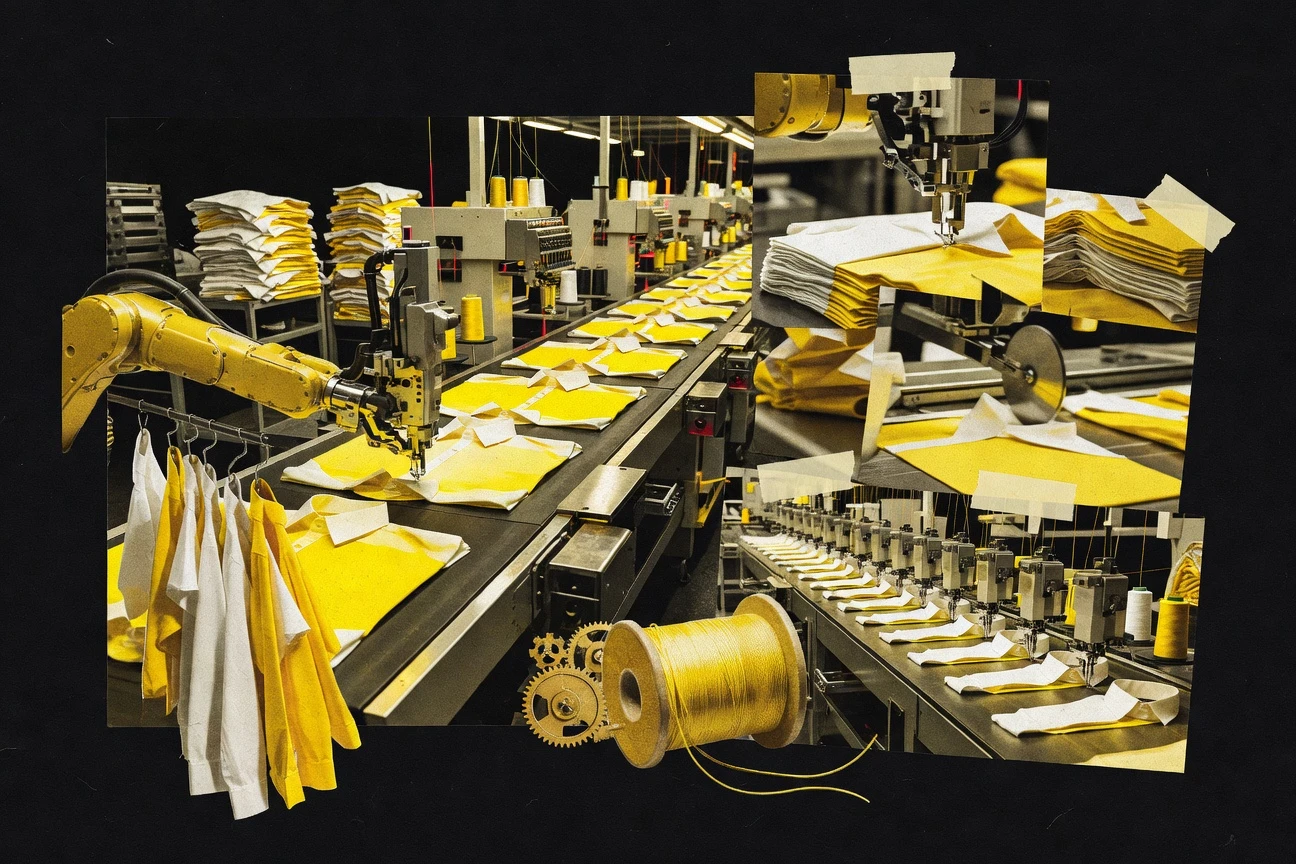
Why it matters: For brands and manufacturers evaluating onshore production, these figures define the new cost and capacity equation, directly impacting the viability of Made in USA lines against offshore competition.
Context: The push for nearshoring and supply chain resilience has intensified focus on domestic apparel manufacturing, but its high labor costs remain a primary constraint. Automation is the proposed lever to close this gap.
"Automation is turning apparel manufacturing into a high-speed, data-driven operation, with the industrial automation market climbing from $265.5B in 2022 to a projected $537.5B by 2030 and advances in robotics, machine vision,." — RAWSHOT.AI
Commentary: These vendor-provided metrics, while optimistic, set the benchmark for capital investment decisions. If achievable, a 30-50% labor reduction fundamentally alters the calculus for domestic cut-and-sew operations, shifting the bottleneck from manual dexterity to capital access and technical integration. The real test will be the operational performance of these systems at scale and their impact on final garment quality, which determines if automation enables reshoring or merely reconfigures the global supply chain around different fixed costs.
Date: April 19, 2026 12:00 AM ET
URL: https://rawshot.ai/statistic/automation-in-the-clothing-industry
AI Sentiment Score: Negative (66%)
AI Credibility Score: 10.0/10 — High
Scores and text generated by AI analysis of the source article indicated.
Textile Bulking Device Market Growth Analysis, Dynamics, Key Players and Innovations, Outlook and Forecast 2026-2034 (Intelmarketresearch)
Summary: The global textile bulking device market is projected to grow from $285.2 million in 2026 to $492.1 million by 2034, a CAGR of 6.8%. Growth is driven by expanding textile production, demand for higher-quality fabrics, and the integration of advanced control systems and automation into this specialized machinery. Key players include Oerlikon Barmag, Rieter, and Saurer.

Why it matters: For domestic textile manufacturers, this growth signals increased capital expenditure on automation to compete on quality and efficiency, directly impacting production line planning and vendor selection.
Context: This is a niche but critical segment of textile machinery, where automation and precision directly affect output quality and cost, factors central to reshoring and domestic manufacturing competitiveness.
"The market is projected to grow from USD 285.2 million in 2026 to USD 492.1 million by 2034, exhibiting a CAGR of 6.8% during the forecast period." — INTELMARKETRESEARCH
Commentary: The projected capital influx into this automation-heavy niche could pressure domestic manufacturers to upgrade or risk obsolescence, favoring vendors with integrated control systems. This isn’t just about market size; it’s a forced march toward smarter, more precise manufacturing that reshapes the cost-benefit analysis for any U.S. facility considering new fiber processing lines.
Date: April 17, 2026 12:00 AM ET
URL: https://www.intelmarketresearch.com/textile-bulking-device-market-41160
AI Sentiment Score: Negative (66%)
AI Credibility Score: 7.0/10 — Medium
Scores and text generated by AI analysis of the source article indicated.
TK Group invests additional $7.5m to expand high-value polyester yarn production (Tbsnews.Net)
Summary: TK Group’s subsidiary Modern Syntex is investing an additional $7.5 million to expand high-value polyester yarn production at Bangladesh’s National Special Economic Zone (NSEZ), securing a new 3.75-acre land lease. The expansion aims to increase import substitution, as a significant portion of Bangladesh’s polyester yarn is currently imported from China, Indonesia, South Korea, and India. The existing facility, built with German technology, already meets about 45% of domestic demand and exports goods worth about $30 million.

Why it matters: This expansion directly impacts the cost, lead times, and supply chain resilience for global apparel brands sourcing from Bangladesh, while shifting the competitive landscape for polyester yarn suppliers.
Context: Bangladesh’s garment industry has long relied on imported synthetic yarns; domestic backward linkage development is a strategic priority to retain value and reduce foreign exchange outflows.
"At present, a significant portion of Bangladesh’s polyester and synthetic yarn demand is met through imports from China, Indonesia, South Korea, and India. Industry stakeholders said local production helps save foreign exchange, reduce lead times, and lower costs in the industrial supply chain." — TBSNEWS.NET
Commentary: This investment signals a maturation of Bangladesh’s textile ecosystem, moving beyond cut-and-sew to higher-value raw material production. For brands, it offers potential for shorter, more predictable supply lines, but also introduces a new dependency on a concentrated domestic supplier base. The focus on ‘high-value’ yarn suggests a play for technical and performance apparel segments, not just commodity fabrics. This vertical integration within an economic zone model, supported by Beza, provides a template for other groups, potentially reshaping sourcing patterns away from traditional hubs like China and India for synthetics.
Date: April 15, 2026 12:00 AM ET
URL: https://www.tbsnews.net/agriculture/tk-group-invests-additional-75m-expand-high-value-polyester-yarn-production-1413466
AI Sentiment Score: Positive (40%)
AI Credibility Score: 10.0/10 — High
Scores and text generated by AI analysis of the source article indicated.
Modern Syntex to invest $7.5m to expand high value polyester yarn production (Textiletoday.Bd)
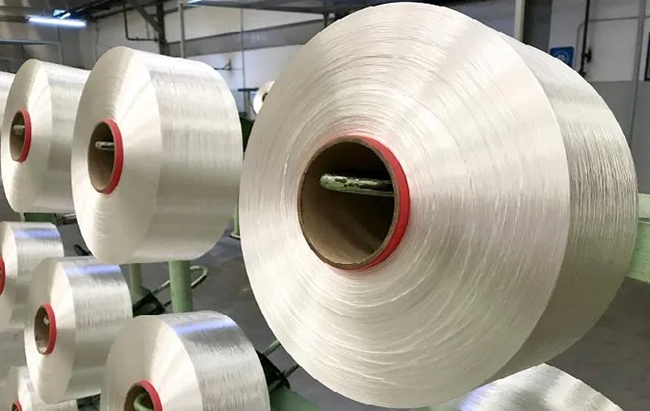
Summary: Modern Syntex Limited is investing $7.5 million to expand high-value polyester yarn production capacity at Bangladesh’s National Special Economic Zone in Mirsarai, covering a 3.75-acre site with advanced eco-friendly technologies. Capacity expansion signals increased localized supply, potentially tightening regional yarn availability.
Why it matters: Capacity expansion signals increased localized supply, potentially tightening regional yarn availability.
Context: Investment focus on ‘high-value’ and ‘eco-friendly’ suggests premium product lines, impacting sourcing tiers.
"Modern Syntex Limited is investing $7.5 million to expand high-value polyester yarn production capacity at Bangladesh’s National Special Economic Zone in Mirsarai, covering a 3.75-acre site with advanced eco-friendly technologies." — TEXTILETODAY.BD
Commentary: The signal is still worth tracking, but the current extraction path did not yield enough body text for a fuller analytical read. The immediate implication is operational rather than speculative: watch how this changes budgets, workflows, or risk assumptions over the next cycle.
Date: April 15, 2026 12:00 AM ET
URL: https://www.textiletoday.com.bd/modern-syntex-to-invest-75m-to-expand-high-value-polyester-yarn-production
AI Sentiment Score: Neutral (33%)
AI Credibility Score: 10.0/10 — High
Scores and text generated by AI analysis of the source article indicated.
Post ID: 249c5fe1