Archaeologists Signals
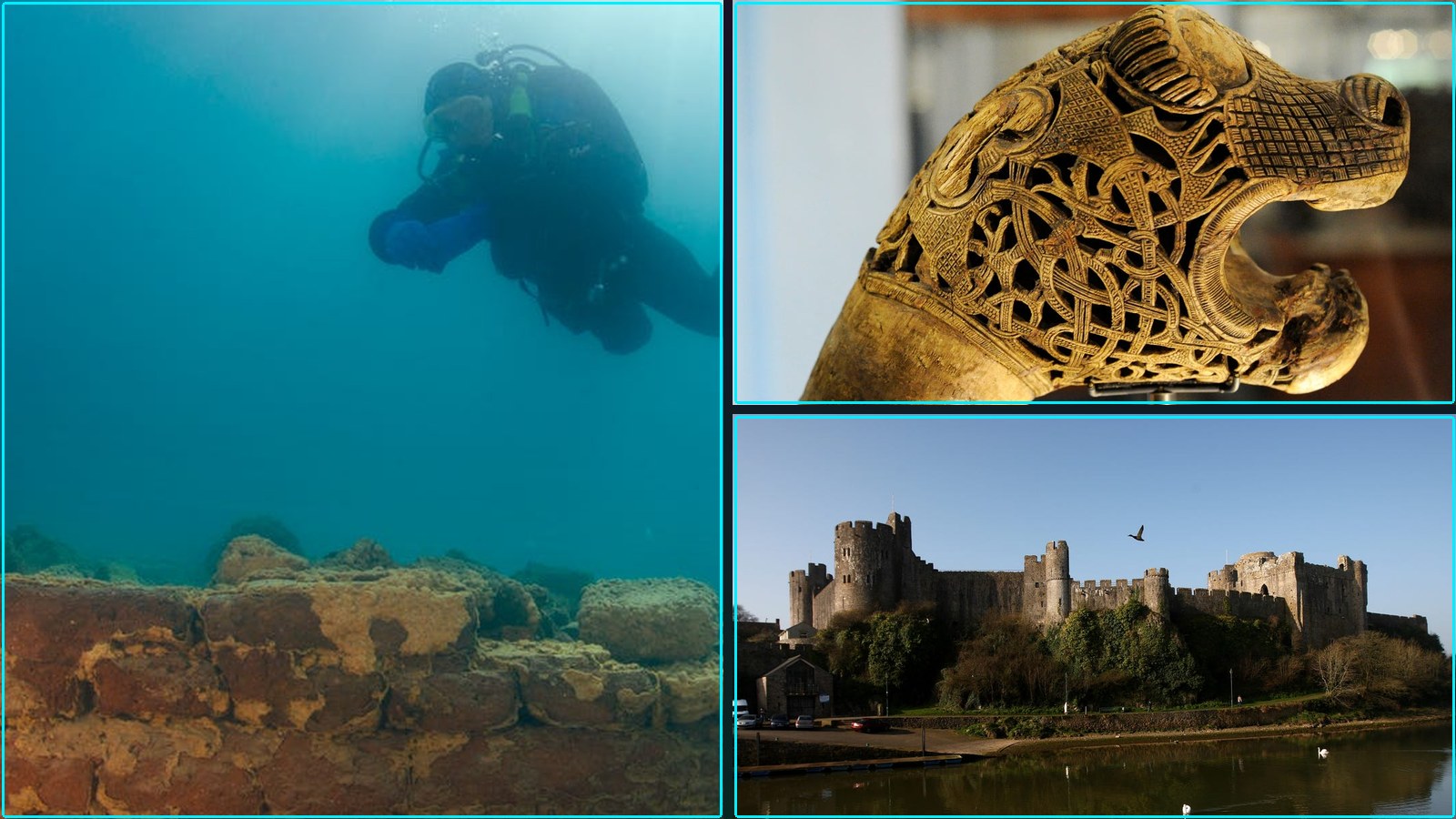
Archaeologists Found a Sunken Lost City at the Bottom of a Lake (Popularmechanics)
Summary: – Underwater archaeologists exploring a lake in Kyrgyzstan found a lost city. – The waters of Lake Issyk-Kul have hidden an important Silk Road city since the beginning of the 15th century. – Experts believe an earthquake redistributed the lake waters and submerged the city.

Why it matters: This matters for Ancient World because it gives a concrete current signal to track: – Underwater archaeologists exploring a lake in Kyrgyzstan found a lost city.
Context: – Underwater archaeologists exploring a lake in Kyrgyzstan found a lost city. – The waters of Lake Issyk-Kul have hidden an important Silk Road city since the beginning of the 15th century. – Experts believe an earthquake redistributed the lake waters and submerged the city.
"- Underwater archaeologists exploring a lake in Kyrgyzstan found a lost city. – The waters of Lake Issyk-Kul have hidden an important Silk Road city since the beginning of the 15th century." — POPULARMECHANICS
Commentary: The immediate implication is operational rather than speculative: watch how this changes budgets, workflows, or risk assumptions over the next cycle.
Date: April 25, 2026 12:00 AM ET
URL: https://www.popularmechanics.com/science/archaeology/a71126143/sunken-city-discovered/
AI Sentiment Score: Negative (66%)
AI Credibility Score: 10.0/10 — High
Scores and text generated by AI analysis of the source article indicated.
Archaeologists Found a Ship Buried in Norway. It’s Older than the … (Popularmechanics)
Summary: Here’s what you’ll learn when you read this story: – Analysis of a monumental ship burial in Norway is rewriting the history of a practice largely associated with the Viking age in Scandinavia. – Experts believe boat and ship burials predated the Vikings in Norway by at least 100 years and covered a wider area than previously known. – By researching a well-known mound, experts learned large sea-faring vessels were in use before Viking lore dominated the landscape.

Why it matters: This matters for Ancient World because it gives a concrete current signal to track: Here’s what you’ll learn when you read this story: – Analysis of a monumental ship burial in Norway is rewriting the history of a practice largely associated with the Viking age in Scandinavia.
Context: Here’s what you’ll learn when you read this story: – Analysis of a monumental ship burial in Norway is rewriting the history of a practice largely associated with the Viking age in Scandinavia. – Experts believe boat and ship burials predated the Vikings in Norway by at least 100 years and covered a wider area than previously known. – By researching a well-known mound, experts learned large sea-faring vessels were in use before Viking lore dominated the landscape.
"Here’s what you’ll learn when you read this story: – Analysis of a monumental ship burial in Norway is rewriting the history of a practice largely associated with the Viking age in." — POPULARMECHANICS
Commentary: The immediate implication is operational rather than speculative: watch how this changes budgets, workflows, or risk assumptions over the next cycle.
Date: April 24, 2026 12:00 AM ET
URL: https://www.popularmechanics.com/science/archaeology/a71110266/first-to-bury-ships/
AI Sentiment Score: Negative (75%)
AI Credibility Score: 10.0/10 — High
Scores and text generated by AI analysis of the source article indicated.
Archaeologists in Egypt have discovered a mummy containing a … (Ua.News)
Summary: # Archaeologists in Egypt have discovered a mummy containing a fragment of Homer’s Iliad UA NEWS 22 April 2026 15:19 An international team of archaeologists from Spain and Egypt has made a unique discovery in the ancient city of Oxyrhynchus: a mummy containing a fragment of Homer’s ancient Greek epic poem, The Iliad. This was reported by international media citing research findings, according to EuroNews.The artifact was found during excavations in Al-Bahna, approximately 190 kilometers south of Cairo. The work was carried out in the so-called “Tomb 65”—a hypogeum that, despite having been looted in the past, has preserved a significant number of funerary objects.During the research, archaeologists documented several mummies with bandages decorated with geometric patterns and bright colors.

Why it matters: This matters for Ancient World because it gives a concrete current signal to track: # Archaeologists in Egypt have discovered a mummy containing a fragment of Homer’s Iliad UA NEWS 22 April 2026 15:19 An international team of archaeologists from Spain and Egypt has made a unique discovery in the ancient city of Oxyrhynchus: a mummy containing a fragment of Homer’s ancient Greek epic poem, The Iliad.
Context: # Archaeologists in Egypt have discovered a mummy containing a fragment of Homer’s Iliad UA NEWS 22 April 2026 15:19 An international team of archaeologists from Spain and Egypt has made a unique discovery in the ancient city of Oxyrhynchus: a mummy containing a fragment of Homer’s ancient Greek epic poem, The Iliad. This was reported by international media citing research findings, according to EuroNews.The artifact was found during excavations in Al-Bahna, approximately 190 kilometers south of Cairo. The work was carried out in the so-called “Tomb 65”—a hypogeum that, despite having been looted in the past, has preserved a significant number of funerary objects.During the research, archaeologists documented several mummies with bandages decorated with geometric patterns and bright colors.
"# Archaeologists in Egypt have discovered a mummy containing a fragment of Homer’s Iliad UA NEWS 22 April 2026 15:19 An international team of archaeologists from Spain and Egypt has made a." — UA.NEWS
Commentary: The immediate implication is operational rather than speculative: watch how this changes budgets, workflows, or risk assumptions over the next cycle.
Date: April 22, 2026 12:00 AM ET
URL: https://ua.news/en/technologies/v-egipti-arkheologi-znaishli-mumiiu-z-fragmentom-iliadi-gomera
AI Sentiment Score: Negative (60%)
AI Credibility Score: 7.0/10 — Medium
Scores and text generated by AI analysis of the source article indicated.
Archaeologists Excavated a Cave Beneath an 11th-Century Castle … (Popularmechanics)
Summary: Here’s what you’ll learn when you read this story: – Excavations into the Wogan Cavern under Wales’ Pembroke Castle showed evidence of life from 120,000 years ago. – Preliminary data traced human activity at the site back to 45,000 years ago, but Neanderthals were likely there deeper into history. – The oldest finds are the remains of an assortment of animals, including hippopotamuses, woolly rhinoceroses, and reindeer.

Why it matters: This matters for Ancient World because it gives a concrete current signal to track: Here’s what you’ll learn when you read this story: – Excavations into the Wogan Cavern under Wales’ Pembroke Castle showed evidence of life from 120,000 years ago.
Context: Here’s what you’ll learn when you read this story: – Excavations into the Wogan Cavern under Wales’ Pembroke Castle showed evidence of life from 120,000 years ago. – Preliminary data traced human activity at the site back to 45,000 years ago, but Neanderthals were likely there deeper into history. – The oldest finds are the remains of an assortment of animals, including hippopotamuses, woolly rhinoceroses, and reindeer.
"Here’s what you’ll learn when you read this story: – Excavations into the Wogan Cavern under Wales’ Pembroke Castle showed evidence of life from 120,000 years ago. – Preliminary data traced human." — POPULARMECHANICS
Commentary: The immediate implication is operational rather than speculative: watch how this changes budgets, workflows, or risk assumptions over the next cycle.
Date: April 23, 2026 12:00 AM ET
URL: https://www.popularmechanics.com/science/archaeology/a71097302/welsh-castle-neanderthals/
AI Sentiment Score: Negative (50%)
AI Credibility Score: 10.0/10 — High
Scores and text generated by AI analysis of the source article indicated.
Post ID: 371f2910