New York City, NY
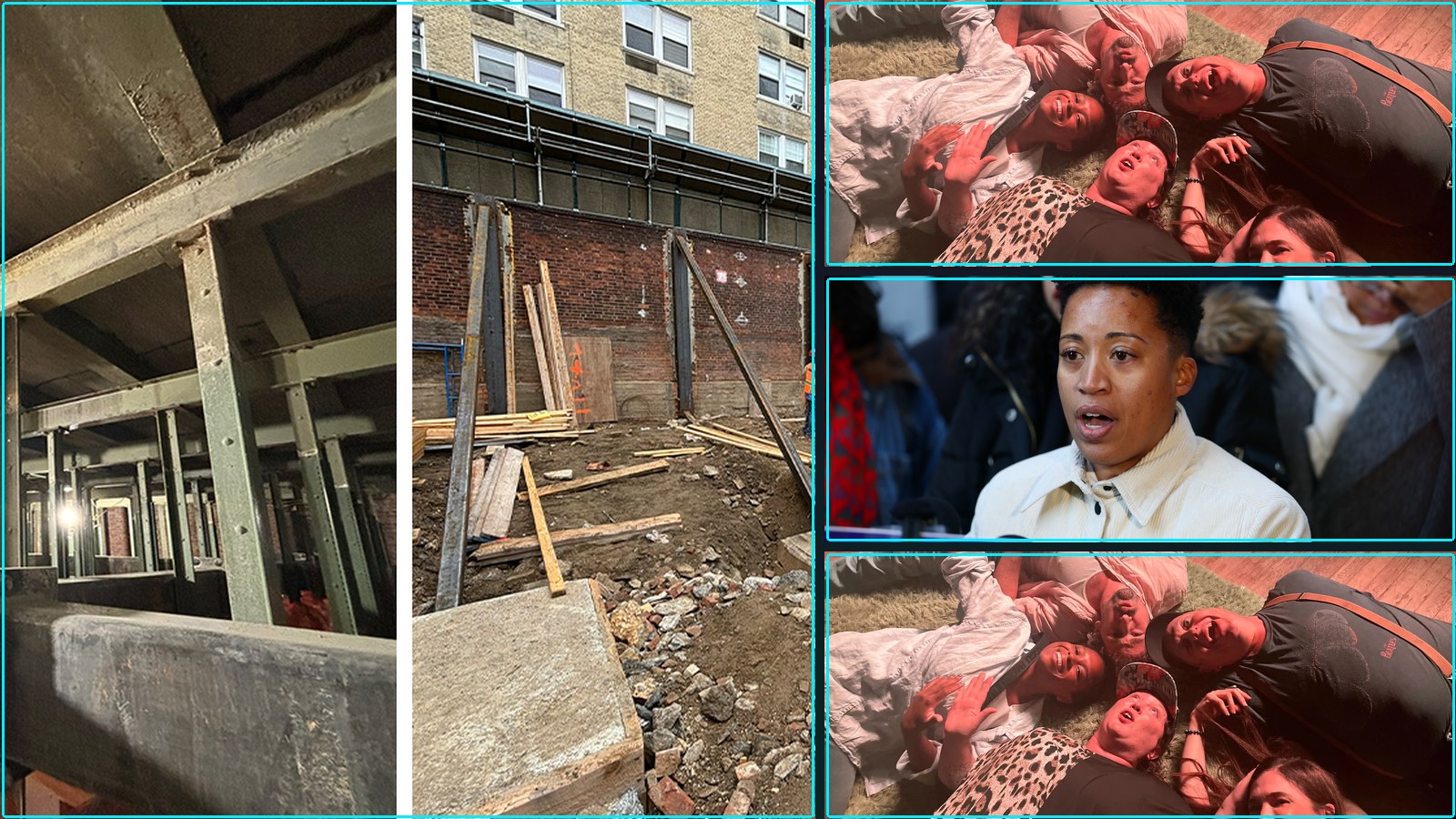
NYC affordable housing preferences for artists? A bill auditions in Albany. (Gothamist)
Summary: A new bill introduced in the New York State legislature seeks to clarify that affordable housing can legally be set aside for artists, addressing a perceived ‘legal gray area’ in city human rights law. The proposal, citing a 32% to 56% decline in artist populations in core Manhattan neighborhoods over the last decade, aims to slow an exodus of creatives priced out by the city’s housing crisis. It faces immediate questions about fairness and potential discrimination, as critics note favoring a profession may inadvertently favor specific demographic groups overrepresented within it.

Why it matters: This legislative move is a direct intervention in the economic composition of New York’s cultural capital, testing whether a city can policy-engineer the retention of a specific labor class essential to its global identity.
Context: Artist-specific housing, like the historic Manhattan Plaza, has existed, but the legal framework for new projects is contested. The debate occurs amid a broader affordability crisis that uniquely layers residential, studio, and performance-space costs on artists.
"What’s the makeup of that profession? Does it tend to be representative of a particular race, religion, whatever?” he asked. “So if you’re favoring that profession, you’re also at least possibly favoring whatever group is heavily represented in that profession, and therefore you’re possibly discriminating against those who are not as heavily involved in that profession." — GOTHAMIST
Commentary: The bill attempts to treat artists as a protected economic sector, a significant shift from place-based or income-based housing policy. Its passage would create a formal, state-sanctioned pipeline for cultural labor retention, but it risks establishing a problematic precedent of occupational favoritism in a resource-scarce system. The outcome will signal whether New York views its artistic workforce as a public good worthy of subsidy or a market outcome to be accepted.
Date: Thu, 30 Apr 2026 15:33:00 +0000
URL: https://gothamist.com/news/nyc-affordable-housing-preferences-for-artists-a-bill-auditions-in-albany
AI Sentiment Score: Negative (50%)
AI Credibility Score: 10.0/10 — High
Scores and text generated by AI analysis of the source article indicated.
NYC shelters need ‘reassessment’ after Gothamist probe into violent site, lawmaker says (Gothamist)
Summary: A Gothamist investigation into the Tillary Street Women’s Shelter in Downtown Brooklyn reveals a facility with a rate of serious incidents—assaults, overdoses, deaths—more than double the citywide average, leading some residents to choose the streets over shelter. Councilmember Crystal Hudson, chair of the committee overseeing homeless services, called for a ‘reassessment’ of shelter models, citing systemic failure. The shelter’s previous operator, the Institute for Community Living, exited its contract early, and management has shifted to the Bowery Residents’ Committee amid broader city efforts to open smaller, trauma-informed facilities.

Why it matters: The operational and humanitarian crisis at a key shelter exposes the structural flaws in New York’s right-to-shelter system, challenging the city’s capacity to serve its most vulnerable and affecting its foundational social contract.
Context: This investigation lands as Mayor Mamdani’s administration begins a push to revamp the shelter system, closing large intake centers like Bellevue, while advocates have long argued that large congregate shelters are ill-suited for populations with complex mental health and addiction needs.
"A Gothamist investigation into long-standing dangerous conditions at the 200-bed Tillary Street Women’s Shelter in Downtown Brooklyn shows why homeless people sometimes choose to sleep on the streets rather than enter New." — GOTHAMIST
Commentary: The Tillary case is a stress test for the nonprofit-contractor model underpinning New York’s shelter infrastructure, revealing accountability gaps that no change in operator alone can fix. It forces a concrete policy choice: continue scaling large, cost-efficient facilities or pivot to smaller, higher-service models that may reduce violence but require greater capital and operational investment. The outcome will signal whether the city prioritizes warehousing or rehabilitation, with direct implications for real estate use, nonprofit contracting, and the visible conditions on streets and subways.
Date: Thu, 30 Apr 2026 12:00:50 +0000
URL: https://gothamist.com/news/nyc-shelters-need-reassessment-after-gothamist-probe-into-violent-site-lawmaker-says
AI Sentiment Score: Negative (66%)
AI Credibility Score: 10.0/10 — High
Scores and text generated by AI analysis of the source article indicated.
Annual Report on Capital Debt and Obligations, Fiscal Year 2025 (Comptroller.Nyc.Gov)
Summary: The New York City Comptroller’s annual debt report details the city’s capital financing structure, which is constitutionally capped. A central component of the 2025-2029 MTA Capital Plan is the $15 billion in funding projected from the Central Business District Tolling Program (congestion pricing). The program’s implementation was paused in June 2024 but has been approved to begin in January 2025, securing a critical revenue stream for the $68.4 billion plan.
Why it matters: The activation of congestion pricing directly underwrites the region’s core transit infrastructure, affecting density, labor mobility, and the city’s fiscal capacity to fund other capital projects like schools and housing.
Context: The MTA’s capital plans have long relied on politically contentious dedicated revenue streams, with congestion pricing being the most significant and delayed new source in decades.
"The implementation of the CBD Tolling Program, which is projected to generate revenue to support $15.0 billion of funding for the MTA Capital Program, was paused in early June, just weeks before it was scheduled to go into effect on June 30, 2024." — COMPTROLLER.NYC.GOV
Commentary: The near-collapse and subsequent rescue of the tolling program exposes the brittle financial engineering underpinning New York’s infrastructure. Its January 2025 start date locks in a major behavioral tax on Manhattan’s core, which could reshape commercial traffic patterns and finally provide the MTA with a predictable, asset-backed revenue line—a model other dense, gridlocked global capitals will dissect.
Date: April 24, 2026 12:00 AM ET
URL: https://comptroller.nyc.gov/reports/annual-report-on-capital-dept-and-obligations-fiscal-year-2025/
AI Sentiment Score: Negative (50%)
AI Credibility Score: 10.0/10 — High
Scores and text generated by AI analysis of the source article indicated.
NYC Department of City Planning – Organization – Idealist (Idealist)
Summary: The New York City Department of City Planning (DCP) is the central agency for land use, zoning, and strategic growth policy. It initiates neighborhood-specific and citywide zoning changes and reviews roughly 450 land use applications annually. Its work directly shapes the physical and economic fabric of the city.

Why it matters: The DCP’s discretionary power over zoning and land use is the primary lever for determining New York’s density, housing supply, commercial corridors, and public space, making its operations a critical node for real estate, community development, and cultural geography.
Context: As New York grapples with a housing crisis and post-pandemic spatial reconfiguration, the DCP’s role in approving or blocking projects has become a focal point for debates over growth, equity, and neighborhood character.
"The Department of City Planning (DCP) promotes strategic growth, transit-oriented development and sustainable communities to enhance quality of life in the City, in part by initiating comprehensive, consensus-based planning and zoning changes for individual neighborhoods and business districts, as well as establishing policies and zoning regulations applicable citywide." — IDEALIST
Commentary: The agency’s mandate for ‘consensus-based’ planning often functions as a bottleneck, empowering local veto points and slowing housing production. Its annual review of hundreds of applications represents a continuous, low-visibility negotiation that cumulatively defines the city’s development trajectory, favoring incrementalism over transformative change unless politically directed.
Date: April 24, 2026 12:00 AM ET
URL: https://www.idealist.org/en/government/fe0eae554c35498c90f27225f44f52e4-nyc-department-of-city-planning-new-york
AI Sentiment Score: Negative (60%)
AI Credibility Score: 10.0/10 — High
Scores and text generated by AI analysis of the source article indicated.
New York Historical Society Renovation and Expansion – KCI.com (Kci)
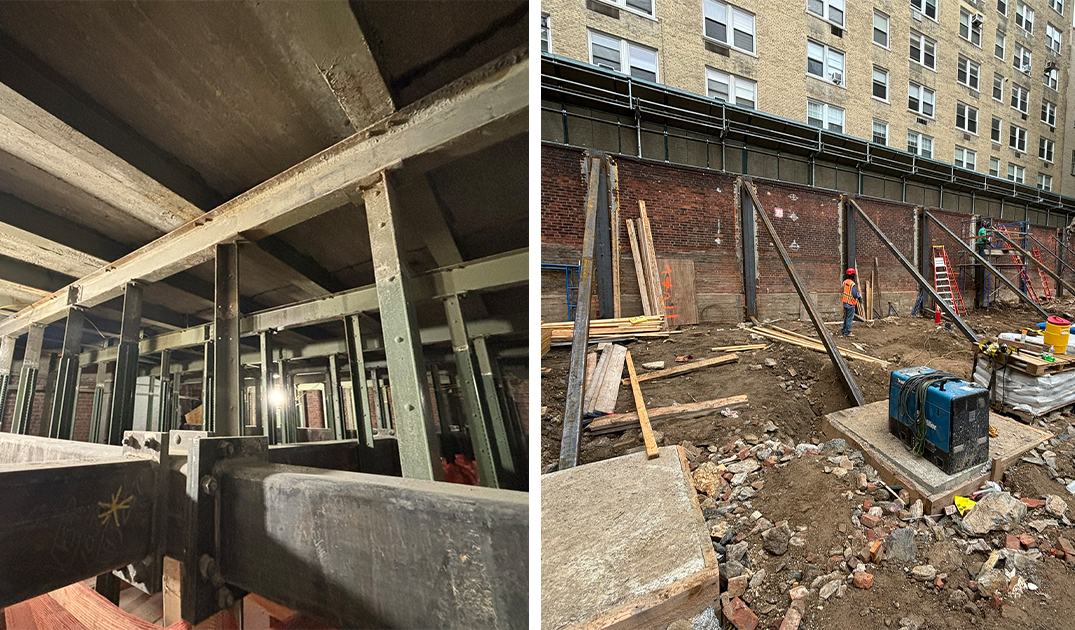
Summary: The New York Historical Society has completed a major structural renovation and expansion, adding 80,000 square feet of new space. The project integrates a new annex with the 1908 landmark building, creating new galleries, classrooms, and a dedicated children’s history museum. Critically, it provides the first permanent home for the American LGBTQ+ Museum.
Why it matters: This expansion physically re-centers a foundational cultural institution, altering the archival and exhibition capacity for American history on a prime Upper West Side corridor and creating a permanent institutional foothold for a major new museum.
Context: The project represents a significant capital investment in a legacy cultural institution, requiring complex engineering to modify a historic structure within dense urban constraints, a pattern seen at MoMA and the Met but with a distinct focus on integrating a new, identity-focused museum.
"The project adds approximately 80,000 square feet of new space, including exhibition galleries, classrooms, a children’s history museum, and the first permanent home for the American LGBTQ+ Museum, integrating a new annex with the original 1908 historic structure." — KCI
Commentary: The integration of the American LGBTQ+ Museum is not just an add-on; it formally embeds a once-marginalized narrative into the physical and institutional core of a canonical history museum. This shifts the Society from being a custodian of a settled past to an active arena for contested history, likely influencing donor priorities and public programming. The engineering feat—modifying a Beaux-Arts landmark on Central Park West—signals that even the most established cultural real estate is now subject to radical reinvention to remain relevant.
Date: April 20, 2026 12:00 AM ET
URL: https://www.kci.com/projects/new-york-historical-society-renovation-and-expansion/
AI Sentiment Score: Neutral (33%)
AI Credibility Score: 8.7/10 — High
Scores and text generated by AI analysis of the source article indicated.
Post ID: db78cb88