Apparel Sourcing, Tariffs & Supply Chain Disruption
Chaos and confusion in the Strait of Hormuz could drive apparel production costs up 15% (Glossy.Co)
Summary: Geopolitical instability in the Strait of Hormuz has halted commercial shipping for three days, creating a legal and logistical morass for importers. Iran has instituted new tolls and an application process for passage, while the U.S. threatens sanctions for compliance, paralyzing shipping companies. This directly impacts apparel and textile shipments from hubs like India and Bangladesh, with forecasts of a 10-15% increase in production costs and a 30-50% rise in shipping expenses. The seasonal nature of fashion makes extended reroutes via the Cape of Good Hope particularly damaging, risking stock imbalances and forced markdowns.

Why it matters: For fashion supply chain managers and brand operators, this introduces concrete cost inflation, lead time uncertainty, and immediate operational decisions around freight, inventory, and contracting.
Context: This follows a pattern of regional conflicts, like the 2024 Red Sea disruptions, translating into delayed but severe cost impacts on global supply chains, with risk surcharges and capacity management lagging the news cycle.
"According to the Business and Human Rights Centre, global textile production costs are likely to increase by 10-15% as delays continue. The United Nations Conference on Trade and Development expects shipping costs alone to increase 30-50% in the near future." — GLOSSY.CO
Commentary: The immediate operational shift is from cost optimization to risk mitigation: forwarders must provide granular, SKU-level landed cost reports including war risk insurance; procurement must lock in committed allocation contracts despite higher rates; and inventory planning must pivot to modeling runway in weeks, not dollars. The strategic implication is a forced reevaluation of freight mix, with air freight becoming a viable, if expensive, contingency for time-sensitive seasonal product, compressing margins but preserving sell-through.
Date: Fri, 08 May 2026 21:27:47 +0000
URL: https://www.glossy.co/fashion/chaos-and-confusion-in-the-strait-of-hormuz-could-drive-apparel-production-costs-up-15/
AI Sentiment Score: Negative (92%)
AI Credibility Score: 10.0/10 — High
Scores and text generated by AI analysis of the source article indicated.
fashion brands’ purchasing practices during the US tariff crisis (Business-Humanrights)
Summary: The 2025 US tariff regime, later ruled unlawful, triggered immediate and severe shifts in fashion brand purchasing practices. Brands responded by pausing orders, demanding price reductions from suppliers, and rapidly reallocating sourcing to lower-tariff jurisdictions. This financial pressure was passed directly to factories, leading to documented spikes in labor rights abuses, including wage theft and layoffs, as suppliers absorbed costs.
 "Freak Pulse placeholder: no illustrative image available from news item source")
Why it matters: For sourcing executives, production managers, and compliance officers, this illustrates how macroeconomic policy directly translates into operational risk and labor violations within their supply chains, requiring proactive contract and relationship management.
Context: This follows a historical pattern where trade policy shocks are absorbed by the most vulnerable nodes in apparel supply chains, with brands leveraging power asymmetries to protect margins.
"In supply chains characterised by significant power asymmetries between buyers and suppliers, rapid purchasing practice adjustments place immediate, severe financial pressure on factories operating on narrow margins – with direct implications for workers at the bottom of the supply chain." — BUSINESS-HUMANRIGHTS
Commentary: The report underscores that tariff events are not just financial hedges but operational crises for suppliers, forcing a reevaluation of ‘flexibility’ as a sourcing virtue. Brands that fail to honor existing commitments or protect worker wages during such shifts face not only legal risk but also long-term reputational and supply chain instability.
Date: May 07, 2026 12:00 AM ET
URL: https://www.business-humanrights.org/en/from-us/briefings/us-tariffs/commercial-priorities-human-costs-brand-purchasing-practices-during-the-us-tariff-crisis/
AI Sentiment Score: Negative (60%)
AI Credibility Score: 10.0/10 — High
Scores and text generated by AI analysis of the source article indicated.
Apparel brands’ responses to the 2025 US tariffs led to significant … (Business-Humanrights)
Summary: A 2026 report from the Business and Human Rights Centre details how apparel brands’ commercial responses to the 2025 US tariffs directly translated into human rights harms for garment workers. Brands rapidly shifted orders away from higher-tariff countries, canceled or delayed orders, and pressured suppliers to absorb costs, pushing financial shocks down the supply chain. The resulting factory closures, layoffs, wage cuts, and payment delays disproportionately impacted women and migrant workers in countries like Bangladesh, Cambodia, and Sri Lanka.

Why it matters: For sourcing executives, production managers, and compliance officers, this report quantifies the operational and ethical cost of reactive tariff mitigation, framing purchasing practices as a direct human rights lever.
Context: This follows a long-standing pattern where commercial pressure from brands during disruptions (like the pandemic or trade policy shifts) is absorbed by suppliers and ultimately borne by workers, highlighting a systemic failure in responsible sourcing commitments.
"Across multiple sourcing countries including Bangladesh, Cambodia, Lesotho, Sri Lanka and India, suppliers consistently reported orders being delayed, paused or cancelled as buyers reassessed sourcing in response to tariff driven cost pressures." — BUSINESS-HUMANRIGHTS
Commentary: The report operationalizes ‘responsible purchasing’ by specifying concrete actions: honoring agreed prices and orders, protecting wages and severance. For brands, this creates a measurable due diligence checklist; for suppliers, it provides a benchmark for contract negotiations. The findings shift the compliance burden upstream, making a brand’s internal cost-absorption calculus a critical factor in its human rights risk profile.
Date: April 23, 2026 12:00 AM ET
URL: https://www.business-humanrights.org/en/from-us/press-releases/apparel-brands-responses-to-the-2025-us-tariffs-led-to-significant-human-rights-risks-for-workers/
AI Sentiment Score: Negative (87%)
AI Credibility Score: 10.0/10 — High
Scores and text generated by AI analysis of the source article indicated.
Gap Q4 2025 slides: tariff pressures weigh on margins … (Investing)
Summary: Gap Inc. reported Q4 FY2025 results meeting analyst expectations with $4.2B in sales and an eighth consecutive quarter of positive comps. The headline figure, however, was a 200 basis point tariff impact on gross margins, which the company absorbed while still showing underlying margin expansion. The performance was uneven across the brand portfolio, with Gap and Banana Republic posting positive comps while Athleta declined 10%. The company exits the quarter with a strengthened $3B cash position.

Why it matters: For apparel operators, Gap’s results quantify the tangible margin cost of ongoing tariff regimes and demonstrate a playbook for managing through them while funding new growth vectors.
Context: This follows a multi-year pattern where major apparel retailers report solid underlying demand but face persistent margin compression from geopolitical trade policy, forcing a focus on pricing, sourcing, and portfolio discipline.
"The company’s Q4 gross margin of 38.1% declined 80 basis points year-over-year, but management emphasized this figure included roughly 200 basis points of net tariff impact, implying approximately 120 basis points of underlying margin expansion." — INVESTING
Commentary: The 200bps tariff hit is a direct operating cost that could pressure sourcing teams to renegotiate contracts and may force smaller competitors without Gap’s scale out of certain categories. The cash hoard, up $400M year-over-year, provides ammunition to fund the stated ‘growth accelerators’ in beauty and accessories while Athleta’s transformation lags, creating a portfolio management challenge that will consume executive attention and capital allocation decisions.
Date: May 03, 2026 12:00 AM ET
URL: https://www.investing.com/news/company-news/gap-q4-2025-slides-tariff-pressures-weigh-on-margins-despite-sales-momentum-93CH-4545807
AI Sentiment Score: Negative (50%)
AI Credibility Score: 10.0/10 — High
Scores and text generated by AI analysis of the source article indicated.
War and tariffs trigger historic shock in $82 bn US apparel sourcing (Fibre2Fashion)
Summary: The US apparel import market, valued at $82 billion, is experiencing its most severe supply chain shock since the pandemic due to war-related disruptions. The closure of the Strait of Hormuz and the Red Sea corridor, combined with soaring crude oil prices, has triggered a sharp rise in container freight rates, emergency war surcharges, and polyester costs. This is embedding a significant ‘war tax’ into garment production costs and is actively reshaping sourcing patterns, disadvantaging distant suppliers like Bangladesh while benefiting nearshoring options.
Why it matters: For sourcing executives, brand strategists, and supply chain managers, this shock directly alters cost structures, vendor selection criteria, and inventory planning cycles, forcing immediate operational recalibrations.
Context: This disruption compounds a multi-year trend of US apparel sourcing shifting away from China due to tariffs, making supply chains more fragile and cost-sensitive just as a new geopolitical crisis hits.
"For an industry where more than per cent of clothing sold in America is imported, and where tariffs had already driven China’s share from .* per cent to **.* per cent in four years, this war-driven supply chain rupture arrives at the worst possible moment." — FIBRE2FASHION
Commentary: The immediate effect is a forced acceleration of nearshoring, but the deeper implication is a structural increase in landed costs that will compress margins across the board. Brands will be forced to choose between absorbing the ‘war tax’ or passing it to consumers in a price-sensitive market, while procurement teams must rapidly audit and dual-source from less exposed corridors like Vietnam and the Western Hemisphere.
Date: April 29, 2026 12:00 AM ET
URL: https://www.fibre2fashion.com/news/apparel-news/war-and-tariffs-trigger-historic-shock-in-82-bn-us-apparel-sourcing-309054-newsdetails.htm
AI Sentiment Score: Negative (66%)
AI Credibility Score: 10.0/10 — High
Scores and text generated by AI analysis of the source article indicated.
U.S. Apparel Manufacturing Plummets 17% in 2025 (Worldtextilesjournal)
Summary: The 2026 Kearney Reshoring Index reports U.S. apparel manufacturing output fell 17% in 2025, contradicting the stated goal of aggressive tariff policies. Instead of returning production stateside, 75% of companies pulling sourcing from China moved to other low-cost Asian nations, with only 20% considering domestic manufacturing viable. The sector’s low R&D budgets inhibit automation, keeping it reliant on manual labor too expensive for U.S. economics, while volatile tariff policy created market paralysis.
Why it matters: For sourcing executives and production managers, this signals that the operational calculus for reshoring remains prohibitive, locking in reliance on Asian supply chains regardless of policy intent.
Context: This follows years of political rhetoric and tariff actions aimed at reviving domestic manufacturing, testing whether policy alone can overcome structural economic disadvantages.
"U.S. apparel manufacturing output (MGO) actually plummeted by 17 percent throughout 2025." — WORLDTEXTILESJOURNAL
Commentary: The data confirms that tariffs failed as an industrial policy lever for apparel; the real constraint is the sector’s inability to finance the automation required to offset U.S. labor costs. This entrenches Asian supply chain dominance and forces brands to manage volatility through regional diversification, not domestic investment, reshaping long-term sourcing strategy.
Date: May 05, 2026 12:00 AM ET
URL: https://worldtextilesjournal.com/index.php/america/446-u-s-apparel-manufacturing-plummets-17-in-2025
AI Sentiment Score: Negative (50%)
AI Credibility Score: 7.0/10 — Medium
Scores and text generated by AI analysis of the source article indicated.
US year-end review 2025: Caught in its own web – Fibre2Fashion (Fibre2Fashion)
Summary: US fashion tariffs, imposed with the stated goal of reshoring, have instead created a disproportionate cost burden on an industry that remains overwhelmingly import-dependent. Apparel, representing only 2.5% of total US imports, contributed 15.6% of total tariff duties in 2024, with average rates rising to 14.6%. Brands face landed cost increases of 15-50%, forcing margin squeezes and price hikes, while the search for low-tariff sourcing havens has largely failed.
Why it matters: For practitioners, this fundamentally alters sourcing calculus, margin structures, and pricing strategies, while narrowing viable supplier options.
Context: This follows years of escalating US-China trade tensions and the broader application of Section 301 tariffs, testing the resilience of globalized fashion supply chains.
"In 2024, apparel accounted for about 2.5 per cent of total US imports yet contributed approximately 15.6 per cent of total tariff duties, according to US International Trade Commission (USITC)." — FIBRE2FASHION
Commentary: The policy has backfired operationally, creating a tax on the industry’s existing structure rather than catalyzing its transformation. Sourcing teams must now prioritize speed and qualitative factors over pure cost, as tariff differentials between regions have flattened. Mid-tier and independent labels face an existential margin crunch, potentially accelerating market consolidation. The result is a less efficient, more expensive supply chain with no clear domestic manufacturing upside.
Date: April 29, 2026 12:00 AM ET
URL: https://www.fibre2fashion.com/news/textile-news/us-year-end-review-2025-caught-in-its-own-web-307362-newsdetails.htm
AI Sentiment Score: Negative (50%)
AI Credibility Score: 10.0/10 — High
Scores and text generated by AI analysis of the source article indicated.
fashion brands’ purchasing practices during the US tariff … (Business-Humanrights)
Summary: A 2025-2026 study by the Business and Human Rights Centre documents how fashion brands’ crisis sourcing responses to U.S. tariffs—including order cancellations, price renegotiations, and supplier shifts—directly transferred commercial shock to garment workers, resulting in labor rights violations. The report argues that responsible purchasing practices are most critical during supply chain disruption, not conditional on stability.
Why it matters: For sourcing executives and production managers, this report provides evidence that crisis-driven cost-cutting directly destabilizes supplier operations and violates ethical commitments, creating legal and reputational risk.
Context: This follows a pattern where macroeconomic or trade policy shocks (e.g., pandemic, tariff wars) expose the fragility of apparel’s just-in-time supply chains and the asymmetry of risk between brands and suppliers.
"# Commercial priorities, human costs: fashion brands’ purchasing practices during the US tariff crisis Sweeping tariffs imposed by the United States in 2025 sent significant shockwaves through global garment supply chains –." — BUSINESS-HUMANRIGHTS
Commentary: The report operationalizes ‘responsible purchasing’ from a vague ESG principle into a concrete crisis discipline: it forces brands to model tariff impacts as a labor cost, not just a landed-cost variable. This could pressure CFOs to fund supply chain continuity buffers or face escalated NGO litigation and union campaigns targeting specific order books.
Date: April 28, 2026 12:00 AM ET
URL: https://www.business-humanrights.org/en/from-us/briefings/us-tariffs/
AI Sentiment Score: Negative (91%)
AI Credibility Score: 10.0/10 — High
Scores and text generated by AI analysis of the source article indicated.
US Clothing Imports Are Not Just Slowing, they Are Becoming … (Wto-Mww)
Summary: US apparel and footwear import volumes are declining, but the more significant operational challenge is the convergence of multiple volatile pressures: softening mid-market demand, rising raw-material and transport costs, unpredictable tariff shifts, sourcing diversification away from China, and heightened cargo security risks. This transforms a straightforward buying function into a complex, integrated planning problem where timing mismatches—costs hitting at different stages of production and logistics—can compound margin erosion. Inventory buffers remain thin at six to eight weeks, leaving little room for error when orders, production, and freight are already locked in.

Why it matters: For fashion importers, planners, and logistics teams, this shifts the core challenge from procurement to integrated risk management, demanding earlier coordination across sourcing, inventory, tariffs, and security to protect margins.
Context: This follows years of post-pandemic supply chain rebalancing, ongoing US-China trade policy uncertainty, and rising incidents of cargo theft, particularly for high-value, seasonal apparel.
"US Clothing Imports Are Not Just Slowing, they Are Becoming Harder to Plan … US apparel and footwear imports are weakening, but the bigger issue isnot volume alone. Apparel supply chains are." — WTO-MWW
Commentary: The article correctly frames the issue as a systems-integration failure waiting to happen for teams operating in silos. The practical implication is that sourcing strategy must now be stress-tested against concurrent tariff, freight, and security scenarios, not just unit cost. This elevates the role of supply chain planners and risk managers within brand and importer orgs, requiring real-time data sharing between procurement, logistics, and finance that most current ERP setups lack. Treating cargo security as a margin-protection lever, not just a loss-prevention cost, is a sharp operational insight for brands with high-resale-value products.
Date: April 23, 2026 12:00 AM ET
URL: https://www.wto-mww.com/en/post/us-clothing-imports-are-not-just-slowing-they-are-becoming-harder-to-plan
AI Sentiment Score: Negative (66%)
AI Credibility Score: 10.0/10 — High
Scores and text generated by AI analysis of the source article indicated.
Navigating Import Regulations for Textiles and Apparel … (Exploretex)
Summary: Import compliance for textiles and apparel has evolved from a logistical hurdle to a core strategic function defined by data transparency and environmental regulation. The EU’s Green Deal and a volatile US tariff landscape, with average effective rates at 9.1% following a 2026 Supreme Court decision, demand sophisticated real-time tracking. The new India-UK FTA introduces a strategic sourcing trade-off between cost and regulatory alignment, favoring hybrid models. Labeling and HTS code accuracy are now critical legal and financial liabilities.

Why it matters: For fashion operators, compliance failure now directly threatens cash flow, market access, and brand viability, making trade expertise a competitive advantage.
Context: A broader shift from trade liberalization to ‘responsible regulation’ is embedding environmental and data-traceability requirements directly into customs clearance.
"In the global fashion economy of 2026, the movement of goods is no longer just about logistics—it is about data, transparency, and high-stakes compliance. For fashion brands and retailers, **navigating import regulations." — EXPLORETEX
Commentary: The Supreme Court’s IEEPA ruling reduces political volatility but locks in structurally higher costs, forcing brands to permanently absorb the 9.1% rate into their margin models. This solidifies the advantage of FTA-sourced or nearshored production for basics, while high-margin, compliance-intensive items will require partners with deep EU technical documentation capabilities. The operational consequence is a bifurcated supply chain strategy, not a unified one.
Date: April 22, 2026 12:00 AM ET
URL: https://exploretex.com/navigating-import-regulations-for-textiles-and-apparel/
AI Sentiment Score: Positive (66%)
AI Credibility Score: 10.0/10 — High
Scores and text generated by AI analysis of the source article indicated.
The New Rules of Global Sourcing: How Automation and … (Thechain.Media)
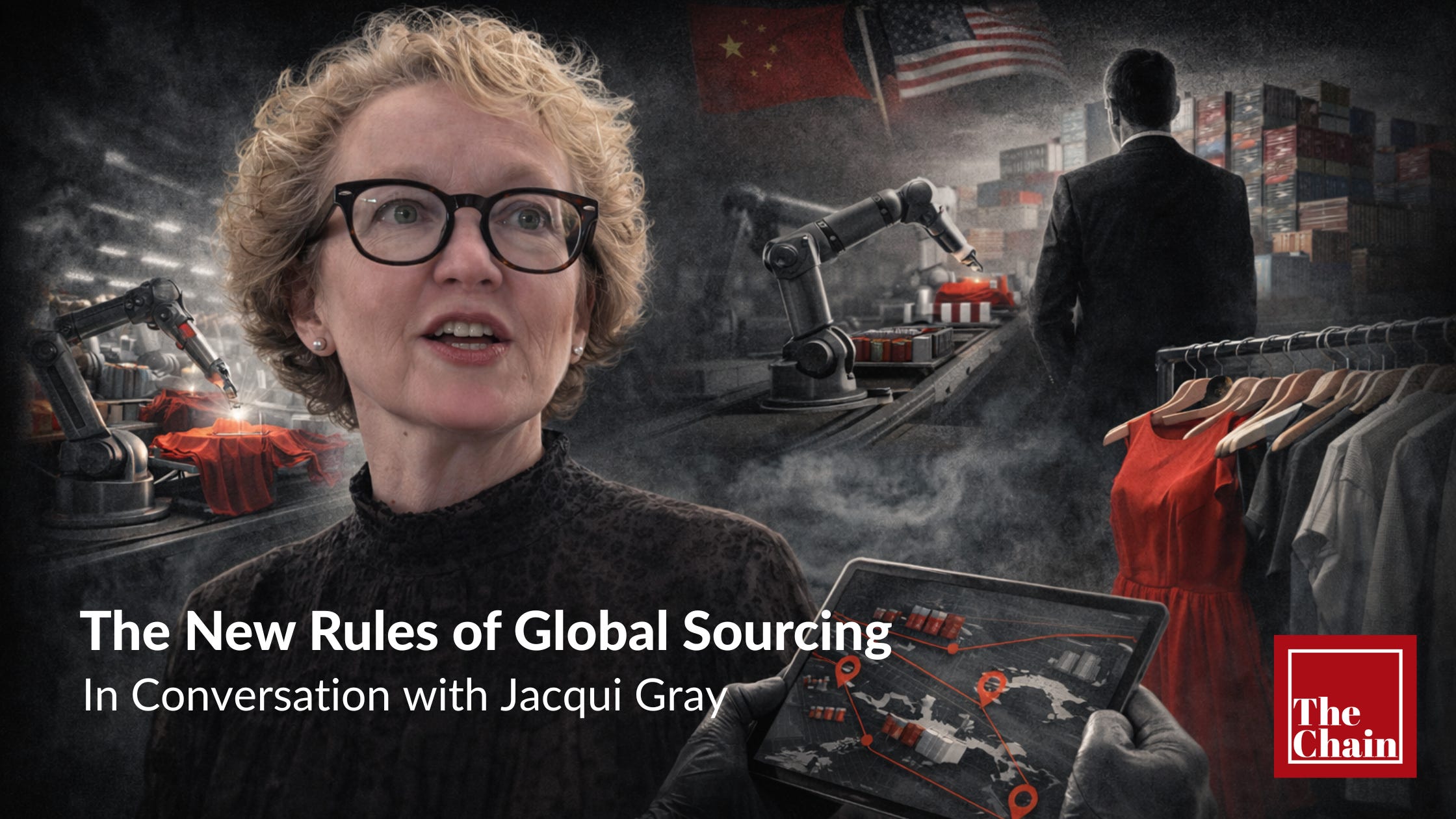
Summary: Global fashion sourcing is undergoing a structural shift driven by two primary forces: automation as a response to an aging workforce in key manufacturing hubs like China, and geopolitical realignment due to U.S. tariffs. This is forcing brands and suppliers into a multi-year strategic recalibration, weighing the long-term investment in new production regions against the immediate pressure of tariff exposure. The process of building new capacity, such as denim manufacturing in Egypt, requires significant capital and years of lead time, creating a lag between policy shifts and operational changes.
Why it matters: For sourcing executives and brand strategists, this changes the five-year planning horizon, demanding a more forensic, multi-tool approach to supplier evaluation and margin protection.
Context: This follows a decade of consolidation in Asian manufacturing and the post-COVID acceleration of nearshoring and ‘China +1’ strategies, now compounded by specific tariff regimes.
"A Chinese supplier whose business is 60% American has seen volume drop this year." — THECHAIN.MEDIA
Commentary: The decoupling is now quantifiable at the supplier level, moving from theoretical risk to concrete volume loss. This will accelerate the bifurcation of the supplier base into U.S.-focused and non-U.S.-focused entities, forcing brands to dual-track their sourcing pipelines. The executive’s caution against over-reliance on AI underscores that vendor assessment remains a high-touch, experience-driven process, even as new tools are adopted. The five-year transition window means current sourcing decisions lock in cost structures and operational flexibility for the medium term.
Date: April 30, 2026 12:00 AM ET
URL: https://www.thechain.media/p/the-new-rules-of-global-sourcing
AI Sentiment Score: Negative (77%)
AI Credibility Score: 7.0/10 — Medium
Scores and text generated by AI analysis of the source article indicated.
How geopolitics is redefining fashion supply chains and … (Apparelviews)
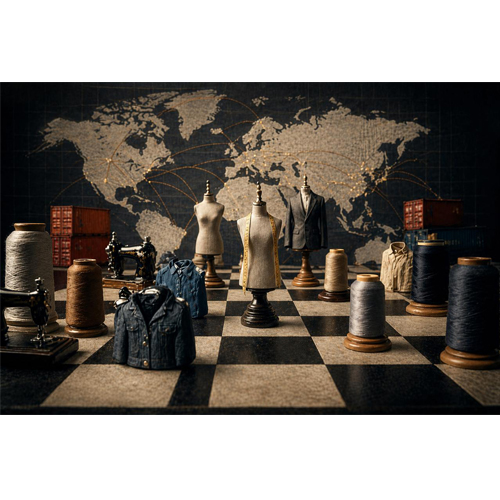
Summary: Geopolitical volatility is forcing fashion brands to treat supply chains as a strategic asset rather than a cost-optimization exercise. The primary risk has shifted from price to disruption, compelling leadership to prioritize resilience over efficiency. Diversification, particularly the ‘China plus one’ model, is now mandatory but requires nuanced, category-specific execution to be effective. The winning strategy involves building a flexible, coordinated system capable of absorbing shocks and supporting regionalized, faster-response production cycles.
Why it matters: For sourcing, production, and operations teams, this means a fundamental redesign of workflows, supplier relationships, and planning assumptions, moving from procurement-centric to leadership-integrated risk management.
Context: This follows a broader industry trend where geopolitical friction—tariffs, shipping uncertainty, export controls—has accelerated a multi-year shift from globalized, lean inventory models to regionalized, resilient networks.
"For years, fashion brands treated sourcing like a map problem. Pick the best country for price, capacity, and lead times, then scale. That playbook is getting rewritten. In today’s global environment, the." — APPARELVIEWS
Commentary: The operational consequence is a re-skilling of sourcing teams: their core function shifts from rate negotiation to building and orchestrating a flexible supplier network. This elevates execution—the coordination of fabric booking, sampling, and logistics across dispersed geographies—as the critical competitive advantage over mere geographical diversification. Brands that fail to upgrade their internal coordination systems will face the exact delays and quality inconsistencies they sought to avoid.
Date: April 23, 2026 12:00 AM ET
URL: https://www.apparelviews.com/how-geopolitics-is-redefining-fashion-supply-chains-and-why-execution-will-matter-more-than-geography/
AI Sentiment Score: Negative (60%)
AI Credibility Score: 10.0/10 — High
Scores and text generated by AI analysis of the source article indicated.
The Ultimate Guide to Fashion Sourcing in 2026: Strategies for … (Exploretex)
Summary: A 2026 sourcing guide positions procurement as a strategic partnership defined by technical capability, scalability, compliance, and geography, moving beyond pure cost minimization. It argues that modern fashion sourcing requires transparent cost engineering and supply chain resilience to meet consumer demands for quality and speed.

Why it matters: For brands and sourcing managers, this reframes procurement from a cost center to a core competency directly impacting margin engineering and brand reputation.
Context: The shift from opaque, lowest-cost sourcing to audited, partnership-driven supply chains has been accelerating, driven by consumer and regulatory pressure.
"The margin between a thriving global label and a struggling startup often comes down to the efficiency, sustainability, and reliability of their fashion sourcing networks. As consumer demands shift toward transparency, quality,." — EXPLORETEX
Commentary: The guide operationalizes a strategic shift already underway, providing a concrete evaluation matrix that could force internal realignments between design, finance, and operations teams. Brands lagging in technical and compliance vetting will face margin compression and reputational risk, while those mastering open-book cost engineering will gain pricing power.
Date: April 21, 2026 12:00 AM ET
URL: https://exploretex.com/fashion-sourcing/
AI Sentiment Score: Negative (75%)
AI Credibility Score: 10.0/10 — High
Scores and text generated by AI analysis of the source article indicated.
Textile sector steps up production amid global supply … (En.Nhandan.Vn)
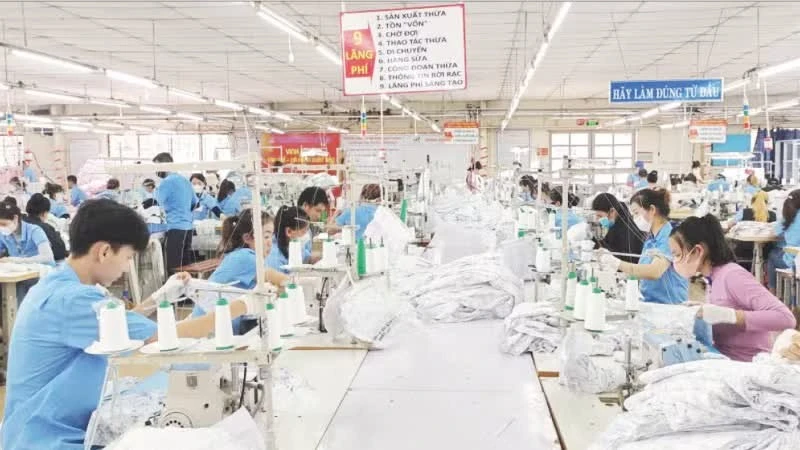
Summary: Vietnamese textile manufacturers are navigating a volatile 2026 marked by rising interest rates, logistics costs, and compressed delivery timelines. Companies like Eight March Textile and Nha Be Garment are responding by accelerating production, expanding domestic sourcing, and flexibly reallocating machinery to meet orders. Vinatex leadership is advising the sector to proactively manage supply chain risks, optimize materials, and accelerate investment to capitalize on market opportunities despite the pressure.
Why it matters: For brands and sourcing managers, this signals tightening margins and operational instability in a key manufacturing hub, necessitating closer supply chain coordination and potential cost renegotiations.
Context: This follows a period of post-pandemic supply chain realignment, where Southeast Asian producers gained prominence but now face their own cost inflation and logistical bottlenecks.
"Rapidly changing partner requirements, especially delivery timelines, have forced management to “spin like a top” in reallocating machinery and switching production between product lines to avoid order cancellations." — EN.NHANDAN.VN
Commentary: The ‘spin like a top’ operational mode indicates a shift from planned production to reactive scrambling, increasing error risk and worker strain. For global brands, this volatility necessitates building more slack into delivery schedules or diversifying sourcing to avoid last-minute disruptions. The focus on ‘accelerating at the right time’ underscores a move towards just-in-time manufacturing under duress, a high-wire act that could fracture under sustained pressure.
Date: May 02, 2026 12:00 AM ET
URL: https://en.nhandan.vn/textile-sector-steps-up-production-amid-global-supply-pressures-post161728.html
AI Sentiment Score: Negative (77%)
AI Credibility Score: 10.0/10 — High
Scores and text generated by AI analysis of the source article indicated.
April 2026 – FASH455 Global Apparel … (Shenglufashion)
Summary: A 2026 study of H&M’s factory list and corporate disclosures from major US apparel firms reveals how tariff pressures are reshaping sourcing and pricing strategies. Companies like Kontoor Brands and Oxford Industries are implementing selective price increases of 4-8% and elevating assortments, while Victoria’s Secret is pulling back on promotions to regain pricing power. The operational focus has shifted from pure cost minimization to managing gross margin headwinds through a mix of pricing, product mix, and reduced discounting.

Why it matters: For sourcing managers and brand strategists, this signals a move away from volume-driven fast fashion economics toward margin preservation tactics that will recalibrate vendor relationships, product development, and channel strategies.
Context: This follows a multi-year trend of rising tariffs and geopolitical friction, forcing a reevaluation of the low-cost, high-volume sourcing model that has defined fast fashion for decades.
"To better understand H&M’s fast fashion business model and its implications for the company’s sourcing practices, this study analyzed H&M’s detailed factory list published in February 2026, which includes 1,455 entries." — SHENGLUFASHION
Commentary: The direct admission of gross margin pressure and the explicit linkage of price increases to tariffs confirms a structural cost-push inflation cycle within apparel. This forces brands to make a stark choice: absorb margin compression or test consumer price elasticity, with most opting for a blended strategy that risks volume erosion. The operational consequence is a more calculated, category-by-category pricing approach, moving planning further upstream and making forecasting even more critical—and uncertain.
Date: April 21, 2026 12:00 AM ET
URL: https://shenglufashion.com/2026/04/
AI Sentiment Score: Negative (81%)
AI Credibility Score: 10.0/10 — High
Scores and text generated by AI analysis of the source article indicated.
Blog Articles – FASH455 Global Apparel & Textile Trade and Sourcing (Shenglufashion)
Summary: Academic analysis of corporate earnings calls reveals how U.S. fashion firms are adapting sourcing and pricing strategies in response to sustained tariff pressure. Firms like Oxford Industries and Victoria’s Secret are shifting product mix and pulling back on promotions to preserve margins, rather than absorbing costs. The study highlights the operational tension between cost pressures and ethical sourcing commitments.
Why it matters: For sourcing managers and brand strategists, this signals a move away from pure cost-optimization toward value engineering and pricing power as primary levers, fundamentally altering vendor relationships and product development cycles.
Context: Tariff regimes and rules of origin have long dictated apparel sourcing maps; current geopolitical tensions are accelerating a reassessment of these maps beyond simple country-hopping.
"- Based on the videos, what have been the expected and unexpected impacts of tariffs on apparel-exporting countries? – Based on the videos, what ethical challenges emerge in apparel sourcing and global." — SHENGLUFASHION
Commentary: The quoted strategy—’more elevated assortment’—is a direct operationalization of tariff pressure into product line planning. It forces a shift from volume-driven, promotional models to margin-driven, value-based design, which will cascade into fabric sourcing, minimum order quantities, and design-to-cost workflows. This makes ‘responsible sourcing’ a harder sell internally unless it can be bundled into this premium positioning.
Date: April 21, 2026 12:00 AM ET
URL: https://shenglufashion.com/blog/
AI Sentiment Score: Negative (80%)
AI Credibility Score: 10.0/10 — High
Scores and text generated by AI analysis of the source article indicated.
Post ID: 147f1a26