
U.S. apparel and textile manufacturing innovations
Bally Ribbon Mills To Highlight Berry-Compliant Webbing And High-Performance Tapes At FedTex 2026 (Textileworld)
Summary: Bally Ribbon Mills will exhibit its Berry Amendment-compliant webbing and high-performance tapes at FedTex 2026. The company emphasizes customization for military applications, including small production runs and in-house engineering support. The announcement underscores a supplier’s role in meeting stringent domestic sourcing and performance specifications for defense contractors.

Why it matters: For DoD contractors and federal procurement officers, this signals a domestic supplier’s capacity to deliver customized, compliant materials on-demand, directly impacting supply chain resilience and program compliance.
Context: The Berry Amendment mandates the U.S. Department of Defense to prioritize domestically produced textiles, food, and other goods, creating a specialized market for compliant manufacturers.
"BRM will highlight its 100% Berry Amendment-compliant woven tapes and webbing, designed to support Department of Defense contractors and federal agencies requiring domestically manufactured materials." — TEXTILEWORLD
Commentary: BRM’s focus on small-run customization and in-house engineering addresses a critical bottleneck in defense procurement: the need for agile, specification-perfect production without offshore dependencies. This operational model allows contractors to mitigate program risk but comes at a premium, testing budget trade-offs against supply chain security. The exhibit at FedTex, a niche trade show, highlights the targeted, relationship-driven sales channel essential in this compliance-heavy sector.
Date: April 27, 2026 12:00 AM ET
URL: https://www.textileworld.com/textile-world/nonwovens-technical-textiles/2026/04/bally-ribbon-mills-to-highlight-berry-compliant-webbing-and-high-performance-tapes-at-fedtex-2026/
AI Sentiment Score: Negative (66%)
AI Credibility Score: 10.0/10 — High
Scores and text generated by AI analysis of the source article indicated.
Apparel brands support unspun’s automated manufacturing hu (Specialtyfabricsreview)
Summary: Unspun has secured letters of support from major brands like Walmart and REI for its plan to establish automated 3D weaving hubs in the U.S. The technology weaves semi-finished garments directly from yarn, collapsing multiple cut-and-sew steps into a single automated process. This partnership with Bethel Industries, Peckham, and PDS Ltd./GSC Link aims to begin production soon, targeting a model of manufacturing closer to demand.

Why it matters: This signals a concrete step toward a new, automated domestic production pipeline, directly affecting sourcing decisions, inventory management, and the labor profile for apparel brands and their contractors.
Context: The push for nearshoring and automated apparel manufacturing has been largely theoretical; this move represents a coordinated commercial effort to operationalize it at scale with brand backing.
"Automated manufacturing technology company unspun announced that brands, including Walmart and REI, have signed letters of support for the company’s plan to build domestic manufacturing capacity in the U.S. In partnership with." — SPECIALTYFABRICSREVIEW
Commentary: The operational consequence is a potential shift from seasonal bulk orders to in-season reordering, which would compress lead times and reduce inventory risk for brands. The ‘skilled American jobs’ claim reframes the labor equation from low-cost sewing to higher-tech machine operation and maintenance, a critical constraint for domestic expansion. Success hinges on whether the 3D weaving technology can achieve the cost, quality, and throughput needed to displace entrenched offshore cut-and-sew networks, not just supplement them.
Date: April 20, 2026 12:00 AM ET
URL: https://specialtyfabricsreview.com/2026/04/20/unspun-2/
AI Sentiment Score: Negative (55%)
AI Credibility Score: 10.0/10 — High
Scores and text generated by AI analysis of the source article indicated.
Leading Brands Back unspun’s Automated U.S. Apparel … – IICTF – (Iictf.In)
Summary: unspun has secured letters of support from Walmart and REI for its plan to deploy automated 3D weaving hubs in the U.S., with supply chain partners Bethel Industries, Peckham, and PDS Ltd / GSC Link also involved. The technology compresses dozens of cut-and-sew steps into a single, AI-controlled cycle that produces semi-finished garments directly from yarn in minutes. With over $50 million in venture funding and deployment-ready equipment, site evaluations are now active across multiple states.

Why it matters: For domestic apparel producers and brands, this signals a tangible shift toward automated, onshore manufacturing that could reshape cost structures, lead times, and labor requirements.
Context: The push for nearshoring and automated apparel production has been largely aspirational; unspun’s move, backed by major retail commitments, represents a concrete step toward commercial-scale deployment.
"unspun is moving its AI-enabled 3D weaving technology toward commercial deployment inside the United States, and it has retail-level commitments to back the claim." — IICTF.IN
Commentary: The Walmart and REI commitments provide the demand anchor necessary to justify capital-intensive domestic automation, moving it from pilot to pipeline. This pressures incumbent cut-and-sew contractors and fabric mills to adapt, as the value chain consolidates around fewer, more technical operations. Site selection will now hinge on logistics corridors, utility costs, and technical workforce availability, not just low-wage labor pools.
Date: April 23, 2026 12:00 AM ET
URL: https://iictf.in/unspun-automated-apparel-manufacturing-us-hubs/
AI Sentiment Score: Negative (66%)
AI Credibility Score: 10.0/10 — High
Scores and text generated by AI analysis of the source article indicated.
INTRODUCING: USA MADE APPAREL (Youtube)
Summary: MKC has launched a Heritage Hoodie marketed as a fully domestic product, with a supply chain tracing from Texas cotton fields to final assembly and shipping in California and Montana. The announcement emphasizes each step—growing, milling, sewing, printing, and fulfillment—occurs within the United States. This positions the item as a direct response to consumer demand for verified American-made apparel.

Why it matters: For brands and manufacturers evaluating domestic production, this case illustrates a complete, mapped supply chain and highlights the operational complexity and cost structure required for a ‘fully American’ claim.
Context: The ‘Made in USA’ apparel segment has grown amid reshoring trends and consumer interest in supply chain transparency, but achieving full vertical integration domestically remains a rare and costly operational feat.
"The cotton starts in Texas fields, then makes its way west to California where it’s processed, dyed, knit, patterned, cut, and sewn before it ships to us in Missoula, MT." — YOUTUBE
Commentary: The detailed geographic mapping is a marketing asset but also a vulnerability audit for competitors; it sets a new benchmark for provenance that could pressure other brands to disclose their own pipelines. The logistics of moving raw material from Texas to California for processing before final shipment to Montana reveals the real, often inefficient, routing that domestic resilience can entail, impacting both lead times and unit economics.
Date: April 24, 2026 12:00 AM ET
URL: https://www.youtube.com/watch?v=iBbHxjyqh3s
AI Sentiment Score: Negative (83%)
AI Credibility Score: 10.0/10 — High
Scores and text generated by AI analysis of the source article indicated.
INTRODUCING: USA MADE APPAREL (Youtube)
Summary: MKC, a Montana-based apparel brand, has launched a ‘USA MADE Heritage Hoodie,’ positioning it as a direct response to customer demand for domestically produced gear. The company details a multi-state supply chain, tracing the product from Texas-grown cotton through processing, dyeing, and manufacturing in California, with final assembly and distribution handled from its Missoula, Montana, headquarters.
Why it matters: For brands and manufacturers evaluating domestic production, this case illustrates the operational reality of a distributed US supply chain and the marketing narrative built upon it.
Context: The ‘Made in USA’ apparel segment has grown as brands seek supply chain resilience and a marketing edge, but it faces persistent challenges with cost, material sourcing, and skilled labor concentration.
"The cotton starts in Texas fields, then makes its way west to California where it’s processed, dyed, knit, patterned, cut, and sewn before it ships to us in Missoula, MT." — YOUTUBE
Commentary: MKC’s model reveals a reliance on established regional hubs—Texas for raw materials, California for textile processing—highlighting that ‘domestic’ often means cross-continental logistics, not localized production. The operational cost and lead-time implications of this pipeline will directly impact the hoodie’s margin and scalability, testing the premium consumers will pay for the provenance story. For other brands, this serves as a concrete map of the nodes and handoffs required, underscoring that ‘Made in USA’ is a complex supply chain achievement, not merely a sourcing decision.
Date: April 24, 2026 12:00 AM ET
URL: https://www.youtube.com/watch?v=iBbHxjyqh3s&vl=id
AI Sentiment Score: Negative (60%)
AI Credibility Score: 10.0/10 — High
Scores and text generated by AI analysis of the source article indicated.
US Textile Sector Stable in 2025 Amid $60.9bn Output (News.Yrules)
Summary: The US textile and apparel industry reported 2025 output of $60.9bn, a modest decline from $63.9bn in 2024, demonstrating resilience amid broader economic volatility. Key to this stability is a sustained, multi-year capital investment cycle, with $34.3bn poured into advanced manufacturing since 2017 and a record $5.5bn in new plants and equipment in 2024 alone. This capital is directed toward automation, traceability, and nearshoring capacity, positioning the sector to meet stringent defense and regional trade compliance demands.
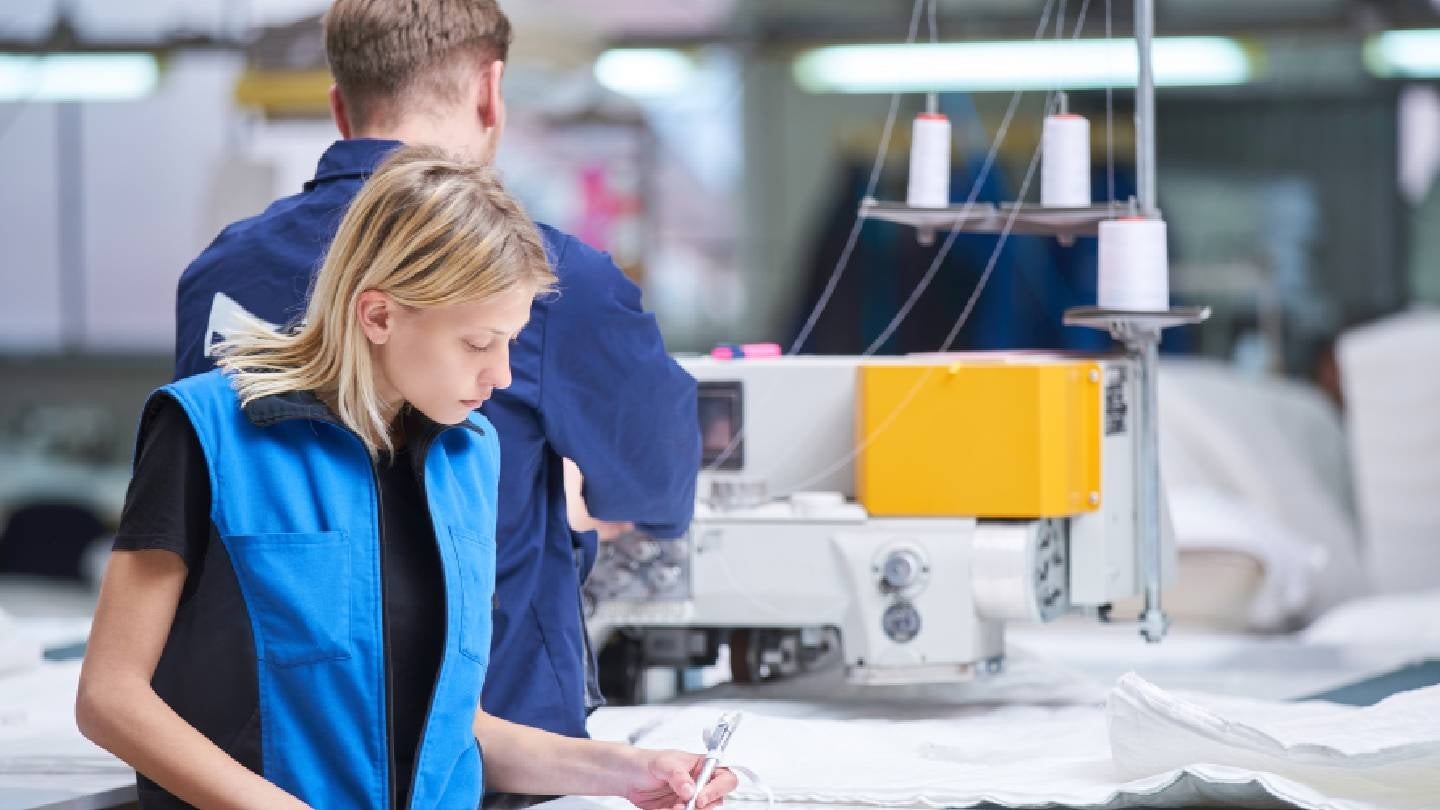
Why it matters: For domestic manufacturers and their supply chain partners, the data signals that operational resilience is being built through capital expenditure, not just policy rhetoric, directly impacting vendor selection, production planning, and compliance workflows.
Context: This stability occurs against a backdrop of persistent trade disruptions and a multi-year strategic pivot toward supply chain reshoring and modernization, driven by both commercial imperatives and government sourcing rules like the Berry Amendment.
"The $34.3bn invested in advanced manufacturing since 2017 reflects a long-term bet on automation, traceability, and nearshoring — trends increasingly critical for compliance with defence sourcing rules and regional trade agreements." — NEWS.YRULES
Commentary: The headline stability masks a fundamental operational shift: the industry is trading higher output for higher-tech, more compliant capacity. For procurement officers and brand supply chain managers, this means a growing domestic vendor base capable of fulfilling contracts with embedded traceability and ‘Made in USA’ verification, but likely at a persistent cost premium. The record 2024 investment figure suggests this retooling phase is accelerating, not tapering off.
Date: April 20, 2026 12:00 AM ET
URL: https://news.yrules.com/en/archives/14851
AI Sentiment Score: Positive (57%)
AI Credibility Score: 7.0/10 — Medium
Scores and text generated by AI analysis of the source article indicated.
Movers and Shakers April 2026: Circulose and CTA to … (Fiberjournal)
Summary: The North American textile and nonwovens industry is navigating a cautious 2026, marked by moderated production and strategic pivots toward sustainability and supply chain resilience. Key developments include the commercial scaling of textile-to-textile recycling via Circulose’s lyocell pulp, the expansion of on-demand digital manufacturing into technical textiles by Kornit, and the creation of new fiber supply chains linking U.S.-grown hemp to Vietnamese manufacturing. Consolidation continues in technical services with Symtech’s acquisition, while regulatory pressure mounts, exemplified by India’s 40% recycled PET mandate.

Why it matters: For manufacturers and brands, these shifts redefine material sourcing options, production workflows, and compliance requirements, directly impacting cost structures and operational planning.
Context: The industry is bifurcating between scaling novel, sustainable feedstocks and optimizing incumbent production through digitalization and service consolidation, all under persistent trade and regulatory uncertainty.
"In the dynamic and global textile fiber industry with its various manufacturing processes and end-uses, news and information is breaking on a daily basis. International Fiber Journal is tracking stories relevant to." — FIBERJOURNAL
Commentary: The Circulose-CTA deal signals a move from pilot to pipeline for chemical recycling, but limited 2026 supply means brands must lock in development slots now for 2027 access. Kornit’s push into footwear and automotive validates digital printing for technical performance, reducing MOQs but introducing new substrate and durability validation workflows for converters. The IND HEMP Vietnam pipeline is a direct workaround for U.S. spinning capacity constraints, offering traceability but adding trans-Pacific logistics complexity to the cost equation.
Date: April 28, 2026 12:00 AM ET
URL: https://www.fiberjournal.com/movers-and-shakers-april-2026/
AI Sentiment Score: Negative (80%)
AI Credibility Score: 9.4/10 — High
Scores and text generated by AI analysis of the source article indicated.
Post ID: 0a379b8f