Artemis Moon Program Updates and Milestones
NASA’s Artemis III Moon Rocket Hardware Arrives, Artemis II Capsule Returns to Kennedy (Nasa.Gov)
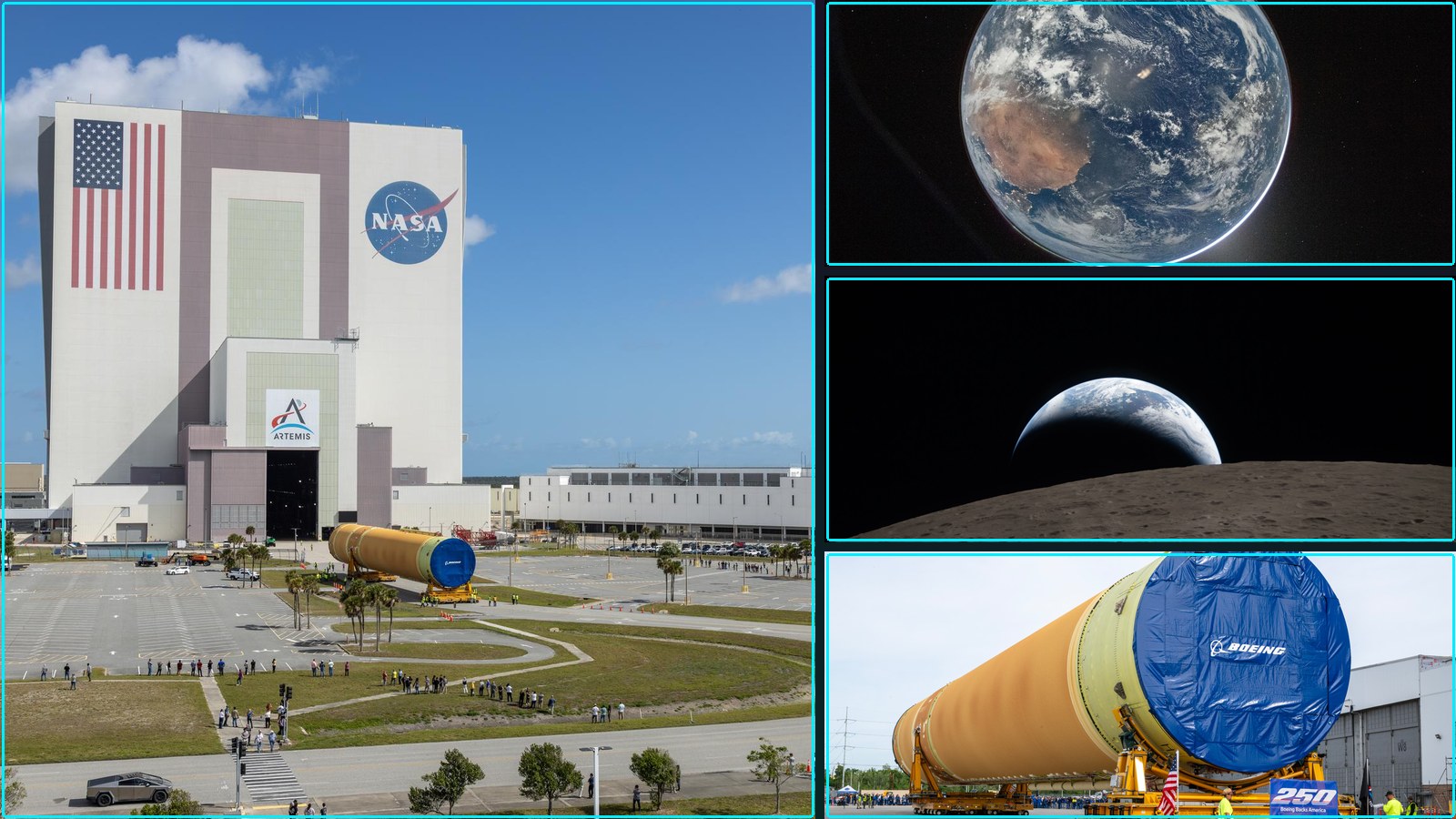
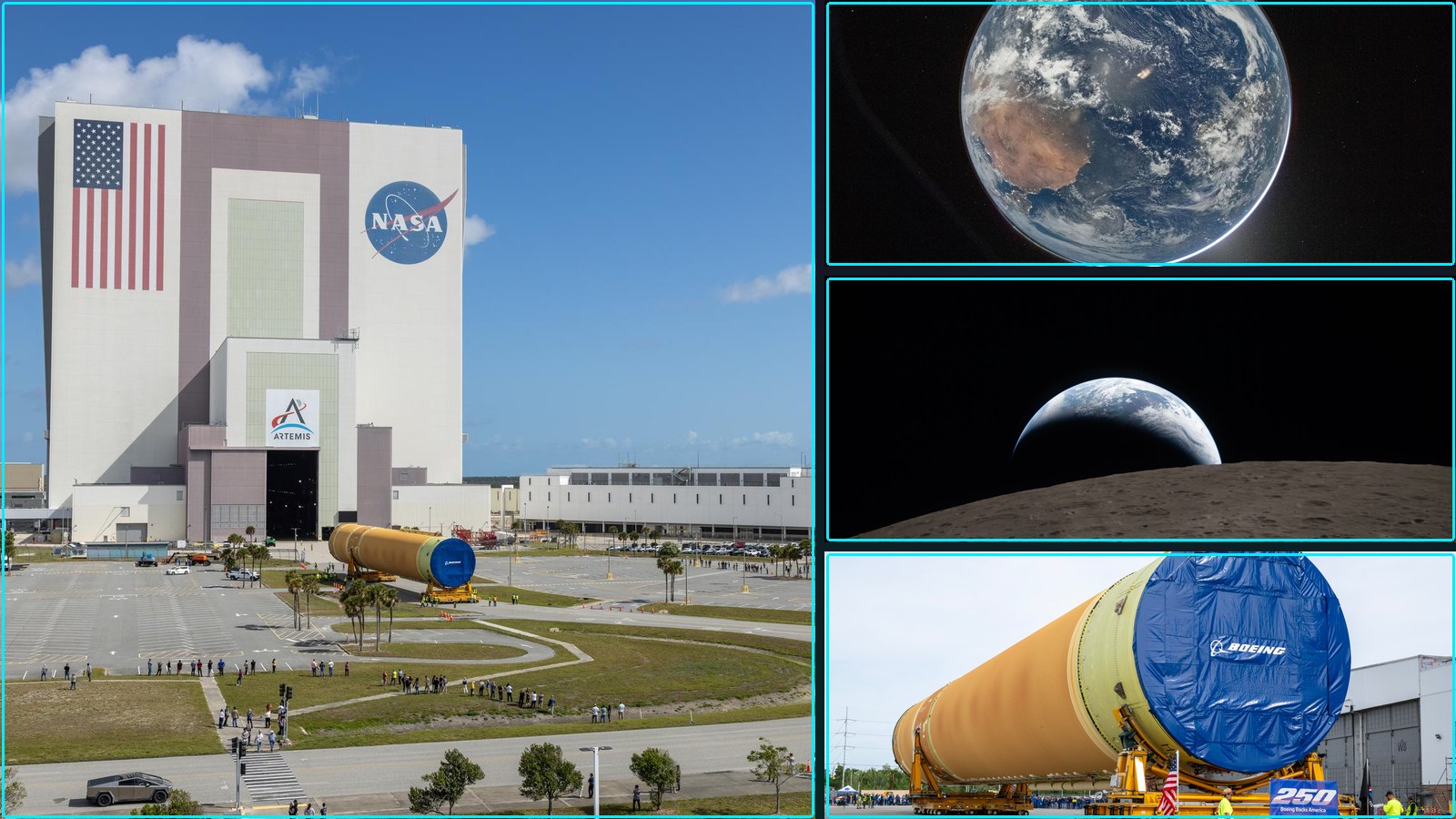
Summary: NASA’s Kennedy Space Center is now the primary assembly site for the SLS core stage, with the Artemis III core stage arriving for integration in the Vehicle Assembly Building. Concurrently, the Artemis II Orion crew module has returned for post-flight analysis, while hardware for the Artemis III mission, including booster segments and the Orion spacecraft, continues to arrive and undergo processing. This marks a logistical and operational shift, consolidating major SLS assembly at Kennedy instead of the Michoud Assembly Facility in Louisiana.
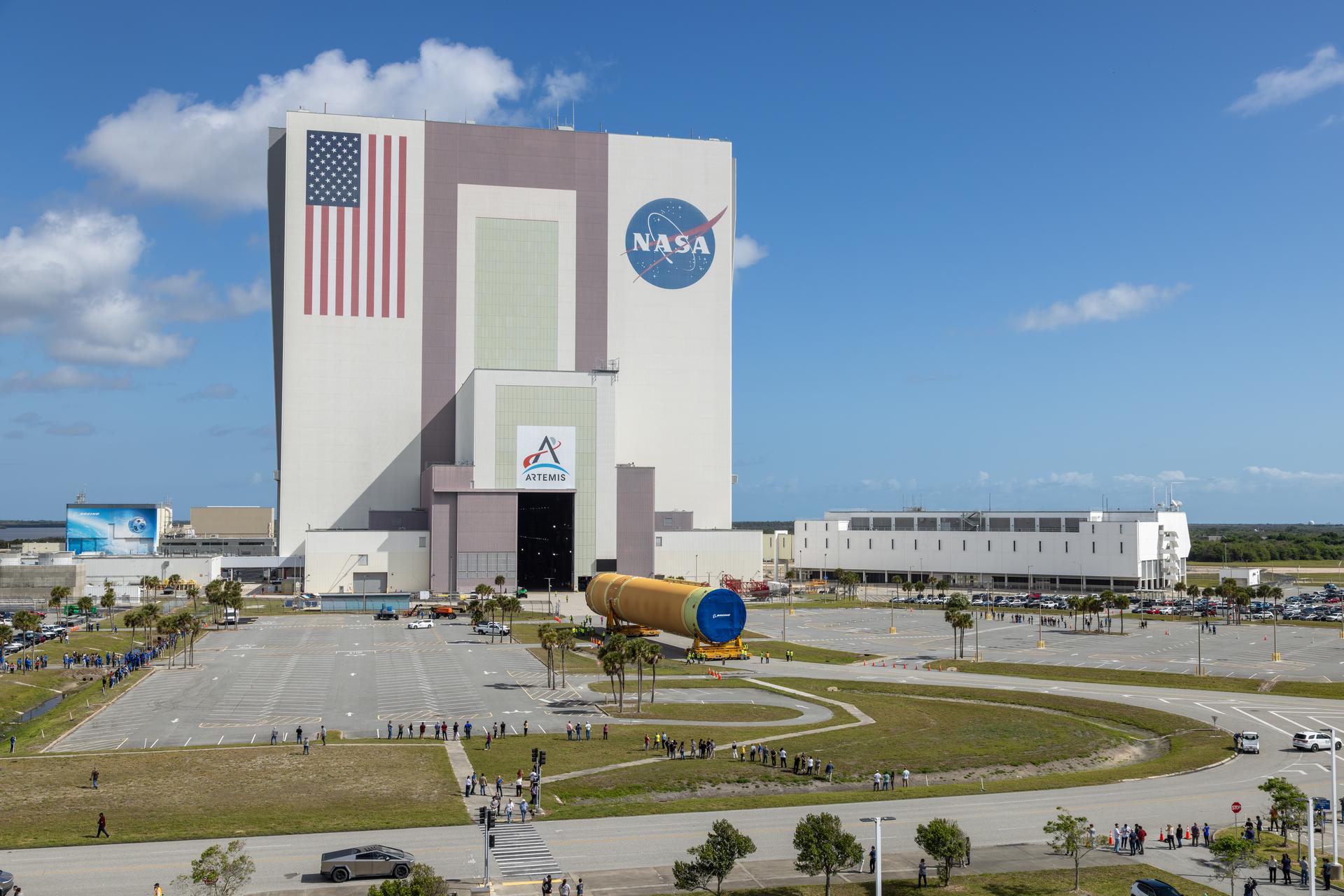
Why it matters: The consolidation of core stage assembly at Kennedy signals a maturation of the SLS production and integration pipeline, reducing transportation risk and potentially streamlining schedules for the critical Artemis III and IV missions.
Context: Artemis III is the planned first crewed lunar landing mission of the program, dependent on the successful development of SpaceX’s Starship Human Landing System and new lunar spacesuits, both of which face significant technical and schedule challenges.
"This marks the first time core stage assembly operations are taking place at NASA Kennedy." — NASA.GOV
Commentary: The move of core stage assembly to Kennedy is a quiet but significant operational change, reducing the logistical burden of shipping the massive stage from Louisiana. While hardware flow is visibly progressing for Artemis III, the mission’s 2026 date remains contingent on the unproven in-space refueling and landing systems being developed commercially, creating a stark contrast between NASA’s controlled, visible progress and its high-risk dependencies.
Date: Tue, 28 Apr 2026 20:52:59 +0000
URL: https://www.nasa.gov/blogs/missions/2026/04/28/nasas-artemis-iii-moon-rocket-hardware-arrives-artemis-ii-capsule-returns-to-kennedy/
AI Sentiment Score: Positive (50%)
AI Credibility Score: 10.0/10 — High
Scores and text generated by AI analysis of the source article indicated.
Artemis III, Gaganyaan & Global Space Boom | MERI Daily Space News Bulletin (Youtube)
Summary: NASA has rolled out the core stage of the Space Launch System for Artemis III, a critical hardware milestone for the 2027 lunar landing mission. The Nancy Grace Roman Space Telescope is now complete, targeting a late 2026 launch to survey dark energy and exoplanets. Global space investment hit a record $7.95 billion in Q1 2026, driven by anticipation of a SpaceX IPO and private station development. Concurrently, China prepares the Shenzhou-23 mission for a year-long crewed stay on Tiangong, while ISRO progresses toward an uncrewed Gaganyaan test flight.

Why it matters: The simultaneous maturation of flagship hardware, record capital flows, and sustained national crewed programs signal a structural shift from planning to execution in the global space sector.
Context: Artemis III represents the first human lunar landing attempt since Apollo, dependent on new SLS hardware and commercial landers. The investment surge follows a period of market consolidation, now reignited by downstream infrastructure bets.
"##### Apr 25, 2026 (0:04:09) Janya Batra (BBA LLB Student) presents today’s MERI Daily Space News Bulletin, covering major developments shaping the future of space exploration. The update highlights NASA’s progress on." — YOUTUBE
Commentary: The capital influx, nearly doubling quarter-over-quarter, is less about exploration novelty and more a vote on the commercial viability of low-Earth orbit infrastructure and launch monopolies. Hardware milestones like the SLS core stage rollout are necessary but non-guaranteeing steps; the 2027 Artemis III date remains contingent on lander development and orbital refueling demonstrations that have no parallel in the investment surge. The parallel progress of national programs (China, India) alongside U.S. public-private efforts underscores a fragmented but accelerating multi-polar space race, where financial markets are now a primary accelerant.
Date: April 25, 2026 12:00 AM ET
URL: https://www.youtube.com/watch?v=Ei2-WCa-U2M
AI Sentiment Score: Positive (66%)
AI Credibility Score: 10.0/10 — High
Scores and text generated by AI analysis of the source article indicated.
Days after Artemis II, scientists warn of deep cuts to NASA missions (Planetary)
Summary: The White House has proposed a 46% cut to NASA’s science budget, targeting over 50 missions for cancellation or reduction. The cuts would affect operational assets, including the New Horizons probe in the Kuiper Belt and the Perseverance rover on Mars, and force the shutdown of major space telescopes. The proposal arrives weeks after the high-profile Artemis II crewed lunar mission, creating a stark contrast between human exploration ambitions and robotic science sustainability.
Why it matters: This represents a fundamental re-prioritization of U.S. space policy with immediate operational consequences, risking the loss of unique scientific data, institutional knowledge, and international standing in planetary science.
Context: NASA’s science budget has historically faced pressure, but a cut of this magnitude targeting active, data-producing missions is unprecedented in the modern era. It follows a pattern where flagship human exploration programs are insulated while discretionary science accounts bear disproportionate austerity.
"On April 3, 2026, the White House announced a plan to cancel over 50 space missions — including spacecraft already paid for, launched, and making discoveries — as part of a devastating." — PLANETARY
Commentary: The timing, just after Artemis II, signals a political calculation that the spectacle of human spaceflight can absorb the shock of gutting robotic exploration. If enacted, this would create a ‘zombie’ fleet of spacecraft still in space but without ground support, wasting billions in sunk capital for marginal short-term savings. The realignment would cede deep-space discovery and exoplanet research to international partners and commercial entities, fundamentally altering NASA’s role from a primary science agency to a human spaceflight contractor.
Date: April 24, 2026 12:00 AM ET
URL: https://www.planetary.org/articles/meet-the-people-behind-nasas-endangered-missions
AI Sentiment Score: Negative (85%)
AI Credibility Score: 10.0/10 — High
Scores and text generated by AI analysis of the source article indicated.
NASA’s Post-Artemis II Mission Assessment (Newspaceeconomy.Ca)
Summary: NASA’s initial postflight review of the April 2026 Artemis II mission indicates it met its primary objectives as a crewed lunar test flight. The Orion spacecraft’s heat shield exhibited significantly less char loss than on the uncrewed Artemis I mission, validating corrective actions taken after that earlier anomaly. The Space Launch System (SLS) and ground infrastructure performed nominally, with Orion achieving a precise splashdown. The mission’s main unresolved issues are a urine vent line anomaly and ongoing detailed heat shield inspections, which are framed as manageable engineering findings.

Why it matters: The review provides critical validation for the Orion-SLS architecture, moving the Artemis program from demonstration into operational readiness for the planned 2027 lunar landing attempt.
Context: Artemis I’s unexpected heat shield char loss in 2022 raised fundamental safety questions for crewed return from lunar velocities, making Artemis II’s reentry performance the program’s most consequential test.
"Orion survived lunar-return reentry with far less heat shield char loss than Artemis I, landed close to its target, and gave NASA data that line up with years of ground testing." — NEWSPACEECONOMY.CA
Commentary: The shift from ‘unexpected char loss’ to ‘data that line up with years of ground testing’ is the signal. It suggests the Artemis I anomaly was a bounded, understood engineering flaw—trapped gases in Avcoat—rather than a fundamental design failure. This transforms the program’s risk profile from existential uncertainty to a tractable development path, albeit one still contingent on resolving the urine vent line issue and final inspections. The clean SLS report card is equally vital, as it removes the launch vehicle as a primary schedule risk for Artemis III.
Date: April 23, 2026 12:00 AM ET
URL: https://newspaceeconomy.ca/2026/04/23/nasas-post-artemis-ii-mission-assessment/
AI Sentiment Score: Negative (83%)
AI Credibility Score: 10.0/10 — High
Scores and text generated by AI analysis of the source article indicated.
NASA’s Moon Base No Longer Science Fiction (Autonomyglobal.Co)
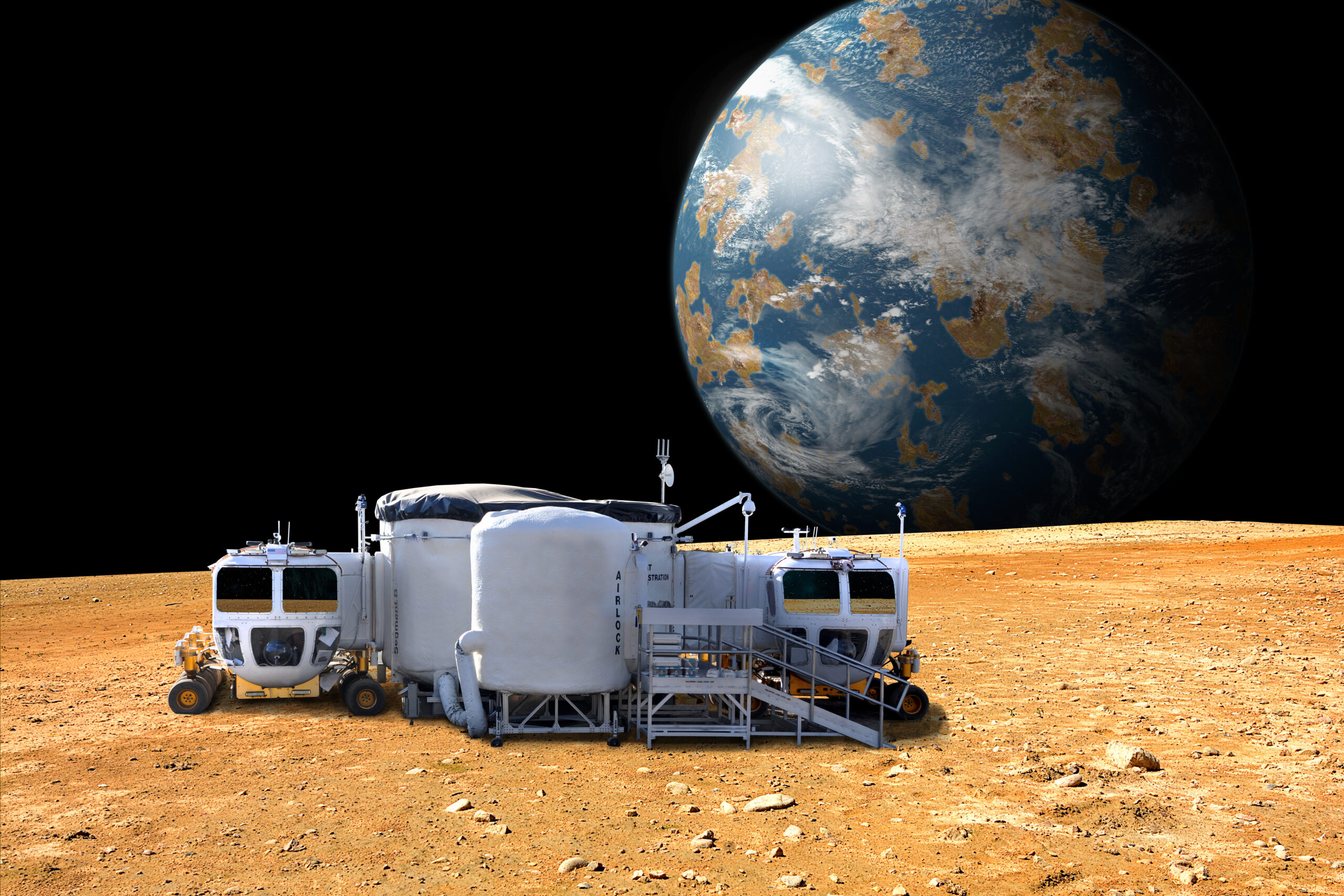
Summary: NASA’s ‘Ignition’ strategic pivot, announced in March 2026, formally shifts resources from the lunar Gateway to establishing a permanent surface base at the south pole. The plan calls for an accelerated campaign of up to 30 commercial robotic landings starting in 2027, using only proven landers, to precede a human landing by 2028 and initial outpost elements by 2030. This represents a multi-billion-dollar reallocation of funding and programmatic focus toward direct surface infrastructure.
Why it matters: This is a consequential reordering of NASA’s lunar architecture, with immediate impacts on contractor portfolios, international partnership roles, and the technical timeline for a sustained human presence.
Context: The pivot follows years of debate over Gateway’s utility and mounting pressure to demonstrate tangible lunar surface progress. It leverages the Commercial Lunar Payload Services (CLPS) program, which proved its model with the 2024 IM-1 landing.
"The big idea is to pivot away from Gateway in its current form and focus all available resources on building a permanent surface base at the lunar south pole." — AUTONOMYGLOBAL.CO
Commentary: The operational shift from ‘orbit-first’ to ‘surface-first’ prioritizes immediate resource prospecting and infrastructure deployment, betting that commercial landers can de-risk the human mission. This sidelines major Gateway contractors while creating a surge demand for proven CLPS providers and surface system developers. The 2028 human landing target is aggressive, making the 2027 robotic landing cadence a critical leading indicator of feasibility.
Date: April 23, 2026 12:00 AM ET
URL: https://www.autonomyglobal.co/nasas-moon-base-no-longer-science-fiction-industry-has-four-weeks-to-get-ready/
AI Sentiment Score: Positive (40%)
AI Credibility Score: 10.0/10 — High
Scores and text generated by AI analysis of the source article indicated.
The Race to Return to the Moon: Where Every Nation Stands in 2026 (Spaceodysseyhub)
Summary: The lunar exploration landscape in 2026 is defined by a multi-player race focused on the strategic lunar south pole. The US Artemis program’s crewed landing faces delays to 2026-2027, while China’s Chang’e program has executed consecutive sample-return successes from both the near and far sides. India’s low-cost Chandrayaan-3 achieved the first south polar landing, and commercial CLPS providers are establishing a nascent cargo delivery capability, albeit with mixed reliability.

Why it matters: The operational tempo and geographic focus of these missions are defining the practical rules, partnerships, and resource claims for the next phase of lunar activity, moving from symbolic flags to sustained infrastructure.
Context: Post-Apollo lunar exploration entered a robotic phase led by space agencies, but the confirmed presence of water ice at the south pole has reframed the Moon as a strategic asset, catalyzing both national programs and commercial services.
"More than 50 years later, humanity is preparing to return — and this time, the competition is genuinely international. The United States, China, India, Japan, South Korea, the UAE, Russia, and a." — SPACEODYSSEYHUB
Commentary: China’s methodical execution with Chang’e 5 and 6 provides a tangible data advantage in understanding lunar geology and resource potential, while Artemis’s schedule dependency on Starship underscores a high-risk, high-reward architectural bet. The convergence of national science objectives and commercial cargo delivery points toward an incipient, but fragile, cislunar logistics layer.
Date: April 25, 2026 12:00 AM ET
URL: https://spaceodysseyhub.com/articles/race-to-return-to-the-moon-2026
AI Sentiment Score: Positive (60%)
AI Credibility Score: 8.4/10 — High
Scores and text generated by AI analysis of the source article indicated.
Artemis II Mission Recap 2026: Humans Return to the Moon’s Far Side (Collegesimplified.In)
Summary: NASA’s Artemis II mission, launched on April 1, 2026, successfully completed a 10-day crewed flight test, splashing down on April 10. The Orion spacecraft, carrying four astronauts, executed a lunar flyby on a free-return trajectory, reaching a record distance of 252,756 miles from Earth—surpassing the Apollo 13 record—and providing the first human views of the lunar far side. The mission served as a critical systems test for the Orion capsule, SLS rocket, and ground operations ahead of planned lunar landings.

Why it matters: Artemis II validates the core human spaceflight architecture for NASA’s lunar return, moving the program from uncrewed test to operational crewed missions and setting a new distance benchmark for human exploration.
Context: Artemis II follows the uncrewed Artemis I test in 2022 and is the essential precursor to Artemis III, which aims to land astronauts near the lunar south pole. The mission profile—a crewed flyby without landing—mirrors Apollo 8’s role in proving systems before attempting a landing.
"The Artemis II Mission Recap 2026 marks a historic turning point in human space exploration. For the first time in over 50 years, since the conclusion of the Apollo era in 1972,." — COLLEGESIMPLIFIED.IN
Commentary: The successful mission resets the clock on human deep-space operations, but the real test is sustaining this cadence. The record distance is a symbolic milestone, yet the operational focus remains on proving life support and re-entry systems for the more complex Artemis III landing. Schedule pressure now shifts to developing the lunar lander and surface systems, where delays have historically accumulated.
Date: April 20, 2026 12:00 AM ET
URL: https://www.collegesimplified.in/post/artemis-ii-lunar-flyby-mission-recap-2026
AI Sentiment Score: Negative (50%)
AI Credibility Score: 7.0/10 — Medium
Scores and text generated by AI analysis of the source article indicated.
Artemis spacesuit development risks further delays – ISS Tracker (Isstracker.Pl)
Summary: NASA’s Office of Inspector General warns that the commercial development of new spacesuits for Artemis and the ISS faces significant delays, potentially pushing key demonstrations to 2031. The report criticizes the agency’s initial schedules as ‘overly optimistic’ and notes that the xEVAS program, led by Axiom Space, has little schedule margin left. This creates a critical path risk for the Artemis lunar landing timeline and for operations before the ISS’s planned decommissioning.

Why it matters: Spacesuit readiness is a critical-path item for Artemis; further delays directly threaten mission cadence and could necessitate costly programmatic reshuffles or risk flying with unproven hardware.
Context: This follows a pattern of NASA’s commercial partnerships, like Commercial Crew, where initial optimism met with developmental realities, though the xEVAS contract structure was a new model for crew-critical hardware.
"If Axiom experiences design and testing delays in line with this historical average, the lunar and microgravity spacesuit demonstrations would not occur until 2031." — ISSTRACKER.PL
Commentary: The OIG’s framing shifts the debate from whether Axiom will fail to how NASA manages the now-expected slip. This forces a portfolio decision: accept delay, accelerate parallel development, or revise Artemis III’s objectives. The report’s calibrated skepticism—offering a ‘more realistic’ timeline rather than a prediction—is a bureaucratic signal that the baseline schedule is no longer credible for planning.
Date: April 22, 2026 12:00 AM ET
URL: https://isstracker.pl/en/news/ryzyko-dalszych-opoznien-w-rozwoju-skafandra-artemis,6TKhs5
AI Sentiment Score: Negative (80%)
AI Credibility Score: 7.0/10 — Medium
Scores and text generated by AI analysis of the source article indicated.
NASA’s Artemis Core Stage Arrives at Kennedy (Nasa.Gov)
Summary: The core stage for NASA’s Artemis III SLS rocket has arrived at Kennedy Space Center from the Michoud Assembly Facility. This 212-foot-long section, containing the primary fuel tanks and structural elements, will now undergo vertical integration in the Vehicle Assembly Building. Its arrival marks a tangible transition from manufacturing to final assembly for the hardware designated to launch the crewed Artemis III lunar landing mission.

Why it matters: This physical movement of flight hardware is a critical, visible milestone that de-risks the Artemis III schedule, shifting the program’s center of gravity from factory production to launch site integration.
Context: The SLS core stage is the program’s pacing item; its delivery follows years of development delays and is a prerequisite for stacking the full vehicle and beginning integrated testing.
"The largest rocket section for NASA’s Artemis III mission arrived at the agency’s Kennedy Space Center in Florida on April 27. The SLS (Space Launch System) core stage traveled 900 miles on the Pegasus barge from NASA’s Michoud Assembly Facility in New Orleans where the stage is manufactured, to complete assembly of the massive rocket at NASA Kennedy." — NASA.GOV
Commentary: The arrival signals that the Artemis III mission profile, which depends on a complex orbital rendezvous between Orion and a commercial human landing system, is now irrevocably tied to the SLS schedule. While a positive step, the real test is the upcoming integration and green run-style testing of the fully stacked stage, where technical and schedule margins will be proven or consumed.
Date: Mon, 27 Apr 2026 19:33:20 +0000
URL: https://www.nasa.gov/blogs/missions/2026/04/27/nasas-artemis-core-stage-arrives-at-kennedy/
AI Sentiment Score: Positive (40%)
AI Credibility Score: 10.0/10 — High
Scores and text generated by AI analysis of the source article indicated.
Artemis II Mission Milestones: An Image and Video Recap – NASA (Nasa.Gov)
Summary: NASA’s Artemis II mission successfully completed a 10-day crewed flight around the Moon, splashing down on April 10, 2026. The crew, traveling aboard the Orion spacecraft, set a new human distance record of 252,756 miles from Earth, surpassing Apollo 13. The mission served as a critical systems test with astronauts aboard and a precursor to more complex lunar surface operations.

Why it matters: The mission validates Orion’s crewed deep-space capabilities and re-establishes a human lunar flight cadence, directly impacting the schedule and risk profile for Artemis III’s planned landing.
Context: Artemis II is the first crewed mission of the Artemis program, following the uncrewed Artemis I test. Its success is a non-negotiable gate for NASA’s planned return to the lunar surface.
"At their farthest point, the crew traveled 252,756 miles from Earth, setting a record for the greatest distance humans have traveled in space and observing the lunar surface like never before." — NASA.GOV
Commentary: The distance record is a symbolic milestone, but the operational data on Orion’s life support, radiation shielding, and crew performance under deep-space conditions is the real payload. A clean mission reduces political and technical friction for the program’s next phase, though it does not resolve the outstanding development challenges with the Human Landing System and lunar spacesuits.
Date: April 21, 2026 12:00 AM ET
URL: https://www.nasa.gov/general/artemis-ii-mission-milestones-an-image-and-video-recap/
AI Sentiment Score: Positive (50%)
AI Credibility Score: 10.0/10 — High
Scores and text generated by AI analysis of the source article indicated.
NASA on Track for Future Missions with Initial Artemis II Assessments (Nasa.Gov)
Summary: NASA has initiated post-flight analysis of the Artemis II mission, which concluded with Orion’s splashdown on April 10. The spacecraft completed a 694,481-mile circumlunar journey and landed within 2.9 miles of its target. Preliminary assessments indicate both the Orion spacecraft and the SLS rocket met their test flight objectives.

Why it matters: The successful data review and system validation of Artemis II directly enables the schedule and technical confidence for Artemis III and subsequent lunar surface operations.
Context: Artemis II was the first crewed test of the Orion spacecraft and SLS rocket, a critical pathfinder for NASA’s return to human deep-space exploration.
"Following NASA’s Artemis II mission successfully splashing down on Earth, engineers started diving into detailed analysis of data to assess how key systems and subsystems on the Orion spacecraft, SLS (Space Launch." — NASA.GOV
Commentary: The precision landing and nominal system performance are operational successes, but the real signal is the shift from flight demonstration to engineering review. The focus on data analysis confirms the program is entering a phase where incremental validation, not dramatic milestones, will dictate the pace toward Artemis III. Any deviations found now will be more consequential for schedule risk than the splashdown distance.
Date: April 20, 2026 12:00 AM ET
URL: https://www.nasa.gov/missions/nasa-on-track-for-future-missions-with-initial-artemis-ii-assessments/
AI Sentiment Score: Negative (75%)
AI Credibility Score: 10.0/10 — High
Scores and text generated by AI analysis of the source article indicated.
NASA on track for future missions with initial Artemis II assessments (Phys)
Summary: NASA’s post-flight analysis of the Artemis II mission is underway, focusing on the performance of the Orion spacecraft, SLS rocket, and ground systems. The successful 694,481-mile crewed test flight around the Moon concluded with a splashdown on April 10, 2026. The agency states this data is critical for preparing the hardware and teams for the planned Artemis III lunar landing mission in 2027 and subsequent surface operations from 2028.

Why it matters: The transition from a successful crewed test flight to a detailed engineering review is the critical gatekeeper for the entire Artemis lunar landing schedule and its associated hardware confidence.
Context: Artemis II was the first crewed flight of the Orion/SLS stack, a necessary but non-landing shakedown cruise. Its post-flight assessment period is a standard but high-stakes phase where minor anomalies can cascade into significant program delays.
"Using data from the first crewed mission under the Artemis program, NASA continues preparing the hardware and teams to launch and fly the Artemis III mission in 2027 ahead of subsequent missions to the moon’s surface beginning in 2028." — PHYS
Commentary: The agency’s public reaffirmation of the 2027 target for Artemis III, immediately following splashdown, is a deliberate signal of programmatic confidence aimed at stakeholders. However, the real schedule risk lies in the yet-unpublished findings from the ongoing subsystem assessments. A clean bill of health for Orion’s heat shield and life support systems is the unstated prerequisite for maintaining this timeline.
Date: April 21, 2026 12:00 AM ET
URL: https://phys.org/news/2026-04-nasa-track-future-missions-artemis.html
AI Sentiment Score: Positive (50%)
AI Credibility Score: 10.0/10 — High
Scores and text generated by AI analysis of the source article indicated.
Ames’s contributions to Artemis II – Phys.org (Phys)
Summary: NASA’s Artemis II mission, launched on April 1, 2026, has successfully completed a crewed lunar flyby, the first in over five decades. The 10-day flight of the Orion spacecraft with astronauts Wiseman, Glover, Koch, and Hansen validated critical systems for deep space operations. The mission represents a key demonstration ahead of planned lunar landings.

Why it matters: This successful test flight de-risks the core transportation architecture for NASA’s lunar return program and provides the first operational human-rating data for Orion in cislunar space.
Context: Artemis II is the essential crewed shakedown cruise before the complex Artemis III landing attempt, testing life support, navigation, and re-entry systems in a relevant environment.
"NASA successfully sent four astronauts around the moon for the first time in more than 50 years, setting the stage for future lunar landing missions." — PHYS
Commentary: The on-schedule 2026 launch and nominal mission profile signals programmatic stability for Artemis, countering prior skepticism. The focus now shifts to the readiness of the Human Landing System and lunar spacesuits, which remain the critical path items for Artemis III.
Date: April 22, 2026 12:00 AM ET
URL: https://phys.org/news/2026-04-ames-contributions-artemis-ii.html
AI Sentiment Score: Negative (60%)
AI Credibility Score: 10.0/10 — High
Scores and text generated by AI analysis of the source article indicated.
Artemis Rewritten: NASA’s New Moon Plan, Its Risks, and Whether … (Aerospace.Csis)
Summary: NASA has restructured the Artemis program, demoting Artemis III from a crewed lunar landing to a low Earth orbit test of Orion’s docking with commercial landers. The first landing now shifts to Artemis IV, targeting 2028, accompanied by an added mission, a standardized SLS configuration, and a new ‘Ignition’ initiative for a permanent base. The change aims to de-risk landing operations through proximate testing but introduces new schedule and integration complexities.

Why it matters: This pivot signals a fundamental recalibration of risk and schedule for the flagship U.S. lunar return, directly impacting contractor timelines, international partner planning, and the political viability of the program’s long-term goals.
Context: Artemis has faced persistent delays in lander development and SLS cadence; moving the landing mission reflects a pragmatic, though reactive, engineering response to those pressures, prioritizing operational testing over symbolic timeline adherence.
"This schedule change aims to reduce technical and operational risks during the lunar landing by first testing the human landing systems and conducting docking operations closer to Earth, before attempting such activities near the Moon." — AEROSPACE.CSIS
Commentary: The shift treats LEO as a necessary integration and shakedown environment, a tacit admission that the original ‘go-fast’ architecture underestimated the novelty of orchestrating new spacecraft near the Moon. However, it extends the program’s political exposure and increases the programmatic burden on Artemis IV, now carrying the full weight of the first landing. The added mission and standardized SLS suggest an attempt to build a more sustainable, if less ambitious, early flight cadence.
Date: April 20, 2026 12:00 AM ET
URL: https://aerospace.csis.org/artemis-rewritten-nasas-new-moon-plan-its-risks-and-whether-the-u-s-can-still-beat-china/
AI Sentiment Score: Negative (80%)
AI Credibility Score: 7.0/10 — Medium
Scores and text generated by AI analysis of the source article indicated.
Artemis III moon rocket rolls out of factory onto barge – Boeing (Boeing)
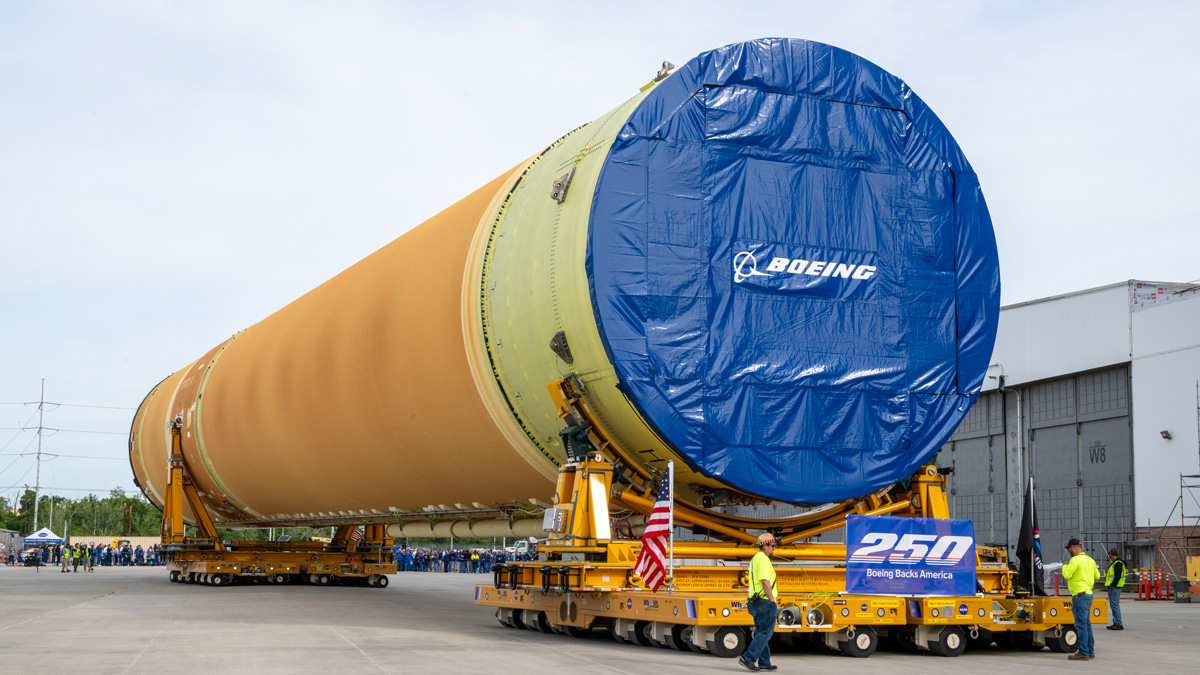
Summary: Boeing has shipped the forward four-fifths of the Space Launch System (SLS) core stage for Artemis III from its New Orleans factory, omitting the engine section for the first time. The component will travel by barge to Kennedy Space Center for final assembly. This marks a procedural shift in the SLS production line, aimed at accelerating throughput for later missions.
Why it matters: The altered manufacturing flow is a tangible signal of Boeing and NASA attempting to address the program’s chronic production bottlenecks, with schedule pressure mounting for the 2027-targeted Artemis III mission.
Context: SLS core stage production has been a critical path item, with each stage historically built and shipped as a single unit from Michoud. Decoupling the engine section assembly is a direct response to lessons from the arduous builds for Artemis I and II.
"This is the first time the Boeing program for NASA’s Space Launch System (SLS) has shipped a core stage without its engine section, a change aimed at accelerating production for future Artemis missions." — BOEING
Commentary: The operational change is a minor but necessary logistics optimization, not a fundamental redesign. It indicates program management is now willing to trade some integration complexity at Kennedy for faster turnover at Michoud, a pragmatic if incremental step toward sustaining a flight rate beyond one mission every two years. The real test remains whether this and other adjustments can reliably deliver stages to support a cadence that justifies the program’s fixed costs.
Date: April 20, 2026 12:00 AM ET
URL: https://www.boeing.com/features/2026/04/artemis-iii-moon-rocket-rolls-out-of-factory-onto-barge
AI Sentiment Score: Negative (50%)
AI Credibility Score: 7.0/10 — Medium
Scores and text generated by AI analysis of the source article indicated.
Post ID: b0ef9114