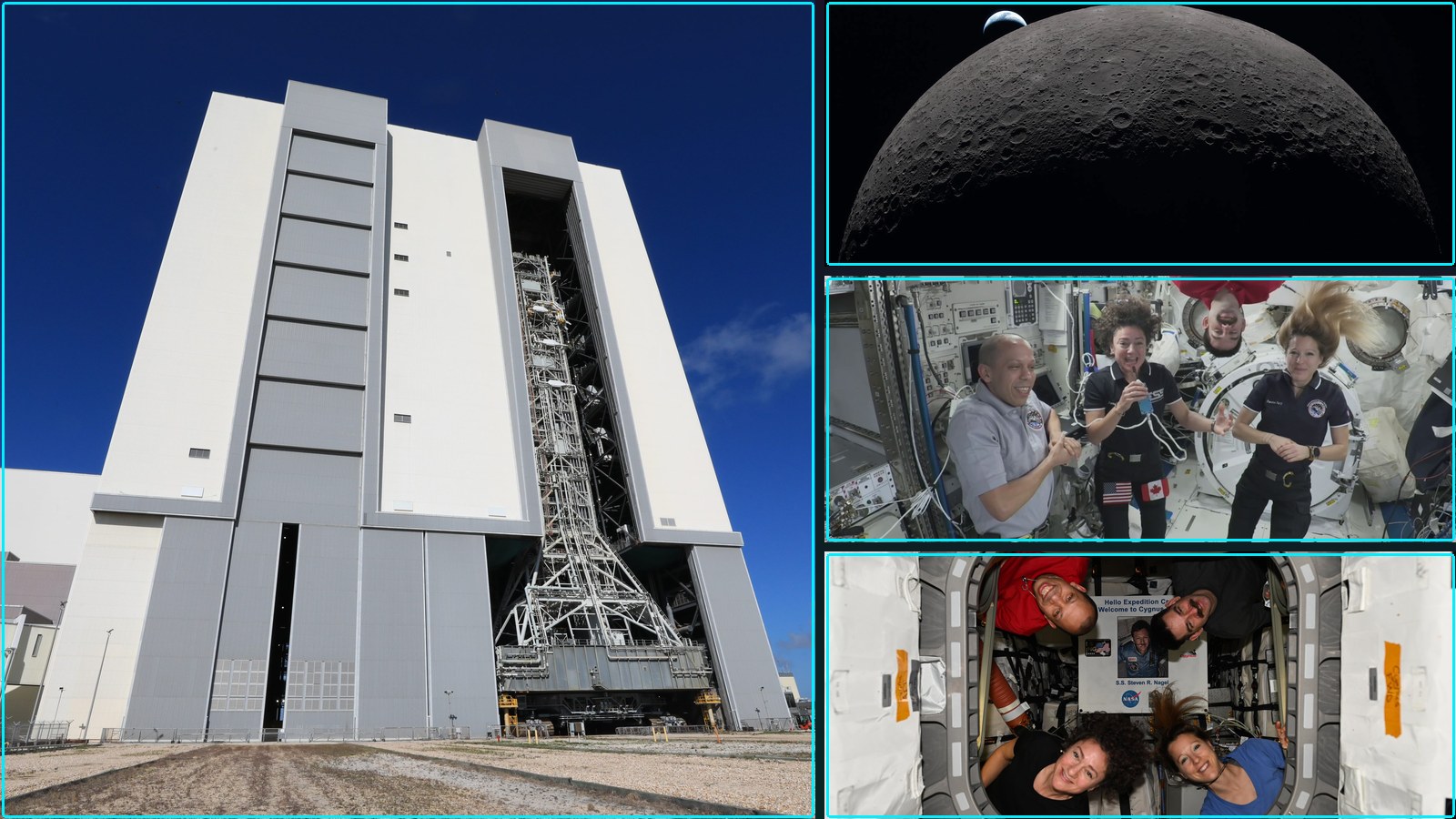
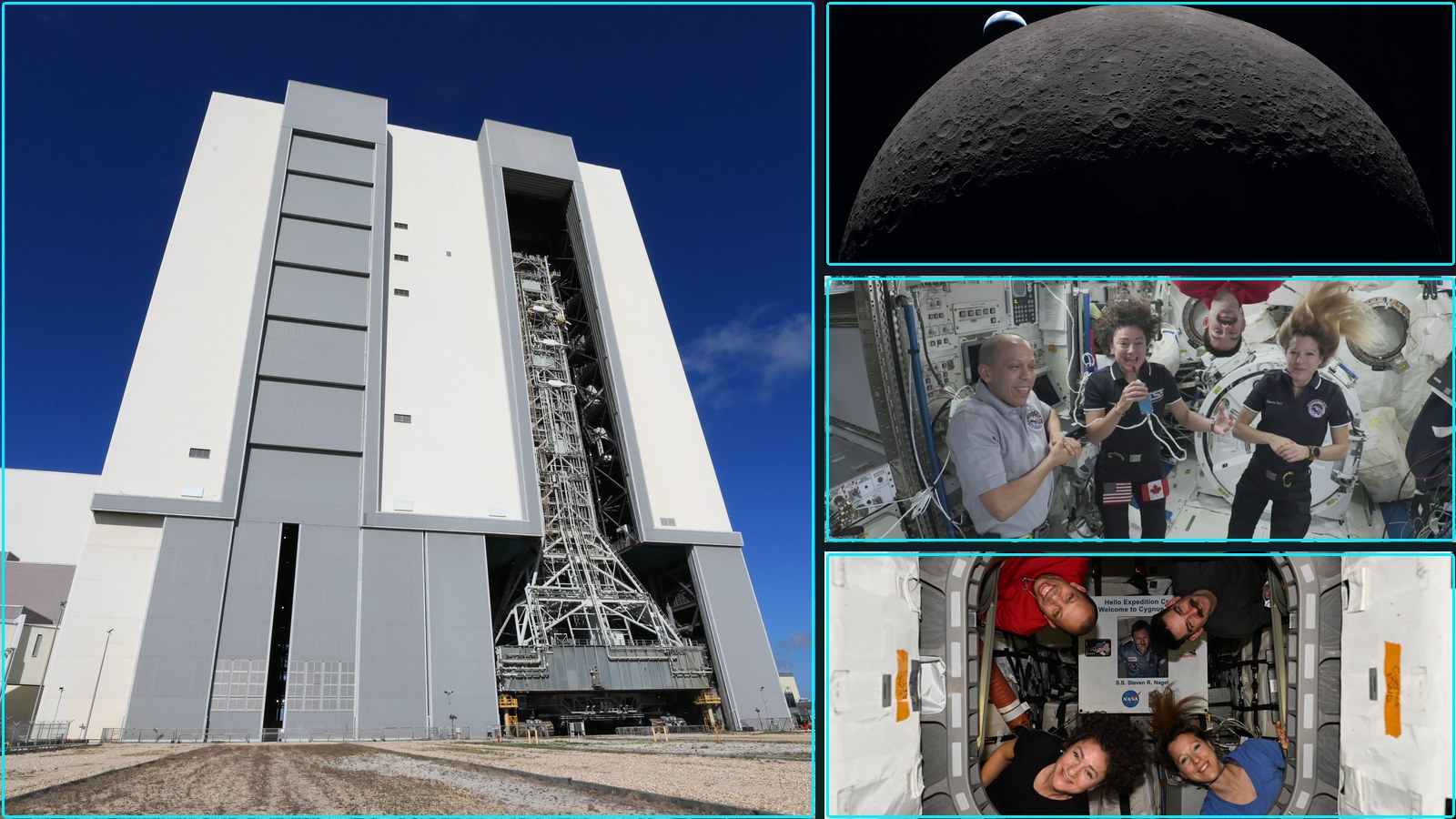
Space Exploration
NASA’s Mobile Launcher Rolls Ahead of Artemis III Preparation (Nasa.Gov)
Summary: NASA has moved the mobile launcher for the Space Launch System from Launch Complex 39B back to the Vehicle Assembly Building at Kennedy Space Center. This follows the Artemis II mission and initiates ground processing for Artemis III, the planned crewed lunar landing mission. The rollback allows teams to begin inspections, data analysis, and repairs to umbilical connections, elevators, and flame hole panels damaged during the Artemis II launch.
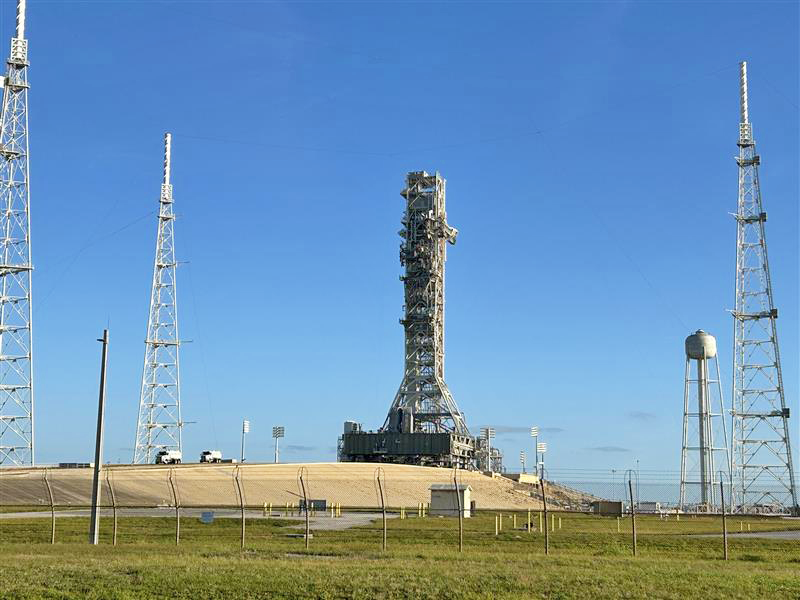
Why it matters: The operational tempo and condition of ground infrastructure are leading indicators for the Artemis III schedule, which remains officially targeted for next year despite significant technical and programmatic hurdles.
Context: Artemis III is the program’s first crewed lunar landing attempt, dependent on multiple unproven elements including SpaceX’s Starship Human Landing System and new lunar spacesuits. Ground system resilience is a critical, often under-reported, pacing item.
"Application of lessons learned from Artemis I to harden and reinforce ground support equipment at the pad proved successful as the mobile launcher and launch pad sustained minimal damage from the 8.8 million pounds of thrust expelled at booster ignition." — NASA.GOV
Commentary: The reported ‘minimal damage’ is a positive data point for ground system durability, but the need for repairs confirms that each SLS launch still inflicts measurable wear. This rollback is a routine but essential step; the real schedule risk for Artemis III lies upstream with the Human Landing System and orbital propellant transfer, not with the mobile launcher’s return to the VAB.
Date: Thu, 16 Apr 2026 12:33:08 +0000
URL: https://www.nasa.gov/blogs/missions/2026/04/16/nasas-mobile-launcher-rolls-ahead-of-artemis-iii-preparation/
AI Sentiment Score: Negative (66%)
AI Credibility Score: 10.0/10 — High
Scores and text generated by AI analysis of the source article indicated.
NASA’s Mobile Launcher Arrives at Vehicle Assembly Building (Nasa.Gov)
Summary: NASA’s mobile launcher for the Space Launch System has returned to the Vehicle Assembly Building at Kennedy Space Center following the Artemis II launch. The 380-foot-tall structure completed a 4-mile crawler-transporter journey from Pad 39B, its final solo move before being integrated with the Artemis III rocket. Inside the VAB, ground teams will now conduct post-launch inspections and repairs on the launcher in preparation for stacking the next mission’s vehicle.
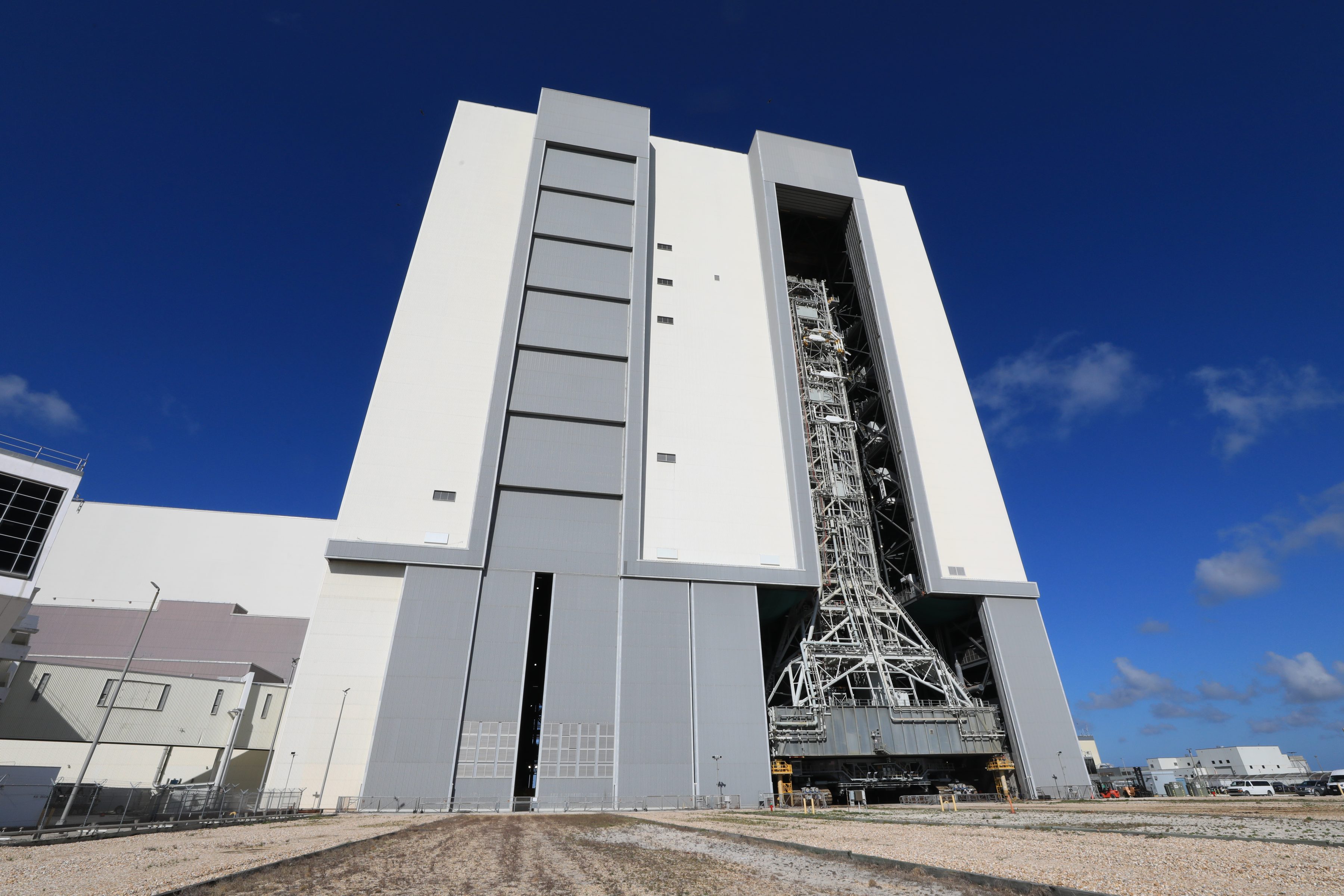
Why it matters: The launcher’s return marks the tangible start of the Artemis III ground processing timeline, transitioning from post-flight analysis of one mission to the hardware integration phase for the next.
Context: The mobile launcher is a critical, single-point ground infrastructure asset for SLS; its movement and readiness directly gate the assembly schedule for each Artemis mission.
"This was the mobile launcher’s last solo trek out to the launch pad ahead of integration of the SLS rocket, and it will remain inside the VAB until it is ready to return to the pad with the rocket." — NASA.GOV
Commentary: The operational cadence is becoming visible: the launcher is now a rotating asset between pad and VAB, with its post-flight inspection and refurbishment window becoming a fixed node in the critical path. This move signals that Exploration Ground Systems is executing the planned sequence, but the clock on Artemis III stacking has now officially started, putting pressure on the resolution of any anomalies found during the Artemis II post-flight review.
Date: Fri, 17 Apr 2026 15:59:01 +0000
URL: https://www.nasa.gov/blogs/missions/2026/04/17/nasas-mobile-launcher-arrives-at-vehicle-assembly-building/
AI Sentiment Score: Negative (80%)
AI Credibility Score: 10.0/10 — High
Scores and text generated by AI analysis of the source article indicated.
First-of-its-kind ship-to-ship call (Esa.Int)
Summary: NASA and ESA conducted a first ship-to-ship call between the Artemis II crew, currently in ground-based training for a lunar flyby mission, and astronauts aboard the International Space Station. The call connected personnel from two distinct operational domains: deep-space preparation and low Earth orbit operations. This is a procedural test, not a technical link between spacecraft in flight.

Why it matters: It signals operational integration and protocol development between concurrent NASA-led human spaceflight programs, a necessary step for managing future multi-vehicle missions.
Context: Artemis II is a scheduled 2025 crewed lunar flyby; such cross-program coordination tests communications, establishes joint procedures, and builds institutional familiarity ahead of complex multi-orbit operations.
"The first‑of‑its‑kind ship‑to‑ship call between astronauts on deep‑space and low Earth orbit missions." — ESA.INT
Commentary: The exercise is less a technical breakthrough than a bureaucratic and operational one. It rehearses the command-and-support relationships that will be required when Orion is in cislunar space and mission control must manage assets across two regimes. The real test will be replicating this during the actual Artemis II mission, under flight dynamics and communications latency.
Date: Mon, 13 Apr 2026 16:20:00 +0200
URL: https://www.esa.int/ESA_Multimedia/Videos/2026/04/First-of-its-kind_ship-to-ship_call
AI Sentiment Score: Positive (50%)
AI Credibility Score: 10.0/10 — High
Scores and text generated by AI analysis of the source article indicated.
Just opened: five tonnes of science and supplies (Esa.Int)
Summary: Northrop Grumman’s Cygnus NG-24 cargo spacecraft has been berthed to the International Space Station, delivering approximately five metric tonnes of supplies and scientific experiments. The capsule, launched on 11 April, was captured by the station’s robotic arm on 13 April. The delivery includes several European experiments among its cargo.

Why it matters: This resupply mission sustains the operational tempo of the ISS, enabling ongoing research and crew support, while demonstrating the continued reliability of the commercial cargo logistics chain.
Context: Cygnus missions are routine but critical logistics flights under NASA’s Commercial Resupply Services contracts, maintaining the station’s consumables and rotating scientific payloads.
"Cygnus NG‑24 is delivering around five metric tonnes of scientific experiments, spare parts and supplies to the Station, including several European experiments:." — ESA.INT
Commentary: The mission’s nominal execution underscores the maturity of commercial cargo systems, shifting focus from launch events to the downstream utility of the delivered hardware. The inclusion of European experiments highlights the continued internationalization of station utilization, even as the platform’s operational horizon is defined.
Date: Thu, 16 Apr 2026 09:34:00 +0200
URL: https://www.esa.int/ESA_Multimedia/Images/2026/04/Just_opened_five_tonnes_of_science_and_supplies
AI Sentiment Score: Negative (50%)
AI Credibility Score: 10.0/10 — High
Scores and text generated by AI analysis of the source article indicated.
Artemis II: around the Moon in 10 days (Esa.Int)
Summary: The Artemis II mission has successfully completed a 10-day lunar flyby, marking the first human venture beyond low Earth orbit in over five decades. The mission’s operational viability relied heavily on the European Service Module (ESM), which provided critical propulsion, power, and life support. This hardware was developed through a consortium of 13 ESA Member States.

Why it matters: The mission validates the ESM as a flight-proven cornerstone of the Artemis architecture, cementing Europe’s role as an indispensable provider of deep-space infrastructure.
Context: This represents a shift from purely NASA-led lunar efforts to a distributed international procurement model for critical mission systems.
"The European Service Module powered and sustained Orion throughout the journey, providing propulsion, power, water and breathable air for the crew." — ESA.INT
Commentary: By securing the life-support and propulsion layer, ESA has transitioned from a secondary partner to a primary stakeholder in the lunar economy. The focus now shifts toward ‘strengthening autonomy,’ suggesting a strategic pivot to reduce dependence on US-led frameworks for future Mars and LEO operations. This is less about a single flight and more about the industrialization of deep-space logistics.
Date: Mon, 13 Apr 2026 13:30:00 +0200
URL: https://www.esa.int/ESA_Multimedia/Videos/2026/04/Artemis_II_around_the_Moon_in_10_days
AI Sentiment Score: Positive (50%)
AI Credibility Score: 10.0/10 — High
Scores and text generated by AI analysis of the source article indicated.
Post ID: 8855ee75