Advertising, Upfronts, and Audience Measurement Trends
2026 TV upfronts recap: Hi-tech ad buying, creator fever … – LA Times (Latimes)
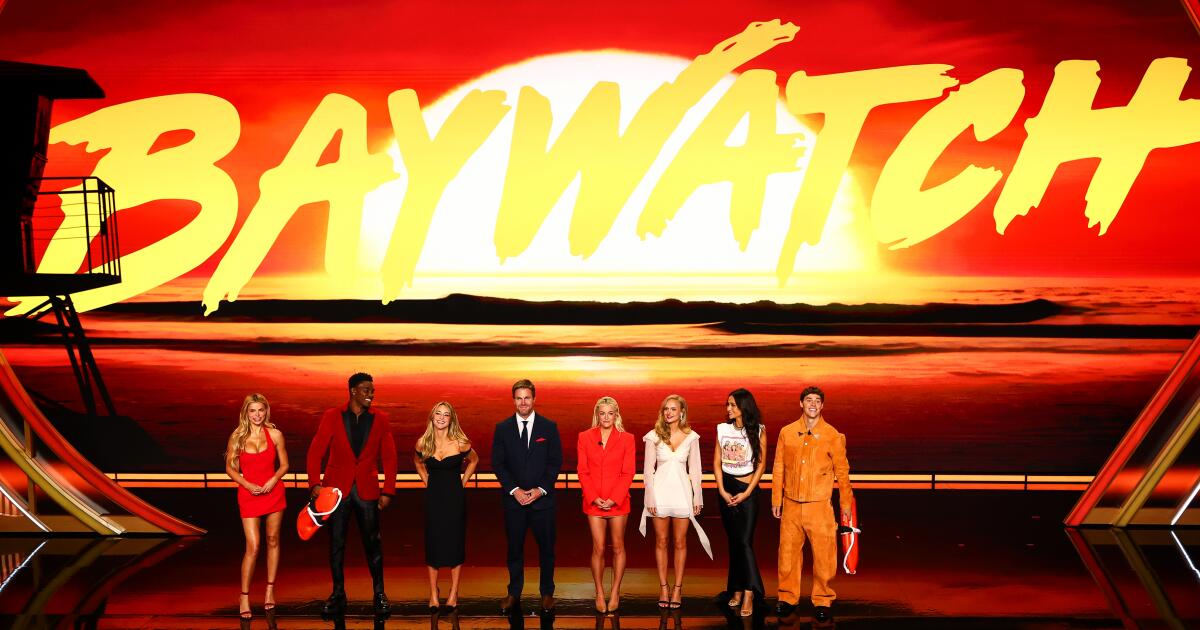
Summary: The 2026 TV upfronts reveal an industry where ad buying has become a hyper-targeted, AI-driven science, with platforms like YouTube and Twitch now central to mainstream media strategies. Creator-led content is being formally integrated into corporate pipelines, with studios and dedicated feeds for influencer-driven programming. Despite the tech focus, a parallel strategy of reviving familiar comfort-TV franchises like ‘Scrubs’ and ‘Baywatch’ remains a core programming pillar. The event underscores a bifurcated market: data-driven precision for advertisers and algorithmic nostalgia for audiences.
Why it matters: The upfronts signal a permanent shift in media economics, where audience attention is monetized through granular data partnerships and creator ecosystems, not just Nielsen ratings.
Context: The annual upfronts have evolved from program showcases to data and platform pitches, reflecting streaming’s dominance and the search for post-subscription growth.
"2026 TV upfronts recap: Hi-tech ad buying, creator fever and ‘Baywatch’ – Click here to listen to this article – Share via – At this year’s TV upfronts, networks and streamers wooed." — LATIMES
Commentary: The operationalization of ‘community’ into targetable segments completes the atomization of the mass audience, turning platforms into real-time ad exchanges. Creator studios and ‘CreatorCast’ deals formalize the influencer economy as a low-risk, high-engagement content pipeline for legacy media. The simultaneous push for comfort-food reboots is not a contradiction but a risk-averse hedge, outsourcing cultural innovation to creators while studios monetize proven IP. This creates a two-tier content system: algorithmically personalized ads supporting algorithmically recommended nostalgia.
Date: May 16, 2026 12:00 AM ET
URL: https://www.latimes.com/entertainment-arts/business/story/2026-05-16/2026-tv-upfronts-recap-hi-tech-ad-buying-creator-fever-baywatch
AI Sentiment Score: Positive (42%)
AI Credibility Score: 10.0/10 — High
Scores and text generated by AI analysis of the source article indicated.
Netflix’s ‘Formidable’ Upfront Pitch (Mediapost)
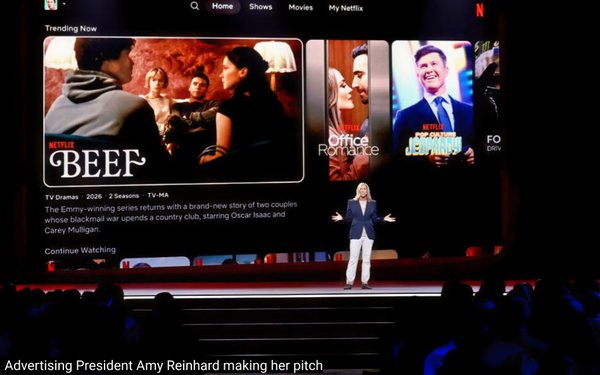
Summary: Netflix used its 2026 upfront presentation to declare its transition from a durable to a ‘formidable’ advertising player, projecting $3 billion in ad revenue this year. The pitch hinges on massive scale—250 million global monthly ad-supported users—and premium live sports, including an expanded NFL package. It also emphasized unique ad reach, AI-driven optimization, and a slate of new originals designed to sustain high engagement.
Why it matters: Netflix’s aggressive monetization of its audience shifts leverage in the streaming ad market, forcing competitors to match its scale, data, and premium content integrations.
Context: The streaming upfronts have become a critical battleground where platforms compete for brand budgets by proving viewer quality and targeting precision, moving beyond traditional TV’s broad-reach model.
"Dominant streamer Netflix says it has come of age in its association with brands as it delivers its fourth upfront presentation for advertising executives. “If the last couple of years were about." — MEDIAPOST
Commentary: Netflix is executing a classic platform power play: using exclusive, must-watch live sports (NFL) to attract a steady, broad audience, then leveraging its first-party data and AI tools to sell premium-targeted access to that audience. The claim that 44% of its ads are unseen elsewhere is a direct attack on the commoditized, frequency-fatigued ad pools of linear TV and rival streamers. This vertical integration of content, distribution, and ad tech positions Netflix not just as a seller of impressions, but as a manager of brand outcomes, potentially resetting pricing and measurement standards for the entire industry.
Date: May 13, 2026 12:00 AM ET
URL: https://www.mediapost.com/publications/article/415072/netflixs-formidable-upfront-pitch.html?edition=142607
AI Sentiment Score: Neutral (50%)
AI Credibility Score: 10.0/10 — High
Scores and text generated by AI analysis of the source article indicated.
Future of TV Briefing: The upfront is overtaking streaming’s programmatic marketplace (Digiday)
Summary: The traditional TV upfront, a legacy of broadcast network dominance, is now the primary engine for programmatic ad spending on streaming platforms. Major sellers like Disney and Warner Bros. Discovery report that 70% and nearly half, respectively, of their biddable programmatic demand originates from upfront advertisers, accelerating a shift from automated guaranteed deals to private marketplaces. This convergence is driven by the rise of streaming inventory, especially live sports, and a buyer preference for real-time control over reach and frequency. The dynamic introduces new revenue risk for sellers but also opens doors to ‘zero-share’ advertisers through programmatic channels.

Why it matters: The fusion of upfront commitments with programmatic bidding reshapes the economics of streaming, transferring pricing power and budget control toward advertisers while forcing media companies to manage inventory yield in real-time.
Context: For years, programmatic spending was allowed to count toward upfront commitments, but initially through low-risk, automated guaranteed deals. The current shift to private marketplaces represents a deeper, more volatile integration of upfront planning with real-time auction mechanics.
"Lock in a year of Digiday+ for 35% less. Ends June 5. Future of TV Briefing: The upfront is overtaking streaming’s programmatic marketplace This Future of TV Briefing covers the latest in." — DIGIDAY
Commentary: The upfront is no longer just a bulk purchase of future airtime; it has become the strategic gateway for deploying sophisticated, data-driven ad campaigns across streaming ecosystems. This forces media companies to operate their premium inventory, including live sports, within a bid-based framework, trading assured revenue for market access and scalability. The pivot also signals a maturation of streaming’s ad infrastructure, where platforms like Roku are deprioritizing proprietary DSPs in favor of integrating with Amazon and Google, effectively commoditizing the transaction layer. For advertisers, this offers unprecedented flexibility, but it systematically undermines the traditional upfront’s function as a price-setting mechanism and suggest of audience supply.
Date: May 20, 2026 12:00 AM ET
URL: https://digiday.com/future-of-tv/future-of-tv-briefing-the-upfront-is-overtaking-streamings-programmatic-marketplace/
AI Sentiment Score: Negative (80%)
AI Credibility Score: 10.0/10 — High
Scores and text generated by AI analysis of the source article indicated.
Title-hopping viewers test streaming ad strategies (Emarketer)
Summary: A new IGN report finds that 70% of Gen Z consumers in key Western markets no longer purchase physical media for TV, film, or music, relying entirely on streaming access. More critically, 59% actively subscribe and unsubscribe from services to follow specific titles, not out of platform loyalty. This behavior, combined with widespread subscription fatigue and a willingness to cancel one service when adding another, creates intense volatility for streaming platforms.

Why it matters: This shift from ownership to transient access upends traditional content monetization and forces platforms to compete on a per-title, rather than per-library, basis.
Context: The streaming market has matured past the initial land-grab phase, where deep catalogs drove subscriptions, into a period where consumer patience for bloated bundles has evaporated.
"59% actively subscribe to and unsubscribe from streamers to follow specific titles." — EMARKETER
Commentary: The data formalizes the ‘title-hopping’ consumer, turning every major release into a subscriber acquisition event with a built-in expiration date. This pressures studios to adopt theatrical-style marketing cycles for streaming and makes exclusive, staggered releases a financial necessity rather than a content strategy. The logical endpoint is a market where platforms function more like high-stakes broadcast networks, with churn rates baked into quarterly forecasts, and where bundling becomes a defensive tactic to aggregate churn risk rather than a value proposition.
Date: May 15, 2026 12:00 AM ET
URL: https://www.emarketer.com/content/title-hopping-viewers-test-streaming-ad-strategies
AI Sentiment Score: Neutral (33%)
AI Credibility Score: 10.0/10 — High
Scores and text generated by AI analysis of the source article indicated.
Future of TV Briefing: Inside Warner Bros. Discovery’s programmatic upfront pitch (Digiday)
Summary: Warner Bros. Discovery is accelerating the programmatic transformation of the upfront market, with nearly half its biddable inventory demand now coming from these annual commitments. The company is expanding programmatic access to its most valuable live sports inventory, enforcing stringent technical requirements on DSPs and SSPs to handle millions of queries per second. Deal structures are shifting from programmatic guaranteed toward more flexible private marketplaces, while its self-serve NEO platform faces adoption hurdles due to agency workflow fragmentation. The 2026 upfront is also poised to see the first experimental ‘agentic AI’ ad buys.
Why it matters: The technical and commercial integration of programmatic buying into premium, live inventory reshapes how billions in upfront dollars are allocated, forcing advertisers, agencies, and platforms to adapt their operations and risk models.
Context: The TV upfront has been gradually absorbing programmatic techniques for years, but live sports and high-stakes event inventory remained a final frontier due to technical and guaranteed-revenue concerns.
"“We’re seeing programmatic guaranteed as a deal type, while it’s still very sizable, the growth is leveling off on that product type. What we’re seeing now is more and more upfront going biddable,” Steinhauser said." — DIGIDAY
Commentary: WBD’s move signifies a maturation where programmatic’s flexibility is no longer antithetical to upfront commitments but is becoming their primary execution mechanism. The strict technical SLAs for live sports create a tiered ecosystem of DSPs, potentially consolidating power with a few scaled players like The Trade Desk and Amazon. The struggle to integrate NEO into agency planning systems highlights that the last-mile problem for new ad tech is often organizational inertia, not capability. Agentic AI’s mentioned entrance, though likely limited, frames this upfront as a transitional phase before another, more autonomous layer of automation.
Date: May 13, 2026 12:00 AM ET
URL: https://digiday.com/future-of-tv/future-of-tv-briefing-inside-warner-bros-discoverys-programmatic-upfront-pitch/
AI Sentiment Score: Negative (60%)
AI Credibility Score: 10.0/10 — High
Scores and text generated by AI analysis of the source article indicated.
THE PROFESSOR’S TAKE: THE 2026 UPFRONTS WEREN’T ABOUT TELEVISION. THEY WERE ABOUT INVENTORY. (Thebusinessofentertainment.Substack)
Summary: The 2026 upfronts saw a fundamental shift in what media companies sold, moving from programming slates to cross-platform audience reach. Approximately $30 billion in ad commitments traded hands, with presentations from Disney, Amazon, and YouTube heavily emphasizing sports, creators, and digital engagement over traditional scripted television. A key survey indicates flat marketing budgets, forcing networks to defend linear dollars while chasing digital ones. The transaction was no longer for a fall schedule but for guaranteed inventory of viewer attention across all owned surfaces.
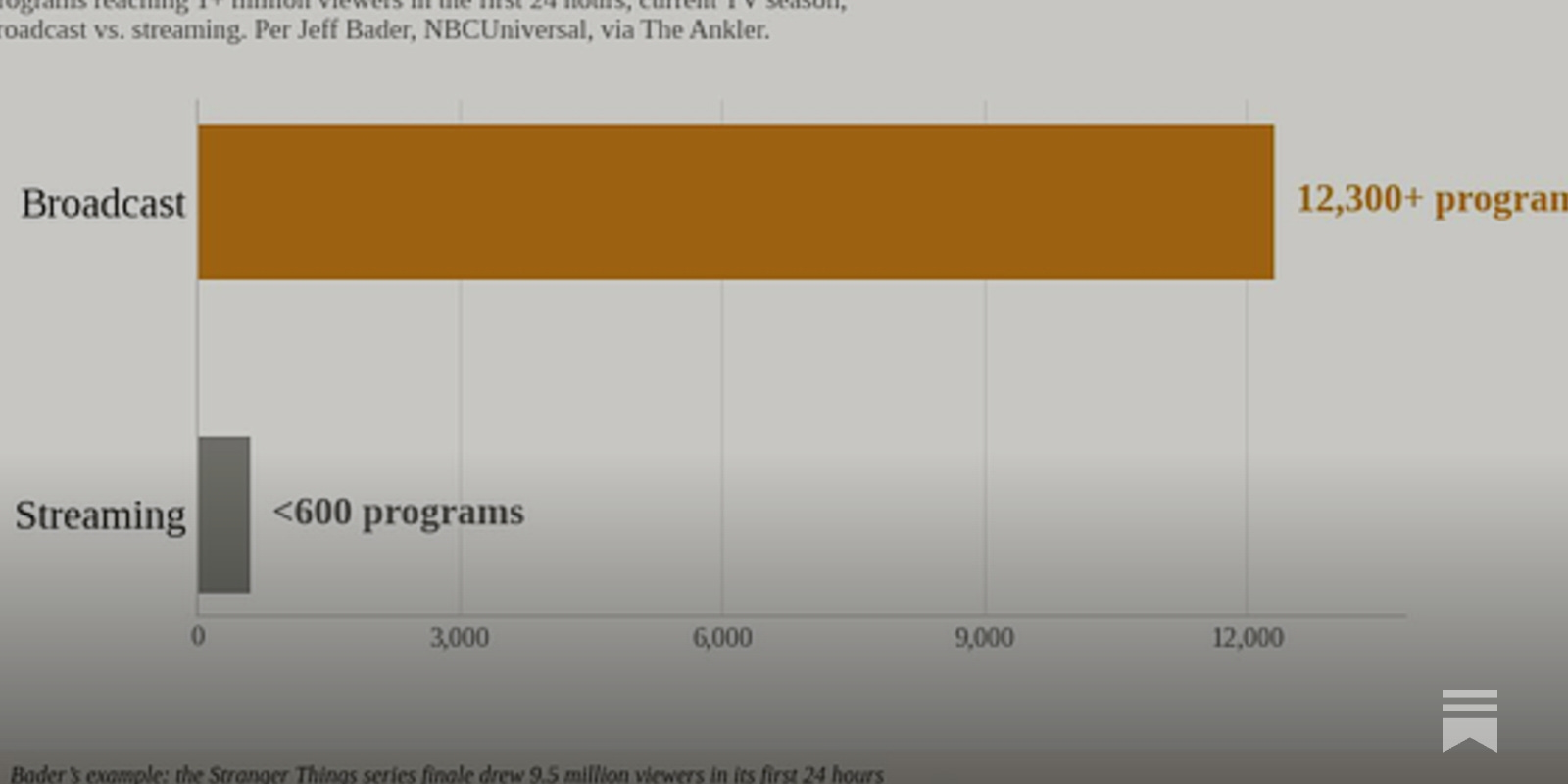
Why it matters: This redefines the core product of media companies from content to audience aggregation, directly impacting how shows are financed, what gets greenlit, and where creative and commercial resources are allocated.
Context: The upfronts are an annual ritual where TV networks sell the majority of their advertising inventory for the coming season, but linear TV’s pricing model is under severe pressure from streaming and digital video.
"The pitch was no longer the fall schedule. It was: we have the audience you need, and we will reach them wherever they are." — THEBUSINESSOFENTERTAINMENT.SUBSTACK
Commentary: The upfronts have become a futures market for human attention, not television programming. This commoditizes ‘reach’ and sidelines scripted development that lacks immediate, scalable audience capture, privileging live sports and creator-driven formats. For IP owners, the implication is stark: your value is now a function of your ability to deliver a predictable, targetable audience segment across platforms, not the cultural prestige of your shows.
Date: May 21, 2026 12:00 AM ET
URL: https://thebusinessofentertainment.substack.com/p/the-professors-take-the-2026-upfronts
AI Sentiment Score: Negative (50%)
AI Credibility Score: 10.0/10 — High
Scores and text generated by AI analysis of the source article indicated.
Program ‘Attention’? What About Media Buyers’ ‘Attention’? (Mediapost)
Summary: The annual upfront presentations for TV and streaming are underway, but media buyers’ attention is fragmented. NBC’s pilot count—eight scripted pilots, the highest in four years—signals a constrained, cost-conscious environment for broadcast networks. Buyers are now evaluating a broader mix of unscripted content, sports, and FAST channels while demanding granular proof of investment returns, moving beyond traditional show-centric metrics.
Why it matters: This shift pressures both networks and advertisers to redefine value in a splintered media landscape, altering how content is funded and measured.
Context: The upfront market has long been dominated by scripted programming, but audience migration to digital platforms and ad-supported streaming is forcing a recalibration of media investment strategies.
"Media-buying executives need a lot more attention these days." — MEDIAPOST
Commentary: The irony is acute: an industry obsessed with capturing consumer ‘attention’ now faces its own attention deficit. NBC’s pilot restraint and Peacock push reflect a strategic pivot to owned platforms, while buyer demands for granular ROI data—website visits, purchases—undermine the upfront’s traditional role as a brand-building showcase. This forces networks to compete on performance metrics better suited to digital direct response, potentially accelerating the commodification of premium content.
Date: May 12, 2026 12:00 AM ET
URL: https://www.mediapost.com/publications/article/414992/
AI Sentiment Score: Neutral (33%)
AI Credibility Score: 10.0/10 — High
Scores and text generated by AI analysis of the source article indicated.
The Gauge (Nielsen)
Summary: Nielsen’s Q4 2025 ‘Gauge’ report details the U.S. TV landscape, segmenting viewing by platform and ad-supported share. The methodology notes reveal critical operational definitions, such as the exclusion of vMVPD apps (e.g., Hulu Live) from the streaming category and the reclassification of original streaming content viewed via cable boxes.

Why it matters: The methodological boundaries define what counts as ‘streaming’ versus ‘linear,’ directly shaping multi-billion-dollar upfront negotiations and the perceived market power of pure-play SVOD services.
Context: Nielsen’s taxonomy is a market-making artifact; its categorizations arbitrate revenue flows between traditional networks, tech platforms, and advertisers.
"Linear streaming via vMVPD apps (e.g., Hulu Live, YouTube TV) are excluded from the streaming category. ‘Hulu SVOD’ and ‘YouTube Main’ within the streaming category refer to the platforms’ usage without the inclusion of linear streaming." — NIELSEN
Commentary: This methodological carve-out artificially depresses the reported scale of streaming, insulating traditional cable and broadcast share. For platforms like YouTube, it creates a bifurcated public identity: a ‘main’ app for on-demand and a live TV service that vanishes from the key streaming metric, complicating narrative leverage in carriage and ad sales.
Date: May 19, 2026 12:00 AM ET
URL: https://www.nielsen.com/data-center/the-gauge/
AI Sentiment Score: Neutral (50%)
AI Credibility Score: 10.0/10 — High
Scores and text generated by AI analysis of the source article indicated.
Nielsen: Co-viewing pilot delivers 4% increase for live TV events (Advanced-Television)
Summary: Nielsen’s pilot measurement of co-viewing—where multiple people watch the same live broadcast from different locations but are counted as a single household—has quantified a significant audience lift. The data, from February’s major live events, shows an average increase of over 4% in total viewers when this behavior is accounted for.

Why it matters: This directly challenges the foundational unit of TV advertising currency and forces a recalibration of value for live, appointment-viewing content.
Context: The industry has long acknowledged the gap between traditional household-based ratings and actual viewership, especially for communal events watched over streaming or social platforms.
"The new data shows an average +4.19 per cent lift in total viewers for the following marquee live events: Super Bowl LX, Olympics Opening Ceremony, NBA All Star Game, Daytona 500, Olympics Closing Ceremony, Olympics Men’s Hockey Gold Medal Game and State of the Union Address." — ADVANCED-TELEVISION
Commentary: Nielsen is attempting to retrofit its legacy measurement for a distributed viewing reality, but a 4% lift is a conservative floor, not a ceiling. The real pressure point is on networks and sports leagues to demand this premium be baked into upfront pricing, while streamers with superior first-party data will use it to further marginalize panel-based metrics. This pilot is less about discovery and more about establishing a negotiating baseline for the next rights cycle.
Date: May 05, 2026 12:00 AM ET
URL: https://www.advanced-television.com/2026/05/05/nielsen-co-viewing-pilot-delivers-4-increase-for-live-tv-events/
AI Sentiment Score: Negative (50%)
AI Credibility Score: 10.0/10 — High
Scores and text generated by AI analysis of the source article indicated.
Co-Viewing Pilot Delivers a +4% Average Increase In Total … (Nielsen)
Summary: Nielsen’s pilot study of co-viewing measurement for major live events in February 2026 shows a consistent, material lift in total audience. The data indicates an average increase of +4.19% across seven marquee broadcasts, including the Super Bowl and the State of the Union. This suggests a significant portion of viewership is currently uncaptured by standard, single-device measurement.

Why it matters: This quantifies a hidden audience layer, forcing a recalibration of advertising value, rights negotiations, and platform strategy for live tentpole content.
Context: The shift to fragmented, multi-screen viewing has long challenged traditional ratings, making co-viewing—multiple people watching a single screen—a known but unmeasured variable in live event economics.
"New York – May 5, 2026 – Nielsen, a global leader in audience measurement, data and media intelligence, today announced the results of its co-viewing pilot for February’s top live televised events." — NIELSEN
Commentary: A 4% systemic undercount for premium live inventory represents billions in mispriced advertising and affiliate fees. Networks and leagues will immediately leverage this to justify higher CPMs and rights renewals. The pressure now shifts to Nielsen to operationalize this measurement across its entire panel, and to competing metrics from iSpot and VideoAmp to match or dispute the finding. This isn’t just a measurement tweak; it’s a direct argument for the enduring, under-monetized scale of communal viewing.
Date: May 05, 2026 12:00 AM ET
URL: https://www.nielsen.com/insights/2026/nielsen-co-viewing-pilot-delivers-a-4-average-increase-in-total-viewers-for-februarys-live-televised-events/
AI Sentiment Score: Negative (71%)
AI Credibility Score: 10.0/10 — High
Scores and text generated by AI analysis of the source article indicated.
Nielsen and Triton Digital® Collaborate to Bring Greater Visibility to Podcast Audiences in Nielsen’s Media Impact Tool (Nielsen)
Summary: Nielsen and Triton Digital have integrated Triton’s Podcast Metrics Demos+ data into Nielsen’s Media Impact cross-media planning tool. This provides advertisers with standardized demographic and reach data for podcasts measured by Triton, enabling direct comparison with TV, radio, and digital channels. Nielsen will also become the primary U.S. sales representative for Triton’s podcast measurement products.
Why it matters: This formalizes podcasting’s entry into the mainstream media planning toolkit, shifting its role from experimental buy to a directly comparable, budgeted line item, which will accelerate ad revenue consolidation toward measured shows and networks.
Context: The podcast industry has long sought IAB-certified, third-party measurement to attract larger brand budgets. This move follows similar integrations for digital and streaming video, representing the final stage of a medium’s maturation into the legacy planning ecosystem.
"Triton Digital’s Podcast Metrics Demos+ Data Integration Enables Comprehensive Insights for All Podcast Shows and Networks Included in Triton’s Podcast Download Data NEW YORK – April 27, 2026 – Nielsen today announced." — NIELSEN
Commentary: The integration is a double-edged sword: it unlocks scaled brand budgets but also imposes the rigid, demographic-based buying logic of traditional media on a channel built on host-read intimacy and niche affinity. Expect a rapid bifurcation between ‘measured’ premium inventory and the unmeasured long tail, with programmatic systems leveraging this data to automate bulk buys, further pressuring mid-tier independent publishers.
Date: April 27, 2026 12:00 AM ET
URL: https://www.nielsen.com/news-center/2026/nielsen-and-triton-digital-collaborate-to-bring-greater-visibility-to-podcast-audiences-in-nielsens-media-impact-tool/
AI Sentiment Score: Neutral (50%)
AI Credibility Score: 10.0/10 — High
Scores and text generated by AI analysis of the source article indicated.
American Podcast Audience Growth, Nielsen x Triton Digital, & More (Youtube)
Summary: Podcast consumption among U.S. online adults has grown significantly, with S&P Global Market Intelligence reporting a 10-point increase to nearly 60% in early 2026, driven by video platforms. Nielsen’s integration of Triton Digital’s demographic data into its Media Impact tool aims to provide advertisers with a unified view of audio audiences. Meanwhile, a study of iHeartMedia stations reveals a stark decline in locally produced radio content, and the Nigerian podcast market remains opaque to global capital due to a lack of measurement infrastructure.
Why it matters: These shifts redefine the audio advertising landscape, forcing a recalibration of media planning away from traditional local radio and toward measurable, digitally-native audio formats, while highlighting global market inefficiencies.
Context: The audio ecosystem is bifurcating: broadcast radio is hollowing out its local differentiator, while on-demand podcasting is consolidating its metrics and audience reach, with video becoming a non-negotiable component of growth.
"• Tom Webster of Sounds Profitable audited iHeartMedia radio stations across three mid-size U.S. markets and found that less than 4% of weekday airtime in Pittsburgh features locally produced content, while Indianapolis." — YOUTUBE
Commentary: The convergence of Nielsen and Triton data signals podcasting’s maturation into a planable, mainstream ad channel, directly competing with television and digital video budgets. The hollowing out of local radio content creates a vacuum that hyper-local podcasts and digital creators could exploit, but the capital will follow the metrics—hence Nigeria’s invisibility. Audioboom’s U.S. expansion, funded by fresh capital, is a tactical move into a market now defined by video-audio hybrids and unified measurement.
Date: May 01, 2026 12:00 AM ET
URL: https://www.youtube.com/watch?v=MNUgy60AHNk
AI Sentiment Score: Positive (50%)
AI Credibility Score: 10.0/10 — High
Scores and text generated by AI analysis of the source article indicated.
Sports content accounts for fastest-growing portion of top global … (Nielsen)
Summary: Nielsen’s Gracenote unit reports sports now constitutes 5% of total programming on major SVOD platforms, marking its fastest-growing content category. Concurrently, the number of free ad-supported streaming TV (FAST) channels grew 19% year-over-year, with news channels seeing 57% growth. Notably, 37% of content on sports-focused FAST channels is live events, establishing FAST as a key global distribution pipeline for live sports.
Why it matters: This dual-channel growth reshapes content economics, forcing platforms to balance high-cost live rights against subscription and advertising models while altering viewer discovery habits.
Context: The streaming landscape is bifurcating: premium SVOD services are integrating live sports to reduce churn, while the FAST ecosystem expands as a low-friction, ad-supported window for live and library content.
"More than one-third of content on sports channels on FAST (37%) is live sports events." — NIELSEN
Commentary: The 37% live figure on FAST channels reveals a strategic pivot: sports rights holders are using ad-supported tiers to monetize non-marquee events and international audiences, effectively creating a secondary market that pressures traditional cable bundles. This commoditizes a segment of live sports, forcing leagues to manage a more complex value chain where exclusivity is no longer the default.
Date: May 21, 2026 12:00 AM ET
URL: https://www.nielsen.com/news-center/2026/sports-content-accounts-for-fastest-growing-portion-of-top-global-svod-catalogs/
AI Sentiment Score: Positive (60%)
AI Credibility Score: 10.0/10 — High
Scores and text generated by AI analysis of the source article indicated.
TV & Video Week in Review | Circana ConnectedIntelligence (Connected-Intelligence)
Summary: Disney’s Q2 2026 results confirm its streaming segment is now the primary financial engine, with DTC operating income surging 88% to offset linear declines. Meanwhile, Paramount moves to integrate its free ad-supported Pluto TV into Paramount+, and RoseBerry Media launches a studio to repurpose premium library content into mobile-first microseries, signaling a new phase of format and distribution adaptation.
Why it matters: The pivot from linear to streaming is complete at the top tier, forcing all media companies to refine their bundling, pricing, and content-repurposing strategies for profitability and audience capture.
Context: This follows years of streaming losses and linear erosion; the focus has shifted from subscriber growth at any cost to operational income and leveraging existing IP across new, cheaper formats.
"Total revenue grew 7% to $25.2 billion, driven by the DTC segment, where operating income surged 88% to $582 million across Disney+, Hulu, and ESPN streaming offerings." — CONNECTED-INTELLIGENCE
Commentary: Disney’s profit surge validates the bundled, tiered-service model but sets a high bar for pure-play streamers. Paramount’s Pluto integration and RoseBerry’s microstudio reveal the next pressure points: maximizing ARPU through ecosystem unification and mining library assets for low-cost, high-engagement vertical content. The industry is bifurcating into integrated giants and niche format innovators.
Date: May 11, 2026 12:00 AM ET
URL: https://connected-intelligence.com/research/digital-distribution/latest/tv-video-week-review-232
AI Sentiment Score: Positive (45%)
AI Credibility Score: 7.0/10 — Medium
Scores and text generated by AI analysis of the source article indicated.
May 8, 2026 – Advanced Television (Advanced-Television)
Summary: NBCUniversal Global TV Distribution has launched four new FAST channels on the European streaming service Rakuten TV. The channels are dedicated to the cult series ‘Hercules: The Legendary Journeys’ and ‘Xena: Warrior Princess’, as well as the ‘Real Housewives’ franchise. This move expands the distribution of legacy and reality catalog content into the European ad-supported streaming market.

Why it matters: It signals a strategic push by a major studio to monetize deep catalog content in international markets via the FAST model, reshaping content valuation and distribution windows.
Context: FAST (Free Ad-Supported Streaming TV) channels are a key growth vector for studios seeking incremental revenue from aging IP, particularly in regions where subscription fatigue is setting in.
"Rakuten TV, the European streaming service, has announced the launch of four brand new FAST channels, in partnership with NBCUniversal Global TV Distribution." — ADVANCED-TELEVISION
Commentary: This is less about Rakuten TV and more about NBCU’s library strategy. Deploying niche, decades-old series like ‘Hercules’ and ‘Xena’ as dedicated channels is a low-cost, high-margin play that tests the long-tail value of 90s syndication-era IP in a new format. It also pressures other European AVOD platforms to secure similar catalog deals, potentially creating a secondary market for content that has exhausted its traditional syndication and SVOD value.
Date: May 08, 2026 12:00 AM ET
URL: https://www.advanced-television.com/2026/5/8/
AI Sentiment Score: Positive (50%)
AI Credibility Score: 10.0/10 — High
Scores and text generated by AI analysis of the source article indicated.
Streaming Ratings March 30-April 5, 2026 – CashWalk (Cashwalklabs.Io)
Summary: Nielsen’s streaming ratings for late March 2026 reveal a market where platform-specific tentpoles and library acquisitions drive sustained engagement. HBO Max’s ‘The Pitt’ maintained its dominance with over a billion minutes for an eighth week, while Netflix leveraged its library strategy by adding CBS’s ‘Mike & Molly,’ instantly propelling it onto the acquired series chart. New seasons of established franchises like Netflix’s ‘Love on the Spectrum’ and Prime Video’s ‘Invincible’ hit series highs, indicating robust franchise health.
Why it matters: The data underscores the strategic value of long-running series for subscriber retention and the immediate, potent impact of library acquisitions in the streaming wars.
Context: Nielsen’s weekly rankings have become a key, if imperfect, benchmark for cross-platform streaming performance, highlighting the endurance of serialized drama and the renewed monetization of legacy TV libraries.
"The HBO Max drama The Pitt topped Nielsen’s streaming rankings for the week of March 30-April 5, with 1.16 billion minutes viewed, marking its eighth consecutive week above a billion minutes and 11th time since its season two premiere." — CASHWALKLABS.IO
Commentary: The eight-week streak for ‘The Pitt’ demonstrates that the ‘event series’ model, when executed well, can generate months of reliable engagement, directly countering the churn-driven ‘drop-and-binge’ release strategy. The immediate success of ‘Mike & Molly’ on Netflix is a stark reminder that exclusive control over deep, familiar libraries remains a powerful, low-risk lever for minutes growth, validating the industry’s rush to lock down legacy IP. These viewing patterns suggest a maturing market where platform loyalty is increasingly tied to a mix of dependable franchises and a comforting, endless catalogue.
Date: May 01, 2026 12:00 AM ET
URL: https://cashwalklabs.io/news/streaming-ratings-march-30-april-5-2026
AI Sentiment Score: Negative (57%)
AI Credibility Score: 7.0/10 — Medium
Scores and text generated by AI analysis of the source article indicated.
Post ID: fe374a9c