

Long-Reads on Society, Culture, and Personal Journeys
How David Frum and Danielle Crittenden grieved their daughter Miranda – The Washington Post (Washingtonpost)
Summary: For journalists Danielle Crittenden and David Frum, processing their grief meant telling Miranda’s story, in an essay and in a new memoir, “Dispatches From Grief.” Public figures using personal tragedy for narrative control; signals shifting boundaries between memoir and public commentary.

Why it matters: Public figures using personal tragedy for narrative control; signals shifting boundaries between memoir and public commentary.
Context: The commodification of grief in high-profile literary output warrants scrutiny regarding narrative authority.
"For journalists Danielle Crittenden and David Frum, processing their grief meant telling Miranda’s story, in an essay and in a new memoir, “Dispatches From Grief.”." — WASHINGTONPOST
Commentary: The signal is still worth tracking, but the current extraction path did not yield enough body text for a fuller analytical read. The immediate implication is operational rather than speculative: watch how this changes budgets, workflows, or risk assumptions over the next cycle.
Date: 2 weeks ago
URL: https://www.washingtonpost.com/style/2026/05/06/dispatches-from-grief-danielle-crittenden-memoir/
AI Sentiment Score: Positive (50%)
AI Credibility Score: 10.0/10 — High
Scores and text generated by AI analysis of the source article indicated.
‘We laced Nicole into her corset and her rib broke again’: Moulin Rouge at 25 – an oral history by cast and crew | Movies | The Guardian (Theguardian)
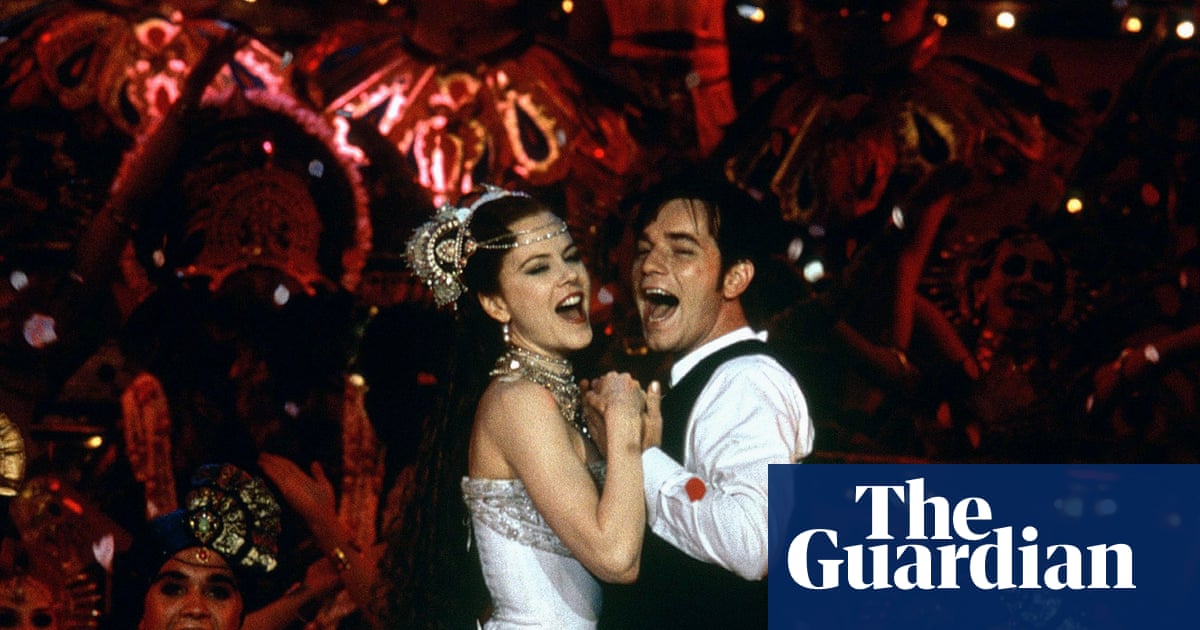
Summary: An oral history of Baz Luhrmann’s ‘Moulin Rouge!’ reveals the extreme physical and creative demands of its production, from Nicole Kidman’s broken ribs to the bulldozing of a 60-foot elephant set piece. The film, a box-office hit and Oscar nominee that revived the musical genre, was forged through a workshop-intensive process and a director’s democratic, relentless drive for ‘more.’ Its legacy persists in stage adaptations and cultural memory, particularly in Australia.
Why it matters: It demonstrates how a high-risk, artistically uncompromising production can achieve lasting cultural impact, offering a case study in creative leadership and the physical cost of cinematic spectacle.
Context: The film arrived when movie musicals were considered commercially and critically dead, making its success a surprise that recalibrated industry calculations.
"Moulin Rouge! was a whirlwind of a film, an extravagant assault on the senses that reinvigorated the musical. The doomed love affair between Satine (Nicole Kidman), a glamorous cabaret star and courtesan,." — THEGUARDIAN
Commentary: The anecdote crystallizes the film’s ethos: a relentless pursuit of visceral authenticity that overrode physical safety and comfort. This operational intensity, mirrored in Luhrmann’s democratic but demanding direction, produced a work whose energy was inseparable from its near-traumatic creation. The oral history format underscores that such enduring cultural artifacts are not just ideas but are built on specific, often punishing, human actions and sacrifices.
Date: 2 weeks ago
URL: https://www.theguardian.com/film/2026/may/06/we-laced-nicole-into-her-corset-and-her-rib-broke-again-moulin-rouge-at-25-an-oral-history-by-cast-and-crew
AI Sentiment Score: Negative (50%)
AI Credibility Score: 10.0/10 — High
Scores and text generated by AI analysis of the source article indicated.
The Hardest Part Of History To Tell Is How It Felt – Longreads (Longreads)
Summary: Craig Fehrman’s essay explores the visceral challenge of historical writing: moving beyond dates and names to capture the lived, sensory experience of the past. His personal injury while researching Lewis and Clark collapses the distance between researcher and subject, forcing a methodology centered on embodied realities like hunger, lactation, and cultural taboos. The piece argues that true historical understanding requires grappling with these physical and emotional textures, which official records often abstract away.
Why it matters: For readers navigating a world saturated with data-driven narratives, this essay is a necessary corrective, arguing that the felt dimension of history is not a decorative add-on but the core substrate of human events.
Context: This joins a growing corpus of meta-historical writing that critiques the discipline’s traditional reliance on documentary evidence, advocating instead for methods that recover sensory, emotional, and corporeal experience.
"I was trying to find the human side of history, and humans were often my best source. When I thought about Sacajawea in the Rockies, trying to keep her infant son alive, I thought about my own kids at that age—about my wife breastfeeding them, both parties always hungry, always thirsty. Breastfeeding burns an extra 500 calories a day, and the Rockies were a time of serious hunger for the expedition." — LONGREADS
Commentary: Fehrman’s approach exposes a critical flaw in institutional historiography: its systematic erasure of the female and domestic body from narratives of conquest and exploration. By centering lactation caloric needs alongside the Shoshone horse taboo, he reframes the expedition not as a heroic traversal but as a contingent, culturally fraught struggle for survival. This methodology, born of personal trauma, suggests that the most potent historical insights emerge not from detached analysis but from a disciplined, empathetic collision with the past’s physical realities.
Date: April 16, 2026
URL: https://longreads.com/2026/04/16/history-writing-lewis-clark/
AI Sentiment Score: Positive (40%)
AI Credibility Score: 10.0/10 — High
Scores and text generated by AI analysis of the source article indicated.
Politics After Literacy – Longreads (Longreads)
Summary: Sam Kriss, writing for Jacobin and shared via Substack, argues that the shift from text-based to video-streaming culture represents a regression to pre-literate, oral modes of thought. He posits that streamers’ reliance on repetition, formulaic language, and stereotype-driven discourse mirrors the patterns Walter Ong identified in purely oral societies, suggesting a decline in analytical depth and curiosity.
Why it matters: The medium structuring public discourse is shifting from the linear, reflective space of text to the repetitive, formulaic flow of streams, with profound implications for political cognition and civic engagement.
Context: This essay enters a long-running debate about media ecology and cognition, updating concerns about television’s effects for the algorithmic, always-on streaming era, where the oral paradigm has re-emerged digitally.
"Reading changes your brain. Reading may also be—at least according to Lenin during the rise of socialism—a precursor to revolutionary politics. But what happens when a society moves beyond reading? What happens." — LONGREADS
Commentary: Kriss’s framing moves the debate beyond screen-time moralism to a structural critique: if Ong was right, then platforms like Twitch, YouTube, and TikTok aren’t just new media but engines of re-primitivization, making nuanced policy debate structurally incompatible with the dominant mode of communication. The political class’s adaptation to this streamer aesthetic—from campaign messaging to legislative rhetoric—becomes a key pressure point for institutional decay.
Date: April 14, 2026
URL: https://longreads.com/2026/04/14/politics-after-literacy/
AI Sentiment Score: Negative (75%)
AI Credibility Score: 10.0/10 — High
Scores and text generated by AI analysis of the source article indicated.
The Car-Crash Conspiracy – Longreads (Longreads)
Summary: Patrick Radden Keefe’s latest investigation for Longreads details a sophisticated insurance fraud ring in New Orleans, where a network of ‘slammers’ staged collisions with commercial trucks to generate lucrative personal injury claims. The scheme, involving lawyers, recruiters, and participants, exploited the local legal and insurance systems, creating a shadow economy. The piece follows the investigation’s unraveling through key informants like Donna Kennedy, who described the operation as a multi-generational, normalized hustle.
Why it matters: It reveals how systemic vulnerabilities in legal and insurance frameworks can be weaponized into organized crime, with tangible impacts on insurance costs, legal ethics, and community norms.
Context: Keefe specializes in deep narratives that expose complex, institutionalized corruption, often where economic desperation intersects with professional complicity.
"It wasn’t just Turner staging accidents, she informed the private investigator; lots of people in New Orleans East were doing it. Some even argued that it was “legal,” she explained, because they were getting paid by lawyers. “It’s three generations of them doing it!” she exclaimed." — LONGREADS
Commentary: The story is less about a single conspiracy than about the emergence of a parasitic sub-economy, where fraud becomes a rational, if morally bankrupt, career path. Its implications extend to actuarial models for commercial insurance, the professional oversight of plaintiff’s bars in certain jurisdictions, and the social license of white-collar crime in economically strained communities. Keefe’s reporting underscores how corruption calcifies when it offers a more reliable income than the formal economy.
Date: April 13, 2026
URL: https://longreads.com/2026/04/13/new-orleans-slammers-accident-scam/
AI Sentiment Score: Negative (50%)
AI Credibility Score: 10.0/10 — High
Scores and text generated by AI analysis of the source article indicated.
The Absolute Hell of Watching a Movie at the Alamo Drafthouse in 2026 – Longreads (Longreads)
Summary: David Ehrlich’s Longreads essay dissects the operational collapse of Alamo Drafthouse, a once-celebrated cinema chain. He argues that its core brand promise—a sanctified, phone-free viewing experience—has been fatally undermined by the very business model it adopted, specifically mandatory QR-code ordering. The piece frames this as a case study in how a customer-centric ethos can be hollowed out by short-term, tech-driven ‘solutions’ that ignore human behavior.
Why it matters: It’s a sharp object lesson in how brand identity and customer experience are fragile systems, easily shattered when operational decisions contradict core values.
Context: This fits a broader pattern of service-industry ‘innovations’ that offload labor and complexity onto customers while degrading the very experience they purport to enhance.
"Once upon a time, not so long ago, the Alamo Drafthouse felt like the future of movie-going. Then, at shocking speed, it all fell apart, hitting rock bottom with the nonsensical introduction." — LONGREADS
Commentary: Ehrlich’s piece earns attention by diagnosing a specific institutional failure with wider resonance: the hypocrisy of enforcing rules you’ve made impossible to follow. The structural takeaway is that convenience and sanctity are often zero-sum in experience design, and attempts to optimize for both can destroy the brand’s reason for existing. For any business built on a curated experience, this is a cautionary tale about the corrosive effects of incoherent policy.
Date: April 13, 2026
URL: https://longreads.com/2026/04/13/alamo-drafthouse-hell/
AI Sentiment Score: Negative (85%)
AI Credibility Score: 10.0/10 — High
Scores and text generated by AI analysis of the source article indicated.
Failure To Lawn – Longreads (Longreads)
Summary: A personal essay chronicles the author’s five-year struggle to maintain a conventional lawn in Bozeman, Montana, framing it as a personal and ecological failure. The narrative traces a shift from shame and environmental guilt to discovery and community, culminating in the deliberate replacement of turfgrass with native, drought-tolerant landscaping. This individual journey mirrors a broader, policy-aware movement against water-intensive ornamental grass, citing municipal rebates, new regulations, and a changing social calculus around conspicuous consumption and ecological responsibility.

Why it matters: It crystallizes a quiet but significant cultural and policy shift—the rejection of the lawn as a status symbol—detailing the personal, communal, and institutional mechanics of change in an era of water scarcity and biodiversity loss.
Context: The American lawn is a 20th-century cultural construct with deep roots in class imitation, now colliding with 21st-century resource constraints. Municipalities from Las Vegas to Bozeman are implementing turfgrass restrictions and rebates, while online communities like r/NoLawns provide practical and social support for alternatives.
"Turfgrass covers an estimated 62,500 square miles in the US—it’s a callous waste of water and habitat, neither of which we can afford to squander." — LONGREADS
Commentary: The essay operationalizes a macro-trend: the lawn is becoming a policy vector for water conservation and a site of quiet civil disobedience. The author’s shift from isolated failure to networked action—leveraging municipal programs, neighborly exchange, and online forums—maps a viable path for decentralized environmental adaptation. This suggests the next frontier of climate action isn’t just technological, but deeply cultural, rewriting the aesthetics of suburban life and the social contracts of homeownership.
Date: 6 days ago
URL: https://longreads.com/2026/05/14/kill-your-lawn-maggie-slepian/
AI Sentiment Score: Negative (57%)
AI Credibility Score: 10.0/10 — High
Scores and text generated by AI analysis of the source article indicated.
Meet the Sad Wives of AI – Longreads (Longreads)
Summary: Alessandra Ram’s Wired feature profiles the partners of AI founders and engineers—primarily women—who describe a domestic life strained by the obsessive, all-consuming nature of their spouses’ work. The piece frames this as the latest iteration of the ‘ideal worker’ trap, historically seen in industrial booms and the dotcom era, now manifesting as midnight ‘vibe coding’ and perpetual model upgrades. It draws on interviews with other ‘sad wives,’ family therapists, and labor researchers to examine the gendered dynamics of care work and professional sacrifice in the current AI gold rush.
Why it matters: It reveals the human and social cost of the AI accelerationist mindset, showing how industry hype and FOMO reshape not just markets but intimate relationships and household labor distribution.
Context: The pattern of technological booms producing single-minded devotees who sacrifice domestic life is well-established, from the Gold Rush to the dotcom era; the AI wave is simply applying this template to a new cohort of builders and their families.
"Alessandra Ram is currently wrangling two babies in her household: a 10-month-old daughter and an LLM. For Wired, Ram writes a dispiriting yet sharp and funny piece about being to be married." — LONGREADS
Commentary: The piece successfully reframes the AI boom’s human impact from venture capital returns and product launches to the quiet crisis of unpaid emotional and domestic labor. It signals a maturation point where the industry’s social externalities—long discussed in abstract terms—become visible in specific, strained households. For investors and operators, this is a reputational and retention risk; for the culture at large, it’s a reminder that technological revolutions are rarely neutral in their distribution of sacrifice.
Date: 5 days ago
URL: https://longreads.com/2026/05/14/ai-wives-relationships/
AI Sentiment Score: Negative (71%)
AI Credibility Score: 10.0/10 — High
Scores and text generated by AI analysis of the source article indicated.
I Mean, Why Shouldn’t We All Smoke Cigarettes Again? – Longreads (Longreads)
Summary: Xochitl Gonzalez’s essay in Longreads reflects on the social and psychological allure of smoking, framing it as a small, defiant act of personal agency in a chaotic world. She juxtaposes the communal rituals and mental breaks of smoking culture against the public health orthodoxy that has successfully demonized it. The piece is less a call to resume smoking than a meditation on what we lose when we purge such sanctioned transgressions from daily life.
Why it matters: It surfaces a growing cultural tension between individual ritual and collective well-being, questioning whether the eradication of certain vices also removes valuable social textures and moments of pause.
Context: This essay joins a minor but persistent genre of writing that re-examines smoking not as a health issue, but as a cultural and sociological phenomenon, often in response to pervasive societal anxiety.
"This piece made me very nostalgic for my long-gone days smoking Marlboro menthols. I was never proud of the habit, but I did love the interesting chats in the smokers’ area, the." — LONGREADS
Commentary: Gonzalez captures the core of the appeal: smoking as a marker of premature adulthood and social currency. The implication is that public health campaigns, while successful, often flatten complex social ecosystems. The piece signals a latent nostalgia for managed risk and minor rebellion in an era of hyper-vigilant optimization, where such ‘offline’ social lubricants have few substitutes.
Date: 3 weeks ago
URL: https://longreads.com/2026/05/01/cigarettes-smoking-smokers/
AI Sentiment Score: Negative (66%)
AI Credibility Score: 10.0/10 — High
Scores and text generated by AI analysis of the source article indicated.
The Secret Door – Longreads (Longreads)
Summary: Mac Barnett’s essay from his forthcoming book ‘Make Believe’ examines the unique contract between children’s literature and its audience, arguing that children are not passive consumers but active participants in a collaborative act of ‘make-believe.’ He recounts his own childhood immersion in books and his later experience as a camp counselor, where he learned that children possess a sophisticated, flexible capacity to inhabit fictional worlds that many adults lose. The piece positions children as ideal readers whose openness and imaginative commitment challenge writers to create ambitious, rule-based fictional games.

Why it matters: It reframes the cultural debate around children’s media, moving beyond simplistic didacticism to champion artistic ambition and the intrinsic value of play in literature.
Context: This arrives amid ongoing institutional battles over what children should read, often framed around pedagogy or morality, and a publishing industry segmented by confusing age-grade jargon Barnett critiques.
"Mac Barnett| Longreads | May 5, 2026 | 3,941 words (16 minutes) This is an excerpt from Make Believe: On Telling Stories to Children by Mac Barnett, which was published by Little,." — LONGREADS
Commentary: Barnett’s ‘game’ metaphor elevates children’s literature from a teaching tool to an art form with its own internal logic, demanding respect for young readers’ intelligence. This directly challenges the market-driven tendency to simplify early readers and the institutional instinct to moralize. For creators and publishers, the implication is that success lies not in talking down, but in crafting richer, more rule-bound worlds that reward a child’s active participation.
Date: 2 weeks ago
URL: https://longreads.com/2026/05/05/mac-barnett-childrens-books-make-believe/
AI Sentiment Score: Positive (40%)
AI Credibility Score: 10.0/10 — High
Scores and text generated by AI analysis of the source article indicated.
The role of literature as the key to personal freedom | Aeon Essays (Aeon.Co)
Summary: Stripped of easy moralising, literature makes us relish the search for truth in an age when many believe truth to be dead Literature’s enduring value lies in its capacity to sustain the difficult pursuit of truth against currents of convenient consensus.
Why it matters: Literature’s enduring value lies in its capacity to sustain the difficult pursuit of truth against currents of convenient consensus.
Context: The essay frames literary engagement as a necessary antidote to contemporary epistemological complacency.
"Stripped of easy moralising, literature makes us relish the search for truth in an age when many believe truth to be dead." — AEON.CO
Commentary: The signal is still worth tracking, but the current extraction path did not yield enough body text for a fuller analytical read. The immediate implication is operational rather than speculative: watch how this changes budgets, workflows, or risk assumptions over the next cycle.
Date: 1 month ago
URL: https://aeon.co/essays/the-role-of-literature-as-the-key-to-personal-freedom
AI Sentiment Score: Negative (50%)
AI Credibility Score: 10.0/10 — High
Scores and text generated by AI analysis of the source article indicated.
What I Learned About Billionaires at Jeff Bezos’s Private Retreat – Longreads (Longreads)
Summary: Noah Hawley’s dispatch from Jeff Bezos’s private ‘Campfire’ retreat chronicles the surreal dissonance of an ultra-elite gathering. He observes a collection of prodigiously accomplished individuals rendered oddly passive and discomfited within a curated environment designed by a host who has isolated himself from common experience. The piece pivots on a telling moment where Hawley attempts a ‘brief human connection’ by sharing a minor problem, only to have Bezos react with horror and be immediately whisked away by an aide.
Why it matters: It offers a rare, unvarnished look at the operational and psychological mechanics of extreme wealth, revealing how power structures actively inhibit empathy and genuine human interaction at the highest levels.
Context: This joins a growing genre of anthropological reportage on the ultra-wealthy, from private butler schools to fortress ecosystems, detailing how capital reshapes social conduct and personal identity.
"When presented with the opportunity for empathy, even performative empathy, he chose escape." — LONGREADS
Commentary: Hawley’s account transcends mere celebrity gossip by framing the retreat as a case study in institutionalized alienation. The core thesis is that extreme wealth doesn’t just buy luxury; it engineers social environments where inconvenient humanity can be efficiently filtered out. This structural takeaway—that empathy becomes a logistical problem to be managed by staff—explains broader societal disconnects more sharply than economic data alone.
Date: 1 month ago
URL: https://longreads.com/2026/04/21/jeff-bezos-billionaire-retreat/
AI Sentiment Score: Negative (66%)
AI Credibility Score: 10.0/10 — High
Scores and text generated by AI analysis of the source article indicated.
The Great Ozempic Experiment – Longreads (Longreads)
Summary: The rapid, off-label adoption of GLP-1 agonists like Ozempic has created a de facto, large-scale public health experiment. Patients are self-reporting unexpected therapeutic benefits for conditions ranging from long Covid to addiction, bypassing traditional clinical pathways. This shift is driven by telehealth platforms, online communities, and gray-market access, operating outside the oversight of conventional medical institutions.
Why it matters: This represents a fundamental shift in therapeutic discovery and patient agency, challenging the pace and control of the formal medical establishment.
Context: The phenomenon follows a pattern seen with other repurposed drugs, but at an unprecedented scale due to social media, direct-to-consumer telehealth, and existing high demand for weight loss.
"Millions of Americans are taking GLP-1 drugs like Ozempic and Zepbound for more than weight loss. As Julia Belluz reports in this interactive New York Times story, people are finding unexpected relief." — LONGREADS
Commentary: The medical system is now in reactive mode, forced to validate or caution against uses discovered by patients. This accelerates potential benefits but also systemic risks, from unknown long-term effects to inequitable access. It pressures regulators and insurers to make coverage decisions based on crowd-sourced data rather than phased trials, potentially rewriting the drug development playbook.
Date: 1 month ago
URL: https://longreads.com/2026/04/21/ozempic-glp1-drug-health/
AI Sentiment Score: Negative (60%)
AI Credibility Score: 10.0/10 — High
Scores and text generated by AI analysis of the source article indicated.
Leaving America – Longreads (Longreads)
Summary: Lindsey Tramuta, in The Bitter Southerner, frames a rising wave of American departures not as simple wanderlust but as a structural critique. She profiles citizens leaving for France, Vietnam, Germany, and New Zealand, driven by unaffordable housing, a broken healthcare system, eroding civil rights, and political alienation. The piece connects these individual exits to a broader pattern of Black Americans, professionals, and creatives seeking refuge and functionality abroad. It examines the psychological weight of the question: is leaving an act of surrender or a rational pursuit of a viable life?
Why it matters: This signals a quiet but measurable brain drain and capital flight, where the U.S. is losing citizens not to opportunity but to escape systemic failures, reshaping its demographic and cultural fabric.
Context: The trend coincides with post-pandemic remote work flexibility, rising political polarization, and a global recalibration of quality-of-life metrics, making emigration a more tangible option for a broader demographic.
"“Some departures are driven by necessity,” she writes, “others by longing, ambition, or a sense of adventure.” All of them, however, raise the same question: Does leaving the US mean you’ve given up?" — LONGREADS
Commentary: The framing shifts the expat narrative from individual choice to collective symptom. When forensic pathologists leave for science-respecting cultures and Black veterans seek refuge from fear, the departures constitute a referendum on American institutional competence and social contract. This isn’t just about lifestyle; it’s a reallocation of human capital that weakens the domestic tax base, civic engagement, and talent pools. The long-term risk is a feedback loop where the most mobile and often most skilled citizens opt out, leaving a less dynamic and more polarized society behind.
Date: April 17, 2026
URL: https://longreads.com/2026/04/17/leaving-america-expat-migration/
AI Sentiment Score: Negative (75%)
AI Credibility Score: 10.0/10 — High
Scores and text generated by AI analysis of the source article indicated.
500-Year-Old Slave Revolt of 1526 Redefines Freedom as US Turns 250 | Truthout (Truthout)
Summary: As federal programming for the U.S. semiquincentennial promotes a celebratory, top-down narrative of freedom originating in 1776, a Truthout article surfaces the 500-year-old San Miguel de Gualdape rebellion of 1526. This event, where enslaved Africans in a Spanish colony in present-day South Carolina revolted, burned settlements, and likely integrated with Indigenous communities, represents the first documented act of resistance to African enslavement on North American soil. The piece argues this history has been systematically marginalized, not only by conservative memory projects but also within mainstream and even progressive historical framing, which often centers 1619 as the starting point. Recovering 1526 reframes freedom as a collective struggle seized from below, challenging the foundational myth that liberty was a gift from the nation’s enslaver-founders.

Why it matters: The contest over historical narrative directly informs contemporary power structures, educational policy, and the legitimacy of ongoing liberation movements.
Context: This analysis arrives amid a polarized political climate where state-level legislation restricts how slavery and systemic racism are taught, and as federal ‘America 250’ initiatives prepare to roll out a year of patriotic programming.
"Truthout is an indispensable resource for activists, movement leaders and workers everywhere. Please make this work possible with a quick donation. “With a single sheet of parchment and 56 signatures, America began." — TRUTHOUT
Commentary: The article’s potency lies not in the discovery of 1526—it’s known to specialists—but in its strategic deployment as a narrative counterweight to state-sanctioned semiquincentennial myth-making. By shifting the origin of American freedom from a declarative act by propertied elites to a collective insurrection by the enslaved, it reframes the entire national project as one of contested liberation, not bestowed liberty. This directly undermines the ideological foundation of campaigns like ‘Freedom 250,’ which seek to equate patriotism with uncritical acceptance of a sanitized origin story. For educators, activists, and institutions, the 1526 frame offers a more radical, and historically accurate, anchor for understanding power, resistance, and solidarity.
Date: 2 weeks ago
URL: https://truthout.org/articles/500-year-old-slave-revolt-of-1526-redefines-freedom-as-us-turns-250
AI Sentiment Score: Negative (66%)
AI Credibility Score: 10.0/10 — High
Scores and text generated by AI analysis of the source article indicated.
Messi and the forgotten tape: Oral history of Argentina’s race vs. Spain to recruit young Barcelona star – ESPN (Espn)
Summary: An ESPN oral history reconstructs the frantic, bureaucratic scramble by the Argentine Football Association (AFA) in 2004 to secure Lionel Messi’s international future, after Spain’s youth setup had begun a quiet campaign to recruit the then-teenage Barcelona prodigy. The story hinges on a VHS highlight tape, a missed U17 World Cup, and a chef’s post-match taunt that spurred the AFA into organizing a FIFA-sanctioned friendly solely to lock Messi into Argentina. The piece reveals how close Spain came and how disorganized Argentina was, with officials misspelling his name and calling every ‘Messi’ in the Rosario phone book.

Why it matters: It reframes a foundational myth of modern football, exposing the contingent, almost accidental nature of a career that came to define national identity and global sport for two decades.
Context: This fits a pattern of international football’s ‘talent wars,’ where federations compete for dual-eligible youth, but the stakes here—a player who would define an era—were uniquely high.
"How would the past 20 years of international football have looked if Lionel Messi had played for Spain and not Argentina? For Messi, not representing the country of his birth was never." — ESPN
Commentary: The operational farce—the misspelled fax, the phone book search, the chef’s intervention—underscores how institutional inertia nearly ceded a generational asset. Spain’s systematic scouting versus Argentina’s reactive panic illustrates a broader dynamic in talent governance: foresight versus patrimony. The episode also crystallizes the counterfactual weight of individual decisions; Spain’s 2008-2012 dynasty might have been extended, while Argentina’s 2022 catharsis might never have occurred, altering the emotional geography of the sport.
Date: 1 week ago
URL: https://www.espn.com/soccer/story/_/id/48636037/lionel-messi-forgotten-vhs-tape-oral-history-argentina-spain-recruit-barcelona-world-cup
AI Sentiment Score: Neutral (33%)
AI Credibility Score: 10.0/10 — High
Scores and text generated by AI analysis of the source article indicated.
Finding God and Leaving Psychiatry: An Interview With Kelsey Osgood – Mad In America (Madinamerica)
Summary: Kelsey Osgood’s interview details her deliberate, media-influenced adoption of anorexia as a teenage identity project, followed by years of psychiatric treatment and medication she later questioned. She frames her eventual conversion to Orthodox Judaism as a more hopeful narrative structure than the ‘broken brain’ model of psychiatry, arguing that modern therapeutic culture often misdiagnoses structural and existential malaise as individual pathology.

Why it matters: It challenges the foundational narratives of mental health treatment and suggests a growing cultural reevaluation of secular frameworks for meaning, with implications for psychiatry, patient agency, and the search for community.
Context: This interview appears on Mad in America, a platform critical of mainstream psychiatry, and aligns with a broader cultural moment questioning the over-medicalization of distress and the search for alternative structures of meaning.
"Welcome to the Mad in America podcast. My name is Brooke Siem, and I am the author of the award-winning memoir on antidepressant withdrawal, May Cause Side Effects. Today, I am excited." — MADINAMERICA
Commentary: Osgood’s trajectory—from patient to critic to religious convert—exemplifies a shift from internalized pathology to externally situated meaning. Her critique is not anti-treatment but anti-dogma, targeting the unexamined substitution of psychiatric jargon for older moral and communal languages. The implication is a potential realignment: as trust in institutional psychiatry erodes, traditional religious structures may regain cultural footing not as regressive forces, but as viable containers for the loneliness and anomie driving much diagnosed ‘disorder.’
Date: 1 month ago
URL: https://www.madinamerica.com/2026/04/kelsey-osgood/
AI Sentiment Score: Positive (50%)
AI Credibility Score: 7.0/10 — Medium
Scores and text generated by AI analysis of the source article indicated.
The Very American, Very Intense World of High-School Debate | The New Yorker (Newyorker)
Summary: The photographer Eli Durst travelled with students to district tournaments in Arkansas and California and to national tournaments at Harvard and the University of Kentucky. Jay Caspian Kang writes about what happens when ethical and political questions become a high-speed game.

Why it matters: Debate circuits reveal how complex ethical debates are gamified for performance, not consensus.
Context: The intense, structured nature of high-stakes academic competition offers a microcosm of modern political discourse.
"The photographer Eli Durst travelled with students to district tournaments in Arkansas and California and to national tournaments at Harvard and the University of Kentucky. Jay Caspian Kang writes about what happens." — NEWYORKER
Commentary: The signal is still worth tracking, but the current extraction path did not yield enough body text for a fuller analytical read. The immediate implication is operational rather than speculative: watch how this changes budgets, workflows, or risk assumptions over the next cycle.
Date: 2 weeks ago
URL: https://newyorker.com/magazine/2026/05/11/the-very-american-very-intense-world-of-high-school-debate
AI Sentiment Score: Neutral (33%)
AI Credibility Score: 10.0/10 — High
Scores and text generated by AI analysis of the source article indicated.
Analysis: The Church of Jesus Christ isn’t suing Mormon Stories over the word ‘Mormon.’ Here’s what’s really happening (Deseret)
Summary: The Church of Jesus Christ of Latter-day Saints has filed a trademark and copyright infringement lawsuit against the ex-Mormon podcast ‘Mormon Stories.’ The church’s legal position, as detailed in a Deseret analysis, centers not on policing the word ‘Mormon’ but on alleged brand confusion created by the podcast’s visual identity and use of copyrighted materials. The article argues this is a standard IP enforcement action, noting the church’s consistent trademark protection and a failed mediation where a simple audio disclaimer was proposed but rejected.

Why it matters: This case tests the boundaries of criticism, branding, and intellectual property law for a major religious institution, setting a precedent for how dissenting voices can engage with—and visually reference—the entities they critique.
Context: The lawsuit follows years of the church publicly distancing itself from the ‘Mormon’ nickname while legally maintaining its trademark portfolio, a strategic distinction often misunderstood.
"When The Church of Jesus Christ of Latter-day Saints publicly announced on Friday afternoon that it had filed a lawsuit against the ex-Mormon podcast “Mormon Stories” for trademark and copyright infringement, the." — DESERET
Commentary: The church’s legal strategy reframes a culturally charged conflict into a mundane trademark dispute, a savvy move that shifts the debate from religious suppression to consumer protection. For critics, the lesson is operational: building a distinct visual brand is a prerequisite for sustainable opposition. The mediation failure over an audio disclaimer suggests Dehlin’s platform relies on the very ambiguity the law seeks to eliminate, making a voluntary rebrand the most probable—if painful—outcome.
Date: 1 month ago
URL: https://www.deseret.com/opinion/2026/04/23/mormon-stories-lawsuit/
AI Sentiment Score: Negative (83%)
AI Credibility Score: 9.7/10 — High
Scores and text generated by AI analysis of the source article indicated.
It’s Time To Stop Interviewing This Kid (Aftermath.Site)
Summary: A 60 Minutes Australia interview with Braden ‘Clavicular’ Peters, a 20-year-old figurehead of the ‘looksmaxxing’ subculture, serves as a case study in the exhaustion of mainstream media’s engagement with online provocateurs. The piece argues that the interview, in which reporter Adam Hegarty calmly dismantles Peters’s superficial ideology, represents a sufficient endpoint for such coverage. It posits that the spectacle of taking ‘deeply unserious’ figures seriously has diminishing returns, and that Hegarty’s method—presenting a grounded, mature alternative—is more effective than further interrogation.

Why it matters: It signals a potential shift in how media handles fringe, algorithmically amplified figures, moving from exploitative fascination to strategic, deflating engagement.
Context: Looksmaxxing—an extreme, often surgical pursuit of conventional attractiveness—has metastasized from niche ‘manosphere’ forums into mainstream discourse, with figures like Peters becoming recurring characters for outlets seeking to explain online subcultures.
"What more is there to learn from the charade of taking this deeply unserious person and his roving carnival of side characters seriously? We can move on." — AFTERMATH.SITE
Commentary: The article’s call to ‘stop interviewing this kid’ is less about censorship and more about editorial triage: it identifies a point of saturation where continued coverage only amplifies the spectacle without adding insight. Hegarty’s interview demonstrates that the most effective counter to such ideologies isn’t deeper immersion but the simple, confident presentation of a normal adult life—a form of cultural ‘mogging’ that exposes the underlying immaturity. This suggests a more disciplined media playbook for dealing with online provocateurs: one focused on deflation over debate.
Date: April 14, 2026
URL: https://aftermath.site/clavicular-looksmaxxing-60-minutes-interview-storm-off
AI Sentiment Score: Negative (50%)
AI Credibility Score: 9.6/10 — High
Scores and text generated by AI analysis of the source article indicated.
Are Prediction Markets Good for Anything?—Asterisk (Asteriskmag)
Summary: Public prediction markets like Polymarket and Kalshi now handle billions in monthly volume, but a data-driven analysis reveals that over 80% of this activity is concentrated on sports, crypto, and election betting. The article, written by an industry insider, categorizes five potential societal benefits—from risk monitoring to accountability—and finds that, despite high liquidity, the markets are largely failing to deliver actionable, novel information to institutional or public decision-makers. Their accuracy improves with volume only for longer-duration markets, and their growth in ‘useful’ categories has plateaued. The piece concludes that AI chatbots may ultimately supersede these markets as the primary source of probabilistic insight for most consumers.
Why it matters: The promise of prediction markets as epistemic tools for society is colliding with their reality as entertainment-driven platforms, raising questions about whether liquidity alone can produce public wisdom or if AI will render the entire model obsolete.
Context: This follows decades of academic optimism, from Hayek to Tetlock, that markets could aggregate dispersed knowledge to improve decision-making, a vision now tested by real-world, high-volume platforms.
"We all know they’re casinos. It’s time to look at the data behind the froth. In 2007, Nobel laureates Kenneth Arrow, Daniel Kahneman, and other notable scholars published a statement arguing that." — ASTERISKMAG
Commentary: The analysis exposes a core tension: liquidity is necessary for accuracy but attracts speculation, not informed forecasting. For institutions, the signal-to-noise ratio remains too low, except in narrow domains like geopolitical risk monitoring where media amplification creates demand. The more profound shift may be the disintermediation of prediction markets altogether by AI agents that can provide probabilistic reasoning integrated with narrative context, sidestepping the markets’ structural flaws in supply and distribution.
Date: 3 weeks ago
URL: https://asteriskmag.com/issues/14/are-prediction-markets-good-for-anything
AI Sentiment Score: Negative (71%)
AI Credibility Score: 7.0/10 — Medium
Scores and text generated by AI analysis of the source article indicated.
Post ID: 885655ba