Manufacturing & Clean Energy Investment in the Southeast
Siemens Commits $165 Million to U.S. Manufacturing … (Wiss)
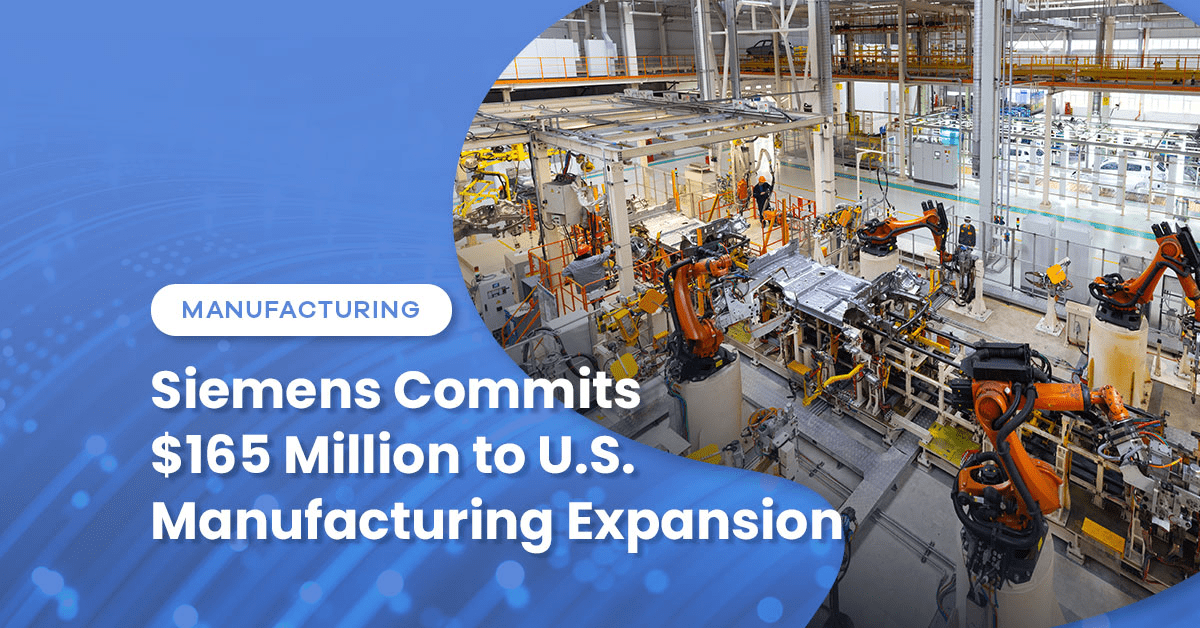
Summary: Siemens is committing over $165 million to expand its U.S. manufacturing footprint, focusing on electrical infrastructure with five new and expanded facilities in North and South Carolina. This creates 350 new manufacturing jobs and significantly boosts production capacity for power delivery systems, switchgear, and busways. The investment is a direct supply-side response to surging demand from data center and AI infrastructure buildouts.
Why it matters: This capital allocation signals where industrial production is concentrating in response to AI-driven demand, offering a concrete indicator of which regional economies are capturing the manufacturing upside of the compute boom.
Context: This follows nearly $700 million in recent U.S. manufacturing investments by Siemens, including in California and Texas, forming a pattern of infrastructure suppliers scaling capacity to meet hyperscale computing needs.
"Ruth Gratzke, President of Siemens Smart Infrastructure U.S., described customer demand as being “at an all-time high” as data center and AI factory operators require upgrades to electrical infrastructure to handle increasing AI workloads." — WISS
Commentary: The Southeast’s established manufacturing base and lower costs are attracting high-value electrical equipment production, shifting the geography of critical infrastructure supply chains. This concentration risks creating bottlenecks if other regions fail to develop similar capacity, potentially affecting data center deployment timelines and costs. The move also pressures competing suppliers to match scale or risk ceding market share in a now-capacity-constrained sector.
Date: April 16, 2026 12:00 AM ET
URL: https://wiss.com/siemens-commits-165-million-to-u-s-manufacturing-expansion/
AI Sentiment Score: Negative (70%)
AI Credibility Score: 10.0/10 — High
Scores and text generated by AI analysis of the source article indicated.
Manufacturing Supply Chains: Top States Driving Efficiency (Wsinc)
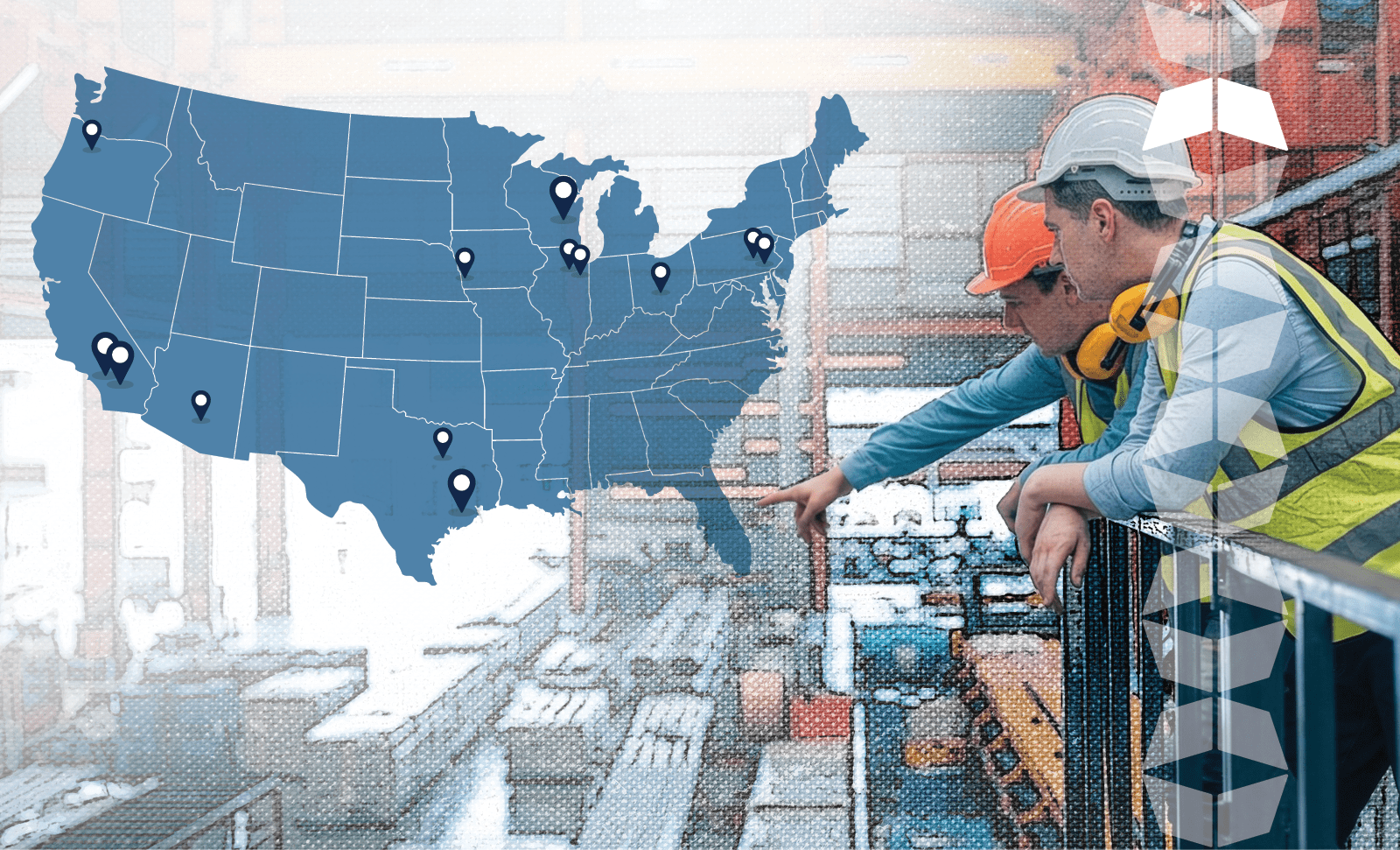
Summary: Manufacturing supply chain efficiency is increasingly determined by geographic alignment with established production hubs, not just by total state employment. The Midwest remains the industrial core for automotive and heavy machinery, while the Southeast is gaining share in automotive and aerospace due to lower costs and port access. Specialized regions, like Louisiana for petrochemicals, demonstrate that output density, not headcount, drives logistics network design.
Why it matters: For logistics operators and manufacturers, network design must shift from chasing general population centers to mirroring the specific geographic realities of production clusters to control costs and transit times.
Context: This reflects a maturation in supply chain strategy, moving from a focus on outbound distribution efficiency to optimizing the entire flow from raw material inbound to finished goods, anchored by production geography.
"Top Manufacturing Hubs in America, and What They Mean for Your Supply Chain Across America, manufacturing remains clustered in a handful of states and regions, each with distinct infrastructure, labor dynamics, and." — WSINC
Commentary: The implication is a quiet but significant reallocation of logistics real estate and transportation spend toward secondary industrial corridors. Third-party logistics providers without deep, asset-specific integration in these hubs—particularly rail-served facilities for bulk commodities—will be structurally disadvantaged. This favors incumbents with established footprints in places like Central Wisconsin or the Gulf Coast over generalist e-commerce fulfillment networks.
Date: April 13, 2026 12:00 AM ET
URL: https://www.wsinc.com/blog/top-manufacturing-supply-chain-hubs-for-3pl/
AI Sentiment Score: Positive (50%)
AI Credibility Score: 10.0/10 — High
Scores and text generated by AI analysis of the source article indicated.
Governor Stein Spotlights North Carolina’s Leadership in the Clean Energy Economy in Davidson (Governor.Nc.Gov)
Summary: Governor Josh Stein convened a roundtable with major corporations, including Trane Technologies, Scout Motors, and Sierra Nevada Brewing, to showcase North Carolina’s clean energy economy. The event highlighted that clean energy availability is now a primary factor in corporate site selection and operational strategy. The state reports over $59.6 billion in investment since 2015 from companies with net-zero targets, comprising half of all major economic development project investment.

Why it matters: Corporate energy strategy is shifting from a cost center to a core competitive and locational factor, directly influencing capital allocation and regional economic concentration.
Context: The Southeast U.S. is experiencing a surge in industrial and advanced manufacturing investment, intensifying competition among states on grid reliability, cost, and carbon intensity.
"Since 2015, $59.6 billion in investment has been announced in our state by companies with net zero targets, comprising 50% of total announced investment in major economic development projects." — GOVERNOR.NC.GOV
Commentary: The 50% figure signals a structural shift: net-zero commitment is no longer a niche ESG metric but a baseline requirement for large-scale industrial capital. North Carolina’s political and corporate narrative is explicitly tying grid modernization and clean energy policy directly to economic competitiveness and national security, a framing that pressures legacy utilities and reshapes the site-selection calculus for high-demand industries like semiconductors and electric vehicles.
Date: April 16, 2026 12:00 AM ET
URL: https://governor.nc.gov/news/press-releases/2026/04/16/governor-stein-spotlights-north-carolinas-leadership-clean-energy-economy-davidson
AI Sentiment Score: Positive (40%)
AI Credibility Score: 10.0/10 — High
Scores and text generated by AI analysis of the source article indicated.
Securing the Critical Battery Materials Supply Chain in the Southeast (C2Es)
Summary: C2ES is convening stakeholders to accelerate the Southeast’s battery materials supply chain through policy, partnerships, and investment. The region has seen over $84 billion in announced investments since 2021 across five states, positioning it as a national hub for battery manufacturing and critical materials. The initiative aims to secure these investments and expand into upstream processing and complementary infrastructure.
Why it matters: The concentration of capital and manufacturing in the Southeast is reshaping national industrial policy and energy security, with direct implications for regional labor markets, infrastructure demands, and geopolitical supply chain resilience.
Context: The Southeast’s emergence as a battery hub follows a pattern of targeted industrial policy incentives and leverages existing automotive and energy sector footprints, marking a deliberate shift from reliance on Asian-dominated supply chains.
"Since 2021, companies have announced more than $84 billion in investments across Georgia, North Carolina, South Carolina, Tennessee, and Alabama in batteries, minerals, stationary storage, and vehicle production." — C2ES
Commentary: The $84 billion figure is a trailing indicator of capital allocation, not a suggest of operational success; the real test is whether the region can build the refining, processing, and skilled-labor ecosystems necessary to move beyond final assembly. This concentration risks creating a new monoculture, making the Southeast’s economic stability contingent on the volatile politics of industrial subsidies and the pace of technological change in energy storage.
Date: April 14, 2026 12:00 AM ET
URL: https://www.c2es.org/critical-battery-materials-supply-chain-southeast/
AI Sentiment Score: Negative (60%)
AI Credibility Score: 10.0/10 — High
Scores and text generated by AI analysis of the source article indicated.
Southeast Regional Summit: Securing the Critical Battery Materials Supply Chain | Plenary & Panel (Youtube)
Summary: A regional summit convened by C2ES’s Regional Clean Economies Initiative highlights the rapid development of a domestic battery supply chain in the Southeast US, termed the ‘battery belt.’ The initiative, involving over 250 stakeholders across five states, frames this as a $140 billion economic opportunity over the next decade, with the potential to generate nearly 400,000 new jobs. This growth spans the full value chain from mineral extraction to battery assembly, driven by supportive policies and private investment.
Why it matters: This quantifies the scale of industrial realignment and capital concentration in the Southeast, directly affecting regional labor markets, infrastructure planning, and the geopolitical security of US energy and tech sectors.
Context: The Southeast’s emergence as a ‘battery belt’ is a direct response to global supply chain vulnerabilities and federal industrial policy incentives, positioning the region as a competitor to established Asian battery manufacturing hubs.
"Rising energy demand, supply chain disruptions, and national security concerns have rapidly accelerated the need for a domestic battery supply chain in the United States. In the emerging “battery belt” of the." — YOUTUBE
Commentary: The $140 billion figure, equated to one-third of South Carolina’s current economy, signals a profound regional economic transformation. The success of this roadmap hinges on sustained policy coordination and private capital deployment; failure would cede strategic ground in a critical industry. The projected job creation will intensify competition for skilled labor and pressure local education and training systems, with ripple effects on housing and services in proximate communities.
Date: May 01, 2026 12:00 AM ET
URL: https://www.youtube.com/watch?v=4UHEplDMTMQ
AI Sentiment Score: Negative (50%)
AI Credibility Score: 10.0/10 — High
Scores and text generated by AI analysis of the source article indicated.
The Future of North Carolina’s Industries: Regional Trends to … (Commerce.Nc.Gov)
Summary: North Carolina’s projected job growth of over 260,000 positions by 2034 will be regionally concentrated, with Raleigh-Durham, Charlotte, and Wilmington metros outpacing statewide rates. The Service-Providing sector, led by Health Care and Social Assistance—specifically Ambulatory Health Care Services—is the primary driver across all regions. While Professional Services, Finance, and Hospitality will also add jobs, growth in construction and manufacturing will be uneven, dependent on local industry mix. The projections explicitly incorporate the gradual, long-term influence of technological change, including AI.
Why it matters: For investors, policymakers, and corporate strategists, the report signals where capital, talent, and infrastructure investment will yield the highest returns and where regional economic divergence may accelerate.
Context: This continues a pattern of Southeastern economic concentration in metro areas and service-sector dominance, even within states with historically strong manufacturing bases.
"North Carolina’s economy is expected to grow, but that growth will not be evenly distributed across industries or regions. More than 260,000 jobs are projected to be added statewide between 2024 and." — COMMERCE.NC.GOV
Commentary: The explicit mention of AI’s accounted-for impact suggests state projections are baking in automation’s effect, potentially tempering raw job numbers in sectors like professional services. The healthcare focus, particularly ambulatory care, underscores a shift toward decentralized, outpatient models, which could pressure real estate and transportation networks differently than hospital-centric growth. The tri-metro acceleration risks widening the economic and political gap between North Carolina’s urban cores and its rural counties, despite statewide gains.
Date: April 13, 2026 12:00 AM ET
URL: https://www.commerce.nc.gov/news/the-lead-feed/north-carolinas-industries-regional-trends
AI Sentiment Score: Positive (40%)
AI Credibility Score: 10.0/10 — High
Scores and text generated by AI analysis of the source article indicated.
IEDA approves $5.7M in tax credits for 4 manufacturing projects … (Businessrecord)
Summary: The Iowa Economic Development Authority allocated $5.7 million in state tax credits across four manufacturing projects, representing over $100 million in capital investment and the planned creation of 87 jobs. The awards range from a $2.6 million credit for Edible Garden’s conversion of a former aquaculture facility into a beverage plant in Webster City to smaller credits for expansions by Afinitas, Advanced Heat Treat, and Walsh Door & Security. Separately, the IEDA board awarded $1.97 million in grants to 39 manufacturers under the Manufacturing 4.0 Technology Investment Program.
Why it matters: This reveals the state’s strategic priorities in capital allocation, highlighting which industrial sectors and technological upgrades Iowa is subsidizing to retain and attract manufacturing capacity.
Context: Iowa’s incentive programs are part of a broader Midwestern competition for advanced manufacturing investment, often pitted against neighboring states offering similar tax abatements and grants for Industry 4.0 adoption.
"The Iowa Economic Development Authority board has approved tax credits for four companies with projects that represent over $100.8 million in investment and the creation of 87 jobs." — BUSINESSRECORD
Commentary: The distribution underscores a focus on food/beverage processing and construction-related manufacturing, with a notable secondary push for automation grants. The Edible Garden project, leveraging a repurposed facility with local TIF support, suggests Iowa is targeting capital-light conversions of existing industrial assets. The separate $1.97 million in Manufacturing 4.0 grants, spread thinly across 39 firms, indicates a broad but shallow subsidy for digital transition, likely insufficient for transformative change but enough to nudge adoption.
Date: April 17, 2026 12:00 AM ET
URL: https://www.businessrecord.com/ieda-approves-5-7m-in-tax-credits-for-4-manufacturing-projects-statewide/
AI Sentiment Score: Neutral (33%)
AI Credibility Score: 10.0/10 — High
Scores and text generated by AI analysis of the source article indicated.
The Onshoring Era: Key Trends Driving U.S. Advanced … (Henselphelps)
Summary: Federal incentives and trade policy are accelerating advanced manufacturing onshoring in the U.S., with over 500 major projects announced since the Inflation Reduction Act. Demand from semiconductors, EVs, life sciences, and aerospace is projected to constitute 25% of total U.S. industrial demand by 2028, driving a tripling of construction spending since 2020. This represents a structural shift in capital allocation and industrial geography.
Why it matters: For regional economies, particularly in the Southeast, this signals a sustained competition for labor, land, and infrastructure that will determine long-term winners in the reshoring race.
Context: The post-IRA/CHIPS investment wave is transitioning from announcement to execution, exposing bottlenecks in specialized construction and skilled labor.
"Manufacturing-related demand is projected to reach 25% of total U.S. industrial demand by 2028 (JLL, 2025), underscoring the scale and durability of this shift." — HENSELPHELPS
Commentary: The concentration of projects in high-growth, facility-intensive sectors like semiconductors and battery production will strain regional capacity. The Southeast’s advantage may be tested by its ability to deliver not just land, but the specialized labor and utility infrastructure these timelines require, turning a policy-driven boom into an execution challenge.
Date: April 29, 2026 12:00 AM ET
URL: https://www.henselphelps.com/the-onshoring-era-key-trends-driving-u-s-advanced-manufacturing-growth/
AI Sentiment Score: Positive (50%)
AI Credibility Score: 7.0/10 — Medium
Scores and text generated by AI analysis of the source article indicated.
North Carolina State Resources – Area Development (Areadevelopment)
Summary: North Carolina’s economic development landscape shows concentrated foreign and domestic investment across advanced manufacturing, energy, and finance, with notable projects from Japan’s SMBC Group, Linde, Hitachi Energy, and Capital Group establishing or expanding operations in Charlotte, Cary, and Greensboro. The state is also securing steel production (US Forged Rings), automotive components (BorgWarner), and medical device manufacturing (Johnson & Johnson) expansions, indicating a diversified industrial base. The broader Southeast region, including South Carolina, continues to attract EV and advanced manufacturing projects, leveraging its established automotive supply chain.
Why it matters: This cluster of announcements signals a sustained capital and operational commitment to the Southeast, affecting supply chain geography, labor markets, and regional competitiveness.
Context: The Southeast has been a primary beneficiary of reshoring and nearshoring trends, particularly in automotive, aerospace, and energy-intensive manufacturing, driven by lower costs, available land, and policy incentives.
"Proximity to existing automotive OEMs and suppliers already located in the southeastern U.S. is just one of the factors drawing new EV projects to the region." — AREADEVELOPMENT
Commentary: The pattern underscores a strategic consolidation: North Carolina is capturing high-value headquarters (SMBC, Capital Group) and R&D (Hitachi Energy) alongside heavy industry, suggesting a move beyond pure cost arbitrage toward a full-spectrum economic ecosystem. This forces competing regions to evaluate whether they can match both the infrastructure and the talent pipeline. The concurrent expansions in smaller towns like Mount Airy and Hertford County indicate capital is flowing beyond major metros, testing rural workforce capacity and potentially altering political economies.
Date: April 17, 2026 12:00 AM ET
URL: https://www.areadevelopment.com/stateResources/northCarolina/
AI Sentiment Score: Negative (60%)
AI Credibility Score: 10.0/10 — High
Scores and text generated by AI analysis of the source article indicated.
Securing the Critical Battery Materials Supply Chain in the … (C2Es)
Summary: Since 2021, more than $48 billion has flowed into an emerging "battery belt" spanning Alabama, Georgia, North Carolina, South Carolina, and Tennessee—laying the foundation for a supply chain that could generate 370,000 jobs and $140 billion in economic output over the next decade. … Recent federal policy reversals—including the
Why it matters: Federal policy reversals introduce immediate investment uncertainty across established US ‘battery belt’ hubs.
Context: Focus shifts to Southeast labor market absorption capacity and alternative regional incentives for material processing.
"Since 2021, more than $48 billion has flowed into an emerging "battery belt" spanning Alabama, Georgia, North Carolina, South Carolina, and Tennessee—laying the foundation for a supply chain that could generate 370,000." — C2ES
Commentary: The signal is still worth tracking, but the current extraction path did not yield enough body text for a fuller analytical read. The immediate implication is operational rather than speculative: watch how this changes budgets, workflows, or risk assumptions over the next cycle.
Date: April 17, 2026 12:00 AM ET
URL: https://www.c2es.org/wp-content/uploads/2026/04/BriefRoadmap-FINAL-1.pdf
AI Sentiment Score: Negative (75%)
AI Credibility Score: 10.0/10 — High
Scores and text generated by AI analysis of the source article indicated.
Publications, Brochures, Events | EDPNC – Resources (Edpnc)
Summary: North Carolina’s economic development agency reports a surge in capital investment and job creation, citing the state’s manufacturing workforce and favorable tax environment as key drivers. The state has secured $27.1 billion in capital investment and over 35,000 new jobs from 164 projects in the most recent reporting period. A significant portion of this growth is attributed to over $7.9 billion in semiconductor-related investment over the past decade.
Why it matters: This data signals a continued concentration of advanced manufacturing and high-tech capital in the Southeast, with implications for supply chain geography, talent migration, and regional competitive dynamics.
Context: The Southeast U.S. has been the primary beneficiary of domestic industrial reshoring and federal incentives like the CHIPS Act, with states competing aggressively on tax policy, workforce training, and infrastructure.
"Through Q4, North Carolina reported 164 new economic development projects, announcing 35,182 new jobs and $27.1 billion in capital investment." — EDPNC
Commentary: The scale of investment, particularly in semiconductors, suggests North Carolina is consolidating a strategic position in the domestic tech supply chain. This concentration risks creating a winner-take-most dynamic within the region, potentially drawing talent and ancillary businesses away from neighboring states. The figures also serve as a leading indicator for pressure on local housing, transportation, and energy infrastructure, which will test the state’s long-term planning capacity.
Date: April 29, 2026 12:00 AM ET
URL: https://edpnc.com/resources/
AI Sentiment Score: Negative (60%)
AI Credibility Score: 10.0/10 — High
Scores and text generated by AI analysis of the source article indicated.
Industrial Development in 2026: 3 Things Driving Location Decisions (Locationgeorgia)
Summary: A 2026 analysis from Locationgeorgia identifies a shift in industrial site selection criteria, driven by advanced manufacturing, logistics, and data infrastructure firms. The primary drivers are now Power, Predictability, and Optionality, with reliable, scalable electricity moving from a late-stage checklist item to the first consideration.
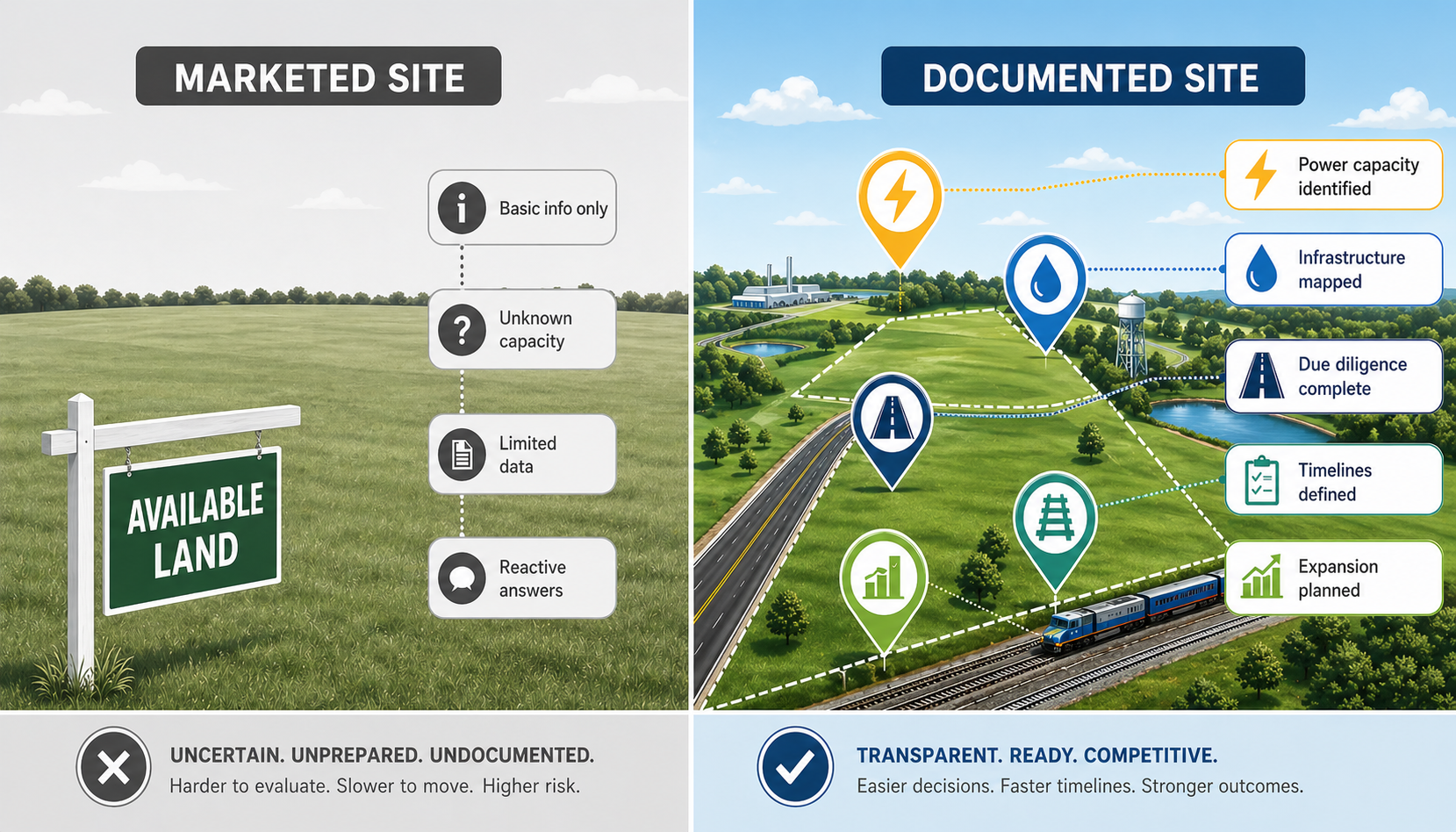
Why it matters: This reframes the competitive landscape for regional economic development, forcing municipalities and utilities to provide transparent, actionable power data or risk losing major capital projects.
Context: This reflects a broader post-pandemic and post-supply-chain-crisis trend where operational resilience and execution certainty outweigh traditional incentives like tax breaks.
"Across industries, companies in advanced manufacturing, logistics, and data infrastructure aren’t necessarily looking for the perfect location anymore. They’re looking for locations that reduce risk, preserve flexibility, and give them confidence in." — LOCATIONGEORGIA
Commentary: The elevation of power to a gatekeeper function will accelerate capital concentration in regions with robust, well-documented grids, like parts of the Southeast, while exposing under-prepared areas. Economic development agencies must now function as technical due diligence partners, with ‘evidence packets’ becoming a mandatory currency for credibility.
Date: April 29, 2026 12:00 AM ET
URL: https://www.locationgeorgia.com/industrial-location-decisions-april-2026/
AI Sentiment Score: Negative (60%)
AI Credibility Score: 7.0/10 — Medium
Scores and text generated by AI analysis of the source article indicated.
Post ID: 2b365c5e