
Intellectual Property & Patent Law Developments
Biopharmaceutical Innovation: The Patent Imperative (Ipwatchdog)
Summary: A policy brief from the Center for American Principles argues that U.S. biopharmaceutical innovation, responsible for recent therapeutic breakthroughs, is threatened by legislative and regulatory measures targeting patents. It cites the ETHIC Act, price controls, and global IP waivers as key pressures, while defending the necessity of multiple patents per product to enable complex, long-term R&D. The piece leverages a 2024 USPTO study to counter claims of patent abuse, asserting that data on exclusivity periods has been manipulated by activists.

Why it matters: The debate directly shapes capital allocation for high-risk drug development, the competitive position of U.S. biotech versus China, and the legal framework governing access to future therapies.
Context: This is a defensive industry response to mounting political pressure on drug pricing and patent practices, framed as a competitiveness and innovation issue rather than a cost debate.
"The USPTO found that none of the medicines studied was afforded more than 3 to 16 years of total market exclusivity – well short of the 20-year patent term." — IPWATCHDOG
Commentary: The brief’s core move is to reframe the policy conflict from ‘patents versus affordability’ to ‘patents versus U.S. technological leadership,’ using the USPTO’s own data as a shield against legislative action. If this framing gains traction, it could stall bills like the ETHIC Act by shifting the burden of proof back onto critics to disprove the agency’s empirical findings. The invocation of clinical trial migration to China adds a geopolitical urgency that abstract debates over ‘evergreening’ lack, potentially realigning bipartisan concern.
Date: Wed, 03 Jun 2026 21:30:23 +0000
URL: https://ipwatchdog.com/2026/06/03/biopharmaceutical-innovation-the-patent-imperative/
AI Sentiment Score: Negative (76%)
AI Credibility Score: 10.0/10 — High
Scores and text generated by AI analysis of the source article indicated.
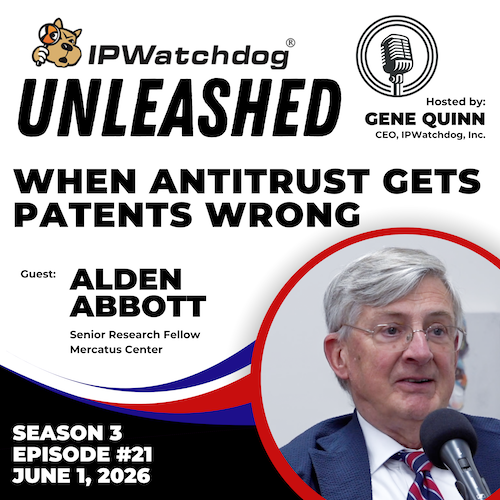
Efficient Infringement Rewards Copycats and Erodes Competition | IPWatchdog Unleashed (Ipwatchdog)
Summary: A former FTC General Counsel argues that the weakening of patent injunctions and the rise of ‘efficient infringement’ have shifted competitive advantage toward large implementers at the expense of innovators. He identifies the eBay decision, Section 101 eligibility rulings, and the PTAB as key structural problems that undermine patent reliability. This creates a market distortion where large companies can infringe with impunity, placing smaller, licensing-compliant competitors at a disadvantage.
Why it matters: The erosion of patent enforcement directly impacts investment, licensing markets, and the competitive landscape, favoring scale over innovation.
Context: This critique emerges amid ongoing policy debates over patent reform, SEP licensing, and the role of antitrust in innovation markets, with a notable divergence between U.S. and European approaches to injunctions.
"For much of the last four decades, American innovation policy has rested on a premise that should be obvious but too often is not: strong intellectual property rights are not an obstacle." — IPWATCHDOG
Commentary: Abbott’s framing recasts efficient infringement as an antitrust issue, not just an IP problem, shifting the enforcement onus onto regulators. The warning against Europe importing U.S.-style injunction weakening highlights a potential global convergence toward under-enforcement. This directly pressures the DOJ and FTC to clarify whether anticompetitive behavior includes strategic infringement by dominant firms.
Date: Tue, 02 Jun 2026 21:15:37 +0000
URL: https://ipwatchdog.com/2026/06/02/efficient-infringement-rewards-copycats/
AI Sentiment Score: Negative (50%)
AI Credibility Score: 10.0/10 — High
Scores and text generated by AI analysis of the source article indicated.
Trump Nominates Peter-Anthony Pappas to ITC (Ipwatchdog)
Summary: President Trump has nominated Peter-Anthony Pappas, currently Director of Intellectual Property Policy for the Senate Judiciary Committee under Senator Thom Tillis, to be a Member of the United States International Trade Commission. Pappas’s background includes extensive patent examination and policy roles at the USPTO, where he contributed to the 2019 Revised Patent Subject Matter Eligibility Guidance and AI initiatives. He has been a vocal advocate for legislative patent reforms like PERA and the PREVAIL Act, arguing agency-level changes are insufficient. The nomination, if confirmed, would place a staunch defender of the current patent system into a key adjudicatory role on Section 337 investigations.

Why it matters: The ITC is a critical venue for patent enforcement, especially for technology and pharmaceutical companies, and this nomination signals a potential shift toward a more patent-holder-friendly commission at a time of intense debate over drug pricing and patent quality.
Context: The ITC has become an increasingly favored forum for patent owners due to its speed and powerful exclusion order remedies. Nominations to the commission are often low-profile but have significant long-term impact on trade policy and innovation disputes.
"“Pappas’ ‘rare combination of patent expertise and public service experience …makes him exceptionally well-qualified for this role.’” – Frank Cullen, C4IP Peter-Anthony Pappas, Director of Intellectual Property Policy for the U.S. Senate,." — IPWATCHDOG
Commentary: Pappas’s confirmation would institutionalize a skeptical view of ‘patent thicket’ critiques within the ITC, likely making it more resistant to policy arguments favoring generic competition in Section 337 cases. His advocacy for legislative over administrative fixes aligns with a push to lock in pro-patentee policies beyond the reach of future USPTO leadership. The nomination, alongside two USTR veterans, suggests a deliberate stacking of the commission with trade and IP experts sympathetic to strong enforcement, potentially altering the calculus for companies considering ITC litigation for the next decade.
Date: Tue, 02 Jun 2026 15:15:17 +0000
URL: https://ipwatchdog.com/2026/06/02/trump-nominates-peter-anthony-pappas-itc/
AI Sentiment Score: Positive (75%)
AI Credibility Score: 10.0/10 — High
Scores and text generated by AI analysis of the source article indicated.
Post ID: 34c322a6