
Digital Privacy & Surveillance Legislation
Pulte Appointment Underscores Need to Reform Section 702 Spying (Eff)
Summary: President Trump appointed Bill Pulte, director of the Federal Housing Finance Agency, as acting Director of National Intelligence, bypassing Senate confirmation. Pulte lacks intelligence, military, or congressional experience but has a history of using government-held private data to accuse political opponents of misconduct. His appointment coincides with the June 12 deadline for Congress to reauthorize Section 702 of FISA, which allows warrantless surveillance of Americans’ communications with overseas targets. The EFF argues this politicized appointment underscores the urgent need for Section 702 reforms, particularly a warrant requirement for queries involving Americans.
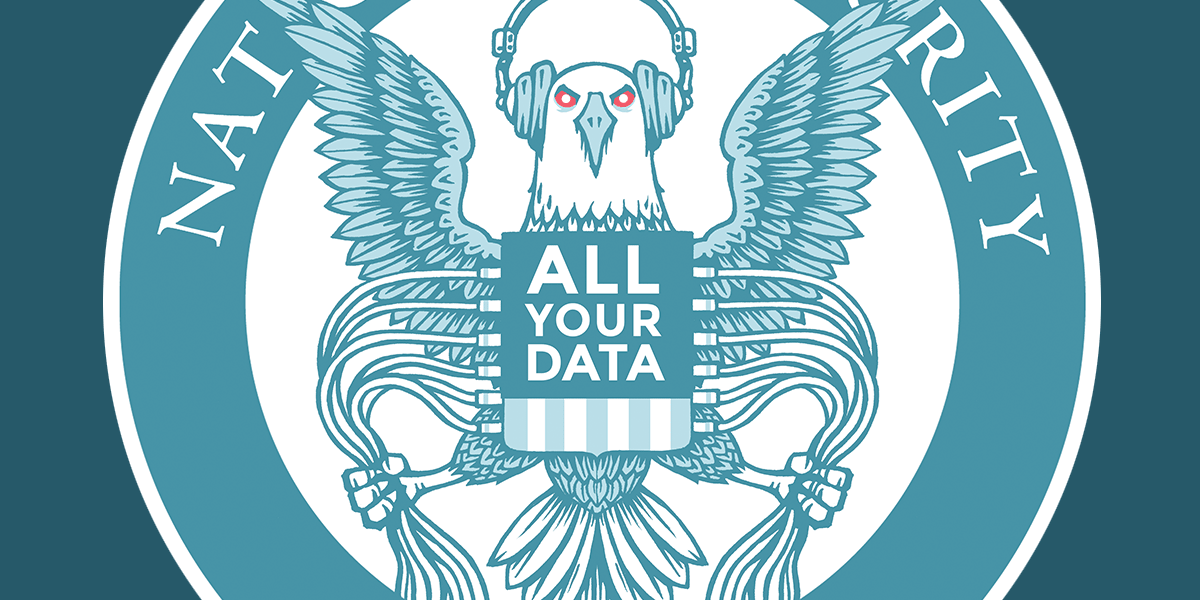
Why it matters: The appointment of an unqualified, politically loyalist to oversee the intelligence community amplifies the risk of weaponizing Section 702 surveillance databases against domestic political opponents, making warrantless query authority an immediate governance crisis.
Context: Section 702 reauthorization has been stalled by a bipartisan coalition demanding a warrant requirement for U.S. person queries, facing opposition from intelligence agencies. The DNI role, created post-9/11 to coordinate 18 agencies, legally requires ‘extensive national security expertise.’
"Pulte isn’t a qualified intelligence administrator. He does, however, seem to be unquestioningly loyal to President Trump and willing to use his position to attack and smear the President’s political foes. As acting DNI, Pulte would have access to every scrap of classified information the Intelligence Community holds, and under Section 702, that includes massive amounts of information about Americans." — EFF
Commentary: The Pulte appointment transforms the abstract debate over Section 702 into a concrete operational risk: a single political actor with a documented pattern of weaponizing administrative data now controls the world’s most powerful surveillance apparatus. This forces even surveillance-friendly lawmakers like John Thune to acknowledge the ‘weaponization’ threat, potentially breaking the legislative logjam toward warrant requirements. The immediate effect is to align civil libertarian arguments with national security institutionalists, creating a rare coalition that could impose stricter statutory limits before the June 12 deadline.
Date: June 04, 2026 05:18 PM ET
URL: https://www.eff.org/deeplinks/2026/06/pulte-appointment-underscores-need-reform-section-702-spying
AI Sentiment Score: Negative (87%)
AI Credibility Score: 10.0/10 — High
Scores and text generated by AI analysis of the source article indicated.
Congress still can’t decide what to do about warrantless surveillance (Theverge)
Summary: Congress remains deadlocked over Section 702 reauthorization, with a one-week extension expiring on June 12th. A three-year renewal deal failed in the Senate, opposed by Democrats and seven Republicans following President Trump’s appointment of businessman Bill Pulte as acting Director of National Intelligence. The administration’s push for a ‘clean’ reauthorization faces heightened resistance due to Pulte’s lack of clearance and Trump’s stated intent to shrink the ODNI and purge career staff.

Why it matters: The stalemate directly impacts the operational continuity of a major surveillance authority and signals a potential politicization of intelligence oversight, increasing compliance and legal risks for agencies and private-sector partners.
Context: This is a recurring legislative crisis; Section 702 was previously extended for only 45 days in April to allow for reform negotiations that have now stalled. The debate centers on whether to impose a warrant requirement for U.S. person queries.
"The deadline to reauthorize Section 702 of the Foreign Intelligence Surveillance Act is coming up a week from now on June 12th, and legislators seem no closer to reaching a deal. If." — THEVERGE
Commentary: The appointment of Pulte has transformed a procedural fight into a institutional crisis, making a clean reauthorization politically untenable. It effectively grants reform advocates leverage by aligning Democratic opposition with Republican concerns over Trump’s control of intelligence. The immediate risk is a lapse in authority, but the structural shift is toward greater congressional distrust of the executive’s stewardship of surveillance powers, regardless of which party holds the presidency.
Date: June 05, 2026 05:15 PM ET
URL: https://www.theverge.com/policy/944615/section-702-senate-vote-fails-pulte
AI Sentiment Score: Negative (85%)
AI Credibility Score: 10.0/10 — High
Scores and text generated by AI analysis of the source article indicated.
The form asked my permission to share my health data. Then it wouldn’t let me say no. (Themarkup)
Summary: Patients nationwide are encountering digital registration systems that force them to acknowledge privacy notices they haven’t read and consent to health data sharing to proceed with care, a practice experts call a ‘dark pattern.’ The director of HHS’s Office for Civil Rights experienced this herself, and a field test by The Markup found a system explicitly offering an opt-out choice but then blocking the ‘no’ option, requiring patients to accept and then separately email to opt out. While this is often legal under HIPAA and state laws, it violates the spirit of informed consent and places undue burden on patients.

Why it matters: This creates systemic pressure that undermines patient autonomy and privacy, turning nominal consent into a coerced default, with particular risks for sensitive care like abortion.
Context: HIPAA does not require consent for data sharing via health information exchanges, only notification, but a proposed rule would eliminate even the requirement for acknowledgment of privacy notices. Enforcement against these interface designs falls into a gap between HHS, which regulates healthcare privacy, and the FTC, which polices deceptive practices elsewhere.
"The Markup, now a part of CalMatters, uses investigative reporting, data analysis, and software engineering to challenge technology to serve the public good. Sign up for Klaxon, a newsletter that delivers our." — THEMARKUP
Commentary: The operational reality is that vendor-provided ‘plug-and-play’ software, from companies like Phreesia and athenahealth, hard-codes these obstructions, distributing liability and obscuring accountability. Regulatory focus must shift from mere notice to the mechanics of choice, mandating symmetry where opting out is as frictionless as opting in, a principle already gaining traction in consumer finance.
Date: Wed, 27 May 2026 08:00:00 -0400
URL: https://themarkup.org/privacy/2026/05/27/opt-out-dark-patterns
AI Sentiment Score: Negative (66%)
AI Credibility Score: 10.0/10 — High
Scores and text generated by AI analysis of the source article indicated.
Privacy hawks rail against Senate FISA proposal with 3-year CBDC ban (Thehill)
Summary: A Senate proposal led by Tom Cotton and Chuck Grassley would extend Section 702 of FISA while imposing a three-year moratorium on the Federal Reserve issuing a central bank digital currency. House privacy hawks oppose the linkage, arguing it uses a popular anti-CBDC measure to secure controversial surveillance powers.

Why it matters: The legislative maneuver reveals how CBDC politics are being weaponized in broader surveillance policy fights, creating a high-stakes trade-off for lawmakers and potentially delaying both surveillance reform and digital currency clarity.
Context: Section 702 of FISA, which permits warrantless surveillance of non-U.S. persons abroad, has faced recurring reauthorization battles. Opposition to a U.S. CBDC has become a unifying cause for privacy advocates across the political spectrum.
"Privacy-minded conservatives in the House are pushing back against a Senate proposal to pair a temporary ban on the creation of central bank digital currency (CBDC) with a long-term extension of the federal government’s warrantless spying powers." — THEHILL
Commentary: The tactic transforms CBDC opposition from a policy stance into a legislative bargaining chip, complicating clean votes on either issue. It signals that any future CBDC development will be inextricably linked to surveillance and privacy debates, raising the political cost for the Fed. The outcome will test whether anti-surveillance coalitions can resist being split by popular, but tangential, policy riders.
Date: Wed, 03 Jun 2026 16:27:12 +0000
URL: https://thehill.com/homenews/house/5907896-fisa-cbdc-house-conservatives/
AI Sentiment Score: Negative (77%)
AI Credibility Score: 10.0/10 — High
Scores and text generated by AI analysis of the source article indicated.
What happens when your phone is confiscated at the airport (Theverge)
Summary: Customs and Border Protection confiscated the phone of Janette Zahia Corcelius, a Minnesota labor organizer, upon her return from Europe. The Council on American-Islamic Relations has filed a lawsuit alleging the seizure violates the Fourth Amendment and CBP regulations, arguing it is part of a systematic pattern of targeting left-wing activists under the guise of counterterrorism. CBP conducted over 55,000 electronic device searches in FY2025, a 32% increase from 2023. The legal landscape for such searches remains a jurisdictional patchwork, with conflicting court rulings on warrant requirements.

Why it matters: The case tests the limits of border search authority and the operationalization of domestic terrorism designations against political activists, with direct implications for privacy, free expression, and the scope of executive power.
Context: CBP’s border search authority operates under a ‘reasonable cause’ standard, with a broad ‘national security concern’ exception. The Trump administration’s executive order designating ‘Antifa’ as a terrorist organization and its rhetoric linking dissent to terrorism provides a political framework for these actions.
"CBP phone searches remain relatively rare, but they’re on the rise. The agency conducted 55,318 searches of phones and other electronic devices during the 2025 fiscal year, up from 41,767 in 2023 — a 32 percent increase." — THEVERGE
Commentary: The lawsuit highlights how terrorism designations are being leveraged for domestic political targeting, transforming a national security apparatus into a tool for intimidating dissent. Even a favorable ruling for Corcelius may only create another jurisdictional patch, leaving the underlying policy and its chilling effect intact. The 32% increase in searches signals institutional normalization, making legal challenges more urgent but less likely to yield systemic reform.
Date: June 05, 2026 12:15 PM ET
URL: https://www.theverge.com/report/944076/cbp-airport-phone-searches-seizure-minneapolis-activists
AI Sentiment Score: Negative (57%)
AI Credibility Score: 10.0/10 — High
Scores and text generated by AI analysis of the source article indicated.
Post ID: 73c23722