
Bloomington-Normal, IL
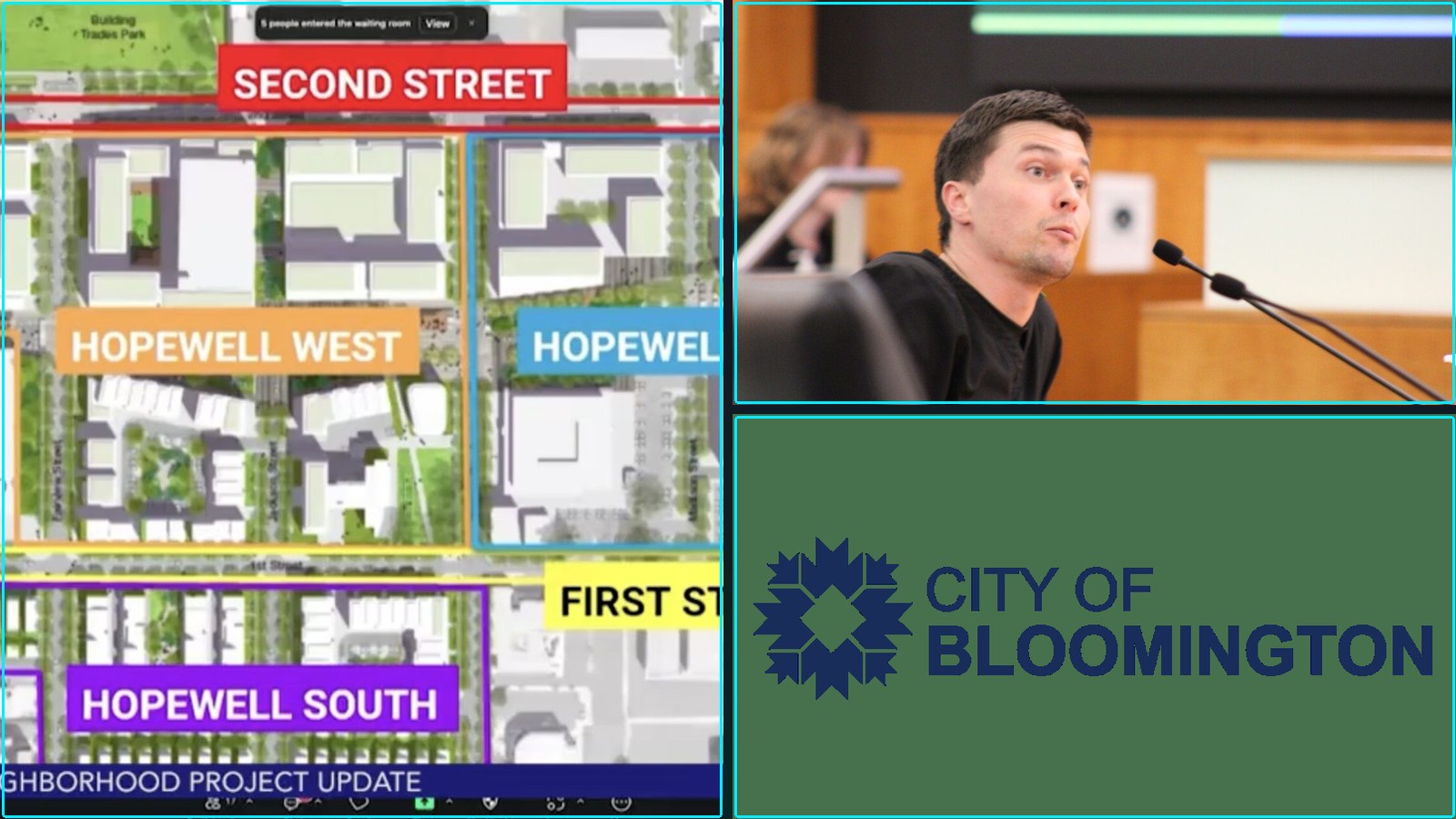
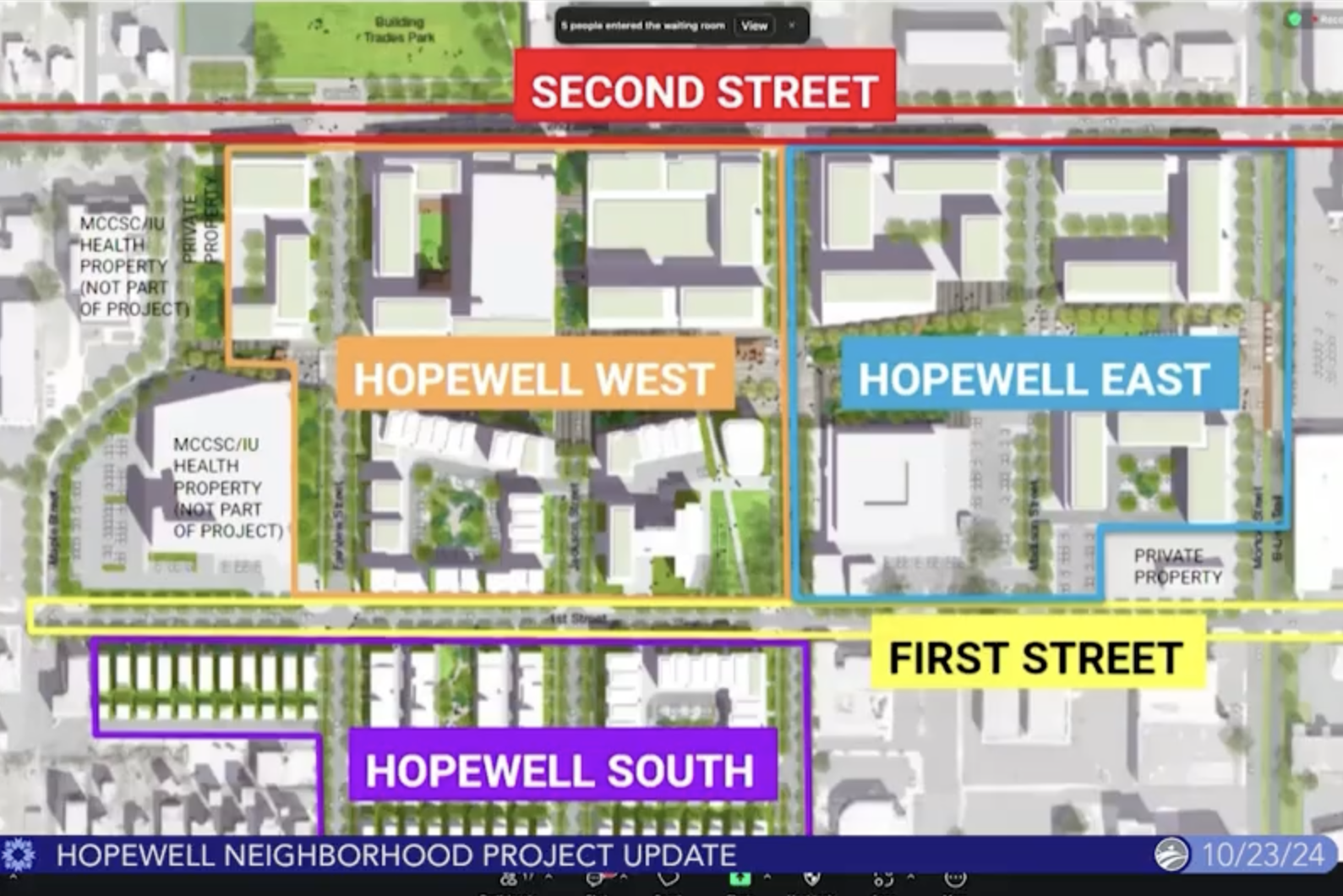
Hopewell South passes city council unanimously (Ipm)
Summary: Bloomington’s city council unanimously approved the Hopewell South planned unit development, rezoning a 6.3-acre former hospital site to allow up to 98 affordable homes—triple the density of standard zoning. The vote followed months of negotiation over conditions, with the final compromise setting a requirement for at least 35% of units to be permanently affordable, with a goal of 50%. The debate highlighted tensions between expanding affordable housing supply and imposing cost-increasing mandates on a project led by the city itself, with officials warning that stricter affordability requirements could jeopardize the build-out or divert funds from other public projects.
Why it matters: This reveals the operational friction and political trade-offs inherent when a municipal government acts as both developer and regulator, a dynamic increasingly common in cities attempting to directly address housing shortages.
Context: The project is a city-led initiative on public land, part of a broader trend of municipalities becoming more active participants in housing development amid market failures.
"Bloomington’s Hopewell neighborhood is moving forward after city council unanimously passed the project on Wednesday night. Hopewell is a city-led project located on the former hospital site along west 2nd Street. It’s." — IPM
Commentary: The unanimous vote masks a significant institutional strain: the council, acting as petitioner, had to negotiate with itself over affordability mandates, exposing the limits of municipal capacity when revenue is finite. The outcome—a lowered, goal-oriented affordability standard—serves as a case study in how direct public development can temper ideological aims with fiscal and practical constraints, potentially setting a precedent for future city-led projects in mid-size markets.
Date: May 08, 2026 12:00 AM ET
URL: https://www.ipm.org/news/2026-05-08/hopewell-south-passes-city-council-unanimously
AI Sentiment Score: Negative (66%)
AI Credibility Score: 10.0/10 — High
Scores and text generated by AI analysis of the source article indicated.
PRESS RELEASE: City of Bloomington Outlines Next Steps for … (Idsnews)
Summary: The Bloomington Redevelopment Commission voted to proceed with a public offering for the College Square property, rejecting a request for a 30-day delay from the Capital Improvement Board. The offering, opening April 27 with an 84-day response window, will solicit proposals for economically productive uses, explicitly excluding purpose-built student housing. This establishes a transparent, comparative framework for evaluating the site’s future, while the city concurrently assesses environmental conditions and other downtown parcels.

Why it matters: The decision signals a shift toward formal, competitive processes for public asset disposition in mid-sized cities, prioritizing long-term downtown revitalization over expedient deals.
Context: College Square is a key downtown parcel whose redevelopment has been stalled, reflecting broader tensions between municipal planning goals and the influence of quasi-public boards like the CIB.
"On April 20, the Bloomington Redevelopment Commission (RDC) voted to move forward with a public offering for the College Square property, establishing a structured and transparent process for evaluating redevelopment proposals for." — IDSNEWS
Commentary: The RDC’s move to override the CIB’s delay request is a minor but telling assertion of procedural rigor over institutional inertia. By forcing an open-market process and banning student housing—a default revenue play for many college towns—Bloomington is betting that transparent competition will yield a higher-value, more cohesive downtown anchor. This reflects a growing municipal sophistication in managing complex redevelopment, treating land not just as a revenue source but as a strategic lever for urban form. The outcome will test whether smaller cities can execute such nuanced plans without ceding control to single-bidder scenarios or politically connected interests.
Date: April 22, 2026 12:00 AM ET
URL: https://www.idsnews.com/article/2026/04/city-of-bloomington-o42226
AI Sentiment Score: Negative (66%)
AI Credibility Score: 10.0/10 — High
Scores and text generated by AI analysis of the source article indicated.
Normal approves Uptown TIF measures and extends tornado … (Wglt)
Summary: The Normal Town Council approved a series of measures reshaping its Uptown Tax Increment Financing district, a key tool for directing new property tax revenue back into redevelopment. The council also initiated zoning amendments for Battery Energy Storage Systems, extended a tornado emergency declaration for damage assessment, and addressed a range of municipal operations from playground renovations to a proposed kratom ban.

Why it matters: This granular municipal action reveals how small cities manage economic development, energy infrastructure, and civic resilience amid fiscal constraints and external shocks.
Context: TIF districts are a common but often contentious municipal financing tool, and their restructuring signals shifting development priorities. The simultaneous focus on BESS zoning and storm recovery highlights the dual pressures of modernizing infrastructure and responding to climate volatility.
"A TIF district directs any new tax revenue generated by an increase in property values back into redevelopment of the area." — WGLT
Commentary: The council’s surgical parcel removal and creation of a new TIF district, while notably keeping the library tethered to the old one, demonstrates the complex calculus of municipal finance: maximizing future revenue streams without destabilizing current civic assets. The parallel move to formalize BESS zoning, alongside routine storm recovery and capital projects, paints a picture of a municipality attempting to script its next chapter—balancing growth, grid stability, and public safety—through a patchwork of ordinances and declarations.
Date: April 20, 2026 12:00 AM ET
URL: https://www.wglt.org/local-news/2026-04-20/normal-approves-uptown-tif-measures-and-extends-tornado-emergency-declaration
AI Sentiment Score: Positive (75%)
AI Credibility Score: 10.0/10 — High
Scores and text generated by AI analysis of the source article indicated.
Tornado damages Rivian factory ahead of R2 SUV launch (Qz)
Summary: An EF-1 tornado damaged a logistics and parts storage building at Rivian’s Normal, Illinois plant, weeks before the planned launch of the R2 SUV. The affected ‘Building 2’ is temporarily offline, though assembly lines for the R1 truck and commercial vans remain operational. The incident tests the operational resilience of a critical regional employer at a sensitive moment in its product rollout.

Why it matters: The event is a stress test for a company-town economy’s dependence on a single, capital-intensive manufacturer, revealing how localized physical disruption can ripple through a global supply chain and product timeline.
Context: Rivian’s Normal facility is layering R2 production alongside existing lines while developing a second plant in Georgia; the community’s economic fate is tightly coupled to the automaker’s execution.
"A tornado struck Rivian $RIVN’s manufacturing plant in Normal, Illinois over the weekend, damaging a building used for R2 electric SUV logistics and parts storage weeks before the vehicle’s planned launch." — QZ
Commentary: The limited scope of the damage—confined to a pre-launch logistics hub—highlights a modern manufacturing vulnerability: even a localized, non-fatal disruption to a just-in-time parts flow can introduce launch risk. For Bloomington-Normal, it underscores the fragility of a mono-employer renaissance; civic resilience is now partially a function of corporate contingency planning. Rivian’s ability to contain the fallout will be read as a signal of operational maturity ahead of its Georgia expansion.
Date: April 20, 2026 12:00 AM ET
URL: https://qz.com/rivian-tornado-illinois-factory-r2-suv-launch-042026
AI Sentiment Score: Negative (90%)
AI Credibility Score: 10.0/10 — High
Scores and text generated by AI analysis of the source article indicated.
Bloomington studies major north‑south corridor for safety, access (Heraldtimesonline)
Summary: Bloomington is conducting a corridor study for the 4.1-mile Kinser Pike/Madison Street/Rogers Street corridor, a key north-south artery. The city aims to address safety issues, improve pedestrian and bicycle access, and support redevelopment in areas like the Trades District and Hopewell neighborhood. The study follows data showing 80 serious-injury crashes in a decade and infrastructure gaps that deter multimodal movement.

Why it matters: This signals how a mid-sized city is retrofitting legacy infrastructure to serve current land use and future density, a test of municipal capacity to integrate safety, development, and connectivity.
Context: The corridor, formerly the industrial Dixie Highway serving the RCA plant, now threads residential areas, parks, schools, and emerging commercial districts, requiring a unified design approach.
"Bloomington studies major north‑south corridor for safety, access The city of Bloomington plans to make changes to an important north-south corridor to improve safety, support redevelopment and to make it more usable." — HERALDTIMESONLINE
Commentary: The project reveals the tension between historical road design and contemporary urban function. Success hinges on Bloomington’s ability to synchronize pavement repairs with pedestrian and cycling upgrades, avoiding the common pitfall of deferring safety improvements. Its coordination with INDOT on a key intersection underscores the institutional dependencies small cities navigate for regional mobility.
Date: April 17, 2026
URL: https://www.heraldtimesonline.com/story/news/local/2026/04/17/heres-what-bloomington-plans-for-the-rogersmadisonkinser-corridor/89612279007/
AI Sentiment Score: Negative (60%)
AI Credibility Score: 9.8/10 — High
Scores and text generated by AI analysis of the source article indicated.
Post ID: 50d7e936