AI, Automation, And Platform Shifts
AI-Driven Apparel Image Retrieval and Feature Optimization for Smart and Sustainable Textile Manufacturing (Intechopen)
Summary: Integrated impact of image retrieval in textile industry applications. Abstract In response to mounting environmental challenges, excessive resource use, and the rapidly increasing volume of textile waste, the global textile and apparel sector is accelerating its transition toward digital transformation to achieve greater efficiency, sustainability, traceability, and intelligent manufacturing practices. Artificial intelligence (AI) has emerged as a highly transformative enabler for smart and sustainable textile systems, particularly through the use of computer vision, machine learning and deep learning technologies.

Why it matters: This matters for FashionTech because it gives a concrete current signal to track: Integrated impact of image retrieval in textile industry applications.
Context: Integrated impact of image retrieval in textile industry applications. Abstract In response to mounting environmental challenges, excessive resource use, and the rapidly increasing volume of textile waste, the global textile and apparel sector is accelerating its transition toward digital transformation to achieve greater efficiency, sustainability, traceability, and intelligent manufacturing practices. Artificial intelligence (AI) has emerged as a highly transformative enabler for smart and sustainable textile systems, particularly through the use of computer vision, machine learning and deep learning technologies.
"Integrated impact of image retrieval in textile industry applications. Abstract In response to mounting environmental challenges, excessive resource use, and the rapidly increasing volume of textile waste, the global textile and apparel." — INTECHOPEN
Commentary: The immediate implication is operational rather than speculative: watch how this changes budgets, workflows, or risk assumptions over the next cycle.
Date: May 07, 2026 12:00 AM ET
URL: https://www.intechopen.com/online-first/1245305
AI Sentiment Score: Negative (66%)
AI Credibility Score: 10.0/10 — High
Scores and text generated by AI analysis of the source article indicated.
Coats Digital appoints Himanshu Mehrotra as MD to lead AI shift (Fibre2Fashion)
Summary: Coats Digital, a provider of manufacturing software for the apparel industry, has appointed Himanshu Mehrotra as Managing Director. Mehrotra, a veteran of Oracle, Blue Yonder, and FourKites, is tasked with leading the company’s shift toward an AI-powered Fashion Intelligence Platform. This follows his recent tenure as Head of Product & Customer Success and signals a strategic focus on scaling cloud-native, integrated solutions. The move aims to transition customers from legacy systems and manual processes toward intelligent, connected operations.

Why it matters: For manufacturers and brands reliant on Coats Digital’s tools for production planning and costing, this leadership change signals a concrete acceleration toward AI-integrated platforms, which will directly impact workflow digitization and data integration timelines.
Context: This appointment reflects a broader industry trend where established manufacturing software vendors are installing leaders with cloud and supply-chain platform experience to execute AI pivots, moving beyond point solutions to integrated intelligence layers.
"As we look ahead, our focus is on building the industry’s most advanced Fashion Intelligence Platform powered by the latest cloud and AI technologies to deliver measurable business value and long-term competitive advantage for all our customers." — FIBRE2FASHION
Commentary: The hire of a supply-chain software veteran, rather than a fashion insider, prioritizes platform scalability and P&L discipline over domain nuance. For users of GSDCost and FastReactPlan, this means a likely push toward mandatory cloud migration, tighter integration between costing and planning modules, and increased pressure to adopt AI features for predictive throughput and dynamic costing, altering vendor lock-in and internal IT roadmaps.
Date: Mon, 01 Jun 2026 17:43:02 GMT
URL: https://www.fibre2fashion.com/news/textiles-technology-news/coats-digital-appoints-himanshu-mehrotra-as-md-to-lead-ai-shift-308611-newsdetails.htm
AI Sentiment Score: Negative (66%)
AI Credibility Score: 10.0/10 — High
Scores and text generated by AI analysis of the source article indicated.
Simkhai is building an AI storefront for shoppers who don’t know what to search (Glossy.Co)
Summary: Simkhai is launching a separate AI-powered storefront, Simkhai.ai, built on Swap’s agentic commerce platform. The site is designed to function as a ‘discovery mode’ for shoppers who know their occasion or mood but not specific search terms, offering styling advice and virtual try-on. It operates alongside the main e-commerce site, with the brand retaining ownership of customer data and the styling agent tuned to reflect the brand’s in-store experience. The move tests whether a dedicated dot-ai domain can become a primary destination for discovery-driven shopping.

Why it matters: For fashion brands and their operations teams, this pilot tests a new, brand-controlled channel for customer acquisition and styling that could shift conversion metrics and data ownership models.
Context: This follows a wave of AI shopping assistants from Zalando, Mango, and Ralph Lauren, but Simkhai’s approach is distinct in deploying a separate, brand-owned dot-ai domain rather than an integrated app feature.
"Simkhai is preparing to launch a separate AI-powered e-commerce site, designed to bring more of its in-store styling experience online. The site, Simkhai.ai, is still in development and will sit alongside Simkhai.com." — GLOSSY.CO
Commentary: The operational bet is that a separate AI storefront, built on Swap’s infrastructure but with brand-controlled data, can capture higher-intent browsing that currently leaks to social media or remains unconverted. Success metrics will be time-in-experience, return visits, and reduced returns, not just conversion lift. If it works, it creates a new production pipeline for brands: tuning AI agents to specific styling voices and managing inventory feeds for both ‘available now’ and pre-launch runway pieces.
Date: Mon, 18 May 2026 04:03:00 +0000
URL: https://www.glossy.co/fashion/luxury/simkhai-is-building-an-ai-storefront-for-shoppers-who-dont-know-what-to-search/
AI Sentiment Score: Positive (40%)
AI Credibility Score: 10.0/10 — High
Scores and text generated by AI analysis of the source article indicated.
Luxury Briefing: Ralph Lauren and LuxExperience turn to AI for styling, search and high-value shoppers (Glossy.Co)
Summary: Ralph Lauren and LuxExperience are deploying AI beyond marketing hype, integrating it into core operations to drive full-price sales and customer lifetime value. Ralph Lauren uses AI to accelerate design iteration for core icons and automate distribution, while LuxExperience leverages predictive and generative AI for customer targeting, personalized content, and search. Concurrently, Louvelle’s invite-only rental platform is monetizing stylists’ closets and filling gaps in traditional brand lending, highlighting a shift in how high-value inventory circulates.

Why it matters: AI tooling is moving from experimental to operational, directly impacting design throughput, marketing ROI, and customer acquisition costs, while new rental models are altering the sourcing pipeline for stylists and the secondary market for luxury goods.
Context: Luxury brands and platforms are under pressure to maintain full-price selling and improve personalization efficiency. Predictive AI for customer valuation is established; the shift is toward generative AI for content and search, and AI-augmented design for staple products.
"Among luxury’s more active AI adopters, both Ralph Lauren and LuxExperience are pushing harder into AI to drive full-price selling and better personalization." — GLOSSY.CO
Commentary: Ralph Lauren’s focus on ‘core icons’ reveals AI’s role in optimizing predictable, high-margin product lines rather than chasing trends, which could streamline design labor and reduce sampling waste. LuxExperience’s platform-wide AI integration, particularly for search and copy, suggests a coming vendor consolidation around Google’s Vertex AI, potentially standardizing e-commerce tooling. Louvelle’s traction with stylists indicates a formalization of peer-to-peer lending, creating a new revenue stream and inventory source that bypasses traditional brand sample logistics, altering the cost and speed of pulling for editorial and influencer work.
Date: Fri, 22 May 2026 04:03:00 +0000
URL: https://www.glossy.co/fashion/luxury/luxury-briefing-ralph-lauren-and-luxexperience-turn-to-ai-for-styling-search-and-high-value-shoppers/
AI Sentiment Score: Negative (60%)
AI Credibility Score: 10.0/10 — High
Scores and text generated by AI analysis of the source article indicated.
Fashion Draws Closer To Some Fixed Ideas About AI, Just … (Theinterline)
Summary: AWS has packaged common retail AI applications into a formal playbook, while Google and Ulta have launched an agentic checkout that bypasses brand websites. The Interline’s forthcoming report indicates that mature, integrated AI solutions are now delivering tangible ROI across the product lifecycle, from design to shopfloor control, moving beyond speculative pilots.

Why it matters: For fashion practitioners, this signals a shift from experimental proofs-of-concept to operational tools with measurable financial returns, altering vendor selection, workflow integration, and competitive benchmarks.
Context: The industry’s AI adoption is maturing beyond marketing hype, focusing on applications that address persistent operational inefficiencies and strategic goals like personalization and waste reduction.
"And those solutions you don’t see in the mainstream press are also, at least according to a first-party case study released by Microsoft and ASOS yesterday, delivering a tangible ROI that doesn’t need to be measured with a reinvented yardstick." — THEINTERLINE
Commentary: The consolidation of AI into vendor playbooks and proven ROI case studies forces brands to evaluate procurement and integration on traditional business metrics, not novelty. Agentic checkouts like Google-Ulta’s threaten to disintermediate brand-owned digital channels, shifting power to platform intermediaries and requiring a reassessment of customer data strategy. For studios and operations teams, the pressure will mount to adopt these integrated solutions or risk falling behind on cost and speed benchmarks set by early adopters like ASOS.
Date: May 01, 2026 12:00 AM ET
URL: https://www.theinterline.com/2026/05/01/fashion-draws-closer-to-some-fixed-ideas-about-ai-just-as-the-subsidies-are-running-out/
AI Sentiment Score: Negative (83%)
AI Credibility Score: 10.0/10 — High
Scores and text generated by AI analysis of the source article indicated.
VF Put RFID Under The Model Already Running (Rack-Reason)
Summary: VF Corporation has selected Nedap to deploy item-level RFID across its brand portfolio, beginning with The North Face in Q2-2026 and expanding to Vans, Timberland, and their supply chains. This is not merely an inventory upgrade but a foundational data retrofit enabling AI-driven allocation and replenishment models. The deployment extends upstream to distribution centers and vendor partners, tagging finished goods at the factory to enable dynamic rerouting and close grey-market leakage.

Why it matters: For practitioners, this signals a shift from debating RFID’s value to executing on the applications it enables, forcing a reevaluation of forecasting, allocation, and logistics workflows.
Context: RFID at scale is now table stakes in apparel retail; the competitive edge lies in leveraging the resulting data layer for AI applications that were previously constrained by inaccurate inventory records.
"VF Corporation’s Nedap partnership — beginning with The North Face and expanding to Vans and Timberland — is not inventory plumbing. It is the data layer the Reinvent turnaround requires before AI-driven." — RACK-REASON
Commentary: VF’s move reframes RFID from a cost-center logistics tool to a capital investment in model integrity. The operational consequence is that allocation teams will soon work with a single, real-time ledger from factory to shelf, making dynamic rerouting and precision markdowns executable. This pressures competing brands to match not just the tagging, but the analytics stack built atop it, or risk being outmaneuvered on inventory efficiency.
Date: April 24, 2026 12:00 AM ET
URL: https://rack-reason.com/en/vf-put-rfid-under-model-already-running/
AI Sentiment Score: Negative (66%)
AI Credibility Score: 10.0/10 — High
Scores and text generated by AI analysis of the source article indicated.
Legit Check: AI Auth Scanner – App Store – Apple (Apps.Apple)
Summary: Apple’s App Store now hosts ‘Legit Check: AI Auth Scanner,’ a free iOS application that uses AI to analyze user-submitted photos of fashion items—sneakers, bags, streetwear—and returns a ‘real or fake’ assessment. The tool examines stitching, logos, materials, and finishing, providing an explanatory analysis within a minute. It is positioned for use in peer-to-peer resale, consignment shops, and second-hand retail environments, explicitly noting it is ‘not a suggest.’

Why it matters: This introduces a consumer-facing, on-device AI tool into the authentication workflow, potentially altering due diligence for resellers, buyers, and platforms, while creating a new data layer on product authenticity.
Context: Authentication remains a costly, expert-dependent bottleneck in the secondary fashion market; previous tech solutions have focused on centralized platforms or professional services.
"# Legit Check: AI Auth Scanner Real or Fake Sneaker Bag Scan Free · In-App Purchases · Designed for iPad. … Scan before you cop. Get a fast AI-powered legit check for." — APPS.APPLE
Commentary: The app commoditizes a first-pass visual audit, shifting some authentication labor from specialized services to the point of sale. For resale platforms, this could lower fraud-related support costs but also create liability if users over-rely on its non-guaranteed results. The data generated—images paired with authenticity flags—could train more robust models, creating a feedback loop that may eventually pressure professional authenticators’ margins. Its success hinges on accuracy rates in wild conditions, which will determine whether it becomes a trusted tool or a novelty that entrenches the value of human expertise.
Date: April 22, 2026 12:00 AM ET
URL: https://apps.apple.com/ca/app/legit-check-ai-auth-scanner/id6761913359
AI Sentiment Score: Positive (42%)
AI Credibility Score: 10.0/10 — High
Scores and text generated by AI analysis of the source article indicated.
How Larroudé’s CEO built an AI system to improve and expedite business operations (Glossy.Co)
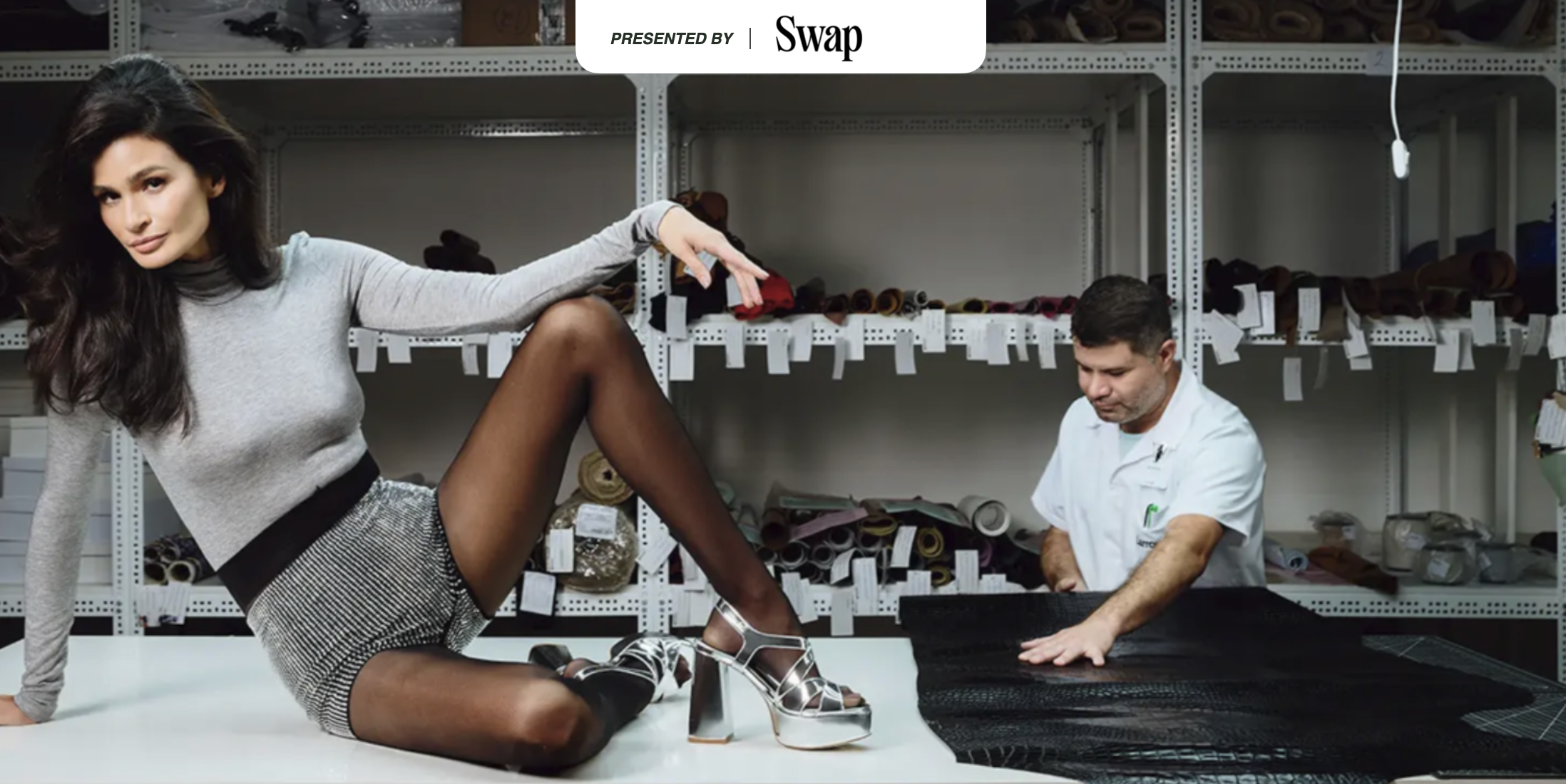
Summary: Ricardo Larroudé, CEO of the footwear brand Larroudé, personally used AI coding tools to build an integrated data system connecting Shopify, factory, inventory, and marketing data. The system automated previously manual reconciliation tasks, identified and fixed site performance issues, and is now being applied to inventory and production planning. The build phase incurred significant cloud and AI query costs, but reduced programming staff from ten to a team focused on ‘agentic’ oversight. Larroudé frames the core lesson as CEOs needing to ‘program their company,’ not code it.
Why it matters: It demonstrates a concrete, CEO-led operational pivot where AI tooling directly replaces manual data labor and alters hiring criteria, offering a template for mid-sized brands to compress planning cycles and reduce overproduction.
Context: Mid-market fashion brands face persistent data silos between e-commerce, supply chain, and planning systems, typically addressed through expensive, slow-moving IT projects or outsourced development.
"At the start of the year, Larroudé’s operating systems were not connecting the way Ricardo Larroudé wanted them to. The problem was that they were not speaking to each other cleanly. The." — GLOSSY.CO
Commentary: The shift from a ten-person programming team to an ‘agentic’ model redefines the in-house tech role as system oversight and control validation, not code writing. This creates a new labor filter: technical staff must now manage automated workflows, not execute them. The high initial cloud costs ($20k/month) and CEO-driven build signal that the barrier is now orchestration skill and capital, not pure technical expertise. For similar brands, the immediate consequence is a recalibration of tech budgets from headcount to cloud/AI services and a pressure on existing technical teams to adapt or be consolidated.
Date: Wed, 13 May 2026 04:04:00 +0000
URL: https://www.glossy.co/fashion/how-larroudes-ceo-built-an-ai-system-to-run-the-business-faster/
AI Sentiment Score: Negative (60%)
AI Credibility Score: 10.0/10 — High
Scores and text generated by AI analysis of the source article indicated.
ASOS: Redesigning online fashion at the speed of AI (Ukstories.Microsoft)
Summary: ASOS is deploying Microsoft’s cloud and AI stack across its entire value chain, from trend scouting to customer service, aiming to compress its design-to-shelf cycle to three weeks. The partnership focuses on a conversational AI stylist, consolidated data lakes for enterprise-wide analytics, and AI agents automating back-office and development tasks. The operational goal is to replace static personalization with a dynamically adapting digital storefront and to handle half of customer inquiries autonomously.

Why it matters: This signals a shift from AI as a discrete feature to a core operating system for fast fashion, directly impacting production velocity, labor allocation, and customer data leverage.
Context: Fast fashion’s competitive edge hinges on shortening feedback loops between trend identification and shelf placement, while e-commerce seeks to reduce high return rates through better personalization.
"ASOS: Redesigning online fashion at the speed of AI Fashion retailer ASOS is applying artificial intelligence and cloud services throughout its whole value chain in a frontier AI transformation partnership with Microsoft,." — UKSTORIES.MICROSOFT
Commentary: The three-week target, enabled by AI trend scouting and 3D design, resets expectations for fast-fashion product development cycles. Consolidating data into a single Azure repository is a prerequisite for the agentic automation targeting 93 use cases, which will redistribute labor from repetitive tasks in finance, coding, and customer service. The ‘AI Stylist’ represents a strategic bet to lower return rates by replicating in-store consultation, making conversational data a new moat. For practitioners, the model demonstrates that frontier AI adoption now requires deep vendor lock-in with a cloud provider to orchestrate these integrated workflows.
Date: April 30, 2026 12:00 AM ET
URL: https://ukstories.microsoft.com/features/asos-redesigning-online-fashion-at-the-speed-of-ai/
AI Sentiment Score: Positive (50%)
AI Credibility Score: 9.6/10 — High
Scores and text generated by AI analysis of the source article indicated.
Arts University Bournemouth takes AI and VR fashion tech … (Edtechinnovationhub)
Summary: Arts University Bournemouth is leveraging Fashion SVP 2026 to pivot from a traditional talent pipeline to a direct commercial partner for the fashion industry. It is showcasing AI pattern engineering, VR design workflows, and Digital Product Passport systems developed by its researchers and alumni. Concurrently, it is soft-launching the AUB Agency, a model connecting brands directly to student talent through live briefs and consultancy ahead of a full 2026 launch.

Why it matters: This signals a structural shift in how creative education institutions monetize R&D and talent, potentially altering vendor relationships and in-house workflow adoption for brands.
Context: Fashion brands are under pressure to accelerate time-to-market, reduce sampling waste, and comply with traceability mandates, creating demand for integrated digital tools and agile talent sourcing.
"#### Arts University Bournemouth arrives at Fashion SVP 2026 in London with AI pattern tools, VR design workflows, and a new commercial agency model that puts student talent directly inside brand briefs." — EDTECHINNOVATIONHUB
Commentary: The move commoditizes university R&D into a service layer, competing directly with boutique tech vendors and consultancies. For brands, it offers a bundled solution of tooling and low-cost, spec-work talent, but risks blurring academic and commercial incentives. The success of the AUB Agency model could pressure other arts institutions to formalize similar commercial arms, potentially reshaping the freelance and entry-level labor market.
Date: April 28, 2026 12:00 AM ET
URL: https://www.edtechinnovationhub.com/news/arts-university-bournemouth-takes-ai-and-vr-fashion-tech-to-olympia-london-this-week
AI Sentiment Score: Negative (66%)
AI Credibility Score: 7.0/10 — Medium
Scores and text generated by AI analysis of the source article indicated.
Fast fashion inventory AI and IoT landscape 2026 (Patsnap)
Summary: Patent and literature analysis through 2026 shows fast fashion inventory optimization evolving from generic algorithms to fashion-specific supply chain automation platforms. Key developments include a 2022 platform OS patent from Refashiond OS and recent Chinese and Indian patents focusing on livestream retail integration and unsold inventory conversion. The landscape indicates convergence of inventory management with sustainability compliance and blockchain traceability, yet the core IP for dedicated fashion orchestration platforms remains sparse.

Why it matters: For supply chain practitioners, the shift from generic tools to specialized platforms changes vendor selection, integration costs, and the operational leverage over time-to-market and waste.
Context: Fast fashion inventory has long been managed with retail-agnostic algorithms; the emergence of patents targeting fashion’s unique cycle signals a move toward vertical-specific tooling.
"With only one WO patent (Refashiond OS Inc., 2022) explicitly targeting fashion industry supply chain automation as a platform OS, the IP landscape for fashion-specific demand-supply orchestration platforms remains substantially underpopulated as of 2026." — PATSNAP
Commentary: The patent scarcity suggests a high barrier to entry or a market misalignment—vendors are still adapting generic systems. For brands, this means continued reliance on bespoke integrations, delaying the promised efficiency gains in digital sampling and overstock reduction. The active Refashiond OS patent could become a foundational blocker or a licensing cornerstone, shaping vendor consolidation. Meanwhile, the Chinese and Indian filings point to regional solutions for hyper-local problems like livestream retail, indicating fragmentation rather than a unified global stack.
Date: May 01, 2026 12:00 AM ET
URL: https://www.patsnap.com/resources/blog/articles/fast-fashion-inventory-ai-and-iot-landscape-2026/
AI Sentiment Score: Negative (66%)
AI Credibility Score: 10.0/10 — High
Scores and text generated by AI analysis of the source article indicated.
AI Turns Thrift Into Profitable Fashion Marketplace (Letsdatascience)
Summary: AI has moved from a peripheral tool to the operational core of the secondhand fashion market, enabling scalable profitability. Platforms now deploy computer vision and generative models to solve the fundamental cataloging problem of unique items, automating tagging, pricing, and visual search. This technical shift underpinned a 12% market growth to $289 billion in 2025, transforming thrift from a logistical burden into a high-margin retail channel.

Why it matters: For practitioners, this signals a shift in required skills toward AI-integrated operations and creates new vendor opportunities in automation tooling, while pressuring traditional cataloging and pricing roles.
Context: The resale sector’s core constraint has always been the uniqueness of every SKU, which made classical retail inventory and search systems ineffective.
"AI has converted secondhand apparel from a logistical headache into a high-margin retail channel. … Platforms solved the core technical challenge of uniqueness by applying computer vision and generative models to discovery,." — LETSDATASCIENCE
Commentary: The operational consequence is a redefinition of the resale workflow: human effort shifts from manual cataloging to managing and refining AI pipelines. This creates a new class of vendor specializing in visual identification and cross-platform matching, while commoditizing basic photography and tagging services. For brands, it opens a data-rich, asset-light channel but also increases price transparency across marketplaces.
Date: April 21, 2026 12:00 AM ET
URL: https://letsdatascience.com/news/ai-turns-thrift-into-profitable-fashion-marketplace-81e30183
AI Sentiment Score: Negative (50%)
AI Credibility Score: 10.0/10 — High
Scores and text generated by AI analysis of the source article indicated.
Post ID: c5ea3307