Digital & Tech-Forward Art Projects
2026 Projection Calendar | ART on THE MART (Artonthemart)
Summary: ART on THE MART’s 2026 projection calendar outlines a full year of programming, revealing an institutional model blending civic partnership, academic collaboration, and commercial sponsorship. The schedule allocates blocks to university-led student projects (SAIC, Columbia College MoCP), scientific visualization labs (UIUC/Argonne, Adler Planetarium), community-focused artist commissions (Trazos), and recurring branded events (Pride, Independence Day, Nutcracker). Operational constraints are explicit: presentations run four nights per week for a half-hour, with seasonal time shifts.
Why it matters: For practitioners, the calendar demonstrates how a large-scale public art program is sustained through a predictable pipeline of institutional partners, which dictates production timelines, technical requirements, and content curation.
Context: ART on THE MART operates as a hybrid platform, balancing civic duty with curated artistic programming on a privately-owned landmark, requiring long-lead planning and diverse funding streams.
"*4 nights per week, ½ hour per night Thursdays through Sundays." — ARTONTHEMART
Commentary: The rigid time slot is a core operational constraint, forcing all content—from student experiments to scientific data visualizations—into a standardized, broadcast-like format. This turns the facade into a programming channel, privileging works that can deliver narrative or impact within a tight, repeatable window. The heavy reliance on academic and institutional partners (SAIC, CPS, Argonne) suggests a labor and funding model where the platform provides the canvas while partners assume production costs and creative development, outsourcing R&D and community engagement. The inclusion of architectural firms like HDR alongside NeoCon signals a deliberate blurring of art, design, and commercial promotion, expanding the platform’s utility for its building owner.
Date: May 21, 2026 12:00 AM ET
URL: https://artonthemart.com/news/2026-projection-calendar
AI Sentiment Score: Negative (66%)
AI Credibility Score: 7.0/10 — Medium
Scores and text generated by AI analysis of the source article indicated.
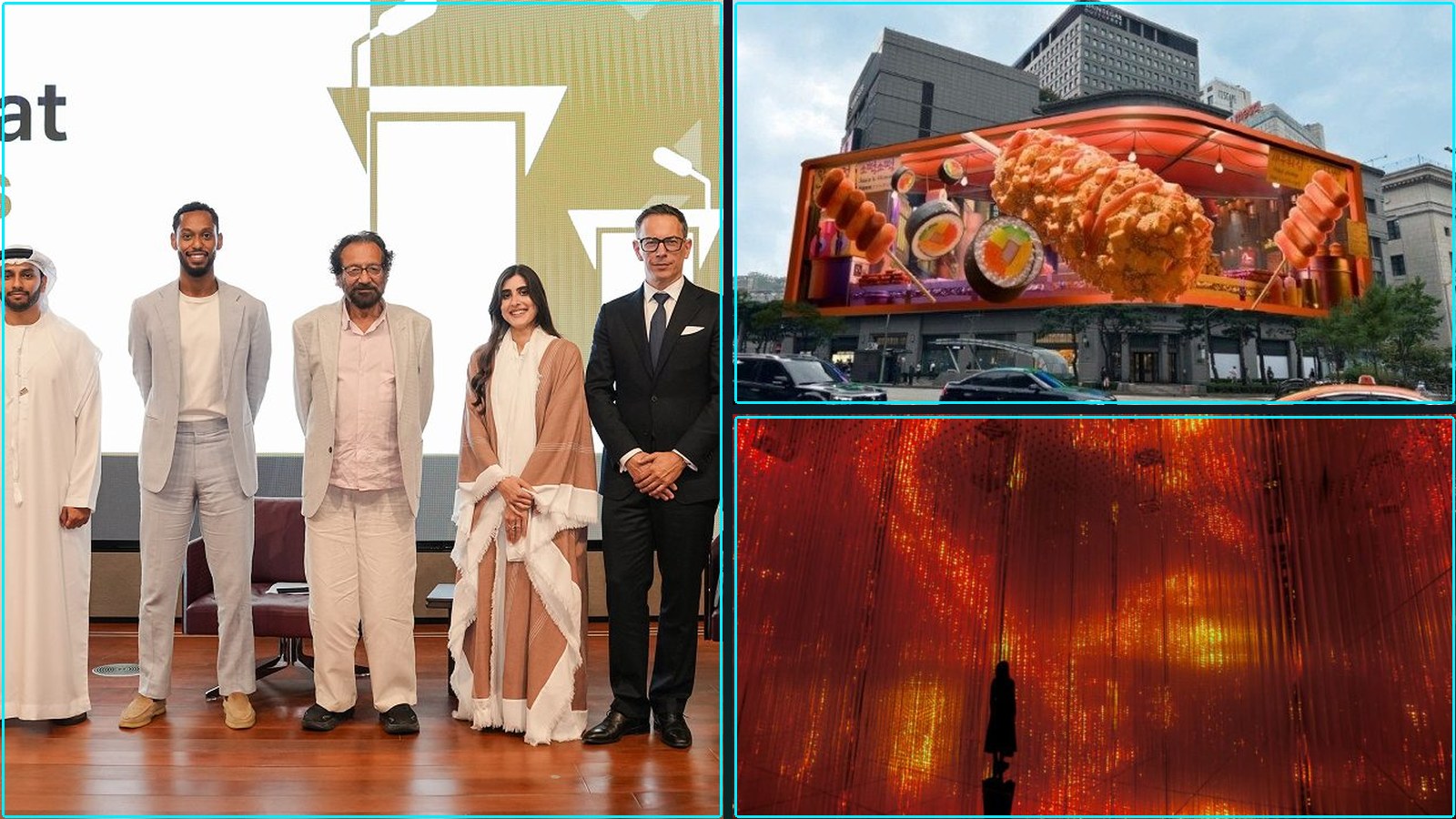
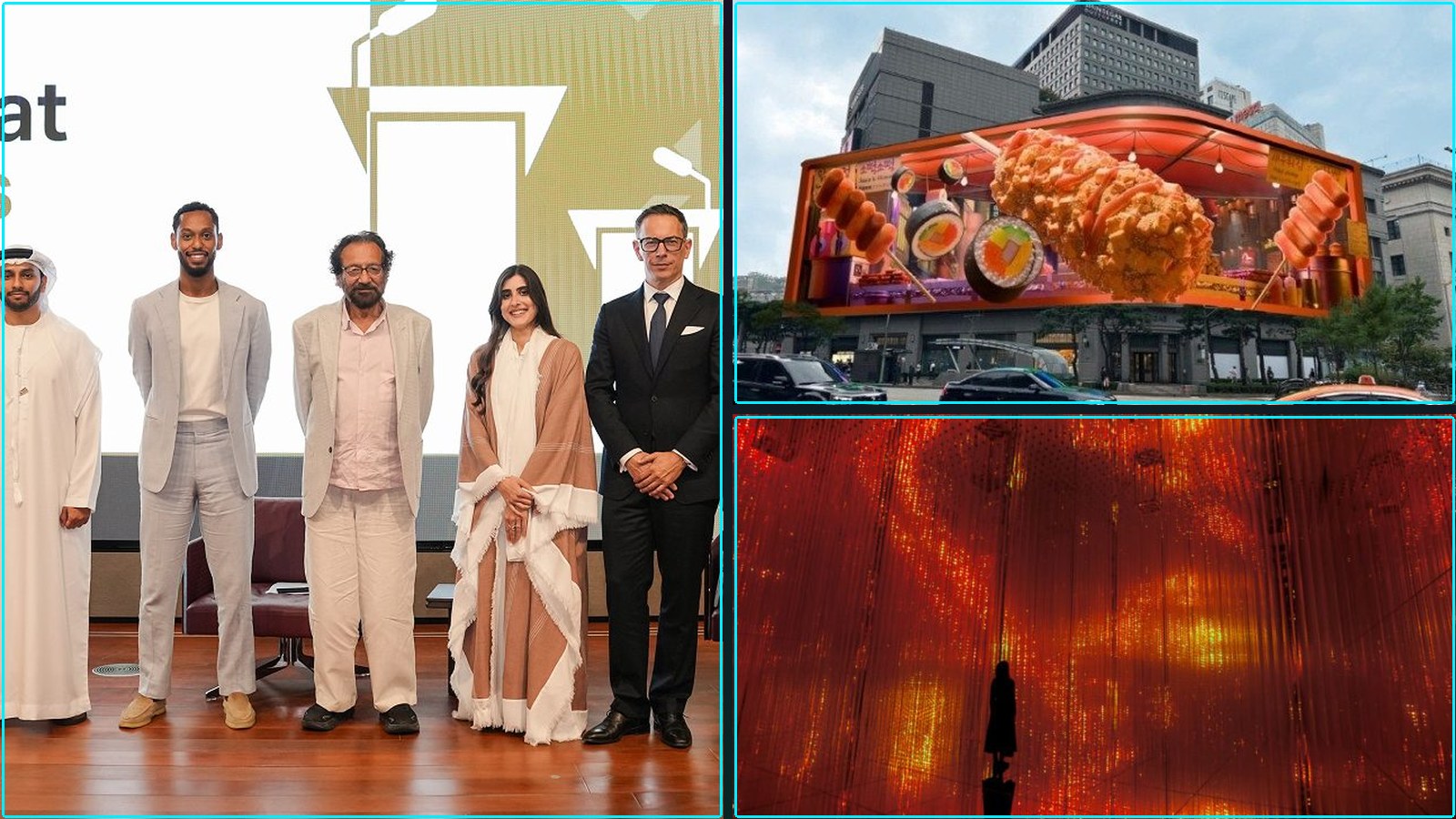
teamLab unveils new interactive artwork at Tokyo’s … – ARAB NEWS (Arabnews.Jp)
Summary: Art collective teamLab will introduce a new interactive installation, ‘Crows are Chased and the Chasing Crows are Destined to be Chased as well: Crystal World,’ at its Tokyo museum, teamLab Borderless, on May 20. The piece is an expansion of an existing work, indicating an iterative, franchise-like approach to its immersive digital portfolio.

Why it matters: For practitioners, this signals teamLab’s operational shift towards refining and scaling proven interactive concepts, affecting content pipelines, technical maintenance loads, and audience re-engagement strategies for permanent installations.
Context: teamLab Borderless in Azabudai Hills operates as a permanent, ticketed venue, requiring a steady stream of new or updated artworks to drive repeat visitation and maintain media relevance, distinct from the temporary exhibition model.
"TOKYO: Art collective teamLab will unveil a new interactive installation, “Crows are Chased and the Chasing Crows are Destined to be Chased as well: Crystal World,” at teamLab Borderless from May 20." — ARABNEWS.JP
Commentary: The launch of ‘Crystal World’ as a variant of an existing piece reflects a calculated, low-risk production strategy for sustaining a flagship venue. It prioritizes technical iteration over radical innovation, locking in crew and vendor workflows around a familiar interactive framework while testing the limits of audience appetite for serialized digital experiences.
Date: May 18, 2026 12:00 AM ET
URL: https://www.arabnews.jp/en/arts-culture/article_170367/
AI Sentiment Score: Negative (50%)
AI Credibility Score: 10.0/10 — High
Scores and text generated by AI analysis of the source article indicated.
Modes of Access — Digital Residencies 2026 (Stiftung-Kuenstlerdorf.De)
Summary: The Künstler*dorf Schöningen and kaethe:k Kunsthaus are launching a call for four digital residencies in 2026, themed ‘Modes of Access.’ The program is structured for remote participation, targeting artists whose work critiques power and explores accessibility through digital media. It explicitly selects for practitioners living over 1,500 km from Germany who face travel barriers due to mobility, care responsibilities, visa issues, or chronic illness. Each residency provides a €2,500 fee, a €500 material budget, and additional access support.

Why it matters: This formalizes a funding and production pipeline for artists excluded from traditional physical residencies, directly affecting how institutions resource and stage remote collaborative work.
Context: Digital residencies have evolved from pandemic-era adaptations into structured programs with explicit access criteria, shifting from convenience to a deliberate methodology for inclusion.
"The criteria are that fellows live more than 1,500 km from Schöppingen, Germany, and are unable to travel, whether due to limited mobility, disability, chronic illness, caring responsibilities, visa restrictions, or other dependence on local support networks." — STIFTUNG-KUENSTLERDORF.DE
Commentary: The 1,500 km rule operationalizes geographic and circumstantial exclusion as a positive selection mechanism, turning a logistical constraint into a curatorial principle. Requiring an optional ‘Access Rider’ shifts institutional responsibility from accommodation to foundational collaboration design. The fee structure and remote framework create a replicable model for other foundations, potentially redirecting grant flows toward artists whose practices are structurally bound to their local contexts.
Date: May 21, 2026 12:00 AM ET
URL: https://stiftung-kuenstlerdorf.de/en/program/modes-of-access-digital-residencies-2026
AI Sentiment Score: Negative (60%)
AI Credibility Score: 7.0/10 — Medium
Scores and text generated by AI analysis of the source article indicated.
TOKYO LIGHTS 2026 – プロジェクションマッピング国際大会 表彰式 (Youtube)
Summary: ##### May 21, 2026 世界中から集結した18組のファイナリストたちによる、プロジェクションマッピングの頂点が決まる――。 『1minute Projection Mapping Competition』国際大会表彰式をライブ配信! … – Venue: Tokyo Metropolitan Government Building No.1,Tokyo Citizen’s Plaza(2-8-1, Nishi-Shinjuku, Shinjuku-ku, Tokyo) Shinjuku Chuo Park(2-11, Nishi-Shinjuku, Shinjuku-ku, Tokyo)
Why it matters: Focus shifts to the ‘1minute’ constraint; timing and rapid iteration are key operational metrics for future competitive work.
Context: Venue confirmation (Tokyo Metropolitan Government Building) suggests established, large-scale public infrastructure remains a primary deployment target.
"##### May 21, 2026 世界中から集結した18組のファイナリストたちによる、プロジェクションマッピングの頂点が決まる――。 『1minute Projection Mapping Competition』国際大会表彰式をライブ配信! … – Venue: Tokyo Metropolitan Government Building No.1,Tokyo Citizen’s Plaza(2-8-1, Nishi-Shinjuku, Shinjuku-ku, Tokyo) Shinjuku Chuo Park(2-11, Nishi-Shinjuku, Shinjuku-ku, Tokyo)." — YOUTUBE
Commentary: The signal is still worth tracking, but the current extraction path did not yield enough body text for a fuller analytical read. The immediate implication is operational rather than speculative: watch how this changes budgets, workflows, or risk assumptions over the next cycle.
Date: May 21, 2026 12:00 AM ET
URL: https://www.youtube.com/watch?v=CP97AChkGKU
AI Sentiment Score: Negative (50%)
AI Credibility Score: 10.0/10 — High
Scores and text generated by AI analysis of the source article indicated.
Looking back on ITERATIONS 2024 | Creative Coding Utrecht (Creativecodingutrecht.Nl)
Summary: Creative Coding Utrecht has published a retrospective on the fourth edition of its ITERATIONS event, held at Design Museum Den Bosch. The event featured a program of talks, workshops, exhibitions, and a performance, supported by institutional partners and public arts funding. Concurrently, the organization is recruiting a Video Content Creation Intern, indicating an ongoing focus on documenting and disseminating its activities.
Why it matters: For practitioners, this highlights the operational model of a regional hub: blending public events, institutional partnerships, and funded labor to sustain a creative coding ecosystem.
Context: European digital art scenes often rely on a mix of public arts funding, museum partnerships, and low-cost or intern labor to produce festivals and maintain community platforms.
"This edition featured talks by Hannah Gmeiner, F451, Mattaniah Aytenfsu, Roos Slegers, John Provencher, Hundred Rabbits, Kim Lê Boutin and a performance by Luna Maurer; workshops by Bri Griffin, F451, Flor de Fuego, Mattaniah Aytenfsu; exhibitions by Patrick McGlynn/Dr. Mindflip and Piece of Code; moderation by Rosa Wevers and Dymphie Braun." — CREATIVECODINGUTRECHT.NL
Commentary: The event’s structure—talks, workshops, exhibitions—reveals a standard festival template, but its funding from Pictoright Fonds and Creative Industries Fund NL is the critical enabler. The simultaneous internship call underscores that documentation and content creation are now core, budgeted operational needs, not optional extras. For other hubs, this model demonstrates how to leverage public funding and institutional partnerships to create a recurring platform, though it remains dependent on that continued subsidy and in-kind labor.
Date: May 20, 2026 12:00 AM ET
URL: https://creativecodingutrecht.nl/en/news/iterations-aftermovie
AI Sentiment Score: Negative (75%)
AI Credibility Score: 10.0/10 — High
Scores and text generated by AI analysis of the source article indicated.
From Personalization Potential to Interactive Museum Experiences (Journals-Sol.Sbc.Br)
Summary: A research paper proposes a scenario-based personalization framework for interactive museum installations, moving away from real-time, individual user profiling. It defines visitor behavioral typologies to create finite narrative branches activated by embedded trigger points. The approach was implemented in the ‘Écho d’Azur’ installation, which uses audiovisual media and emotion recognition. The framework prioritizes curatorial control and reduces technical complexity by handling personalization at design-time rather than runtime.
Why it matters: For institutions commissioning interactive art and the studios that build it, this framework offers a pragmatic, maintainable model that balances technological ambition with curatorial authority and ethical guardrails.
Context: Museums have struggled to integrate adaptive tech without ceding narrative control or incurring unsustainable technical debt from real-time AI systems.
"Real-time adaptation is contrasted with design-time personalization, reducing technical complexity and ethical concerns while maintaining curatorial coherence." — JOURNALS-SOL.SBC.BR
Commentary: This shifts the labor burden from post-launch AI ops teams to upfront experience designers and curators, creating a more predictable vendor workflow. It also establishes a defensible institutional stance on data privacy by avoiding continuous biometric profiling. The model favors robust, pre-authored content pipelines over brittle, real-time machine learning, making long-term maintenance and touring of installations more feasible.
Date: May 20, 2026 12:00 AM ET
URL: https://journals-sol.sbc.org.br/index.php/jis/article/view/7334
AI Sentiment Score: Negative (71%)
AI Credibility Score: 8.4/10 — High
Scores and text generated by AI analysis of the source article indicated.
Art Korea Lab to recruit participants for the ‘2026 Art-Tech Convergence Testbed’… Sound Design, Dynamic XR, Interactive Mapping, Active Kinetic, and more (Sports.Khan.Co.Kr)
Summary: Art Korea Lab, backed by the Ministry of Culture, Sports and Tourism, is recruiting 40 individuals or teams across four specialized tracks—Sound Design, Dynamic XR, Interactive Mapping, and Active Kinetic—for its 2026 Art-Tech Convergence Testbed. The program offers integrated support for experiments, with applications accepted via the National Culture and Arts Support System until May 29.

Why it matters: This public funding call defines the specific technical categories South Korea’s cultural ministry is prioritizing for institutional support, directly shaping the pipeline for emerging interactive art projects and the tools their creators must master.
Context: National arts labs increasingly function as R&D funnels, using structured tracks to steer innovation toward commercially viable or institutionally scalable forms of experiential media.
"Applicants may choose one of four tracks: Sound Design, Dynamic XR, Interactive Mapping, or Active Kinetic." — SPORTS.KHAN.CO.KR
Commentary: The track taxonomy—especially ‘Dynamic XR’ and ‘Active Kinetic’—signals a move beyond static installations toward responsive, physically engaged experiences. For practitioners, success now requires aligning proposals with these bureaucratically defined tech categories, which will influence vendor selection, crew skillsets, and post-production workflows for the funded cohort.
Date: May 20, 2026 12:00 AM ET
URL: https://sports.khan.co.kr/en/article/202605200354007
AI Sentiment Score: Positive (75%)
AI Credibility Score: 9.2/10 — High
Scores and text generated by AI analysis of the source article indicated.
Abandon Normal Devices: the power of Digital Arts (Ifacca)
Summary: The Arts Council UK is formalizing ‘Digital Arts’ as a distinct artform, moving it out from under the umbrella of ‘visual arts.’ This institutional recognition is intended to remove perceptual barriers and empower artists and organizations to engage more directly with digital technology as a primary creative medium. The move signals a shift in how major cultural funders categorize and legitimize work that is native to computational systems.
Why it matters: For practitioners, this reclassification directly affects grant applications, funding streams, and institutional partnerships, creating a clearer pipeline for digital-native projects.
Context: Cultural institutions have long struggled to categorize and fund digital work, often forcing it into existing visual or performance art frameworks that misalign with its production and exhibition needs.
"Digital technology is not simply an enabling tool, but a defining creative force, as well as a way of artists imagining what art means in the 21st century. Digital Art is appreciated not just for what it can replicate of traditional mediums, but for what it can do that traditional media cannot." — IFACCA
Commentary: This formal carve-out by a major funder could pressure other institutions to follow suit, creating a more stable operating environment for digital arts producers. It legitimizes budgets for technical R&D, maintenance, and specialist roles that were previously hard to justify under traditional artform criteria. The risk is that it creates a new silo, but the immediate effect is practical: clearer RFPs and evaluation criteria for artists and studios.
Date: May 19, 2026 12:00 AM ET
URL: https://ifacca.org/news/2026/05/19/abandon-normal-devices-power-digital-arts/
AI Sentiment Score: Negative (75%)
AI Credibility Score: 8.2/10 — High
Scores and text generated by AI analysis of the source article indicated.
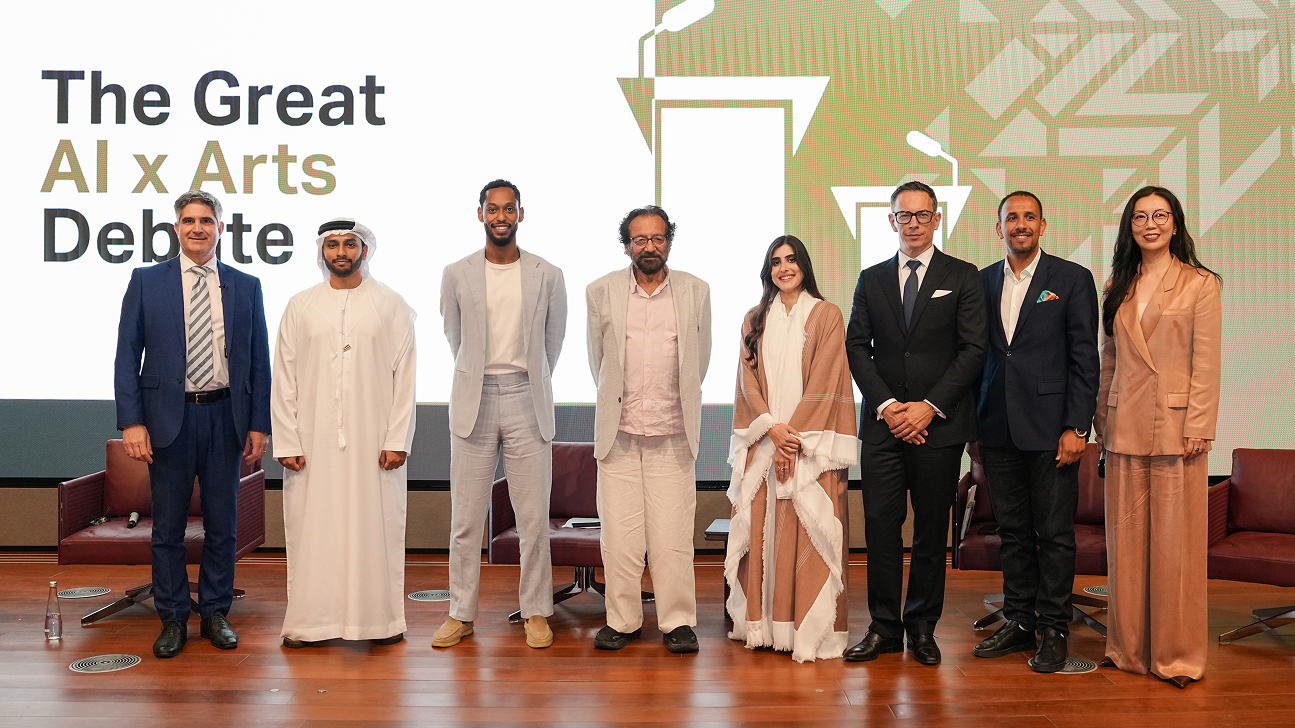
AI and art: debating the future of creativity – MBZUAI (Mbzuai.Ac.Ae)
Summary: MBZUAI hosted a debate on AI and art, framing the discussion around whether AI-generated output constitutes art, if it threatens professional artists, and if it democratizes or dilutes creative practice. Panelists argued positions on historical continuity versus process surrender, professional displacement versus role evolution, and access versus industrial production. Audience polling showed shifting, nuanced opinions on each question.
Why it matters: The debate crystallizes the operational tensions for artists, curators, and institutions as they navigate a market where the definition of art and the artist’s professional model are under active renegotiation.
Context: This is part of a broader institutional effort to position cultural and academic bodies within the AI discourse, shaping the frameworks that will govern funding, exhibition, and professional validation.
"What happens to art – and to us – when machines begin to create? That was the question at the heart of The Great AI x Arts Debate, hosted by The Academy." — MBZUAI.AC.AE
Commentary: The core tension is not ontological but economic: the ‘artist’ may persist, but the ‘professional artist’ faces obsolescence. This shifts institutional pressure points from curation and criticism to labor advocacy and new credentialing models for creative work. The debate’s structure, forcing argued positions, reveals that the industry’s narrative is being strategically shaped by its hosts.
Date: May 19, 2026 12:00 AM ET
URL: https://mbzuai.ac.ae/news/ai-and-art-debating-the-future-of-creativity/
AI Sentiment Score: Negative (75%)
AI Credibility Score: 7.0/10 — Medium
Scores and text generated by AI analysis of the source article indicated.
Post ID: 840e1d84