Pawleys Island / Georgetown & Horry Counties, SC
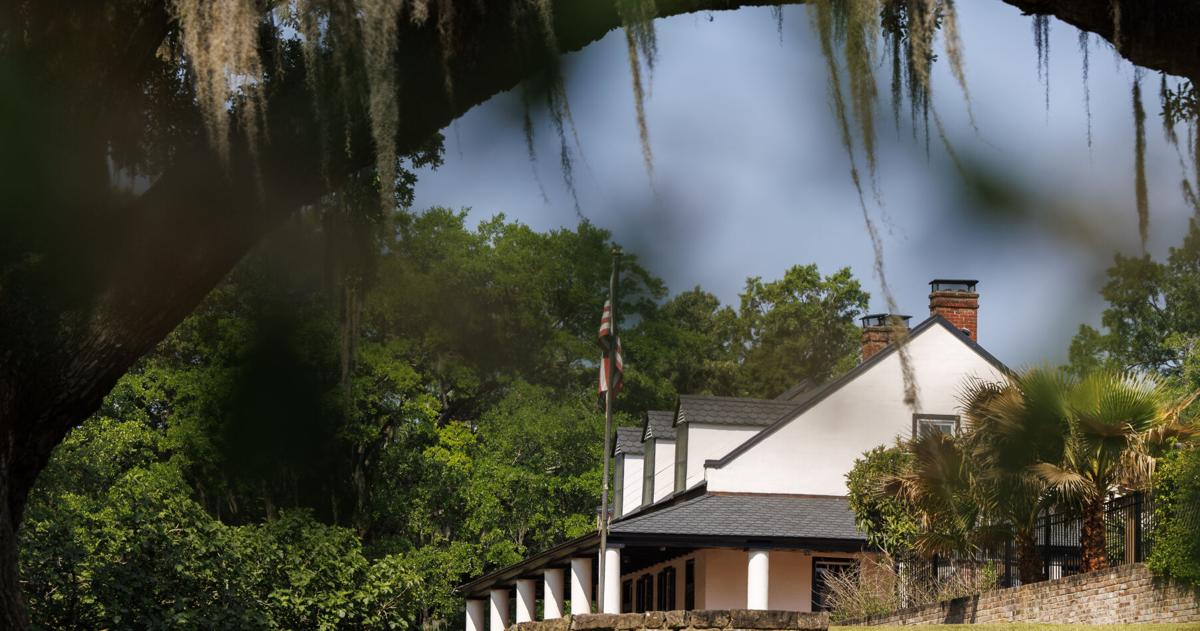
Charleston’s colonial naturalist and his fragrant, namesake flower (Postandcourier)
Summary: A profile of Alexander Garden, the 18th-century Scottish physician and naturalist who gave his name to the gardenia, traces his 30-year career in Charleston—treating smallpox patients, collecting New World specimens for Linnaeus, and operating a plantation called Otranto along Goose Creek. Garden’s Loyalist ties led to his banishment after the American Revolution, and he died in London in 1791. The gardenia, native to Asia, thrives in the Lowcountry each spring, linking the region’s botanical identity to a colonial figure whose scientific legacy outlasted his political exile.
Why it matters: This story reframes a familiar Lowcountry flower as a tangible link to colonial science, Loyalist displacement, and the region’s plantation economy—offering a layered historical signal for readers attuned to how place names and natural features encode contested pasts.
Context: Garden did not discover the gardenia; Linnaeus named it after him in 1760. The article uses his correspondence and the surviving Otranto plantation house in Hanahan to connect botanical history to contemporary land use and memory.
"Severely was I buffeted by the violence of a political tourbillion for eight years… What I lament now most of all is that I have lost so many years and have almost lost the love of Learning and the desire of pursuit or improvement." — POSTANDCOURIER
Commentary: The piece quietly underscores how political rupture can derail scientific careers—Garden’s banishment ended his specimen-collecting and correspondence with Linnaeus and Ellis. For readers in coastal South Carolina, the gardenia’s annual bloom becomes a seasonal reminder of the region’s deep entanglement with empire, slavery, and the intellectual networks that shaped early American natural history.
Date: July 04, 2026 05:00 AM ET
URL: https://www.postandcourier.com/news/gardenia-alexander-garden-charleston-physician-otranto/article_ec5f04f3-b9b1-4394-8fef-7e1a67395e73.html
AI Sentiment Score: Neutral (50%)
AI Credibility Score: 10.0/10 — High
Scores and text generated by AI analysis of the source article indicated.
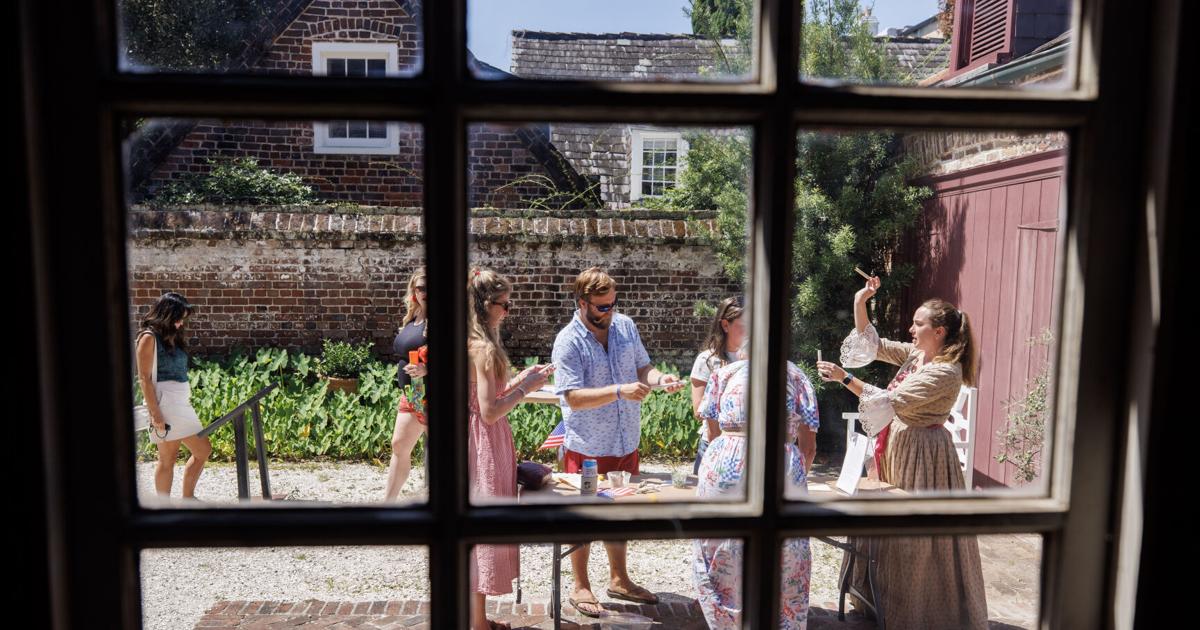
Heyward-Washington House celebrates 250 years of American independence with interactive stations (Postandcourier)
Summary: The Heyward-Washington House in Charleston hosted a family-friendly celebration on July 3 for the 250th anniversary of the Declaration of Independence, featuring interactive stations that recreated colonial life. The event highlighted Charleston’s designation as one of only four America 250 showcase cities, and the only one in the South. The museum emphasized multiple perspectives, including those of women, enslaved people, and patriots, through hands-on activities like candle-making and rice pounding.
Why it matters: This event underscores how historic sites in the South are leveraging the semiquincentennial to reframe Revolutionary narratives, potentially influencing tourism patterns and public memory in a region often associated with the Civil War rather than the founding era.
Context: Charleston’s selection as a showcase city alongside Boston, New York, and Philadelphia signals a deliberate effort to broaden the geographic and cultural scope of America’s founding story, particularly relevant as coastal South Carolina grapples with balancing heritage tourism and development pressures.
"CHARLESTON — Decked in red, white and blue and other patriotic garb, families filled the garden of the Heyward-Washington House on July 3 to get a taste of the Revolutionary War as." — POSTANDCOURIER
Commentary: The museum’s explicit inclusion of enslaved people’s labor in rice processing—a direct reference to the region’s plantation economy—is a notable departure from sanitized heritage tourism. This approach may set a precedent for other Southern historic sites navigating the 250th anniversary, but the event’s one-time nature suggests institutional caution about sustained programming. For the Grand Strand and Lowcountry, where tourism is the economic backbone, such nuanced historical framing could either deepen visitor engagement or trigger backlash from traditionalist audiences.
Date: July 04, 2026 05:00 AM ET
URL: https://www.postandcourier.com/charleston_sc/heyward-washington-south-carolina-250-independence/article_fda113ed-6c1d-42f6-bc3a-3e31bcd6e77b.html
AI Sentiment Score: Negative (66%)
AI Credibility Score: 10.0/10 — High
Scores and text generated by AI analysis of the source article indicated.
‘Stop as Yield’ bicycle bill turns into a South Carolina law. What does this mean for cyclists? (Postandcourier)
Summary: South Carolina has become the first East Coast state and the 14th in the U.S. to enact a ‘stop as yield’ law for bicyclists, allowing them to treat stop signs as yield signs and red lights as stop signs when safe. Signed by Governor Henry McMaster on May 18 and effective immediately, the law aims to make cycling more practical and reduce time spent at dangerous intersections. Cyclists must still come to a complete stop at red lights and yield to right-of-way traffic; reckless riding remains illegal.

Why it matters: This law signals a significant shift in traffic policy that could reshape urban mobility and safety norms in a state heavily reliant on car infrastructure, with potential ripple effects for coastal tourism and commuting patterns.
Context: Bicycle deaths in the U.S. peak between June and October, with 1,392 deaths in 2024 alone; intersections are particularly hazardous for cyclists. Previously, cyclists had to wait two minutes at non-responsive red lights before proceeding.
"It means when it is clear to do so, you slow and if it is clear, you just simply continue your momentum, but you always yield to anybody who’s already there." — POSTANDCOURIER
Commentary: This law reduces a friction point that discouraged utilitarian cycling, especially in car-centric areas like the Grand Strand where stoplights are plentiful and bike infrastructure is sparse. The practical effect will be most felt by daily commuters and delivery cyclists, not recreational riders, and could nudge local governments to reconsider intersection design. However, enforcement and driver awareness remain wild cards—without public education campaigns, the law risks backlash if collisions increase. It also positions South Carolina as a test case for other Southern states weighing similar legislation.
Date: July 03, 2026 05:00 AM ET
URL: https://www.postandcourier.com/news/stop-as-yield-bike-law-south-carolina/article_4770ae2a-1bbc-4ee4-806b-135fff973fdd.html
AI Sentiment Score: Positive (50%)
AI Credibility Score: 10.0/10 — High
Scores and text generated by AI analysis of the source article indicated.
Charleston honors one of nation’s oldest post offices ahead of USA’s 250th anniversary (Postandcourier)
Summary: Charleston honored its historic 83 Broad St. post office, one of only 62 in the nation continuously operating since before the U.S. founding, as part of America’s 250th anniversary celebrations. Mayor William Cogswell linked the postal service’s Revolutionary War role to the Declaration of Independence, while the local postmaster noted the institution’s inseparable bond with national history. A nursing student’s stamp design depicting mail delivery evolution was also showcased. The event underscores how a single, still-active federal facility can anchor local identity in a rapidly changing coastal city.

Why it matters: For coastal South Carolina communities like Pawleys Island and Georgetown, this story reinforces how historic federal infrastructure—especially the USPS—remains a tangible link to national origins and a stabilizing force amid tourist-driven development and climate risk.
Context: The 83 Broad St. branch is one of only two such pre-1776 post offices in South Carolina, highlighting the state’s deep colonial and revolutionary heritage. Charleston’s recognition comes as the USPS faces modern pressures from digital communication and operational restructuring.
"“You can’t really separate our nation’s history from that of the postal service,” Charleston Postmaster Shannon Verastequi said. She herself made history when she became Charleston’s first female postmaster last year." — POSTANDCOURIER
Commentary: The ceremony’s timing—ahead of the 250th anniversary—is a deliberate signal that the USPS still matters as a civic institution, not just a delivery service. For the Grand Strand and Lowcountry, where seasonal economies and dispersed populations rely on mail for everything from prescriptions to ballots, this recognition may foreshadow renewed local advocacy for postal funding and resilience. The stamp design contest also hints at a soft-power play: embedding postal history into public memory through youth engagement, a tactic other historic coastal towns could replicate.
Date: July 02, 2026 05:00 PM ET
URL: https://www.postandcourier.com/charleston_sc/charleston-post-office-recognized-america-250/article_e261cdf3-6611-4a0d-8203-11e7372ca1b3.html
AI Sentiment Score: Negative (50%)
AI Credibility Score: 10.0/10 — High
Scores and text generated by AI analysis of the source article indicated.
Charleston County plans more parking for this busy Mount Pleasant boat landing (Postandcourier)
Summary: Charleston County Parks and Recreation Commission plans to add 15 parking spots to the crowded Shem Creek boat landing in Mount Pleasant, purchased an adjacent parcel in 2022 for $1.9 million, and will remove three trees including a 26-inch live oak. The expansion aims to reduce street parking congestion near restaurants and a marina. The Commercial Design Review Board requested pervious pavers and removal of red maples due to Asian longhorned beetle quarantine. Construction could start as early as November 2027 pending approvals.
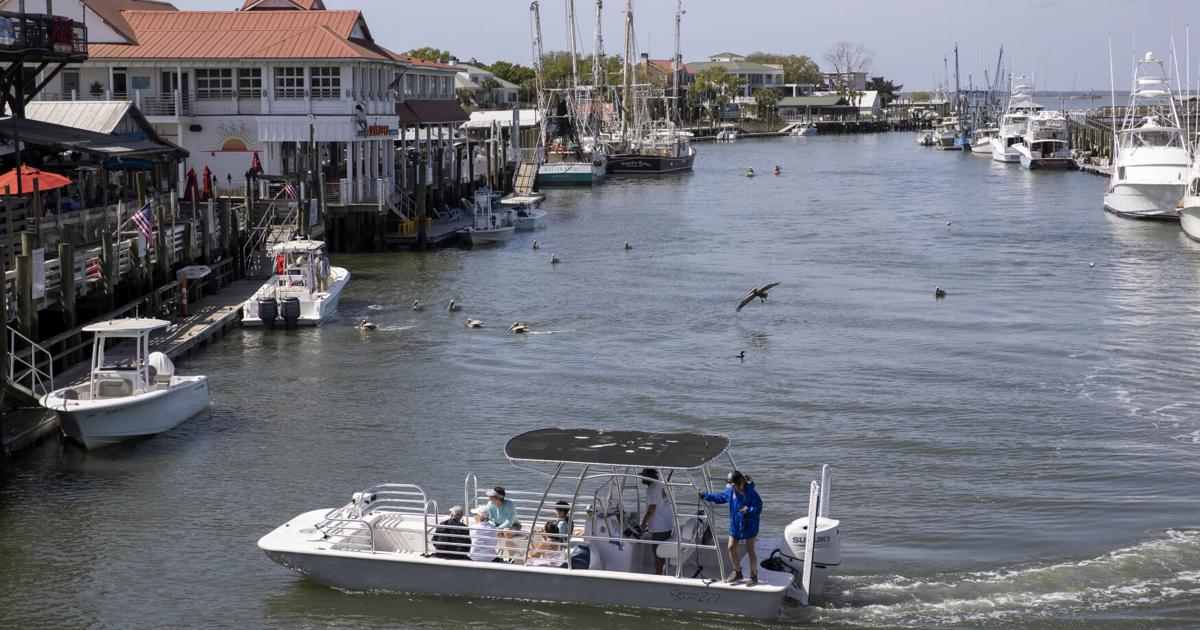
Why it matters: For coastal communities like Pawleys Island and Georgetown, this signals how public agencies are responding to recreational infrastructure strain from population growth and tourism, with implications for tree canopy, stormwater management, and invasive species policy.
Context: Shem Creek is a high-traffic recreational hub; similar boat landings along the Grand Strand face comparable parking and environmental pressures as seasonal and year-round use intensifies.
"MOUNT PLEASANT — A popular, and often crowded, boat landing on Shem Creek will gain over a dozen new parking spots in a long-planned expansion by the Charleston County Parks and Recreation." — POSTANDCOURIER
Commentary: The $1.9 million land purchase and multi-year timeline reflect the high cost of retrofitting infrastructure in built-out coastal zones. The tree removal and beetle quarantine details show how environmental regulations now directly shape parking lot design, a pattern likely to recur in Horry County as development pushes into wooded areas near waterways.
Date: June 30, 2026 05:00 AM ET
URL: https://www.postandcourier.com/charleston_sc/shem-creek-boat-landing-parking/article_e5d7c1e6-de5c-4d9f-9a51-ff2cc6525a26.html
AI Sentiment Score: Positive (50%)
AI Credibility Score: 10.0/10 — High
Scores and text generated by AI analysis of the source article indicated.
Military planes will fly down South Carolina coastline for Fourth of July celebration (Postandcourier)
Summary: The 16th annual Salute from the Shore flyover will send F-16s, a C-17 Globemaster III, and—new this year—Apache helicopters down the entire South Carolina coast on July 4, from Cherry Grove to Beaufort. The event, organized by a nonprofit, honors active-duty military, veterans, and first responders. Beachgoers are asked to avoid flying kites during the Apache segment to allow low-altitude passes. The flyover concludes with a volunteer brigade of vintage Warbirds.

Why it matters: For coastal South Carolina communities, this is a rare, synchronized military aviation event that draws thousands of beachgoers and reinforces the region’s identity as a patriotic tourism destination—while also introducing operational constraints (no kites) that could affect local beach businesses and public safety planning.
Context: Salute from the Shore has been a fixture since 2011, typically featuring fighter jets and cargo planes; the addition of Apache attack helicopters in 2026 signals deeper Army National Guard involvement and a shift toward lower-altitude, more dramatic flyovers.
"Beachgoers are asked to refrain from flying kites when the helicopters are in the area so they can fly as low to the ground as possible." — POSTANDCOURIER
Commentary: The kite restriction is a small but telling operational detail: it reveals that Apache pilots intend to fly at treetop height, which will amplify the spectacle but also increase noise and safety concerns along the Grand Strand. For towns like Murrells Inlet and Pawleys Island, where the flyover passes at 1:04 and 1:06 p.m. respectively, this could briefly disrupt beach commerce—kite rentals, parasailing, drone operators—and requires local law enforcement to coordinate with military flight paths. The event’s growing complexity also suggests that coastal South Carolina is becoming a regular training and public-relations corridor for the National Guard, with implications for airspace management during peak tourist season.
Date: June 30, 2026 05:00 AM ET
URL: https://www.postandcourier.com/news/flyover-coastline-south-carolina-salute-shore/article_3c068e8b-25c9-4507-88a2-9c011f2f7a10.html
AI Sentiment Score: Negative (50%)
AI Credibility Score: 10.0/10 — High
Scores and text generated by AI analysis of the source article indicated.
Post ID: d4df63ec