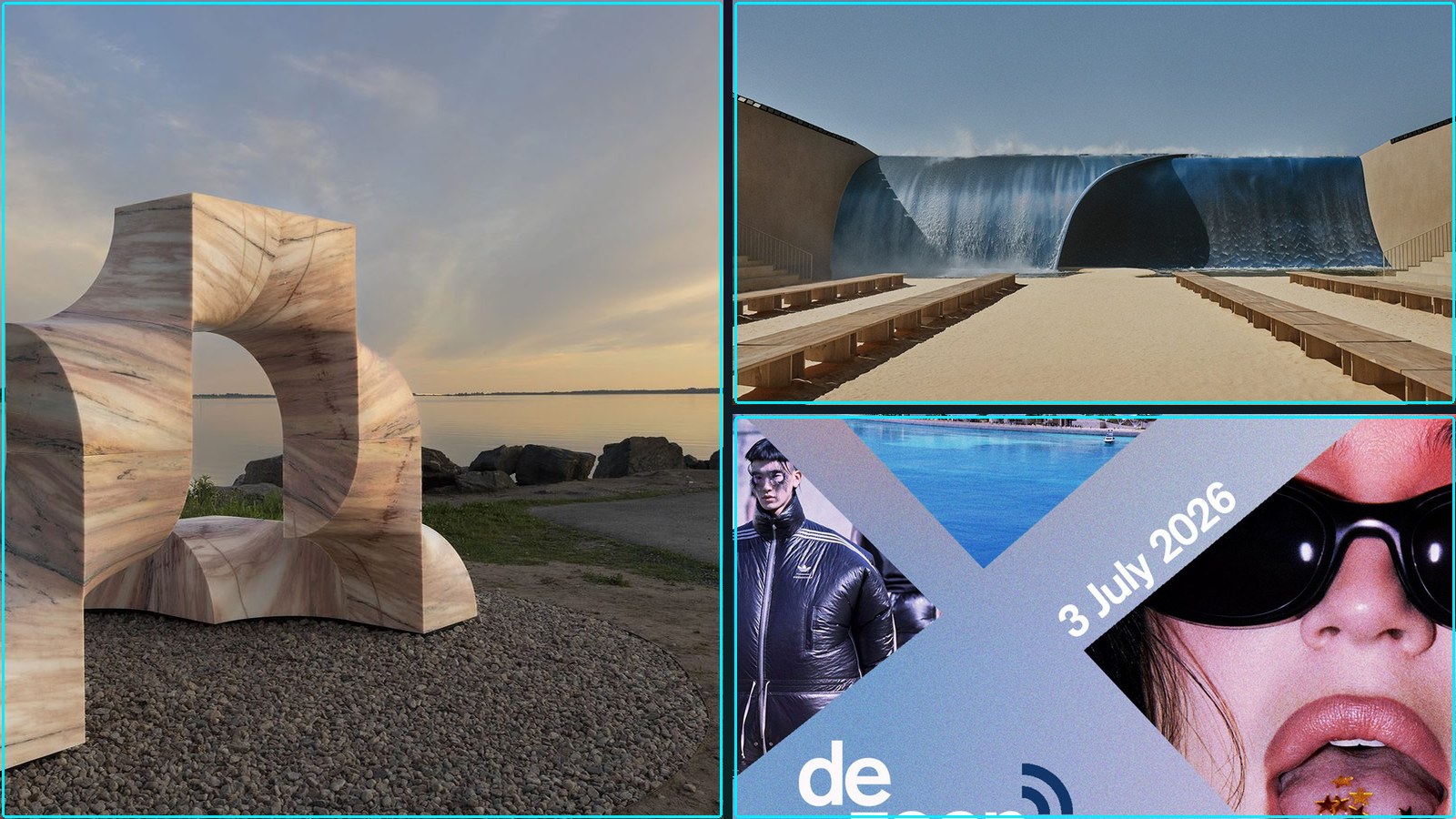
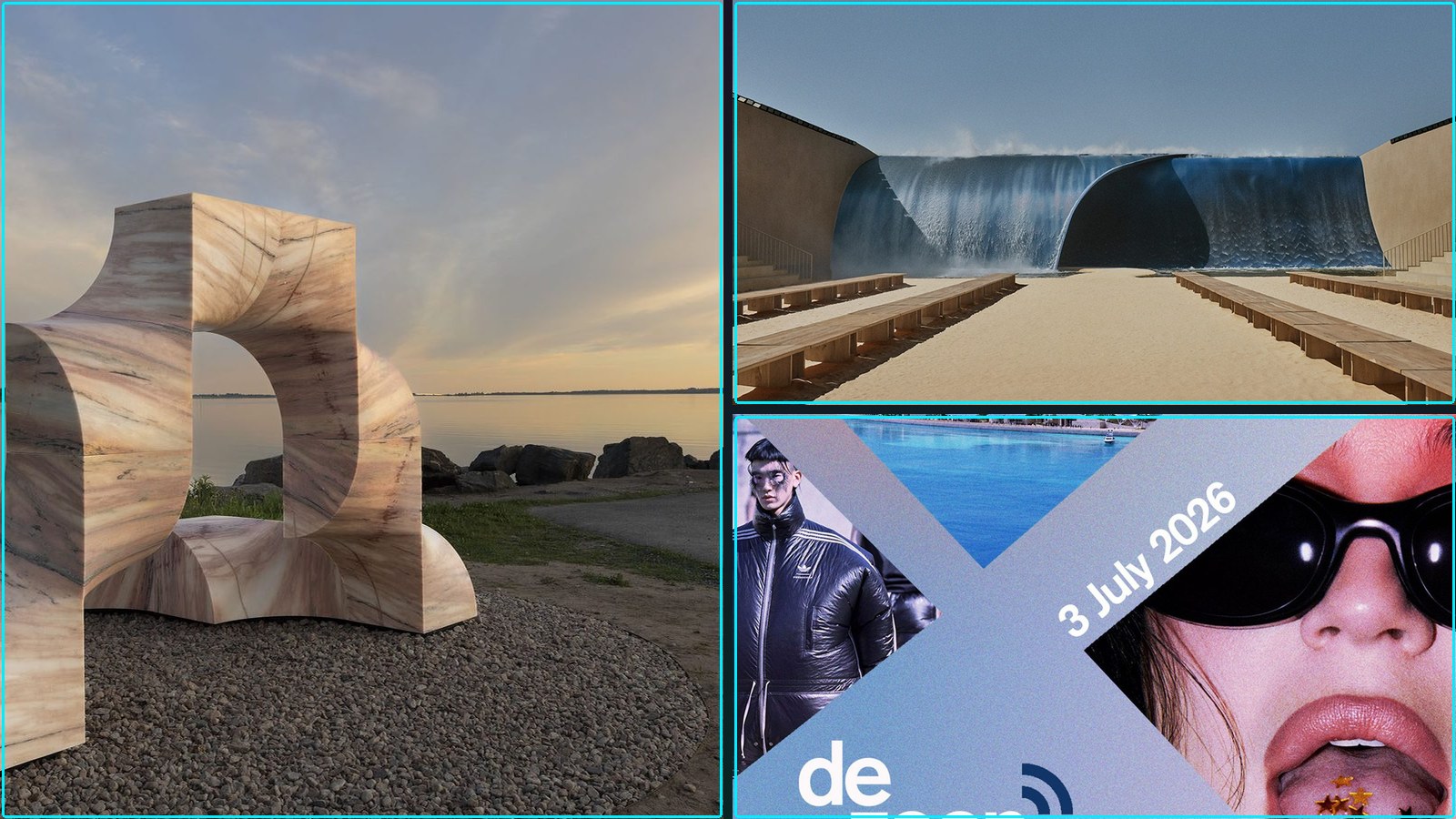
Design news and commentary
"Forgive me if I’m wrong, but isn’t the world on fire?" says commenter (Dezeen)
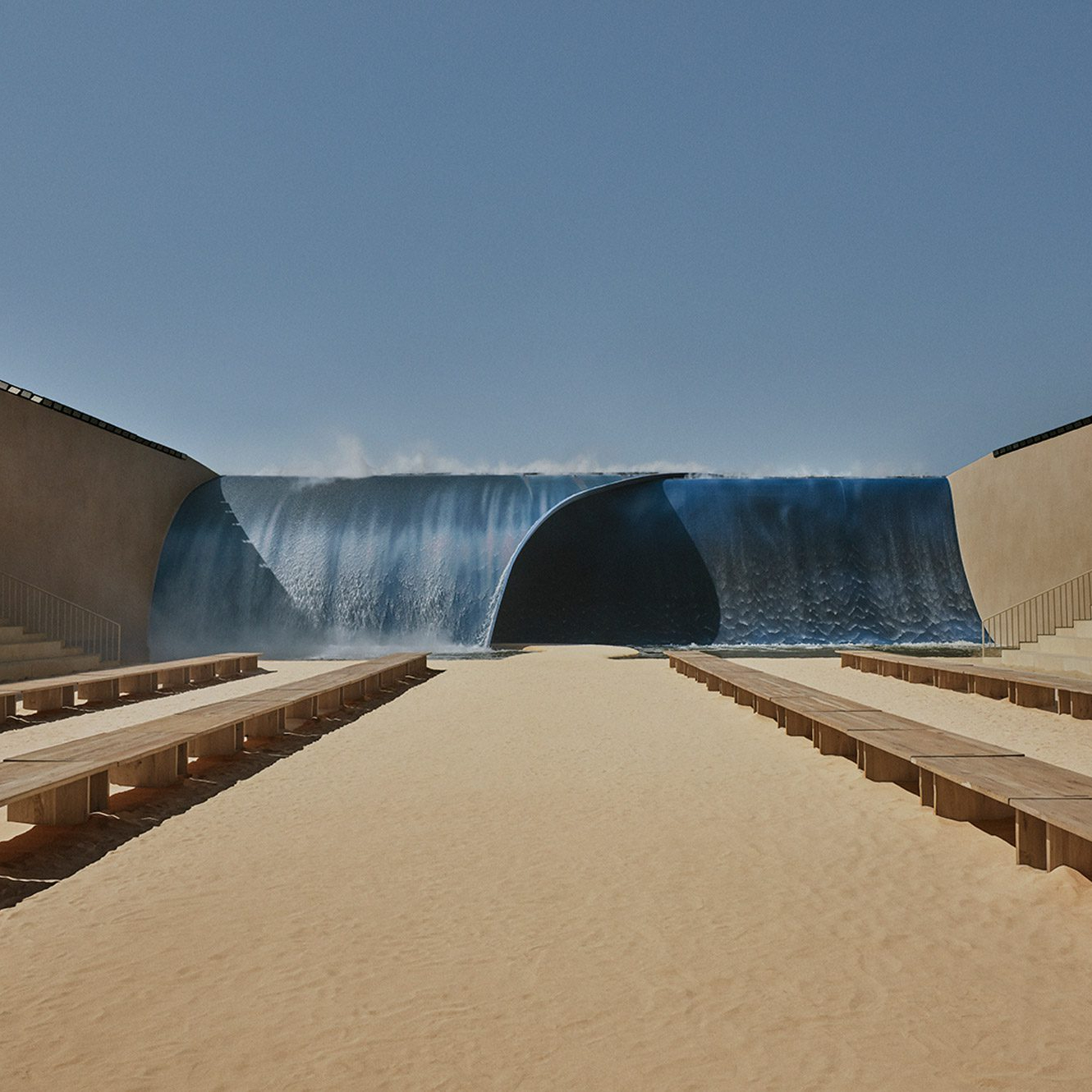
Summary: Dezeen readers react to Louis Vuitton’s Spring Summer 2027 menswear show, which featured a 37-metre-wide jumbo wave powered by Paris’ aquatic network. Commenters express dismay at the water spectacle amid global climate crises, with one calling it the "set design equivalent of Chevy Chase tossing his full canteen in front of thirsty Steve Martin." Others defend the show, noting the water was returned and benches reused. The piece also covers reader reactions to Rick Owens’ inflatable Adidas tracksuits and Frank Gehry’s Dar al Funoon venue in Abu Dhabi.
Why it matters: The backlash highlights a growing tension between luxury fashion’s spectacle-driven marketing and audience expectations of environmental responsibility, directly affecting how brands and creative directors calibrate show budgets, water usage, and sustainability messaging.
Context: Luxury fashion shows have increasingly become large-scale environmental installations, with water usage and waste drawing scrutiny. This season’s Paris menswear week saw multiple brands grappling with the optics of excess amid record heatwaves and drought conditions across Europe.
""Forgive me if I’m wrong, but isn’t the world on fire?" says commenter In this week’s comments update, readers are discussing a 37-metre-wide jumbo wave that formed the backdrop of Louis Vuitton’s." — DEZEEN
Commentary: The wave set’s water was sourced from Paris’ municipal network and returned, but the optics of a 37-metre water feature during a European heatwave still landed poorly with a vocal segment of the design press audience. For commissioners and production teams, this signals that even technically responsible water use may not insulate a show from climate-adjacent criticism. The split in reader sentiment—some praising the spectacle, others calling it tone-deaf—mirrors the broader industry divide between experiential marketing and sustainability commitments.
Date: July 03, 2026 05:00 AM ET
URL: https://www.dezeen.com/2026/07/03/jumbo-tidal-wave-louis-vuitton-menswear-show-comments/
AI Sentiment Score: Negative (60%)
AI Credibility Score: 10.0/10 — High
Scores and text generated by AI analysis of the source article indicated.
Superflex and KWY.studio create architecture for fish to enjoy after sea levels rise (Dezeen)
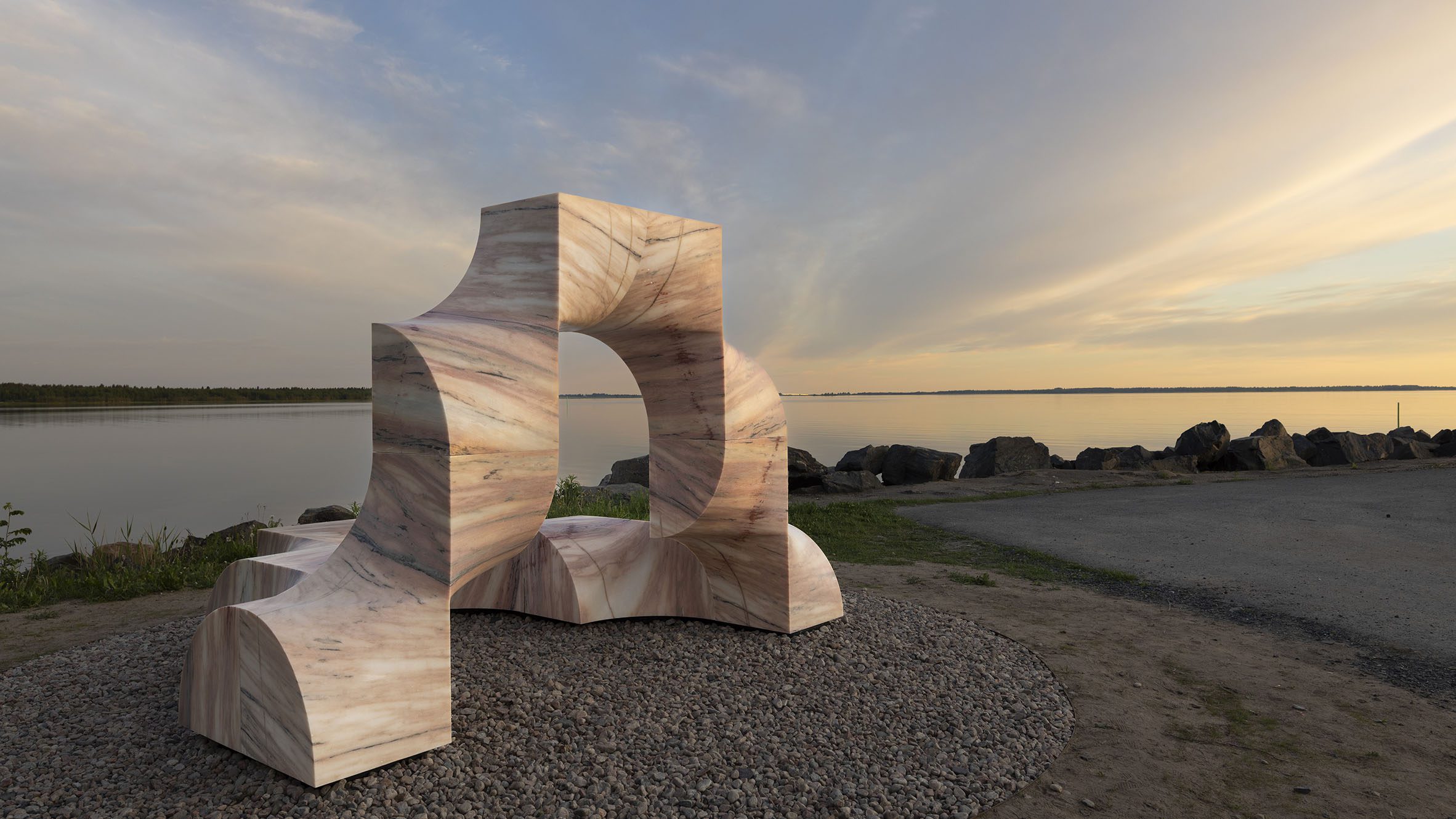
Summary: Superflex and KWY.studio have installed Super Kello, a stone sculpture in Oulu, Finland, designed for fish to inhabit after sea levels rise. The work is part of the Climate Clock public art trail, which pairs artists with scientists to create climate-themed pieces in a sub-Arctic location warming four times faster than the global average. The sculpture uses parametrically cut Rosa Aurora marble to maximize surface area for marine life, continuing the collective’s series of ‘fish cubes’ and their broader ‘interspecies design’ practice. The piece is accompanied by a 10-year broadcast of Homer’s Odyssey at one word per hour, intended to encourage visitors to contemplate deep time.
Why it matters: For editorial fashion and art directors commissioning location shoots, this project signals a shift toward designing sets and props that function as permanent, climate-adaptive infrastructure—blending aesthetic intent with ecological utility in ways that could influence how brands brief production teams for outdoor campaigns.
Context: Superflex has previously installed fish cubes as street furniture in Portugal and as submerged habitat in Copenhagen Harbour, working with behavioral ecologist Alex Jordan to understand fish perception. The Climate Clock trail is part of Oulu’s 2026 European Capital of Culture program, curated by Invisible Dust.
"Superflex and KWY.studio create architecture for fish to enjoy after sea levels rise Danish artist collective Superflex has collaborated with KWY.studio architects to create Super Kello – a harbourside stone sculpture in." — DEZEEN
Commentary: The commissioning logic here—artists paired with glaciologists, snow hydrologists, and mycologists—offers a replicable model for editorial teams seeking to embed climate narrative into physical production. For photographers and set designers, the key takeaway is material choice as a temporal argument: Rosa Aurora marble was selected for its pink hue, which mimics coral polyps expected to migrate north as oceans warm. That kind of forward-looking material briefing could become a standard part of location scouting for luxury or environmental editorial work.
Date: July 05, 2026 01:00 AM ET
URL: https://www.dezeen.com/2026/07/05/superflex-kwy-studio-suepr-kello-fish-architecture/
AI Sentiment Score: Negative (66%)
AI Credibility Score: 10.0/10 — High
Scores and text generated by AI analysis of the source article indicated.
Can Kylie Jenner detoxify AI smart glasses? (Dezeen)
Summary: Meta has partnered with Kylie Jenner to launch its first in-house designed smart glasses, a move aimed at repositioning AI wearables as fashion accessories rather than tech gadgets. The collaboration signals a strategic shift from utility-driven marketing to cultural cachet, leveraging Jenner’s influence to normalize face-mounted computing. The episode also covers Frank Gehry’s Abu Dhabi opera house and a Paris Fashion Week overshadowed by a deadly heatwave.
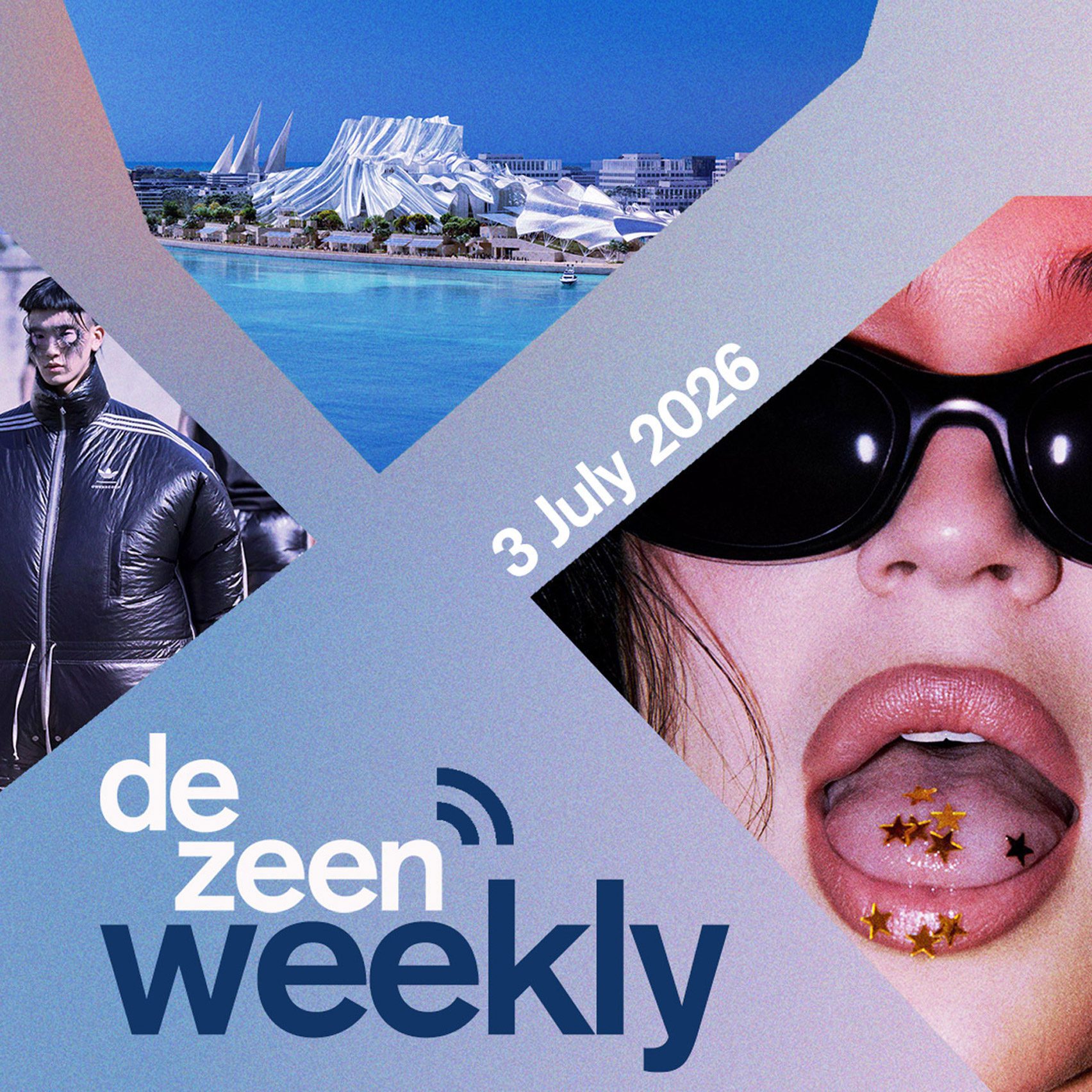
Why it matters: For editorial fashion photography, this partnership tests whether celebrity endorsement can overcome the aesthetic and social stigma of AI glasses, potentially opening a new product category for brand collaborations and editorial shoots.
Context: Previous smart glasses from Google and Snap failed to gain mainstream traction due to privacy concerns and unfashionable design. Meta’s earlier Ray-Ban Stories partnership was a cautious step; this in-house model with Jenner represents a bolder bet on fashion-led adoption.
"Can Kylie Jenner detoxify AI smart glasses? Would we wear the new Meta smart glasses? Is Frank Gehry’s Abu Dhabi opera house actually pretty good? And why did Paris Fashion Week feel." — DEZEEN
Commentary: Jenner’s involvement is a calculated play to rebrand AI glasses as aspirational accessories, but the real test will be whether editorial photographers and stylists can integrate them into shoots without the tech overwhelming the image. If the glasses become a recurring prop in luxury campaigns, it could normalize the form factor for consumers. However, the Paris Fashion Week heatwave context reminds us that climate disruption is already reshaping event logistics and outdoor shooting conditions, a parallel pressure on the industry’s production calendar.
Date: July 03, 2026 05:00 AM ET
URL: https://www.dezeen.com/2026/07/03/smart-glasses-gehry-abu-dhabi-heatwave-fashion-week-dezeen-weekly-podcast/
AI Sentiment Score: Negative (57%)
AI Credibility Score: 10.0/10 — High
Scores and text generated by AI analysis of the source article indicated.
This week Rick Owens created air-conditioned tracksuits (Dezeen)
Summary: Rick Owens debuted inflatable, fan-equipped Adidas jogging suits at Paris Fashion Week’s Spring/Summer 2027 menswear show, timed to a record-breaking heatwave. The garments integrate tiny built-in fans to circulate air around the wearer, marking a functional pivot in luxury sportswear. The collection signals a growing intersection between climate adaptation and high-fashion design, with potential downstream effects on technical garment production and editorial styling.

Why it matters: For editorial fashion photographers and stylists, this development introduces new challenges in capturing movement and silhouette when garments are actively inflating, and may shift commissioning briefs toward climate-responsive wardrobe engineering.
Context: Owens has a history of merging dystopian aesthetics with utilitarian innovation; this follows broader industry experiments with wearable cooling tech, though few have reached the runway at this scale.
"This week on Dezeen, we reported on Paris Fashion Week where fashion designer Rick Owens showed inflatable Adidas jogging suits. Complete with tiny built-in fans that circulate air around the wearer, the jogging suits formed part of Owens’ Spring Summer 27 menswear show, which took place during the city’s record-breaking heatwave." — DEZEEN
Commentary: The integration of active mechanical systems into ready-to-wear pieces could force production teams to rethink garment handling, lighting, and motion capture during shoots. For brands and studios, this could mean new line items in production budgets for battery packs, fan noise mitigation, and inflatable garment maintenance. The heatwave context also suggests that climate-driven design is moving from niche concept to commercial necessity, potentially reshaping seasonal editorial calendars.
Date: July 04, 2026 01:00 AM ET
URL: https://www.dezeen.com/2026/07/04/rick-owens-air-conditioned-tracksuits-this-week/
AI Sentiment Score: Positive (50%)
AI Credibility Score: 10.0/10 — High
Scores and text generated by AI analysis of the source article indicated.
Layer designs "playful and personal" modular system for charging devices at home (Dezeen)
Summary: British design studio Layer has created Node and Loft, a modular charging system for Daily Objects that allows users to reconfigure charging modules across different rooms. The system emphasizes flexibility and personalization over fixed charging stations, targeting the home rather than the office or public space. This reflects a broader shift in consumer electronics accessories toward adaptable, design-forward solutions that integrate with domestic interiors.

Why it matters: For editorial fashion photographers and their crews, this signals a growing market for portable, modular charging that can be deployed on set or location without permanent installation, potentially reducing downtime and clutter in production environments.
Context: Daily Objects is an Indian accessories brand that has previously collaborated with Layer on minimalist tech accessories, and this launch extends their focus from mobile peripherals to home charging infrastructure.
"British design studio Layer has developed a family of charging products, including a dock with interchangeable modules that can be moved to wherever they are required around the house." — DEZEEN
Commentary: The modular approach directly addresses a pain point for production teams who need to charge multiple devices (cameras, monitors, tablets, phones) in varied locations without dedicated power stations. If Daily Objects scales distribution, this could become a standard kit item for location shoots, competing with existing power management solutions from brands like Pelican or Anker. The design-forward aesthetic also aligns with the visual expectations of editorial sets, where gear often appears in background shots.
Date: June 29, 2026 01:00 AM ET
URL: https://www.dezeen.com/2026/06/29/layer-modular-system-charging-devices-at-home/
AI Sentiment Score: Negative (50%)
AI Credibility Score: 10.0/10 — High
Scores and text generated by AI analysis of the source article indicated.
Dezeen Agenda features Frank Gehry-designed venue in Abu Dhabi (Dezeen)
Summary: Dezeen’s latest Agenda newsletter highlights the start of construction on Dar al Funoon Abu Dhabi, a Frank Gehry-designed performing arts venue on Saadiyat Island. The project, which was completed before Gehry’s death, joins the Guggenheim Abu Dhabi as part of the emirate’s cultural district. This signals continued investment in large-scale architectural landmarks in the Gulf region.
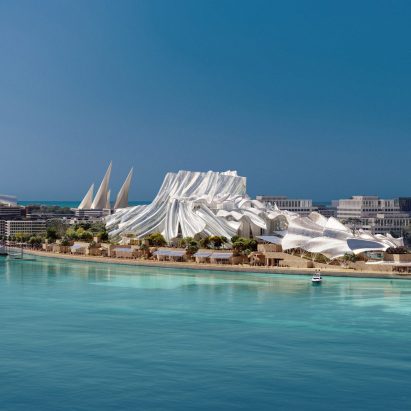
Why it matters: For editorial fashion photographers and image-makers, this venue represents a new potential commission source for architectural and cultural documentation, as well as a backdrop for high-end editorial shoots that require iconic, brand-aligned locations.
Context: Saadiyat Island is already home to the Louvre Abu Dhabi and the upcoming Guggenheim, making it a concentrated hub for global cultural tourism and luxury brand activations.
"The latest edition of our weekly Dezeen Agenda newsletter features news that construction has commenced on Dar al Funoon Abu Dhabi, which was designed by Frank Gehry before his death." — DEZEEN
Commentary: The posthumous Gehry project adds scarcity value to the venue’s visual identity, which could drive premium rates for exclusive access shoots. Production teams should monitor the construction timeline and commissioning windows, as early-access imagery often commands higher editorial and advertising budgets.
Date: July 02, 2026 02:00 PM ET
URL: https://www.dezeen.com/2026/07/02/frank-gehry-performing-arts-venue-abu-dhabi-dezeen-agenda/
AI Sentiment Score: Positive (40%)
AI Credibility Score: 10.0/10 — High
Scores and text generated by AI analysis of the source article indicated.
Dezeen’s top five houses of June 2026 (Dezeen)
Summary: Dezeen’s June 2026 roundup of top houses highlights a trio of brick-walled homes, including a Dutch holiday cabin and a compact British infill residence, alongside a bamboo-and-steel house in Malaysia. The selection underscores a continued editorial preference for material-driven, context-sensitive residential architecture. For commissioning editors and photographers, the list signals which typologies and material palettes are currently earning editorial placement.
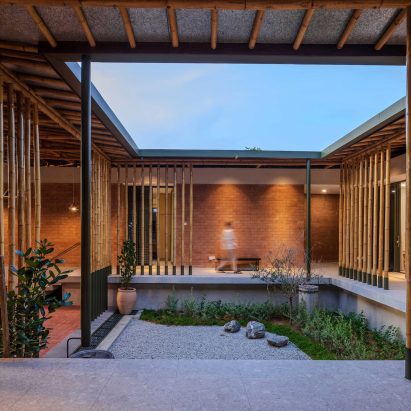
Why it matters: For editorial fashion and interiors photographers, Dezeen’s monthly house picks directly influence which architectural styles, materials, and spatial narratives are deemed publishable, shaping the aesthetic direction of upcoming commissions and the portfolios that win them.
Context: Dezeen’s monthly house features are a bellwether for architectural media trends, often driving subsequent coverage in shelter magazines and brand campaigns. The June 2026 list leans heavily on brick and infill typologies, suggesting a market preference for tactile, urban-responsive design over glass-and-steel minimalism.
"A trio of brick-walled homes features in Dezeen’s top five houses of the month for June, including a holiday cabin in the Netherlands and a compact British residence built on an infill site." — DEZEEN
Commentary: The prominence of brick and infill projects indicates that editors are rewarding architects who solve for density and material honesty—two qualities that translate well into editorial photography with strong texture and narrative depth. Photographers should note the emphasis on compact, site-specific homes, which demand tighter framing and more inventive lighting than sprawling villas. This roundup also reinforces the value of shooting in overcast northern European light, which flatters brick and renders interiors without harsh contrast.
Date: June 30, 2026 06:00 AM ET
URL: https://www.dezeen.com/2026/06/30/top-houses-june-2026/
AI Sentiment Score: Positive (60%)
AI Credibility Score: 10.0/10 — High
Scores and text generated by AI analysis of the source article indicated.
Davidson Prize winner proposes reusing buses as mobile playgrounds (Dezeen)
Summary: RUA Studio has won the 2026 Davidson Prize with Playdeck, a concept to convert London’s decommissioned New Routemaster buses into mobile playgrounds for all ages. The design targets the 800+ buses slated for phase-out by 2030, proposing a modular interior that transforms the vehicle into a traveling playscape for residential neighborhoods. The prize, which awards £15,000, is focused on rethinking how we use existing urban infrastructure for community benefit.

Why it matters: For editorial fashion and commercial image-makers, this signals a growing commissioning opportunity around repurposed urban infrastructure as sets and backdrops, potentially opening a new category of location-driven editorial work tied to municipal sustainability narratives.
Context: The Davidson Prize is an annual UK award for conceptual architectural and design proposals that address social or environmental challenges. Previous winners have explored temporary housing, community spaces, and adaptive reuse of underutilized urban assets.
"The proposal takes London’s decommissioned New Routemaster buses, which will be phased out by 2030, and transforms them into mobile playgrounds to help encourage play in residential neighbourhoods." — DEZEEN
Commentary: For photographers and production teams, this concept could translate into a new type of bookable, mobile set that travels to neighborhoods, reducing location scouting costs and offering a controlled, branded environment for editorial shoots. The modular interior design suggests potential for quick reconfiguration between play, performance, and still-life setups, which may appeal to brands seeking flexible, low-footprint production solutions. However, the real test will be whether the design can accommodate lighting rigs, crew access, and wardrobe changes without compromising its core play function.
Date: July 02, 2026 05:00 AM ET
URL: https://www.dezeen.com/2026/07/02/rua-studio-playdeck-davidson-prize/
AI Sentiment Score: Positive (50%)
AI Credibility Score: 10.0/10 — High
Scores and text generated by AI analysis of the source article indicated.
Post ID: 26e6ee29