VFX and CGI Software Updates
Inbibo releases Adonis 2.1 with AdonisML (Cgchannel)
Summary: Inbibo has released Adonis 2.1, splitting the soft-tissue simulation framework into a base edition (AdonisFX) and a new high-end edition (AdonisML) that adds machine learning tools for training lightweight, interactive approximations of complex tissue setups. The update introduces AdnTransfer, an anatomy transfer system for moving tissue setups between characters of different proportions, and AdnMush, a deformer that smooths simulation artifacts while preserving fine anatomical detail. AdonisML Pro subscriptions start at £3,000/year, signaling a premium tier aimed at studios needing real-time fidelity in animation workflows.
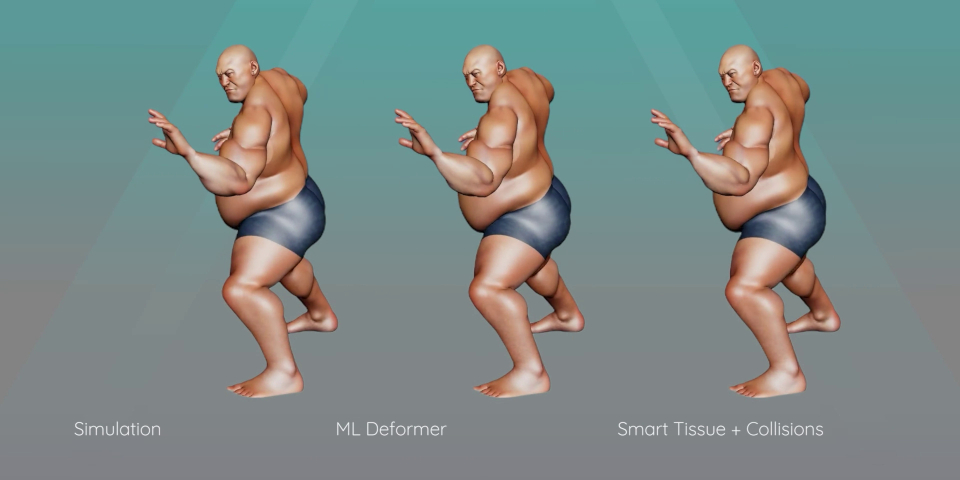
Why it matters: For VFX and animation pipelines, AdonisML’s ML Deformer and SmartTissue system offer a path to interactive playback of previously non-real-time tissue simulations, potentially reducing iteration cycles and changing how rigging and animation teams collaborate on high-fidelity character work.
Context: Adonis emerged as a replacement for Ziva VFX after that tool was discontinued, and is already in use at major facilities like Sony Pictures Imageworks. The addition of machine learning tools mirrors similar developments in Maya and Unreal Engine, but applied specifically to soft-tissue simulation.
"Inbibo releases Adonis 2.1 with AdonisML Inbibo has released Adonis 2.1, the latest version of the modular anatomy framework for Maya and Houdini. The core edition of the software, AdonisFX, gets a." — CGCHANNEL
Commentary: The pricing gap between AdonisFX (£1,100/year Pro) and AdonisML (starting at £3,000/year) creates a clear tier for studios that can justify the investment for speed gains on complex shots. The anatomy transfer system (AdnTransfer) directly addresses a pipeline bottleneck—retargeting tissue setups across characters—which could reduce manual rework in creature-heavy shows. If the ML Deformer delivers on its promise, it may shift the bottleneck from simulation compute time to training data preparation, altering staffing ratios between riggers and technical animators.
Date: July 02, 2026 09:16 AM ET
URL: https://www.cgchannel.com/2026/07/inbibo-releases-adonis-2-1-with-adonisml/
AI Sentiment Score: Positive (50%)
AI Credibility Score: 10.0/10 — High
Scores and text generated by AI analysis of the source article indicated.
Foundry releases Mari 8.0 in open beta (Cgchannel)
Summary: Foundry has released Mari 8.0 in open beta, introducing over 50 new nodes to the Node Graph, including a Hex Tile node for minimizing texture repeats, a Compare node for A/B wipe comparisons, and a Color Remap node for centralized color grading. The update also adds 49 new math nodes, trackball rotation navigation, and moves to the CY2025 VFX Reference Platform spec. Mari remains rental-only, with team subscriptions rising $60/year to $1,289. A stable release is expected in three to six months.
Why it matters: For texture artists and look development teams, the new Compare and Hex Tile nodes directly address two persistent pain points: iterative material review and visible texture tiling, potentially reducing shot turnaround time and improving output quality in high-volume VFX pipelines.
Context: Mari 7.5 is now four versions behind the current VFX Reference Platform spec, making this update a significant catch-up release. Hex tiling support is already present in Houdini, Redshift, and RenderMan, so Mari 8.0 closes a workflow gap that previously required workarounds.
"Foundry releases Mari 8.0 in open beta Mari 8.0 makes it possible to perform A/B wipe comparisons between the outputs of different parts of the node graph, making it easier to iterate." — CGCHANNEL
Commentary: The Compare node is the headline feature for senior artists and supervisors: it formalizes a review workflow that previously relied on manual layer toggling or external comps, which should speed up client feedback loops. The 49 new math nodes signal Foundry is betting on proceduralism over hand-painting, aligning Mari more closely with Houdini’s node-based ethos. The $60/year price hike on team licenses is modest but continues Foundry’s trend of pushing rental costs upward, which may accelerate studio evaluations of open-source alternatives like Blender’s texture painting tools.
Date: July 02, 2026 04:16 AM ET
URL: https://www.cgchannel.com/2026/07/foundry-releases-mari-8-0-in-open-beta/
AI Sentiment Score: Positive (55%)
AI Credibility Score: 10.0/10 — High
Scores and text generated by AI analysis of the source article indicated.
Adobe Sampler 6.0 Adds OpenPBR (Digitalproduction)
Summary: Adobe Substance 3D Sampler 6.0 makes OpenPBR the default material model, integrating the Academy Software Foundation’s open surface shading standard into its photo-to-material pipeline. The update adds material creation presets for common surface types, redesigned channel controls, and USD export support, alongside refinements to the HP Z Captis scanning workflow. For VFX and game asset teams, this reduces manual shader translation but still requires renderer-side validation. The release also bumps default asset size to 2K and rendering to 8K, with a subsequent 6.0.2 patch addressing stability issues.

Why it matters: OpenPBR as a default workflow signals a shift toward pipeline interoperability, potentially reducing the ‘close enough’ shader conversion tax that inflates lookdev time and vendor rework costs.
Context: OpenPBR, hosted under the Academy Software Foundation as a MaterialX subproject, aims to replace proprietary material models with a shared standard, but adoption has been gated by renderer support and tool integration.
"The default material creation preset now uses OpenPBR, export channel selection supports OpenPBR channels, and the channel settings panel can switch between OpenPBR and legacy Adobe Standard Material." — DIGITALPRODUCTION
Commentary: The practical win here is less manual channel hunting for artists, but the real test is whether renderers in production pipelines—like Arnold, RenderMan, or USD Hydra delegates—actually honor OpenPBR parameters without fallback. For studios, the USD export addition is equally significant: it lets material data travel with scene geometry rather than as loose texture piles, which tightens the feedback loop between Sampler and downstream lookdev. The Captis auto-scan mode is a nice ergonomic bump for high-throughput capture houses, but the core value remains in reducing shader translation friction across heterogeneous pipelines.
Date: June 30, 2026 02:00 AM ET
URL: https://digitalproduction.com/2026/06/30/adobe-sampler-6-0-adds-openpbr/
AI Sentiment Score: Positive (44%)
AI Credibility Score: 10.0/10 — High
Scores and text generated by AI analysis of the source article indicated.
Mixos lets you paint PBR textures in your web browser (Cgchannel)
Summary: Mixos is a new WebGPU-based browser app for painting and mixing PBR textures, offering a portable alternative to offline tools like Substance 3D. It supports 4K texture export, a library of 2,600 CC0 materials, and optional AI features for generating texture sets from text prompts. The free tier watermarks exports; paid plans start at $9/month. For VFX and game asset teams, the key signal is a shift toward browser-based workflows that reduce hardware dependency and enable remote texture work.
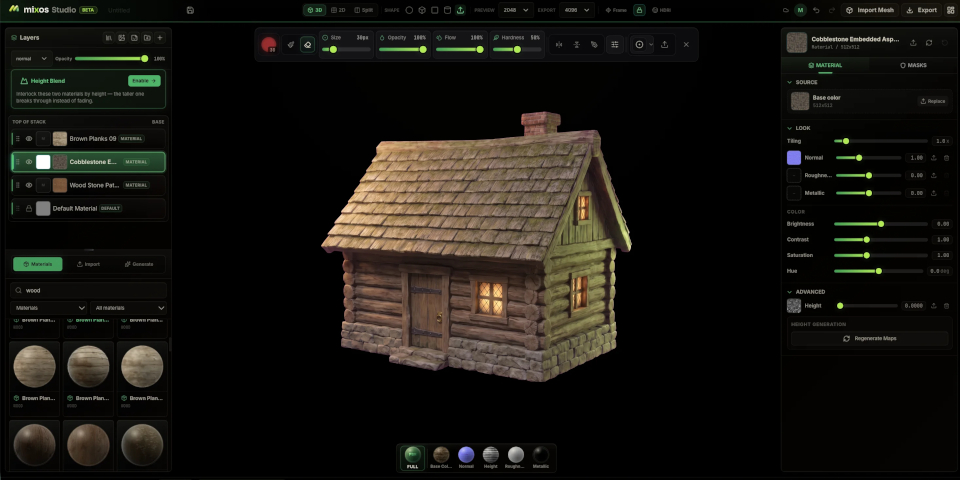
Why it matters: For VFX and game studios, Mixos signals a viable path to offload texture painting from high-end workstations, potentially lowering per-seat costs and enabling distributed teams to collaborate on asset texturing without installing heavy DCC software.
Context: Browser-based 3D tools have historically been limited to viewing or simple editing; Mixos leverages WebGPU to deliver a painting and material-mixing feature set that approaches desktop parity, targeting the gap between full offline suites and lightweight viewers.
"Mixos lets you paint PBR textures in your web browser Need an easy way to do texture work on your travels? Check out Mixos. The new WebGPU-based app makes it possible to." — CGCHANNEL
Commentary: The real operational impact is on throughput for quick-turn or remote tasks: artists can edit materials on a laptop without a GPU workstation, reducing friction for travel or distributed teams. The AI auto-texturing feature, while credit-gated, could compress the early blocking phase of asset creation, though quality ceilings remain unproven against hand-authored work. The CC0 material library lowers the barrier for indie and mid-size studios to build texture bases, but the watermark on free exports means professional use requires a subscription, adding a recurring cost that may offset hardware savings for some pipelines.
Date: July 03, 2026 03:11 AM ET
URL: https://www.cgchannel.com/2026/07/mixos-lets-you-paint-pbr-textures-in-your-web-browser/
AI Sentiment Score: Negative (71%)
AI Credibility Score: 10.0/10 — High
Scores and text generated by AI analysis of the source article indicated.
Post ID: f1adcce9