
Humor, Cartoons, and Short Takes on American Life
Daily Cartoon: Wednesday, July 1st (Newyorker)
Summary: A drawing that riffs on the latest news and happenings. Visual commentary on current affairs suggests underlying narrative tensions.

Why it matters: Visual commentary on current affairs suggests underlying narrative tensions.
Context: The cartoon’s focus indicates which recent developments warrant sustained attention.
[Metadata-only note] The available source data did not expose a direct source quote this cycle.
Commentary: The signal is still worth tracking, but the current extraction path did not yield enough body text for a fuller analytical read. The immediate implication is operational rather than speculative: watch how this changes budgets, workflows, or risk assumptions over the next cycle.
Date: July 01, 2026 06:00 AM ET
URL: https://www.newyorker.com/cartoons/daily-cartoon/wednesday-july-1st-ice-cream-mechanic
AI Sentiment Score: Neutral (50%)
AI Credibility Score: 10.0/10 — High
Scores and text generated by AI analysis of the source article indicated.
Daily Cartoon: Friday, July 3rd (Newyorker)
Summary: The New Yorker’s July 3rd Daily Cartoon bundle offers a mix of humor and cultural commentary, including a caption contest and playful takes on modern life. The collection satirizes dating app personas, group chat dynamics, and the pursuit of perfection before parenthood. It also promotes new games and social media engagement, reflecting the magazine’s ongoing effort to blend wit with audience interaction.

Why it matters: This bundle illustrates how legacy humor outlets are adapting to digital platforms, using interactive features like caption contests and Instagram to maintain relevance in a fragmented media landscape.
Context: The New Yorker has long used cartoons as a signature feature, but this digital-first approach signals a shift toward real-time engagement and platform-specific content.
"I’ll have kids in a few years, when I’m successful and wealthy and my life is finally perfect." — NEWYORKER
Commentary: The line captures a generational anxiety about delayed adulthood and the illusion of control, a theme that resonates with readers navigating economic precarity. The bundle’s structure—mixing standalone jokes with participatory elements—shows The New Yorker leveraging its brand for community building rather than passive consumption. This strategy may offer a template for other print-era publications seeking to sustain cultural authority online.
Date: July 03, 2026 06:00 AM ET
URL: https://www.newyorker.com/cartoons/daily-cartoon/friday-july-3rd-america-birthday
AI Sentiment Score: Negative (50%)
AI Credibility Score: 10.0/10 — High
Scores and text generated by AI analysis of the source article indicated.
Iconic Presidents Incognito (Newyorker)
Summary: And who can blame them? The persistent allure of presidential anonymity suggests a public appetite for curated, unmediated glimpses into power.

Why it matters: The persistent allure of presidential anonymity suggests a public appetite for curated, unmediated glimpses into power.
Context: Focus shifts from policy outcomes to the performance of private life, a perennial media fascination.
[Metadata-only note] The available source data did not expose a direct source quote this cycle.
Commentary: The signal is still worth tracking, but the current extraction path did not yield enough body text for a fuller analytical read. The immediate implication is operational rather than speculative: watch how this changes budgets, workflows, or risk assumptions over the next cycle.
Date: July 04, 2026 06:00 AM ET
URL: https://www.newyorker.com/cartoons/blitts-kvetchbook/iconic-presidents-incognito
AI Sentiment Score: Neutral (50%)
AI Credibility Score: 10.0/10 — High
Scores and text generated by AI analysis of the source article indicated.
Paul Revere’s Unabridged Instructions (Newyorker)
Summary: A satirical piece reimagines Paul Revere’s famous lantern signal as a comically overcomplicated system of instructions, complete with absurd contingencies for British troop fitness, smallpox outbreaks, and haunted steeples. The humor escalates through increasingly ridiculous scenarios, culminating in a punchline about Revere’s poor eyesight and vanity.

Why it matters: This piece exemplifies how historical myths can be deconstructed through humor, revealing the gap between simplified narratives and the messy reality of communication and coordination in revolutionary times.
Context: The Paul Revere ride is a foundational American myth, often taught as a straightforward tale of patriotic alertness. This parody plays on the tension between that simplified story and the actual complexities of 18th-century signaling.
"If the British are coming by, not to attack, just for tea and a chat, I wish they would send a letter first. Oh, light eleven lanterns." — NEWYORKER
Commentary: The piece’s genius lies in its escalation from practical instructions to absurdist humor, ultimately revealing that even the most iconic historical moments are built on fragile, improvised systems. It reminds us that our cherished stories are often sanitized versions of chaotic reality.
Date: July 01, 2026 06:00 AM ET
URL: https://www.newyorker.com/humor/shouts-murmurs/paul-reveres-unabridged-instructions
AI Sentiment Score: Negative (50%)
AI Credibility Score: 10.0/10 — High
Scores and text generated by AI analysis of the source article indicated.
My Great Meeting with God (Newyorker)
Summary: This satirical piece from The New Yorker imagines a meeting between Donald Trump and God, rendered entirely in Trump’s distinctive rhetorical voice. The narrator boasts about his negotiating prowess, critiques the divine aesthetic (clouds too fluffy, poor signage), and claims to have secured unspecified concessions. The piece ends with a punchline about a potential 2028 bid for God’s job.

Why it matters: The satire crystallizes how Trump’s transactional worldview and self-aggrandizing style have become a recognizable cultural archetype, even when projected onto the afterlife.
Context: The New Yorker has published several Trump-as-narrator satires; this one extends the conceit to its logical extreme, treating the divine as just another counterparty to be bullied and outmaneuvered.
"He called me. I want to be clear about that. I didn’t call Him. He invited me up personally. Very selective crowd. Very hard ticket. I’ve met with many world leaders—Putin, Kim." — NEWYORKER
Commentary: The piece works because it doesn’t exaggerate—it simply maps Trump’s known verbal tics and priorities onto a celestial setting. The real insight is how seamlessly the voice accommodates the absurd premise, revealing that the underlying worldview already treats all authority as negotiable and all relationships as zero-sum. The closing joke about a 2028 bid for God is structurally perfect: it completes the loop of infinite ambition.
Date: June 29, 2026 06:00 AM ET
URL: https://www.newyorker.com/magazine/2026/07/06/my-great-meeting-with-god
AI Sentiment Score: Negative (50%)
AI Credibility Score: 10.0/10 — High
Scores and text generated by AI analysis of the source article indicated.
Misophonia Fireworks (Newyorker)
Summary: The New Yorker’s latest issue features a curated selection of standout pieces, including an investigation into the hidden harms of CPR, a provocative case against travel, and a deep dive into a Harvard Ph.D. scientist who fatally shot three colleagues, with subsequent revelations about her family history. The collection also offers lighter fare like a new daily game and a satirical piece imagining Ayn Rand reviewing children’s movies. This mix reflects the magazine’s signature blend of serious journalism, cultural critique, and humor.

Why it matters: For readers who follow long-form journalism, this bundle signals the cultural and intellectual conversations that are shaping public discourse—from medical ethics and travel’s environmental toll to the unsettling intersection of elite academia and violence.
Context: The New Yorker’s ‘Favorites’ feature regularly highlights stories that have resonated with its audience, often serving as a barometer for the issues and narratives that define the moment.
"New Yorker Favorites The hidden harms of CPR. The case against travel. A scientist with a Ph.D. from Harvard fatally shot three of her colleagues. Then revelations about her family history came." — NEWYORKER
Commentary: The inclusion of ‘the case against travel’ alongside a violent academic story suggests a deliberate editorial tension: one piece challenges a cherished lifestyle, the other confronts a rupture in the institution of knowledge itself. The Ayn Rand satire provides necessary comic relief, but also underscores how the magazine uses humor to dissect ideology. This curation rewards readers who appreciate thematic juxtaposition over simple aggregation.
Date: July 02, 2026 06:00 AM ET
URL: https://www.newyorker.com/humor/shouts-murmurs/misophonia-fireworks
AI Sentiment Score: Negative (66%)
AI Credibility Score: 10.0/10 — High
Scores and text generated by AI analysis of the source article indicated.
The Summer When Everyone Wanted a Good, Good Night (Newyorker)
Summary: A New Yorker essay examines DJ Earworm’s 2009 mega-mashup "Blame It on the Pop" as a cultural artifact of the late monoculture, built atop the Black Eyed Peas’ "I Gotta Feeling"—a song of recession-era optimism that avoided tension and release. The piece argues that the mashup’s coherent blend of 2009’s top 25 singles reflected a unified national mood of desperate hope, contrasting sharply with the fragmented, algorithm-driven music landscape of 2025. The essay uses the track’s enduring YouTube comments from nostalgic former children to frame it as a relic of a time when pop music treated the public as a single audience seeking temporary solace.

Why it matters: This piece crystallizes how the shift from monoculture to algorithmic fragmentation has fundamentally altered pop music’s emotional function and cultural resonance, using a single mashup as a time capsule of a vanished collective mood.
Context: The essay situates DJ Earworm’s work within the brief golden age of mainstream mashups (2001-2009), from Freelance Hellraiser to Girl Talk, and contrasts the thematic coherence of 2009’s pop with the anomie of today’s chart.
"More than a decade and a half later, this sounds like one of the last gasps of the monoculture. It’s as if our country, on the cusp of micro-fracturing into algorithmically determined foxholes of individual obsession, had simply agreed, after the foreclosures and the bankruptcies and the bailouts, to put on a suit of shiny hundred-and-twenty-seven-b.p.m. optimism and go out for a good, good night." — NEWYORKER
Commentary: The essay’s real insight is that the mashup’s structural reliance on "I Gotta Feeling"—a song that avoids its dominant chord, existing in perpetual anticipation—mirrors the recession’s suspended animation. That 2009’s pop offered benediction rather than release now reads as a cultural coping mechanism that the current algorithmic landscape, with its atomized moods, can no longer sustain. The piece earns its length by using musicology to diagnose a broader societal shift from collective emotional management to individualized anomie.
Date: July 05, 2026 06:00 AM ET
URL: https://www.newyorker.com/culture/songs-of-summer/the-summer-when-everyone-wanted-a-good-good-night
AI Sentiment Score: Negative (66%)
AI Credibility Score: 10.0/10 — High
Scores and text generated by AI analysis of the source article indicated.
Edward Steed’s “Down to Earth” (Newyorker)
Summary: Creatures underfoot. Focus on the granular ecology beneath visible systems; suggests overlooked infrastructural dependencies.

Why it matters: Focus on the granular ecology beneath visible systems; suggests overlooked infrastructural dependencies.
Context: The piece frames mundane ground-level observation as a lens for understanding broader systemic undercurrents.
[Metadata-only note] The available source data did not expose a direct source quote this cycle.
Commentary: The signal is still worth tracking, but the current extraction path did not yield enough body text for a fuller analytical read. The immediate implication is operational rather than speculative: watch how this changes budgets, workflows, or risk assumptions over the next cycle.
Date: June 29, 2026 06:00 AM ET
URL: https://www.newyorker.com/culture/cover-story/cover-story-2026-07-06
AI Sentiment Score: Neutral (50%)
AI Credibility Score: 10.0/10 — High
Scores and text generated by AI analysis of the source article indicated.
From<em> Idaho B Roll</em> (Theatlantic)
Summary: A poem from The Atlantic’s August 2026 print edition captures a moment of stillness in a small Idaho town, where a worn basketball on a neglected court becomes a meditation on loss, memory, and the persistence of grace. The speaker stops during a road trip to shoot baskets, finding in the ball’s familiar backspin a quiet counterpoint to the news and the blur of travel. The poem’s power lies in its compression: a single image—the ball’s seam, the feel of release—holds the weight of experience, time, and the American landscape.
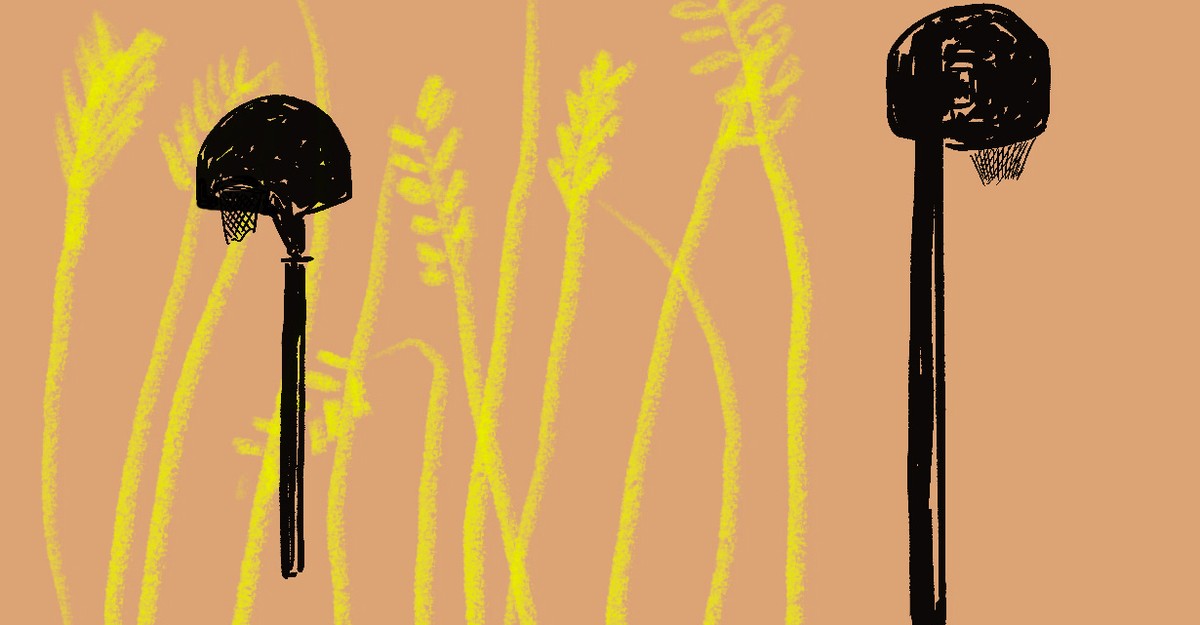
Why it matters: In an era of constant information and digital overwhelm, this poem reminds readers that meaning often arrives not through headlines but through embodied, analog moments—the feel of a worn ball, the pause before a shot. It speaks to a cultural hunger for slowness and presence.
Context: The poem appears in a long-form section of The Atlantic, a magazine known for narrative journalism and cultural commentary. Its inclusion signals a valuing of lyric observation as a form of understanding contemporary life.
"In Garfield, Washington, the second of three speed-trap towns cutting over into Idaho on the way home from Spokane, there is a gray-going-white basketball furred from use and exposure, deflated only enough." — THEATLANTIC
Commentary: The poem’s structure—a single sentence stretching across stanzas—mirrors the road trip’s momentum, then breaks into the stillness of the court. The ‘unseen mark of experience’ in the ball’s groove is a quiet thesis: we carry our histories in our bodies, not our feeds. For readers accustomed to narrative journalism, this is a reminder that the most resonant stories often arrive in fragments, not features.
Date: July 05, 2026 11:00 AM ET
URL: https://www.theatlantic.com/magazine/2026/08/brian-blanchfield-from-idaho-b-roll/687622/
AI Sentiment Score: Negative (80%)
AI Credibility Score: 10.0/10 — High
Scores and text generated by AI analysis of the source article indicated.
Celebrating the 4th with nothing but bangers! (Npr)
Summary: NPR’s Independence Day episode features interviews with John Cusack, Kali Reis, Arden Cho, and Aasif Mandvi, offering a mix of cultural commentary and personal reflection. The segment is framed as a collection of ‘absolute bangers,’ suggesting a curated, high-energy celebration of American creativity and diversity. The piece leans into the holiday’s spirit by spotlighting voices from film, sports, and comedy.
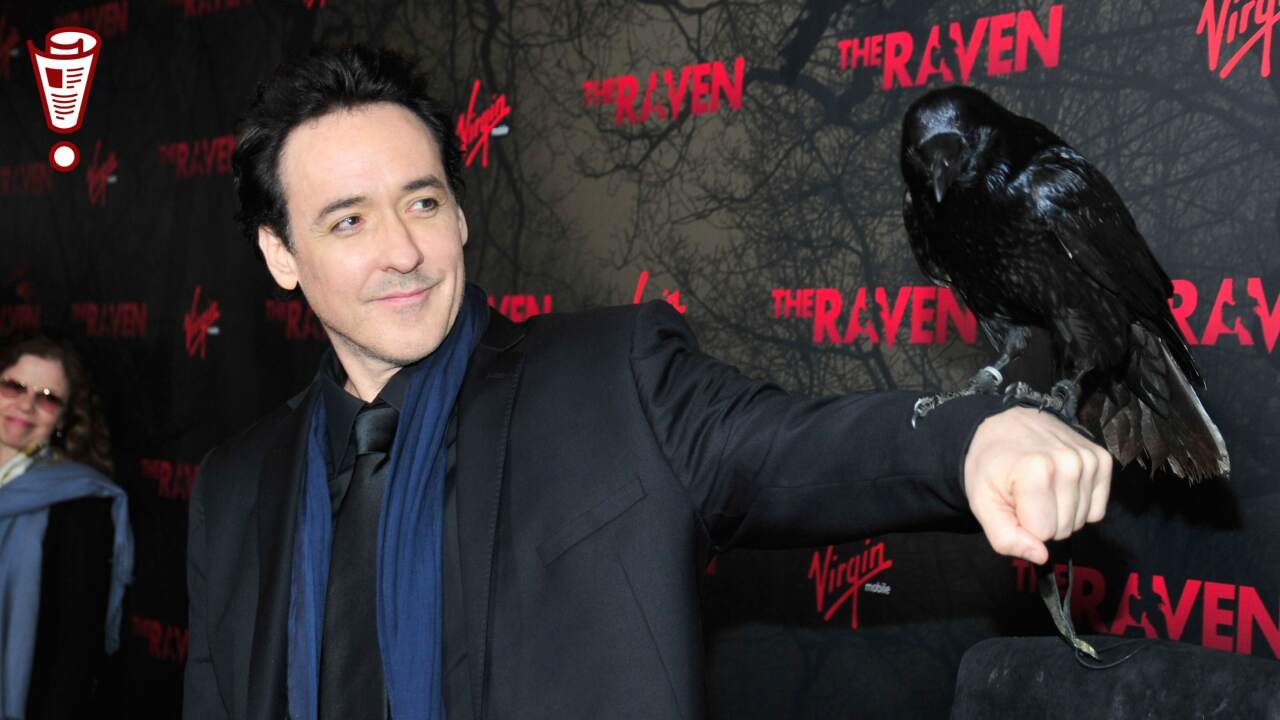
Why it matters: This episode underscores how public radio uses national holidays to bridge entertainment and civic identity, offering listeners a curated cultural experience that feels both festive and substantive.
Context: NPR’s holiday programming often blends celebrity interviews with thematic storytelling, aiming to engage audiences beyond hard news. This year’s Fourth of July lineup continues that tradition by selecting figures who represent varied facets of American life.
"This week, we celebrate Independence Day with a collection of absolute bangers, including interviews with John Cusack, Kali Reis, Arden Cho, and Aasif Mandvi<br /><br /><br />See <a href="https://pcm.adswizz.com">pcm.adswizz.com</a> for information about." — NPR
Commentary: The choice of guests—a veteran actor, a boxer-turned-actress, a TV star, and a comedian—signals an effort to redefine ‘American icons’ beyond politics or military themes. It’s a subtle but effective editorial move: the holiday becomes a platform for stories about resilience and reinvention rather than flag-waving. For regular listeners, this episode offers a low-stakes entry point into deeper cultural conversations.
Date: July 04, 2026 04:00 AM ET
URL: https://www.npr.org/2026/07/04/nx-s1-5872776/celebrating-the-4th-with-nothing-but-bangers
AI Sentiment Score: Neutral (33%)
AI Credibility Score: 10.0/10 — High
Scores and text generated by AI analysis of the source article indicated.
Post ID: 22bc29de