

Courts and regulators address rights and accountability in tech and media
Governors and State Administration (Justsecurity)
Summary: New York Governor Kathy Hochul announced $7.25 million in legal aid for unaccompanied immigrant children and reaffirmed a state law barring local police from formal cooperation agreements with ICE, illustrating a broader pattern of gubernatorial pushback against federal overreach. The article details mechanisms governors can use—bully pulpit, agency direction, market participation, interstate coalitions, and defensive force—while noting legal limits and risks of state-level overreach or complicity with presidential power.
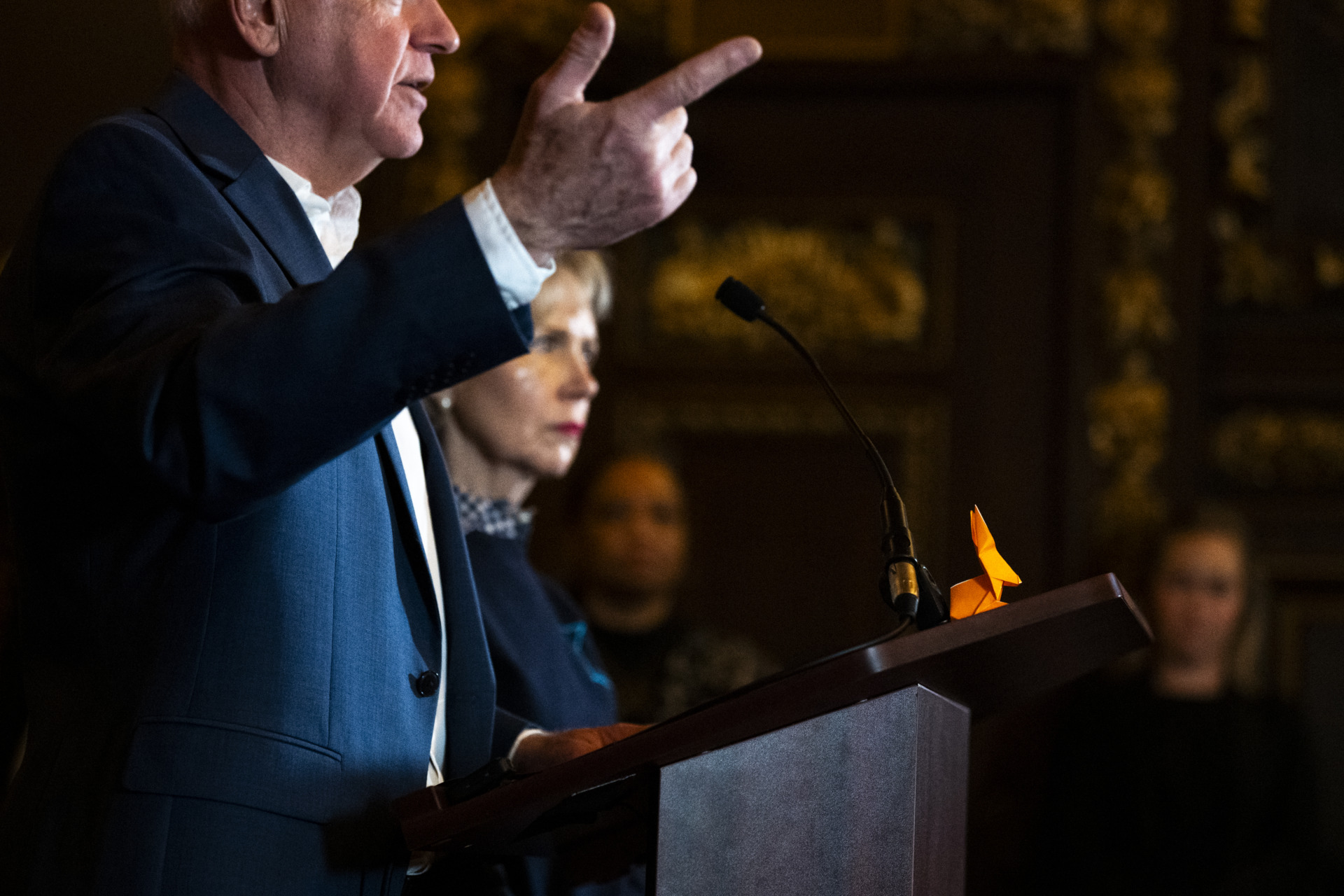
Why it matters: The article explains that governors’ institutional capacities make them well positioned to resist national excess, and that in the near term, gubernatorial friction is a powerful and often necessary component of meaningful state pushback.
Context: The article is part of a broader discussion of modern American federalism, where governors use their formal and informal powers to counter perceived federal overreach, with examples including Virginia’s executive order terminating ICE cooperation and California’s refusal to do business with Walgreens.
Commentary: The piece usefully distinguishes lawful opposition from overreach, noting that pushback conflicting with federal law or discriminating against federal actors is ripe for judicial challenge. The federal government has been litigious in reaction to state pushback, and governors can mitigate risks by grounding action in existing state authority and applying policies generally. The greatest headwinds are political—fear of reprisal or fiscal revenge—and the risk that governors themselves overstep or align with presidential overreach.
Date: September 09, 2026 09:15 AM ET
URL: https://www.justsecurity.org/149214/governors-state-administration/
Generated Analysis Tone: Negative (85%)
Source Registry Score: 10.0/10 — High
Generated text and tone describe the analysis; the source registry score is not a factual truth rating.
Correcting the Uncorrectable: AI-Assisted Inventorship and Section 256 (Ipwatchdog)
Summary: The Federal Circuit’s Fortress Iron decision holds that a patent with an uncorrectable inventorship error is invalid, and AI-assisted development creates records that may not establish who conceived the invention at all. Section 256 correction requires identifying all parties and proving facts, which fails when the record cannot show whether an uncredited contributor exists. The USPTO’s 2025 AI inventorship guidance does not address this evidentiary gap, leaving patentees to build conception evidence at the time of development.

Why it matters: AI-assisted workflows that do not capture human conception evidence at the time of development face invalidity, ownership, and chain-of-title risks that cannot be corrected later, because Section 256 assumes conception happened and only needs to be found.
Context: Fortress Iron involved an omitted coinventor whose identity was conceded but who could not be located, and the court held the patent invalid because correction was legally impossible.
"Section 256 assumes conception happened and only needs to be found. Fortress Iron shows what happens when even a conceded conception cannot be traced to a person who can be reached. AI-assisted development pushes the same problem back a step: not that conception did not happen, but that nothing written down can prove who it happened to." — IPWATCHDOG
Commentary: The records that will settle that question are being created right now, by people who do not think of themselves as building evidence. The point of doing it deliberately is not to satisfy an examiner today. It is to have something left to correct if someone asks the question in five years. The USPTO guidance treats AI as a tool like any other, but it has nothing to say about a court reconstructing the same question years later from a record built for product development, not litigation.
Date: September 08, 2026 08:15 AM ET
URL: https://ipwatchdog.com/2026/09/08/correcting-uncorrectable-ai-assisted-inventorship-section-256/
Generated Analysis Tone: Negative (66%)
Source Registry Score: 10.0/10 — High
Generated text and tone describe the analysis; the source registry score is not a factual truth rating.
Post ID: 89eed8a8