
Hacker Community
Flipper Zero Transmits APRS With No Extra Parts – Hackaday (Hackaday)
Summary: A developer has modified the firmware of the Flipper Zero multi-tool to transmit APRS (Automatic Packet Reporting System) packets using its built-in 435 MHz ISM-band radio, eliminating the need for external hardware. This software hack leverages the device’s existing FSK modulation to approximate the FM modulation required by APRS, creating a minimalist, integrated transceiver.
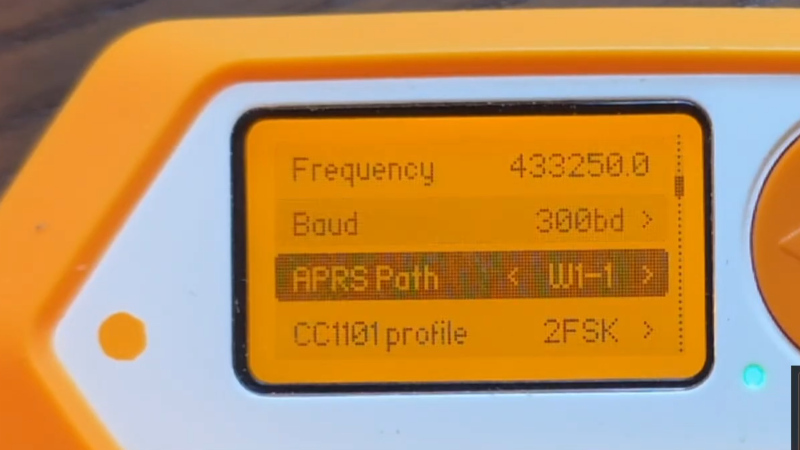
Why it matters: This represents a tool-release archetype, lowering the barrier for hardware hackers to experiment with and deploy amateur radio data networks, and signals a continued trend of repurposing consumer-grade RF tools for licensed spectrum applications.
Context: The Flipper Zero has become a focal point in hacker-space-to-mainstream pipeline debates, often scrutinized by regulators. Previous APRS implementations for the device required external transmitters.
"APRs is an amateur radio protocol allowing the exchange of short packets of data. It’s commonly used to transmit a GPS position, though it can find other applications. The Flipper Zero RF." — HACKADAY
Commentary: The hack concretely expands the tool’s utility within the licensed amateur radio community, but its reliance on FSK-as-FM modulation creates interoperability friction, highlighting the trade-off between accessibility and protocol purity. It also quietly tests the regulatory grey area of using an unlicensed ISM-band device for licensed-band transmissions, a recurring pattern in hacker hardware culture.
Date: April 21, 2026 12:00 AM ET
URL: https://hackaday.com/2026/04/21/flipper-zero-transmits-aprs-with-no-extra-parts/
AI Sentiment Score: Negative (75%)
AI Credibility Score: 9.9/10 — High
Scores and text generated by AI analysis of the source article indicated.
Open Hardware Summit 2026 is Going to Germany – Make Magazine (Makezine)
Summary: The Open Hardware Summit 2026 will be held in Berlin, marking its first iteration in Germany. The program highlights a maturation beyond pure technical discussion, featuring sessions on CE marking for European market compliance, speculative hardware, and community-driven practices like open-source knitting machines. The event blends traditional talks and workshops with a distinct cultural layer, including a drag performance and noise art at the afterparty.

Why it matters: The Summit’s location shift and agenda signal open-source hardware’s evolution from a niche hobbyist pursuit to a professionalized, culturally-integrated movement with real-world commercial and artistic consequences.
Context: The summit has historically been a key node for the open hardware community, acting as a conduit between hackerspace projects and broader industry adoption. Its move to a major European manufacturing and regulatory hub reflects a strategic pivot.
"Clemens Mayer is going to lead us through the ins and outs of CE marking in open source hardware so you know exactly what matters when selling your work in Europe." — MAKEZINE
Commentary: This is a clear hackerspace-to-mainstream pipeline signal. The inclusion of CE marking guidance directly addresses a previously ignored warning: that open hardware creators often lack the legal and regulatory frameworks to commercialize safely. Pairing this with sessions on speculative hardware and open-source knitting indicates the community is consciously building the institutional and cultural scaffolding for a durable alternative ecosystem, not just prototyping.
Date: April 23, 2026 12:00 AM ET
URL: https://makezine.com/article/maker-news/open-hardware-summit-2026-is-going-to-germany/
AI Sentiment Score: Negative (66%)
AI Credibility Score: 9.8/10 — High
Scores and text generated by AI analysis of the source article indicated.
DMCA 1201 Bootloader Unlock: Act vs. Trafficking After 2024 (Blog.Promise.Legal)
Summary: A legal analysis clarifies a persistent trap in the DMCA’s Section 1201, distinguishing between the act of circumventing a technological protection measure and the trafficking of tools that enable it. The 2024 triennial rulemaking by the Librarian of Congress can exempt specific user acts, but it provides no legal shield for those who develop, distribute, or commercialize the circumvention tools themselves. This creates a critical asymmetry where a lawful user activity can still leave toolmakers and distributors exposed to liability.

Why it matters: This legal distinction directly impacts the viability of open-source toolchains, repair documentation, and community workshops that rely on distributing software or hardware to enable user rights.
Context: The triennial exemption process is a primary battleground for right-to-repair and device-ownership advocates, but its limitations have long been a point of strategic concern within hacker and legal circles.
"The Digital Millennium Copyright Act’s anti-circumvention regime is one of the busiest fault lines in technology law. Every three years the Librarian of Congress issues new exemptions; every renewal cycle reshapes what." — BLOG.PROMISE.LEGAL
Commentary: This analysis formalizes a known but often blurred risk, transforming it from a community warning into a clear legal doctrine. The immediate consequence is that successful advocacy for a user exemption (e.g., for phone bootloader unlocking) does not de-risk the ecosystem that makes the act possible. It reinforces a chilling effect on tool development, pushing critical infrastructure further into legal gray zones and potentially stifling the open collaboration needed for sustainable repair and modification communities.
Date: April 25, 2026 12:00 AM ET
URL: https://blog.promise.legal/dmca-1201-bootloader-unlock-2024-rulemaking/
AI Sentiment Score: Negative (66%)
AI Credibility Score: 8.2/10 — High
Scores and text generated by AI analysis of the source article indicated.
The Open Social Web Needs Section 230 to Survive (Eff)
Summary: The Electronic Frontier Foundation argues that the legal protections of Section 230 are a critical, non-negotiable prerequisite for the survival and growth of the Open Social Web. They contend that while large platforms can absorb legal costs, the decentralized ecosystem of small hosts, developers, and users underpinning projects like the Fediverse would be uniquely vulnerable to liability without these protections. The piece frames 230 not as a shield for Big Tech, but as the essential legal infrastructure enabling a shift from centralized platforms to community-controlled protocols.

Why it matters: This directly challenges a common hacker-world and policy narrative, reframing a key legal tool as the essential defense for the very decentralized alternatives seeking to dismantle corporate control, making its defense a core operational priority.
Context: Section 230 reform is a perennial policy debate, often framed as a way to hold large platforms accountable. The EFF’s argument inverts this, positioning 230 as the legal substrate for anti-corporate, decentralized infrastructure—a cypherpunk infrastructure argument applied to US intermediary liability law.
"If you want to overthrow Big Tech, you’ll need Section 230. The paradigm shift being built with the Open Social Web can put communities back in control of social media infrastructure, and." — EFF
Commentary: The EFF correctly identifies the central tension: decentralization’s strength (distributed liability) is also its legal Achilles’ heel. This moves the debate from abstract ‘free speech’ to concrete systems analysis, forcing builders to engage with legal risk as a first-order design constraint. The implication is that any successful ‘dethroning’ of Big Tech requires not just superior protocols, but active defense of the specific legal regime that allows small-scale hosting to be viable.
Date: Tue, 28 Apr 2026 20:59:06 +0000
URL: https://www.eff.org/deeplinks/2026/04/open-social-web-needs-section-230-survive
AI Sentiment Score: Negative (85%)
AI Credibility Score: 10.0/10 — High
Scores and text generated by AI analysis of the source article indicated.
How Piracy Has Changed Forever.. (Youtube)
Summary: A YouTube analysis from 2026 frames the cracking of Denuvo’s hypervisor-based DRM as a pivotal moment, marking a shift from a decade-long stalemate. The method involves a kernel-level hypervisor intercepting and falsifying integrity checks, enabling rapid cracks of titles like ‘Doom: The Dark Ages’. This signals a potential end to the era where Denuvo effectively delayed piracy for weeks or months, reshaping the economic calculus for game publishers.

Why it matters: The technical defeat of a flagship DRM system alters the security-debt burden for publishers and reopens debates on digital ownership and preservation within hacker culture.
Context: Denuvo represented the high-water mark for commercial anti-piracy technology, creating a significant delay between release and crack that protected launch window revenues. Its failure follows a pattern where increasingly complex DRM eventually meets a community-built countermeasure.
"In 2014, a new anti-piracy system changed everything. For years, it was considered nearly impossible to break. But in 2026… something changed. This video explores the rise of Denuvo, how it reshaped." — YOUTUBE
Commentary: This is a tool-release and ignored-warning signal: the hacker community has operationalized a kernel-level bypass, moving the attack surface from application logic to the hypervisor. The consequence is not just another crack, but a method that potentially invalidates a class of integrity-checking DRM, forcing publishers to reconsider the cost-benefit of such systems. It also provides a concrete case for the ‘piracy isn’t stealing’ digital ownership argument, as preservation becomes technically feasible again.
Date: April 23, 2026 12:00 AM ET
URL: https://www.youtube.com/watch?v=JwMkS3oTTag
AI Sentiment Score: Negative (66%)
AI Credibility Score: 10.0/10 — High
Scores and text generated by AI analysis of the source article indicated.
EFF Challenges Secrecy In Eastern District of Texas Patent Case (Eff)
Summary: The Electronic Frontier Foundation has intervened in a patent case in the Eastern District of Texas, challenging the court’s routine practice of allowing litigants to seal key documents without specific justification. The case, Wilus Institute of Standards and Technology Inc. v. HP Inc., involves standard-essential patents for Wi-Fi 6, where arguments about patent ownership and FRAND licensing obligations were initially hidden from public view. EFF’s pressure led to the filing of redacted versions, but significant portions remain concealed, highlighting a systemic transparency failure in a jurisdiction known for patent litigation.

Why it matters: This is a digital-rights fight over the transparency of judicial power, directly affecting how essential technology standards are governed and litigated in the shadows.
Context: The Eastern District of Texas is a notorious venue for patent litigation, often criticized for plaintiff-friendly procedures. This case fits a pattern of courts allowing broad protective orders that circumvent the ‘compelling reasons’ standard required for sealing public court records.
"Courts are not private forums for business disputes. They are public institutions, and their records belong to the public. But too often, courts forget that and allow for massive over-sealing, especially in patent cases." — EFF
Commentary: This intervention signals a shift from abstract policy advocacy to targeted legal trench warfare over procedural defaults. The Eastern District’s leniency creates a de facto private arbitration system for disputes over public infrastructure, allowing non-practicing entities to obscure the validity and licensing terms of foundational technologies. EFF’s tactic of direct, case-by-case pressure establishes a necessary counterweight but underscores the institutional failure of the court itself to enforce its own transparency rules. The contrast with the Northern District of California’s strict standing orders reveals how jurisdictional procedural culture can determine the public’s right to know.
Date: Fri, 24 Apr 2026 22:57:05 +0000
URL: https://www.eff.org/deeplinks/2026/04/eff-challenges-secrecy-eastern-district-texas-patent-case
AI Sentiment Score: Negative (75%)
AI Credibility Score: 10.0/10 — High
Scores and text generated by AI analysis of the source article indicated.
Act Now to Stop California’s Paternalistic and Privacy-Destroying Social Media Ban (Eff)
Summary: The Electronic Frontier Foundation is issuing an urgent call to action against California’s A.B. 1709, a bill that would ban social media access for users under 16 and mandate identity verification for all users. The legislation has cleared key committees and is headed for a floor vote, positioning California to set a national precedent for online censorship and surveillance. The EFF argues the bill is unconstitutional, creates massive privacy and security risks, and harms the youth it purports to protect by severing vital online communities.

Why it matters: This represents a direct, high-stakes digital-rights fight with immediate consequences for anonymity, free speech architecture, and the regulatory playbook other states will follow.
Context: This follows a pattern of state-level ‘child safety’ bills, like those in Utah and Arkansas, that use age verification to effectively mandate real-name policies and create honeypots of sensitive data, often benefiting large platforms that can absorb compliance costs.
"California lawmakers are fast-tracking A.B. 1709—a sweeping bill that would ban anyone under 16 from using social media and force every user, regardless of age, to verify their identity before accessing social." — EFF
Commentary: The bill’s mechanics—forcing ID submission to private vendors—creates a mandatory surveillance infrastructure under the state’s authority, a cypherpunk nightmare becoming policy. Its passage would accelerate the balkanization of US internet access by jurisdiction and cement identity verification as a default gatekeeper for public discourse. The EFF’s framing as a ‘digital-rights fight’ is precise; the outcome will define the legal attack surface for similar bills nationwide and test the resilience of First Amendment arguments against paternalistic tech regulation.
Date: Fri, 24 Apr 2026 23:11:32 +0000
URL: https://www.eff.org/deeplinks/2026/04/act-now-stop-californias-paternalistic-and-privacy-destroying-social-media-ban
AI Sentiment Score: Negative (71%)
AI Credibility Score: 10.0/10 — High
Scores and text generated by AI analysis of the source article indicated.
Android Reverse Engineering Skill: A Defensive APK … (Antigravity.Codes)
Summary: A developer has automated the tedious, manual process of reverse-engineering Android APKs to extract HTTP API endpoints by packaging it as a Claude Code skill. The tool, which runs deterministic scripts for decompilation and pattern matching, is framed as a defensive integration aid rather than an offensive hacking utility. Its GitHub repository shows substantive, unmerged contributions for Windows support and error handling, indicating active use by practitioners who face the same workflow friction.

Why it matters: It signals the codification and distribution of expert security workflows into low-friction, agent-executable packages, lowering the barrier for both defensive analysis and potential misuse.
Context: This fits the ‘tool release’ and ‘hackerspace-to-mainstream pipeline’ archetypes, representing the ongoing automation of reverse-engineering grunt work previously confined to internal team playbooks.
"The pattern is always the same: pull the APK, run jadx, get thousands of decompiled files, grep for Retrofit annotations and base URLs, walk back from each hit through ViewModels and repositories, and finally write a clean endpoint document for whoever needs it." — ANTIGRAVITY.CODES
Commentary: The project’s deliberate ‘defensive’ framing and the community’s focus on expanding support (Flutter, Windows) show this is a toolchain maturation signal, not a novelty. The substantive pull requests suggest it solves a real, repetitive pain point. The shift to packaged ‘skills’ democratizes capability, making the ethics of the user and maintainer, not the tool format, the critical control layer.
Date: April 26, 2026 12:00 AM ET
URL: https://antigravity.codes/blog/android-reverse-engineering-skill-guide
AI Sentiment Score: Negative (50%)
AI Credibility Score: 7.0/10 — Medium
Scores and text generated by AI analysis of the source article indicated.
Post ID: f251b1bc