Policy, Courts, And Regulation
On Ambassador Waltz’s Defense of Potential Law of War Violations in Iran Conflict (Justsecurity)
Summary: U.S. Ambassador to the UN Michael Waltz, appearing on multiple Sunday political talk shows, provided legal justifications for President Trump’s threats to destroy Iranian infrastructure, arguing that dual-use objects are legitimate military targets. A Justsecurity analysis systematically dismantles these justifications, detailing six distinct legal grounds under the Law of Armed Conflict (LOAC) that would render such blanket targeting unlawful, including prohibitions on indiscriminate attacks, disproportionate force, and terrorizing civilians. The article concludes that Waltz’s arguments misrepresent core LOAC principles and that carrying out the threats would constitute war crimes.
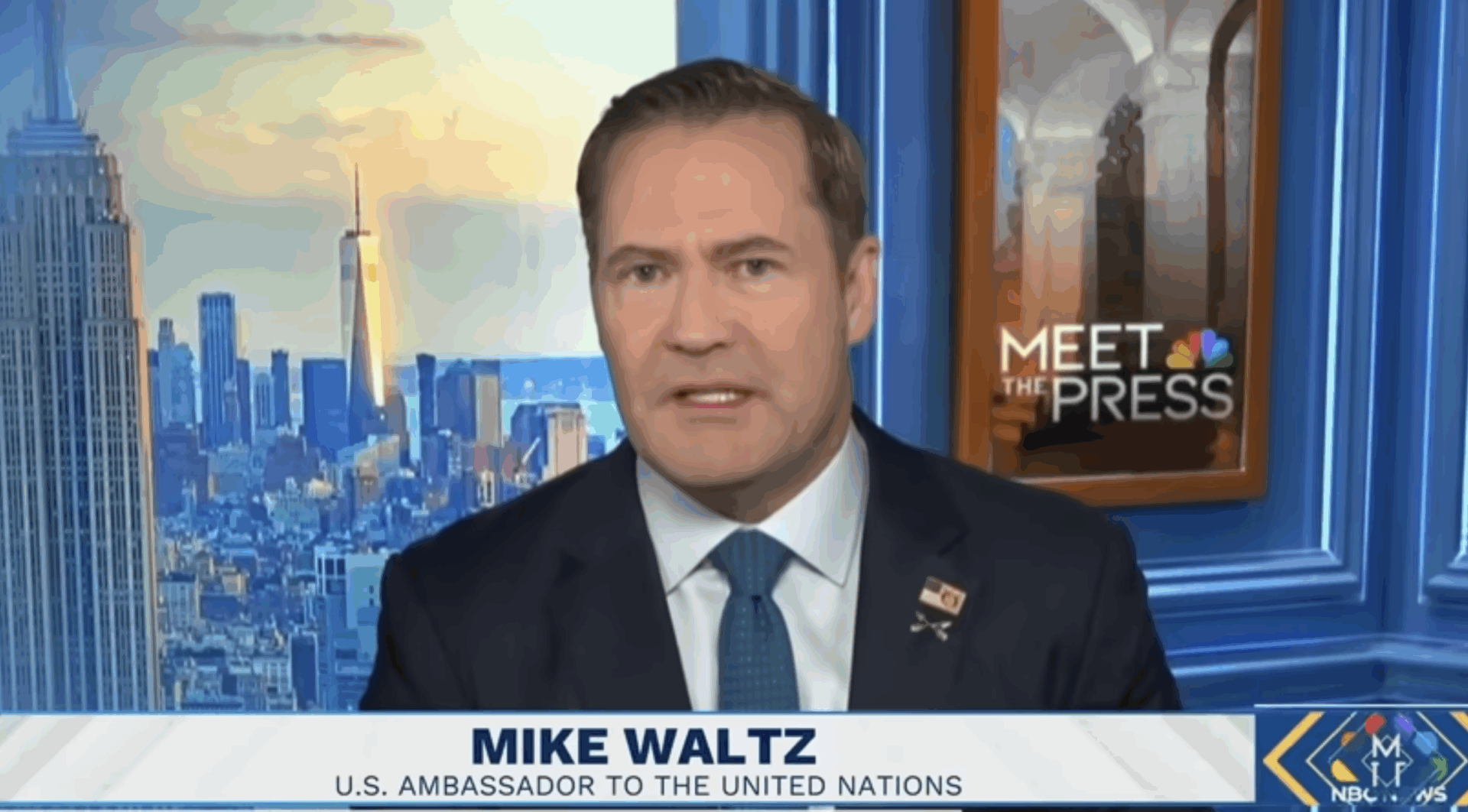
Why it matters: A senior U.S. diplomat is publicly articulating a permissive legal framework for targeting civilian infrastructure that contradicts established LOAC principles, signaling a potential shift in U.S. operational norms and increasing the risk of catastrophic escalation and violations.
Context: This follows a pattern of the Trump administration testing the boundaries of international law rhetoric, particularly regarding Iran, and occurs amidst heightened regional tensions. It reflects an ongoing struggle between political rhetoric seeking maximalist leverage and the military’s institutional adherence to LOAC.
"The question, at bottom, is whether U.S. officials will respect fundamental LOAC requirements or instead pretend that the law permits what it plainly forbids. On that question, Waltz’s statements should alarm anyone concerned with the rule of law, the protection of civilians, and the honor of the U.S. armed forces." — JUSTSECURITY
Commentary: Waltz’s statements represent a deliberate effort to normalize a ‘war-sustaining’ targeting doctrine that blurs into total warfare, directly challenging the DoD Law of War Manual’s own nuanced safeguards. The operational implication is a heightened risk of command pressure on JAGs and targeteers to approve legally dubious strikes. Institutionally, it undermines the Pentagon’s legal bureaucracy and could fracture allied cohesion on LOAC interpretation.
Date: Wed, 22 Apr 2026 12:11:41 +0000
URL: https://www.justsecurity.org/136882/ambassador-waltz-law-war-crimes/
AI Sentiment Score: Negative (87%)
AI Credibility Score: 10.0/10 — High
Scores and text generated by AI analysis of the source article indicated.
K&C Sports & Entertainment Law Weekly Roundup – April 2026 #4 (Jdsupra)
Summary: Entertainment: MUSIC – Anthropic PBC has asked a CA federal judge to find that its use of copyrighted materials to train its tool Claude is "transformative" fair use under copyright law, comparing Claude’s learning to how humans learn from reading and internalizing the themes of various works. Anthropic Claude AI Music Lawsuit: Company Argues for Fair Use Finding – A 6^th^ Circuit panel sharply questioned both sides over when, if ever, Parliament-Funkadelic co-founder George Clinton clearly rejected a decades-old royalty deal with the band’s former keyboardist, signaling uncertainty about whether the late musician’s estate waited too long to sue. Sixth Circuit Court to Rule on Parliament-Funkadelic Keyboardist’s Royalty Dispute, Highlighting Legal Precedents in Music Industry – Legal News Feed LAWSUITS OF THE RICH & FAMOUS – Harvey Weinstein’s attorney told a Manhattan jury that the film producer had a genuine on-and-off relationship with a woman who chose to "change the narrative" from consensual sex to rape after he faced a flurry of assault accusations in 2017.

Why it matters: This matters for Policy, Legal & Regulatory because it gives a concrete current signal to track: Entertainment: MUSIC – Anthropic PBC has asked a CA federal judge to find that its use of copyrighted materials to train its tool Claude is "transformative" fair use under copyright law, comparing Claude’s learning to how humans learn from reading and internalizing the themes of various works.
Context: Entertainment: MUSIC – Anthropic PBC has asked a CA federal judge to find that its use of copyrighted materials to train its tool Claude is "transformative" fair use under copyright law, comparing Claude’s learning to how humans learn from reading and internalizing the themes of various works. Anthropic Claude AI Music Lawsuit: Company Argues for Fair Use Finding – A 6^th^ Circuit panel sharply questioned both sides over when, if ever, Parliament-Funkadelic co-founder George Clinton clearly rejected a decades-old royalty deal with the band’s former keyboardist, signaling uncertainty about whether the late musician’s estate waited too long to sue. Sixth Circuit Court to Rule on Parliament-Funkadelic Keyboardist’s Royalty Dispute, Highlighting Legal Precedents in Music Industry – Legal News Feed LAWSUITS OF THE RICH & FAMOUS – Harvey Weinstein’s attorney told a Manhattan jury that the film producer had a genuine on-and-off relationship with a woman who chose to "change the narrative" from consensual sex to rape after he faced a flurry of assault accusations in 2017.
"Entertainment: MUSIC – Anthropic PBC has asked a CA federal judge to find that its use of copyrighted materials to train its tool Claude is "transformative" fair use under copyright law, comparing." — JDSUPRA
Commentary: The real consequence will depend on whether this changes enforcement, liability, or the operating room for major platforms and institutions.
Date: April 28, 2026 12:00 AM ET
URL: https://www.jdsupra.com/legalnews/k-c-sports-entertainment-law-weekly-8934591/
AI Sentiment Score: Negative (80%)
AI Credibility Score: 10.0/10 — High
Scores and text generated by AI analysis of the source article indicated.
When law finally arrives, technology already moved on: Launching UN …policyreview.info › articles › news › laun… (Policyreview.Info)
Summary: International law has a timing problem. When a new technology enables serious harm, the legal response follows a familiar sequence: harm occurs, victims and advocates demand action, legislators and treaty negotiators draft rules, states ratify and implement them. In a stable technological environment, this cycle eventually produces adequate governance.

Why it matters: This matters for Policy, Legal & Regulatory because it gives a concrete current signal to track: International law has a timing problem.
Context: International law has a timing problem. When a new technology enables serious harm, the legal response follows a familiar sequence: harm occurs, victims and advocates demand action, legislators and treaty negotiators draft rules, states ratify and implement them. In a stable technological environment, this cycle eventually produces adequate governance.
"International law has a timing problem. When a new technology enables serious harm, the legal response follows a familiar sequence: harm occurs, victims and advocates demand action, legislators and treaty negotiators draft." — POLICYREVIEW.INFO
Commentary: The real consequence will depend on whether this changes enforcement, liability, or the operating room for major platforms and institutions.
Date: April 21, 2026 12:00 AM ET
URL: https://policyreview.info/articles/news/launching-un-global-mechanism
AI Sentiment Score: Negative (80%)
AI Credibility Score: 7.0/10 — Medium
Scores and text generated by AI analysis of the source article indicated.
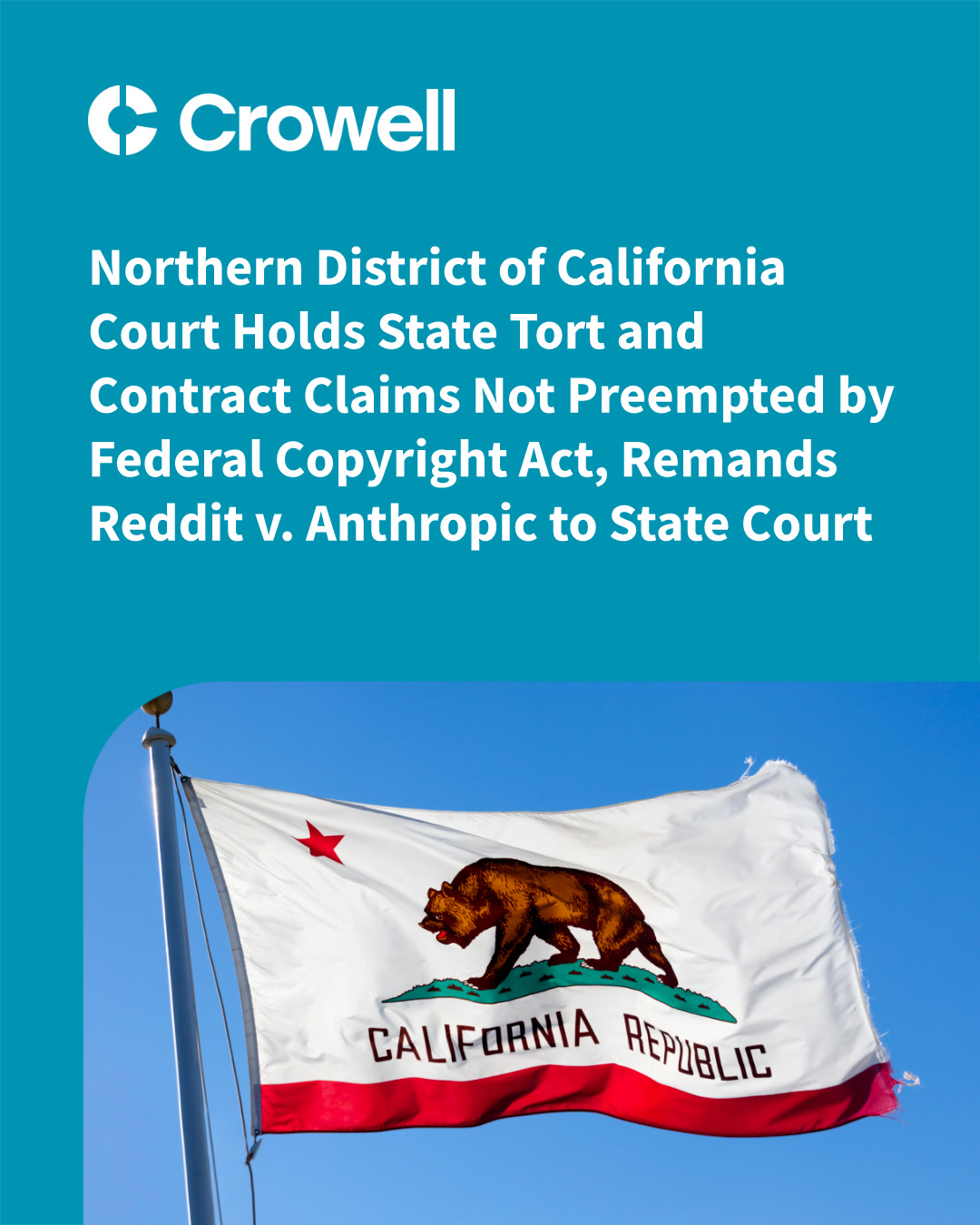
Northern District of California Court Holds State Tort and Contract … (Crowell)
Summary: # Northern District of California Court Holds State Tort and Contract Claims Not Preempted by Federal Copyright Act, Remands Reddit v. Anthropic to State Court ## What You Need to Know – Key takeaway #1 State Law Claims Survive Preemption: The Court held that Reddit’s claims for breach of contract, unjust enrichment, trespass to chattels, tortious interference, and unfair competition were not preempted by the Copyright Act. – Key takeaway #2 Broader Impact on AI Industry: This decision signals that preemption arguments may not shield AI companies from state-law claims over the taking and use of online content to train AI models.
Why it matters: This matters for Policy, Legal & Regulatory because it gives a concrete current signal to track: # Northern District of California Court Holds State Tort and Contract Claims Not Preempted by Federal Copyright Act, Remands Reddit v.
Context: # Northern District of California Court Holds State Tort and Contract Claims Not Preempted by Federal Copyright Act, Remands Reddit v. Anthropic to State Court ## What You Need to Know – Key takeaway #1 State Law Claims Survive Preemption: The Court held that Reddit’s claims for breach of contract, unjust enrichment, trespass to chattels, tortious interference, and unfair competition were not preempted by the Copyright Act. – Key takeaway #2 Broader Impact on AI Industry: This decision signals that preemption arguments may not shield AI companies from state-law claims over the taking and use of online content to train AI models.
"# Northern District of California Court Holds State Tort and Contract Claims Not Preempted by Federal Copyright Act, Remands Reddit v. Anthropic to State Court ## What You Need to Know -." — CROWELL
Commentary: The real consequence will depend on whether this changes enforcement, liability, or the operating room for major platforms and institutions.
Date: April 24, 2026 12:00 AM ET
URL: https://www.crowell.com/en/insights/client-alerts/northern-district-of-california-court-holds-state-tort-and-contract-claims-not-preempted-by-federal-copyright-act-remands-reddit-v-anthropic-to-state-court
AI Sentiment Score: Neutral (50%)
AI Credibility Score: 7.0/10 — Medium
Scores and text generated by AI analysis of the source article indicated.
The Current Landscape of Tech and Work Policy in the U.S. (Laborcenter.Berkeley.Edu)
Summary: Two 2025 bills in California (see here and here) supported by unions combine to establish a broad framework for regulating employers’ use of electronic monitoring on and off the job, including notice requirements, prohibitions, and responsible use guardrails. A 2025 bill in Maine contains some of these prohibitions, and bills in Massachusetts, Vermont, and Washington combine similar electronic monitoring standards with algorithmic management provisions (see the section “Algorithmic Management” below). …

Why it matters: This matters for Policy, Legal & Regulatory because it gives a concrete current signal to track: Two 2025 bills in California (see here and here) supported by unions combine to establish a broad framework for regulating employers’ use of electronic monitoring on and off the job, including notice requirements, prohibitions, and responsible use guardrails.
Context: Two 2025 bills in California (see here and here) supported by unions combine to establish a broad framework for regulating employers’ use of electronic monitoring on and off the job, including notice requirements, prohibitions, and responsible use guardrails. A 2025 bill in Maine contains some of these prohibitions, and bills in Massachusetts, Vermont, and Washington combine similar electronic monitoring standards with algorithmic management provisions (see the section “Algorithmic Management” below). …
"Two 2025 bills in California (see here and here) supported by unions combine to establish a broad framework for regulating employers’ use of electronic monitoring on and off the job, including notice." — LABORCENTER.BERKELEY.EDU
Commentary: The real consequence will depend on whether this changes enforcement, liability, or the operating room for major platforms and institutions.
Date: April 22, 2026 12:00 AM ET
URL: https://laborcenter.berkeley.edu/tech-and-work-policy-guide/
AI Sentiment Score: Negative (66%)
AI Credibility Score: 7.0/10 — Medium
Scores and text generated by AI analysis of the source article indicated.
The Supreme Court’s last best chance to stop the surveillance state (Pacificlegal)
Summary: # The Supreme Court’s last best chance to stop the surveillance state … That doctrine is the third-party doctrine. The Court now has a chance to return it to its original and proper scope in the case *Chatrie v.

Why it matters: This matters for Policy, Legal & Regulatory because it gives a concrete current signal to track: # The Supreme Court’s last best chance to stop the surveillance state …
Context: # The Supreme Court’s last best chance to stop the surveillance state … That doctrine is the third-party doctrine. The Court now has a chance to return it to its original and proper scope in the case *Chatrie v.
"# The Supreme Court’s last best chance to stop the surveillance state … That doctrine is the third-party doctrine. The Court now has a chance to return it to its original and." — PACIFICLEGAL
Commentary: The real consequence will depend on whether this changes enforcement, liability, or the operating room for major platforms and institutions.
Date: April 24, 2026 12:00 AM ET
URL: https://pacificlegal.org/the-supreme-courts-last-best-chance-to-stop-the-surveillance-state/
AI Sentiment Score: Positive (40%)
AI Credibility Score: 7.0/10 — Medium
Scores and text generated by AI analysis of the source article indicated.
Post ID: 21fdfe62