

Streaming And Adaptation Deals
Doctor’s Orders: The Search for a Workable Pleading Standard in Hikma v. Amarin (Ipwatchdog)
Summary: The Supreme Court will hear oral arguments in Hikma v. Amarin on April 29, a case that tests the limits of inducement liability under 35 U.S.C. § 271(b) for generic drugs with FDA-approved ‘skinny labels.’ The Federal Circuit reversed a district court dismissal, finding Amarin plausibly pleaded Hikma induced infringement through extra-label marketing—press releases, web content, and references to total brand sales—despite a label carving out the patented indication. The Court must decide whether such communications can override the statutory protections of a compliant skinny label, setting a pleading standard that will determine when generics cross from lawful competition into active inducement.

Why it matters: The ruling will define the litigation risk and marketing constraints for all generic launches using the skinny-label pathway, directly impacting settlement leverage, discovery costs, and the economic calculus for follow-on drug development.
Context: This case represents the latest escalation in a long-running tension between the Hatch-Waxman Act’s carve-out provisions and patent inducement liability, following precedents like GlaxoSmithKline v. Teva but focusing squarely on the sufficiency of pleadings based on non-label conduct.
"If a generic can bypass method patents by merely stripping an indication from a label while winking at the market through its sales materials, it severely weakens IP protection." — IPWATCHDOG
Commentary: A Federal Circuit-friendly standard would empower brand plaintiffs at the motion-to-dismiss stage, forcing generics into costly discovery or settlement and potentially chilling skinny-label launches. A reversal would insulate compliant labeling, but could incentivize generics to design marketing campaigns that implicitly signal interchangeability, pushing the enforcement burden onto the FDA or prompting legislative action to close the perceived loophole.
Date: Tue, 28 Apr 2026 16:15:20 +0000
URL: https://ipwatchdog.com/2026/04/28/doctors-orders-search-workable-pleading-standard-hikma-v-amarin/
AI Sentiment Score: Negative (80%)
AI Credibility Score: 10.0/10 — High
Scores and text generated by AI analysis of the source article indicated.
The Meta Oversight Board’s Advisory Opinion on Global Community Notes Rollout: Another Check on Platform Power? (Justsecurity)
Summary: Meta’s Oversight Board issued an advisory opinion on the global expansion of its ‘community notes’ program, a crowdsourced fact-checking system. The Board did not endorse or oppose the expansion but outlined specific conditions under which rollout should be paused or modified, citing risks in repressive regimes, conflict zones, and during elections. It concluded that community notes alone are inadequate to counter harmful misinformation, highlighting operational delays, limited scale, and dependence on a reliable information environment.

Why it matters: The opinion tests the Oversight Board’s capacity to act as a meaningful check on platform power and sets a precedent for human rights due diligence in algorithmic content moderation at global scale.
Context: Meta is phasing out third-party professional fact-checking in favor of community notes, mirroring X’s model, amid broader industry shifts toward crowdsourced moderation and automated trust and safety systems.
"Insofar as Meta envisions community notes as its primary way to address misinformation… the Board finds that the program’s design may limit its ability to accomplish that goal. Delays in note publication, the limited number of published notes and its dependence on the broader information environment’s reliability raise serious doubts about the extent to which community notes can meaningfully address misinformation linked to harm." — JUSTSECURITY
Commentary: The Board’s granular, context-specific warnings—covering disinformation networks, language complexity, and political violence—function as a de facto regulatory framework for a product Meta intends to deploy universally. This creates a compliance roadmap for Meta and a liability benchmark for critics, but its non-binding nature and Meta’s reported considerations to defund the Board by 2028 signal the limits of this private adjudication model. The opinion’s real impact hinges on whether Meta treats it as operational guidance or a symbolic concession.
Date: Tue, 21 Apr 2026 12:52:39 +0000
URL: https://www.justsecurity.org/136035/meta-boards-opinion-community-notes/
AI Sentiment Score: Neutral (33%)
AI Credibility Score: 10.0/10 — High
Scores and text generated by AI analysis of the source article indicated.
AI Regulation and Human Rights: A Global Trilemma (Hks.Harvard.Edu)
Summary: ### 1. None of the Three Major Regulatory Regimes on AI Genuinely Serves Human Rights For AI regulation to genuinely serve human rights, three conditions must be met simultaneously. First, there must be governance reach: the practical capacity to make and enforce rules over the main developers and deployers of AI—jurisdictional scope, enforcement authority, and enough geopolitical and market leverage to ensure that rules are not simply circumvented.

Why it matters: This matters for Policy, Legal & Regulatory because it gives a concrete current signal to track: ### 1.
Context: ### 1. None of the Three Major Regulatory Regimes on AI Genuinely Serves Human Rights For AI regulation to genuinely serve human rights, three conditions must be met simultaneously. First, there must be governance reach: the practical capacity to make and enforce rules over the main developers and deployers of AI—jurisdictional scope, enforcement authority, and enough geopolitical and market leverage to ensure that rules are not simply circumvented.
"### 1. None of the Three Major Regulatory Regimes on AI Genuinely Serves Human Rights For AI regulation to genuinely serve human rights, three conditions must be met simultaneously. First, there must." — HKS.HARVARD.EDU
Commentary: The real consequence will depend on whether this changes enforcement, liability, or the operating room for major platforms and institutions.
Date: April 22, 2026 12:00 AM ET
URL: https://www.hks.harvard.edu/centers/carr-ryan/our-work/carr-ryan-commentary/ai-regulation-and-human-rights-global-trilemma
AI Sentiment Score: Negative (66%)
AI Credibility Score: 7.0/10 — Medium
Scores and text generated by AI analysis of the source article indicated.
Why It’s So Easy to Talk Past Each Other about Platform Moderation … (Bedrockprinciple)
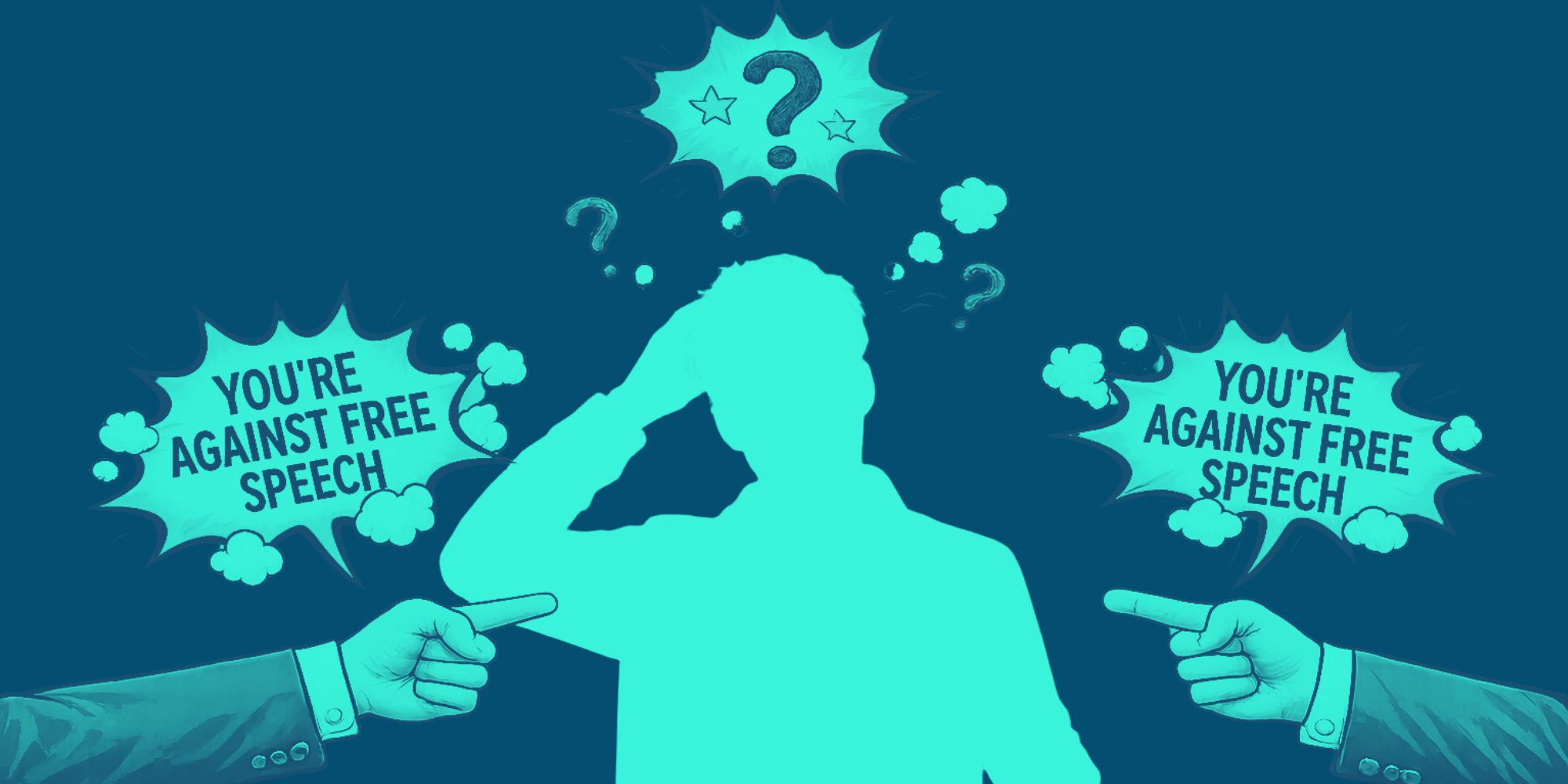
Summary: ### The TL;DR: Platforms have a legal right to moderate content; that doesn’t mean we shouldn’t criticize them when they go too far. Last week, The Intercept reported that Meta would be removing posts from its platforms containing the word “antifa” (short for anti-fascist) if the word appeared alongside what the company deems a “content-level threat signal.” That bucket includes any “visual depiction of a weapon,” “reference to arson, theft, or vandalism,” or “military language” used near the term. According to the policy, use of “antifa” could also trigger account bans or hidden comments if it appears in “references to historical or recent incidents of violence,” including “historic wars” and “battles.” In fairness, a Meta spokesperson pointed to a recent transparency report noting the company will also remove QAnon content when it appears alongside “content-level threat signals.” Still, if the reporting is accurate, the policy raises an obvious worry: moderation this broad could impact historians, journalists, educators, and activists who use the word in perfectly legitimate ways.
Why it matters: This matters for Policy, Legal & Regulatory because it gives a concrete current signal to track: ### The TL;DR: Platforms have a legal right to moderate content; that doesn’t mean we shouldn’t criticize them when they go too far.
Context: ### The TL;DR: Platforms have a legal right to moderate content; that doesn’t mean we shouldn’t criticize them when they go too far. Last week, The Intercept reported that Meta would be removing posts from its platforms containing the word “antifa” (short for anti-fascist) if the word appeared alongside what the company deems a “content-level threat signal.” That bucket includes any “visual depiction of a weapon,” “reference to arson, theft, or vandalism,” or “military language” used near the term. According to the policy, use of “antifa” could also trigger account bans or hidden comments if it appears in “references to historical or recent incidents of violence,” including “historic wars” and “battles.” In fairness, a Meta spokesperson pointed to a recent transparency report noting the company will also remove QAnon content when it appears alongside “content-level threat signals.” Still, if the reporting is accurate, the policy raises an obvious worry: moderation this broad could impact historians, journalists, educators, and activists who use the word in perfectly legitimate ways.
"### The TL;DR: Platforms have a legal right to moderate content; that doesn’t mean we shouldn’t criticize them when they go too far. Last week, The Intercept reported that Meta would." — BEDROCKPRINCIPLE
Commentary: The real consequence will depend on whether this changes enforcement, liability, or the operating room for major platforms and institutions.
Date: April 21, 2026 12:00 AM ET
URL: https://www.bedrockprinciple.com/p/why-its-so-easy-to-talk-past-each
AI Sentiment Score: Negative (80%)
AI Credibility Score: 10.0/10 — High
Scores and text generated by AI analysis of the source article indicated.
Platform Governance and the Challenge of Real-Time Copyright … (Vintagelegalvl)
Summary: In this essay, we will be critically analyzing how digital platforms regulate live streaming of copyrighted content, and we will also identify legal, technological, and policy challenges in real-time enforcement. … In this paper, we will examine the governance challenges faced by digital platforms in regulating live streaming of copyrighted content.

Why it matters: This matters for Policy, Legal & Regulatory because it gives a concrete current signal to track: In this essay, we will be critically analyzing how digital platforms regulate live streaming of copyrighted content, and we will also identify legal, technological, and policy challenges in real-time enforcement.
Context: In this essay, we will be critically analyzing how digital platforms regulate live streaming of copyrighted content, and we will also identify legal, technological, and policy challenges in real-time enforcement. … In this paper, we will examine the governance challenges faced by digital platforms in regulating live streaming of copyrighted content.
"In this essay, we will be critically analyzing how digital platforms regulate live streaming of copyrighted content, and we will also identify legal, technological, and policy challenges in real-time enforcement. … In." — VINTAGELEGALVL
Commentary: The real consequence will depend on whether this changes enforcement, liability, or the operating room for major platforms and institutions.
Date: April 24, 2026 12:00 AM ET
URL: https://www.vintagelegalvl.com/post/platform-governance-and-the-challenge-of-real-time-copyright-enforcement-in-live-streaming
AI Sentiment Score: Negative (75%)
AI Credibility Score: 7.0/10 — Medium
Scores and text generated by AI analysis of the source article indicated.
Digital Resurrection and Posthumous Personality Rights: Ownership … (Vintagelegalvl)
Summary: The theoretical foundations of personality rights trace to Warren and Brandeis’s seminal 1890 article articulating the "right to be let alone." This privacy-based conception gradually evolved to recognize economic dimensions, particularly for celebrities. In Haelan Laboratories v. Topps Chewing Gum, the U.S.

Why it matters: This matters for Policy, Legal & Regulatory because it gives a concrete current signal to track: The theoretical foundations of personality rights trace to Warren and Brandeis’s seminal 1890 article articulating the "right to be let alone." This privacy-based conception gradually evolved to recognize economic dimensions, particularly for celebrities.
Context: The theoretical foundations of personality rights trace to Warren and Brandeis’s seminal 1890 article articulating the "right to be let alone." This privacy-based conception gradually evolved to recognize economic dimensions, particularly for celebrities. In Haelan Laboratories v. Topps Chewing Gum, the U.S.
"The theoretical foundations of personality rights trace to Warren and Brandeis’s seminal 1890 article articulating the "right to be let alone." This privacy-based conception gradually evolved to recognize economic dimensions, particularly for." — VINTAGELEGALVL
Commentary: The real consequence will depend on whether this changes enforcement, liability, or the operating room for major platforms and institutions.
Date: April 24, 2026 12:00 AM ET
URL: https://www.vintagelegalvl.com/post/digital-resurrection-and-posthumous-personality-rights-ownership-of-ai-generated-avatars-of-decease
AI Sentiment Score: Negative (66%)
AI Credibility Score: 8.6/10 — High
Scores and text generated by AI analysis of the source article indicated.
Ethical AI and Privacy Series: Article 2, The Regulations – BDO USA (Bdo)
Summary: As artificial intelligence technologies continue to advance, the legal community is working to pass legislation meant to govern its responsible use. The use of AI has permeated industries in almost every sector, raising important questions about privacy, data protection, and accountability. In this second article of our series on AI, we delve deeper into the legal landscape surrounding these technologies.

Why it matters: This matters for Policy, Legal & Regulatory because it gives a concrete current signal to track: As artificial intelligence technologies continue to advance, the legal community is working to pass legislation meant to govern its responsible use.
Context: As artificial intelligence technologies continue to advance, the legal community is working to pass legislation meant to govern its responsible use. The use of AI has permeated industries in almost every sector, raising important questions about privacy, data protection, and accountability. In this second article of our series on AI, we delve deeper into the legal landscape surrounding these technologies.
"As artificial intelligence technologies continue to advance, the legal community is working to pass legislation meant to govern its responsible use. The use of AI has permeated industries in almost every sector,." — BDO
Commentary: The real consequence will depend on whether this changes enforcement, liability, or the operating room for major platforms and institutions.
Date: April 22, 2026 12:00 AM ET
URL: https://www.bdo.com/insights/advisory/ethical-ai-and-privacy-series-article-2-the-regulations
AI Sentiment Score: Positive (66%)
AI Credibility Score: 10.0/10 — High
Scores and text generated by AI analysis of the source article indicated.
South Africa: ICASA To Reassess Regulation Of OTT Streaming … (News.Broadcastmediaafrica)
Summary: South Africa’s communication regulator is launching an investigation into over-the-top (OTT) platforms, including popular services such as WhatsApp and Netflix, reigniting discussions about their impact on the country’s telecommunications and broadcasting industries. The Independent Communications Authority of South Africa (ICASA) outlined plans in its 2026/27 Annual Performance Plan to conduct a detailed market inquiry into OTT services. This initiative aims to assess the impact of internet-based platforms that offer messaging, video, and streaming content, with the findings culminating in a discussion paper that may guide future regulations.

Why it matters: This matters for Policy, Legal & Regulatory because it gives a concrete current signal to track: South Africa’s communication regulator is launching an investigation into over-the-top (OTT) platforms, including popular services such as WhatsApp and Netflix, reigniting discussions about their impact on the country’s telecommunications and broadcasting industries.
Context: South Africa’s communication regulator is launching an investigation into over-the-top (OTT) platforms, including popular services such as WhatsApp and Netflix, reigniting discussions about their impact on the country’s telecommunications and broadcasting industries. The Independent Communications Authority of South Africa (ICASA) outlined plans in its 2026/27 Annual Performance Plan to conduct a detailed market inquiry into OTT services. This initiative aims to assess the impact of internet-based platforms that offer messaging, video, and streaming content, with the findings culminating in a discussion paper that may guide future regulations.
"South Africa’s communication regulator is launching an investigation into over-the-top (OTT) platforms, including popular services such as WhatsApp and Netflix, reigniting discussions about their impact on the country’s telecommunications and broadcasting industries." — NEWS.BROADCASTMEDIAAFRICA
Commentary: The real consequence will depend on whether this changes enforcement, liability, or the operating room for major platforms and institutions.
Date: April 22, 2026 12:00 AM ET
URL: https://news.broadcastmediaafrica.com/2026/04/22/south-africa-icasa-to-reassess-regulation-of-ott-streaming-services/
AI Sentiment Score: Neutral (50%)
AI Credibility Score: 7.0/10 — Medium
Scores and text generated by AI analysis of the source article indicated.
Scraping Between GDPR, the AI Act, and Platform TOS – Evomi Blog (Evomi)
Summary: The legal landscape around web scraping has shifted more in the last two years than in the previous ten. Three forces are converging simultaneously: GDPR enforcement is maturing and getting teeth, the EU AI Act is adding new data provenance requirements for AI training pipelines, and platform terms of service have escalated from boilerplate to litigation instruments. …
Why it matters: This matters for Policy, Legal & Regulatory because it gives a concrete current signal to track: The legal landscape around web scraping has shifted more in the last two years than in the previous ten.
Context: The legal landscape around web scraping has shifted more in the last two years than in the previous ten. Three forces are converging simultaneously: GDPR enforcement is maturing and getting teeth, the EU AI Act is adding new data provenance requirements for AI training pipelines, and platform terms of service have escalated from boilerplate to litigation instruments. …
"The legal landscape around web scraping has shifted more in the last two years than in the previous ten. Three forces are converging simultaneously: GDPR enforcement is maturing and getting teeth, the." — EVOMI
Commentary: The real consequence will depend on whether this changes enforcement, liability, or the operating room for major platforms and institutions.
Date: April 21, 2026 12:00 AM ET
URL: https://evomi.com/blog/the-compliance-squeeze-scraping-between-gdpr-the-ai-act-and-platform-tos
AI Sentiment Score: Neutral (50%)
AI Credibility Score: 7.0/10 — Medium
Scores and text generated by AI analysis of the source article indicated.
Post ID: 4184dc6e