
Apparel and Textile Manufacturing Innovations
Bally Ribbon Mills To Highlight Berry-Compliant Webbing And High-Performance Tapes At FedTex 2026 (Textileworld)
Summary: Bally Ribbon Mills will exhibit its Berry Amendment-compliant webbing and high-performance tapes at FedTex 2026, a defense textiles conference. The company’s products, including custom webbing for aircraft seat belts and tactical gear, are manufactured to U.S. military specifications and can be produced in small, customized runs. This highlights a niche supplier’s role in the domestic defense supply chain.

Why it matters: For defense contractors and federal procurement officers, this signals the availability of a specialized, compliant domestic source for critical woven components, directly impacting material sourcing and supply chain resilience.
Context: The Berry Amendment mandates the U.S. Department of Defense to prefer domestically produced textiles and other items, creating a protected but capacity-constrained market for compliant manufacturers.
"BRM will highlight its 100% Berry Amendment-compliant woven tapes and webbing, designed to support Department of Defense contractors and federal agencies requiring domestically manufactured materials. Ideal for aircraft seat belts, fall protection and work position harnesses and equipment, tie-downs, and load-bearing systems, this webbing is manufactured to meet US MIL and PIA specifications to deliver consistent performance, durability, and traceability." — TEXTILEWORLD
Commentary: BRM’s offering of small-batch, fully customized production runs is a critical operational detail; it reduces the minimum viable order size for specialized gear, allowing for more agile prototyping and procurement by defense contractors. The emphasis on in-house engineering collaboration points to a vendor model shifting from commodity supplier to integrated development partner, which can shorten design cycles but may increase dependency on single-source suppliers. This specialization underscores the real constraint in ‘Made in USA’ defense textiles: not just raw capacity, but the technical expertise to meet evolving MIL-SPEC requirements with traceable, compliant materials.
Date: April 27, 2026 12:00 AM ET
URL: https://www.textileworld.com/textile-world/nonwovens-technical-textiles/2026/04/bally-ribbon-mills-to-highlight-berry-compliant-webbing-and-high-performance-tapes-at-fedtex-2026/
AI Sentiment Score: Negative (50%)
AI Credibility Score: 10.0/10 — High
Scores and text generated by AI analysis of the source article indicated.
Leading Brands Back unspun’s Automated U.S. Apparel … – IICTF – (Iictf.In)
Summary: unspun’s automated 3D weaving technology, which converts yarn directly into semi-finished garments in a single programmable cycle, is advancing toward commercial U.S. deployment. Retail commitments from Walmart and REI, alongside supply chain partners Bethel Industries, Peckham, and PDS Ltd / GSC Link, signal a move to establish domestic apparel manufacturing hubs. With over $50 million in venture funding and deployment-ready equipment, site evaluations are underway across multiple states.

Why it matters: For U.S. apparel manufacturers and brands, this represents a potential shift in production economics, reducing reliance on overseas cut-and-sew labor and altering domestic capacity, cost, and resilience calculations.
Context: Automated apparel production has remained largely experimental; commercial-scale deployment in the U.S. has been constrained by capital costs, technical integration, and lack of anchor customer demand.
"Automated production that converts yarn directly into a semi-finished garment in minutes — compressing dozens of discrete cut-and-sew steps into a single programmable cycle — is no longer confined to a pilot facility." — IICTF.IN
Commentary: The Walmart and REI letters of support provide the demand anchor necessary to justify capital-intensive hub deployment, moving the technology from pilot to operational risk. This shifts the competitive calculus for domestic apparel production: labor availability constraints become less critical, but the capital and technical overhead for brands integrating with this new pipeline will be substantial. If scaled, it could rebalance the cost-resilience trade-off for mid-volume U.S. apparel, though it likely remains niche for high-variety, low-volume segments.
Date: April 23, 2026 12:00 AM ET
URL: https://iictf.in/unspun-automated-apparel-manufacturing-us-hubs/
AI Sentiment Score: Negative (63%)
AI Credibility Score: 10.0/10 — High
Scores and text generated by AI analysis of the source article indicated.
Apparel brands support unspun’s automated manufacturing hu (Specialtyfabricsreview)
Summary: Unspun, an automated manufacturing technology company, has secured letters of support from major brands including Walmart and REI for its plan to build domestic apparel production hubs in the U.S. The initiative, developed in partnership with Bethel Industries, Peckham, and PDS Ltd./GSC Link, will deploy unspun’s AI-enabled 3D weaving technology to produce semi-finished garments directly from yarn. The company, backed by over $50 million in VC funding, frames the move as a shift from exploration to execution of a new, automated production model.

Why it matters: This signals a concrete, brand-backed step toward re-shoring apparel manufacturing, which would alter supply chain logistics, inventory management, and labor requirements for participating retailers and their vendors.
Context: The push for onshore, automated apparel production has been a long-term industry goal, aiming to address supply chain fragility, inventory waste, and consumer demand for domestically made goods, but has been hindered by cost and scalability constraints.
"Automated manufacturing technology company unspun announced that brands, including Walmart and REI, have signed letters of support for the company’s plan to build domestic manufacturing capacity in the U.S. In partnership with." — SPECIALTYFABRICSREVIEW
Commentary: The operational pivot here is from pilot to pipeline, with brand commitments providing the demand signal needed to justify capital deployment. For brands, the tangible implication is a potential reconfiguration of sourcing teams and a recalibration of lead times and minimum order quantities. The success of this model hinges on unspun’s ability to scale its proprietary technology to meet the volume and cost thresholds of mass retailers like Walmart, which will test the real-world resilience and cost-competitiveness of automated domestic production.
Date: April 20, 2026 12:00 AM ET
URL: https://specialtyfabricsreview.com/2026/04/20/unspun-2/
AI Sentiment Score: Negative (81%)
AI Credibility Score: 10.0/10 — High
Scores and text generated by AI analysis of the source article indicated.
US Textile Sector Stable in 2025 Amid $60.9bn Output (News.Yrules)
Summary: The US textile and apparel industry recorded $60.9bn in output for 2025, a modest decline from $63.9bn in 2024, demonstrating resilience amid broader economic volatility. Exports also saw a slight dip, from $28bn to $27bn. The sector’s stability is underpinned by a sustained, multi-year capital investment cycle, with $34.3bn deployed in advanced manufacturing since 2017 and a record $5.5bn spent on new plants and equipment in 2024 alone.
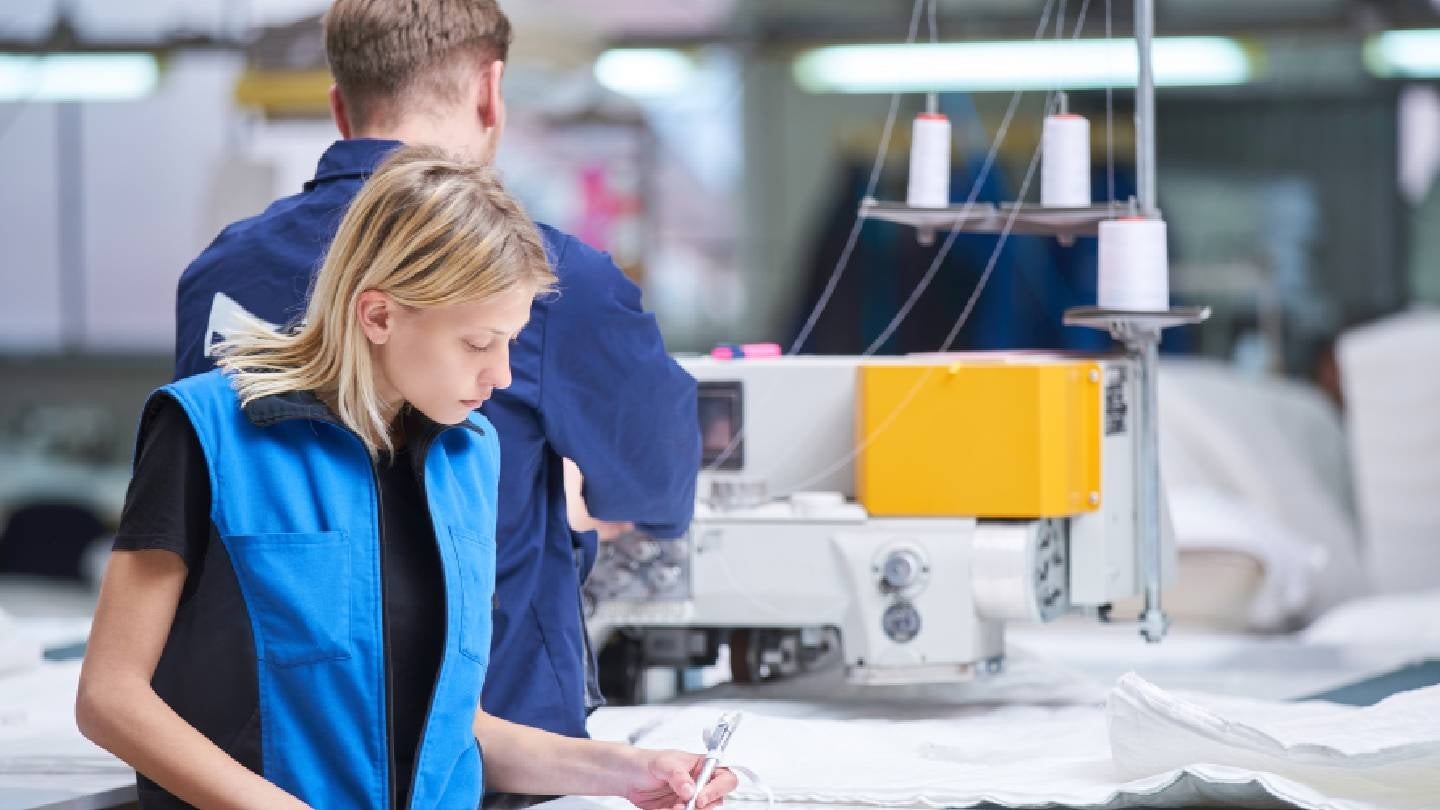
Why it matters: For manufacturers and brands evaluating domestic sourcing, the data signals a maturing, capital-intensive industrial base focused on automation and compliance, directly impacting cost structures and supply chain resilience decisions.
Context: This follows a decade of offshoring, with recent investment driven by defense procurement rules (e.g., Berry Amendment), USMCA requirements, and corporate nearshoring strategies for traceability and speed.
"The $34.3bn invested in advanced manufacturing since 2017 reflects a long-term bet on automation, traceability, and nearshoring — trends increasingly critical for compliance with defence sourcing rules and regional trade agreements." — NEWS.YRULES
Commentary: The headline stability masks a structural shift: output is being maintained by automation, not labor expansion. For operational planners, this means domestic textile capacity is becoming more capital-efficient but less flexible for short-run, bespoke orders. The record 2024 capex suggests vendors are locking in capacity for long-term government and trade-compliant contracts, which could tighten availability and raise baseline costs for commercial brands not aligned with those programs.
Date: April 20, 2026 12:00 AM ET
URL: https://news.yrules.com/en/archives/14851
AI Sentiment Score: Negative (50%)
AI Credibility Score: 7.0/10 — Medium
Scores and text generated by AI analysis of the source article indicated.
INTRODUCING: USA MADE APPAREL (Youtube)
Summary: MKC, a Montana-based apparel brand, has launched a Heritage Hoodie marketed as a fully domestic product, tracing its supply chain from Texas cotton fields through California processing and manufacturing to final shipment from Missoula. The announcement positions the item as a direct response to sustained customer demand for USA-made goods. It explicitly details each stage of production and logistics occurring within the country.

Why it matters: For brands and manufacturers evaluating reshoring, this case illustrates the operational reality and marketing narrative of a fully integrated, traceable domestic supply chain, highlighting both its feasibility and its inherent cost and complexity.
Context: Apparel reshoring faces significant hurdles in fragmented domestic textile capacity, skilled labor shortages, and higher costs, making a vertically traced product from raw material to final stitch a notable, if niche, achievement.
"The cotton starts in Texas fields, then makes its way west to California where it’s processed, dyed, knit, patterned, cut, and sewn before it ships to us in Missoula, MT." — YOUTUBE
Commentary: The detailed provenance map is the product’s primary value proposition, shifting competition from pure cost to verifiable resilience and story. For other brands, this sets a high bar for ‘Made in USA’ claims, requiring full supply chain transparency rather than final assembly alone. It signals a operational model where logistics and marketing are deeply integrated, but likely confines such products to a premium, low-volume segment due to systemic capacity constraints in domestic textile milling and finishing.
Date: April 24, 2026 12:00 AM ET
URL: https://www.youtube.com/watch?v=iBbHxjyqh3s
AI Sentiment Score: Negative (50%)
AI Credibility Score: 10.0/10 — High
Scores and text generated by AI analysis of the source article indicated.
INTRODUCING: USA MADE APPAREL (Youtube)
Summary: MKC has launched a ‘USA MADE Heritage Hoodie,’ a product explicitly designed to fulfill a market demand for apparel with a fully domestic supply chain. The company details a specific, traceable pipeline: Texas-grown cotton is processed, dyed, knit, patterned, cut, and sewn in California before final shipment to Montana. This represents a concrete operational case study in onshoring a complex textile product.
Why it matters: For brands and manufacturers evaluating domestic production, this case reveals the real geographic and logistical footprint required, highlighting both the capabilities and potential fragmentation of the US textile and apparel manufacturing base.
Context: The ‘Made in USA’ apparel segment has grown as a resilience and marketing strategy, but often relies on imported components or final assembly; a claim of full vertical integration from raw material to finished good is a higher operational bar.
"The cotton starts in Texas fields, then makes its way west to California where it’s processed, dyed, knit, patterned, cut, and sewn before it ships to us in Missoula, MT." — YOUTUBE
Commentary: The detailed pipeline map is the story—it exposes the multi-state journey and specialized facilities still required, underscoring that domestic capacity exists but is distributed. For competitors, this sets a new benchmark for verifiable sourcing that marketing must now support with transparent logistics. The cost and lead-time implications of this cross-continental workflow will be the key constraint for scaling this model beyond a premium niche.
Date: April 24, 2026 12:00 AM ET
URL: https://www.youtube.com/watch?v=iBbHxjyqh3s&vl=id
AI Sentiment Score: Negative (57%)
AI Credibility Score: 10.0/10 — High
Scores and text generated by AI analysis of the source article indicated.
Movers and Shakers April 2026: Circulose and CTA to … (Fiberjournal)
Summary: The textile and nonwovens industry is consolidating supply chains and advancing material circularity through strategic partnerships and new production technologies. Key developments include Circulose and CTA scaling recycled lyocell, IND HEMP linking U.S. fiber to Vietnamese manufacturing, and Symtech acquiring McDaniel Textile Services to deepen U.S. spinning support. Meanwhile, digital production expands into technical textiles with Kornit’s new system, and regulatory pressure mounts with India’s 40% r-PET mandate.

Why it matters: These moves redefine material availability, domestic service capacity, and compliance requirements, directly impacting sourcing, production planning, and capital investment for manufacturers and brands.
Context: The industry is navigating trade uncertainty and sustainability mandates by vertically integrating recycled feedstocks, on-shoring critical services, and forming trans-Pacific partnerships to secure fiber supply.
"Supply will be limited in 2026, with the ambition to scale capacity to meet demand during 2027. Commercial volumes in 2026 will be available only to selected brands, while those seeking access in 2027 are invited to engage in product development already now." — FIBERJOURNAL
Commentary: The Circulose-CTA deal creates a new, constrained pipeline for premium recycled lyocell, forcing brands to lock in development slots now for 2027 volume. Symtech’s acquisition signals consolidation in the niche but critical U.S. spinning service sector, potentially reducing vendor options but increasing service depth. IND HEMP’s Vietnam partnership is a pragmatic workaround for U.S. apparel brands seeking traceable, non-Chinese hemp supply, leveraging established Asian textile infrastructure.
Date: April 28, 2026 12:00 AM ET
URL: https://www.fiberjournal.com/movers-and-shakers-april-2026/
AI Sentiment Score: Negative (80%)
AI Credibility Score: 8.2/10 — High
Scores and text generated by AI analysis of the source article indicated.
Post ID: cdf6b4a9